Inspiration
I wanted to tackle one of the most dangerous and economically draining bottlenecks in modern green technology: e-waste and lithium-ion recycling. Every day, sorting facilities face catastrophic thermal runaway fires and lose massive amounts of critical minerals (like lithium, cobalt, and nickel) due to manual, inefficient triage. I set out to build an autonomous system that merges industrial computer vision, multi-agent AI decision-making, and electrochemical telemetry to automate recycling safety and asset recovery at scale.
What it does
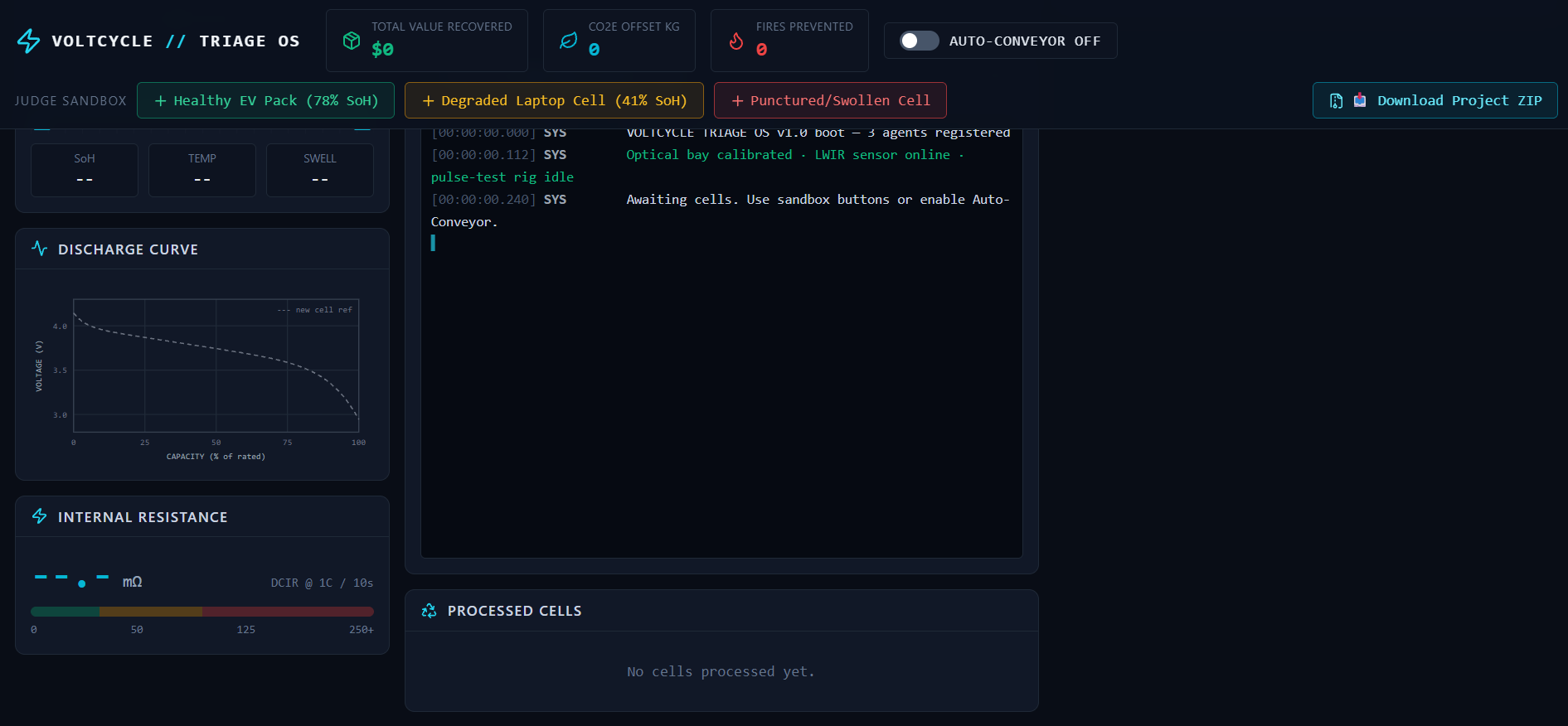
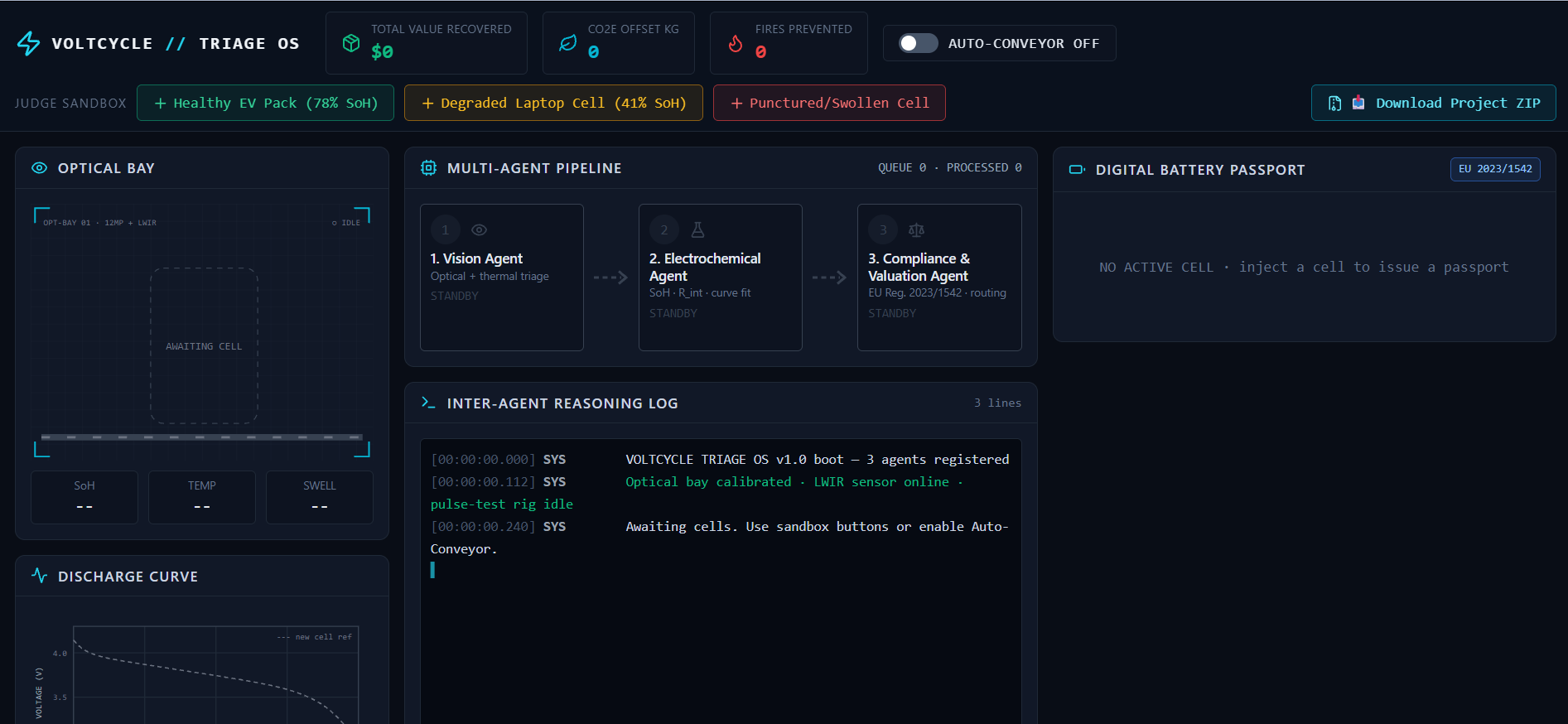
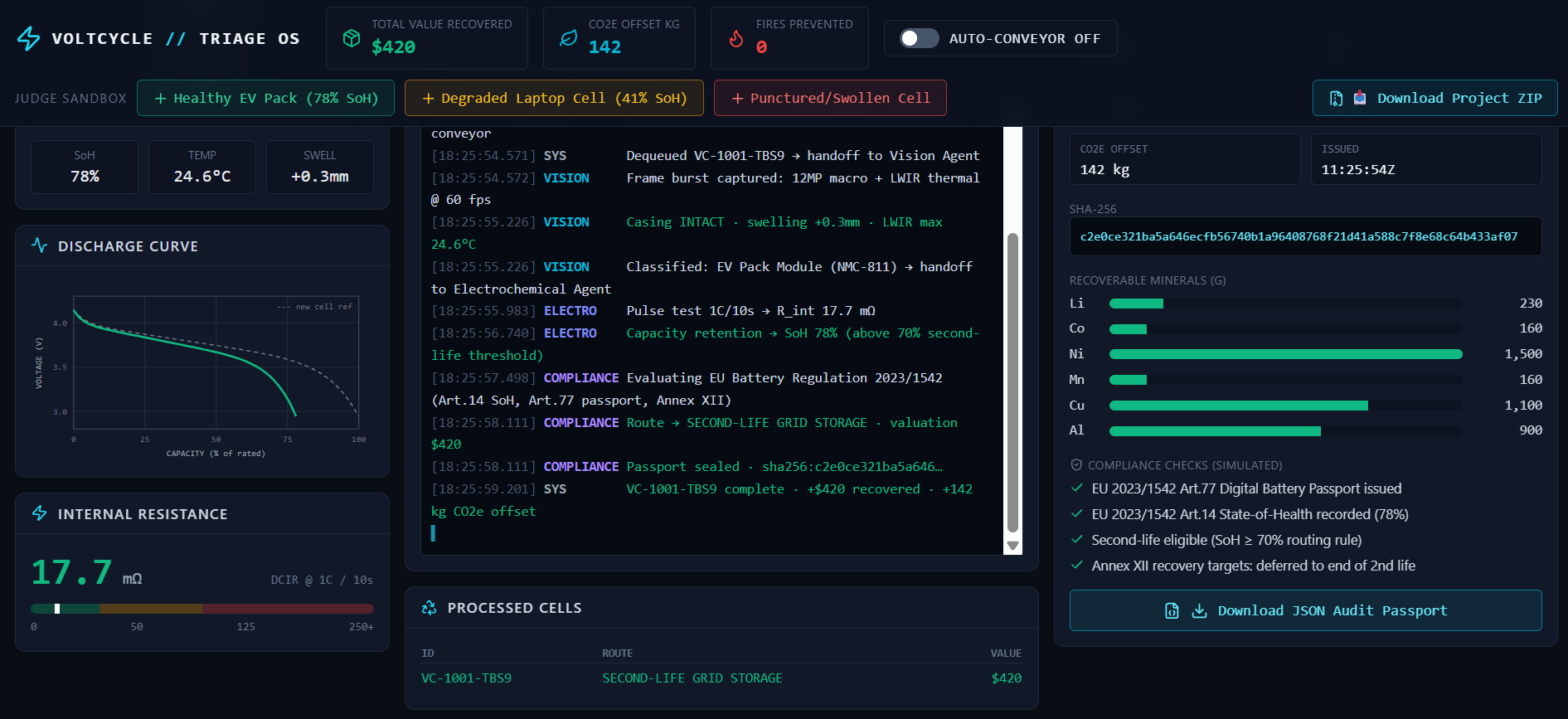
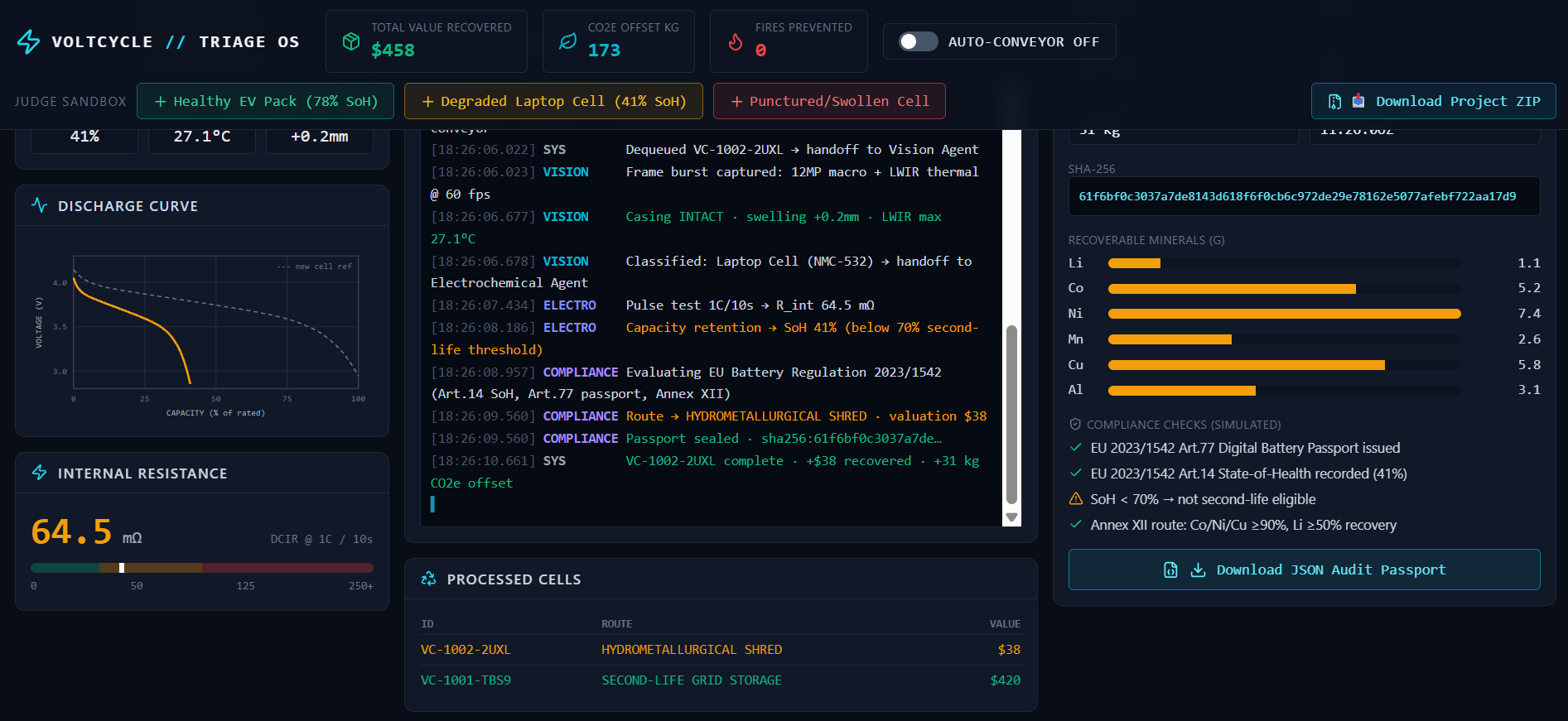
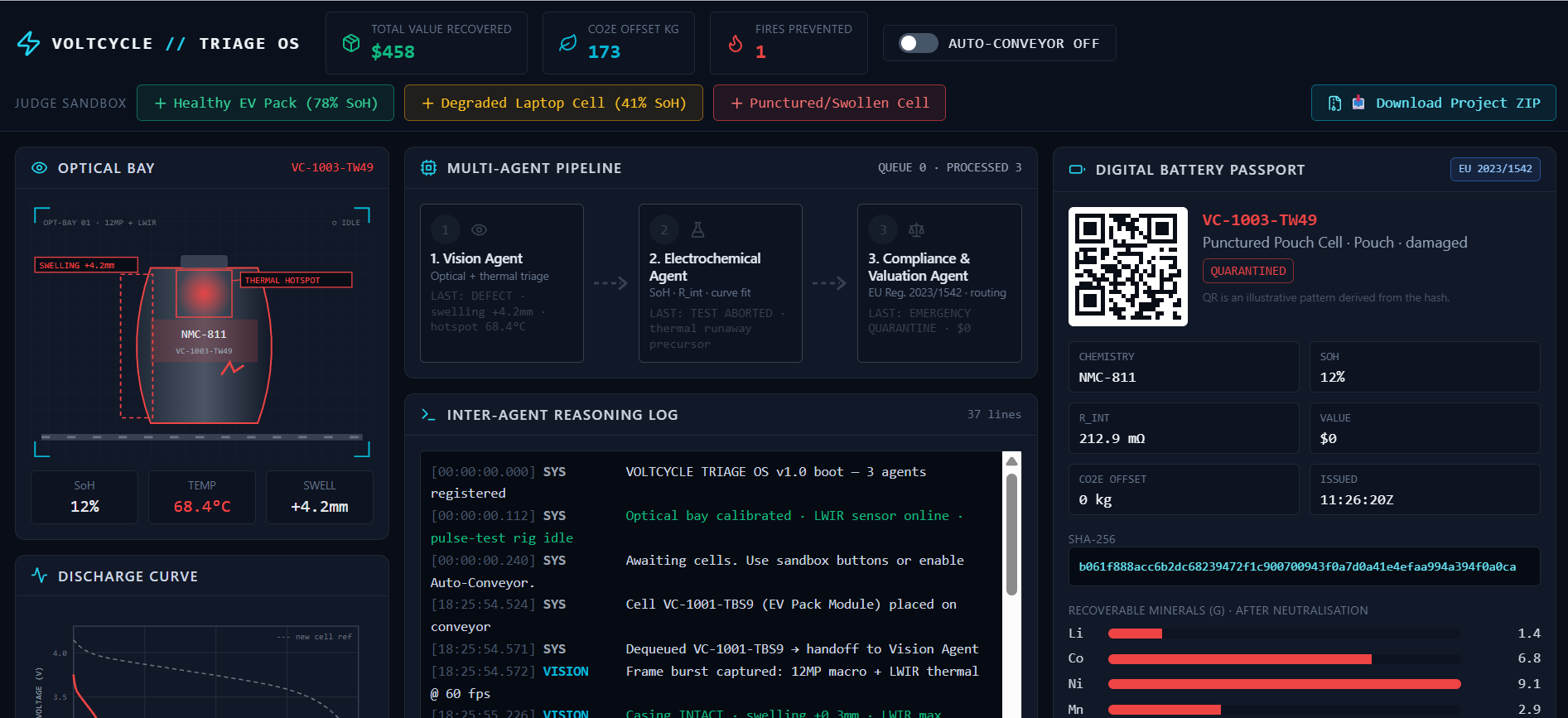
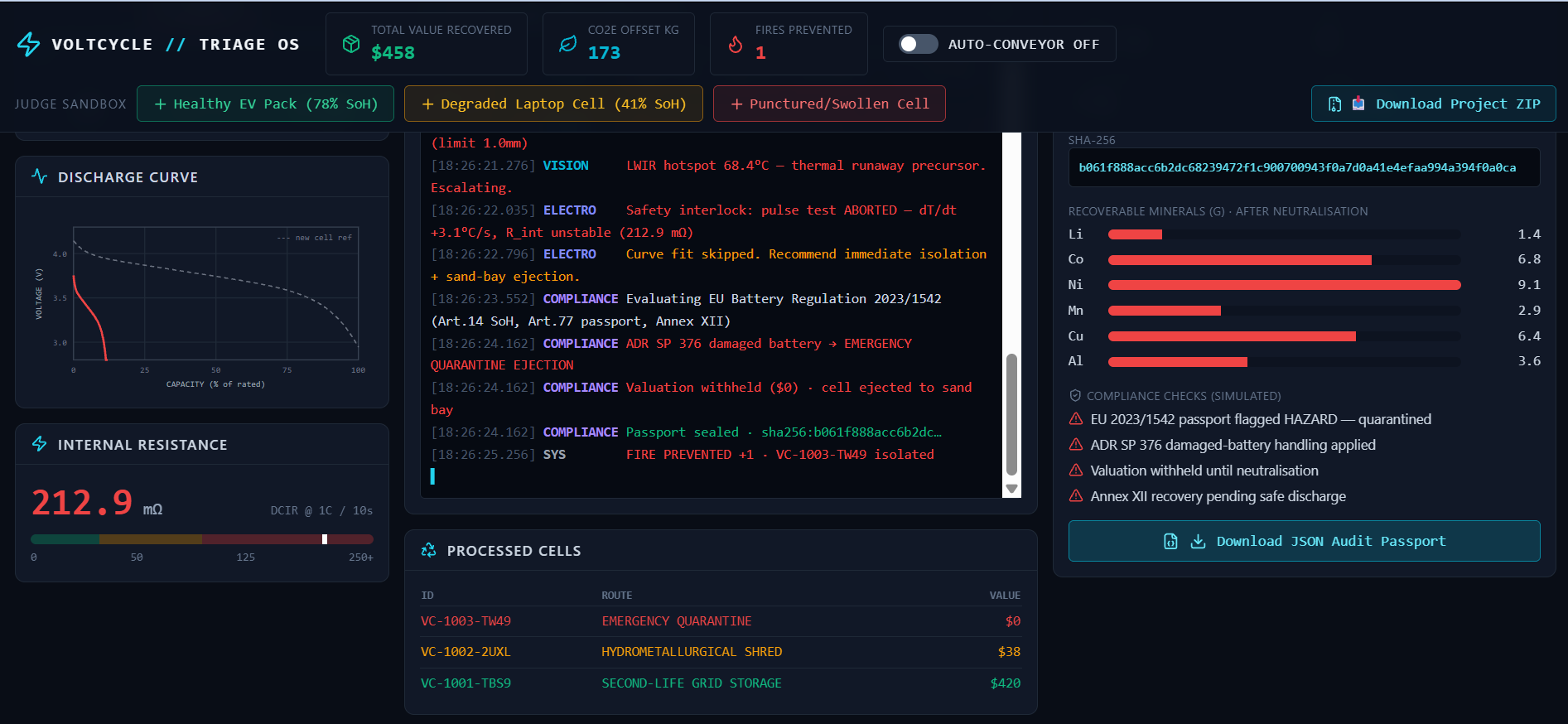
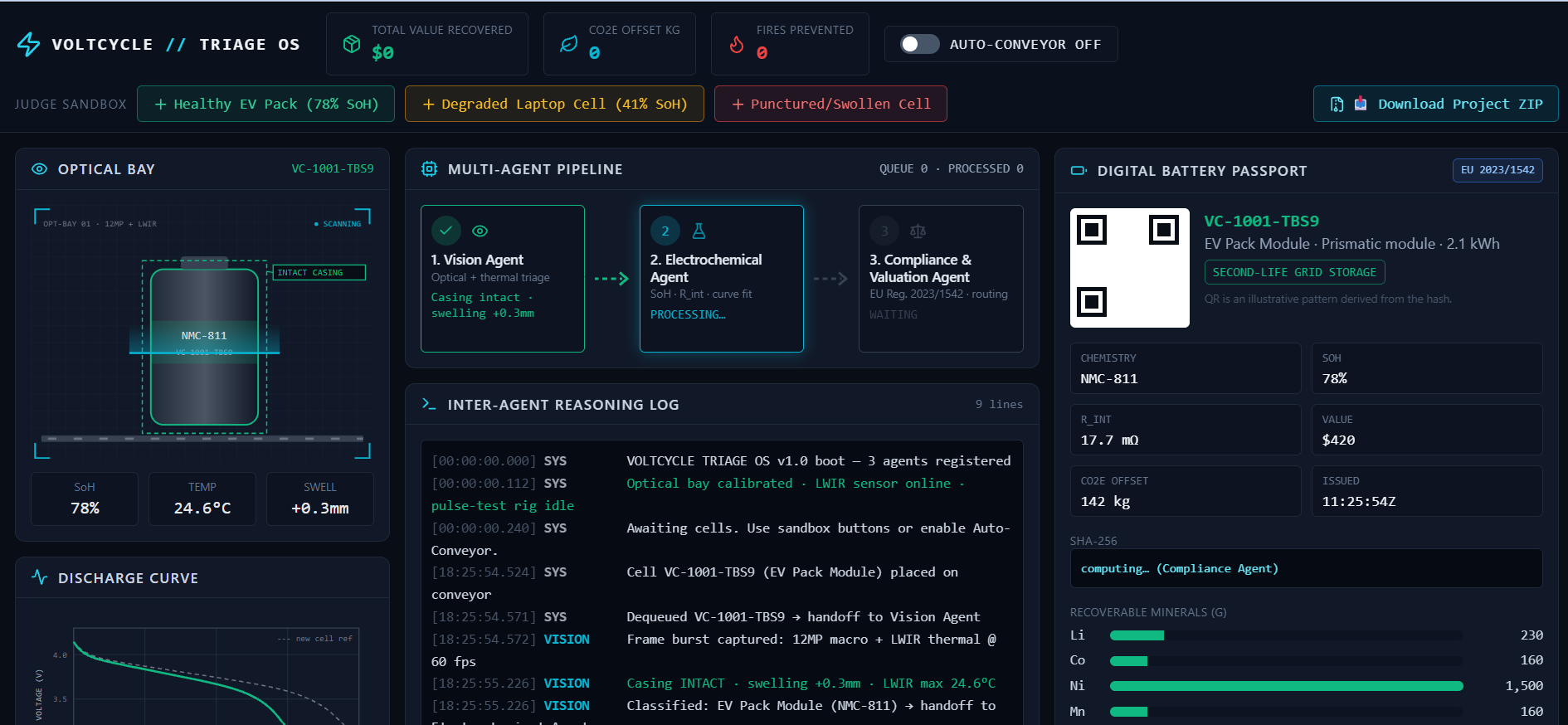
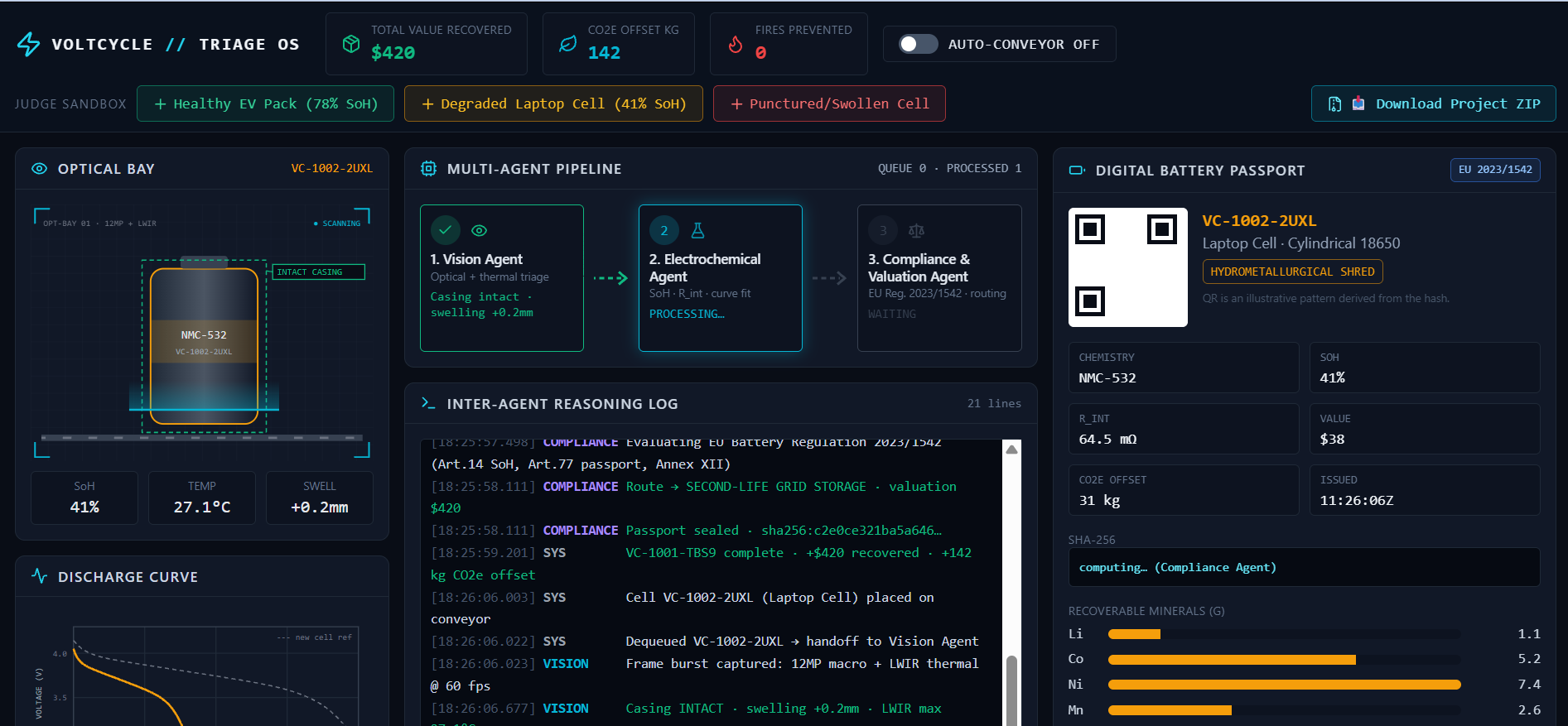
VoltCycle is an autonomous multi-agent pipeline and SCADA control dashboard designed to triage e-waste and battery modules in real time. It features an optical scanner simulation with live defect bounding boxes, an electrochemical RUL (Remaining Useful Life) calculation engine, and a sequential multi-agent reasoning architecture that evaluates safety hazards against EU battery regulations. It automatically routes cells to either second-life grid storage, hydrometallurgical shredding, or emergency thermal quarantine, while generating verifiable Digital Battery Passports with cryptographic hashes and JSON export capabilities.
How I built it
I built VoltCycle as a high-performance, self-contained React and TypeScript web application styled with Tailwind CSS. I engineered a real-time simulation engine that handles asynchronous agent log streams, dynamic SVG canvas physics for laser-scanning diagnostics, and interactive telemetry charts. To ensure seamless deployment and testing for hackathon judges, I also integrated a client-side project file packaging utility directly into the dashboard.
Challenges I ran into
Balancing industrial-grade complexity with a clean, responsive single-page user interface was a major challenge. I had to carefully optimize the multi-agent terminal simulation and canvas rendering loops to make sure the live telemetry, interactive judge sandbox controls, and emergency override triggers ran smoothly without lag or layout shifts.
Accomplishments that I'm proud of
I am especially proud of building a fully interactive, production-grade industrial control room interface that runs entirely client-side with zero external API dependencies. Creating a convincing multi-agent diagnostic loop that simulates real-time safety interventions for lithium-ion fire hazards gave the project genuine high-stakes impact.
What I learned
Working on this project deepened my understanding of industrial recycling logistics, circular economy frameworks like Digital Battery Passports, and how multi-agent AI pipelines can be structured to handle high-risk physical automation workflows.
What's next for VoltCycle
I plan to connect VoltCycle to actual IoT conveyor hardware and computer vision camera feeds, expand the electrochemical dataset to cover more complex battery chemistries (like LFP and solid-state cells), and integrate blockchain-backed provenance tracking for enterprise-scale compliance.
Built With
- ai
- computer-vision
- css3
- html5
- javascript
- lucide-react
- multi-agent
- react
- sustainability
- tailwindcss
- typescript
- vite

