-
Logo
-
Esquema VoltaWay
-
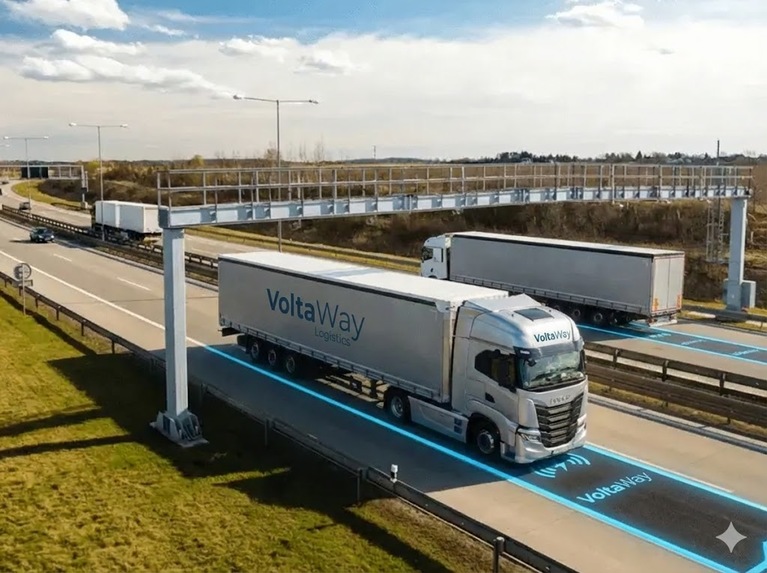
Imagem figurativa

Inspiration
Our inspiration stemmed from a fundamental question about technological evolution: if everything evolves towards absolute convenience, why is charging a vehicle still a burden?
We analyzed the heavy-duty logistics sector and identified a critical problem: "range anxiety" and operational downtime. For a truck or bus, stopping for 1 hour to charge giant batteries is not just inconvenient—it represents a significant financial loss. The national fleet electrification—addressing the Brisa (Code B8) and Galp (Code G5) challenges—cannot depend on batteries weighing 4 tons or waiting lines at service stations.
We believe the road of the future should not be just a passive path, but an active energy asset. Thus, VoltaWay was born: the idea that infrastructure must serve the vehicle, enabling the concept of "charge to keep moving."
What it does
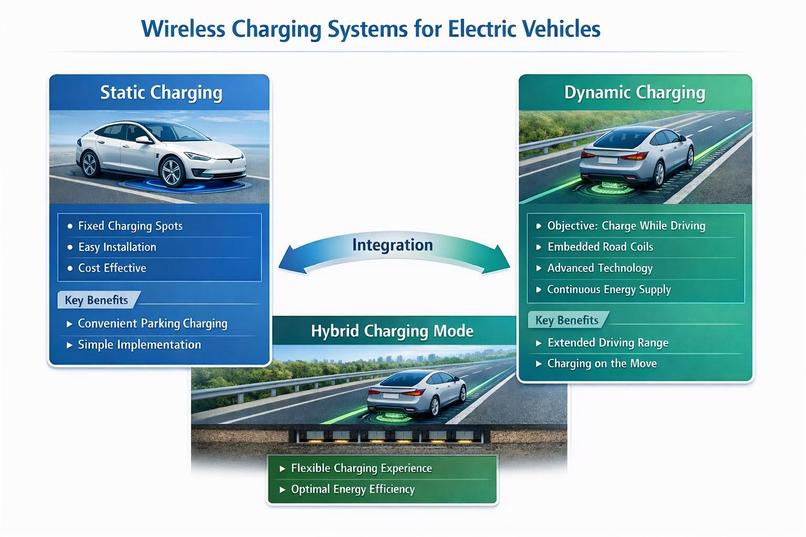
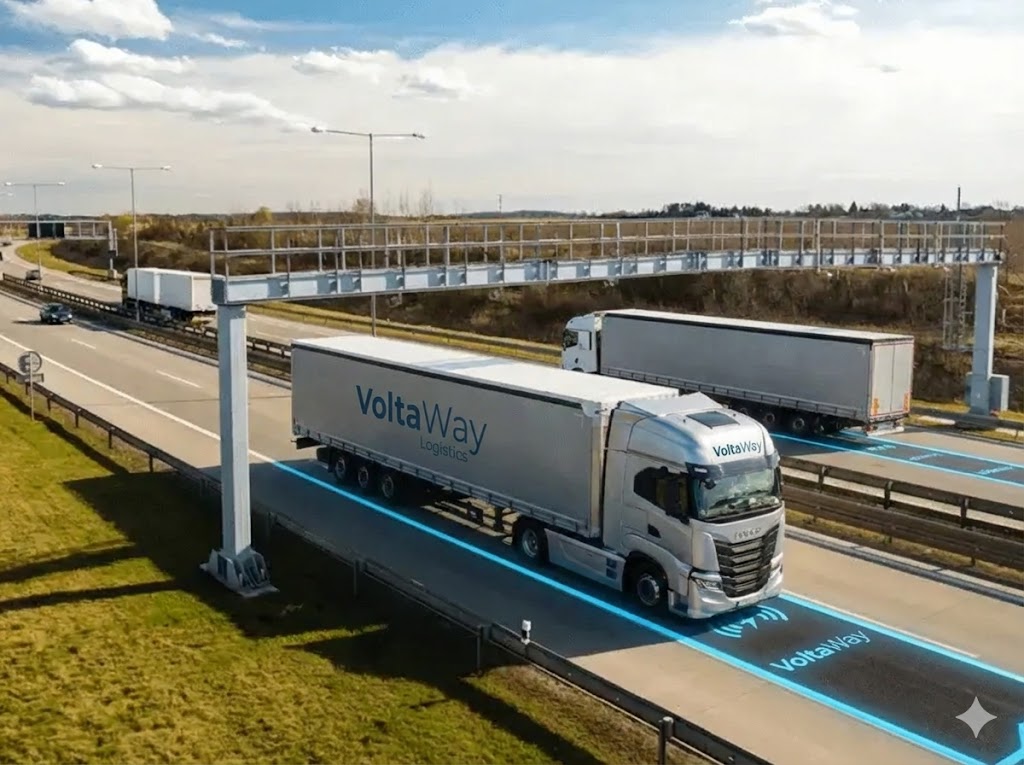
VoltaWay is a Hybrid Wireless Charging Ecosystem that eliminates the need for charging stops. It operates through two integrated systems:
- VoltaWay Dynamic (PowerLane): A highway lane equipped with modular induction technology. When a vehicle enters this lane, it charges while moving at cruising speed. This enables unlimited range and allows for the use of batteries that are approx 50% smaller and lighter.
- VoltaWay Static (Smart Parking): Designed for logistics hubs and parking lots. The system uses a "Park-and-Forget" logic: the driver parks, and the vehicle automatically begins charging via a digital handshake, without touching any cables or kiosks.
How we built it
Our demonstrator that replicates the physics and logic of the entire ecosystem:
- The Infrastructure (PowerLane Mini): We constructed a road segment of approx 2.0 meters with embedded inductive transmitters. We implemented Dynamic Segmentation logic: the system detects the exact position of the vehicle and activates only the specific coil immediately underneath it 5 ms latency, ensuring safety and maximizing energy efficiency.
- The Vehicle (Receiver Truck): We adapted a robotic platform with a custom receiver unit featuring a Litz wire coil to minimize skin effect at high frequencies 85 kHz, a high-efficiency rectifier circuit, and a DC/DC converter that powers the motor and simulates battery charging.
- Smart Control & App: We developed a simulation of the "VoltaWay App." The vehicle communicates in real-time via IoT, allowing the user to monitor energy flow, view costs, and "Authorize/Deny" charging with a tap on their phone.
Challenges we ran into
- The Maintenance Problem (Our Major Innovation): We realized the biggest barrier to existing DWPT technologies is having coils buried deep in asphalt—if a component fails, you have to destroy the road to fix it. Our biggest challenge was engineering the "Modular Cartridge" concept. Instead of deep civil works, we designed drop-in modules sealed with bitumen, allowing for rapid night-time maintenance without major infrastructure disruption.
- Alignment and Efficiency: Ensuring consistent energy transfer while the vehicle is moving required fine-tuning the resonance frequency to exactly 85 kHz and creating tolerances for lateral misalignment.
- Hybrid Integration: Making a smooth transition between dynamic mode (road) and static mode (parking) using the same receiver unit required complex control logic to handle the different power states.
Accomplishments that we're proud of
We are incredibly proud to have a prototype where the physics works. Seeing the vehicle maintain speed and light up its charging indicators using only energy "pulled" wirelessly from the ground is fascinating.
We are also proud of the viability of our business model. We mathematically proved that our solution can save over €26,000 annually per truck and drastically reduce emissions, savings daily approxing 75kg of carbon dioxide per truck. This presents a credible path for decarbonizing major arteries in Portugal.
What we learned
We learned that induction technology is viable, but civil engineering and maintenance are just as important as the electronics. We learned to balance energy efficiency (Grid-to-Battery) with the operational reality of highways. We realized the future is not just "electric," it is "smart electric," where the car, the road, and the grid communicate constantly.
What's next for VoltaWay
Our roadmap is defined for the next decade:
- Pilot (2027): Test the technology in a real highway environment with controlled traffic and favorable geometry to validate high-speed charging 90 km/h.
- Brisa/Galp Partnership: Equip Brisa's assistance fleets with our technology for 24/7 validation.
- National Expansion (2030): Implement "Green Corridors" on major arterial highways, allowing national logistics to operate with unlimited range and reduced batteries.
The road of the future is a two-way street for energy, and VoltaWay is driving that change.


Log in or sign up for Devpost to join the conversation.