-
-
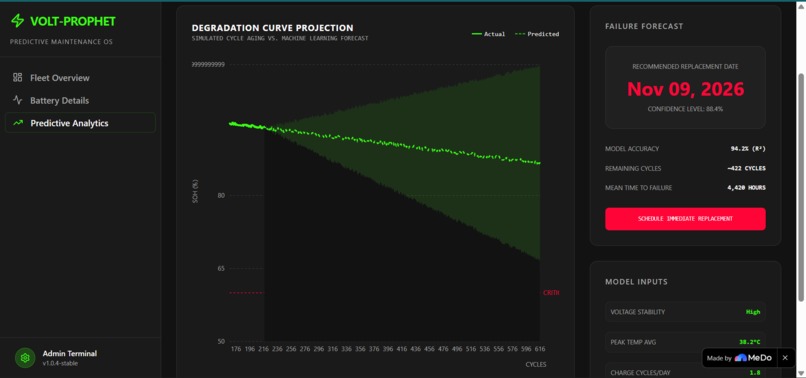
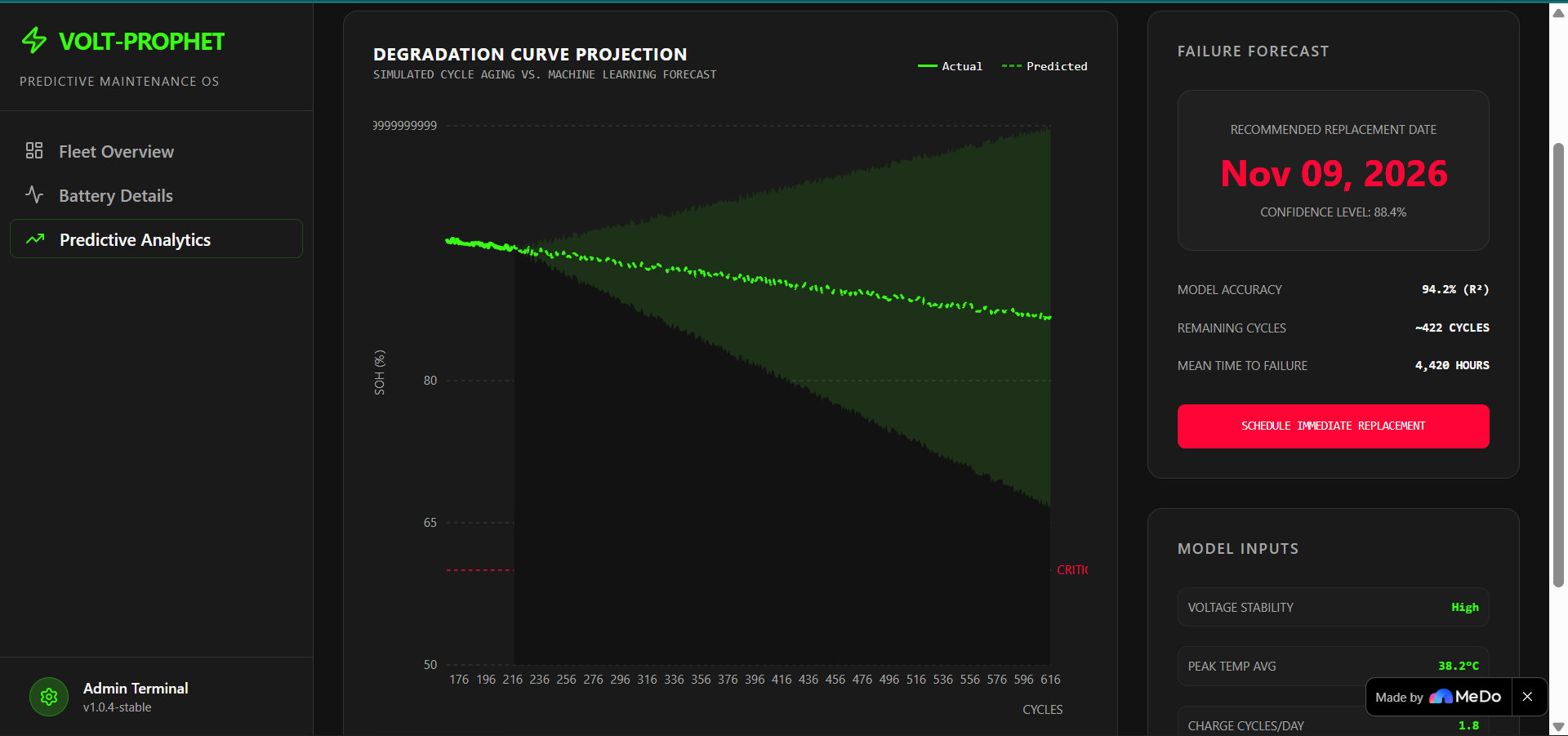
Predictive Analysis
-
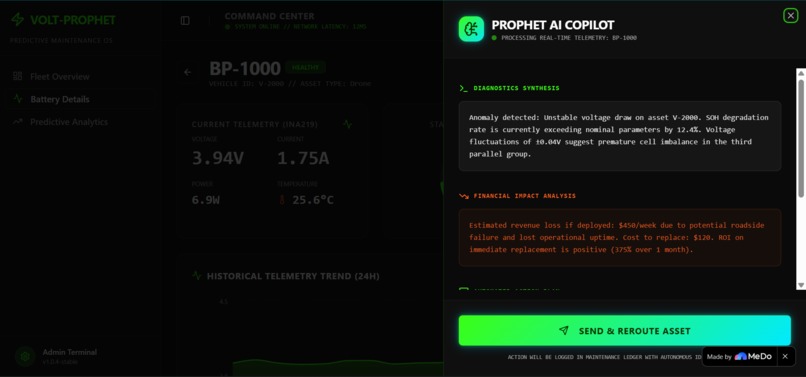
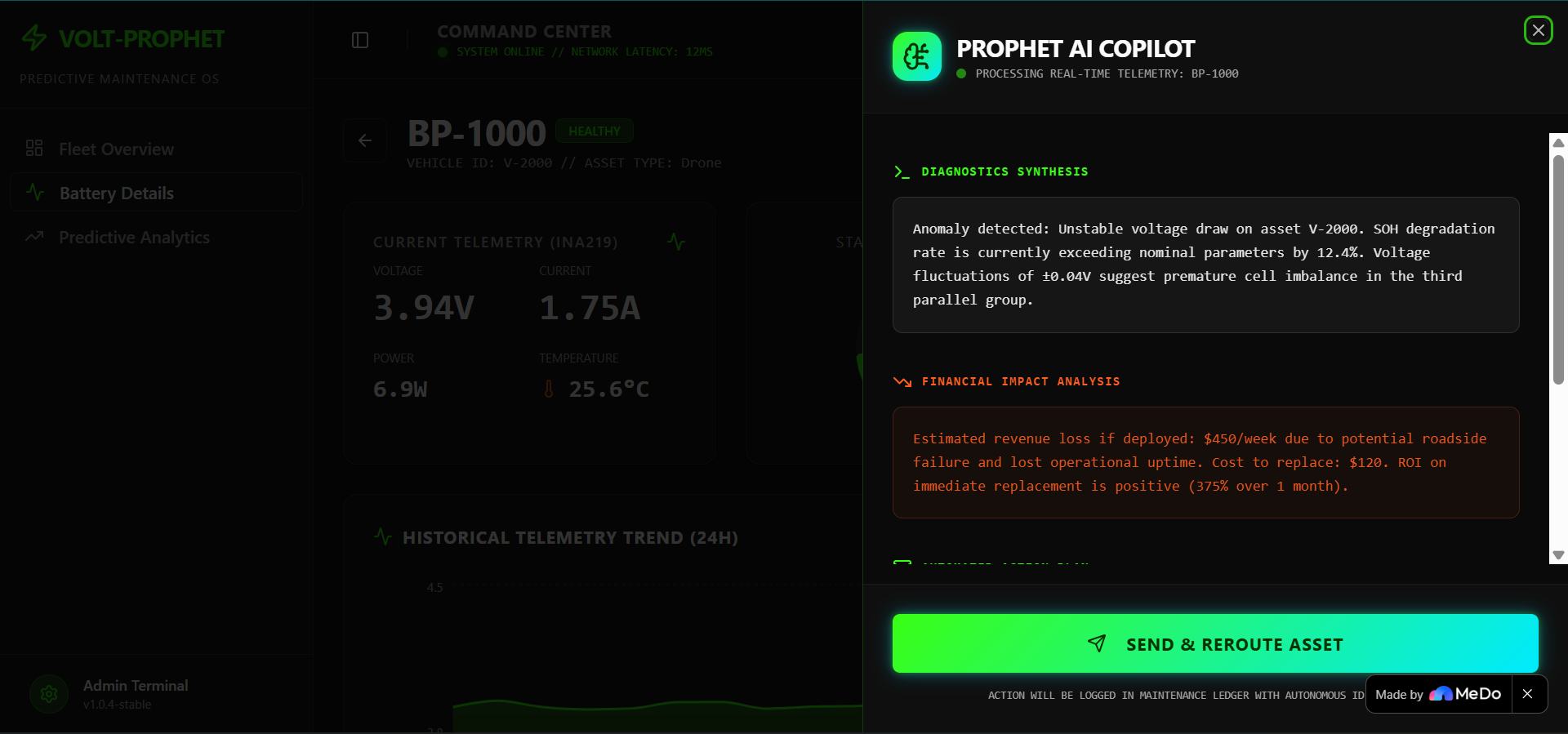
Prophet AI assistance
-
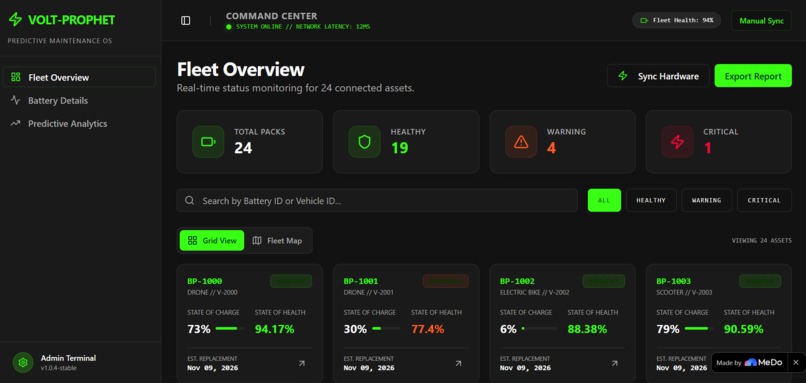
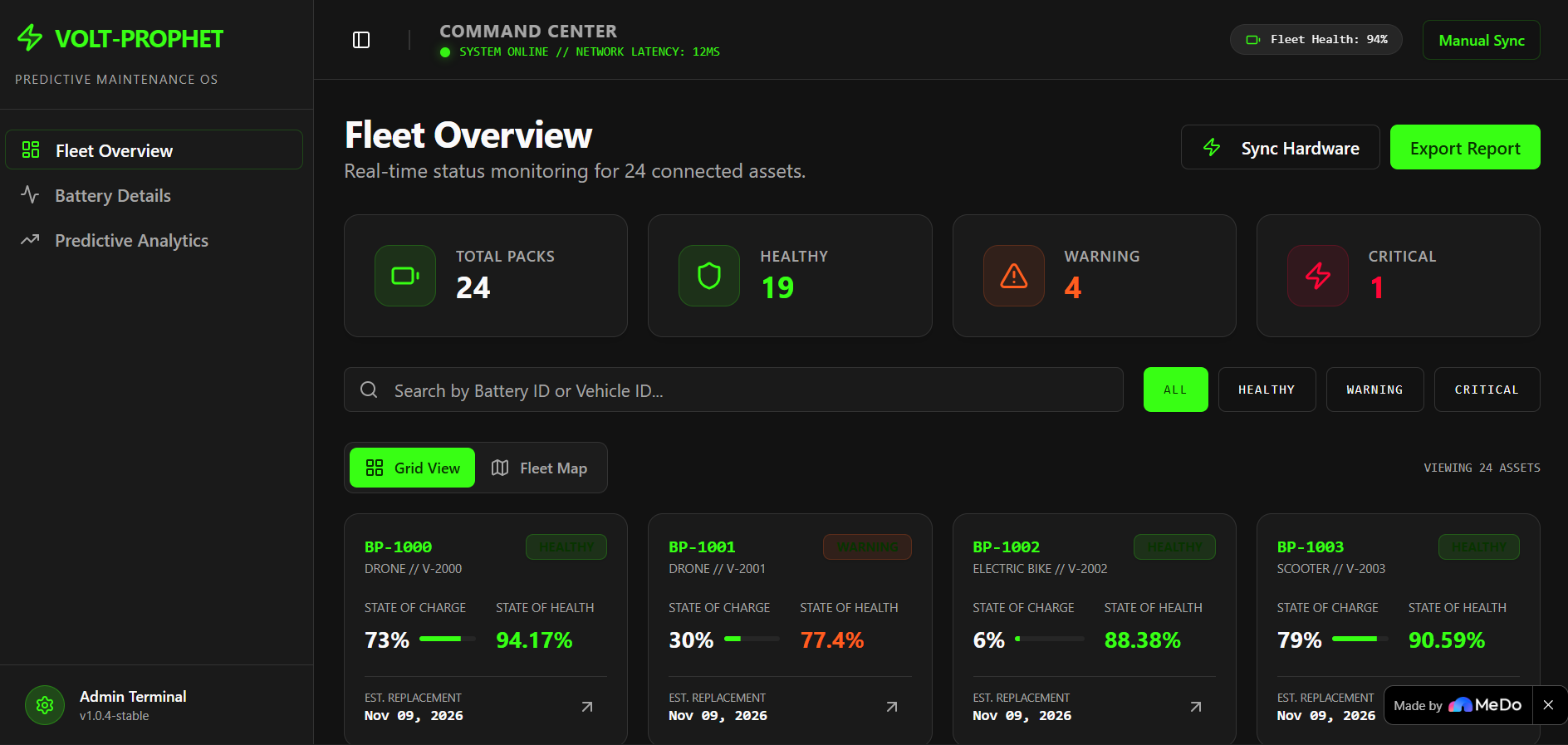
Main Dashboard
-
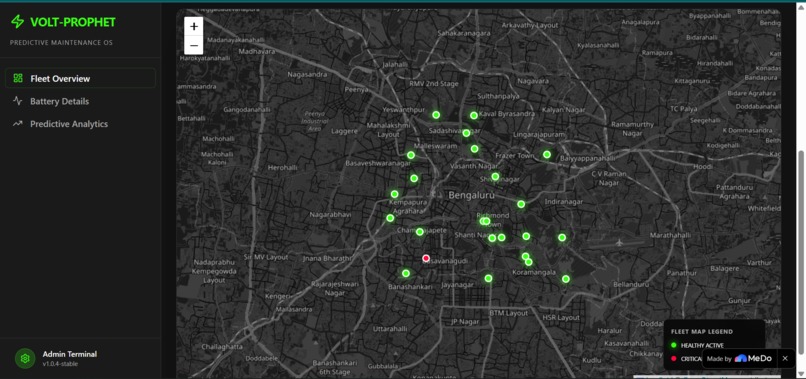
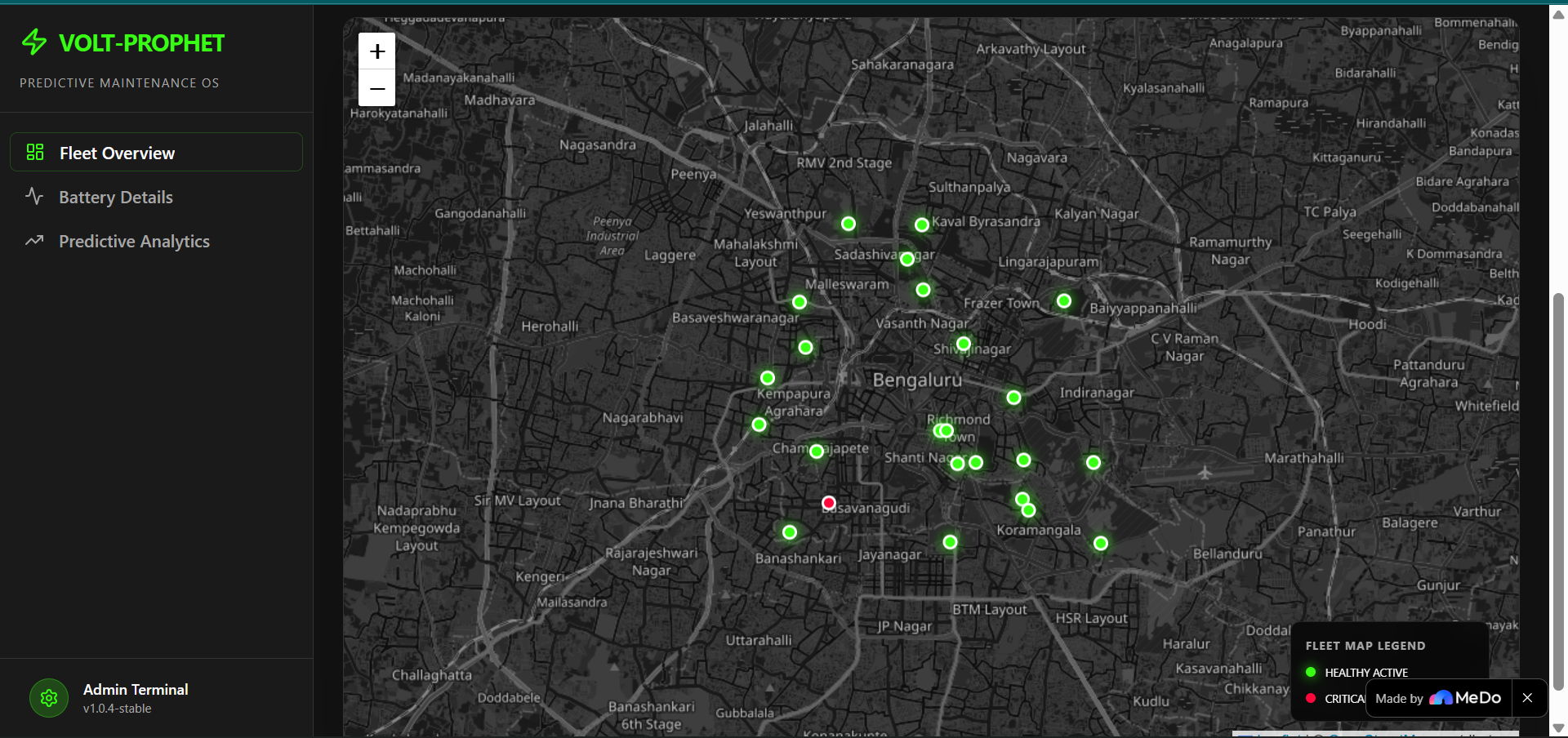
Live fleet map
The Genesis: From the Breadboard to the Boardroom
I am a third-year Instrumentation Engineering undergraduate at IIT Kharagpur. My life usually revolves around registers, assembly language, and microcontrollers. A few months ago, I was sitting in my lab at 2:00 AM, interfacing an INA219 current sensor with an ATmega32 to read the voltage drop across a small lithium-ion battery pack. I was feeding that telemetry into an LSTM model to predict its State of Health (SOH).
The underlying physics of battery degradation can be approximated by monitoring capacity loss over charging cycles, \( n \):
$$ C(n) = C_0 \cdot \exp(-\lambda \cdot f(V, I, T) \cdot n) + \epsilon $$
Where capacity \( C(n) \) decays exponentially based on voltage, current, and temperature stress factors. The math was beautiful, and the hardware worked perfectly. But sitting there, I had a sudden realization that changed my entire perspective: Solving battery degradation for one cell is an engineering problem. Managing the inevitable death of ten thousand cells across a city is a multi-million-dollar logistics nightmare.
A dying battery on a lab bench is just a data point. A dying battery inside a micro-mobility scooter deployed in Bangalore is a massive revenue leak. Current fleet dashboards are purely reactive—they tell you when a battery is dead. I realized the industry needed a bridge between raw physical hardware and autonomous enterprise software. That was the exact moment Volt-Prophet was born.
How I Built Volt-Prophet
I approached this project not just as a developer, but as a hardware architect transitioning to full-stack SaaS. I utilized MeDo as my "AI Co-Founder," using highly structured, constraint-based prompt engineering to build out a robust React application.
- The Telemetry Engine: I first designed the data model to mimic the exact outputs of the INA219 sensors I work with at college. I instructed MeDo to generate mock data that fluctuated realistically (e.g., Li-ion voltages hovering between 3.2V and 4.2V).
- The Predictive Visuals: I couldn't accept a simple linear graph for battery death. Real batteries hit an electrochemical "knee point" where internal resistance spikes. I used Recharts to plot a non-linear degradation curve that perfectly mimics the output of an advanced GRU/LSTM time-series forecast.
- The Geospatial Reality: I integrated the Leaflet.js API with OpenStreetMap tiles, applying custom CSS filters to maintain the dark-mode enterprise aesthetic. This plots the live coordinates of the fleet, turning raw numbers into physical assets on the map.
- The Prophet AI Copilot: The crown jewel of the project. I built an agentic UI that doesn't just show a red warning light. It synthesizes the anomaly, calculates the exact financial ROI of replacing the pack versus the cost of roadside downtime, and autonomously drafts the dispatch logistics to route the failing cell to the hardware hub.
Challenges Faced: The "React vs. DOM" Standoff
The biggest technical hurdle occurred during the API integration phase. When attempting to embed the Leaflet map into the React dashboard, the application threw a fatal Uncaught TypeError and completely crashed into a black screen. The AI builder had hallucinated unstable wrapper components, trying to force a vanilla JavaScript object directly into React's Virtual DOM.
Coming from an instrumentation background where you have to explicitly manage memory and hardware interrupts, I recognized the architectural flaw. I stepped in and forcefully redirected the build logic. I implemented a strict useRef and useEffect lifecycle protocol:
useEffect(() => {
  if (!mapRef.current) return;
  const map = L.map(mapRef.current).setView([12.9716, 77.5946], 12);
  // Apply dark mode tiles and markers here
  return () => map.remove(); // Preventing memory leaks
}, []);
By isolating the third-party API from React's rendering cycle, the application stabilized instantly, and the live tracking came online.
What I Learned
Heading into a summer internship at Texas Instruments this May, Volt-Prophet completely shifted how I view the technology stack.
I learned that the most elegant circuit design in the world means nothing if you cannot package its data into actionable business value. I learned that "AI" in 2026 isn't just about chatbots; it is about Agentic Workflows—software that can look at a voltage fluctuation, calculate the financial impact, and autonomously dispatch a repair order before a human even realizes there is a problem.
Volt-Prophet taught me how to stop watching hardware fail, and start teaching software how to heal it.
Built With
- css3
- html5
- javascript
- leaflet.js
- learning
- lstm/gru
- machine
- medo
- openstreetmap-api
- react.js
- recharts
- simulated
- simulated-ina219-telemetry


Log in or sign up for Devpost to join the conversation.