-
-
HelperBirdy Logo
-
-
-
-
-
Inspiration
In our quest to enhance HelperBird's impact, we were inspired by the United Nations' Sustainable Development Goals (SDGs). These comprehensive objectives address global challenges like poverty, inequality, and environmental sustainability. To align with them, we sought a practical solution that would integrate SDG-related information into our platform.
Enter HelperBirdy. We realized that this specific project checks not only one of the boxes but several, we wanted to seamlessly integrate SDG metrics into HelperBird, allowing users to track their impact in line with specific goals. The idea itself has covered a wide range of SDGs, making the effect larger and the change bigger.
This journey wasn't just about meeting requirements—it was about embracing a shared vision of a better world. Through our platform, we're empowering volunteers to make a tangible impact on global challenges, one step at a time.
What it does
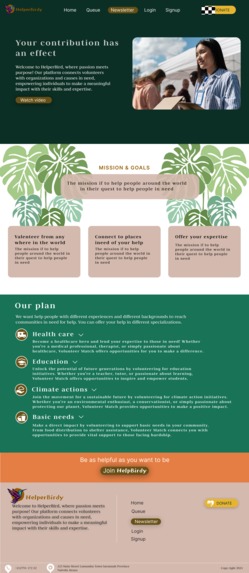
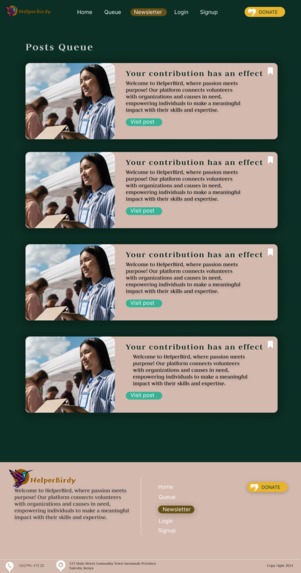
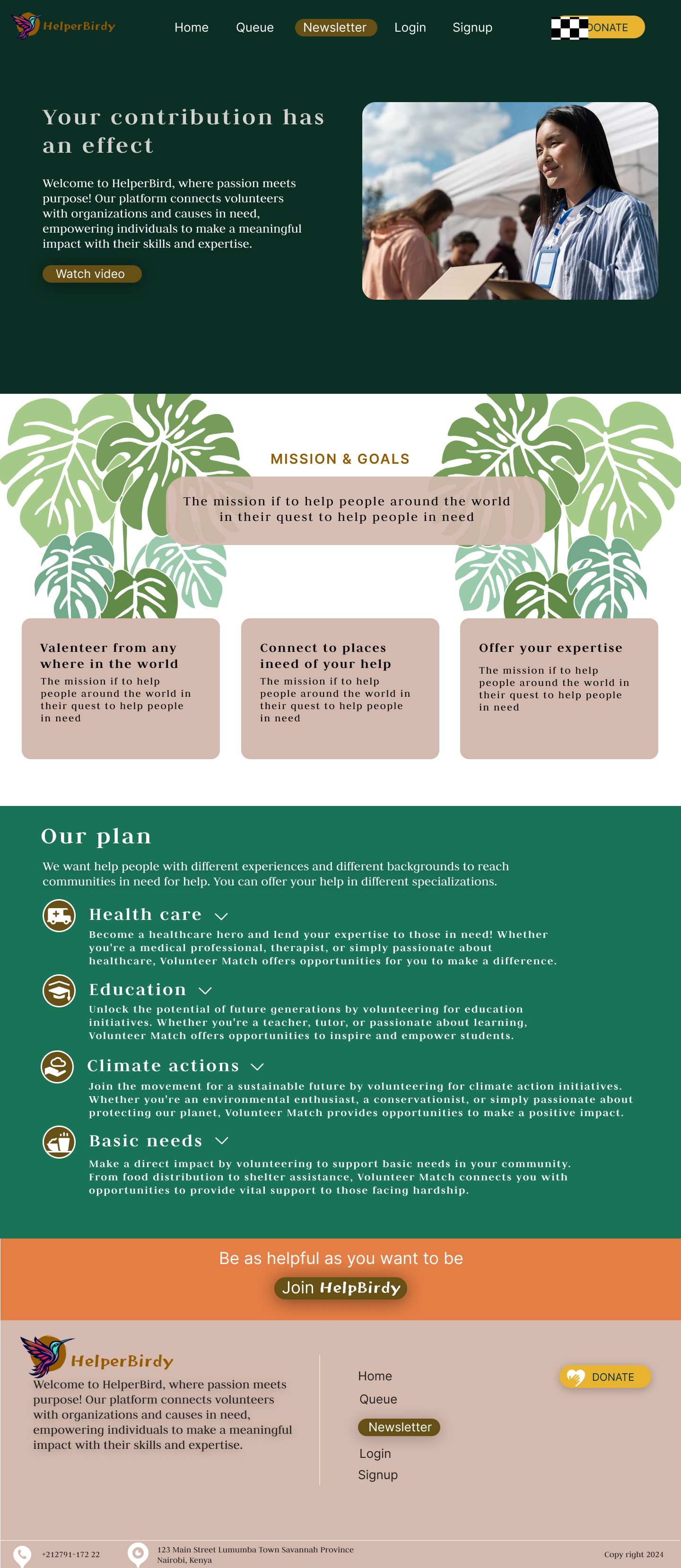
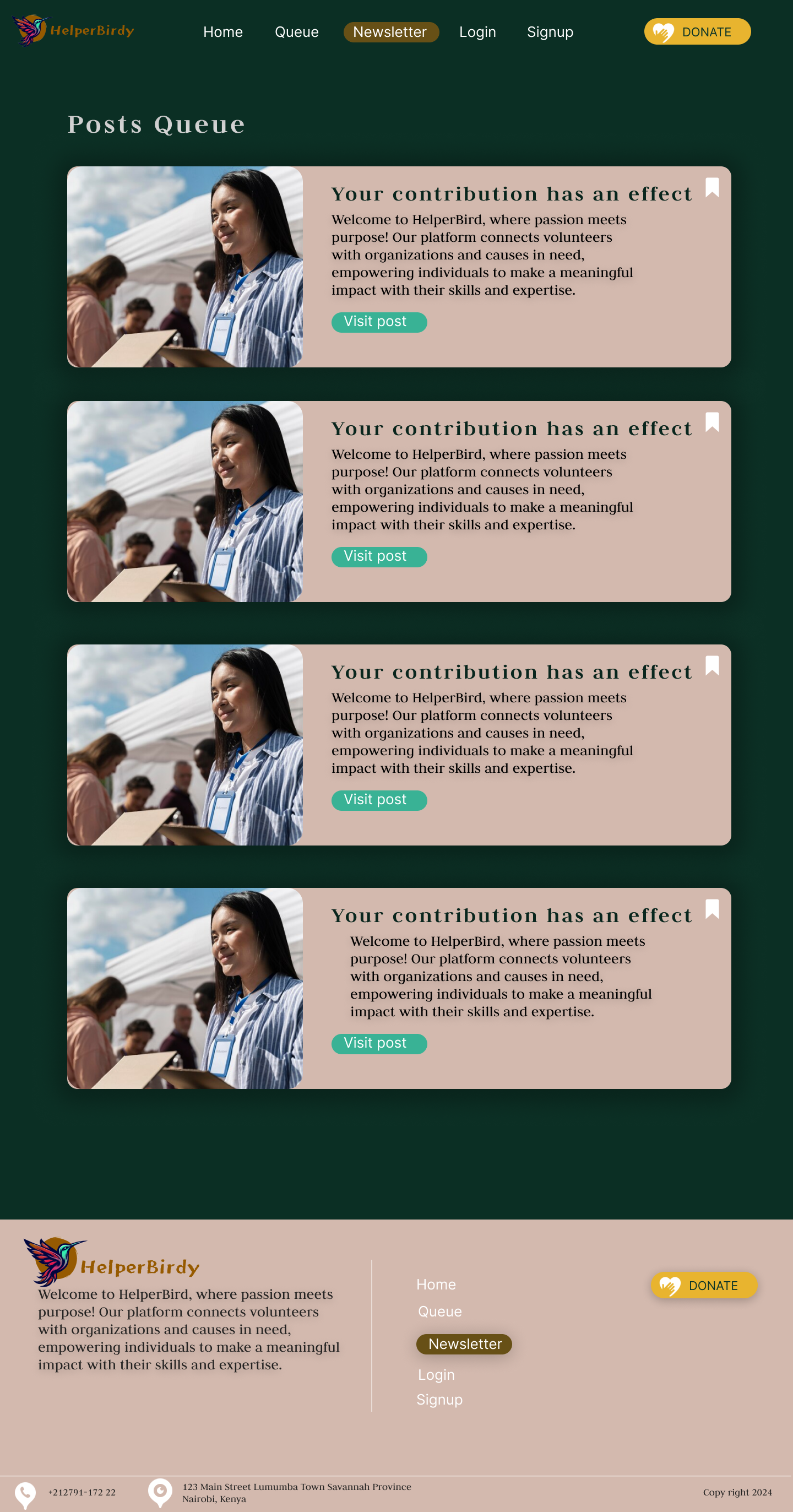
HelperBird provides a seamless interface where volunteers can browse through a variety of opportunities ranging from environmental conservation to education, healthcare, and beyond. With our intuitive search filters, users can easily find projects aligned with their interests, skills, and availability.
Once volunteers find a project that resonates with them, they can connect directly with the organization or cause to offer their support. Our platform facilitates smooth communication and coordination, ensuring that volunteers can contribute effectively and organizations can maximize their impact.
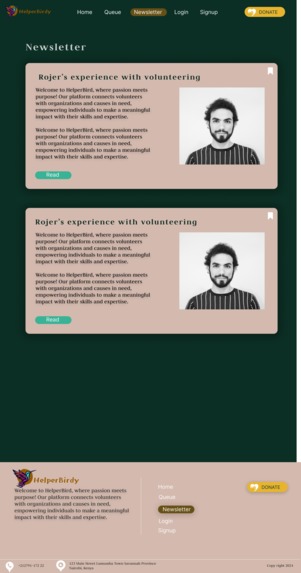
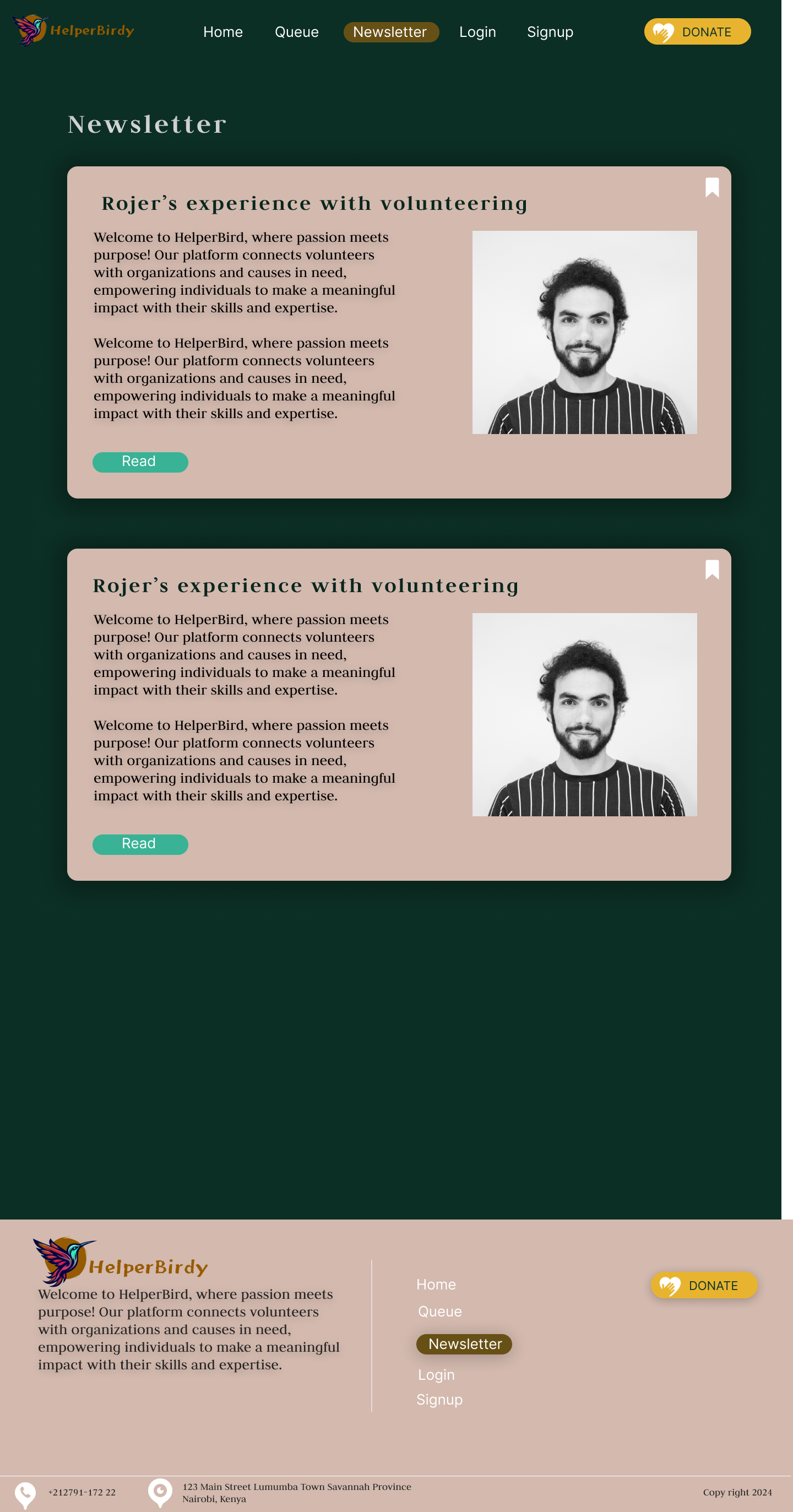
But HelperBird isn't just about connecting volunteers with opportunities—it's also about fostering a sense of community and collaboration. Through forums, Newsletters where volunteers can get a peak into others' experiences, and more, and virtual events. volunteers can connect with like-minded individuals, share insights, and inspire each other to drive positive change.
How we built it
To build our API solution aligning with the Sustainable Development Goals (SDGs), we opted for a robust tech stack. Leveraging the versatility and scalability of the MERN stack (MongoDB, Express.js, React.js, and Node.js), we laid the foundation for our platform's backend and frontend.
First and foremost, we chose MongoDB as our database to store and manage data efficiently. Its flexibility and scalability were crucial for handling diverse SDG-related information and user data.
On the backend, we utilized Node.js and Express.js to create a RESTful API that serves as the bridge between our database and frontend. This allowed us to handle HTTP requests, manage data flow, and integrate external APIs seamlessly.
Meanwhile, on the frontend, we employed React.js to build a dynamic and intuitive user interface. React's component-based architecture facilitated the creation of reusable UI elements, enhancing development efficiency and user experience.
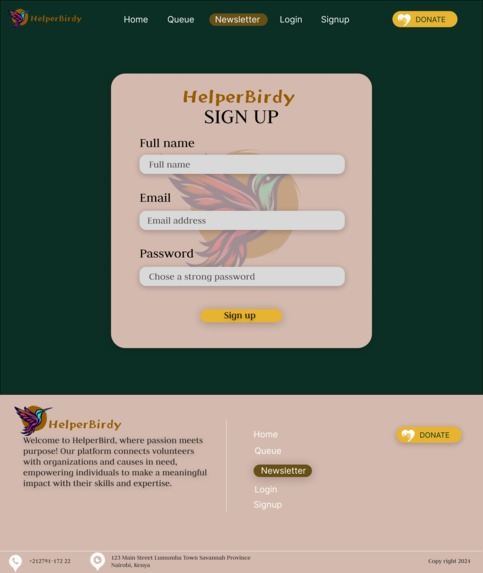
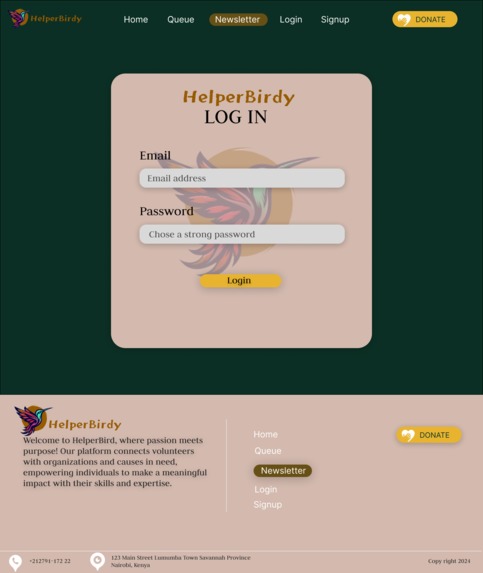
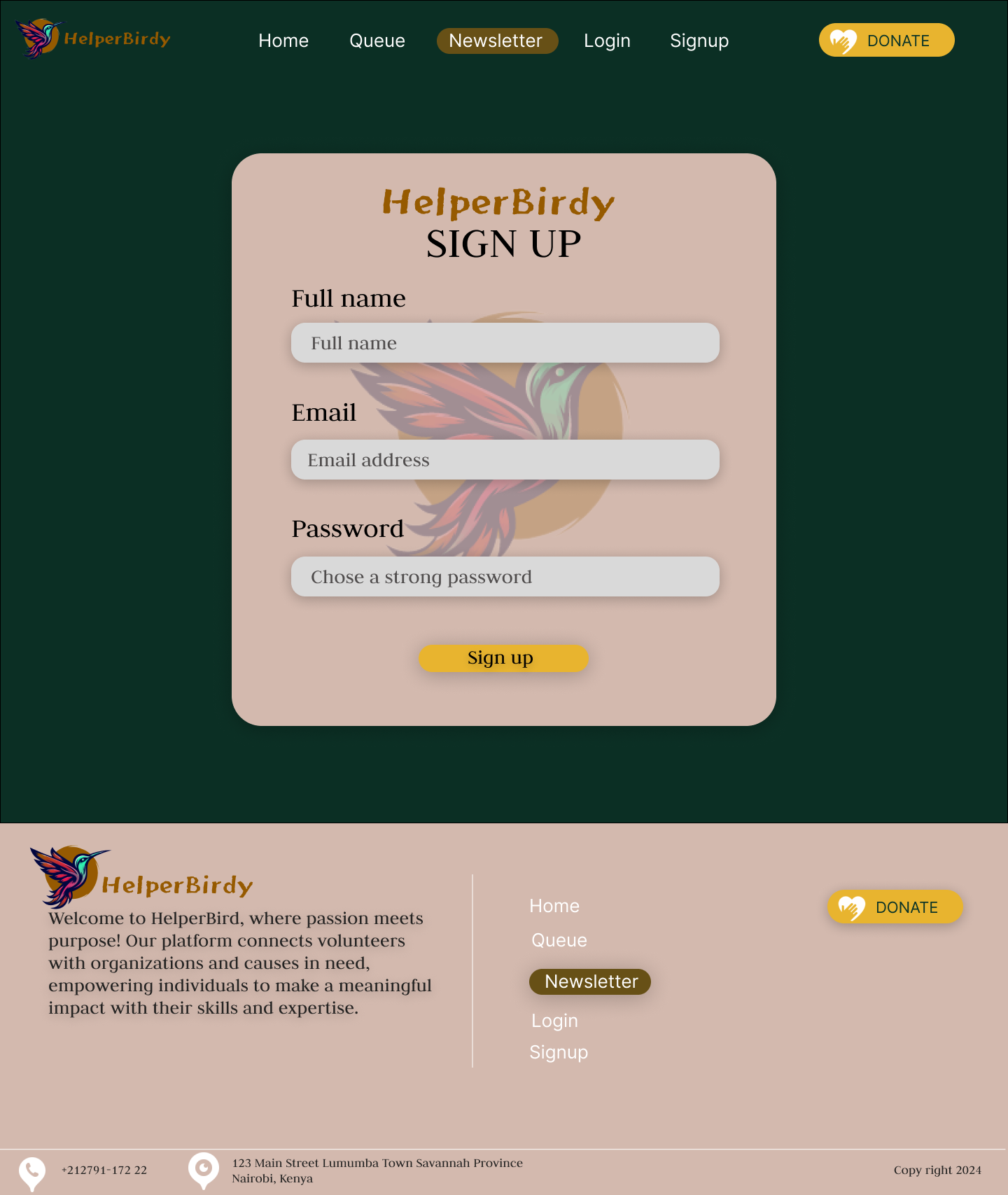
But building a great product isn't just about code—it's also about design. That's where Figma came into play. We used Figma to create wireframes, mockups, and prototypes, ensuring a cohesive and user-friendly design across all aspects of our platform.
By combining these powerful technologies and design tools, we were able to create an API solution that not only integrates seamlessly with HelperBird but also aligns with the UN's SDGs, empowering volunteers to make a positive impact on a global scale.
Challenges we ran into
One of the key challenges we faced in developing our API solution for HelperBird was assembling the right team. With such a complex and impactful project on our hands, finding individuals who shared our passion for the mission and possessed the necessary skills was crucial.
The search for team members who were not only technically proficient but also aligned with our vision proved to be a daunting task. We needed individuals who could not only navigate the intricacies of the MERN stack and MongoDB but also understand the importance of integrating the Sustainable Development Goals (SDGs) into our platform.
Moreover, time was of the essence. The pressure to deliver within a tight timeframe added an extra layer of complexity to the recruitment process. We needed to find team members who could hit the ground running and collaborate effectively under the constraints of a fast-paced development environment.
Accomplishments that we're proud of
We're incredibly proud of the achievements we've made in developing our API solution for HelperBird. One of our standout accomplishments is the seamless coordination among team members. Despite the challenges of assembling a team quickly and working under tight deadlines, we fostered an environment of collaboration and synergy.
Our team hit the ground running with a clear plan of action from the beginning. We wasted no time in laying out our objectives, dividing tasks, and leveraging each team member's strengths. This rapid planning and execution allowed us to maximize productivity and make significant progress in a short amount of time.
Furthermore, we're thrilled to have reached a pivotal point in our project's development within such a short timeframe. Despite the complexity of integrating the Sustainable Development Goals (SDGs) into our platform and the technical challenges along the way, we've achieved significant milestones at lightning speed.
Our ability to plan and execute with agility, combined with our unwavering dedication to our mission, has been instrumental in our success. As we reflect on our accomplishments, we're inspired by how much we've achieved in such a short amount of time and energized by the momentum we've built.
What we learned
One of the most valuable lessons we've learned throughout this process is how to collaborate more effectively as a team, especially under pressure. The tight timeframe challenged us to communicate more efficiently, delegate tasks strategically, and leverage each team member's strengths to the fullest. Through this experience, we've honed our ability to work cohesively towards a common goal, fostering a culture of collaboration and mutual support.
Additionally, we've gained a deeper appreciation for the power of resilience. Despite the time constraints and inevitable obstacles that arose along the way, we remained steadfast in our determination to deliver a high-quality product. Through perseverance and adaptability, we navigated through challenges, learned from setbacks, and ultimately emerged stronger and more resilient than before.
Moreover, this experience has reinforced the notion that even with limited time, we can still create something meaningful and impactful. By prioritizing tasks, staying focused, and making efficient use of resources.
What's next for HelperBirdy
As we look ahead to the future of HelperBird, our focus is on continuous improvement and expansion. Building upon the foundation we've established, our next steps involve refining our backend API to ensure seamless integration and enhance performance.
We're committed to listening to our users' feedback and incorporating their suggestions to make HelperBird even better. This means fine-tuning existing features, addressing any pain points, and adding new functionalities that further empower volunteers and organizations to make a meaningful impact.
In addition to optimizing our backend infrastructure, we're excited to explore new avenues for growth and innovation. This includes expanding our network of partner organizations, diversifying the types of volunteer opportunities available on our platform, and exploring ways to leverage emerging technologies to enhance the user experience.
Built With
- express.js
- figma
- mongodb
- node.js
- react
- tailwind


Log in or sign up for Devpost to join the conversation.