-
-
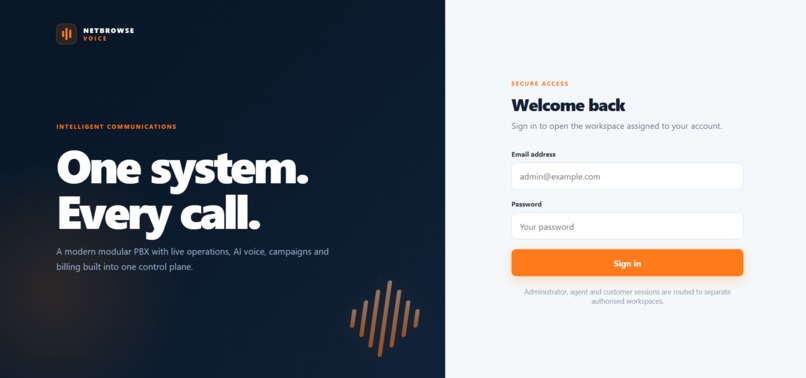
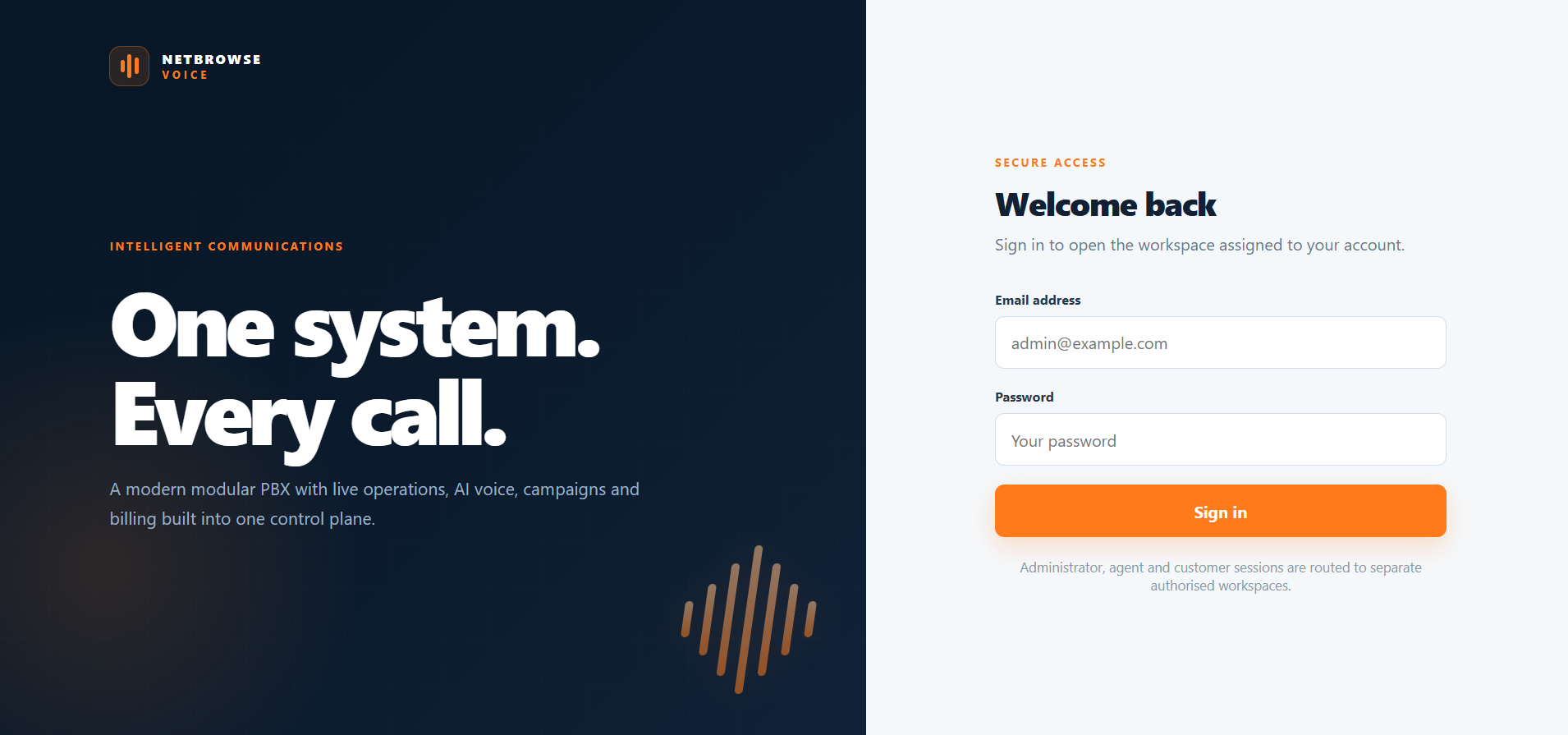
Admin Login Page
-
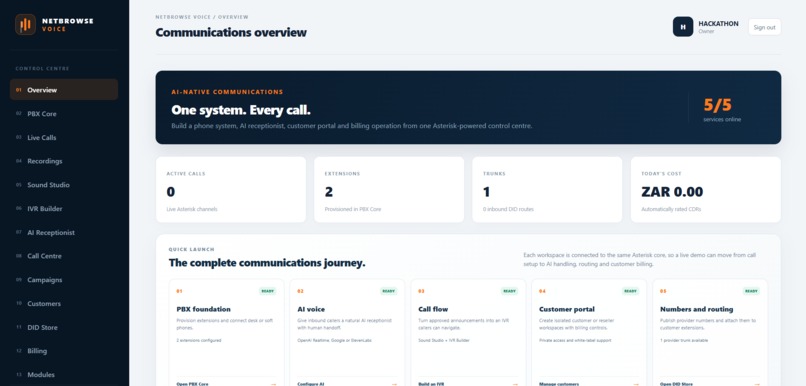
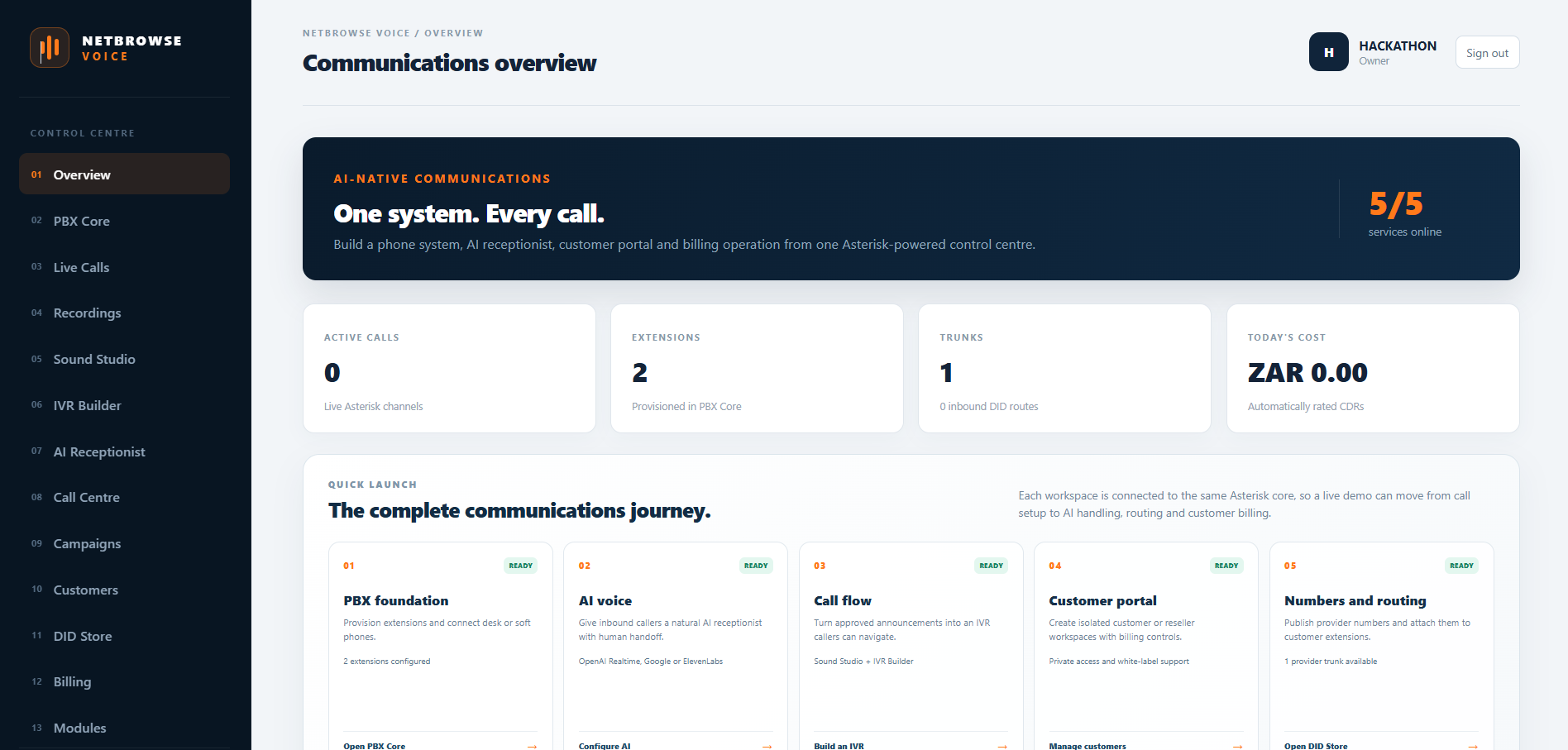
Admin Overview
-
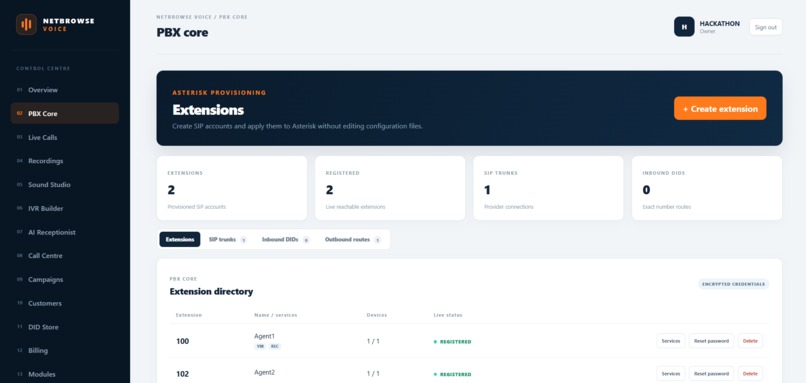
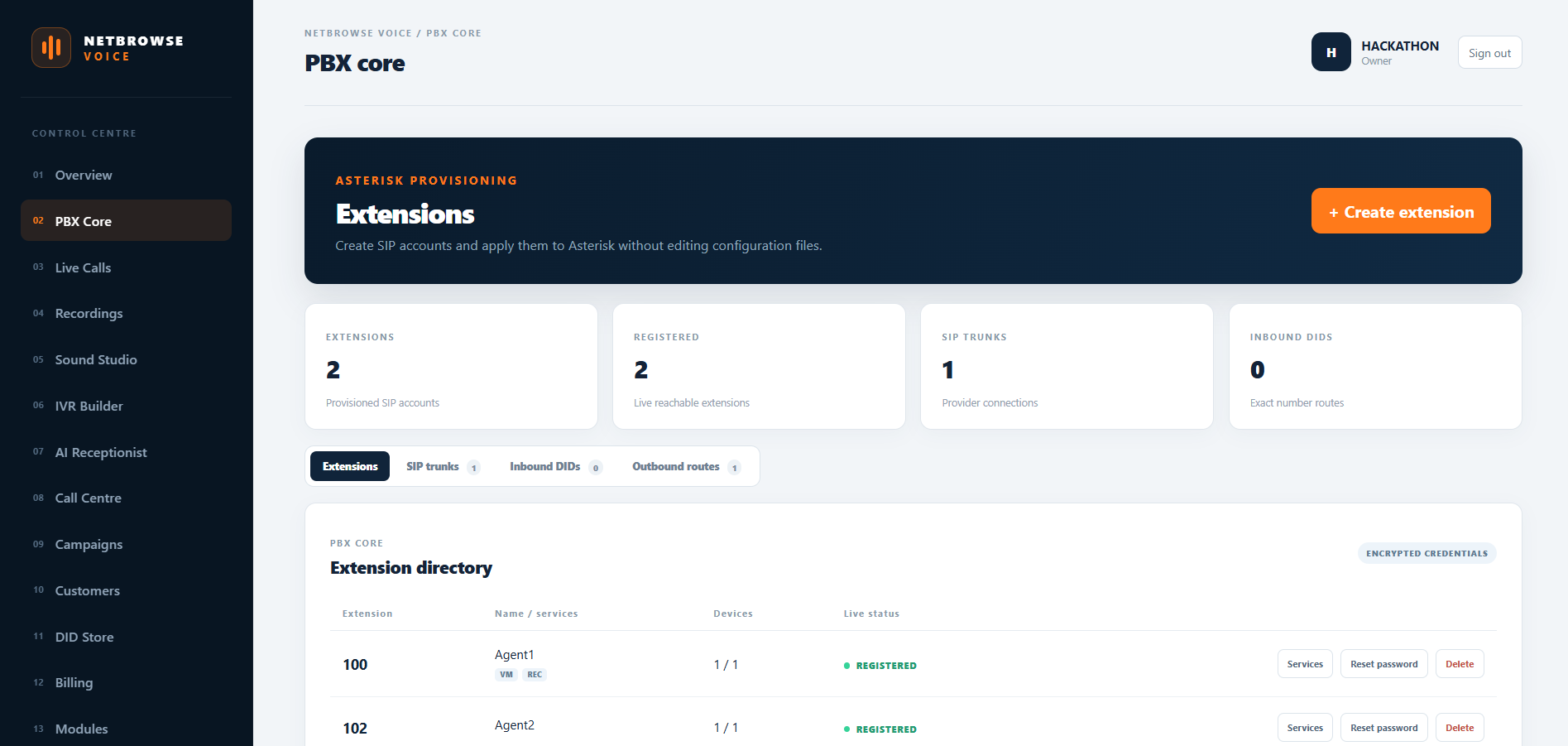
PBX Core
-
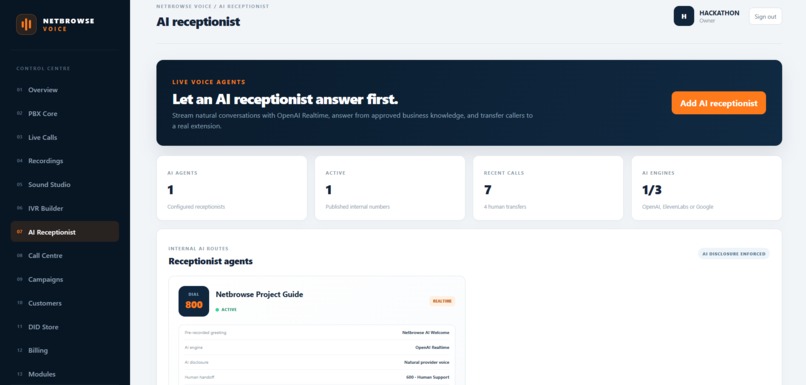
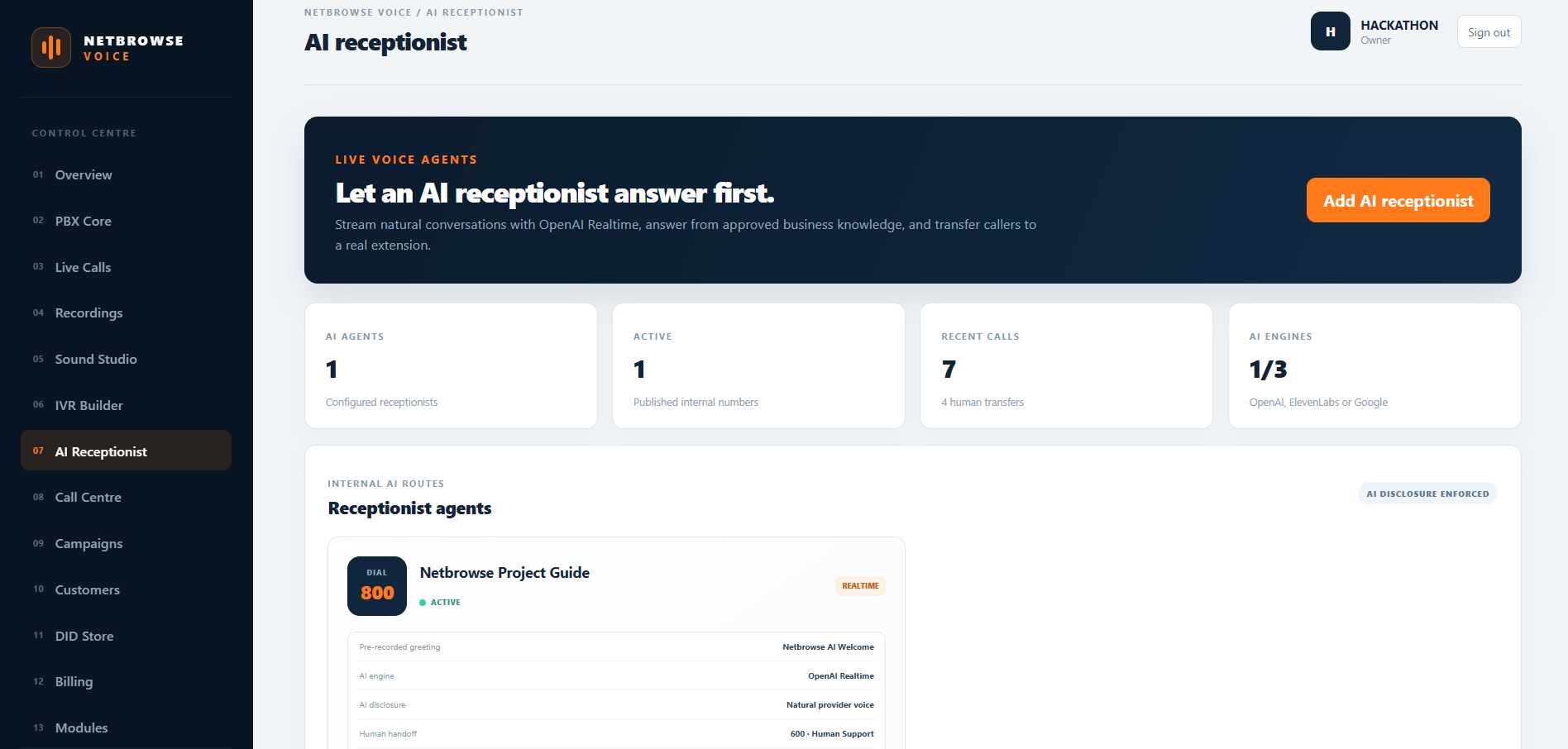
Ai receptionist
-
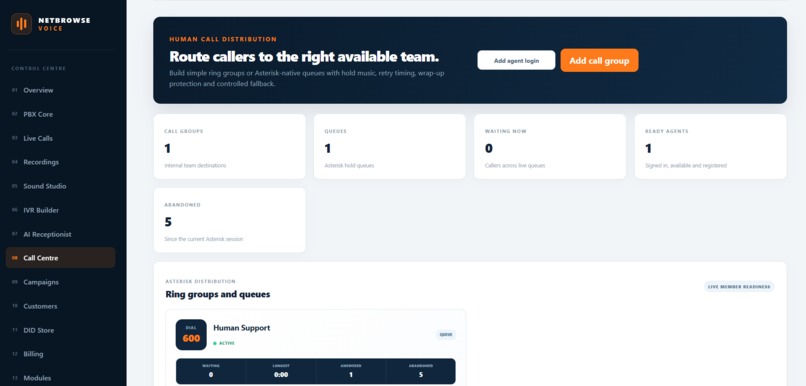
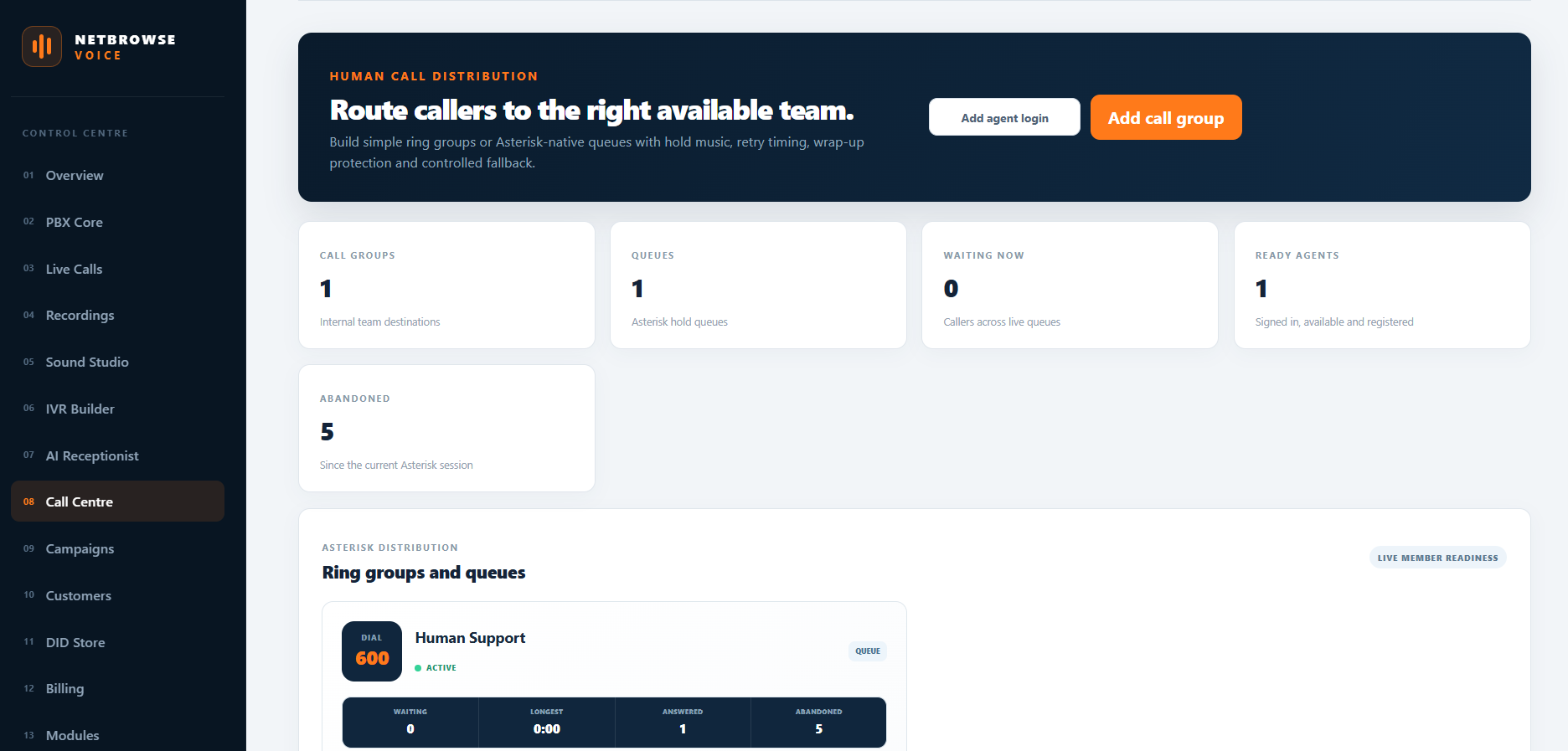
Call Centre
-
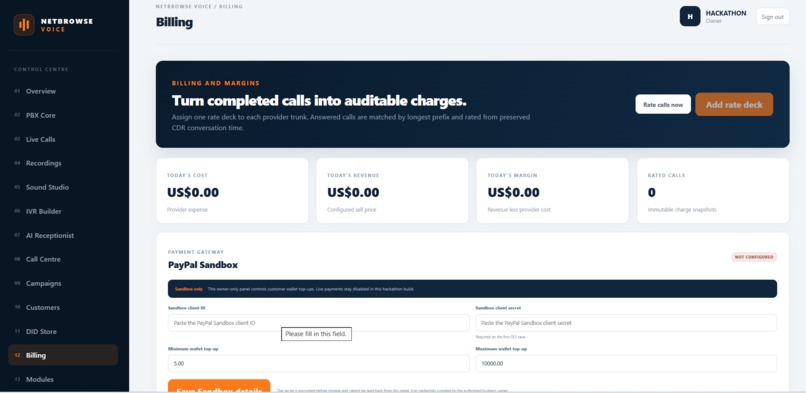
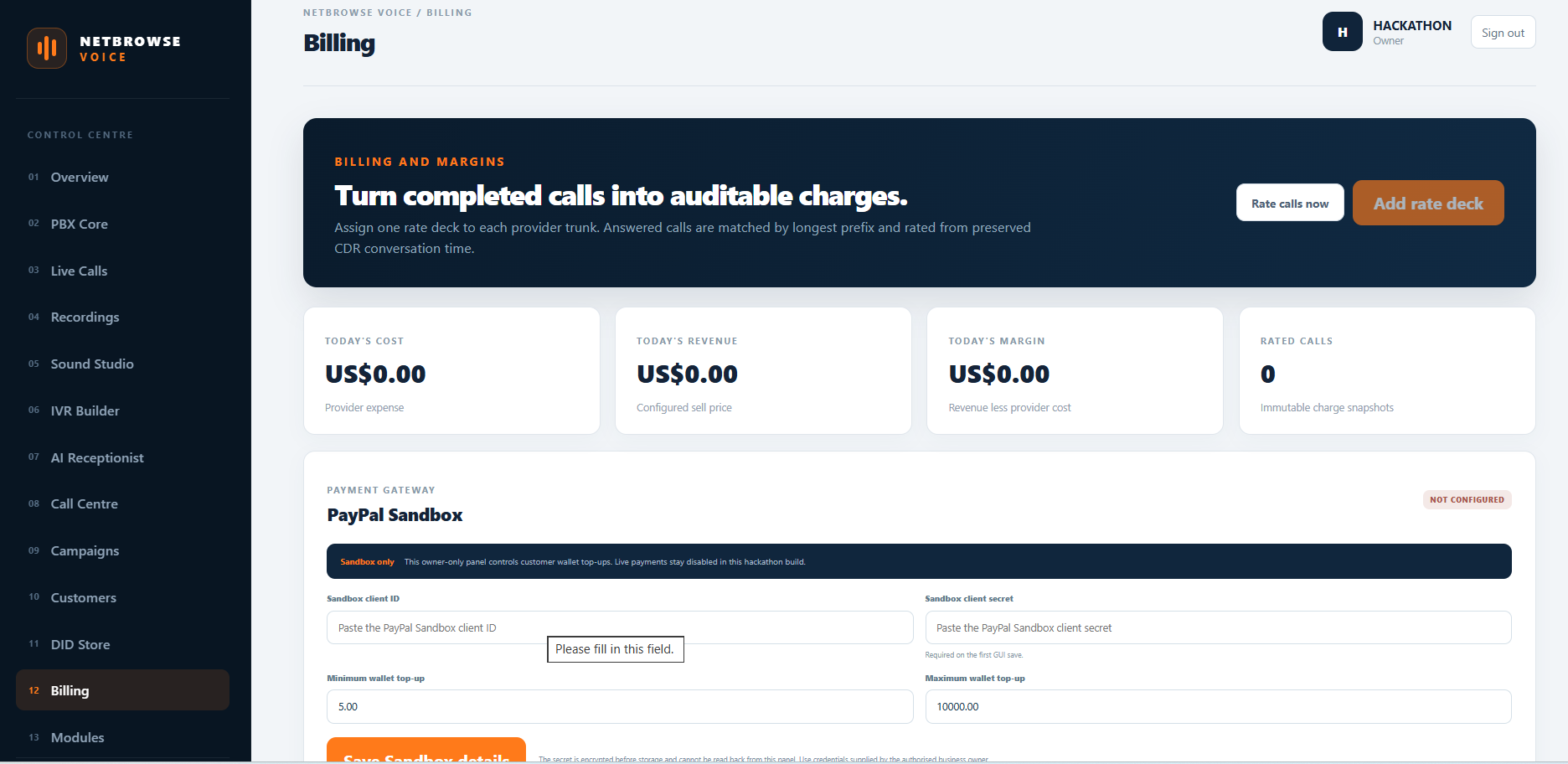
Admin Billing
-
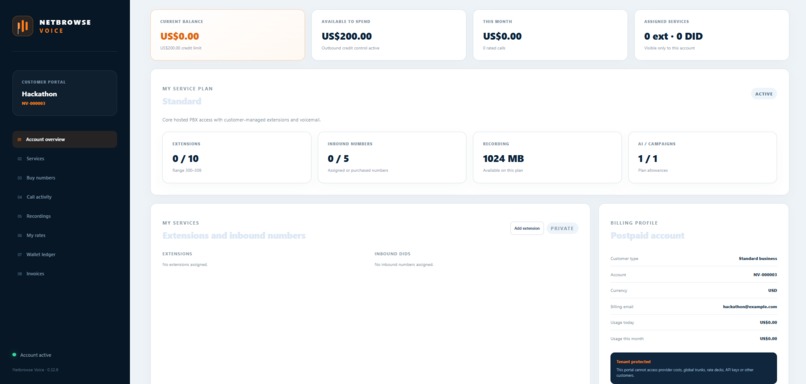
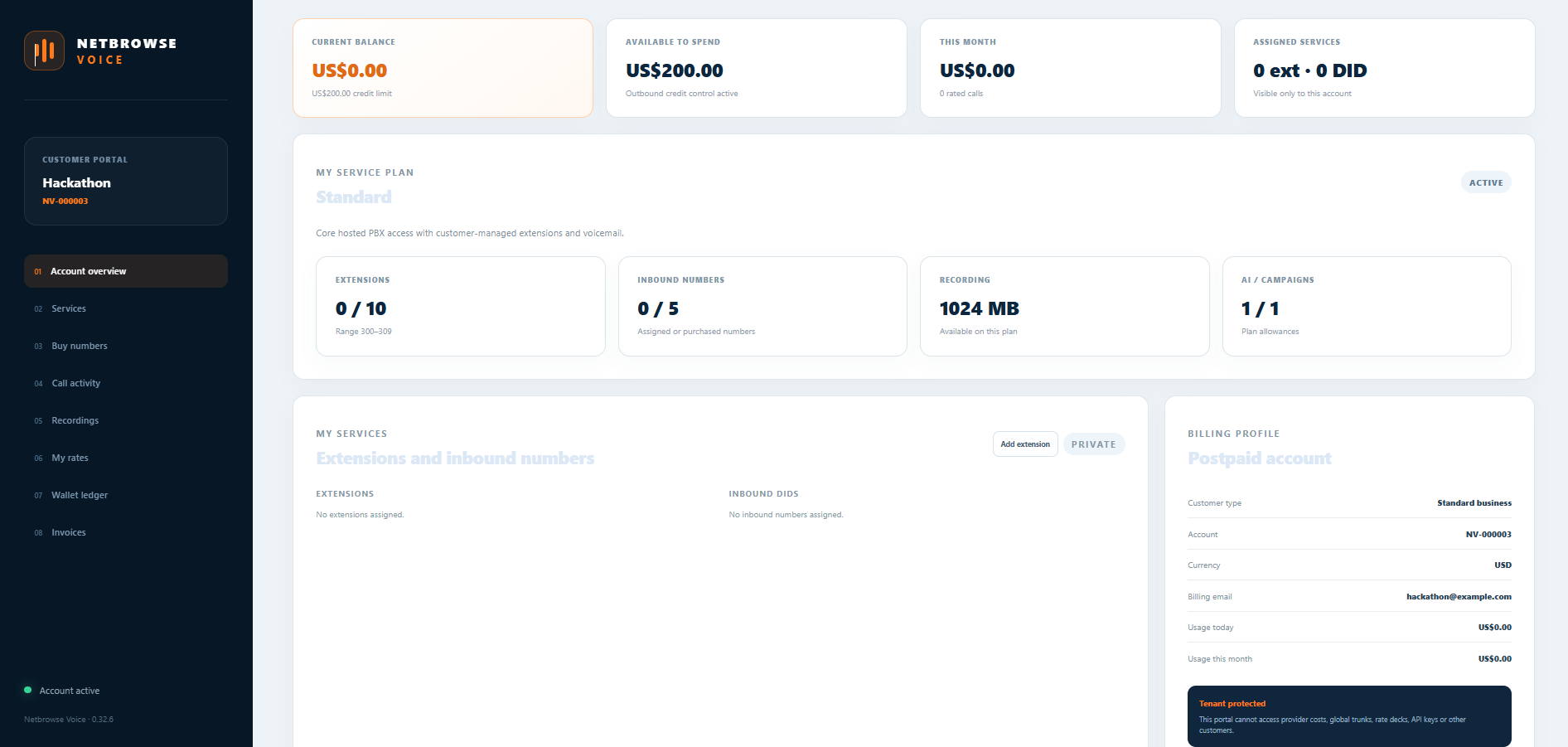
Client account overview
-
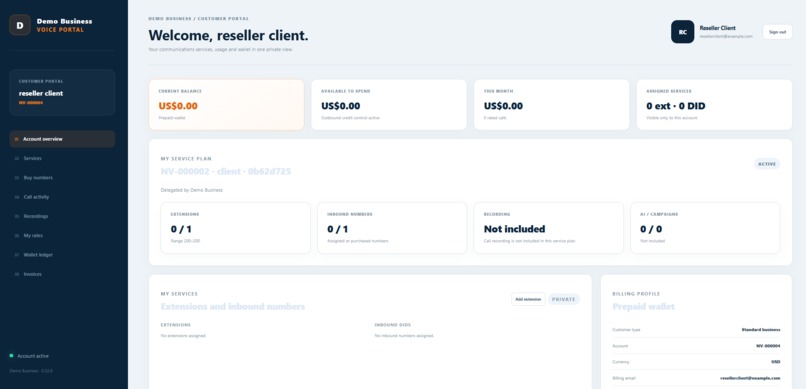
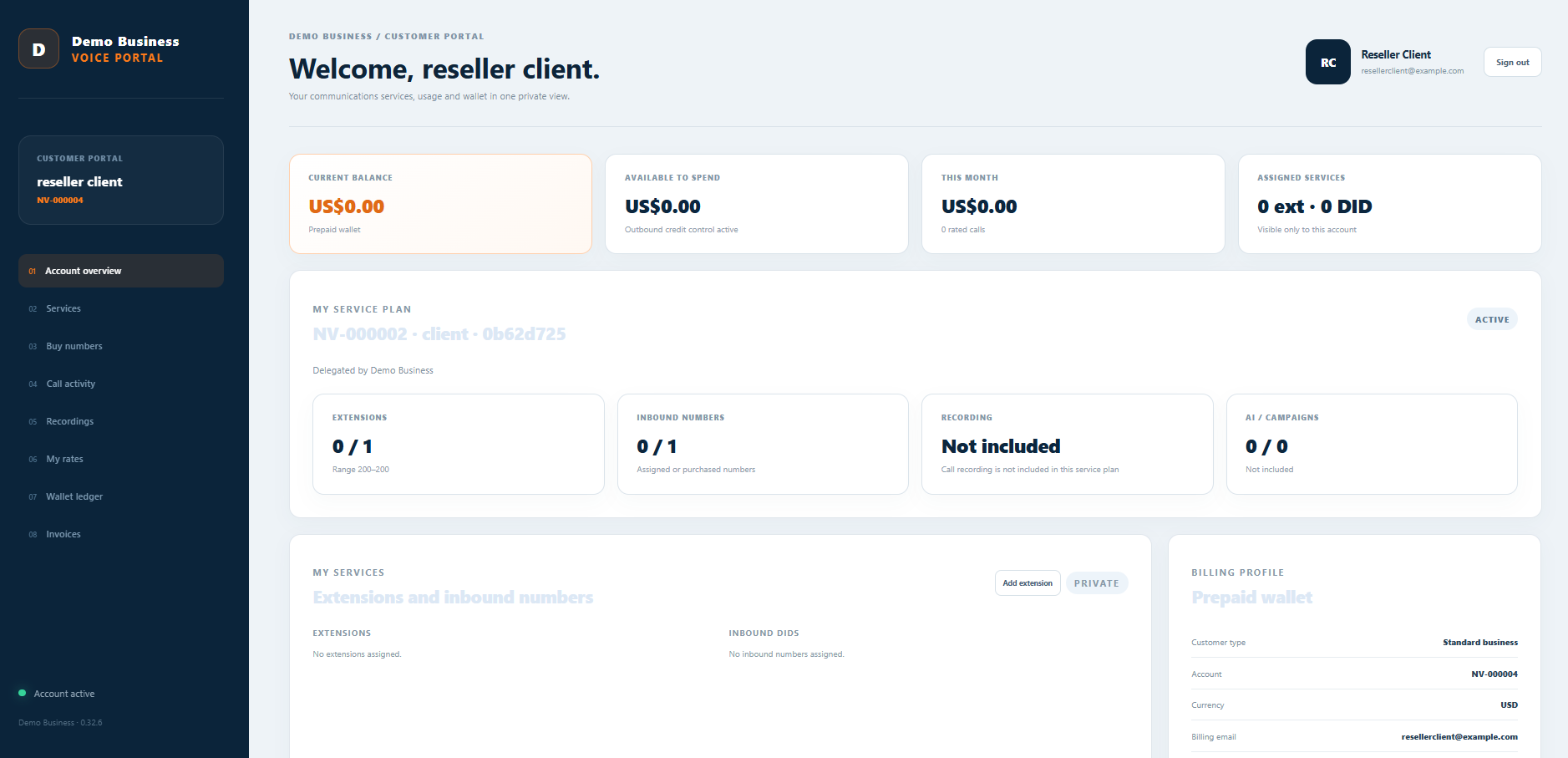
Reseller Overview
-
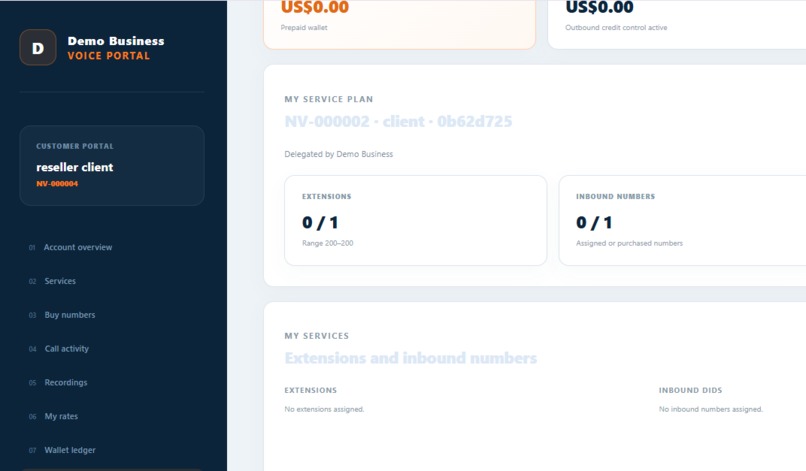
Reseller accounts
-
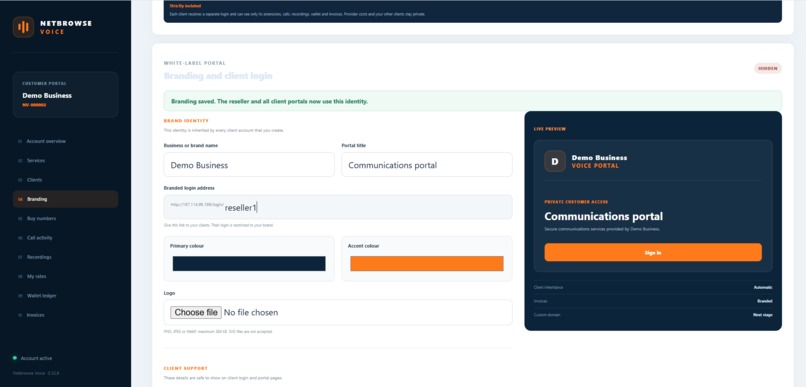
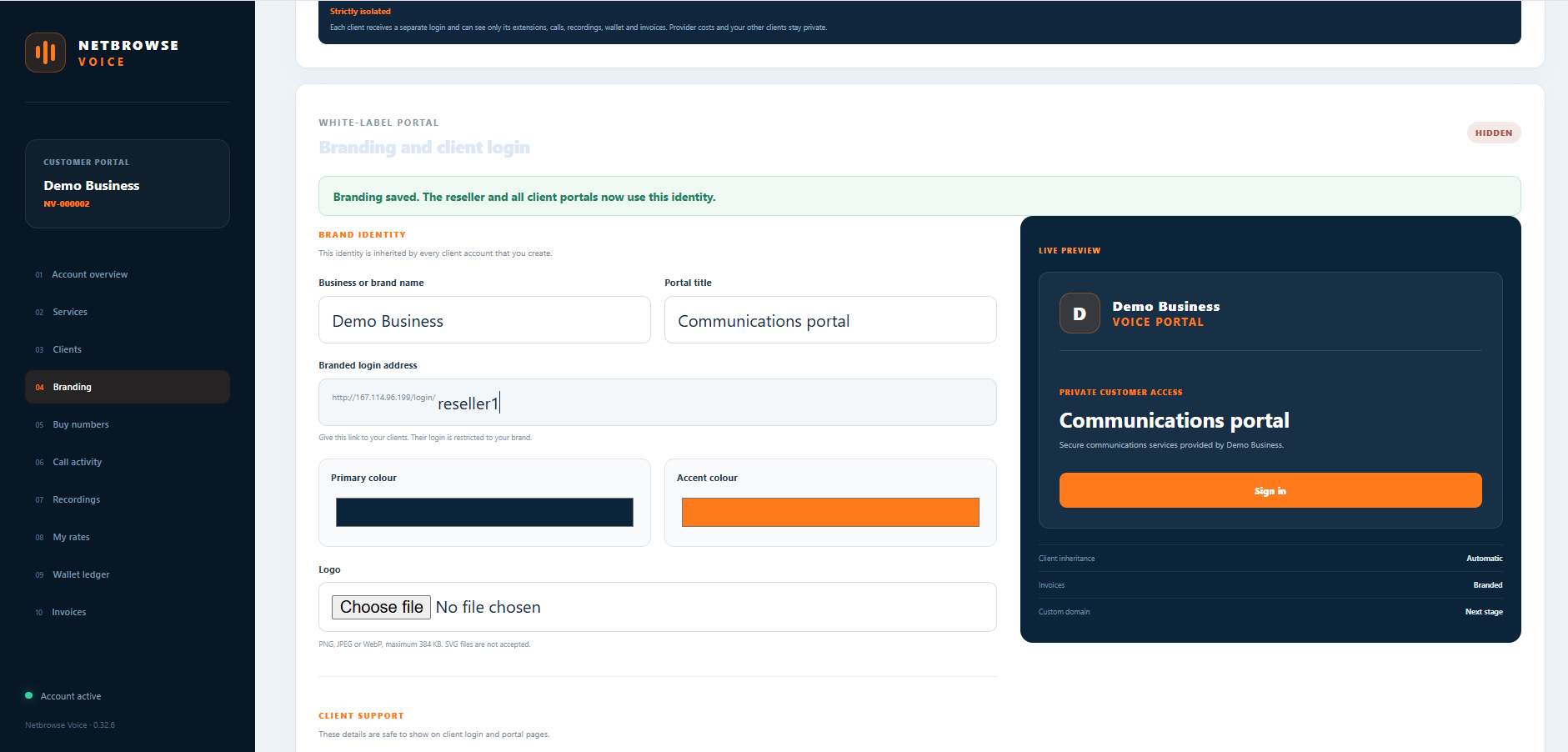
Reseller Branding
-
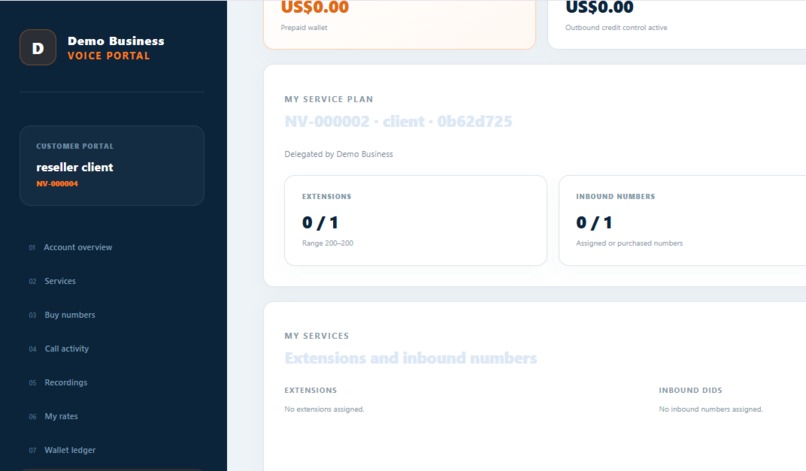
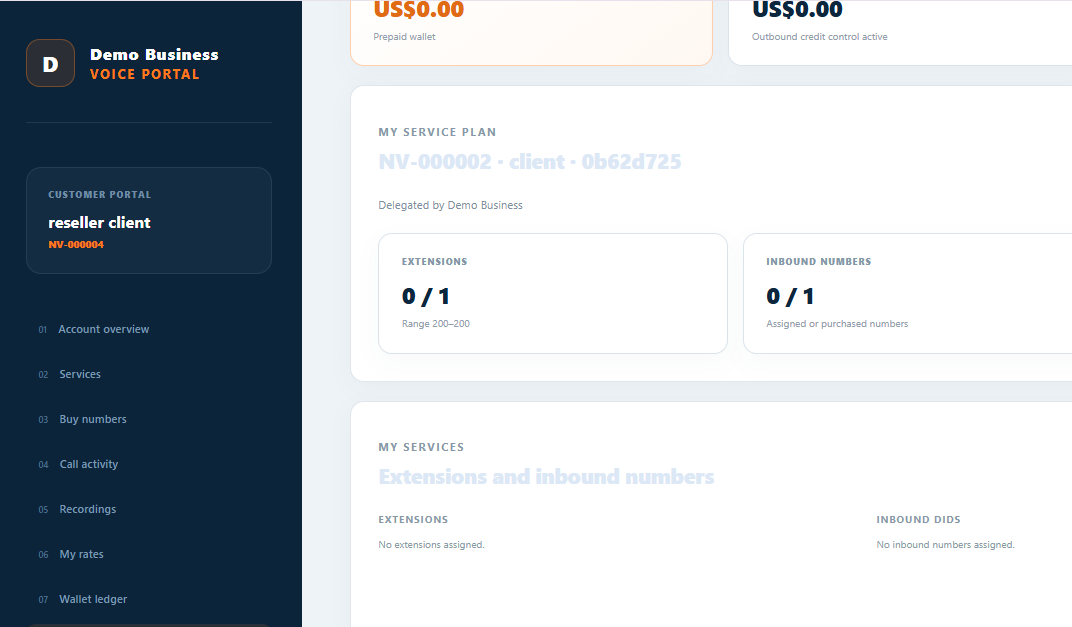
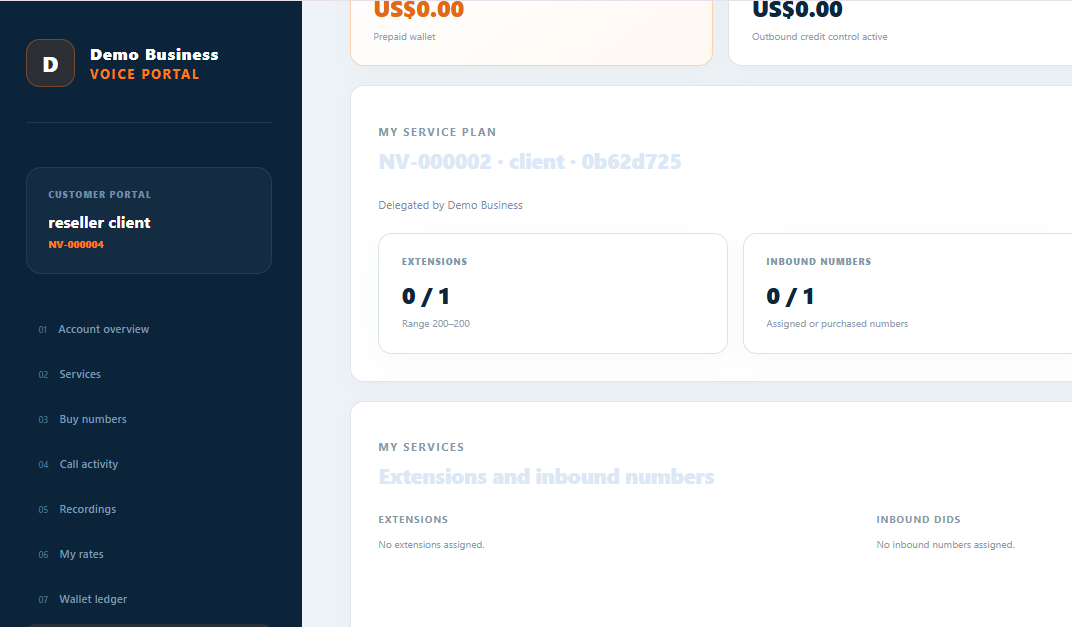
Reseller Client Overview
Inspiration I have always been a VOIP enthusiast so when the agents came out on ChatGPT the first thing in my mind was create a competitor to Freepbx but use AI for certain aspects like call centres and IVR
What it does
Netbrowse Voice is a modern, AI-powered VoIP and business communication platform built around Asterisk.
The goal is to make setting up and managing a telephone system much easier, even for users who do not have advanced knowledge of Linux, Asterisk configuration files or traditional PBX administration.
From one clean web interface, a business can manage extensions, users, inbound and outbound call routes, ring groups, call queues, recordings, billing information and live call activity.
What makes Netbrowse Voice different is that artificial intelligence is being built directly into the telephone system rather than being added as an afterthought. Businesses will be able to create AI receptionists that answer calls, speak naturally to customers, collect information, answer common questions and transfer callers to the correct person or department.
The platform is also being designed to support:
AI-generated voice prompts Call recordings and downloadable call history Live call monitoring Call billing and usage reports Automated outbound dialling AI agents for customer service and lead qualification Call transcripts and structured call summaries Email notifications after calls Exporting captured information to spreadsheets or Google Sheets A modular addon system for adding new features Connections to external PBX systems such as FreePBX
Netbrowse Voice is intended to work for small businesses, call centres, support teams, schools, healthcare facilities and organisations that need an affordable but powerful communication system.
How we built it
We started with Asterisk as the core telephony engine because it is flexible, reliable and already widely used in the VoIP industry.
The server is designed to run on Ubuntu, allowing it to be installed on a VPS, dedicated server, local computer or compact device such as a Raspberry Pi.
Instead of forcing users to manage Asterisk manually, we are building a web-based control panel that communicates with the telephony engine and turns complicated configurations into simple forms, buttons and visual workflows.
The application is being developed as a modular system. Different parts of the platform, such as the web interface, API, telephony services and module development tools, are separated into their own components. This makes the platform easier to maintain and allows additional modules to be added without rebuilding the entire system.
We are also developing an installation process that can prepare the server, install the required packages, configure the application and start the necessary services from a single installer.
The AI receptionist is being connected to the call-routing system so that an AI agent can temporarily handle a call and then transfer it back to an extension, queue, external number or another PBX when human assistance is required.
Challenges we ran into
One of the biggest challenges has been bringing together several technologies that normally operate independently.
Asterisk handles telephone calls, but the web application must also communicate with databases, APIs, AI services, audio systems and background services. Every part must work together without introducing delays or affecting call quality.
Permissions and deployment have also been challenging. A production VoIP server contains files and services that must be accessed by the correct users while still remaining secure. Incorrect ownership or permissions can prevent the application from loading, while permissions that are too open can create security risks.
We have also encountered TypeScript build errors, dependency issues and differences between development and production environments. These problems have required us to improve validation, error handling and the installation process.
AI telephone conversations present another challenge. Unlike a normal chatbot, a voice agent must listen, understand, respond and transfer calls quickly. Even a small delay can make the conversation feel unnatural.
We also need to make sure that the platform remains flexible. Some customers may use Netbrowse Voice as their complete PBX, while others may only want to connect an AI receptionist to an existing FreePBX or Asterisk server.
Building for both situations requires careful planning.
Accomplishments that we're proud of
This project just started as exploring what ChatGPT 5.6 can really do. How can i leverage this tool even if my profession does not involve coding. I was amazed by what i actually achieved. A PBX like no other i have seen. Leveraging AI as call agents in asterisk is something we only dreamt of and by We i mean VOIP enthusiast. Being stuck in legacy systems such as Freepbx and Fusionpbx while the world moves ahead with tech is painful. Being able to achieve the AI receptionist without going through Elevelabs website is a remarkable thing Asterisk liberates you and you can have a large choice of DID providers and better pricing ranges. This will be a game changer for VOIP lovers and proffesionals.
What we learned
I learnt that building a VoIP platform is not only about making calls connect. A complete telephone system needs strong security, reliable networking, accurate billing, crisp audio quality, simple admin and proper reporting.
I also learnt the importance of developing in modules. Separating the frontend, backend, telephony services and addon system makes it easier to identify problems and improve individual parts of the application. The process was step by step module after module testing each usable stage. With my VOIP Knowledge checking whether the services were adequately addressing the needs of VIP professionals.
The project has shown me that simplicity important. A system may work when configured manually by its developer, but a commercial product must be easy for other to deploy. that is why the simple automated installation script was developed.
l also learnt that AI voice communication must be designed differently from text-based AI. Responses must be shorter, interruptions must be handled properly and the agent must always know when to transfer the call to a human. OpenAI API handles this with ease.
I also learnt that each technical problem reveals an area where the product can be made stronger. Build failures, permission problems and installation issues are frustrating, but solving them moves Netbrowse Voice closer to becoming a dependable and quality platform.
What's next for VOIP Server
The next stages of development will focus on improving the AI receptionist, including better call transfers, downloadable transcripts, structured call summaries and integrations with email, Google Drive and Google Sheets.
We also plan to develop a FreePBX connector. This will allow companies to use the Netbrowse Voice AI receptionist while continuing to operate their existing FreePBX system. Only the AI portion of the call will be handled by Netbrowse Voice before the call is transferred back to the customer’s PBX.
A cross-platform mobile dialler is also planned for Android and iPhone. Users will be able to connect to a compatible Asterisk server using their server address and account details, allowing the mobile application to be sold together with the PBX platform.
Other planned developments include:
- DID commerce/marketplace completion
- Outbound campaigns - Controlled automated dialling, pacing, compliance and human/AI agent
- Ubuntu 24.04 support - Compatibility work has been tested and will be integrated after the release freeze for judging.
*NEAR TERM *
- Unified IVR destinations Route keys and failures to extensions, AI agents, queues, voicemail etc currently IVR routing is to Extensions
- Global currency setting - Remove fixed fallbacks and consistently inherit platform, customer and billing currency.
- AI usage billing - Credits, allowances, flat monthly add-ons, per-minute pricing and auditable overages.
- Security operations - Fail2ban integration, firewall guidance, security alerts, backup and restore.
- GSM/VoLTE gateways Vendor-neutral SIP gateway support with optional SMS, USSD and SIM-status modules.
*FUTURE *
- Conversational administration - A permission-aware AI assistant that previews, confirms and audits configuration changes.
- Commercial modules - Option with an app store for developers
The long-term vision is for Netbrowse Voice to become more than a VoIP server. I want it to become a complete, intelligent communication platform that helps businesses answer calls, support customers, automate repetitive work and manage their communications from one place.
Built With
- ami
- ari
- artificial-intelligence
- asterisk
- bash
- css3
- html5
- javascript
- large-language-models
- linux
- monorepo
- node.js
- npm
- npm-workspaces
- pjsip
- rest-api
- sip
- speech-to-text
- systemd
- text-to-speech
- typescript
- ubuntu
- voip

Log in or sign up for Devpost to join the conversation.