-
-
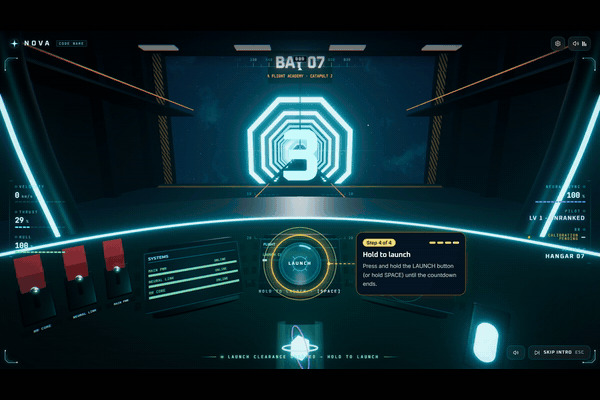 GIF
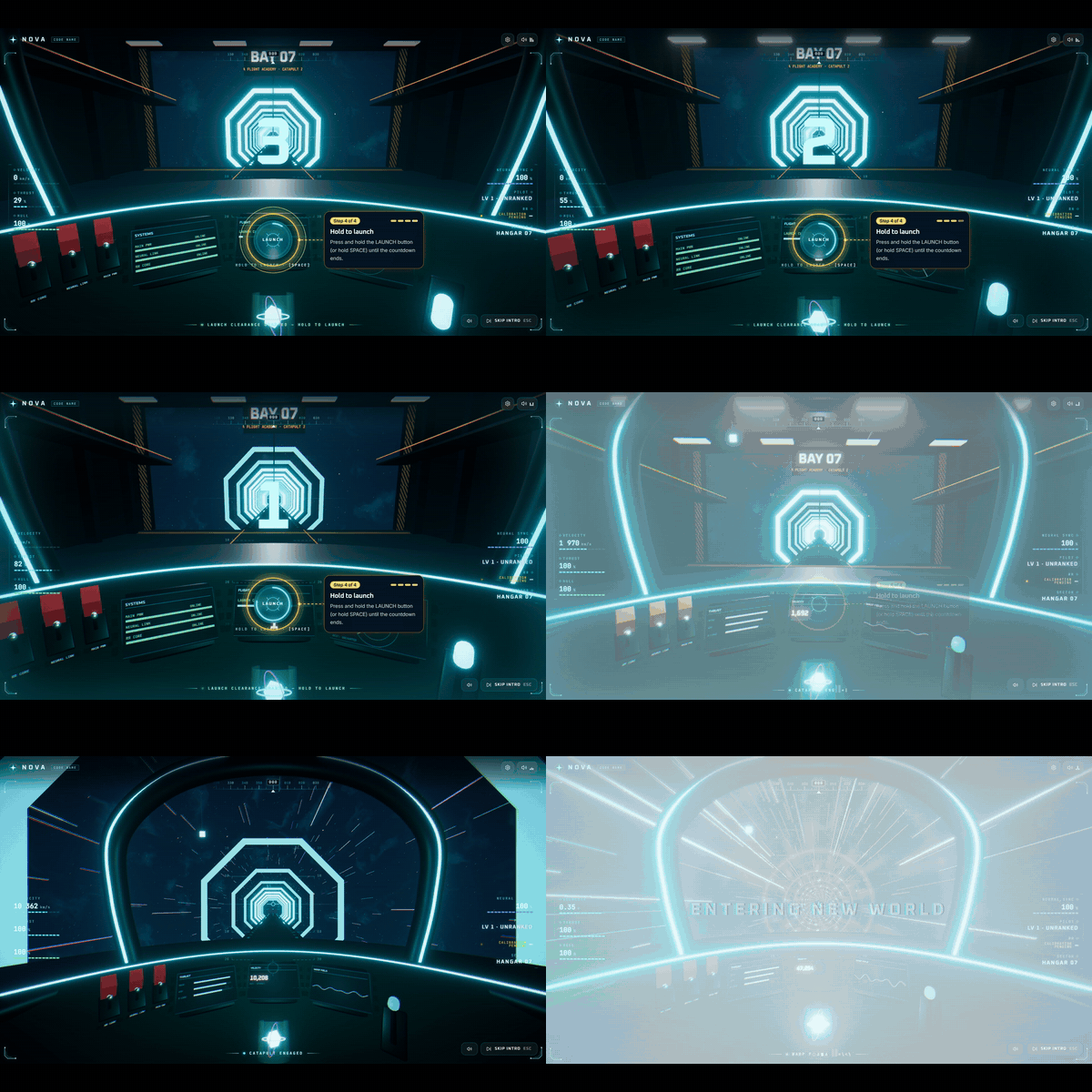
Initiating pre-flight systems and launching through Hangar Bay 07's catapult tunnel into deep space.
-
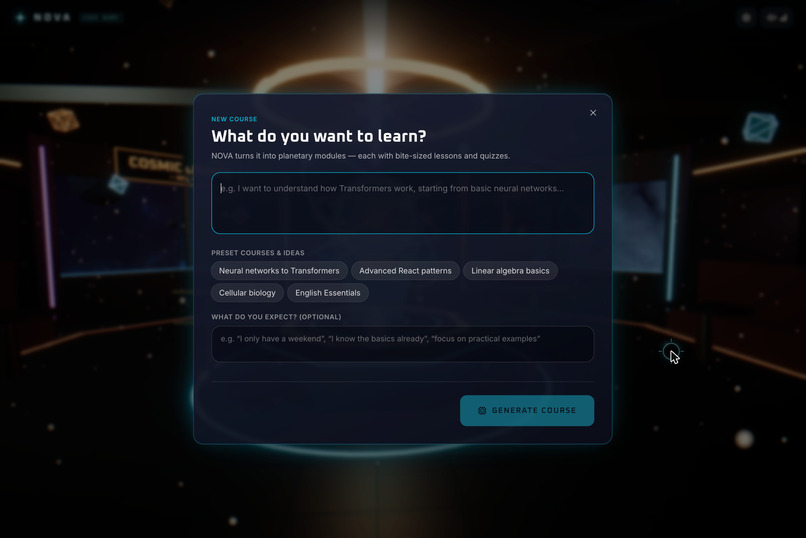
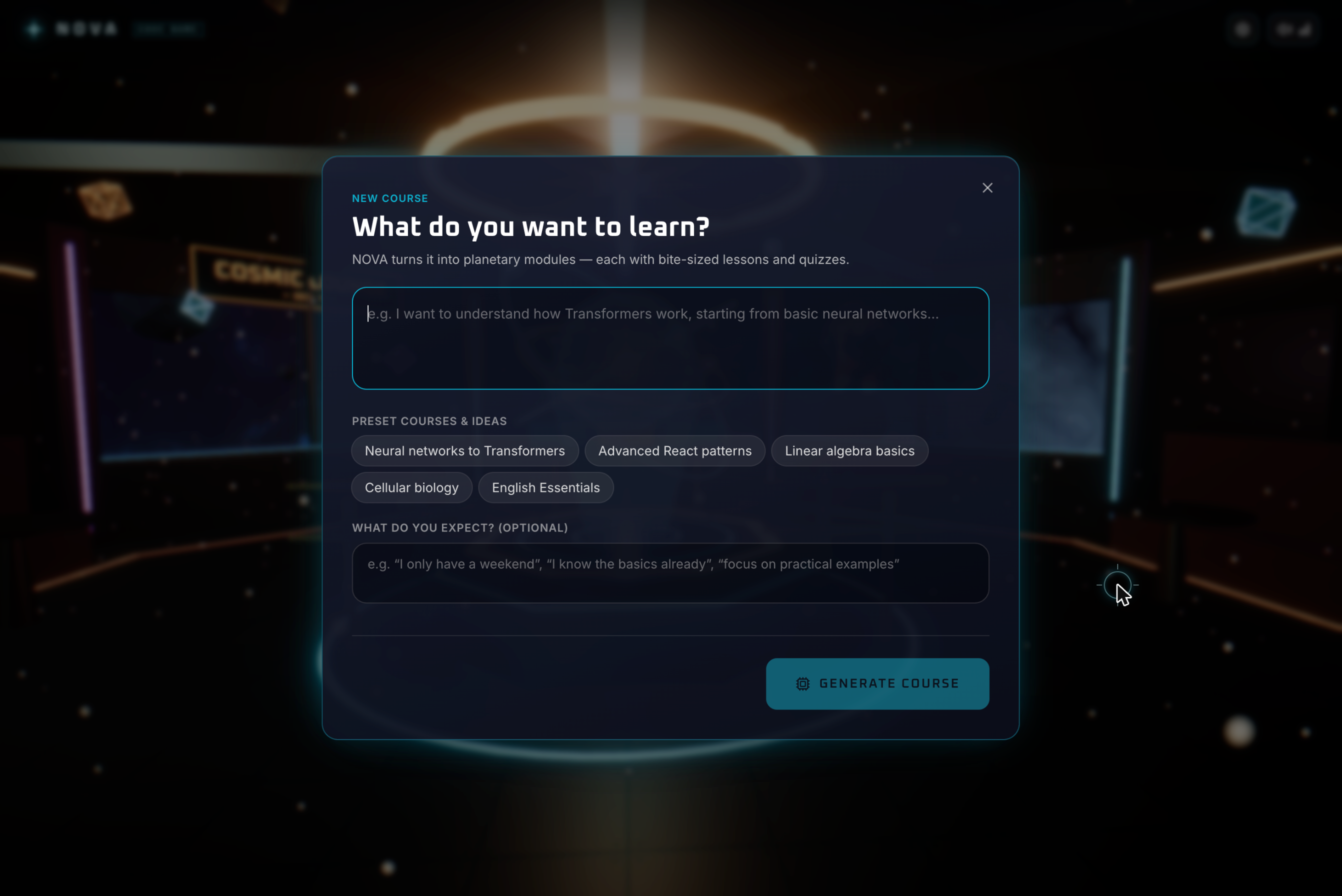
Zero-friction course creation: enter any learning goal or choose a preset to generate a full planetary syllabus.
-
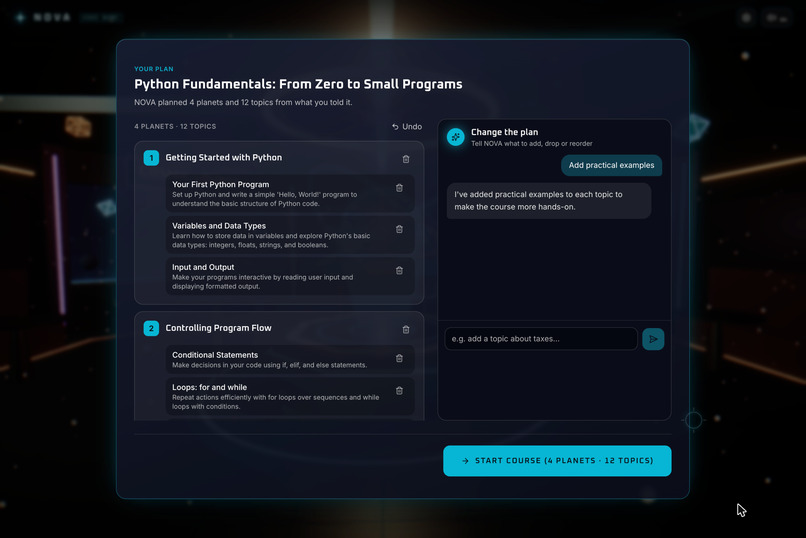
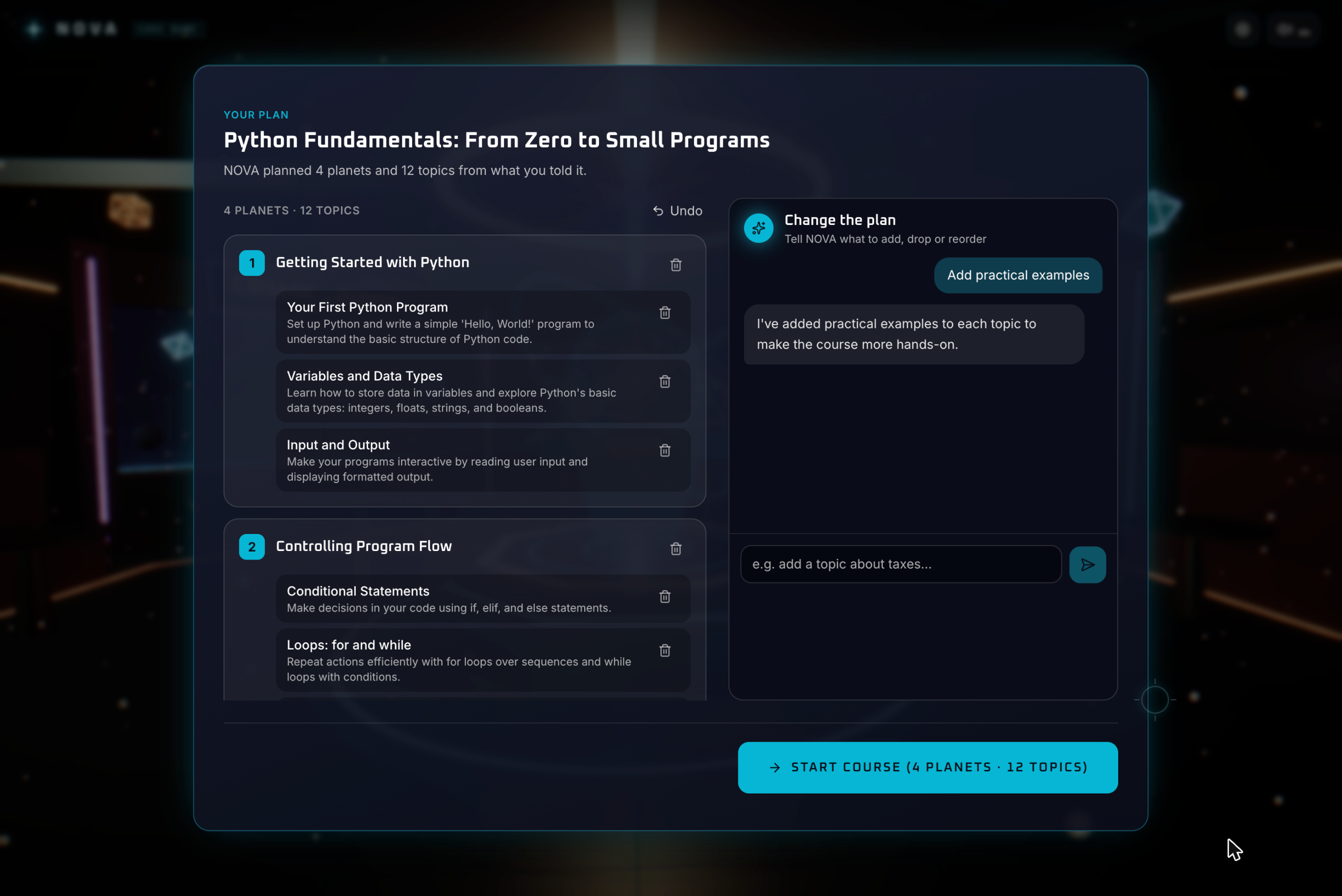
Collaborative AI curriculum builder: chat with NOVA to refine topics, add hands-on exercises, or reorder planets.
-
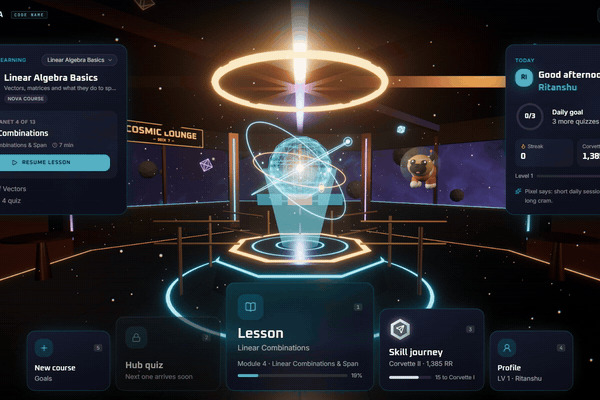 GIF
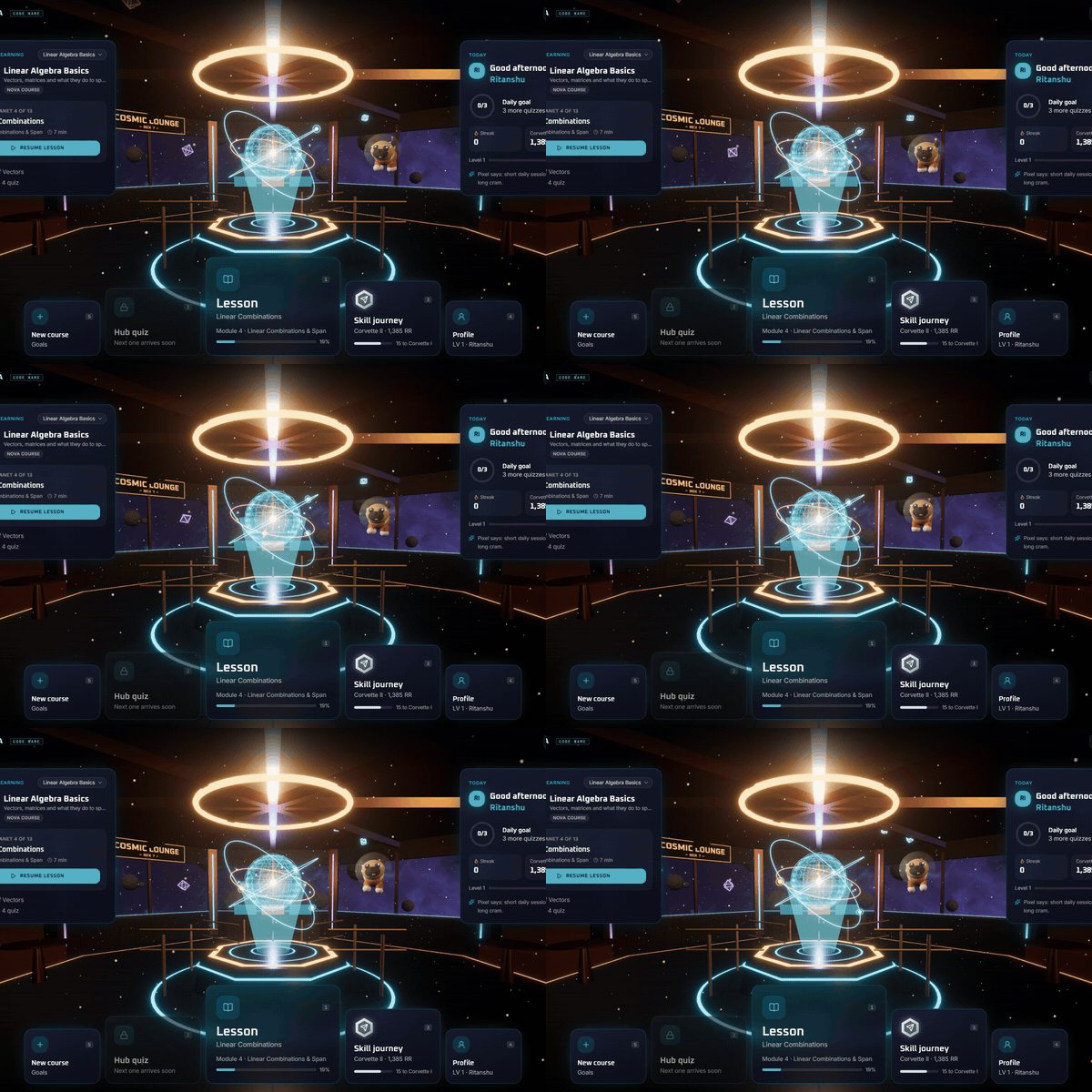
Step into the Cosmic Lounge quiz arena — rack up combo streaks, unlock instant XP bursts, and level up your pilot rank in real time!
-
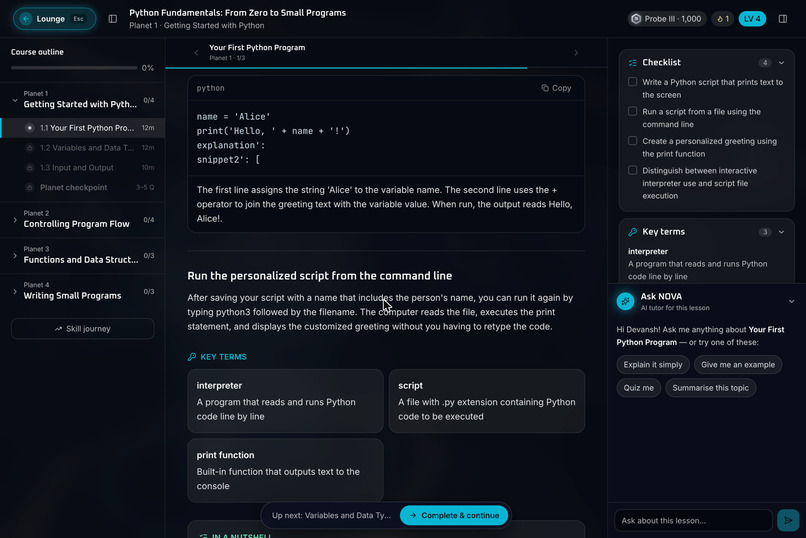
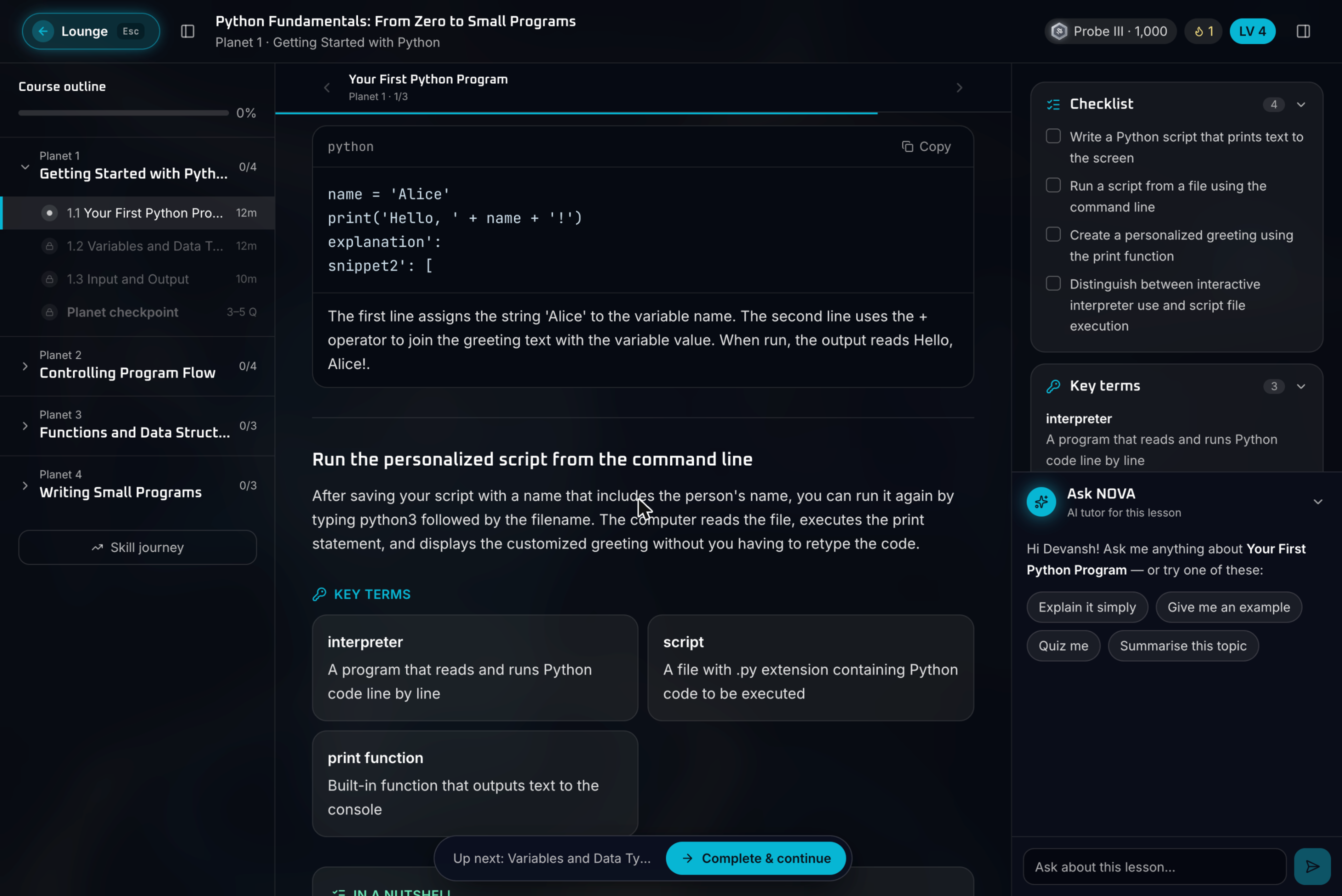
Bite-sized lesson view featuring interactive code, learning checklists, and real-time Ask NOVA AI tutoring.
-
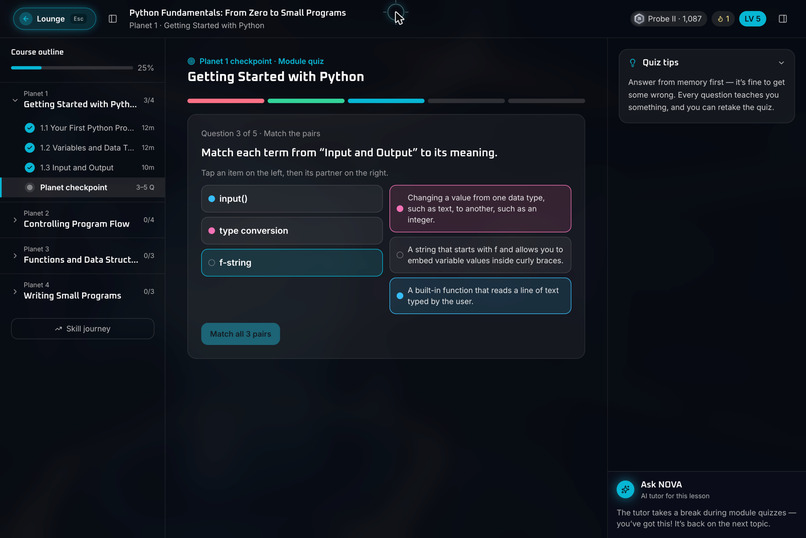
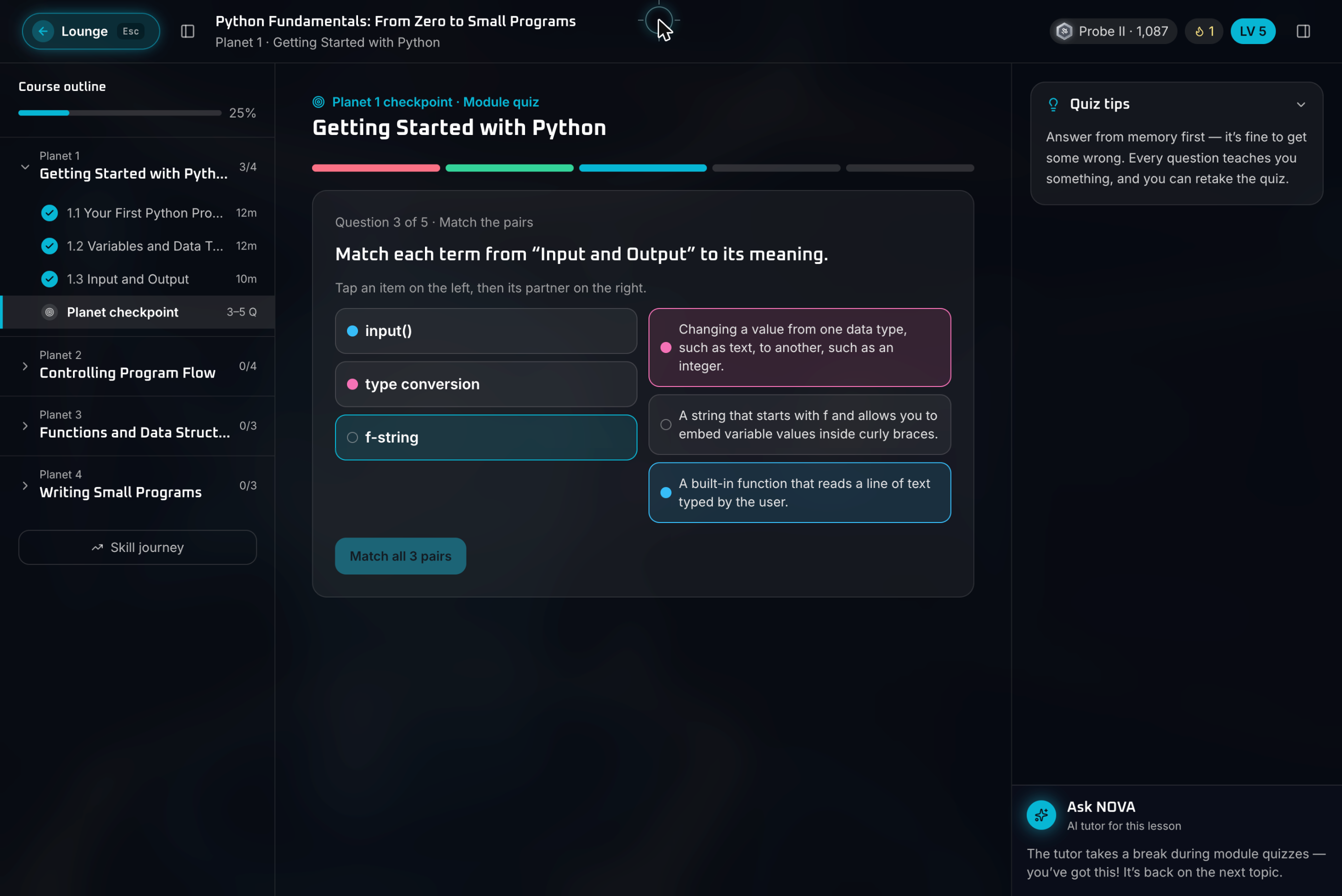
Gamified pair-matching quiz testing concept comprehension with instant color-coded feedback.
-
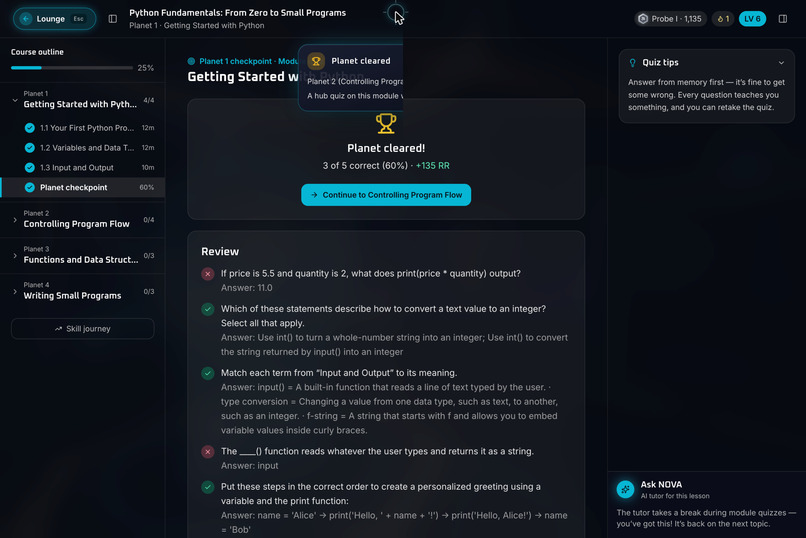
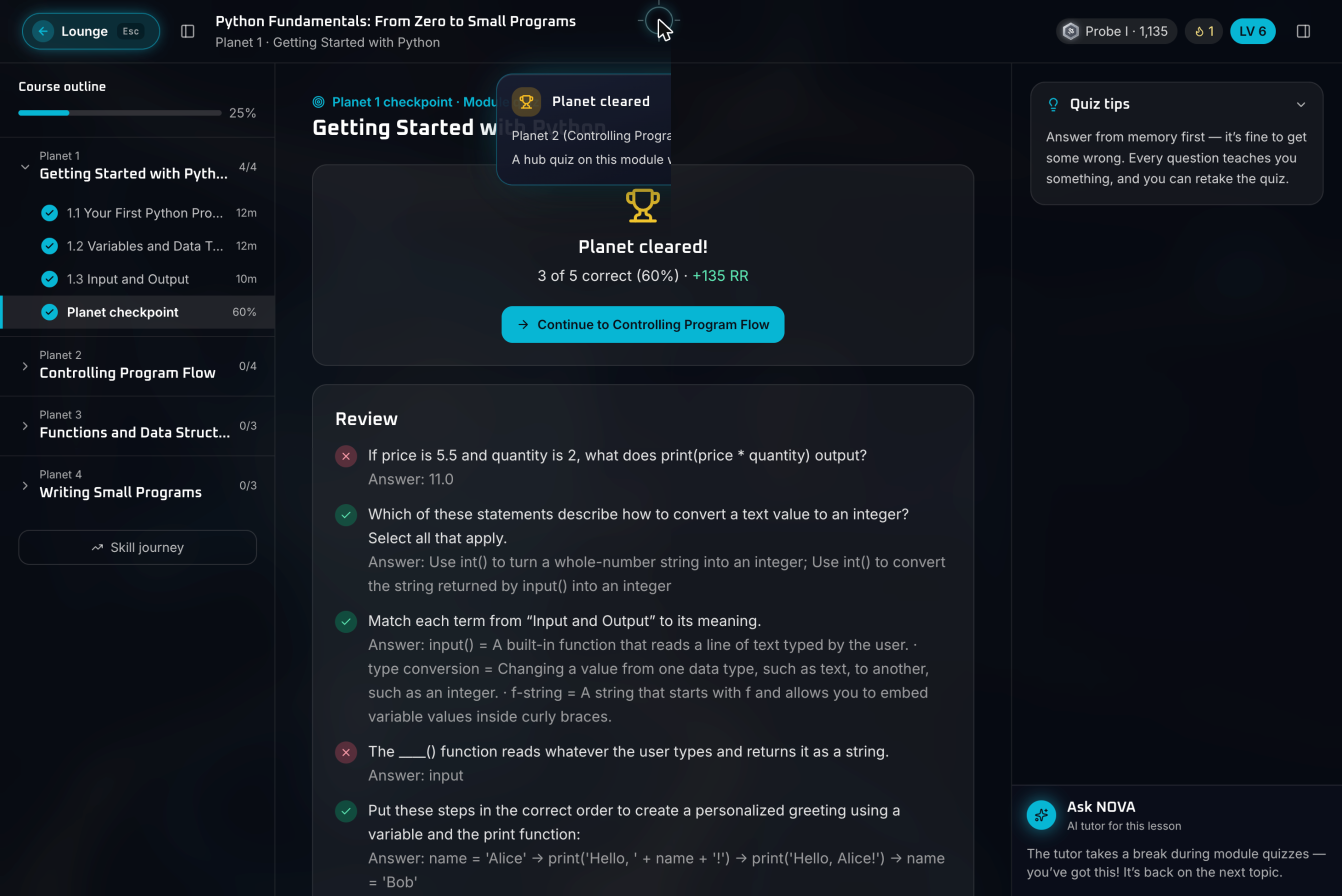
Instant module checkpoint review with score breakdown, answer explanations, and earned Pilot RR rank points.
-
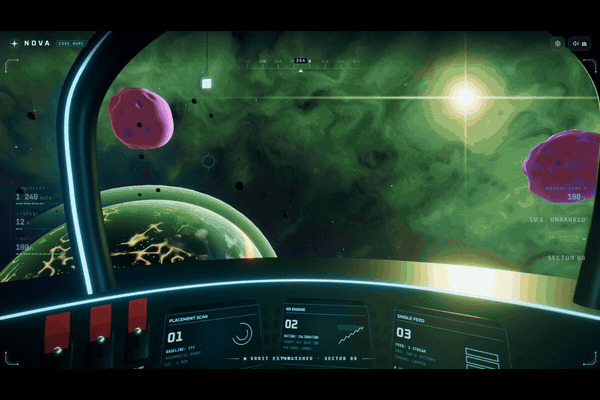 GIF
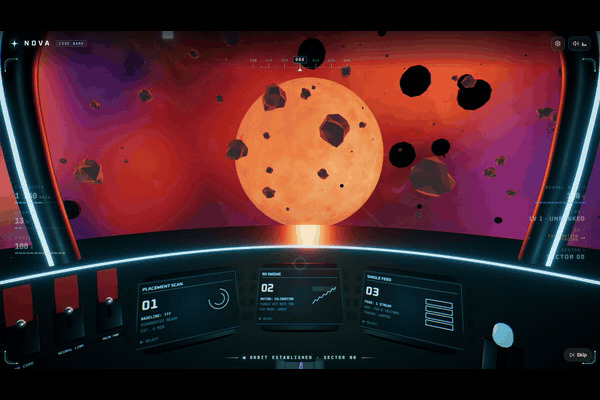
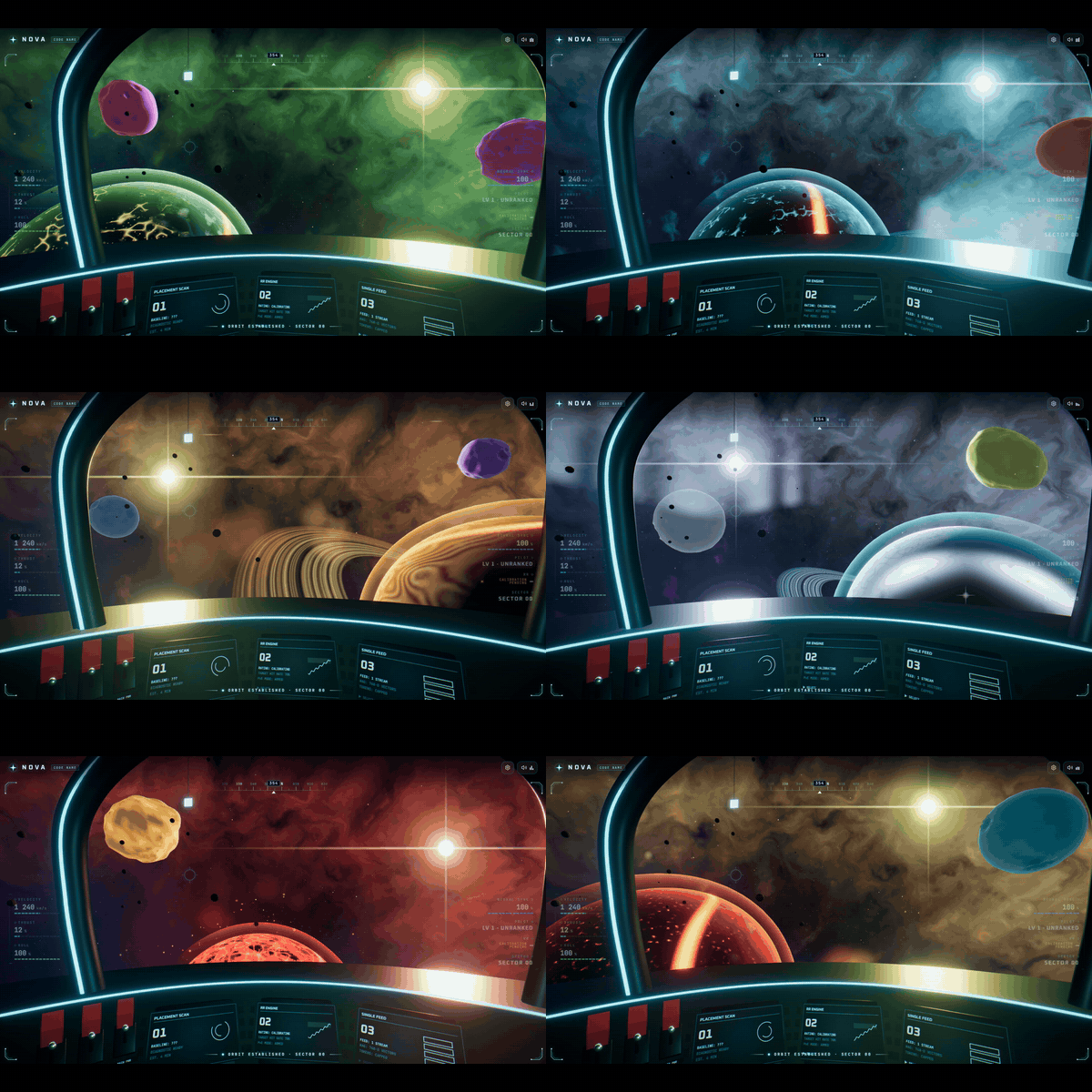
Starship entering orbit around a ringed gas giant with real-time atmospheric shaders and telemetry sync.
-
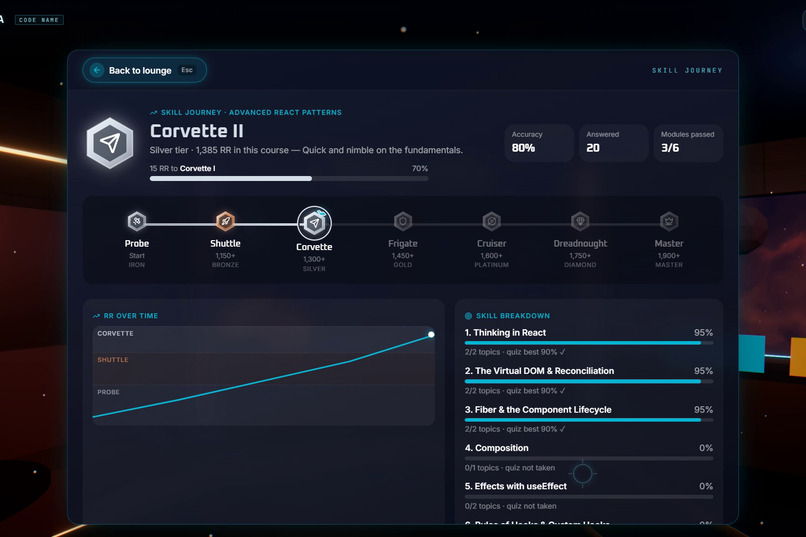
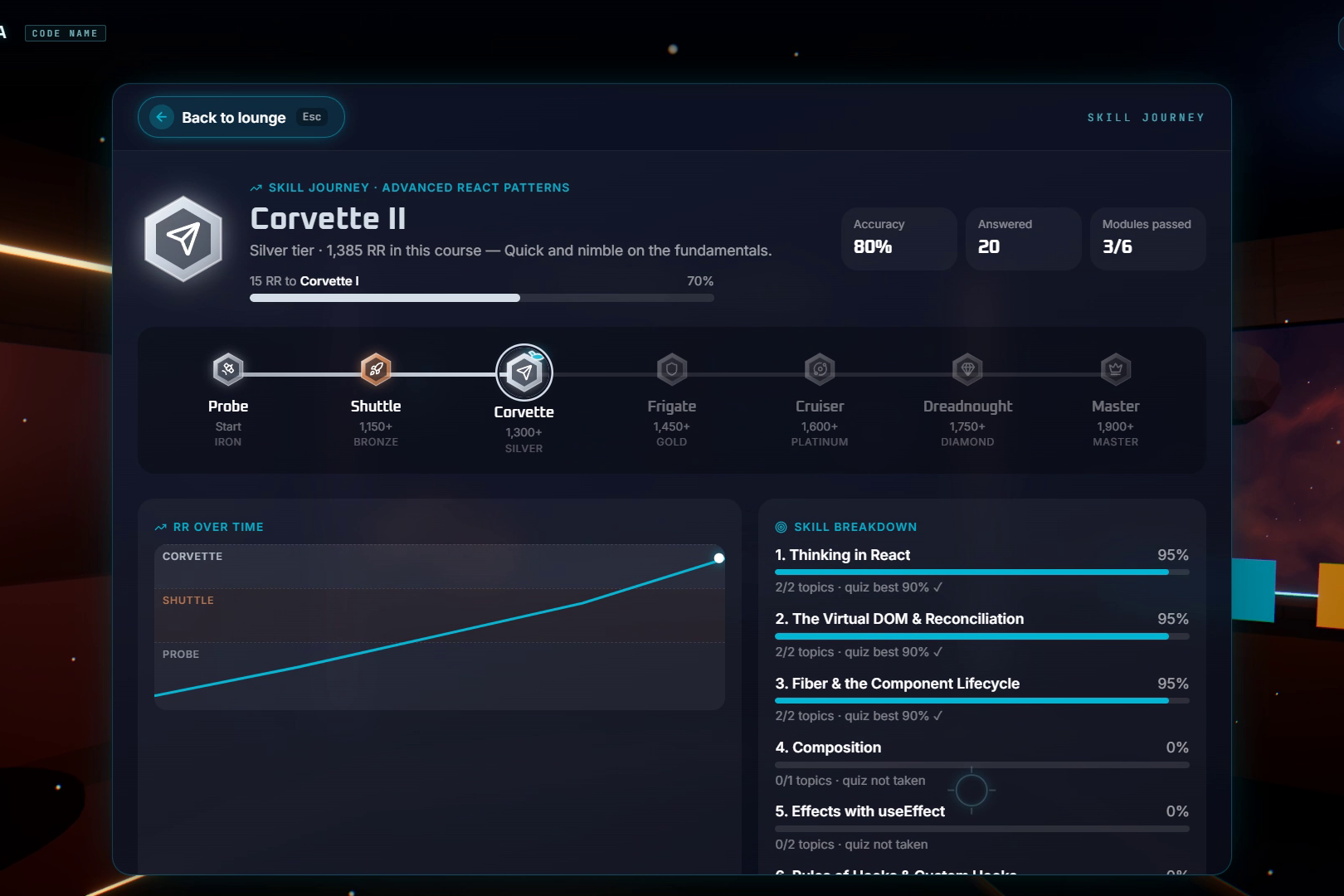
Competitive pilot progression: adaptive MMR rating tiers, real-time skill growth graphs, and modular topic mastery tracking.
-
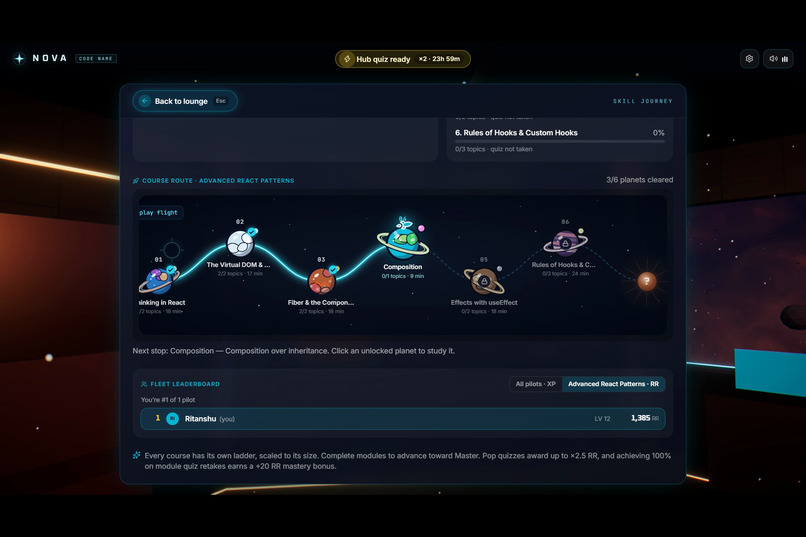
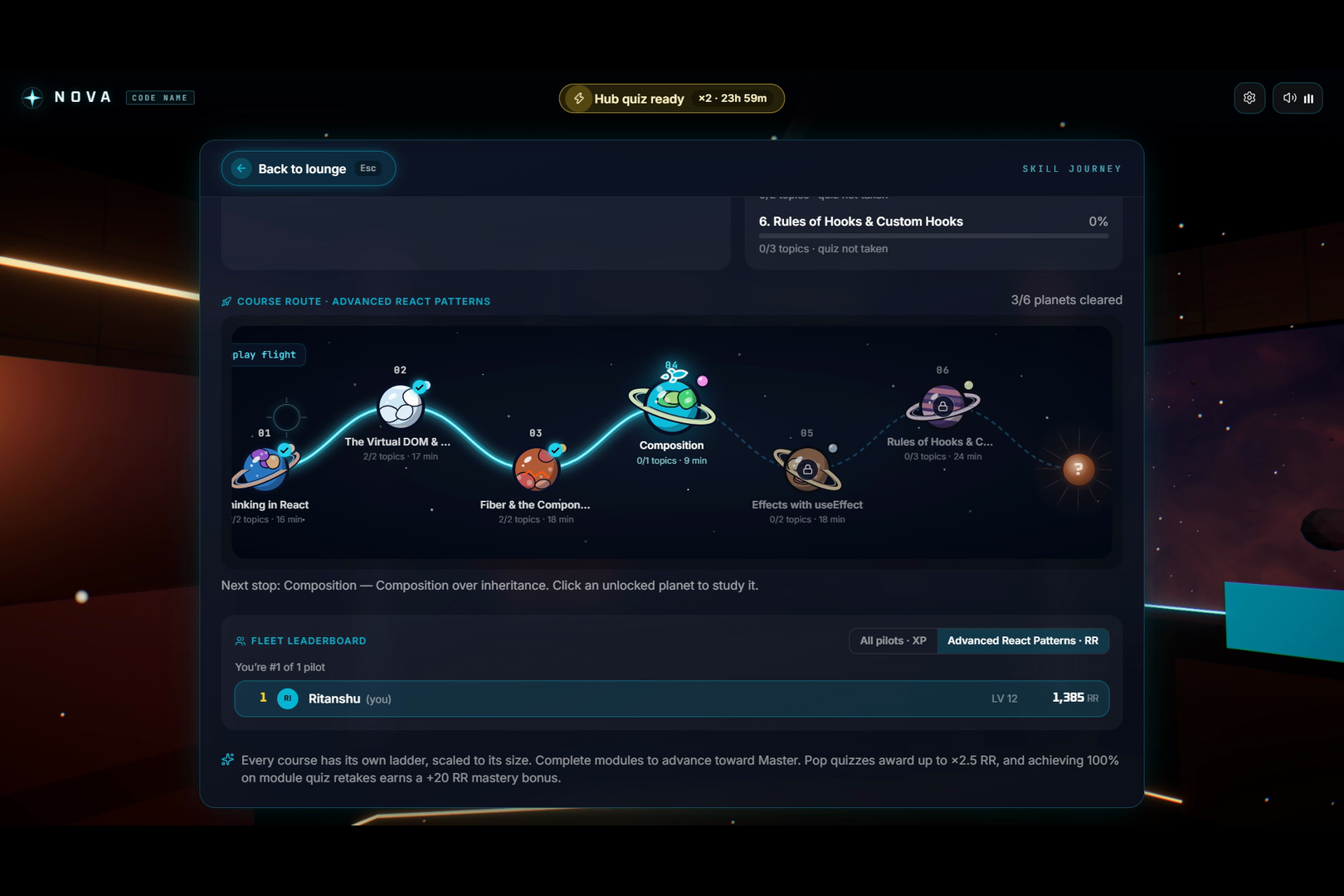
Interactive planetary course route visualising learning progress as space exploration alongside a live fleet leaderboard.
-
 GIF
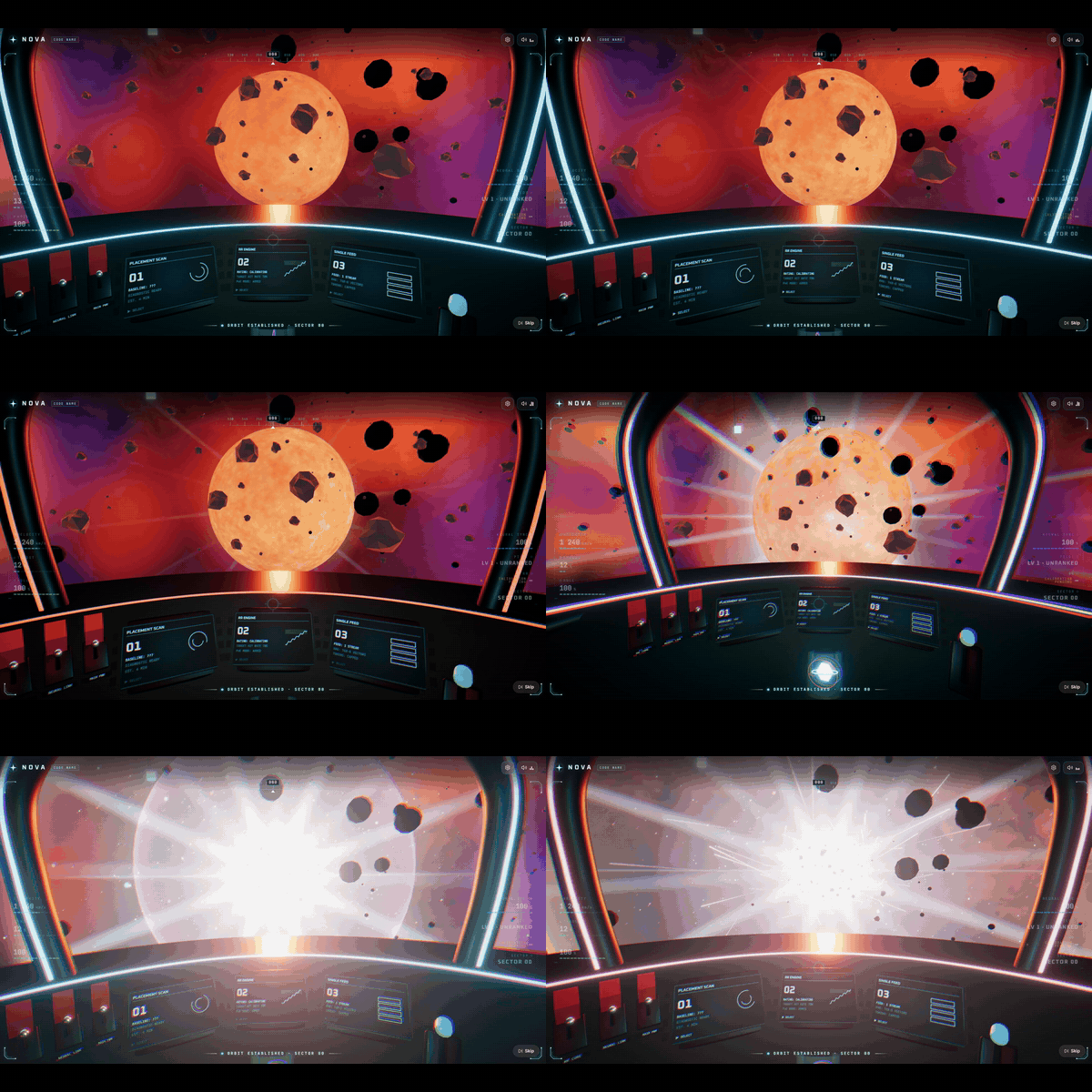
Reaching course mastery triggers the cosmic finale — a supernova shockwave with real-time chromatic flare.
Inspiration
Self-paced learning has a finishing problem. In MIT and Harvard's edX courses, only about 3% of learners who enrolled in 2017-18 completed (Reich & Ruipérez-Valiente, Science, 2019). Fixed courses can't adapt to what you already know or how much time you have. General chatbots fail the other way: no curriculum, no proof you learned anything, and they hand over the answer the moment you ask.
We wanted something in between: a real course, planned around your goal and your time, written and checked by AI, with the pull of a game that brings you back for the next planet. Ranked games gave us the core idea: rate the learner like a player, rate every question like an opponent, and make progress feel earned.
What it does
- Tell NOVA what you want to learn. Type any goal and say what you expect in your own words ("I only have a weekend", "I know the basics", "practical examples please"). An optional 5-question placement check adds where you're starting from.
- Review your flight plan. NOVA plans modules and topics sized to what you said: an hour becomes a few short topics, a weekend a few modules, a few weeks up to six. Untick what you don't need, or just chat: "drop the history, add a module on deployment."
- Fly planet to planet. Each topic is a planet, and its lesson is written when you arrive: explanations, worked examples, common mistakes, quick checks, and code only when the topic needs it.
- Prove it. Multiple-choice, multi-select, true/false and ordering questions. Every question quotes the line of the lesson it tests and is answer-checked before you see it. Module quizzes close each module, and any question can be reported from the quiz.
- Ask the tutor. It won't spoil your quiz. A streaming Socratic tutor answers from the lesson you're on, explains things more simply on request, and writes fresh practice questions that never repeat a graded one.
- Level up. An Elo-style rating (RR) climbs seven ship tiers, from Probe to Master. A fleet leaderboard, avatars you can draw yourself, a pet called Pixel, warp jumps between procedurally generated planets and a supernova graduation make progress visible.
How we built it
Every model call goes through Nebius Token Factory. NVIDIA Nemotron 3.5 Lightning writes and checks the lessons, quizzes and tutor replies; DeepSeek-V4-Flash drafts the course plan.
| Stage | Model on Token Factory | What it does |
|---|---|---|
| Plan | DeepSeek-V4-Flash (falls back to Nemotron 3.5 Lightning) | Modules and topics sized to the learner's words; chat edits to the plan |
| Gate | Nemotron 3.5 Lightning + code | Code refuses instructions disguised as goals; Nemotron screens goals meant to cause harm, alongside planning so it adds no wait |
| Write | Nemotron 3.5 Lightning | Code-or-not decision, structured lesson (strict JSON schema), fact review |
| Assess | Nemotron 3.5 Lightning | Question bank (one call per question type), blind answer check |
| Tutor | Nemotron 3.5 Lightning, streaming | Answers from the lesson you're on; writes fresh practice questions |
Planning is one call per course (plus one per chat edit to the plan). Everything else runs on Nemotron: the goal check, 8 to 14 calls per topic, and every tutor reply.
The model writes; code decides. Nemotron never chooses a question's type, which section it tests, or whether a topic needs code. Python decides those, asks for exactly that, and checks the result:
- Every question must quote its evidence from the lesson. Code verifies the quote exists and that the wording fits the question type.
- Blind second opinion: Nemotron answers each question without the key, reading the lesson. Questions whose key it can't reproduce are dropped.
- Repair before retry: over-long lists, duplicates and empty code are fixed in code. Real failures are re-asked with the exact validation errors attached, with 1.5x the token budget if the answer was cut off.
- Structured outputs: Pydantic models become JSON Schemas sent as
response_format(strict for lessons). Thinking is switched off throughchat_template_kwargs, so calls stay fast and inside budget. - Spoiler guard: when you ask to be quizzed, the tutor's reply is written in full first, and a question that overlaps a graded one is rewritten before you see it.
Fair progression, in maths. Each question gets a rating ( Q ) that rises with its place in the course and its difficulty. With ( P ) your rating and ( S ) = 1 for a right answer (0 for a wrong one), your expected score and rating change are
$$E = \frac{1}{1 + 10^{(Q - P)/400}}, \qquad \Delta = K\,(S - E) \times \text{pace}$$
where ( K ) shrinks as the course grows and the pace factor speeds you up when you're behind the course's trajectory (up to 3.5x) and slows you when you're ahead (down to 0.55x), so finishing a course takes you to Master. Re-answering a question you already got right earns nothing; fixing one you missed earns remediation RR.
Built to be measured.
- 8 eval suites (courses, safety, prompt injection, tutor, placement, lesson writer, outline size, question bank) with 24 regression gates, runnable from GitHub Actions. An LLM-judge rubric, with 18 human-labelled lessons to check the judge. Requests that had problems can be turned into new eval cases.
- Token and cost ledger per model and call type, an admin dashboard, Prometheus metrics, a daily token budget with an 80% alert and a hard stop, and a script that reconciles our estimate with the Nebius invoice.
- 1,173 backend and 146 frontend tests, Playwright end-to-end and axe accessibility checks. The deployed branch only moves when they pass.
Stack: React 19, TypeScript, Vite, Tailwind v4, Three.js / React Three Fiber with custom GLSL, Zustand, Framer Motion. Python 3.11, FastAPI, Pydantic v2, HTTPX. Upstash Redis, Neon Postgres, Vercel, Google sign-in.
Challenges we ran into
- Reasoning ate the budget. On Nemotron 3 Nano, thinking often used up the whole token limit before the JSON began. We switched thinking off for structured calls and re-ask cut-off answers with a bigger budget.
- One big call collapsed. Asking for a mixed question bank in one call produced nothing but true/false questions, so we moved to one call per question type, with the type decided in code.
- Small slips, multiplied. The model left "Select all that apply." off about half of its multi-select questions and pointed at "Section 0". Rewriting those made a topic take up to 13 calls and 40 seconds, so we now fix that wording in code.
- Checking answer keys honestly. A closed-book check agreed with lesson-specific keys only 44-67% of the time on Nano, so it would have dropped good questions and kept generic ones. Giving the checker the lesson made a disagreement mean something.
- Serverless time limits. Writing a whole course in one request was too slow, so NOVA plans the course first and writes each topic when you open it, with its question types written in parallel.
- A 3D world on ordinary laptops. We added a lighter graphics tier with automatic fallback, and a photosensitivity warning for the warp effects.
Accomplishments that we're proud of
- Measured quality. In our latest all-suite eval, all 6 test courses came out valid, 98.6% of question-bank checks passed on the first try, 0 of 10 prompt-injection attacks hidden in goals leaked, the goal-safety check scored perfect precision and recall on 40 cases, and in tutor tests the spoiler guard let no graded question through.
- A measured model upgrade. Moving from Nemotron 3 Nano to 3.5 Lightning (with a prompt update), at the same listed price: lessons 2.4x longer, about 1.5x more words per second, lesson judge score 3.9 to 4.8 out of 5, and deep lessons much easier to read (reading grade 22.6 to 13.3).
- Cheap enough to give away. Planning a course and writing its first topic, checked quiz included, cost under half a US cent. All 19 of our recorded eval runs together (2.5M tokens) cost about $0.33.
- A finished product, not a script: accounts, sync, a leaderboard, accessibility checks, cost controls and a live deployment.
What we learned
- Small, fast models plus code-enforced structure beat one big prompt. Decide in code what you can, and let the model write.
- Evals turn arguments into numbers. Every model and prompt change showed us what improved and, just as useful, what got worse.
- Measuring cost per call shaped the design: lazy topics, caching, thinking off, one rewrite round.
- A game layer only motivates if the numbers underneath are fair, so the rating is paced to end at Master and can't be farmed.
What's next
- Put NOVA in front of real learners. The progress counters and the report button are already built for it.
- Lift question quality on deeper courses, our weakest eval number, using learner reports and the judge-vs-human check.
- Re-rate difficulty from real answers. NOVA already records anonymous right/wrong counts per question.
- Test Nemotron 3 Super and Ultra as the planner with our outline suite, aiming for an all-Nemotron pipeline.
Try it
Live app · Code, MIT licensed. Pick a ready-made course to start instantly with no model calls, or type your own goal and watch Nemotron write it.
Built With
- deepseek
- fastapi
- framer-motion
- github-actions
- glsl
- google-oauth
- httpx
- nebius-token-factory
- nemotron-3.5-lightning
- neon-postgres
- nvidia-nemotron
- playwright
- pydantic
- pytest
- python
- react
- react-three-fiber
- tailwindcss
- three.js
- typescript
- upstash-redis
- vercel
- vite
- vitest
- zustand


