-
-
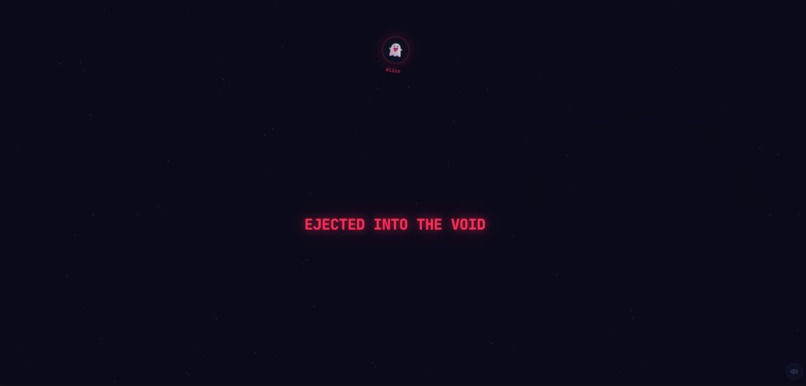
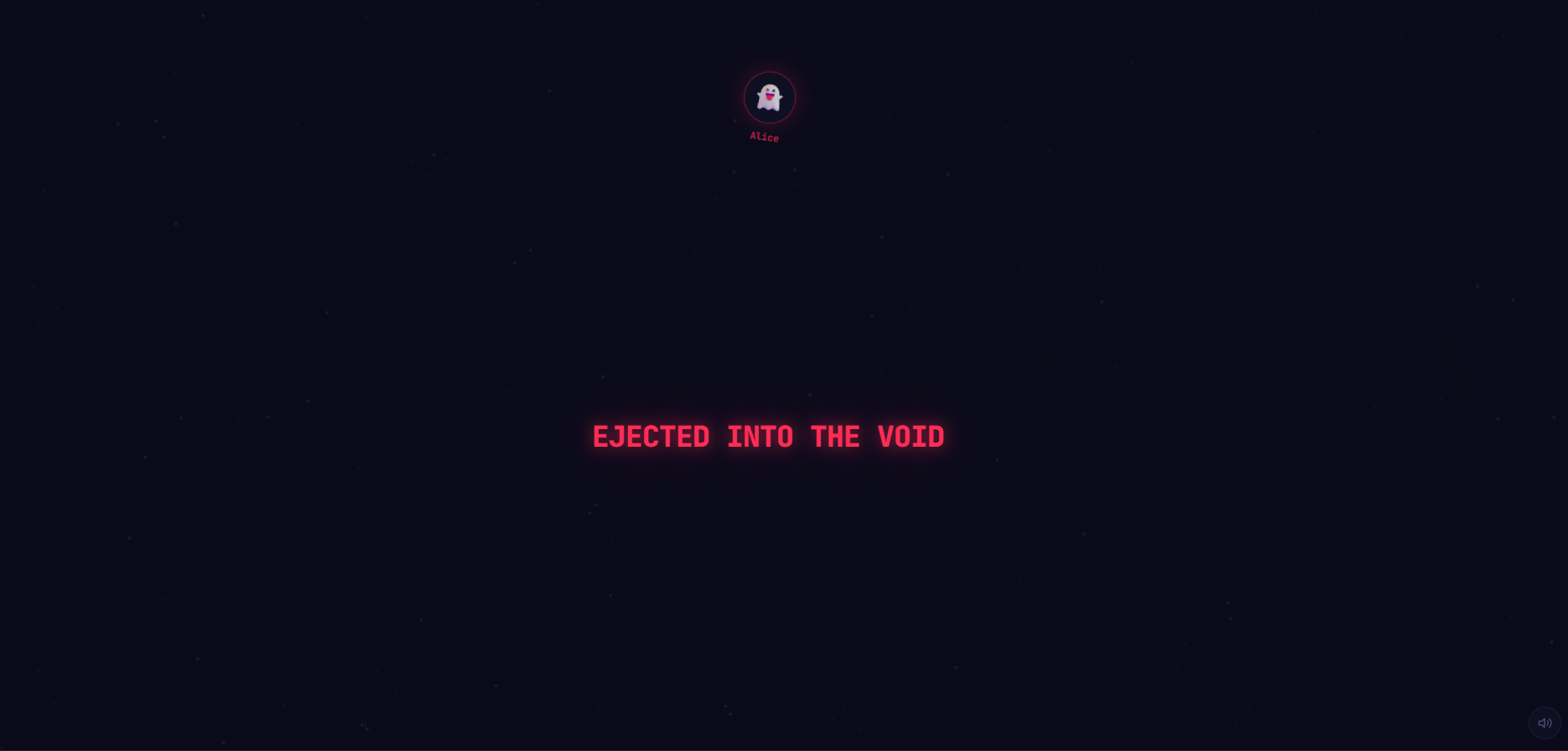
5.Ejecting
-
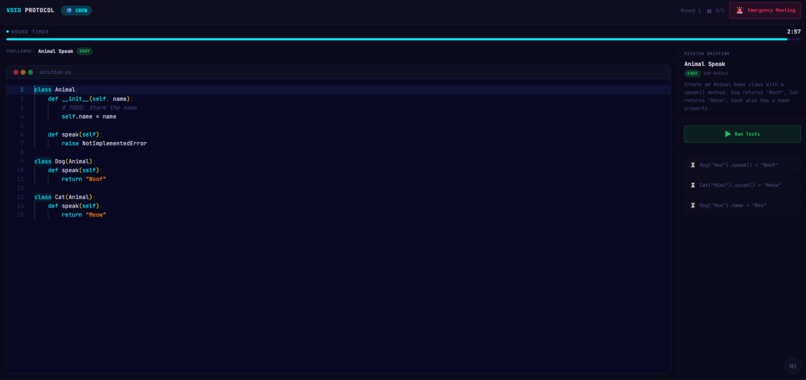
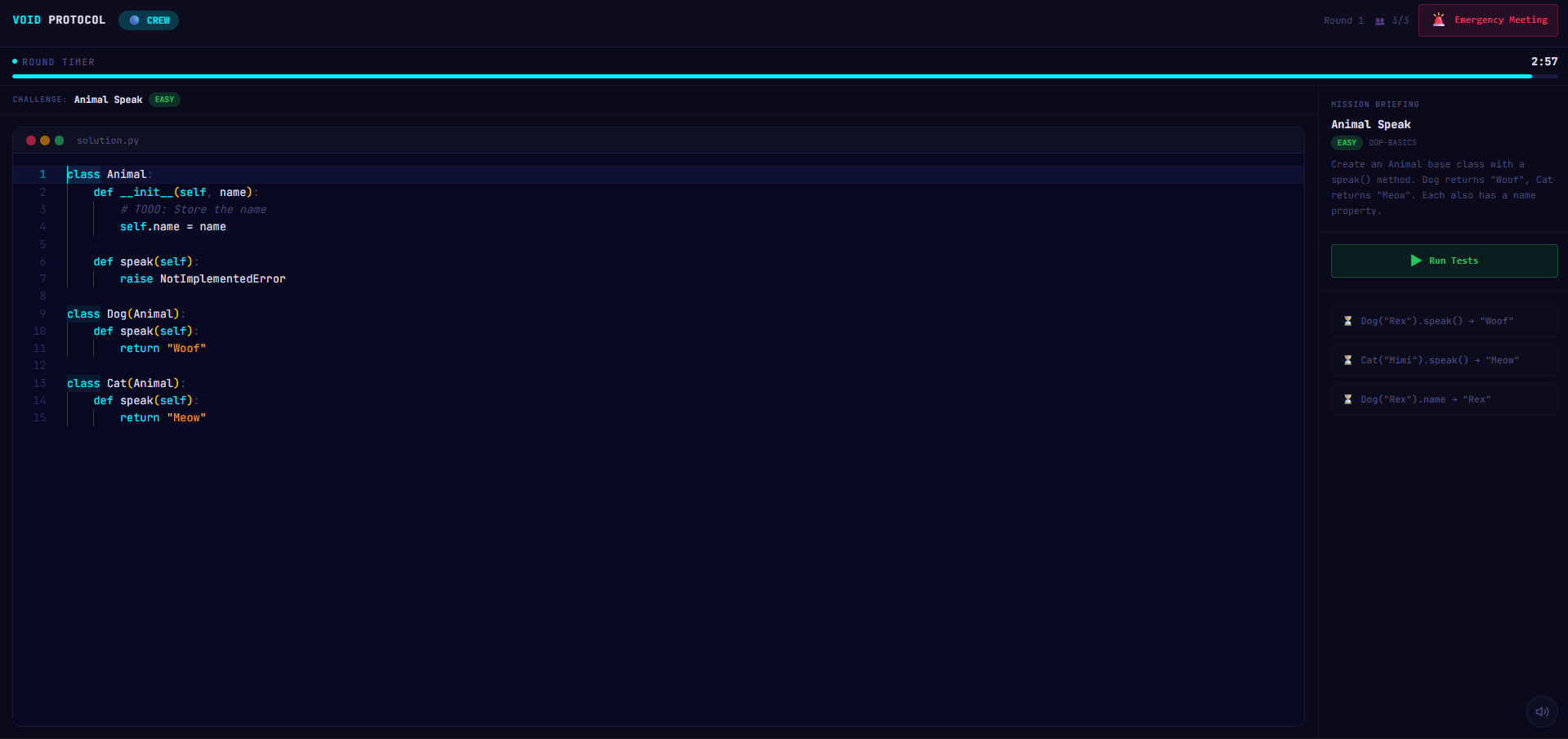
4.Coding with friend
-
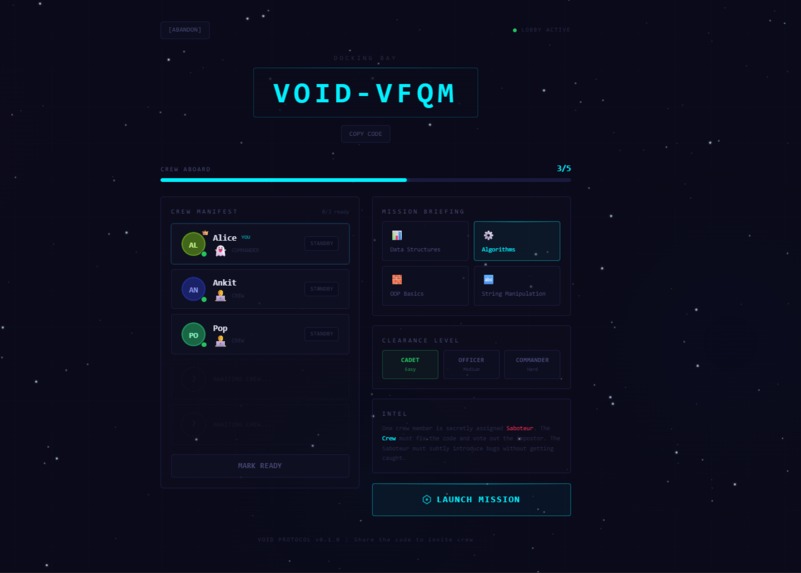
3.Playing with friends
-
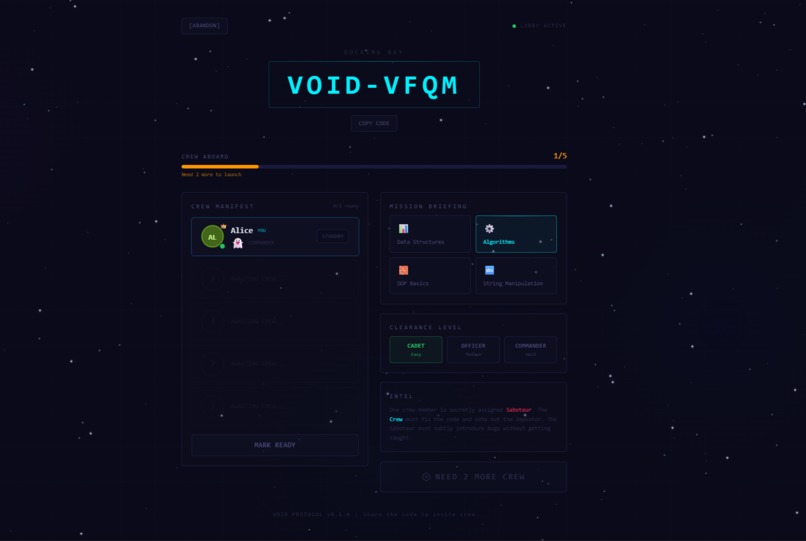
2.Create Mission
-
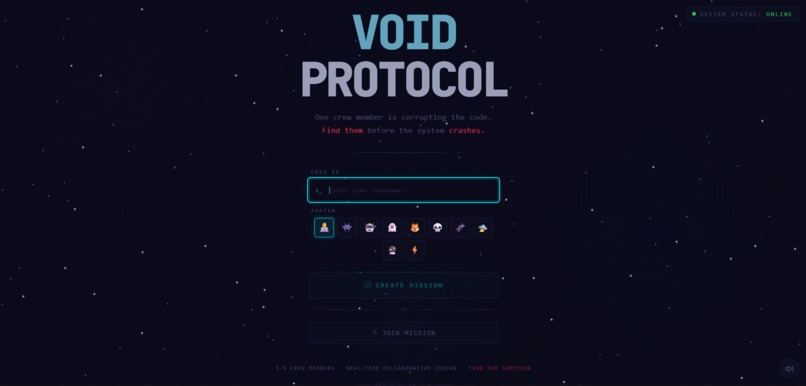
1.Home page
-
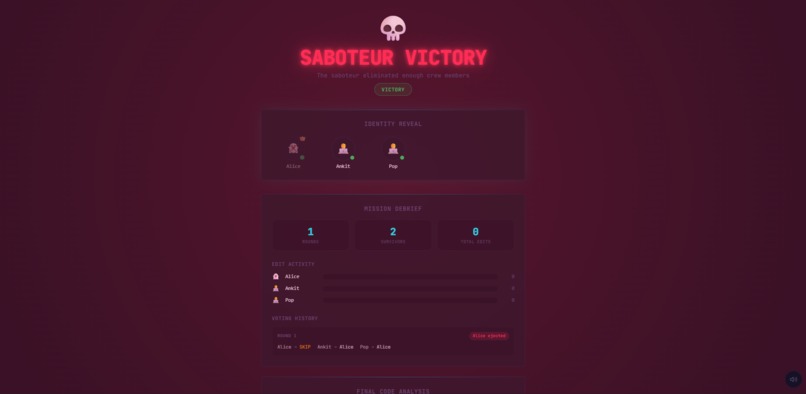
6.Victory or Loss page
Inspiration
The idea for Void Protocol came from a simple observation:
games are engaging, but coding practice often isn’t.
While playing Among Us with friends, I was fascinated by how naturally it creates tension, collaboration, and deception. At the same time, platforms like competitive coding sites focus heavily on individual problem-solving, often lacking interaction and excitement.
I wondered:
What if solving coding problems felt like playing a multiplayer game with real stakes?
I also explored similar experimental projects online that tried to gamify coding, but most lacked real-time interaction or meaningful social mechanics. That motivated me to push the idea further — combining live code execution, multiplayer systems, and social deduction into a single experience.
This led to the creation of Void Protocol — a game where coding is not just a skill, but a survival tool.
What it does
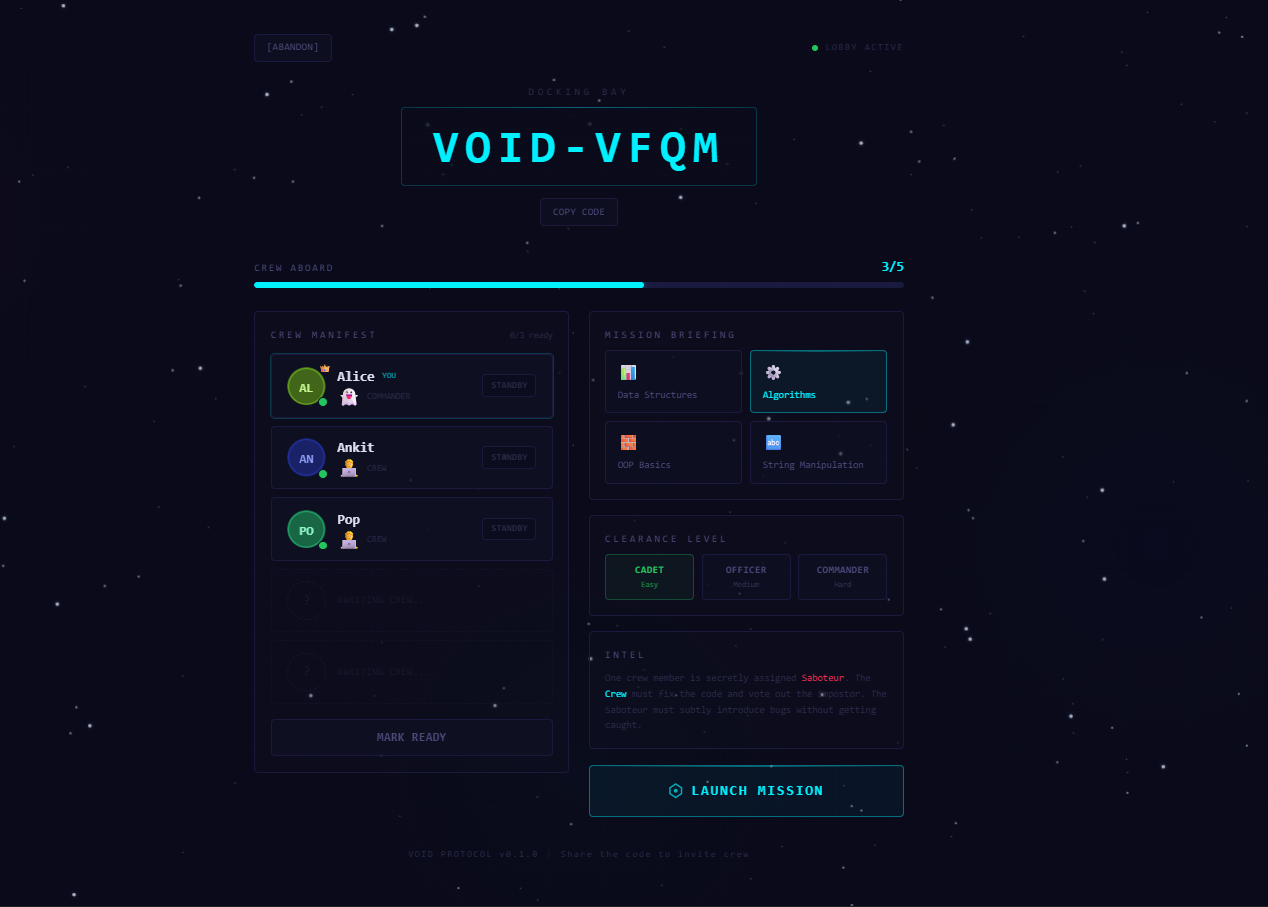
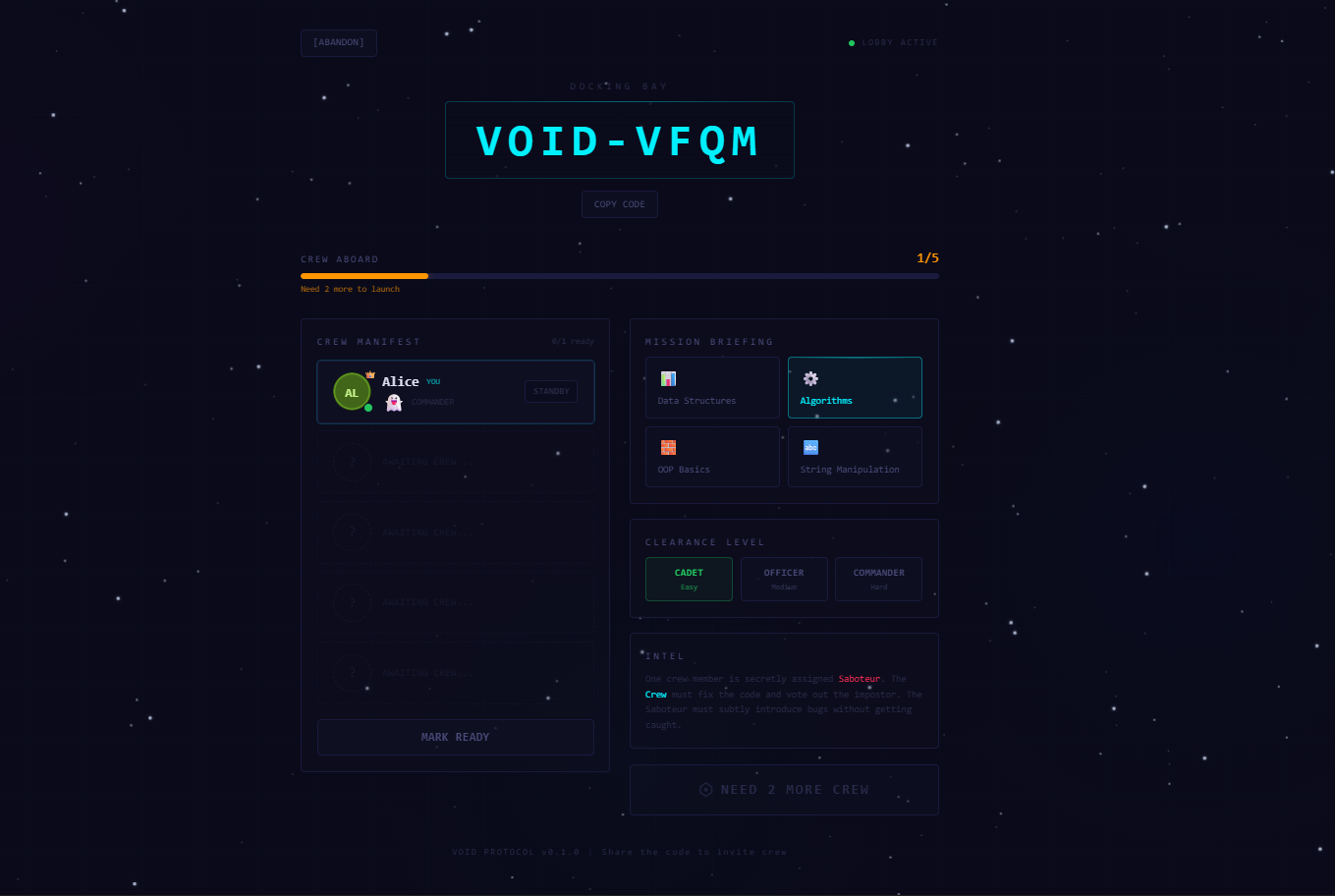
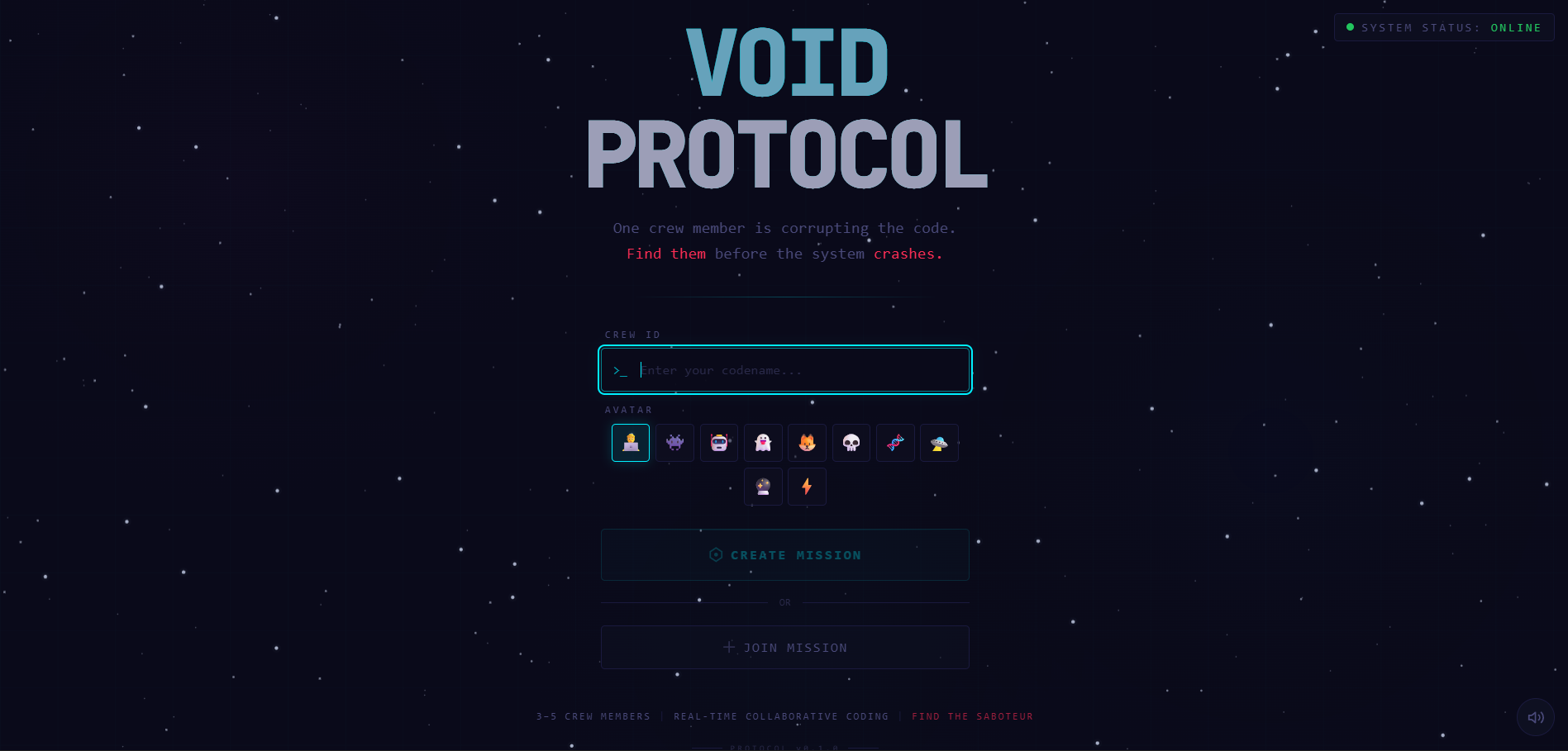
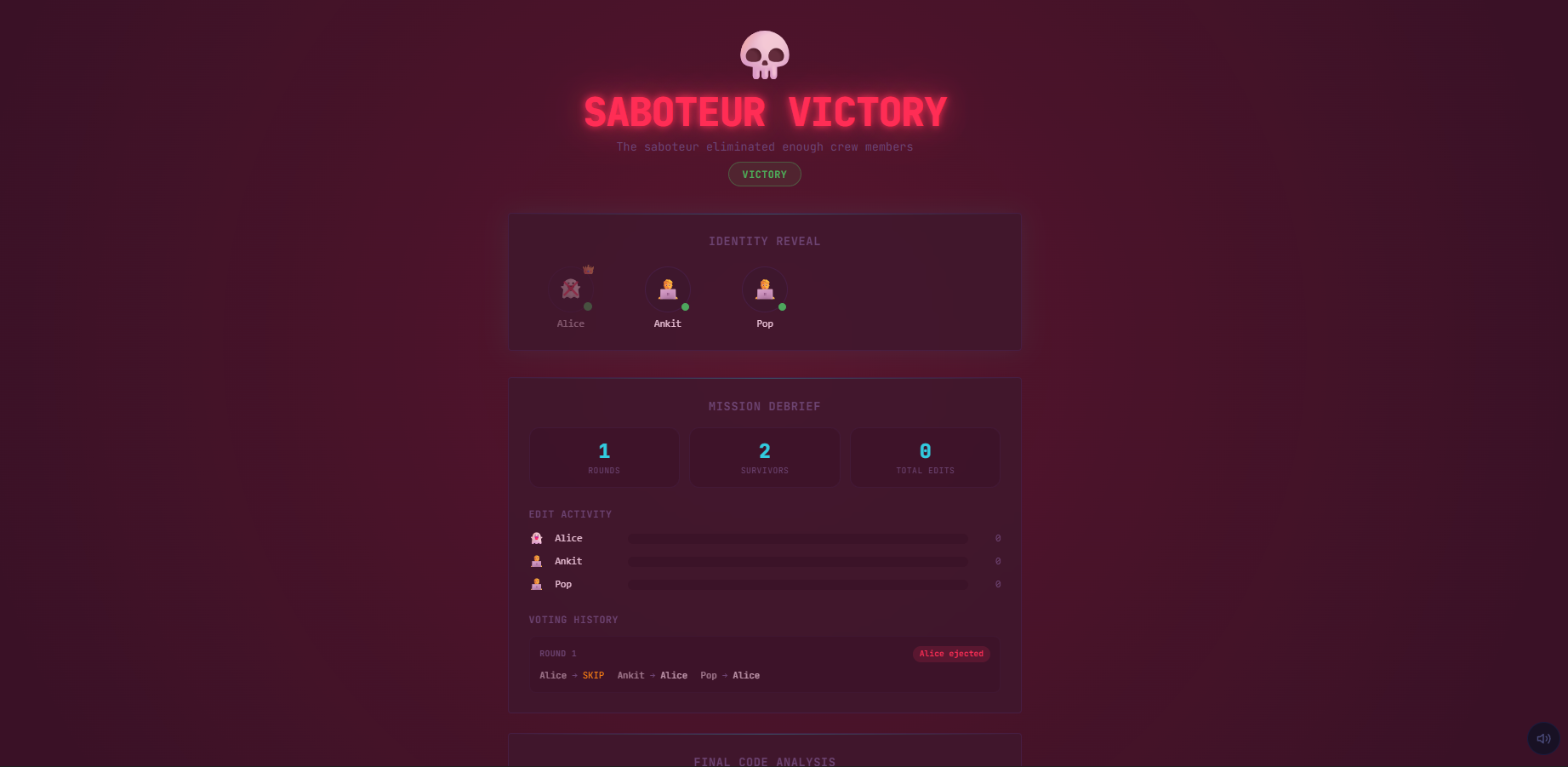
Void Protocol is a real-time multiplayer social deduction game set in a futuristic space station.
- Players are assigned roles: Crew or Saboteur
- Crew members solve real coding challenges to stabilize the system
- Saboteurs secretly disrupt progress and manipulate other players
- Meetings allow players to debate, accuse, and vote
The game blends:
- Competitive coding
- Real-time collaboration
- Psychological strategy
How we built it
We built Void Protocol using a modern real-time web stack:
- Frontend: React + TypeScript + Vite
- State Management: Zustand for handling complex game state
- Backend (Real-time): PartyKit for WebSocket-based multiplayer synchronization
- Storage: Durable state with SQLite for consistent sessions
- Code Engine: A custom sandboxed runner to evaluate player-submitted code
- UI/UX: Glassmorphism design with custom CSS and immersive animations
The biggest technical focus was ensuring low-latency synchronization so that all players see updates instantly.
Challenges we ran into
1. Real-time synchronization
Keeping all players in sync during fast-paced gameplay was difficult.
We had to ensure consistency across clients while handling events like voting, sabotage, and task completion.
2. Safe code execution
Running user-submitted code inside a game environment required careful handling to avoid unsafe execution and maintain performance.
3. Game balance
Designing challenges that are:
- not too easy (boring)
- not too hard (frustrating)
was an ongoing balancing act.
4. Blending logic with social gameplay
Ensuring that coding and deduction both feel equally important was tricky — neither should dominate the experience.
What we learned
- How to design and manage real-time multiplayer systems
- Handling shared state across distributed clients
- Building a custom code evaluation engine
- The importance of game design balance alongside technical implementation
- How combining different domains (gaming + coding) creates powerful user experiences
We also realized that engagement can be modeled almost like a system:
$$ Engagement = f(\text{Challenge}, \text{Interaction}, \text{Uncertainty}) $$
Where increasing interaction and uncertainty significantly improves user retention.
What's next for Void Protocol
- AI-generated adaptive coding challenges
- Ranked multiplayer and tournaments
- Voice chat integration
- Expanded challenge library
- Educational integrations for learning platforms
Final Thoughts
Void Protocol is more than just a game —
it’s an attempt to make coding interactive, social, and exciting.
Instead of practicing alone, players learn by competing, collaborating, and surviving together.
Built With
- javascript
- node.js
- partykit
- react
- sqlite
- typescript
- vanilla
- vite


Log in or sign up for Devpost to join the conversation.