Inspiration
Growing up in Liberia, I’ve seen first-hand how language and literacy barriers prevent people especially women and youth in rural areas from accessing reliable Sexual and Reproductive Health and Rights (SRHR) information. Many rural Liberians don’t speak English fluently and depend on traditional knowledge or rumors, which can be misleading or harmful. This inspired me to build a solution that allows everyone’s voice to be heard, regardless of literacy, internet access, or language. Technology should speak our language not the other way around.
What it does
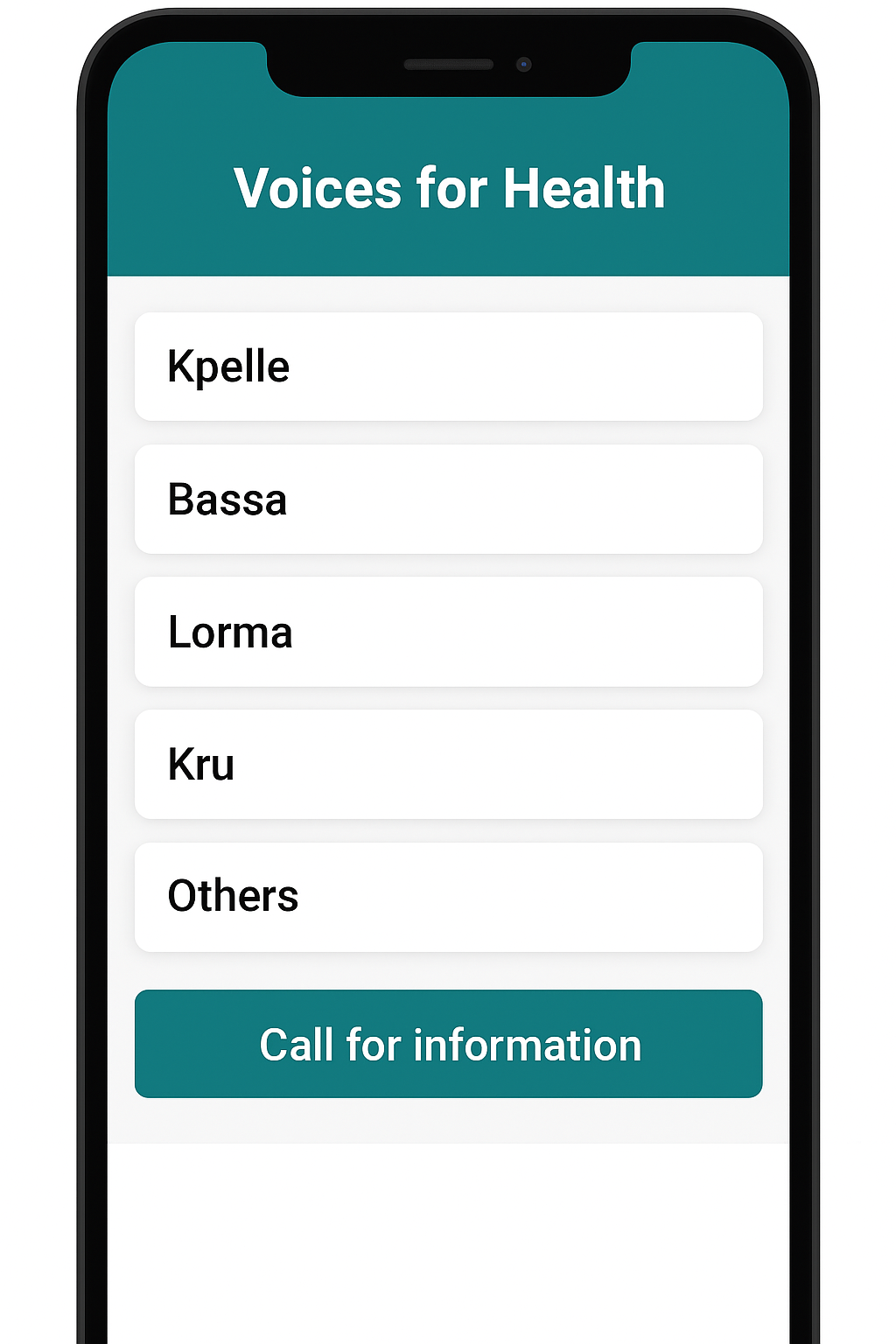
Voices for Health is a voice-based and location-aware app that delivers SRHR information in local Liberian dialects such as Kpelle, Bassa, Lorma, and Kru, etc. It uses a combination of: IVR (Interactive Voice Response): Users call a toll-free number to listen to SRHR messages in their native language. GPS Integration: The app detects the user’s location and selects the appropriate dialect automatically. Audio Translation: Converts SRHR messages into voice recordings in local dialects.
How we built it
We built Voices for Health with no code, integrating these components: Twilio IVR for the toll-free voice hotline and menu flows. GeoDirectory + Google Maps API for GPS-based language selection and clinic lookup. Manual audio recordings (Kpelle, Bassa, Lorma, Kru) embedded with Compact WP Audio Player. SuperPWA to enable offline access and installable behavior. AppMySite to produce an Android APK for field testing.
Challenges we ran into
Language coverage: No off-the-shelf translators for Liberian dialects; required human recordings. Connectivity: Many users are offline necessitated PWA + IVR + USSD planning. IVR complexity: Menu trees and audio file management across dialects are time-consuming. User testing: Hard to run broad field tests due to distance and low network coverage.
Accomplishments that we're proud of
Reaching Rural Communities: Successfully delivered accurate Sexual and Reproductive Health information to rural areas in Liberia, overcoming language and connectivity barriers. Inclusive Multilingual Access: Launched SRHR content in local dialects like Kpelle, lorma, bassa, etc. ensuring everyone can access critical health guidance in their own language. Innovative Technology Integration: Built an IVR system integrated with GPS and WordPress, powered by Twilio and Google Maps API, making information accessible offline and online. Toll-Free Access: Enabled users without internet to call a tollfree number and receive trusted health tips and nearby clinic information anytime, anywhere. Community Engagement & Awareness: Increased awareness and health literacy among underserved populations through culturally sensitive audio content and outreach programs. Scalable & Sustainable Model: Developed a system that can be expanded to other regions and languages, supporting long-term impact in health education.
What we learned
Voice-first interfaces are crucial for low-literacy contexts. GPS + language mapping dramatically improves relevance of health messages. WordPress can rapidly prototype multi-channel health tools when combined with APIs.
What's next for Voices for Health
Integrate AI-enabled voice translation for dialect assist (pilot only). Add USSD fallback for basic phones. Partner with Ministry of Health and NGOs to validate content and scale to all 15 counties.
Built With
- gsm
- nocode


Log in or sign up for Devpost to join the conversation.