-
-
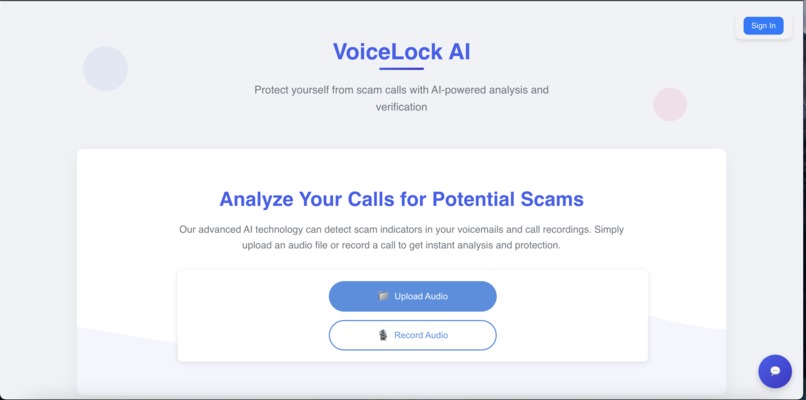
Main Screen
-
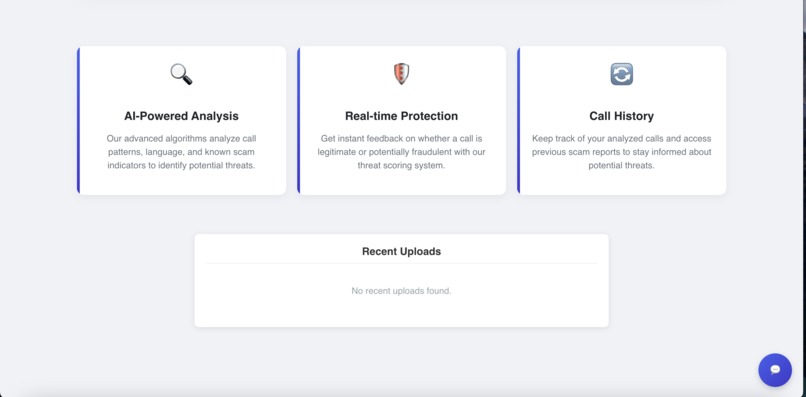
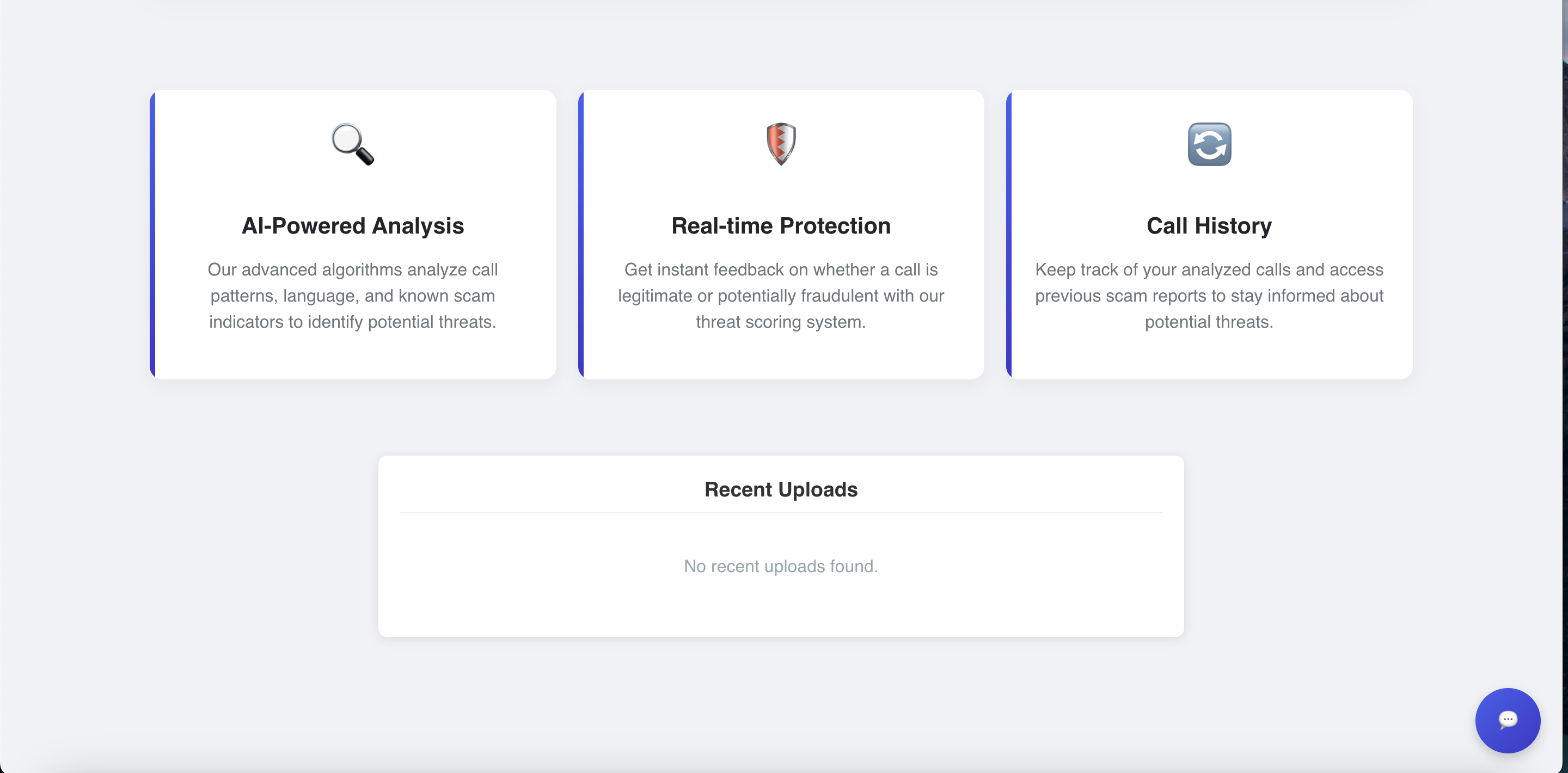
Site Features
-
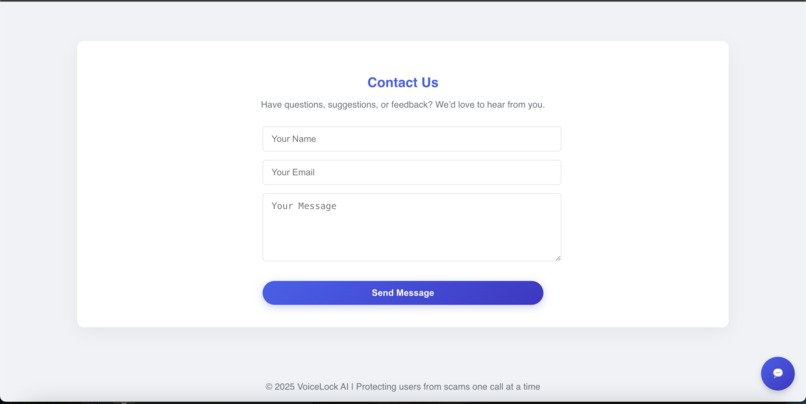
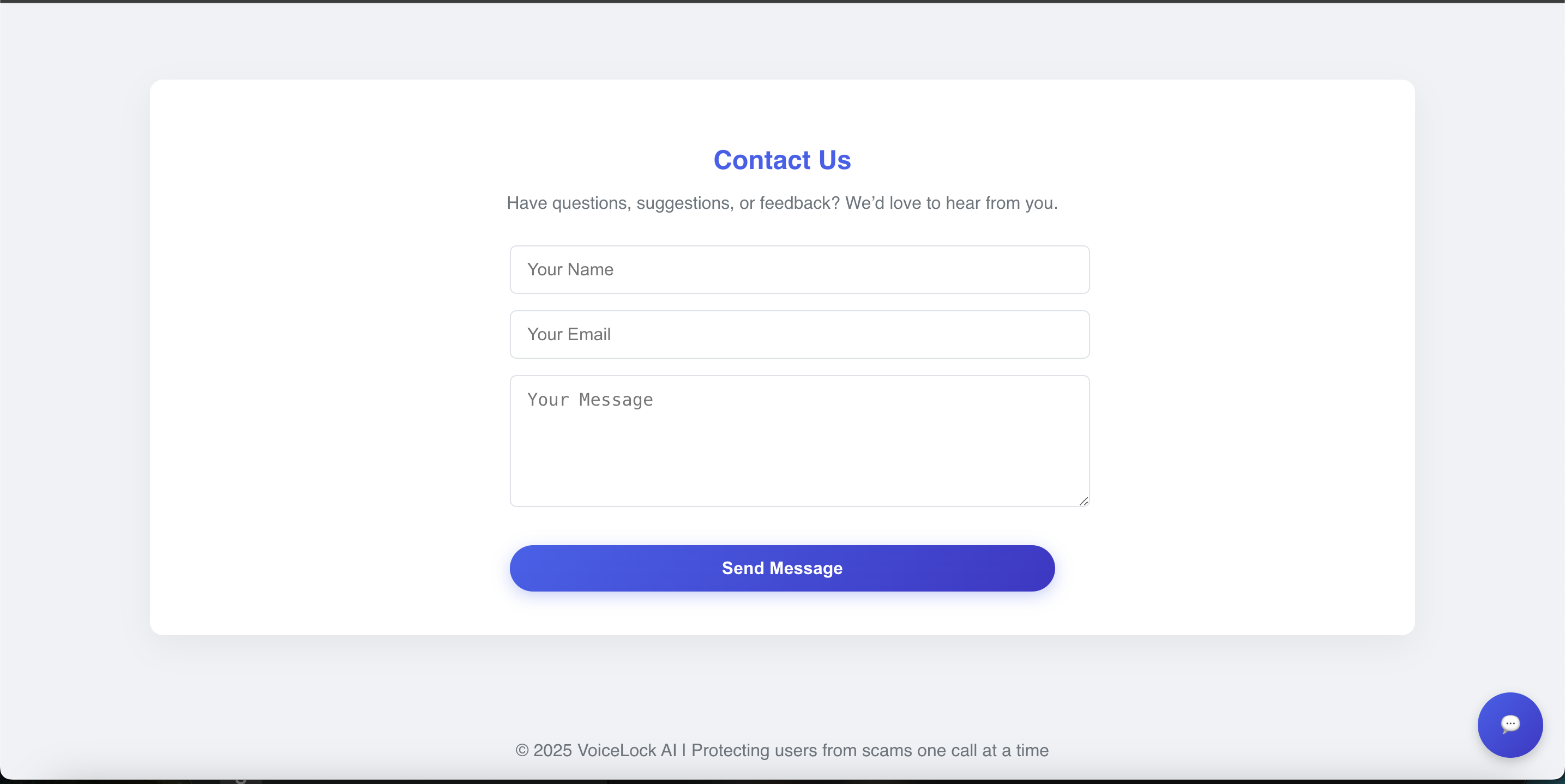
Contact us
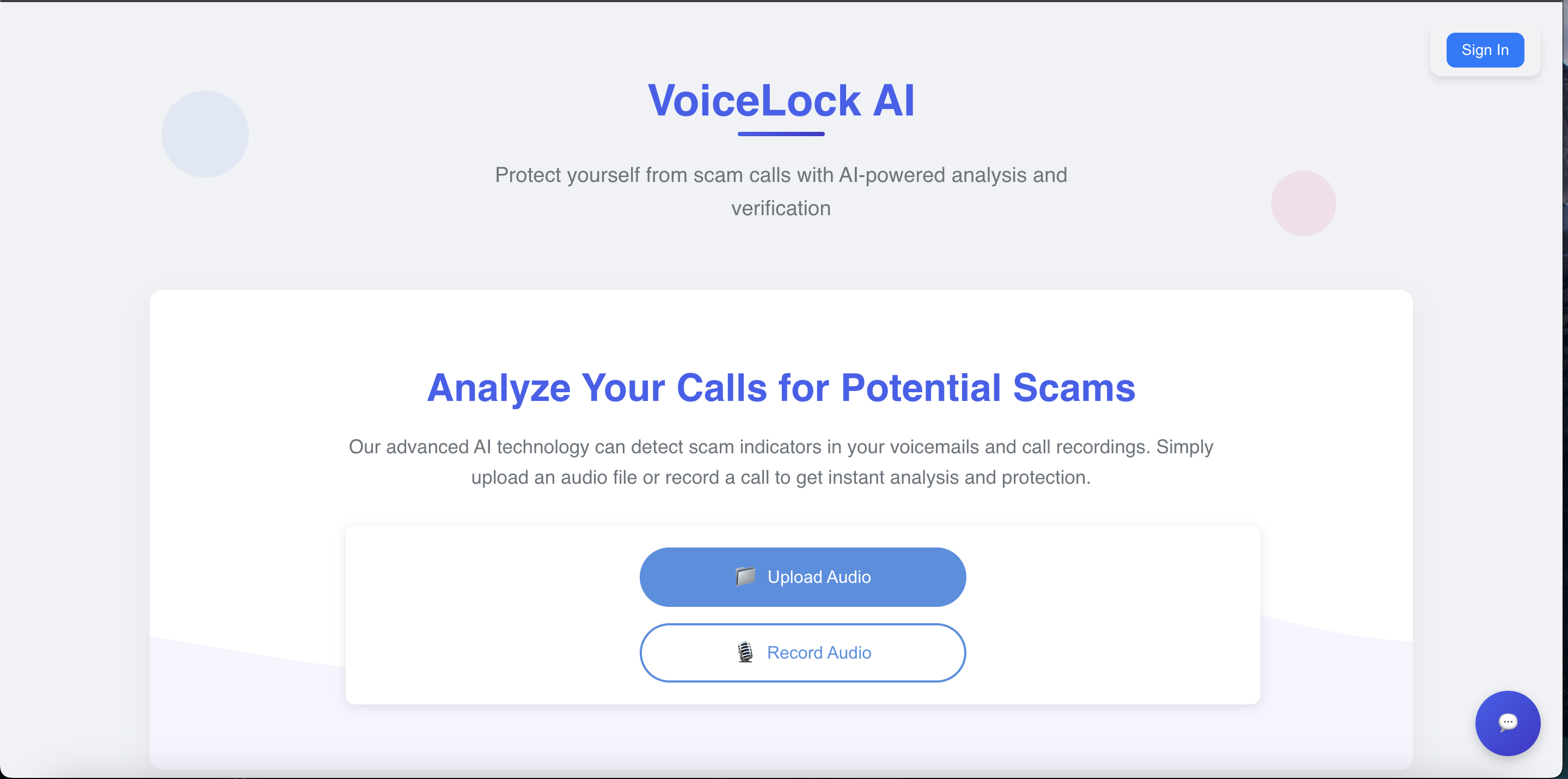
Inspiration
It was 3 AM on a Friday morning when my phone rang—multiple times in a row. Assuming it was an emergency, I picked up, only to hear a robotic voice claiming my bank account had been compromised. Still half-asleep, I dismissed it as a mistake and went back to bed.
Minutes later, my phone rang again. This time, the caller urgently warned that my credit card had been leaked and pressured me to provide my Social Security Number to prevent fraudulent charges. In that moment of panic and confusion, it was easy to believe the call was real.
Scam calls like these prey on fear, urgency, and exhaustion, catching people off guard. This experience inspired us to build VoiceLock AI—a tool that uses machine learning to analyze call recordings, detect scam patterns, and alert users before they fall victim to fraud.
What it does
Allows users to upload files and record audio recordings to detect if a call is a scam or not.
How we built it
Using machine learning to build our AI model, we were able to take audio/recording to detect scam percentages.
Challenges we ran into
One of the biggest challenges we faced was integrating the front-end and back-end while ensuring real-time data flow. Connecting the gap between React for UI, our Node.js + Python-powered backend required managing CORS policies and synchronizing authentication flows with OAuth 2.0.
Accomplishments that we're proud of
Integrating on-site Google Gemini AI chatbot for assistance. OAuth for login. Real-time scam detection using our machine learning model.
What we learned
We learned how to implement an AI chatbot. Use OAuth for logins. Training and testing a machine learning model.
What's next for VoiceLock
Develop an App for live recording.


Log in or sign up for Devpost to join the conversation.