-
-
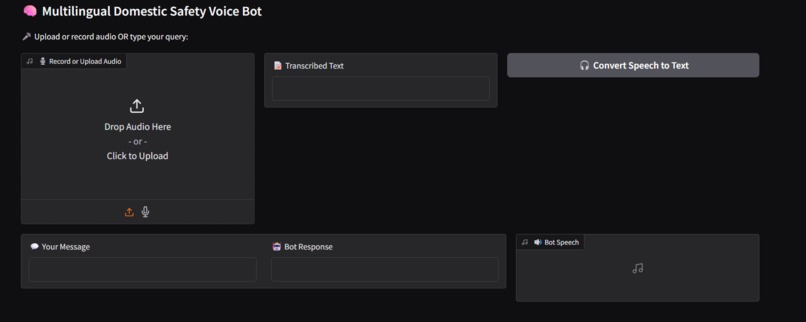
ui
-
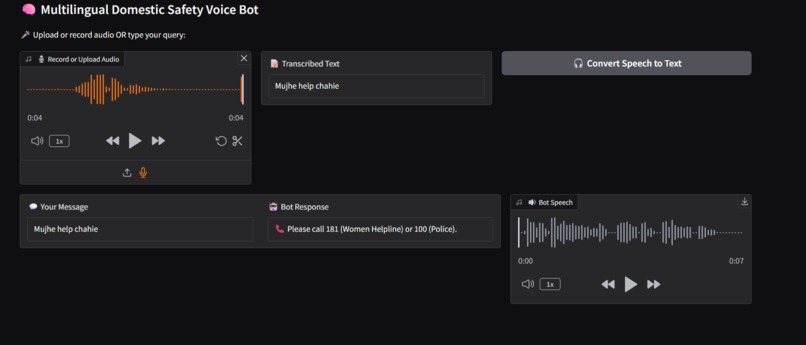
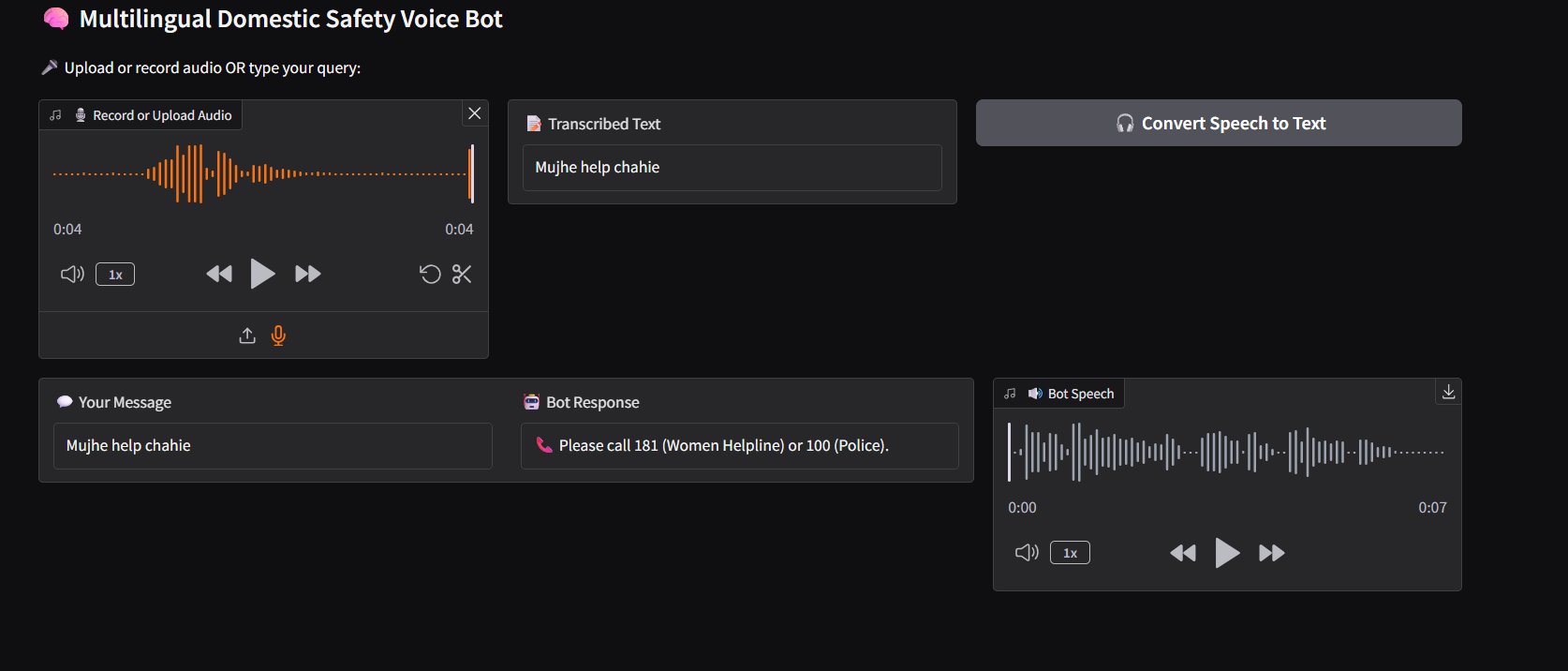
converting message to bot speech
🌟 Inspiration Many victims of domestic violence, especially women in marginalized or rural communities, struggle to access help due to language barriers, lack of literacy, or technological inaccessibility. While AI is rapidly evolving, it often overlooks inclusivity and accessibility. We wanted to build something that uses simple AI tools to solve a real-world problem — giving a voice to the voiceless, in any language.
💡 What it does VoiceGuard is a multilingual, voice-based AI chatbot that:
🎙️ Accepts voice or text input in any language
🌐 Translates the user's speech into English
🧠 Detects intent (like help, safety, law) using rule-based NLP
⚖️ Responds with legal rights, helpline numbers, and safe shelter links
🔊 Speaks the response aloud in the user’s own language
It acts as a private, always-available assistant for those who cannot easily read, type, or speak English — especially during moments of stress or danger.
🛠️ How we built it We built VoiceGuard using:
Python 3 for scripting and logic
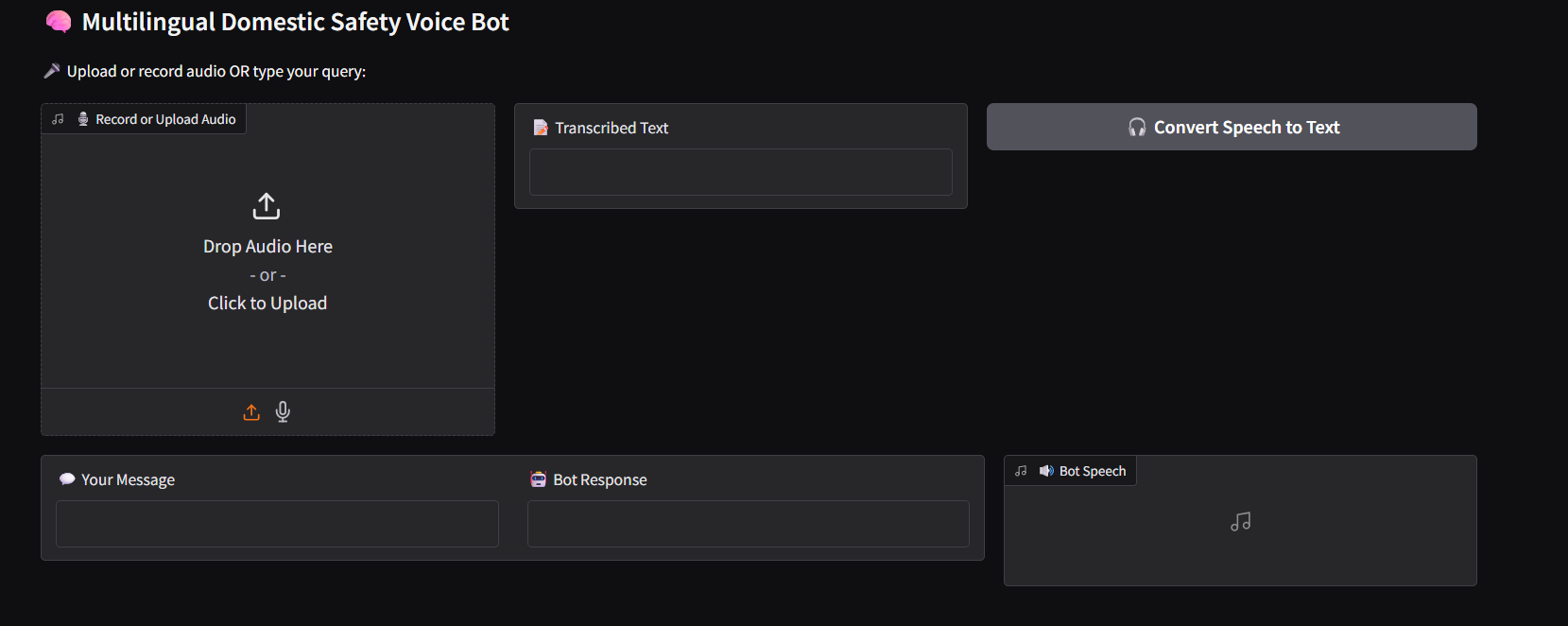
Gradio to create a web-based UI that supports voice input/output
SpeechRecognition to transcribe audio input
deep_translator for automatic translation to/from English
pyttsx3 for offline text-to-speech
Pandas/CSV to store example phrases and intents
We used a modular notebook design, allowing smooth chaining of: Voice → Text → Translation → Intent → Response → Voice
🚧 Challenges we ran into 🧩 Ensuring mic input compatibility across browsers using Gradio components
🈳 Accurately translating and detecting the user’s intent from short, spoken queries
📢 Handling offline text-to-speech reliably with pyttsx3
⚖️ Designing bot responses that are helpful, empathetic, and non-triggering
🏆 Accomplishments that we're proud of 🎯 Built a working MVP that is fully voice-powered and multilingual
🛡️ Created a socially impactful tool that addresses a real-world safety issue
🌐 Enabled language-agnostic accessibility with no need for typing or English fluency
💬 Designed for privacy-first interaction — no user data is stored
📚 What we learned 💡 How to combine multiple AI techniques (STT, NLP, TTS, Translation) into one seamless pipeline
🌍 How inclusive design in AI can reach people who are often overlooked
⚙️ How to balance simplicity, functionality, and ethics in a crisis-response tool
🎤 Improved our understanding of speech input processing and response flow
🔮 What's next for VoiceGuard: AI Safety Companion 📱 Build a mobile-friendly Progressive Web App (PWA) version
🔗 Integrate with emergency contacts or SMS alerts
🤖 Use LLMs for smarter conversational responses
🧾 Add multi-turn conversation memory and contextual safety checks
🧠 Partner with NGOs to pilot real-world deployment in vulnerable regions
Built With
- googletranslator
- gradio
- pyaudio
- python
- pyttsx3
- speechrecognition


Log in or sign up for Devpost to join the conversation.