-
-
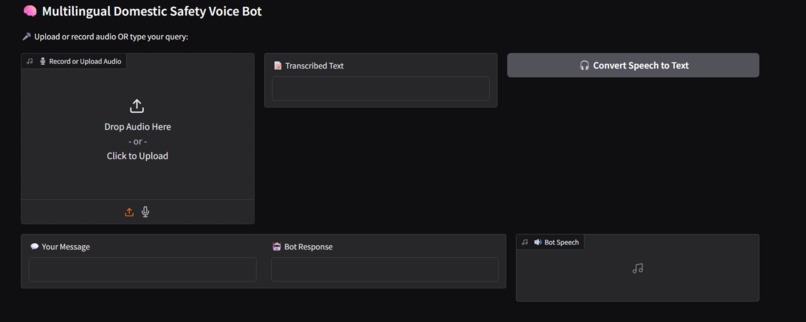
UI
-
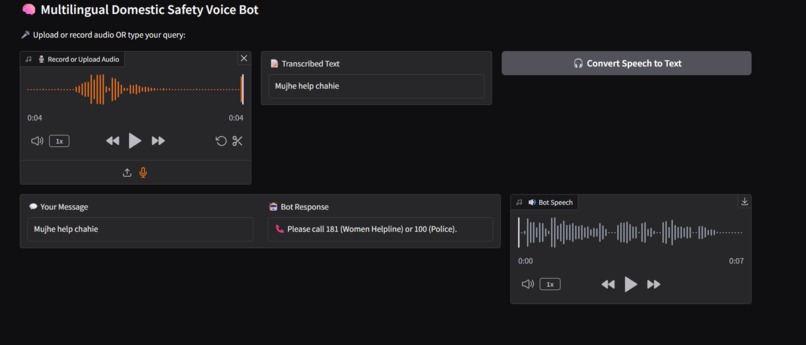
given a voice and bot has respond by text and by voice
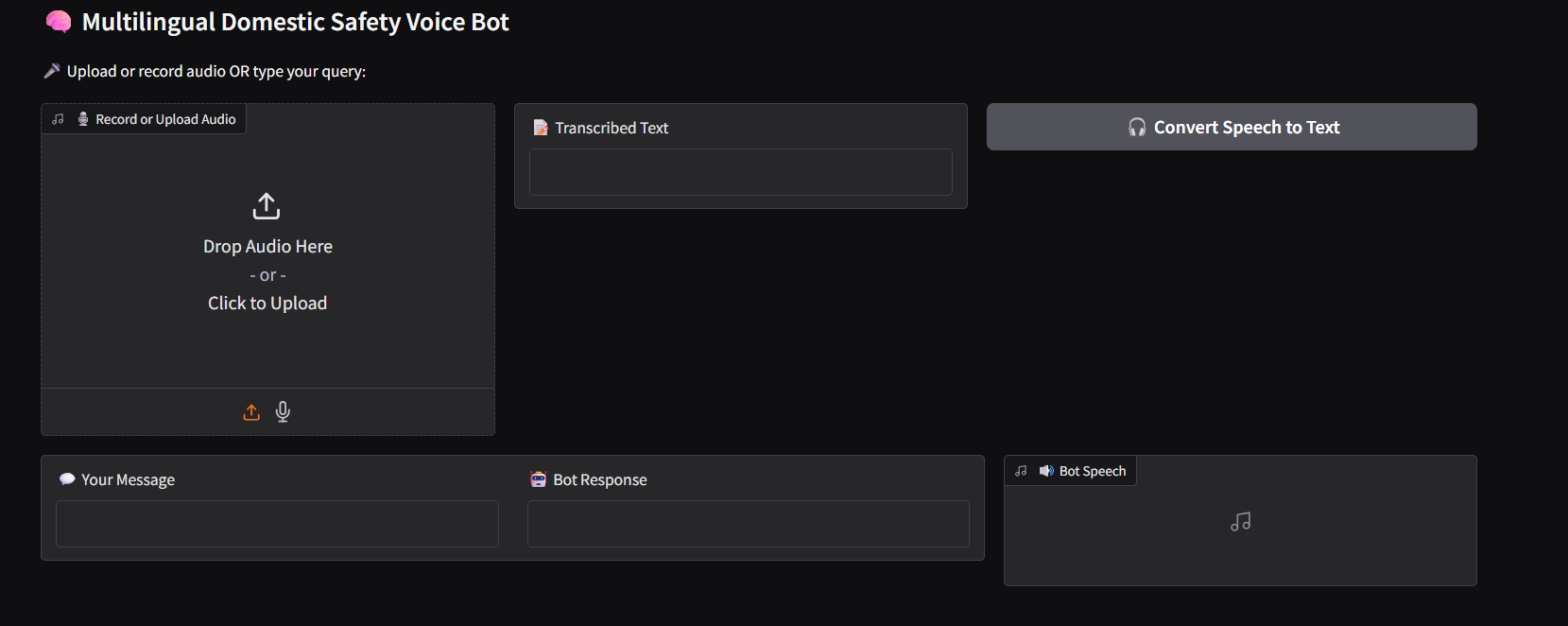
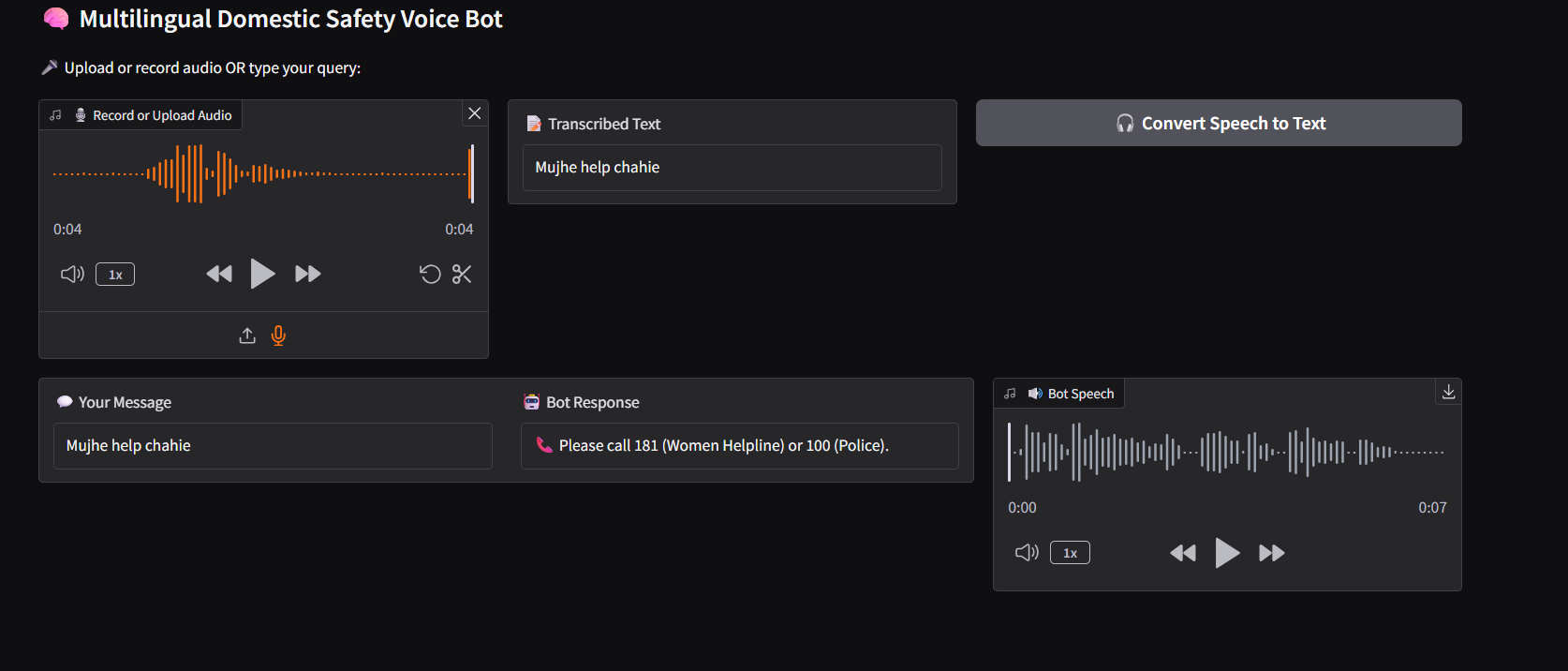
VoiceGuard is a multilingual, voice-enabled AI safety companion designed to empower individuals—especially women and vulnerable groups—facing domestic violence or crisis situations. Built with accessibility and simplicity in mind, it enables users to speak or type queries in any language, get immediate AI-powered support, and receive localized safety resources.
Domestic violence remains a silent epidemic across the world. Victims often hesitate to seek help due to fear, lack of privacy, or language barriers. VoiceGuard aims to break that silence by providing an always-available digital ally that understands multiple languages and responds with legal information, safety resources, and support guidance.
🎯 Key Goals: Enable safe, discreet communication in crisis situations via voice/text input.
Provide instant access to legal aid, helpline numbers, and verified resources related to domestic violence.
Support multilingual users through live translation and understanding.
Make help accessible in low-resource or offline environments, thanks to local audio synthesis and a lightweight stack.
Whether someone is silently seeking information about their rights, looking for shelters, or in immediate danger—VoiceGuard is designed to be a non-intrusive first step toward help.
🔊 What it does VoiceGuard is a multilingual voice-based AI chatbot that:
Accepts voice input in various languages.
Transcribes the speech to text.
Translates it to English using NLP.
Understands the intent (e.g., "I need help", "Where is legal aid?").
Responds with safety information, legal guidance, or emergency contact support.
Speaks the translated response back to the user in their own language.
It uses speech recognition, translation, intent detection, and text-to-speech (TTS) to close the gap between AI and real-world safety needs.
🛠️ How we built it Gradio: For building the interactive user interface with support for audio input and output.
SpeechRecognition + Google Speech API: For transcribing spoken queries.
Deep Translator (GoogleTranslator): For translating multilingual input to English and then translating responses back to the user's native language.
Custom Rule-Based Logic: To detect keywords like help, safety, law, etc., and route responses accordingly.
pyttsx3: For generating spoken audio responses offline.
Open-source tools only: Built entirely without any proprietary APIs, making it easy to replicate or deploy.
🚧 Challenges we ran into Gradio version incompatibilities: Microphone input support required newer Gradio usage patterns.
Accurate transcription for multiple languages: Not all accents and languages were transcribed correctly with the same quality.
Voice response synthesis: Getting a natural-sounding voice output with pyttsx3 across platforms needed several tweaks.
Multilingual flow: Handling both translation directions (input + response) in real-time required careful pipeline management.
🏆 Accomplishments that we're proud of Built a fully working voice-based multilingual chatbot with real-time translation.
No need for cloud-based AI services—this solution is lightweight and privacy-friendly.
Enabled empathy-driven AI to respond in local languages for sensitive situations like abuse, discrimination, or distress.
📚 What we learned Leveraging AI for social good requires both technical creativity and ethical design thinking.
Voice interfaces make tools more inclusive for people with disabilities or low literacy.
Combining multiple open-source tools can lead to a powerful, production-ready MVP within hours.
🚀 What's next for VoiceGuard: AI Safety Companion Language detection improvements: Use automatic language identification to optimize translation routes.
Mobile version: A lightweight mobile app with offline support.
Smart alerting: Add integration to notify emergency contacts if a user speaks trigger phrases.
Conversational memory: Make the bot remember prior queries in the same session for better continuity.
NGO integration: Connect users directly with local women’s helplines, legal aid, or counselors.

Log in or sign up for Devpost to join the conversation.