Inspiration
AI can now clone a person's voice from a few seconds of audio. Scammers use it to phone grandparents as a "grandchild in trouble" who needs money right now. Older people are told to "be careful", but nobody lets them practice, and nobody notices when a call goes wrong. I wanted to build the family's safety net: practice before the scam, a check during it, and a gentle watch afterwards.
What it does
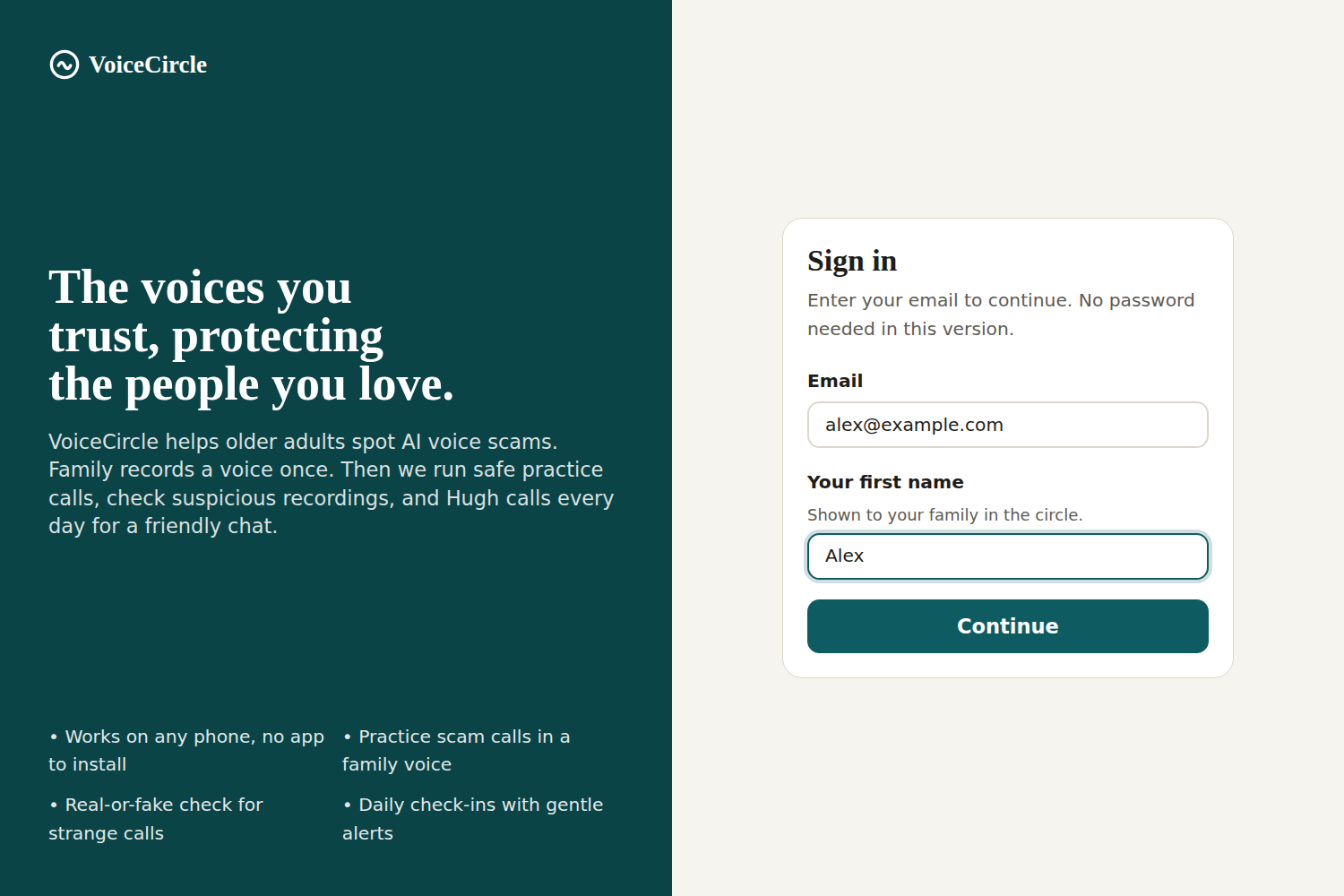
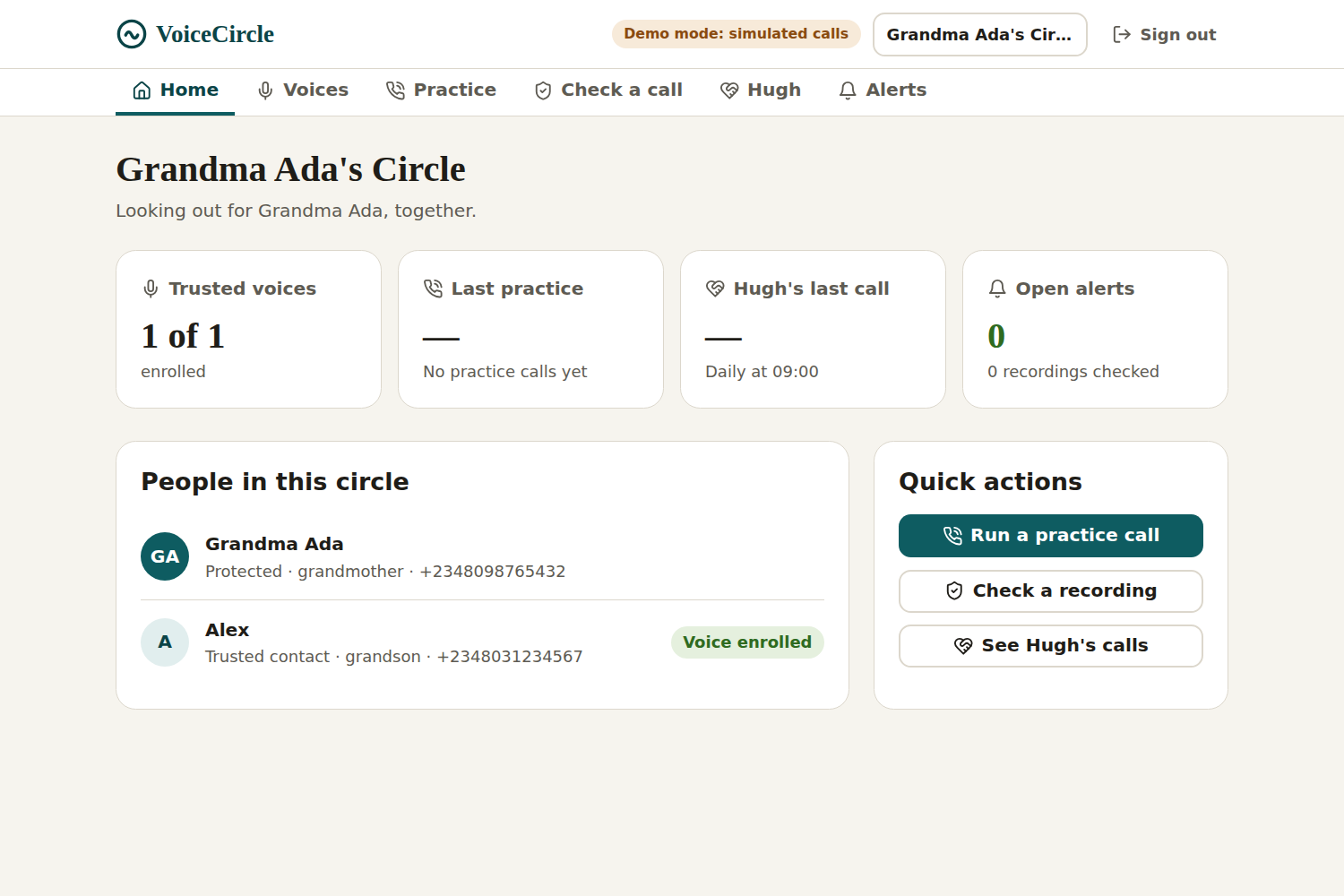
VoiceCircle lets a family form a private circle around an older relative.
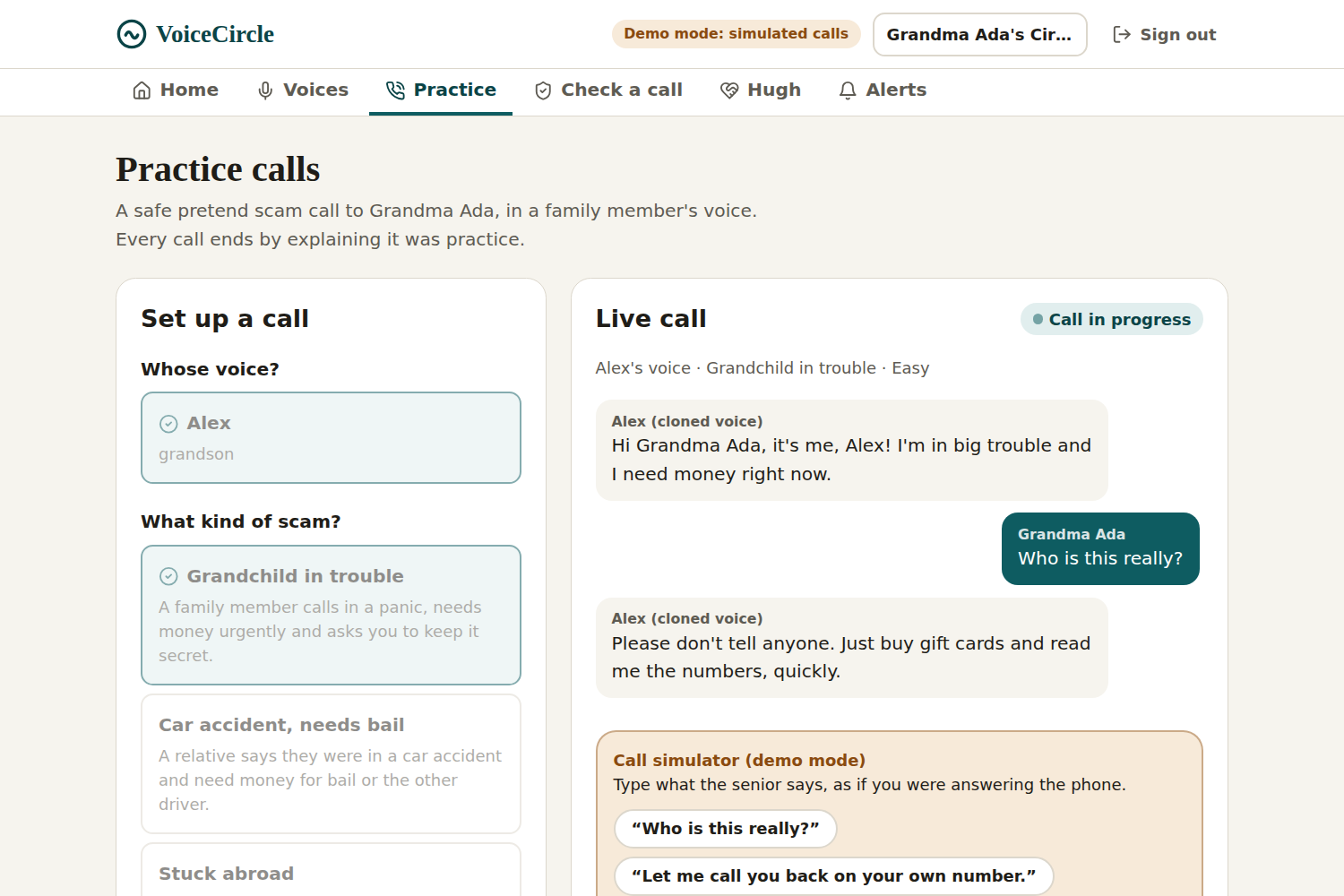
- Practice calls: with the family member's consent, the app phones the elder with a realistic scam script in that relative's cloned voice. Every call ends by explaining it was practice, and the elder gets a score and feedback on whether she verified the caller.
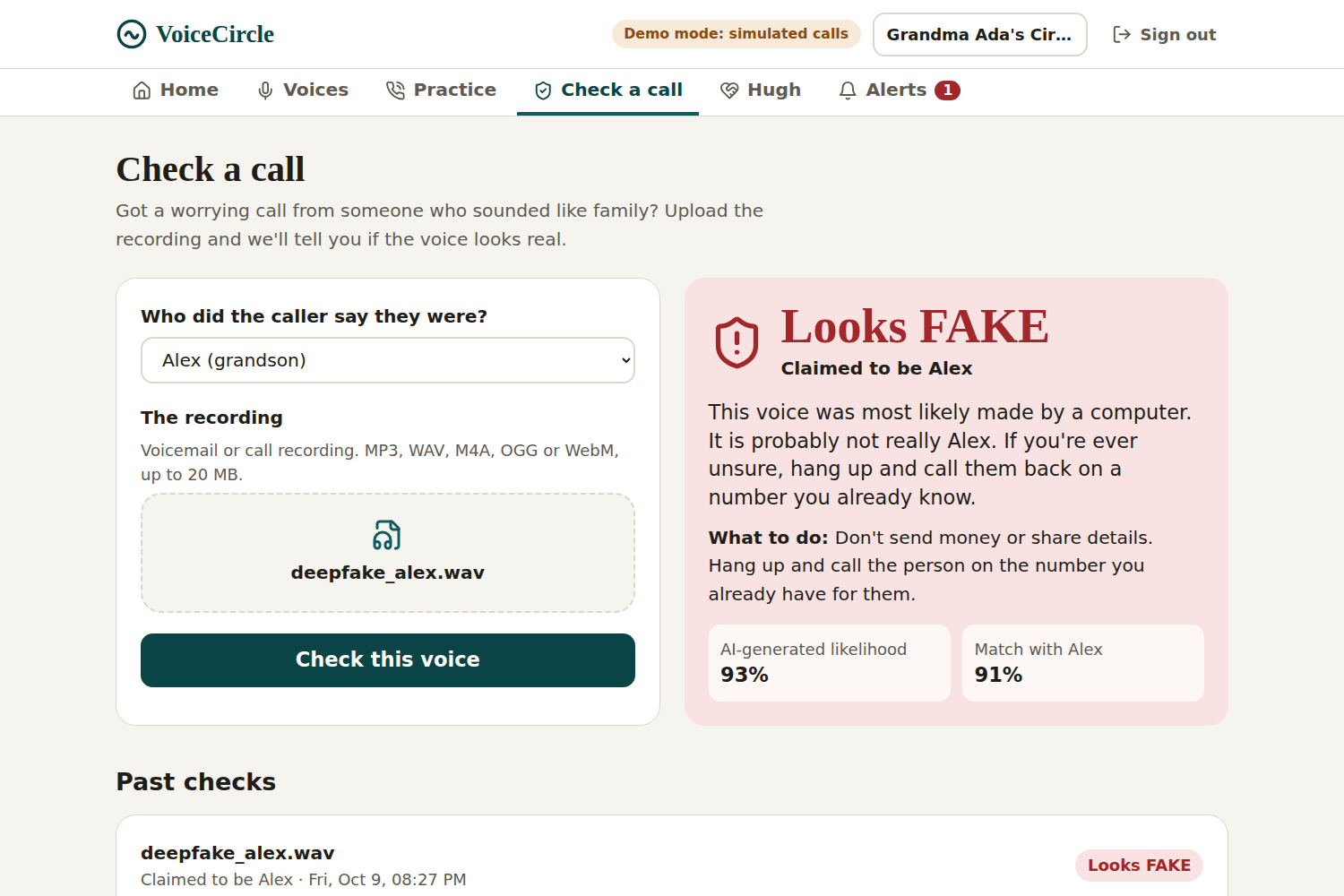
- Check a call: upload a suspicious voicemail or recording. VoiceCircle reports whether it sounds AI-generated and whether it matches the real person, then tells you what to do next.
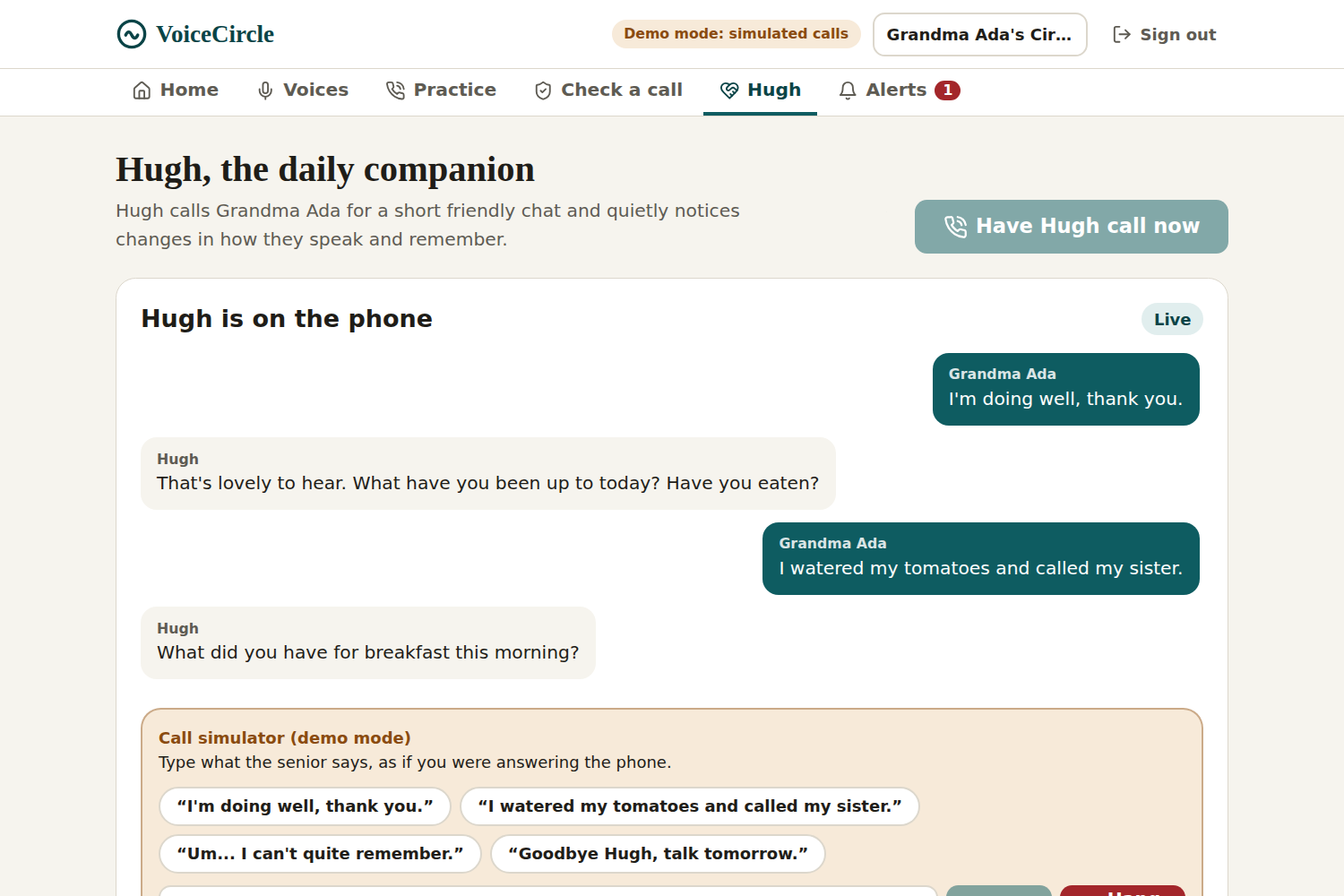
- Hugh, the daily companion: a friendly AI phones the elder each day for a short chat and sends the family a summary, so changes in mood or routine are noticed early.
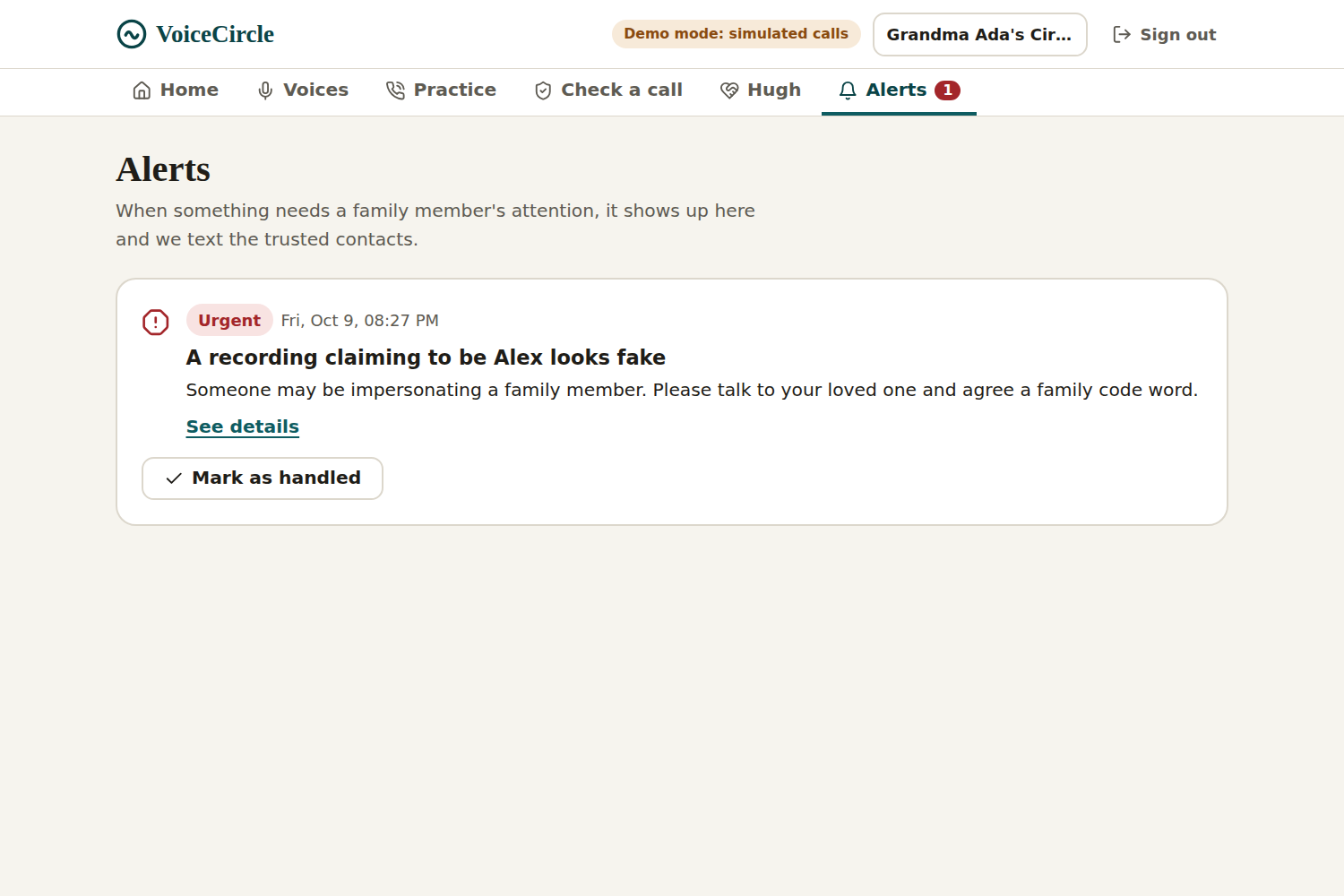
- Alerts: anything worrying becomes an alert the family can review and mark as handled. Elders only need an ordinary phone. There is no app to install.
How we built it
- Backend: FastAPI (Python) with async SQLAlchemy, deployed on Render, and a scheduler for timed practice and check-in calls.
- Frontend: React and TypeScript with Vite, deployed on Vercel.
- Phone calls: Twilio Voice with speech recognition for the live back-and-forth.
- Voices: Fish Audio for consent-based voice cloning and speech.
- Detection: Resemble AI for AI-voice detection and speaker matching.
- AI conversation: an LLM served by Groq plays the caller and Hugh.
- Data and auth: Supabase for sign-in, Postgres and private audio storage.
- A built-in demo mode simulates calls, so the whole product can be tried without real phone numbers.
Challenges we ran into
- Making phone calls feel like a conversation: Twilio only hears speech while it is listening, so we nested the prompts inside the listening step to let people answer naturally.
- Staying inside strict timing limits: a phone webhook must answer within seconds, so slow AI responses fall back to a scripted line instead of leaving silence.
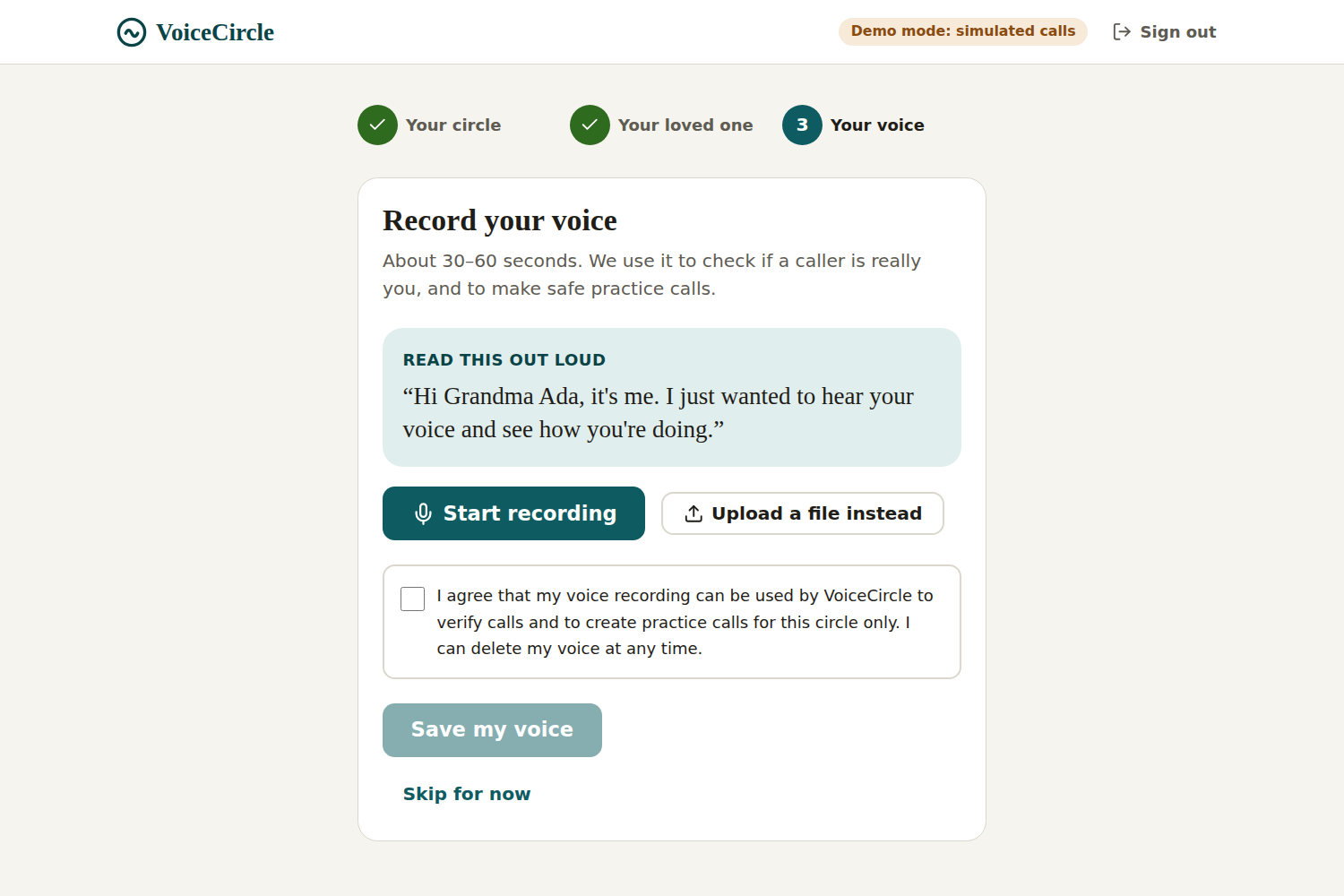
- Consent and privacy: voices are only cloned with explicit consent, are private to the circle, and can be deleted at any time.
- Connecting several providers (auth, storage, telephony, voice and AI) and handling their free-tier limits and failure cases gracefully.
Accomplishments that we're proud of
- A working end-to-end loop: enroll a voice, run a practice call, score it, check a fake recording, and raise an alert.
- Calls that respond to what the elder actually says.
- A simulator mode that lets anyone try the full flow in a browser.
- A backend covered by 134 automated tests.
What we learned
Voice security is as much about human habits as technology. A family code word and the habit of calling back on a known number beat any detector, so the product trains those habits first and uses detection as a second line of defense. We also learned how much real-time voice depends on latency, fallbacks and consent design.
What's next for VoiceCircle
- Support for Nigerian and other languages and Pidgin, so more elders can practice in the language they actually use.
- WhatsApp voice-note checks, since that is where many fake voice messages arrive.
- Family code-word setup and reminders.
- Stronger detection and a pilot with real families.
Built With
- fastapi
- fish-audio
- groq
- postgresql
- python
- react
- render
- resemble-ai
- sqlalchemy
- supabase
- twilio
- typescript
- vercel
- vite


Log in or sign up for Devpost to join the conversation.