-
-
-
System Architecture
Inspiration
We live in a world of hyper-connectivity, yet our most vulnerable population, the elderly, is often left behind. For many seniors living alone, the biggest concerns are staying safe during emergencies and coping with the silence of isolation. They need a reliable link to the outside world, but finding that assurance is often harder than it should be because modern devices can be intimidating.
We realized that the very tools meant to help them frequently create barriers with small screens and confusing buttons that are hard to use. We believed that safety and companionship should never depend on technical skills or good eyesight. This inspired us to build VoiceCare, a solution that provides protection and connection using the only interface that everyone knows how to use, which is the human voice.
What it does
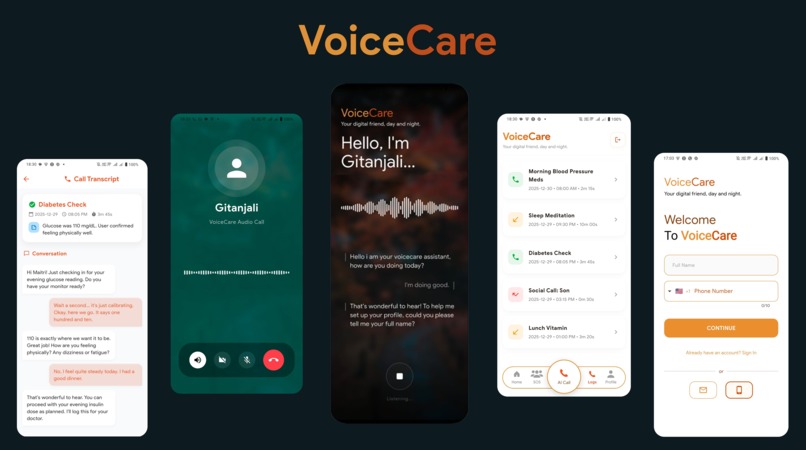
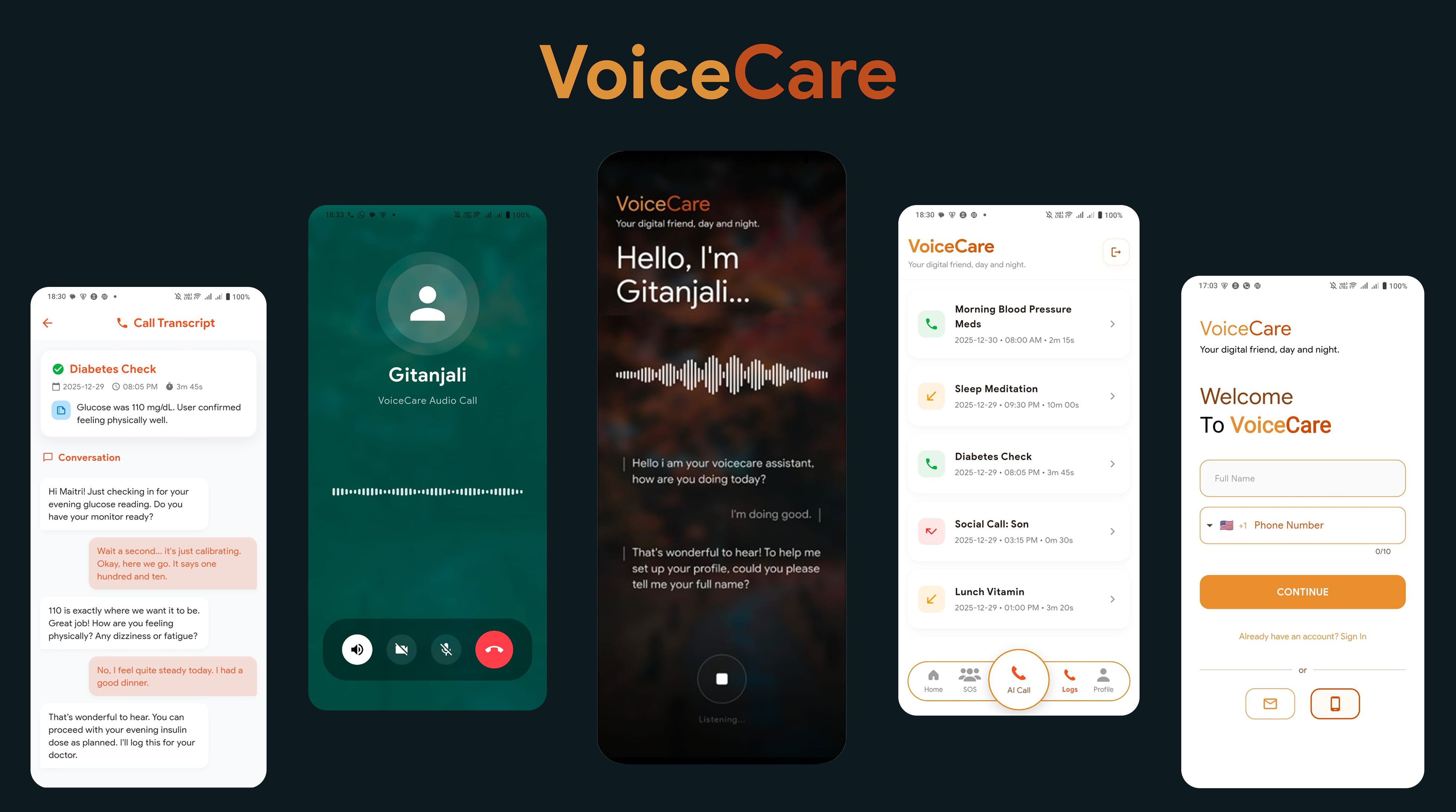
VoiceCare is an intelligent, voice-first guardian that turns a standard device into a proactive caregiver. It is designed to replace the silence of living alone with safety and connection.
Instead of waiting for a user to press a button or open an app, VoiceCare takes the initiative:
- It Removes Barriers: We prioritized a voice-first design. While the interface is visual, the primary interaction happens through natural speech.
- It Manages Health: The AI proactively calls the user at designated times to ask, "Have you taken your medication?" This ensures compliance and makes the user feel personally looked after, rather than just notified.
- It Offers Companionship: To combat isolation, VoiceCare initiates calls to chat about the user's interests. Powered by Gemini's long context window, it remembers past conversations and builds a genuine bond, treating the user as a friend rather than a patient.
- It Listens for Danger: During every interaction, the system analyzes speech for distress cues. If the user is inactive or has not been responding properly, the AI recognizes the emergency immediately and triggers an SMS alert to family members.
Simply put: It is a companion that checks on you when you're quiet, reminds you when you forget, and saves you when you're in trouble, all without requiring you to touch a single screen.
How we built it
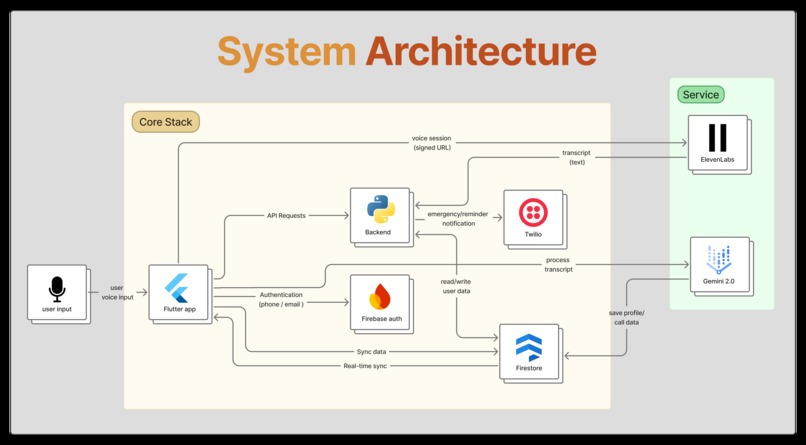
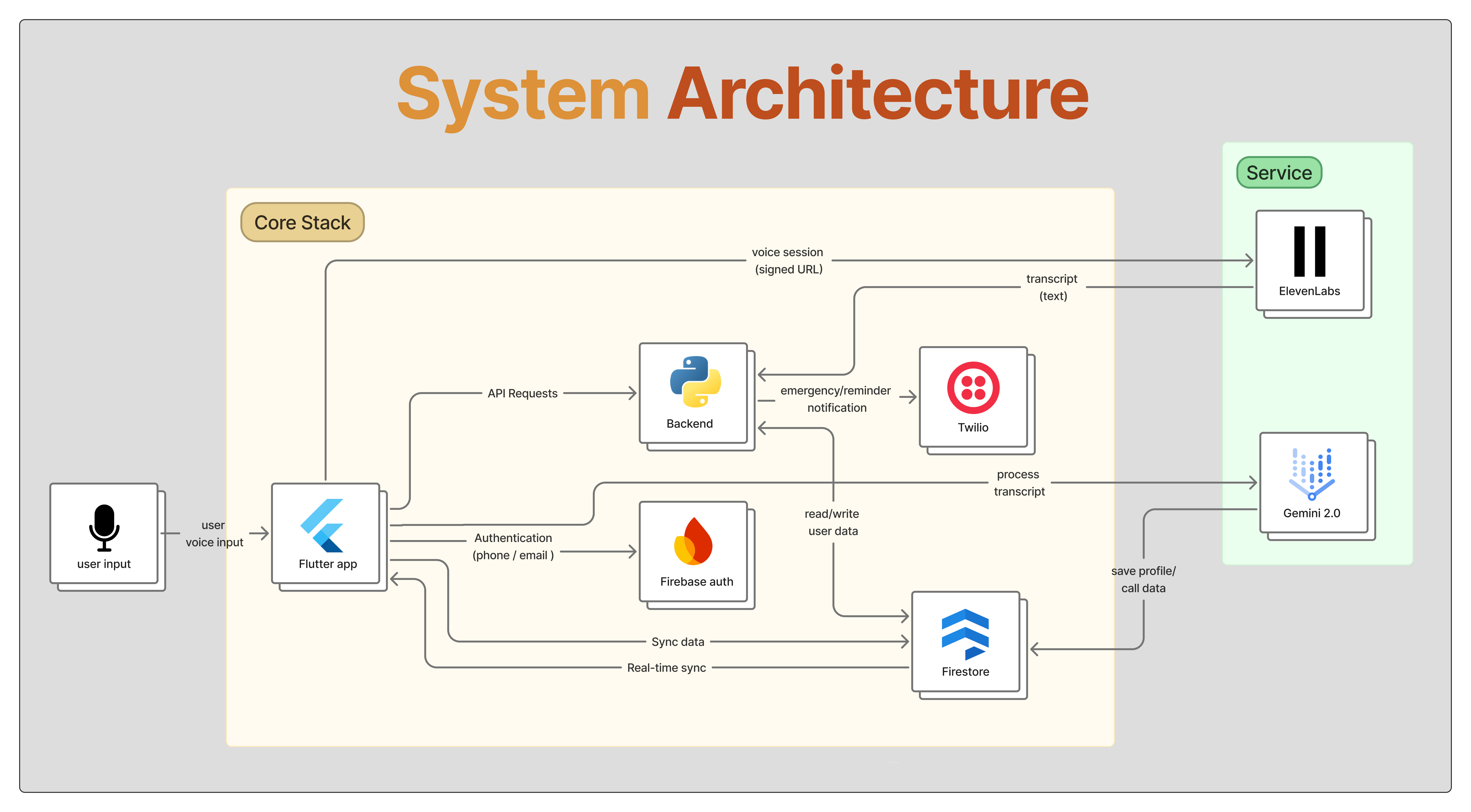
We built VoiceCare using a modern, scalable architecture designed for low latency and high reliability.
Mobile Frontend (The User Interface)
- Flutter and Dart: We used Flutter to build a responsive, cross-platform mobile app. It handles the raw voice input from the user and manages the real-time audio stream.
- Firebase Auth: Secure authentication allows users to log in easily via phone or email.
The AI Core (The Brain)
- Gemini 2.0 via Vertex AI: We utilized Google's Gemini 2.0 as our primary intelligence engine. It processes the user's voice transcripts to understand intent, detect emergencies, and generate conversational responses.
- ElevenLabs: To make the AI feel human and comforting, we integrated ElevenLabs for high-quality, realistic Text-to-Speech (TTS) and Speech-to-Text (STT).
Backend and Infrastructure
- Python (Flask): Our backend is powered by Python (using Flask), acting as the central controller that processes API requests from the Flutter app.
- Twilio: For the critical safety layer, we integrated Twilio. When the backend receives an "Emergency" flag from the AI, it immediately triggers an WhatsApp message SMS to the caregiver's phone number.
- Firestore: This acts as our sync engine. When the AI detects a new health insight or completes a reminder, data is instantly pushed to Firestore, ensuring all user logs and health metrics are securely stored and synchronized in real-time.
Challenges we ran into
- Minimizing the delay between the user speaking and the AI responding was critical. We had to optimize the handoff between the Flutter app, Gemini, and ElevenLabs to ensure the conversation felt natural, not disjointed.
- Our backend ran perfectly on our laptops, but deploying broke our audio processing. We spent hours fixing missing system libraries and environment mismatches to get the live server running smoothly.
Accomplishments that we're proud of
- Human-Like Care: We moved beyond passive alerts by building a system that actively calls users for medication checks and companionship, utilizing ElevenLabs and Gemini to ensure these interactions feel warm, patient, and genuinely human.
- The Emergency Loop: Building a fully functional safety pipeline where a spoken phrase in the app triggers a real-world SMS alert via Twilio in seconds.
- Accessible Design: Creating an app that requires zero technical literacy to operate once set up.
What we learned
- Optimizing for real-time voice: We realized that connecting Gemini, ElevenLabs, and the backend created awkward pauses. We learned that for voice apps, reducing lag is just as important as the code itself so the user doesn't think the app froze.
- Mastering background logic: We learned how to build a reliable scheduler that proactively initiates calls for medication checks and companionship. It taught us how to manage server-side events effectively to ensure every reminder happens exactly when promised.
What's next for VoiceCare
- Offline Mode: Implementing safety features to work even without an internet connection.
- Direct Emergency Dispatch: Right now, we notify the family. We plan to upgrade this to contact emergency services directly, sharing location and health data instantly to ensure professional help arrives the moment it’s needed.


Log in or sign up for Devpost to join the conversation.