Inspiration
In rural India, over 900,000 ASHA (Accredited Social Health Activist) workers serve as the frontline of healthcare — yet they operate with minimal tools, low literacy support, and unreliable internet connectivity. Every year, preventable maternal and pediatric deaths occur simply because high-risk symptoms weren't flagged early enough for hospital referral.
We asked: What if an AI assistant could listen to a health worker describe symptoms in their own language and instantly flag life-threatening conditions?
What it does
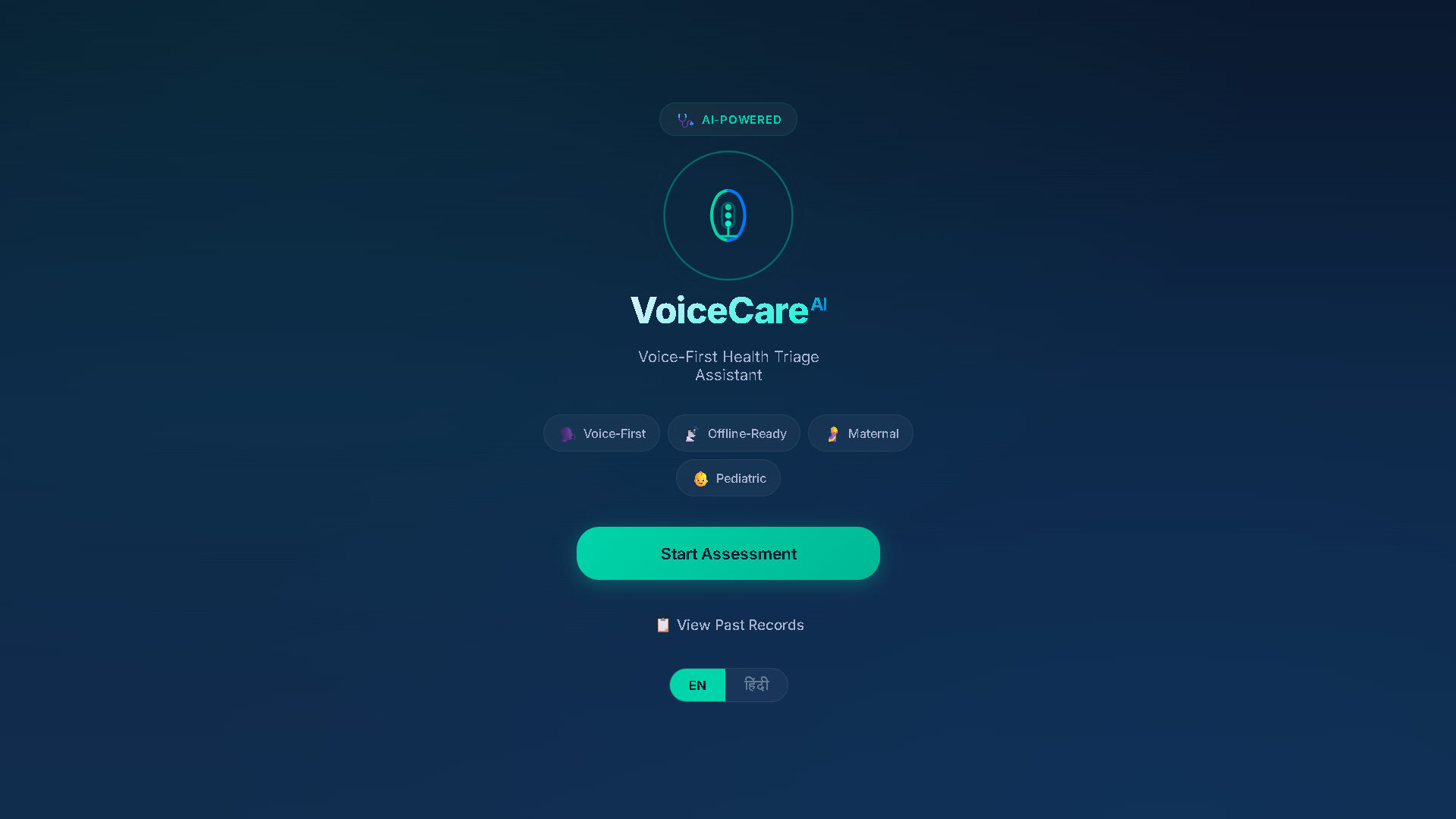
VoiceCare AI is a voice-first health triage assistant that enables rural health workers to:
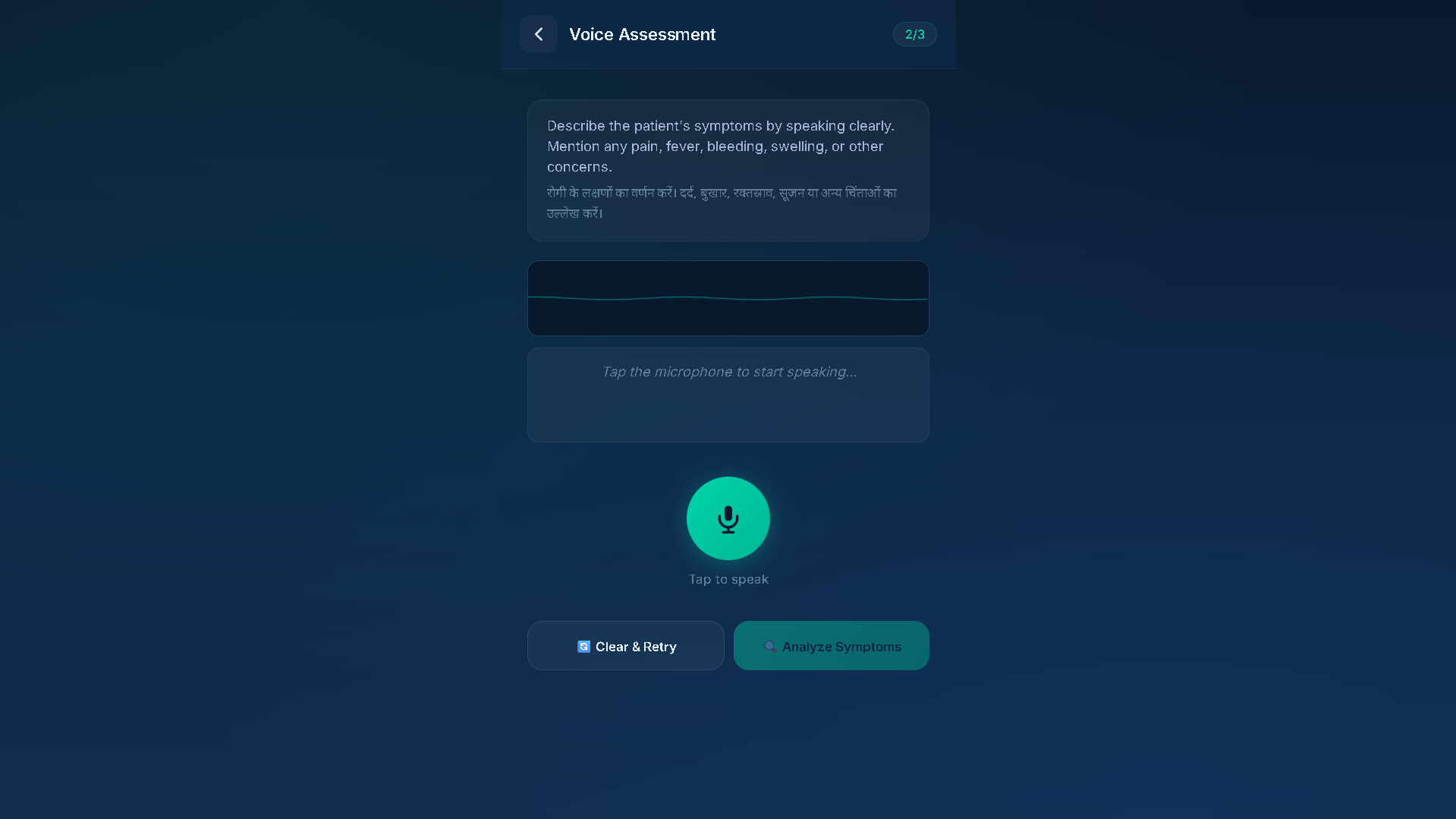
- 🗣️ Speak symptoms naturally in English or Hindi — no typing required
- 🧠 Get instant AI-powered risk assessment for maternal (pre-eclampsia, hemorrhage), pediatric (fever, respiratory distress), and malnutrition conditions
- 🚨 Receive clear action steps — from home monitoring to immediate hospital referral with ambulance instructions
- 📡 Work completely offline as a PWA — critical for areas with poor connectivity
- 📋 Track patient history locally for follow-up visits
How we built it
We built VoiceCare AI as a lightweight Progressive Web App using vanilla HTML, CSS, and JavaScript — intentionally avoiding heavy frameworks to ensure fast loading on low-end devices common in rural areas.
- Voice Engine: Web Speech API for real-time speech-to-text (supporting Hindi and English) with live waveform visualization
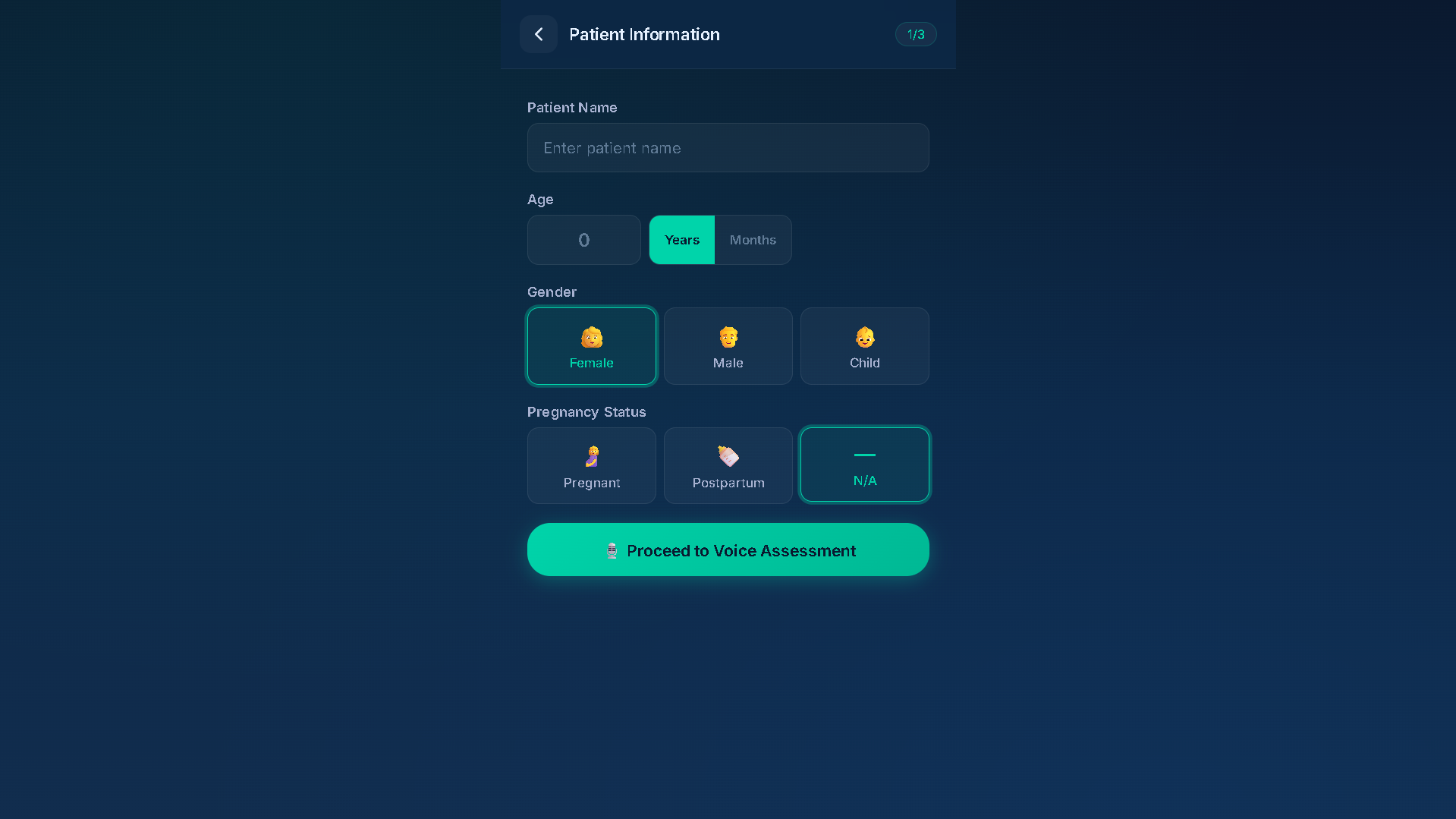
- AI Triage Engine: A keyword-based NLP system with 25+ symptom patterns, severity-weighted scoring, and context-aware modifiers (pregnancy status, patient age)
- Risk Scoring: A 0-100 risk score algorithm that factors symptom severity, quantity, and patient context to classify into LOW / MEDIUM / HIGH risk levels
- Offline-first PWA: Service worker caches all assets for full offline functionality
- Mobile-first UI: Dark gradient theme with large touch targets (56px+) designed for field use under sunlight
Challenges we faced
- Dialect variation: Hindi medical terminology varies greatly across regions. We addressed this by including multiple keyword variants for each symptom
- Offline constraint: The entire triage engine had to run client-side with zero API calls, pushing us to build a comprehensive local knowledge base
- Low-literacy UX: Designing for users who may not be comfortable reading — voice input/output and large visual indicators were our solution
- Balancing sensitivity vs specificity: The triage engine needed to err on the side of caution (flagging potential emergencies) without creating alarm fatigue
What we learned
- Voice-first interfaces dramatically lower the barrier to technology adoption in low-resource settings
- A well-designed keyword NLP system can achieve surprisingly effective symptom detection without requiring cloud-based LLMs
- PWA technology is a game-changer for healthcare in connectivity-challenged areas
What's next for VoiceCare AI
- 🌐 Adding more regional languages (Tamil, Telugu, Bengali, Marathi)
- 🤖 Integration with on-device LLMs (Gemini Nano) for conversational symptom gathering
- 📊 Dashboard for PHC (Primary Health Centre) supervisors to monitor field data
- 🔗 Integration with government health databases (RCH portal, HMIS)
Built With
- css3
- html5
- javascript
- natural-language-processing
- progressive-web-app
- service-workers
- vite
- web-speech-api


Log in or sign up for Devpost to join the conversation.