-
-
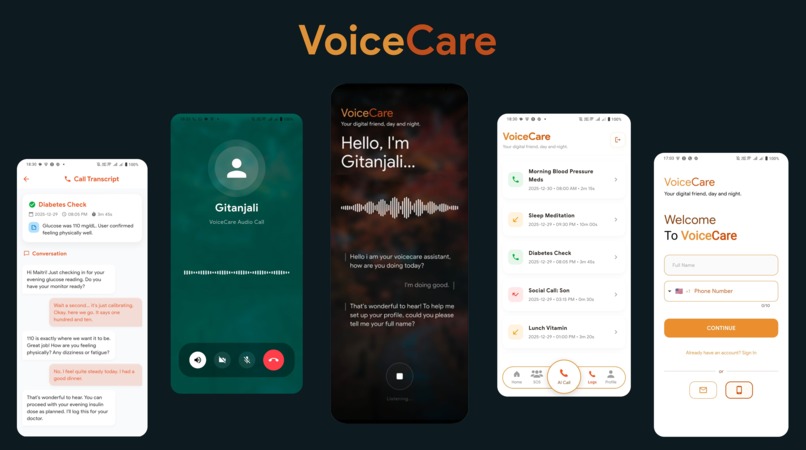
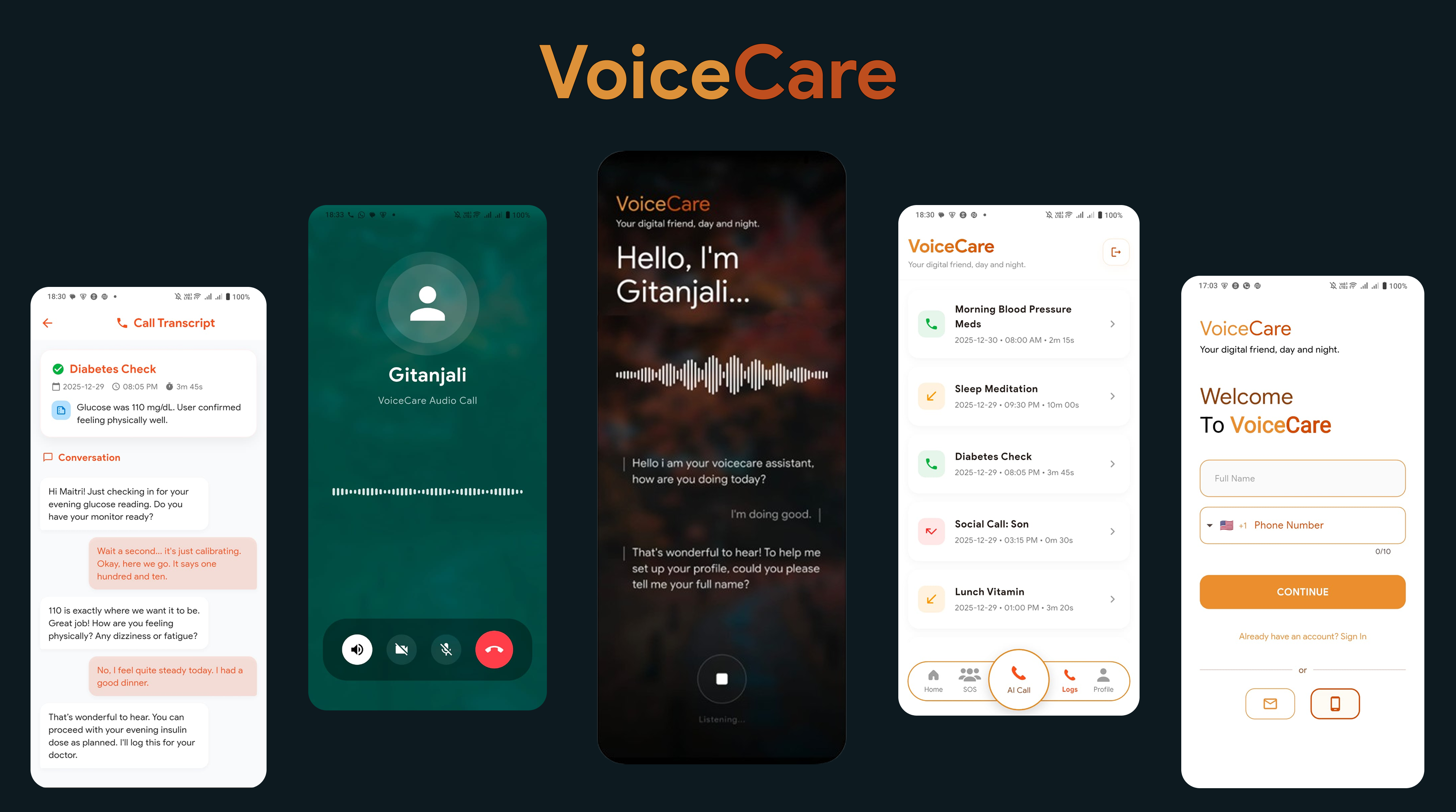
user app interface
-
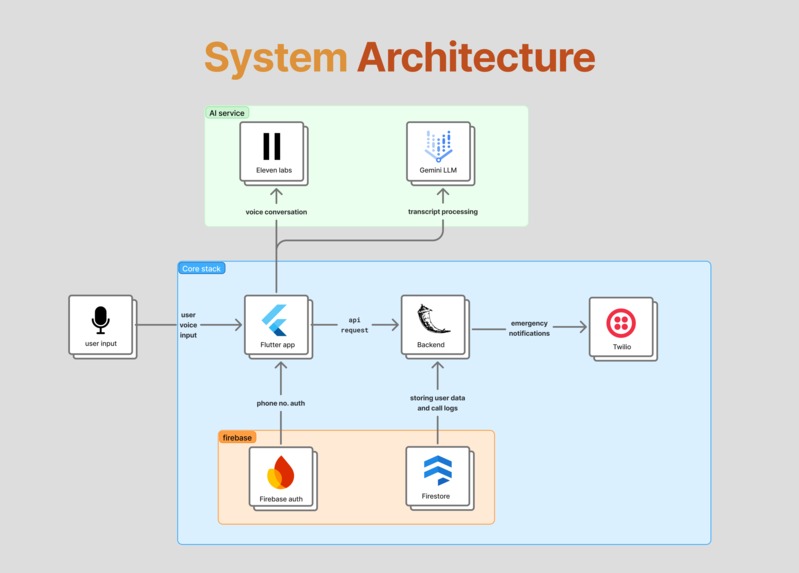
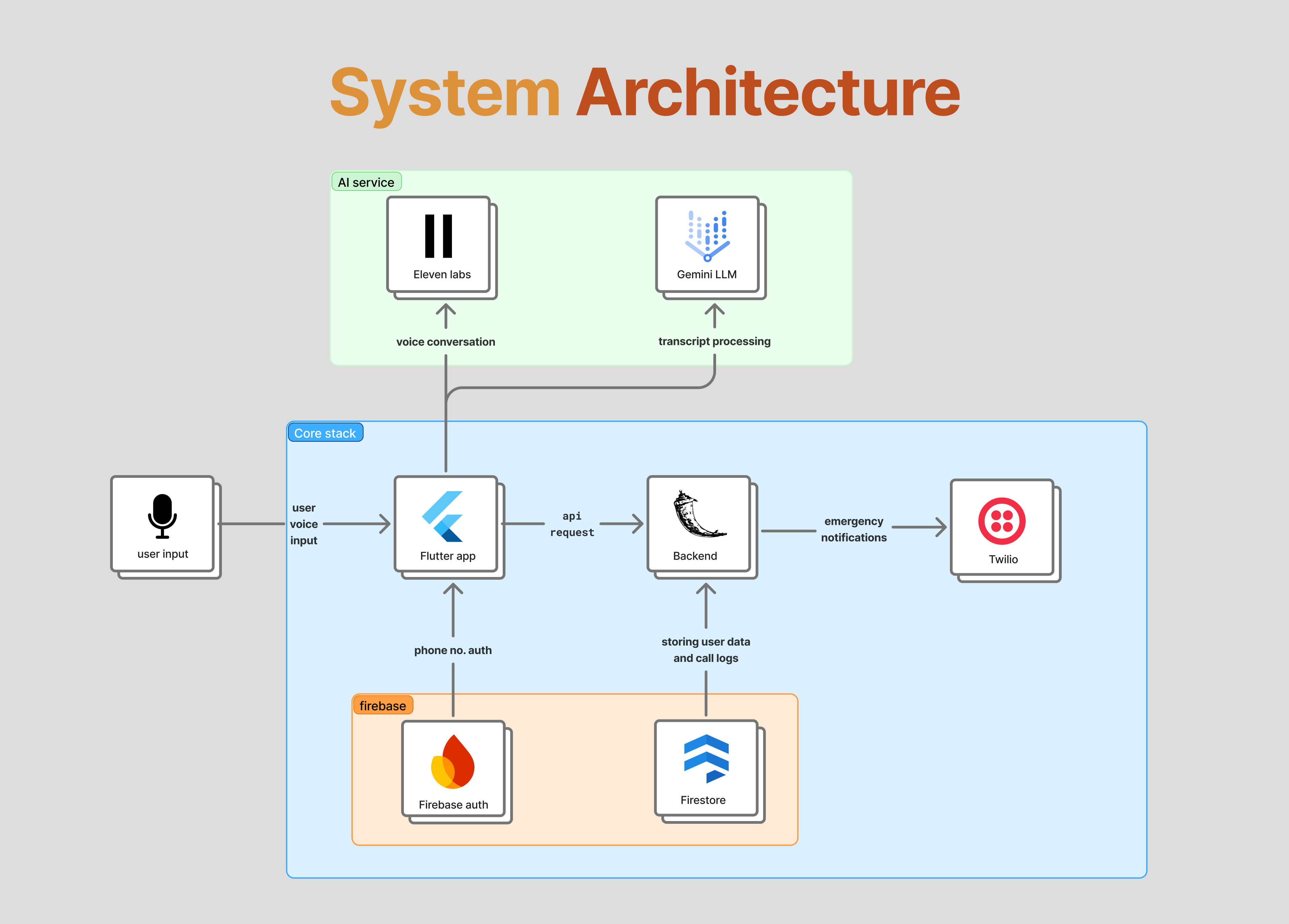
system architecture

Inspiration
Artificial Intelligence has transformed how humans interact with technology, yet its most meaningful potential lies in supporting those who need assistance the most. Elderly individuals living alone face two major challenges: staying safe during emergencies and coping with emotional isolation. While digital solutions exist, most are built around screens, buttons, and complex navigation that unintentionally exclude senior users.
We wanted to explore how AI could become more human-centric, intuitive, and emotionally intelligent. Instead of forcing users to adapt to technology, we asked: What if AI adapted to humans using their most natural form of communication voice?
This vision inspired us to build VoiceCare, an AI-driven companion that combines conversational intelligence, emotional understanding, and real-time decision making to provide safety, companionship, and proactive care.
What it does

VoiceCare is an AI-powered voice companion that transforms a mobile device into an intelligent, proactive caregiving assistant. It leverages advanced Natural Language Processing, speech intelligence, and multi-agent AI orchestration to deliver personalized support.
Instead of waiting for user interaction, VoiceCare uses Artificial Intelligence to anticipate, detect, and respond to user needs in real time:
AI-Powered Voice Interaction: The system uses conversational AI to enable natural, human-like communication. Users interact entirely through speech, removing the need for screen-based navigation.
Intelligent Health Monitoring: The AI proactively initiates calls to remind users about medications, appointments, and daily tasks. It uses contextual memory to maintain continuity across conversations and ensure personalized care.
Emotionally Aware Companionship: Using long-context conversational intelligence, VoiceCare remembers user preferences, past interactions, and interests. The AI adapts its tone and responses to provide meaningful, emotionally supportive conversations.
AI Emergency Detection: During every interaction, the system performs real-time speech analysis using machine learning models to detect distress, hesitation, abnormal silence, or emotional anomalies. When risk is identified, the AI autonomously triggers emergency alerts to caregivers through automated communication channels.
In essence: VoiceCare is an intelligent AI companion that predicts needs, understands emotions, and responds instantly to ensure user safety and well-being through voice-driven intelligence.
How we built it
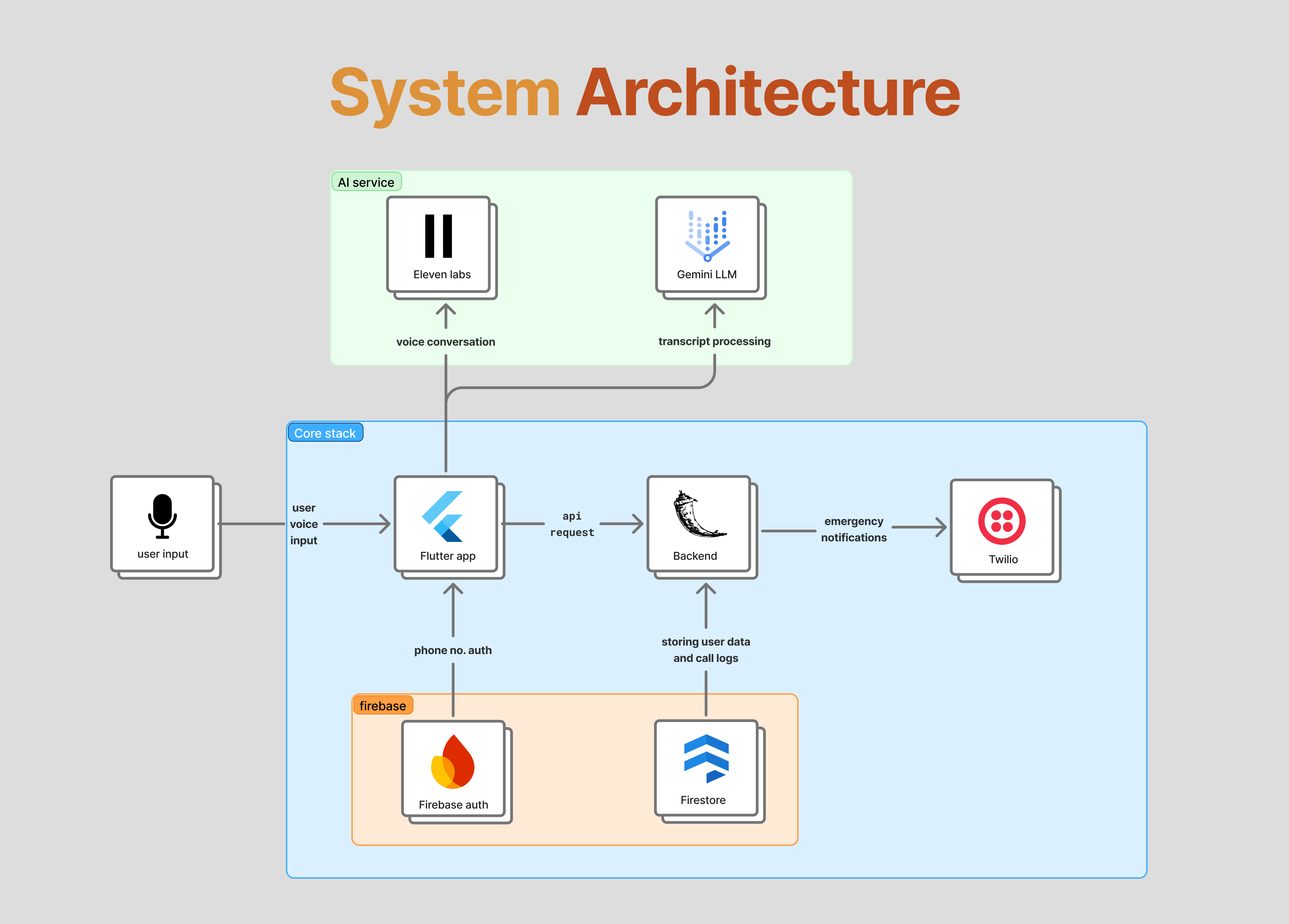
We designed VoiceCare around a modular Artificial Intelligence architecture optimized for real-time speech understanding, decision intelligence, and adaptive personalization.
Mobile Frontend (AI Interaction Gateway)
Flutter and Dart: We built a cross-platform mobile application that captures voice input and streams real-time audio data to AI processing services. Flutter enables seamless real-time conversation management between users and AI agents.
Firebase Authentication: Provides secure identity management and personalized AI user sessions.
The AI Core (Cognitive Intelligence Engine)
Gemini 2.0 LLM via Vertex AI: Serves as the primary reasoning and conversational intelligence engine. It performs:
- Natural language understanding
- Emotional and distress signal analysis
- Context retention and memory-driven responses
- Decision-making for health reminders and emergency detection
ElevenLabs Speech Intelligence: Enables highly realistic Text-to-Speech and Speech-to-Text processing. This allows VoiceCare to maintain natural, multilingual conversations and deliver emotionally comforting responses.
Backend and AI Orchestration Infrastructure
Python (Flask): Acts as the orchestration layer that coordinates AI processing pipelines, manages conversation workflows, and handles emergency decision routing.
Twilio Communication AI Bridge: When the AI classifies a conversation as high-risk or emergency-related, Twilio automatically triggers WhatsApp messages and SMS alerts to designated emergency contacts.
Firestore: Stores user behavioral data, conversation logs, health reminders, and AI-generated insights. This allows VoiceCare to continuously learn and adapt to individual user patterns.
Challenges we ran into
Reducing AI Response Latency: Achieving smooth real-time conversations required optimizing communication between speech recognition, large language models, and speech synthesis systems. Even small delays negatively impacted conversational realism.
Reliable AI Deployment: Ensuring that speech processing pipelines worked consistently across development and production environments required resolving audio library dependencies and runtime configuration mismatches.
Accomplishments that we're proud of
Emotionally Intelligent AI Caregiver: We successfully built a conversational AI system that provides companionship and health assistance while maintaining natural and empathetic communication patterns.
End-to-End Emergency Intelligence Pipeline: We created a real-time AI decision system where voice-based distress signals automatically trigger caregiver notifications within seconds.
Adaptive Personalization: VoiceCare continuously learns user preferences, communication styles, and health routines, improving care quality over time.
What we learned
Real-Time AI Systems Require Behavioral Optimization: Building conversational AI is not just about accuracy but also about timing, responsiveness, and emotional realism.
AI Scheduling and Event Automation: Developing proactive AI agents taught us how to implement server-side automation systems capable of initiating conversations and reminders without user prompts.
What's next for VoiceCare
Edge AI & Offline Intelligence: Implementing lightweight on-device AI models to ensure safety features remain functional even without internet connectivity.
Autonomous Emergency Response Intelligence: Expanding AI decision capabilities to directly contact emergency services, share live location data, and provide AI-generated health summaries to first responders.


Log in or sign up for Devpost to join the conversation.