-
-
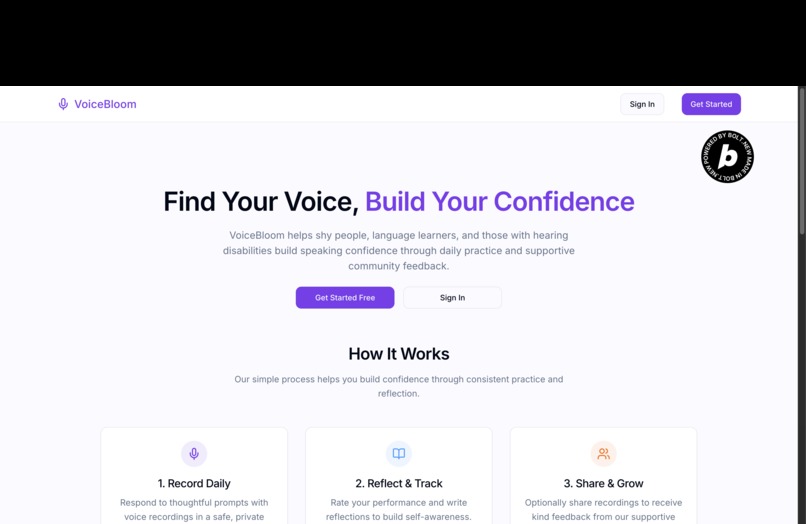
VoiceBloom HomePage
-
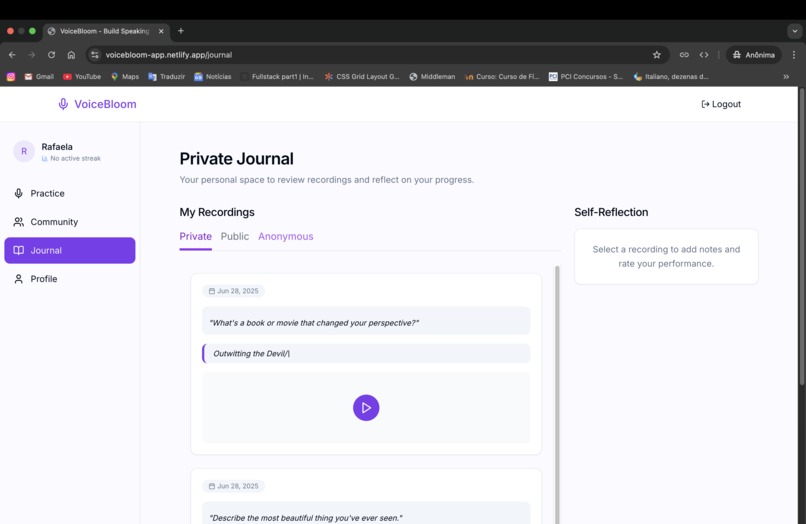
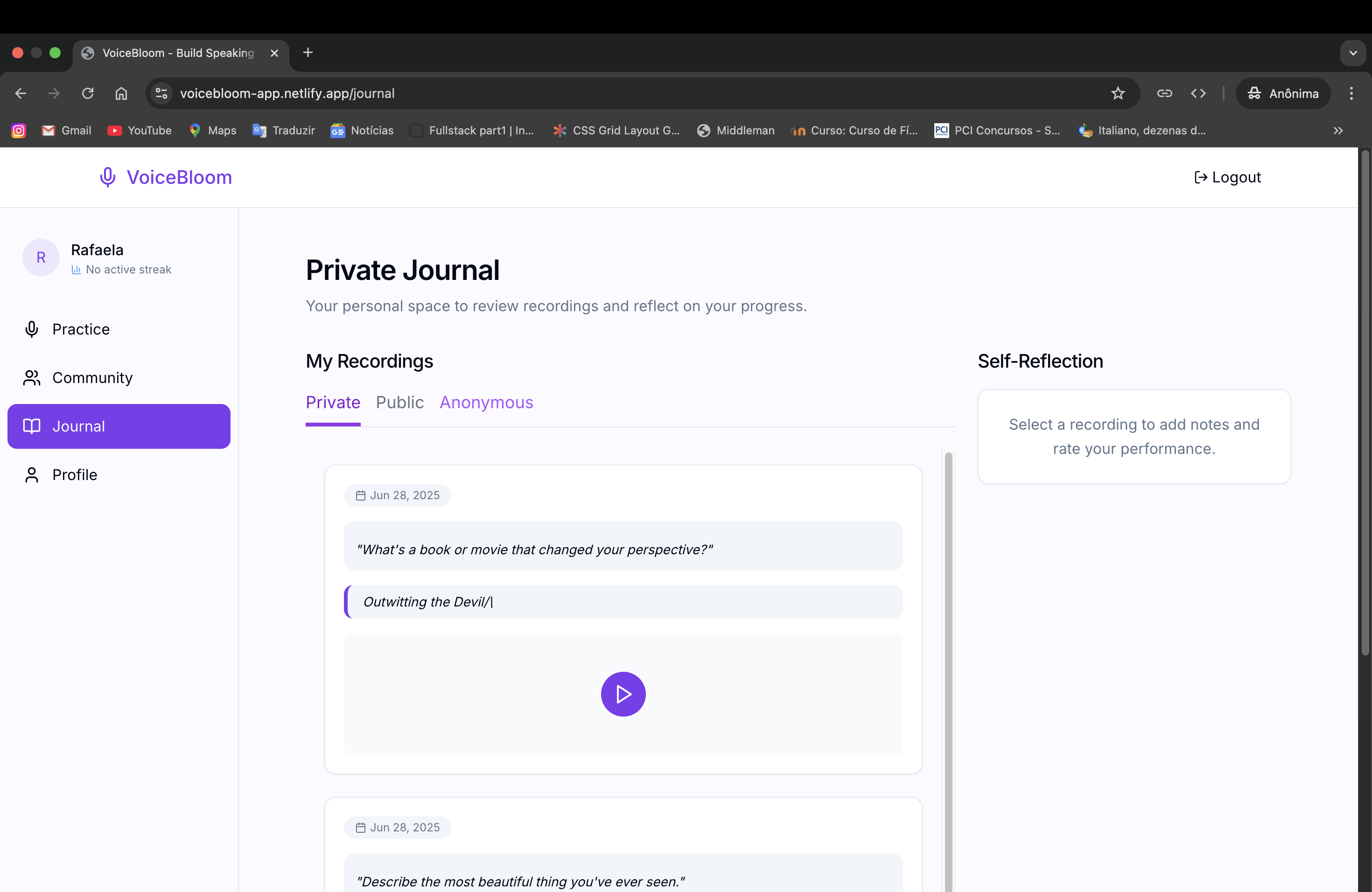
VoiceBloom PrivateJournalPage
-
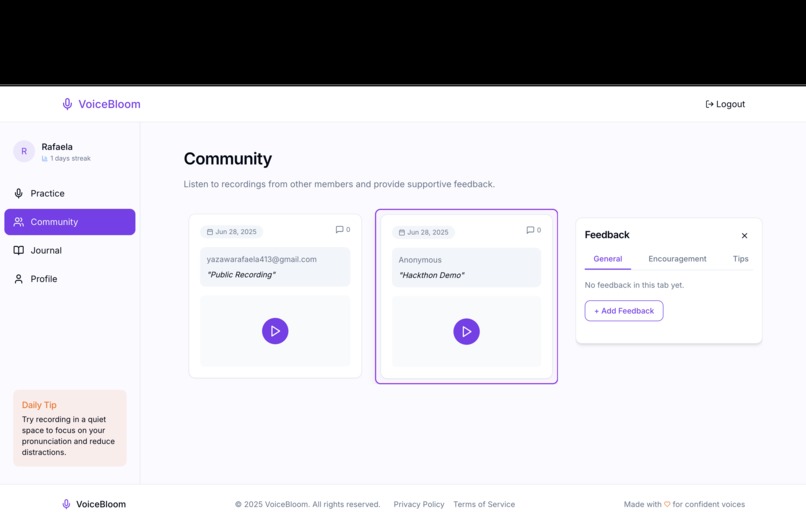
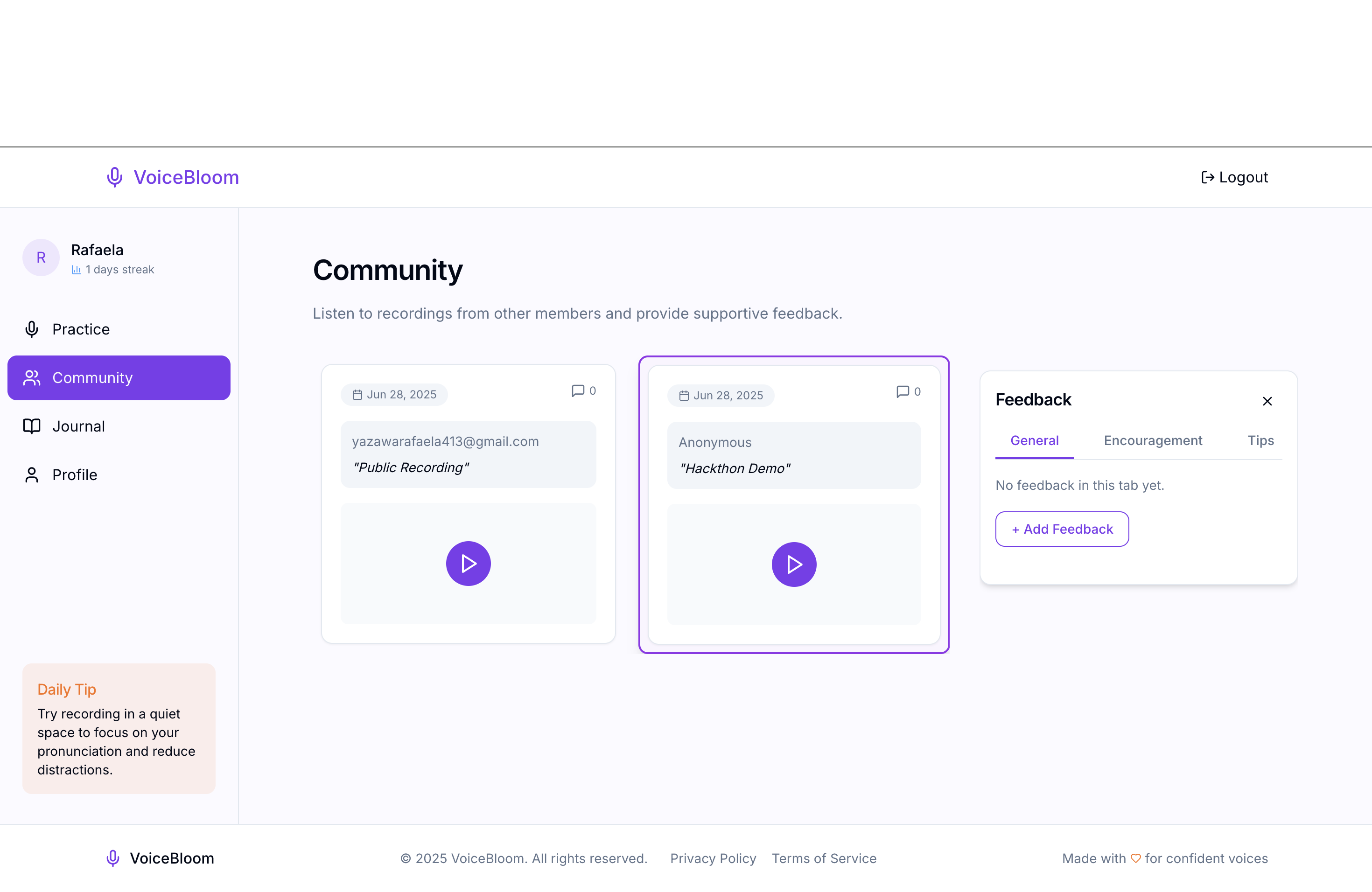
VoiceBloom CommunityPage
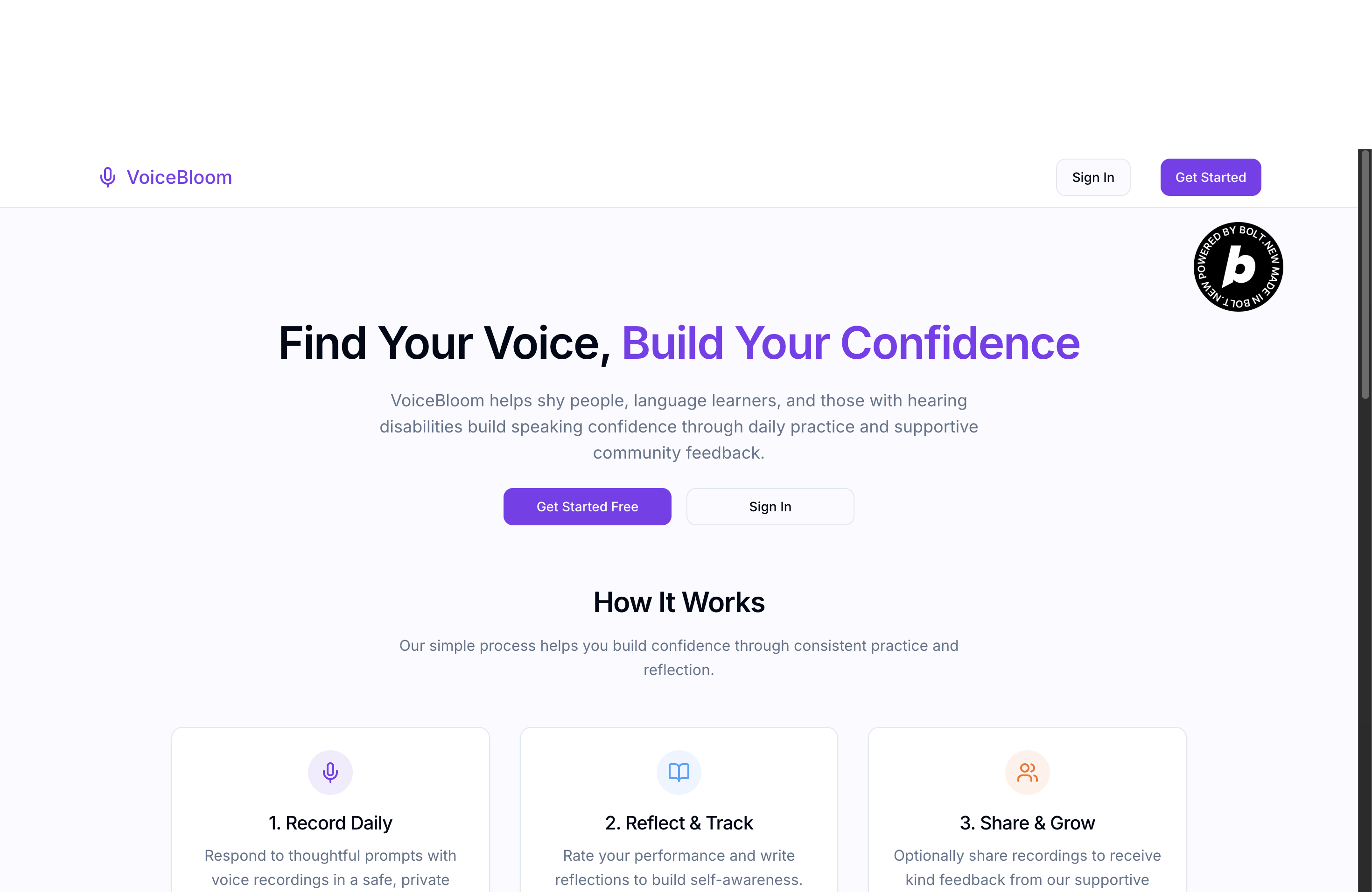
Inspiration
VoiceBloom is inspired by my own struggles and experiences. It has the core goal of helping people have the chance to feel confident when speaking their truth out loud. Whether it’s overcoming shyness, practicing a new language, or finding your voice after a setback, I wanted to create a space where practice feels safe, positive, and consistent, and where progress is easy to see over time.
What it does
VoiceBloom helps people practice speaking daily and build self-awareness and confidence over time. Instead of relying on AI to analyze recordings, the app encourages users to reflect on their own progress. You can record yourself responding to daily prompts or create your own, then write personal notes about how you felt and what you’d like to improve. Each recording can be rated on Tone, Confidence, and Fluency to track growth in a way that feels authentic to you. Recordings can be saved privately, shared anonymously, or made public for supportive feedback. A profile dashboard shows your stats and a calendar view to celebrate consistency and progress.
How we built it
VoiceBloom was built with React and TypeScript, using Vite for fast development and efficient bundling. Supabase powers authentication, relational data storage, and file storage for audio recordings, which are saved in Supabase storage buckets and linked to user profiles. I used lightweight libraries for recording and playback directly in the browser. The app is deployed on Netlify, making continuous deployment smooth and reliable. All core features—from recording to tracking progress—were designed and implemented within the hackathon timeframe, starting from a single initial prompt.
Challenges we ran into
One of the main challenges was designing a sharing system that felt safe and flexible for different comfort levels. I wanted users to decide exactly how their recordings would be visible without making the experience confusing.
At first, I planned to build a Rails API backend from scratch, but I realized that setting up all the authentication, storage, and APIs would take too much time within the hackathon timeframe. To stay focused and deliver a complete project, I switched to Supabase, which made it faster to implement secure authentication and storage.
Another challenge was managing audio files—ensuring they were uploaded reliably, stored securely, and could be played back smoothly in the browser. Integrating Supabase authentication with recording workflows also required careful planning to keep everything seamless.
Finally, as a solo developer, balancing design, development, and deployment pushed me to focus on simplicity and prioritize the features that mattered most.
Accomplishments that we're proud of
I’m proud to have built VoiceBloom, a project rooted in my personal experience with the challenges of speaking confidently. This personal connection made the project meaningful and motivated me to create an app that genuinely supports others facing similar struggles. Despite working solo and within a tight timeframe, I developed and deployed a fully functional app that helps users grow through self-reflection and community support.
What we learned
This project was a meaningful learning journey both personally and technically. Because VoiceBloom is based on my own experiences, it motivated me to deeply consider how to create a supportive, safe space for others.
Technically, I gained hands-on experience with React and TypeScript, as well as integrating authentication and file storage using Supabase. I also learned how scalable apps work by managing user data and recordings efficiently. Additionally, I discovered how real-world issues—like incorrect system time settings—can cause token refresh bugs, highlighting the importance of testing for edge cases.
What's next for VoiceBloom
The next step for VoiceBloom is to make the app fully optimized for mobile devices. Since many users prefer practicing on the go, improving the interface and audio recording experience for smaller screens and mobile browsers is a priority. Ensuring smooth performance and usability on smartphones and tablets will make daily practice more accessible and convenient.
To make VoiceBloom even more engaging and supportive, I plan to add features like daily or weekly speaking challenges that encourage users to practice regularly and try new topics. Group challenges could foster teamwork and friendly competition, helping users connect and motivate each other.
I also hope to implement audio transcription to give users a clear record of what they said, making it easier to review progress and identify areas for improvement.
These features aim to build a vibrant, motivating community where everyone feels inspired to grow their speaking confidence together.
Built With
- html5
- netlify
- postgresql
- react
- supabase
- typescript
- vite


Log in or sign up for Devpost to join the conversation.