
Voicebank Africa - Project Story 🚀 About the Project Voicebank Africa presents a voice-activated banking solution designed to address financial exclusion in underserved African communities. The platform enables users to perform essential banking transactions using their voice, in local languages, without the need for literacy, internet access, or smartphones. The solution prioritizes accessibility, security, and inclusion.
💡 Inspiration Behind the Project The development of this project is inspired by the fact that over 350 million adults in Africa remain unbanked, as reported by the World Bank. Contributing factors include
Limited literacy Inaccessibility to internet or smart devices Language diversity and exclusion Physical distance from banking facilities We identify a recurring challenge where individuals travel long distances for simple transactions. This prompts the question:
"What if a person could access banking services just by speaking their own language?"
Voicebank Africa emerges from this vision to make banking universally accessible through voice technology.
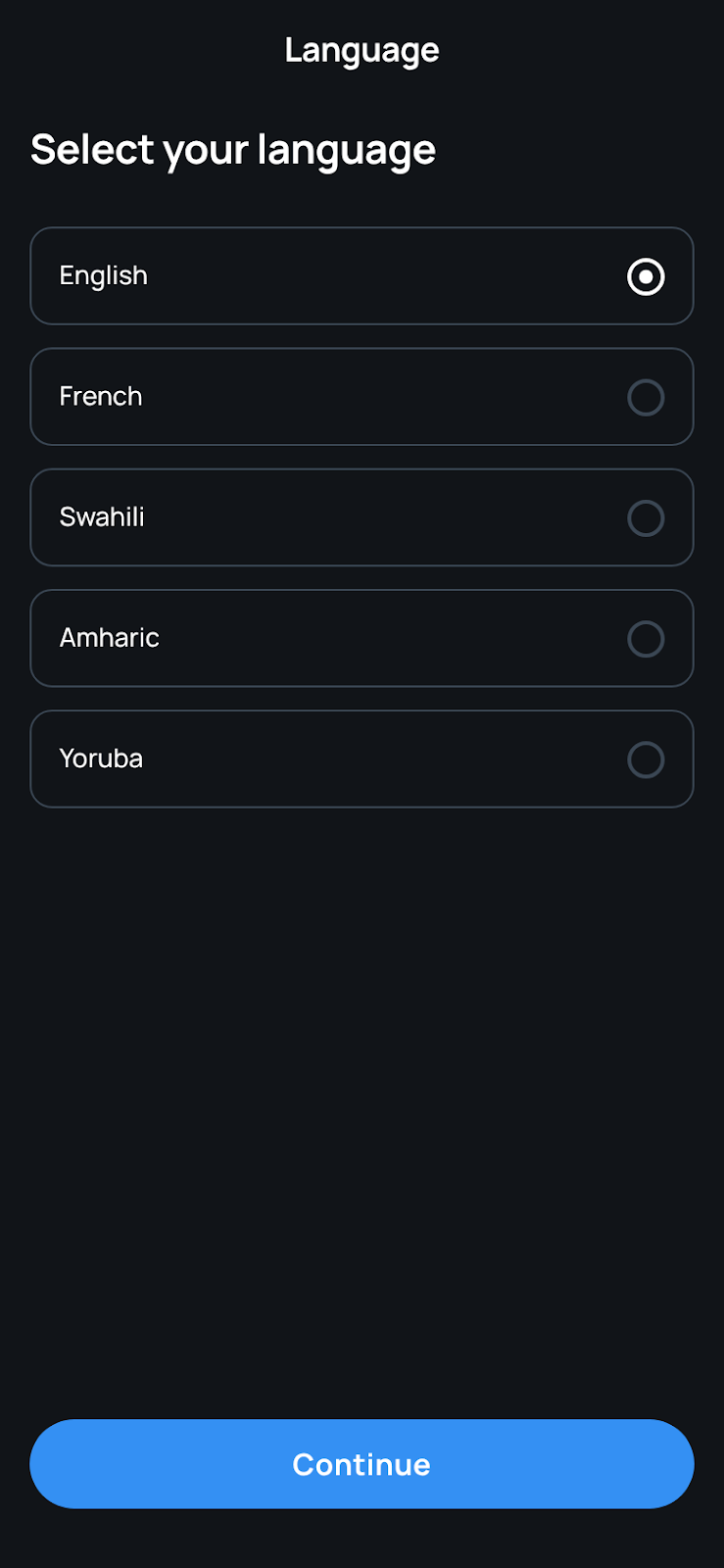
🛠️ Project Development Approach We adopt a voice-first architecture, utilizing the following technologies: Voice Recognition: Google Speech-to-Text and Mozilla Deep Speech Natural Language Processing (NLP): Custom-built models to interpret local dialects Backend: Node.js and Express Security: OAuth2 protocol and AES encryption Frontend: Flutter (for future mobile support) Languages Supported in MVP: Sepedi, Swahili, Zulu
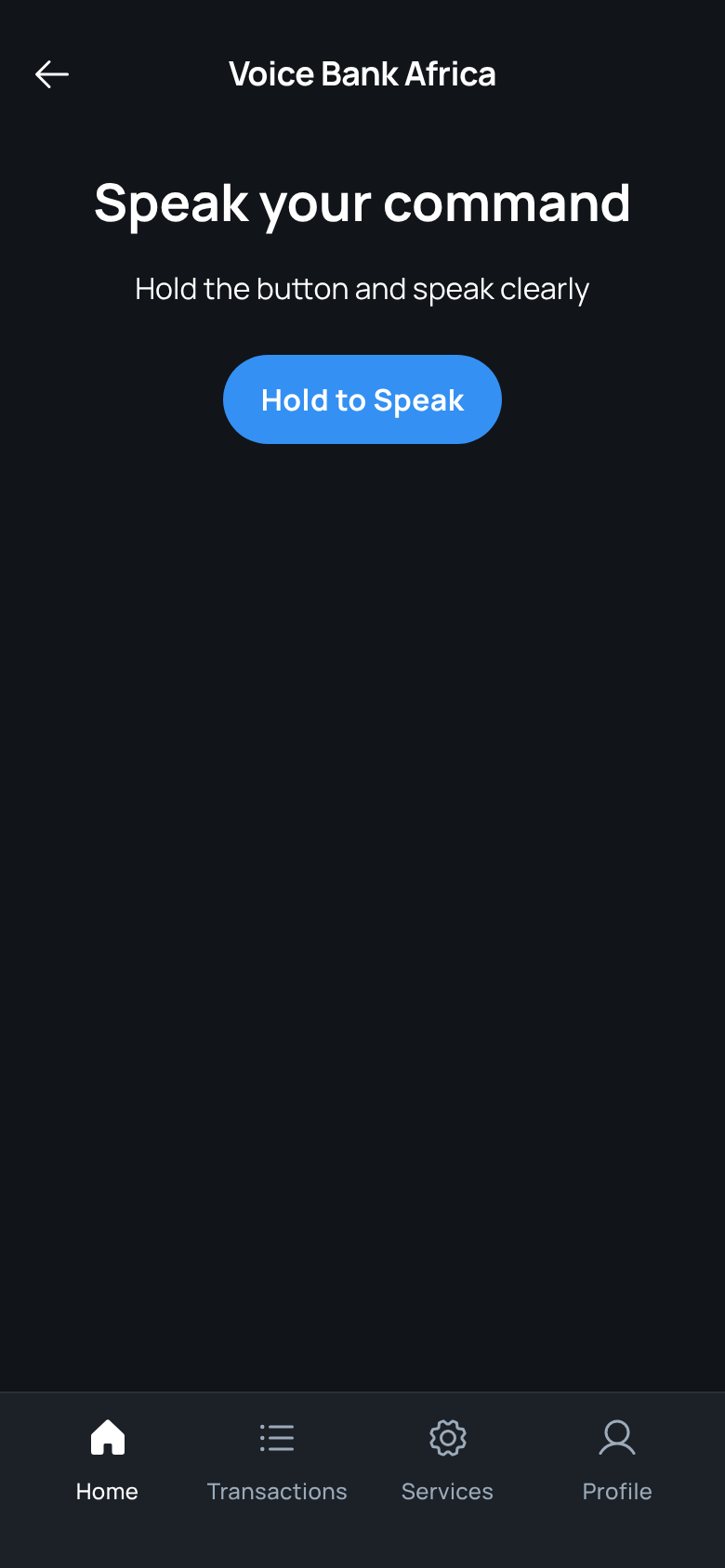
User Interaction Flow: plaintext Copy Edit 🎤 Voice Command → 🔐 Authentication → 💳 Transaction → 📱 Voice Confirmation Example Use Case: "Mary from Limpopo says 'Check balance' in Sepedi, and the system responds with her account balance via audio feedback."
💡 Lessons Learned Through this project, we gain the following insights: Speech interfaces can significantly reduce digital barriers Designing for offline-first environments is essential for emerging markets Securing voice-based interactions presents unique challenges Inclusive design requires co-creation with local communities
We continue to iterate and refine the solution based on real-world feedback and technical advancements.
Challenges We Face & Will Address One of the primary challenges we face is achieving accurate voice recognition across diverse African languages. Currently, we rely on limited open-source datasets and manually collected voice samples. Moving forward, we aim to collaborate with linguists, native speakers, and local communities to create richer and more comprehensive language models tailored to regional dialects.
Another ongoing challenge is providing consistent offline access. While we currently support SMS fallback and cache essential voice commands, our future development will include full offline functionality using USSD protocols and on-device AI, ensuring accessibility even in areas without internet connectivity.
Secure authentication in a voice-based environment also presents a complex problem. At present, we use basic speaker verification combined with optional PIN entry. To strengthen security, we plan to implement advanced biometric voice recognition that uniquely identifies individual users based on vocal characteristics.
Testing the platform across multiple languages is a further challenge. Our current internal testing involves speakers of Sepedi, Zulu, and Swahili. However, we intend to expand this process by engaging wider user groups in various regions, which will enhance the reliability and inclusivity of the platform.
Lastly, compatibility with low-resource environments remains essential. While we are optimizing the platform for low-bandwidth usage and basic devices, we will continue developing a lightweight version of the system specifically designed for users in rural and under-resourced areas.
🌍 Social Impact and Innovation VoiceBank Africa stands out due to its ability to empower users to bank in their native language through natural conversation. It: Addresses long-standing issues of financial inaccessibility Encourages economic participation in remote and rural areas Contributes to bridging the digital divide across the continent
We foresee its long-term potential in: Promoting financial inclusion Enabling economic mobility Supporting localized digital transformation across Africa
"Voice + Language + Accessibility = Inclusion" Voice + Language +
Access
Inclusion Voice + Language + Access = Inclusion
🧭 Future Roadmap We will pursue the following development milestones:
Complete MVP with support for 3 languages Pilot testing in rural communities in South Africa Partnership building with microbanks and telecoms Expand language support across the African continent Launch scalable deployment with security and UX improvements
👥 The Team The VoiceBank Africa project is developed by a collaborative team with diverse roles:
Jabelo – Vision & UX Lead Tumi – Research Lead Kutloano – Technical Contributor & UX Support Paballo – Presentation & Research Lead
Each member contributes to the project’s design, research, development, and storytelling to ensure a comprehensive, inclusive solution
Built With
- 2.0
- aes
- and-ai-model-integration-firebase-?-authentication
- android
- api
- atlas
- azure
- biometric
- cloud
- cognitive
- custom
- dart
- database
- encryption
- express.js
- firebase
- flutter
- gcp)
- html/css
- javascript
- lite
- mongodb
- natural-language-processing
- node.js
- oauth
- platform
- python
- real-time-database
- realtime
- sdk
- services
- speech-to-text
- tensorflow
- translate
- twilio
- voice

Log in or sign up for Devpost to join the conversation.