Inspiration:
We wanted to create a tool that makes coding more accessible and inclusive, especially for beginners and people who have difficulty typing. Voice2Code was born from this idea.
What it does:
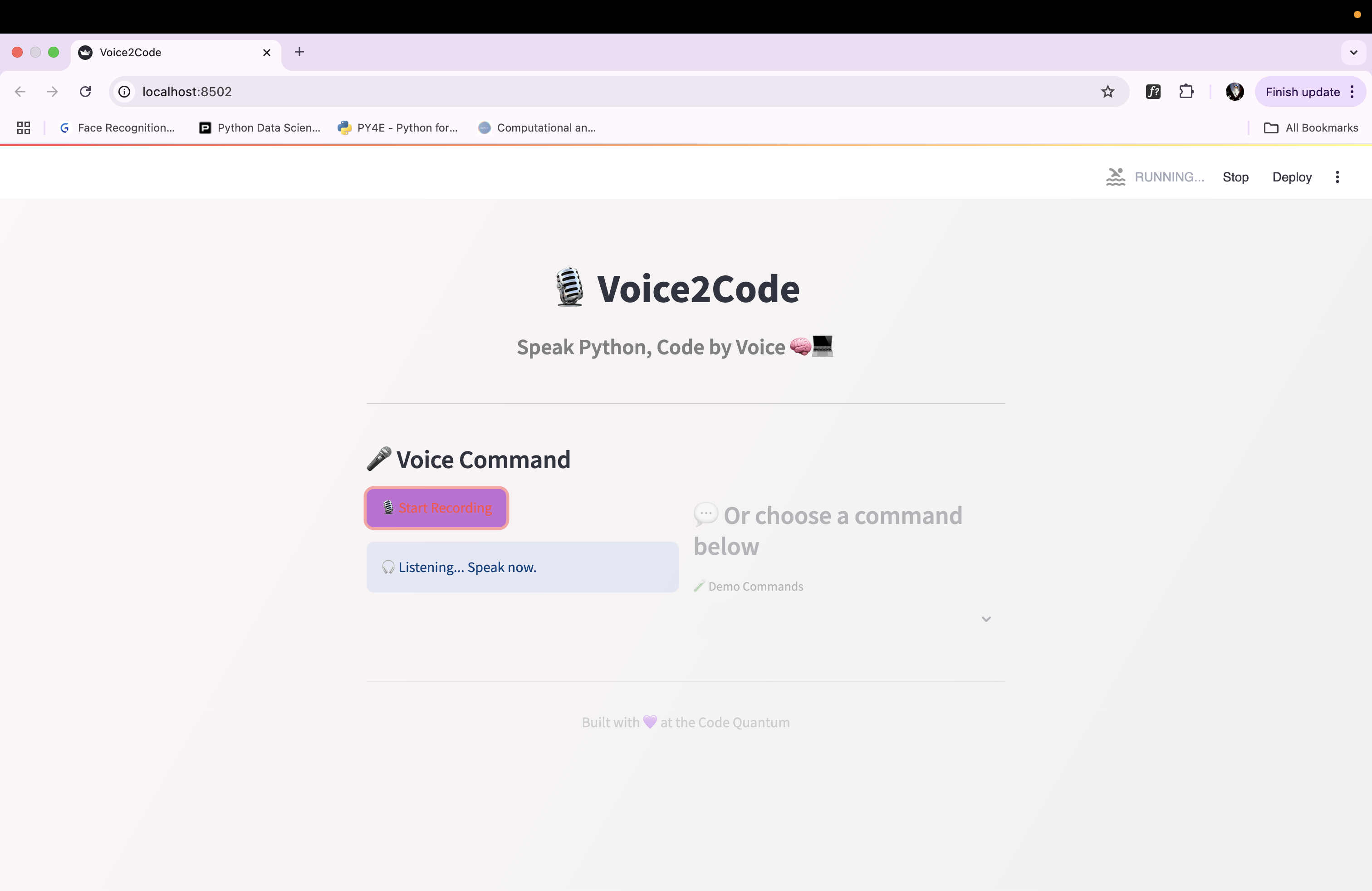
Voice2Code converts natural voice commands into executable Python code using Whisper. Users can speak, view, run, and download the generated code within a friendly Streamlit app.
How we built it:
We used OpenAI's Whisper for speech recognition and Streamlit to build the interactive web interface. Commands are parsed using regex and mapped to Python code snippets.
Challenges we ran into:
Whisper’s output needed clean parsing for accurate command recognition. Handling ambiguous or unexpected speech inputs. Setting up real-time recording and processing on the frontend.
Accomplishments that we're proud of
End-to-end voice-to-code execution with a clean interface. Supporting multiple Python structures via voice. Making coding more accessible in just a few hours.
What we learned
How to integrate Whisper into real-time apps. Parsing natural language into code using regex.
Designing accessible, user-friendly interfaces with Streamlit.
What's next for Voice2code
Add support for more languages and frameworks. Improve command flexibility using NLP. Deploy it online and integrate with GitHub or VS Code.
