-
-
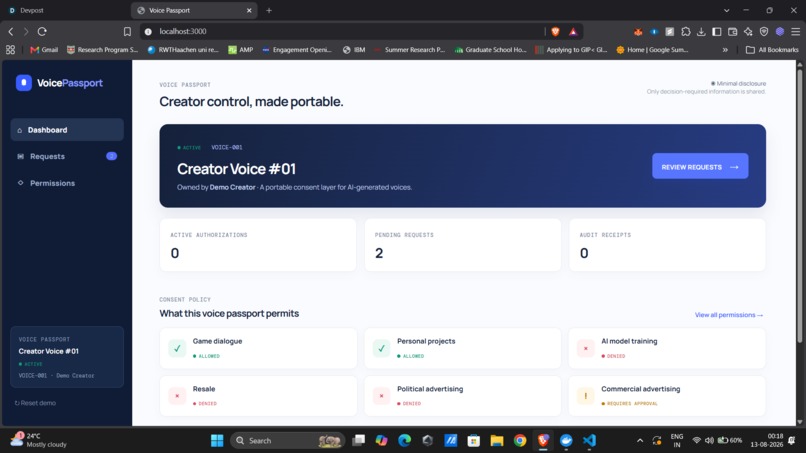
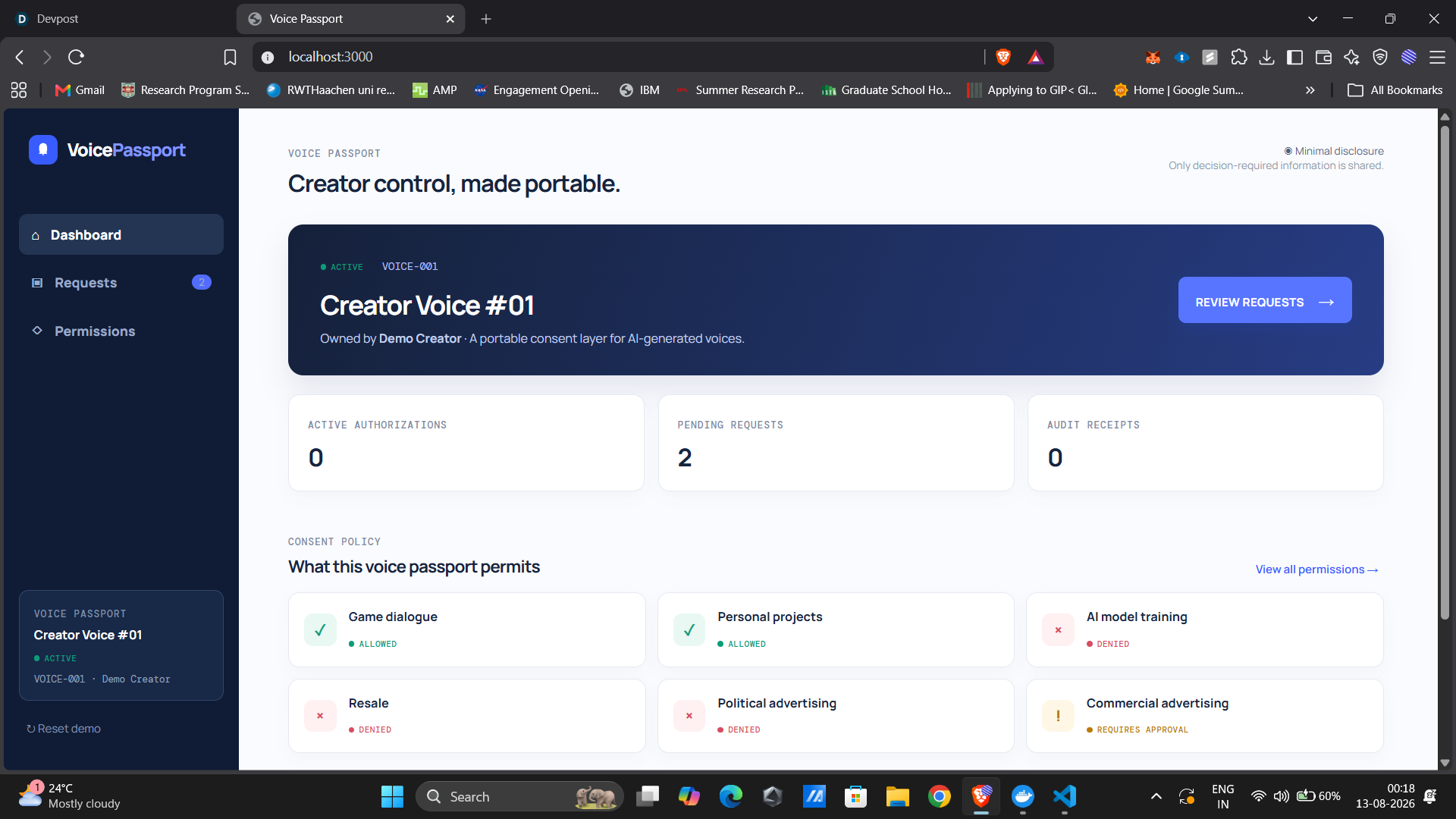
Dashboard - User
-
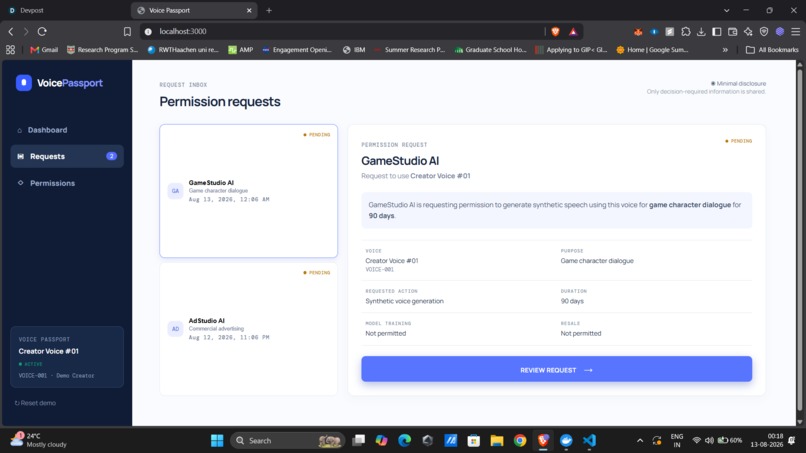
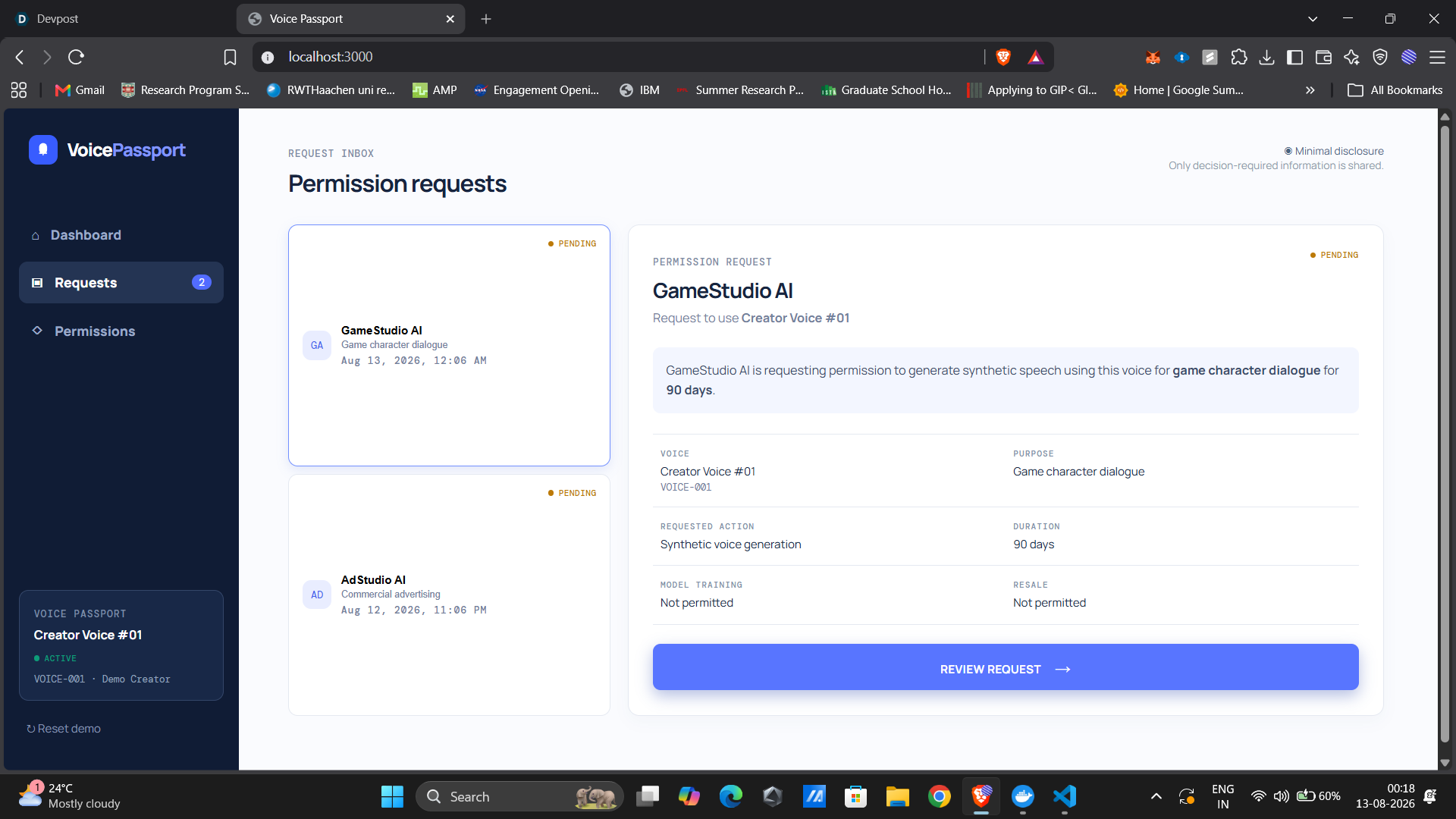
Request - User can find his/her "to" requests
-
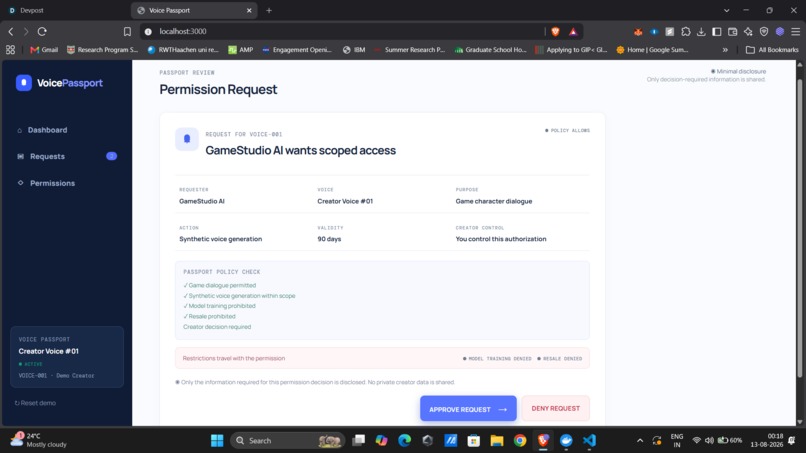
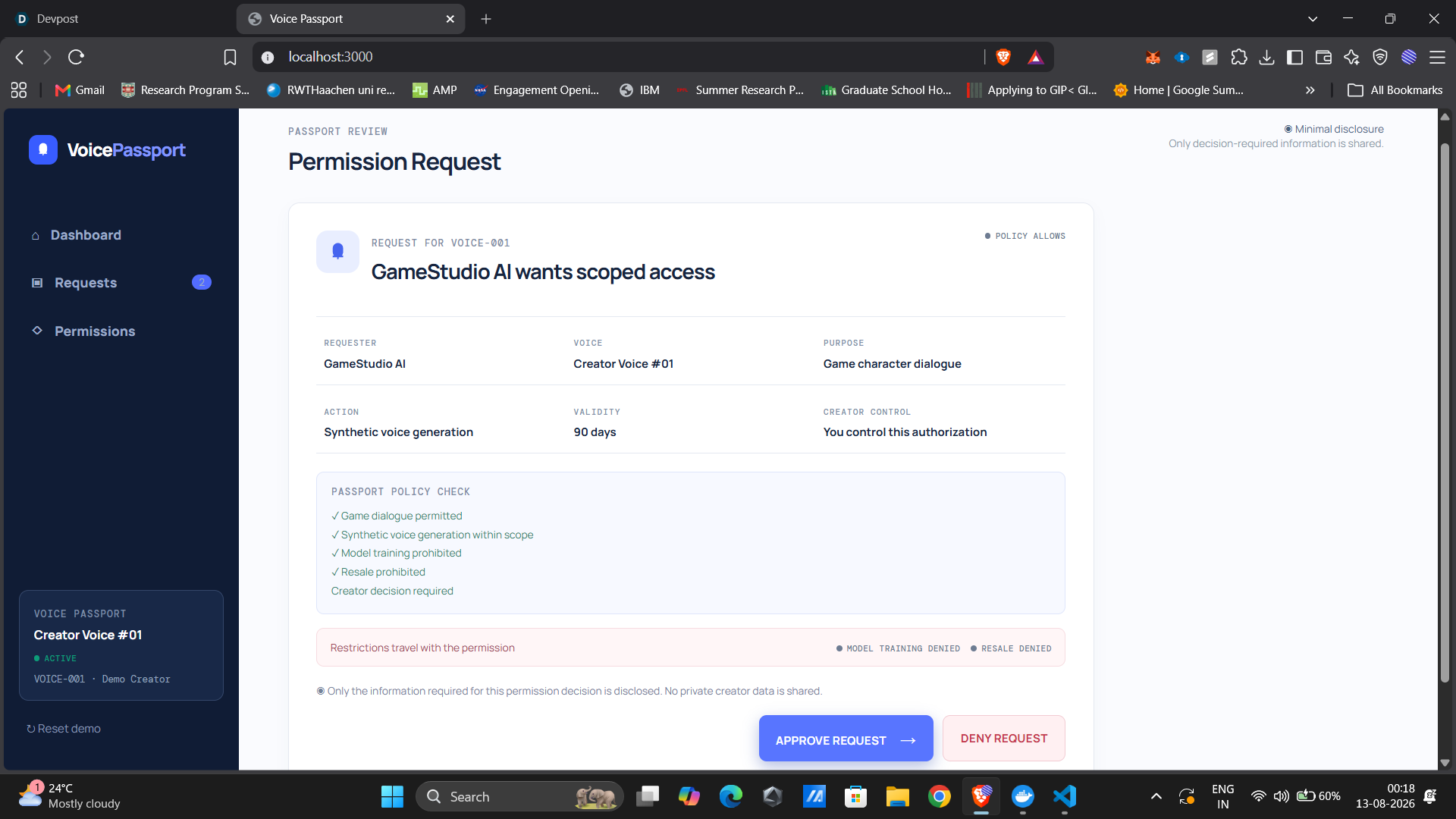
Approve / Deny - pre check and complaince
-
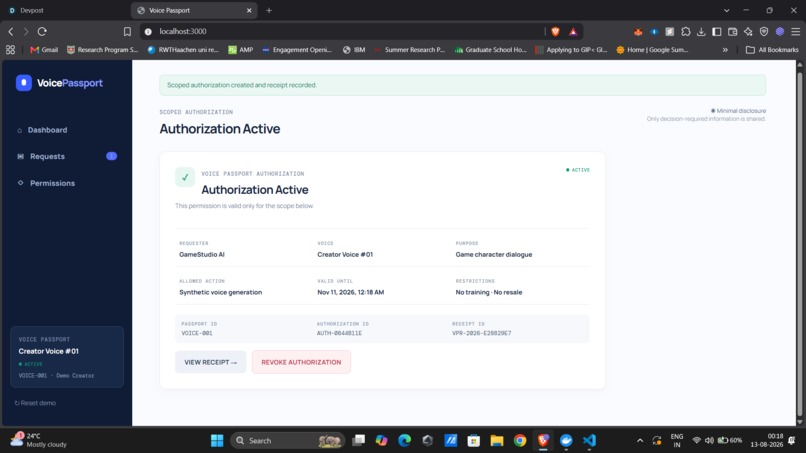
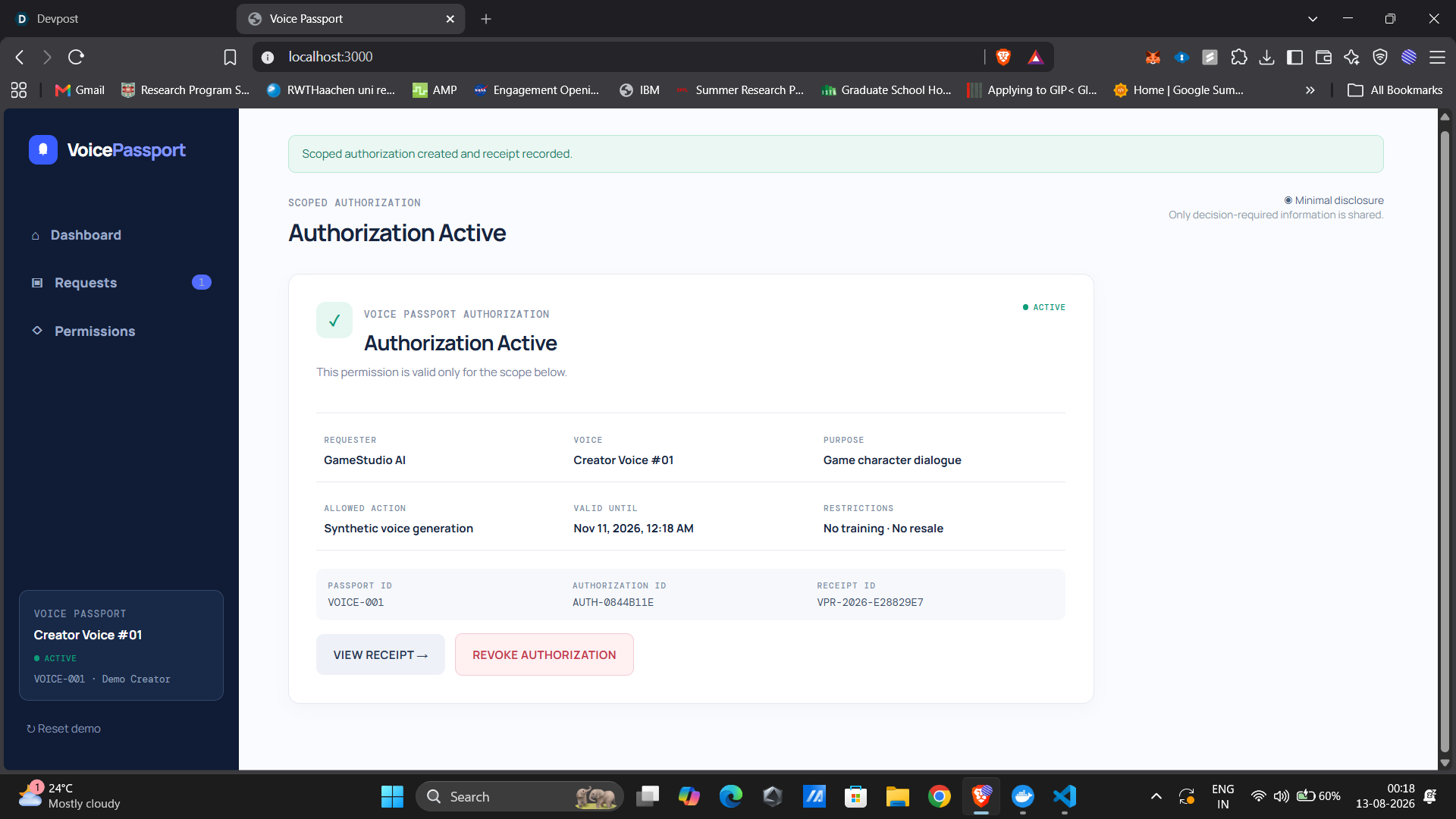
Receipt
Inspiration
Generative AI has made it possible to reproduce a person's voice in seconds. The technology is becoming increasingly accessible, but the permission model around it has not kept pace. A creator may agree to let a company use their voice for one specific purpose, such as a game character, while not agreeing to model training, advertising, resale, or other forms of synthetic use. The problem becomes larger when the same voice moves between different AI tools. A permission given in one place does not naturally travel with the voice to another. We wanted to explore a simple question: What if a creator's permission could travel with their voice? That led us to Voice Passport: a portable consent layer where the creator controls what an AI application is allowed to do with their voice.
What we built
Voice Passport demonstrates a creator creating a digital Voice Passport containing scoped permissions for synthetic voice use. An AI application can request access for a specific purpose. Instead of receiving unrestricted access, the application receives only the permission that was explicitly granted. A permission can include:
- intended purpose
- allowed type of voice use
- restrictions
- duration
- whether model training is permitted
- whether commercial use is permitted
- whether the permission can be revoked The system also creates a receipt for the decision so the creator has an auditable record of what was requested and what was allowed or denied. The important part is that the permission is designed to travel across applications rather than remaining locked inside a single voice platform. ## How the Passport is used
The workflow is:
- A creator registers a voice and defines its allowed uses.
- An AI application requests permission for a specific use.
- The Passport evaluates the request against the creator's permissions.
- The creator can approve or deny the request.
- If approved, the application receives a scoped authorization rather than unrestricted access.
- The authorization can expire or be revoked.
- A receipt records the request and decision.
For example, a game studio could request permission to generate dialogue using a creator's voice for a game character for 90 days.
The creator could approve that request while explicitly denying model training and resale. Another application could later request permission for an advertisement and receive a different decision.
Why this matters
Voice is not just an audio file. It can represent identity, likeness, reputation, and a creator's economic rights. A permission system therefore needs to communicate more than "access granted." It needs to communicate: who is allowed to use the voice, what they may do, why they may do it, for how long, and what they are not allowed to do. Voice Passport makes those decisions explicit and portable.
Privacy and control
The creator remains the authority over the permission. Applications should receive the minimum information needed to perform the authorized action rather than unrelated personal information. Permissions can be limited by purpose and time, and can be revoked or changed. The design intentionally avoids turning the creator into a database of personal information. The Passport carries the relevant claim and permission instead.
What we learned
The most important insight was that portable trust is not only about proving identity. It is also about proving authorization. For AI-generated media, the useful question is often not: "Who owns this voice?" but: "Is this application authorized to perform this particular action with this voice?" That distinction shaped the design of Voice Passport.
Challenges
The main challenge was designing permissions that were specific enough to be meaningful without becoming unnecessarily complicated. A simple allow/deny model was not sufficient. A creator may allow synthetic speech for a game while denying advertising, model training, resale, or other uses. We therefore designed permissions around purpose, scope, restrictions, expiry, and revocation. Another challenge was keeping the experience understandable. The Passport should make a permission decision clear in seconds rather than exposing creators to technical policy details.
Next step
The prototype demonstrates the first version of portable voice consent. The next step would be to connect the Passport to real AI voice providers so that applications can request and verify authorization before generating synthetic speech, while preserving the creator's ability to change or revoke that authorization over time.
NOTE : IT TAKES ABOUT 1-2 MIN FOR THE SERVER TO ACCEPT AND SAY THE RESOURCE< PLEASE WIAT FOR 2-3 min AND SEND THE REQUEST OR https://voice-passport-egoist-ideathon.onrender.com/ AGAIN.
