-
-
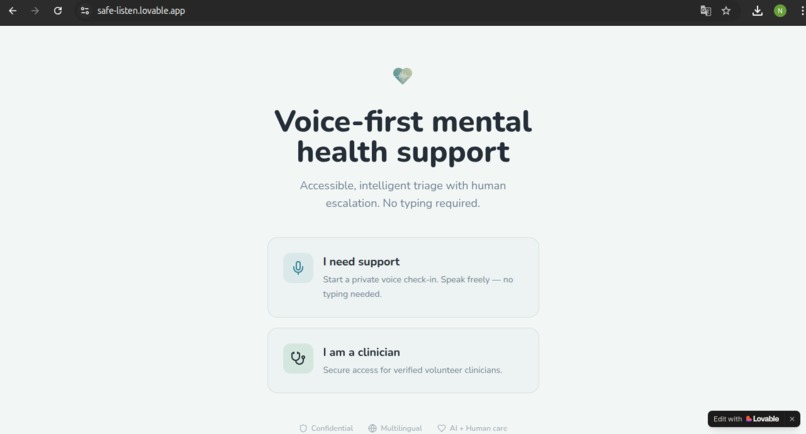
1 User
-
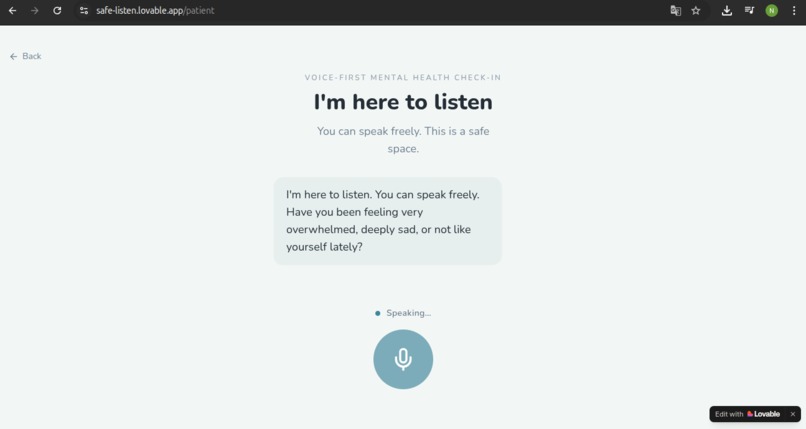
2
-
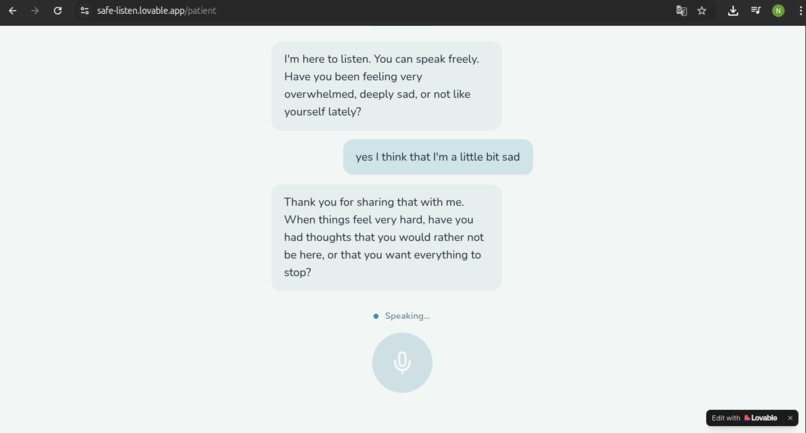
3
-
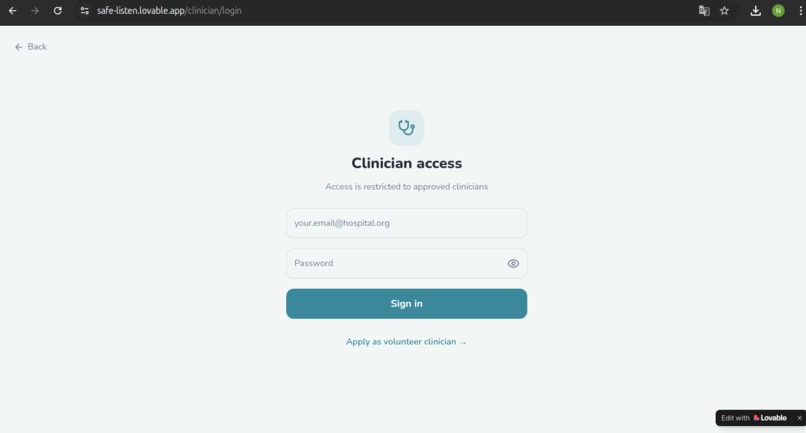
1 Clinician
-
2
-
3
-
4
-
5
-
6
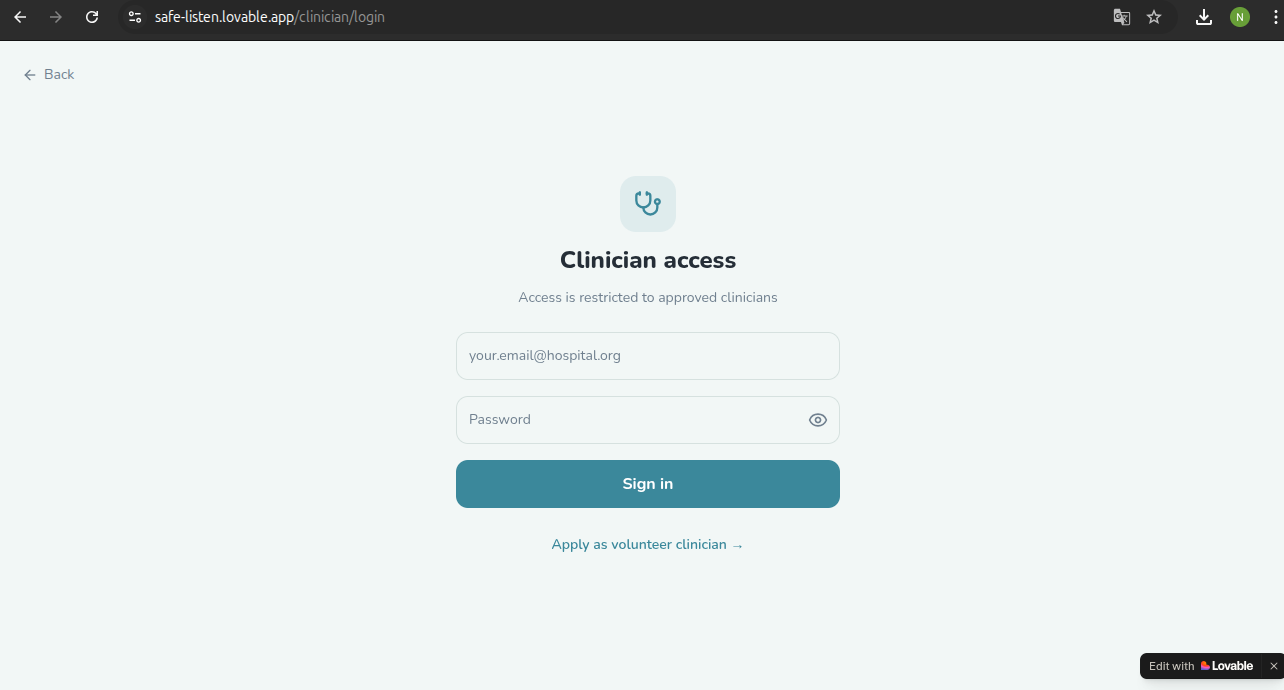
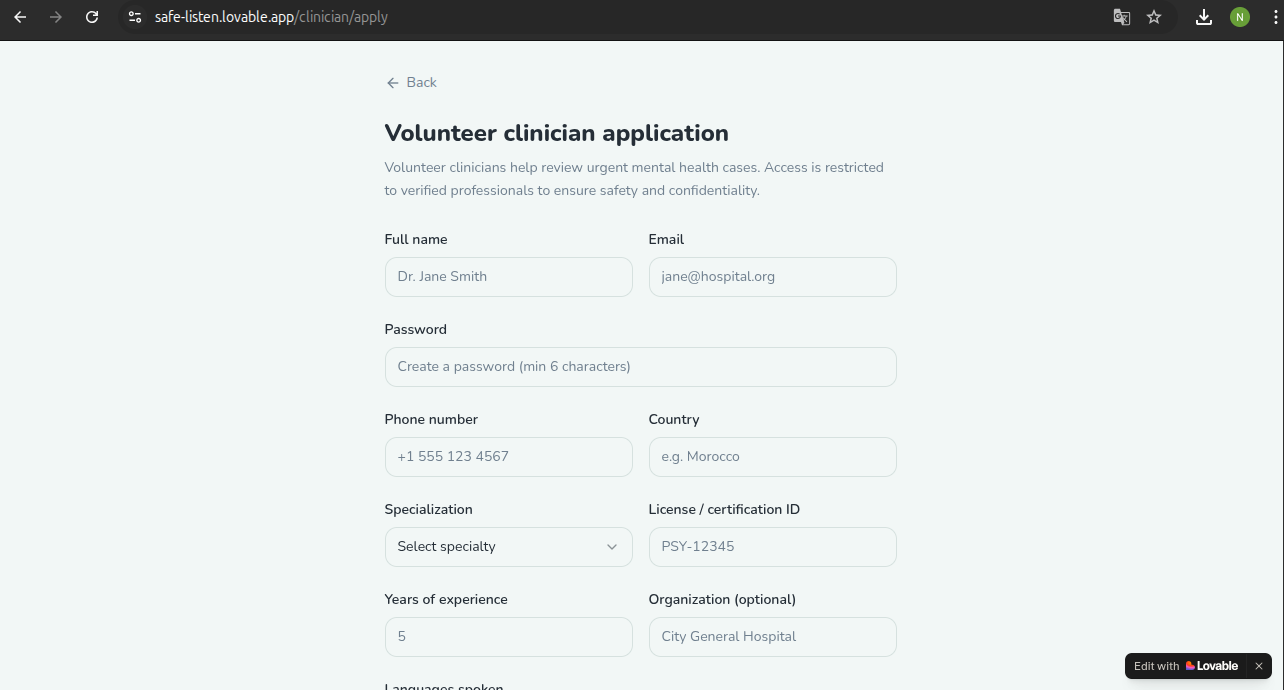
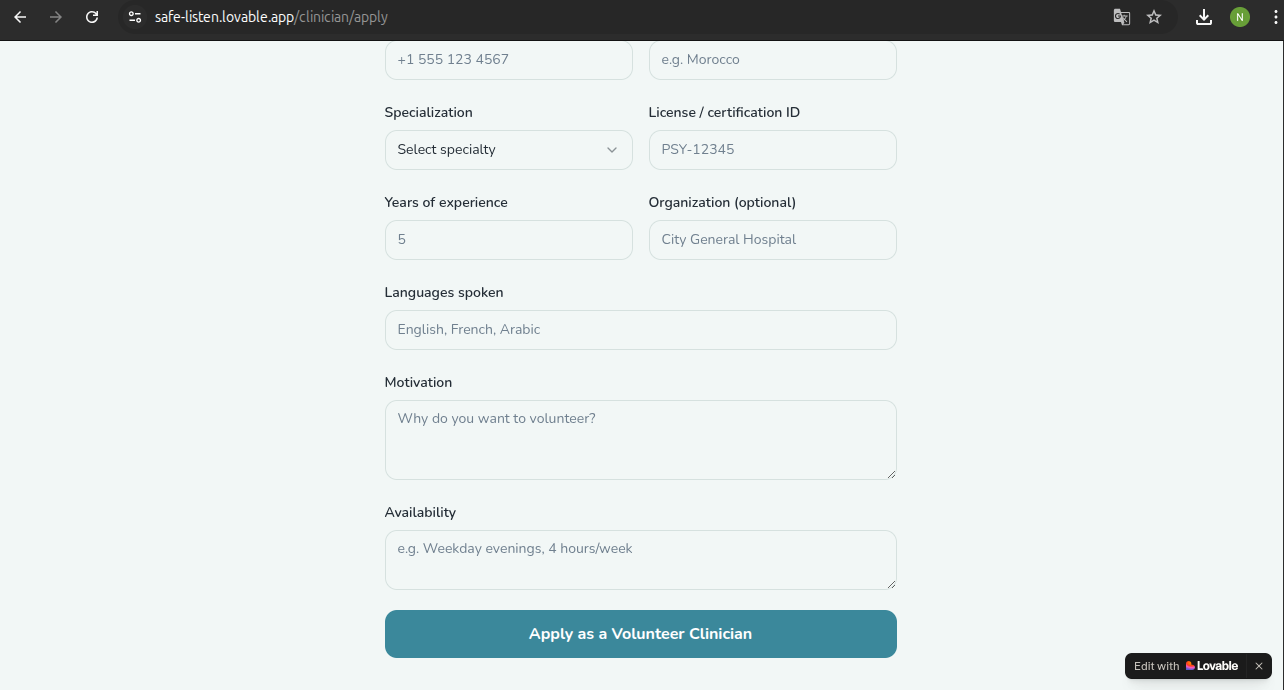
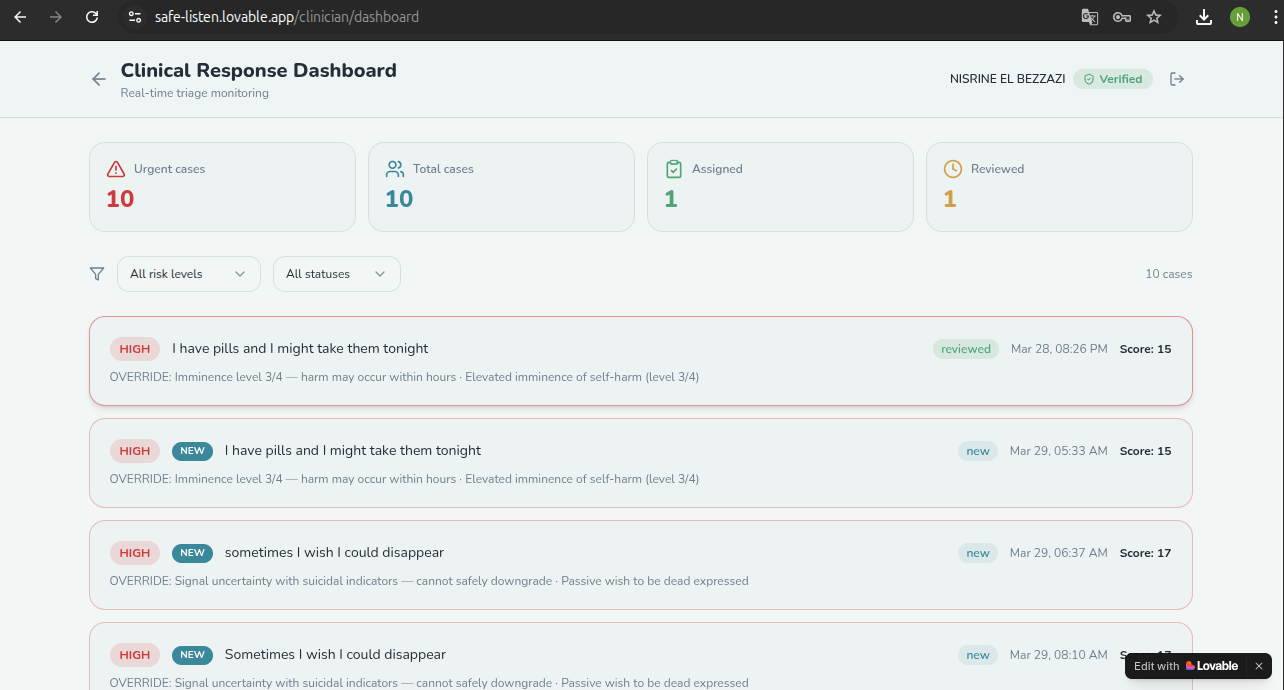
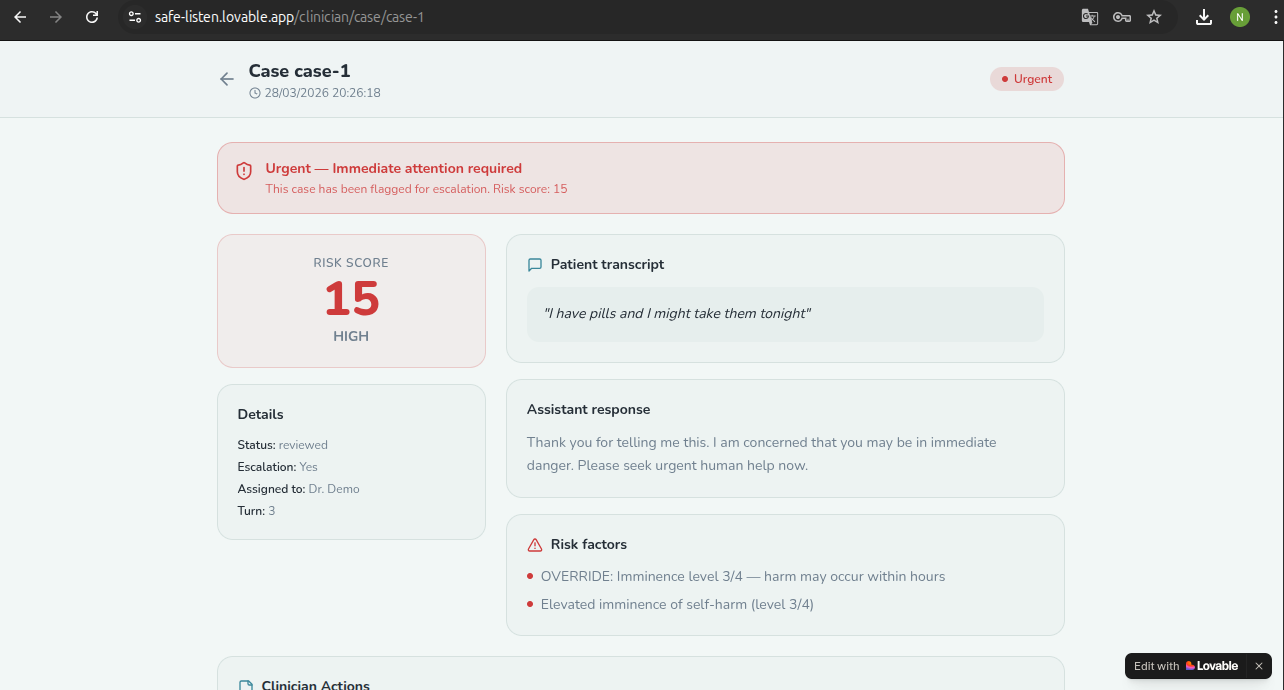
Mental health disorders are increasing globally due to social media pressure, stressful lifestyles, and modern living conditions. However, unlike physical illnesses, mental health issues are often invisible and difficult to recognize early, which prevents many people from seeking help. Access to psychiatric care also remains highly unequal: treatments are often expensive, and many individuals lack the time, financial resources, or education needed to consult a professional. In addition, many existing digital mental-health tools are not accessible to everyone, as they rely heavily on text-based interaction, require digital literacy, or are limited by language and connectivity barriers. The reliability of automated mental-health assessments is also a major concern, which reduces trust in such systems.
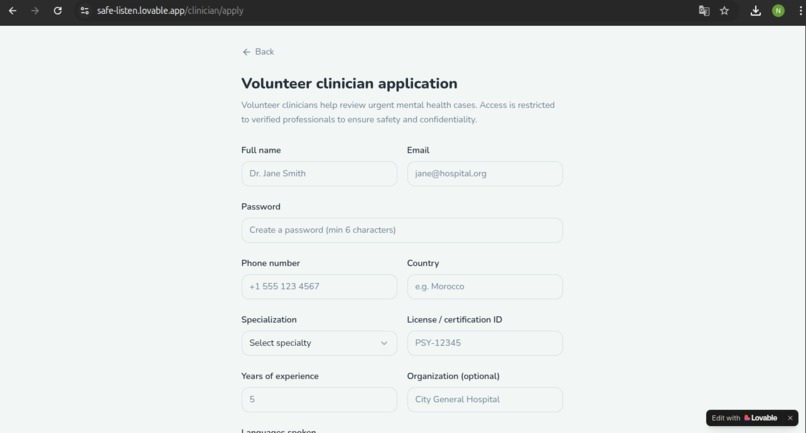
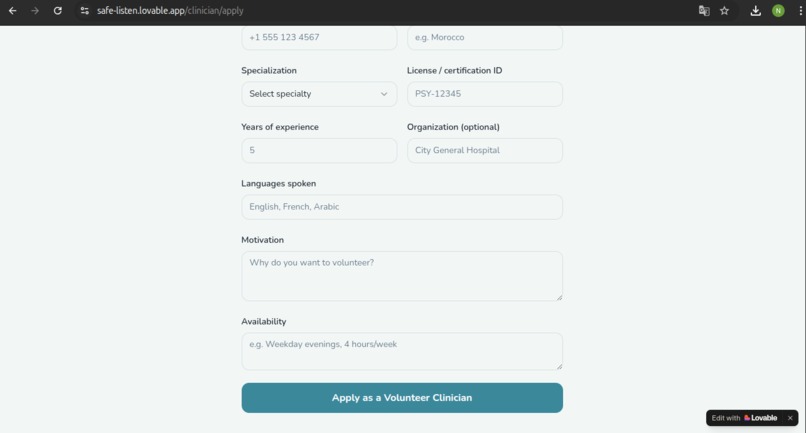
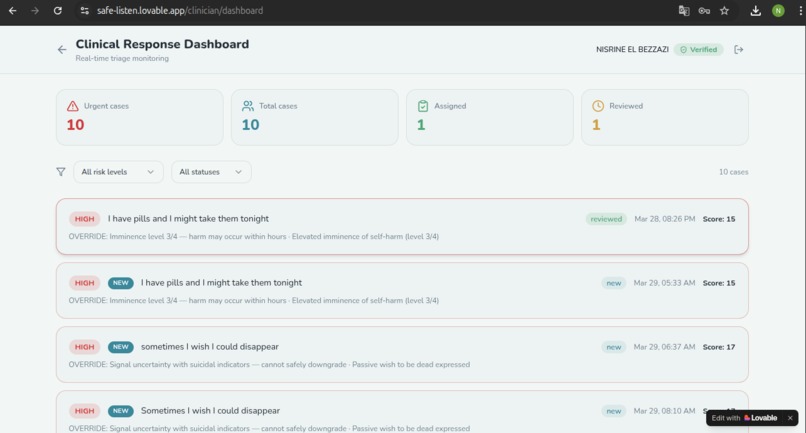
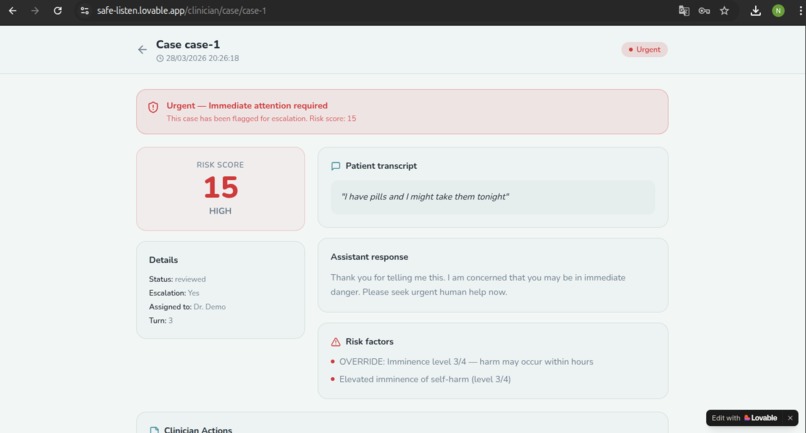
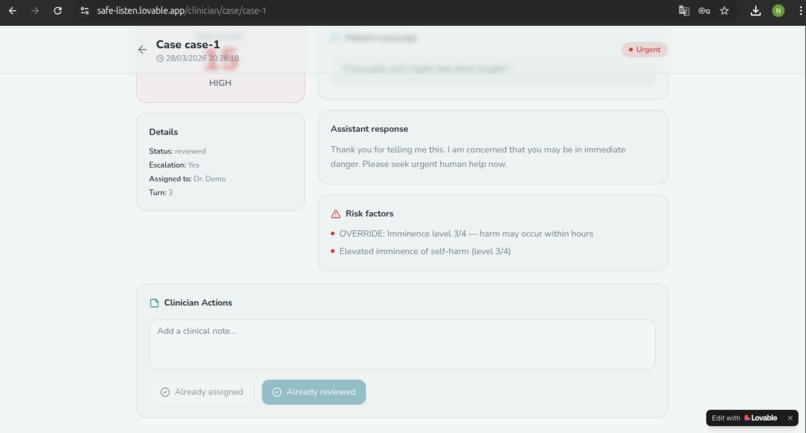
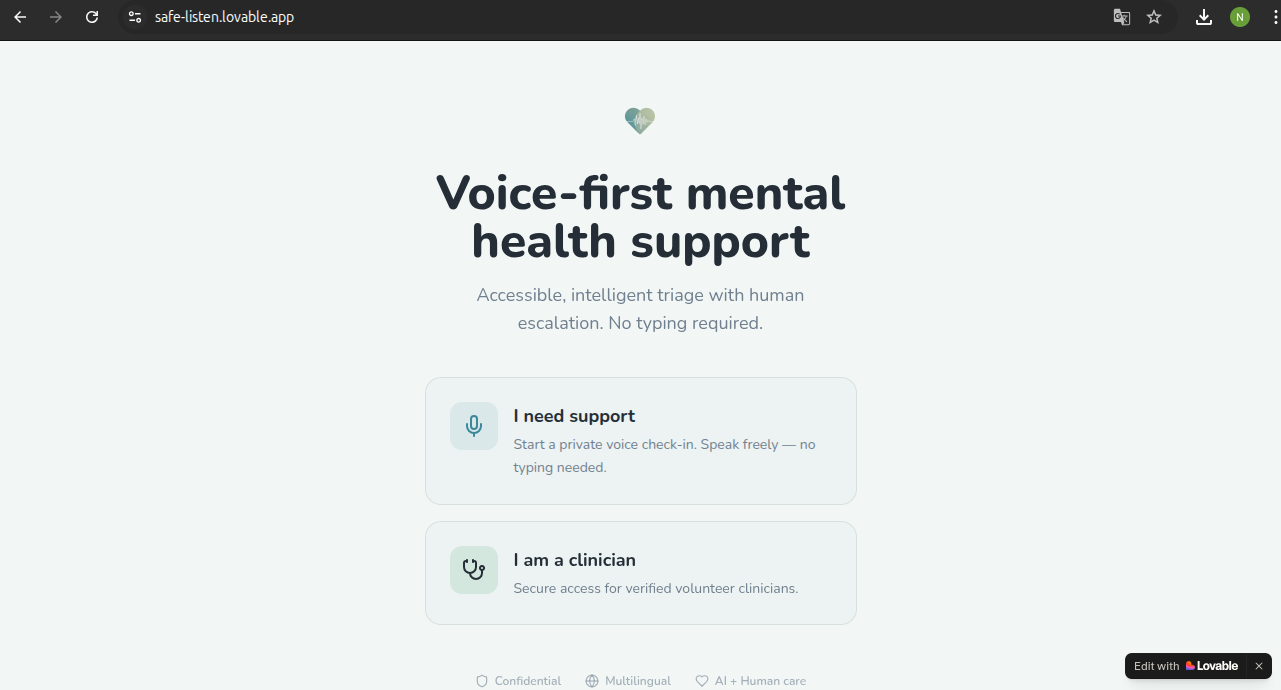
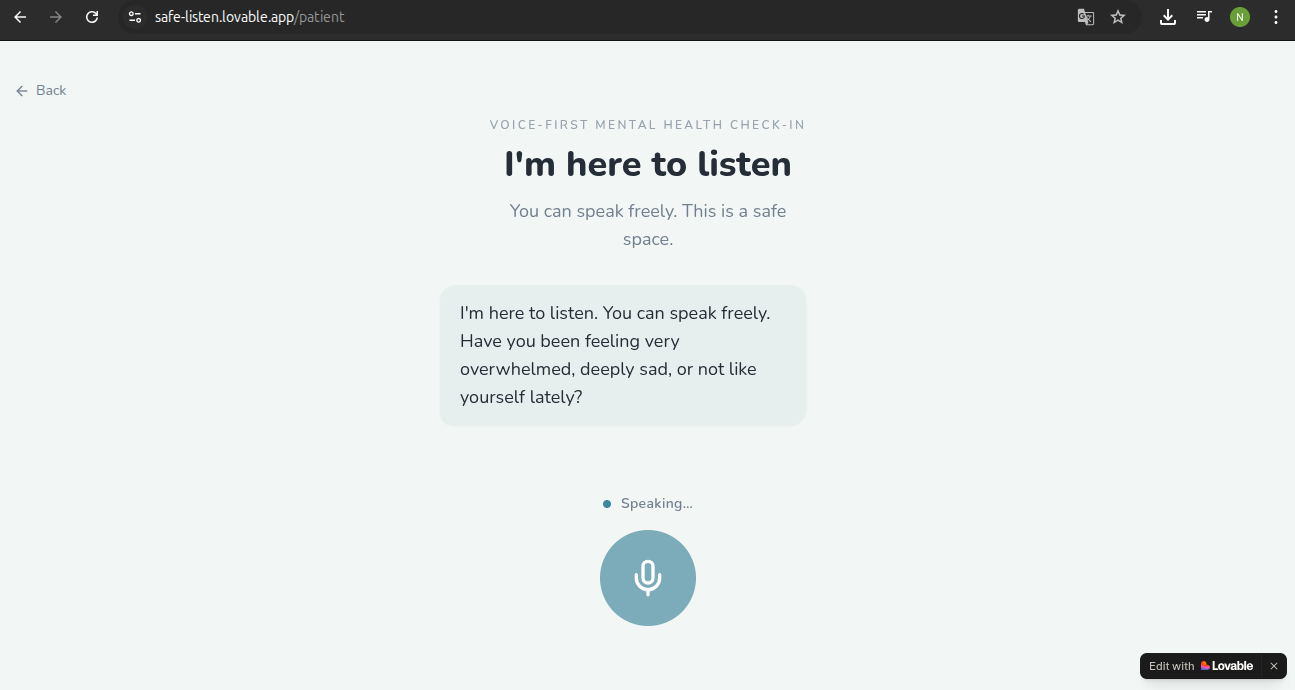
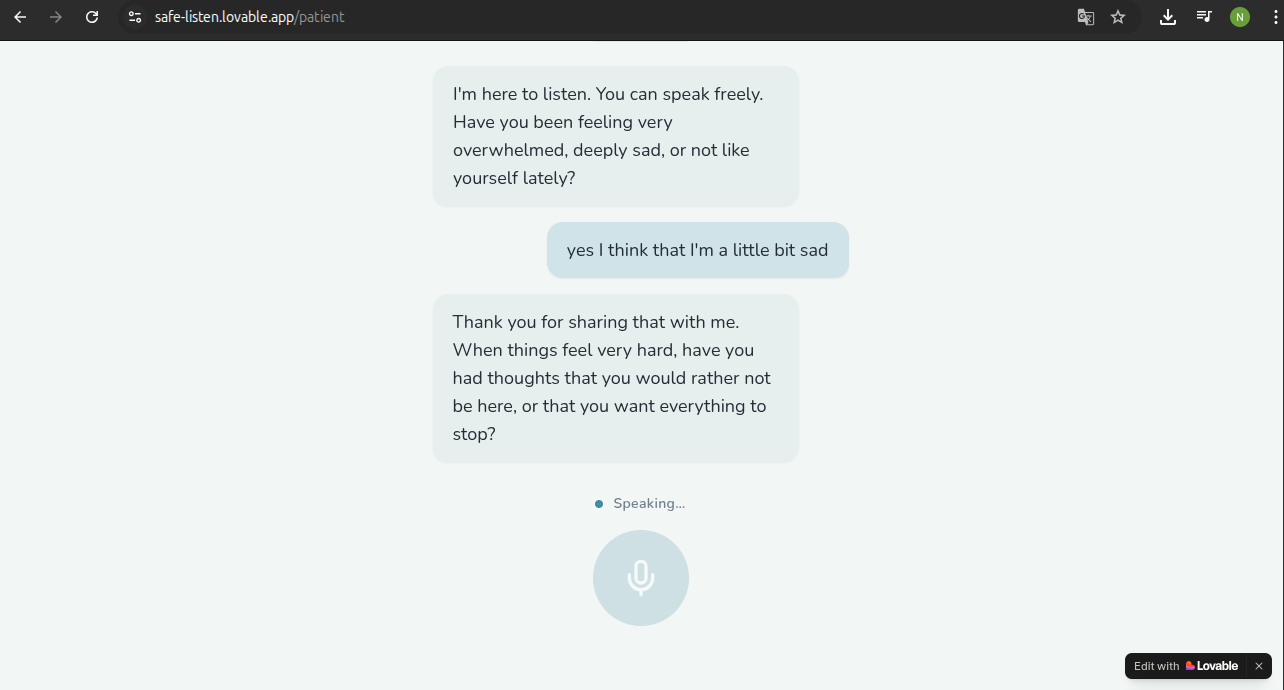
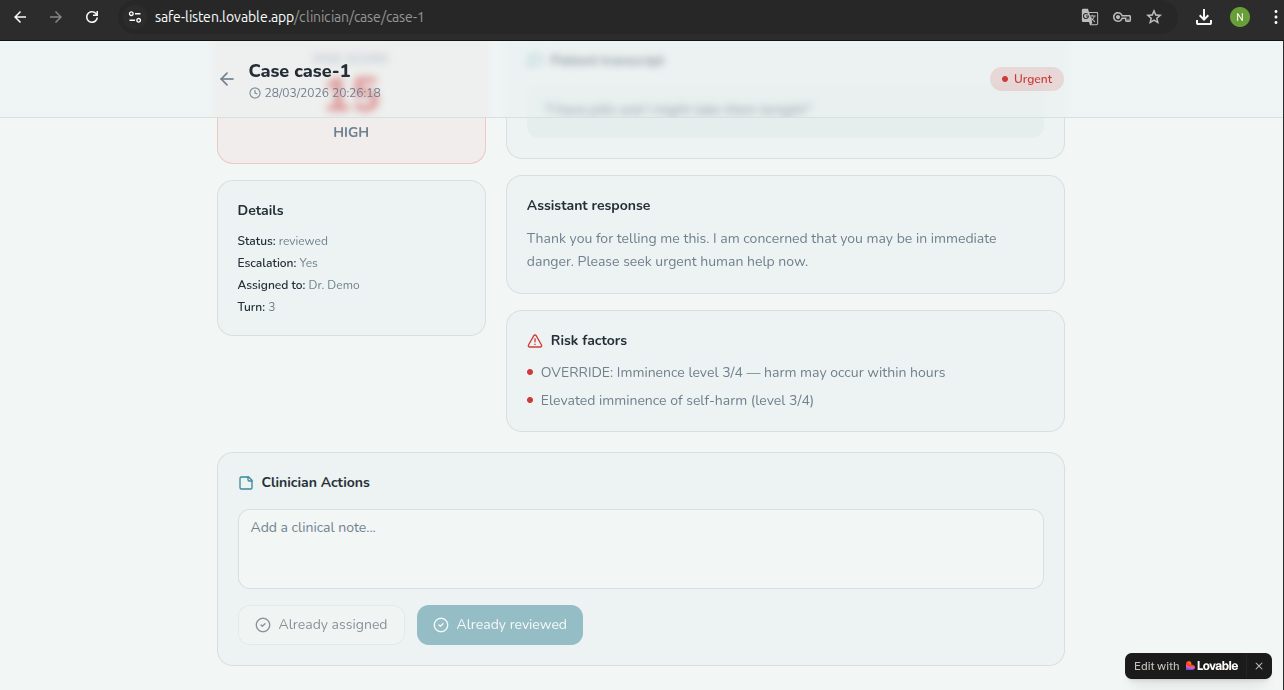
To address these challenges, we developed an AI-powered mental health platform designed to be accessible, inclusive, and easy to use. Our system is voice-first, allowing users to interact through natural speech in their own language, making it usable even for people with low literacy. The AI guides users through structured questions inspired by real clinical practices and analyzes emotional tone, speech patterns, and responses to assess potential symptoms and determine the level of risk. Importantly, the system is not designed to replace medical professionals but to act as a triage tool. For non-urgent cases, it provides personalized recommendations and guidance. For urgent situations, it escalates the case to volunteer psychologists or psychiatrists registered on the platform, who can review the situation and provide appropriate support.
From a technical perspective, we combined AI capabilities with structured medical logic to improve reliability. Instead of relying entirely on free-form AI outputs, the system is grounded in well-known clinical questionnaires and controlled workflows. We implemented a voice interface using existing speech technologies, ensuring ease of access without requiring complex user interfaces. To protect user privacy, the system does not require personal sensitive information; instead, it uses a unique identifier to track cases and maintain history when necessary.
One of the main challenges we faced was ensuring the reliability of the system. Early versions of the prototype sometimes produced inaccurate results, not because of AI hallucination, but due to the simplicity of the extraction and processing logic. This highlighted the importance of combining AI with structured medical frameworks. We also faced challenges in designing a system that remains simple, intuitive, and accessible while still being technically robust and secure.
Despite these challenges, we successfully built a functional prototype that demonstrates the feasibility of a voice-first mental health triage system. We are particularly proud of creating a solution that is accessible to a wide range of users, including those with limited literacy, and that integrates human professionals into the loop for critical cases. This ensures both scalability and trust.
Through this project, we learned that AI in healthcare must be carefully designed, constrained, and supported by human expertise. Accessibility is just as important as accuracy, and real-world impact requires solutions that are simple, inclusive, and trustworthy. Moving forward, we plan to improve the accuracy of the system, expand multilingual support, onboard more verified clinicians, and integrate more clinically validated assessment frameworks. Our long-term vision is to build a global mental-health support system that is accessible to anyone, anywhere, simply through voice interaction.
Built With
- api
- javascript
- lovable
- n8n
- speech
- web
- webhook

Log in or sign up for Devpost to join the conversation.