💡 The spark of inspiration
If you've ever worked a customer support job, you know how stressful an angry escalation call can be. You have a distressed customer shouting in your ear, and at the same time, you're frantically trying to type out everything they're saying so you can hand the ticket off to a specialist.
When you're rushing, notes get messy. Context gets lost. By the time that ticket finally reaches the Tier 2 or Tier 3 team, they have to spend half an hour just deciphering what the problem actually is. That delay causes SLA (Service Level Agreement) breaches and makes angry customers even angrier.
We realized we didn't need to force human agents to be perfect stenographers. With the release of Amazon Nova Sonic, we saw the opportunity to build a structured "second pair of ears"—an AI copilot that actively guides the agent through an escalation interview, ensuring zero critical details are missed before hitting "Submit."
🚀 What it actually does
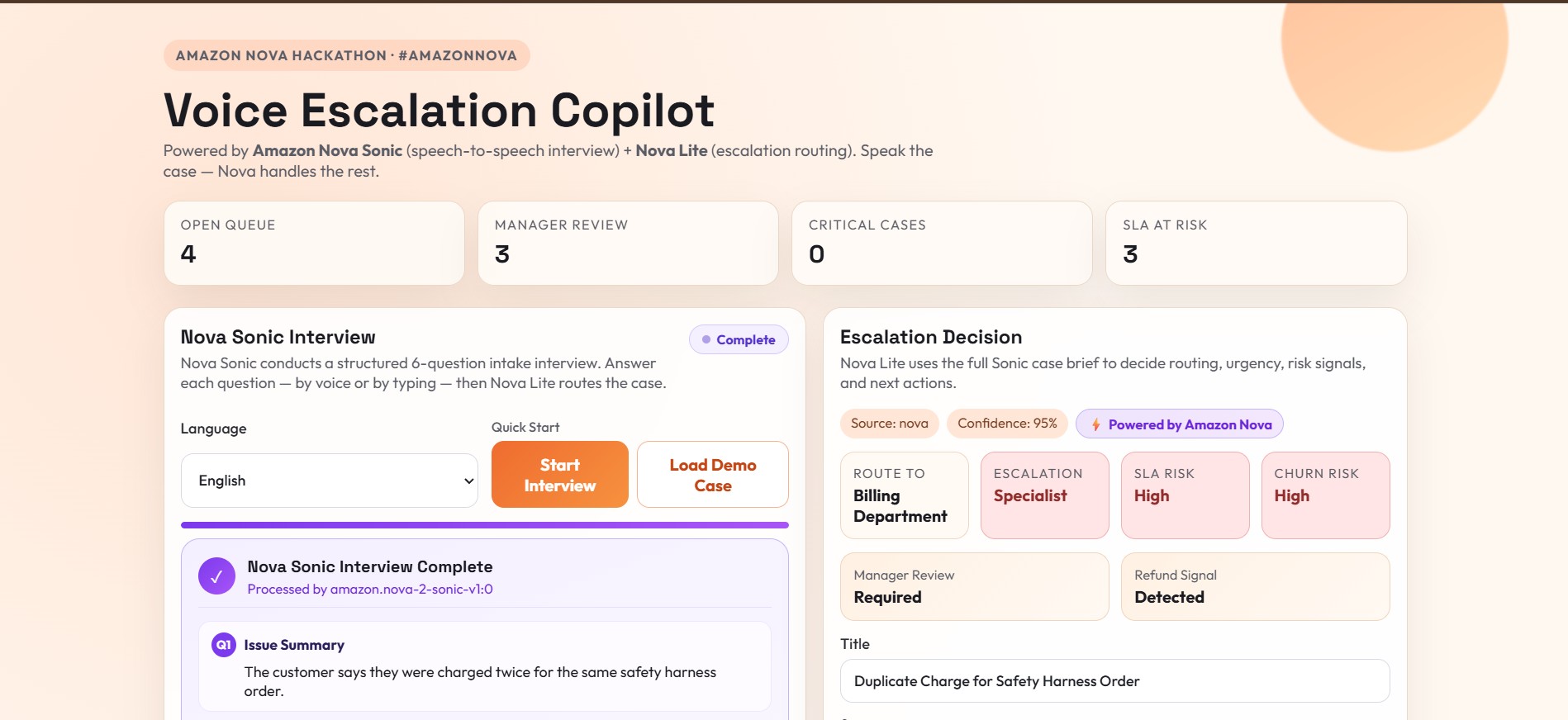
Voice Escalation Copilot transforms a chaotic, highly stressful voice interaction into a perfectly structured, instantly actionable support ticket.
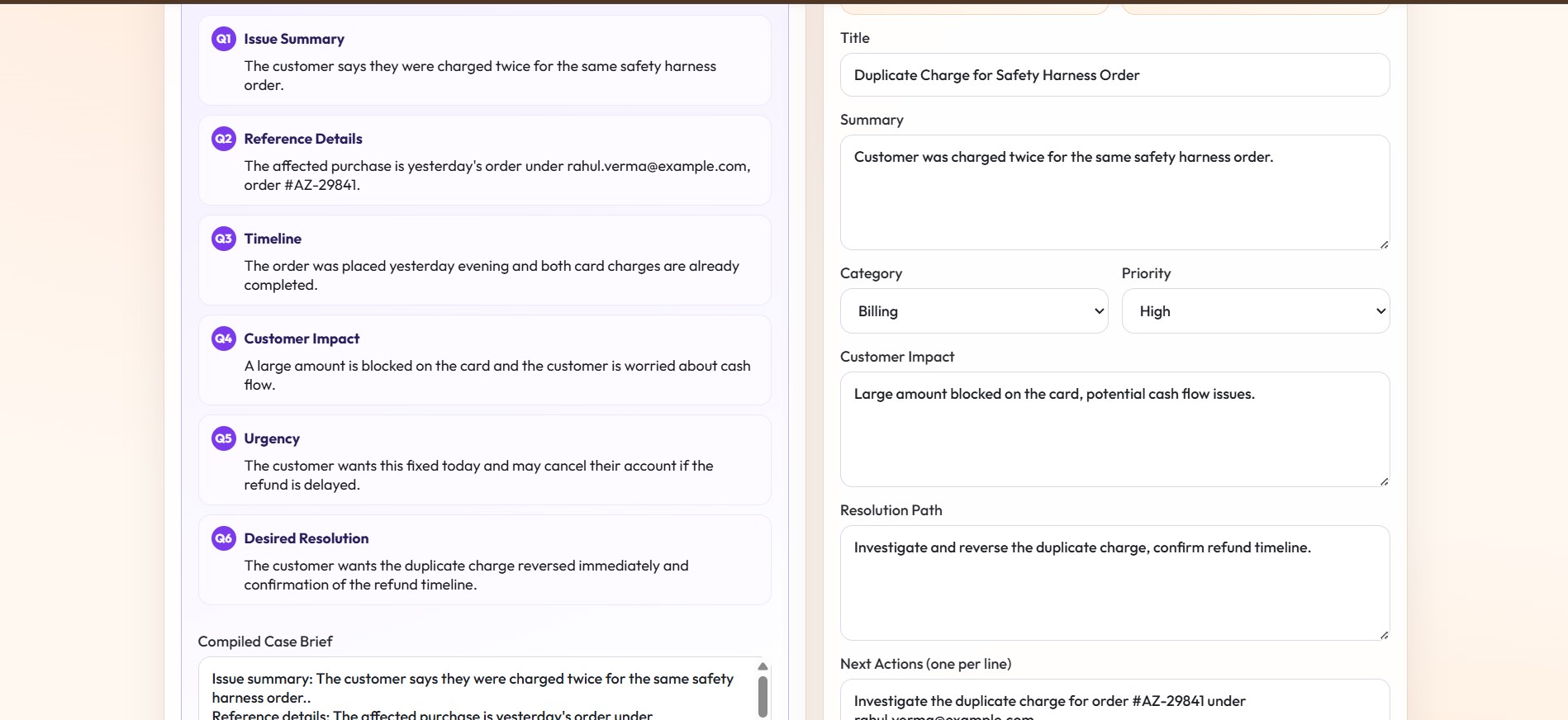
Instead of an agent typing freeform notes into a blank box, our app uses Amazon Nova Sonic to conduct a bidirectional, conversational "intake interview." After the call, the copilot asks the agent 6 rapid-fire questions covering the critical details (like the timeline, the business impact, and how urgent the fix is).
Once the agent answers (either by speaking or typing), the raw transcript is handed over to Amazon Nova Lite. Nova Lite acts as the brain behind the scenes:
- It cleans up the messy transcript into a readable case brief.
- It figures out exactly which department (Billing, Tech Support, etc.) needs to handle it.
- It flags any critical SLA or churn risks so supervisors know what's burning.
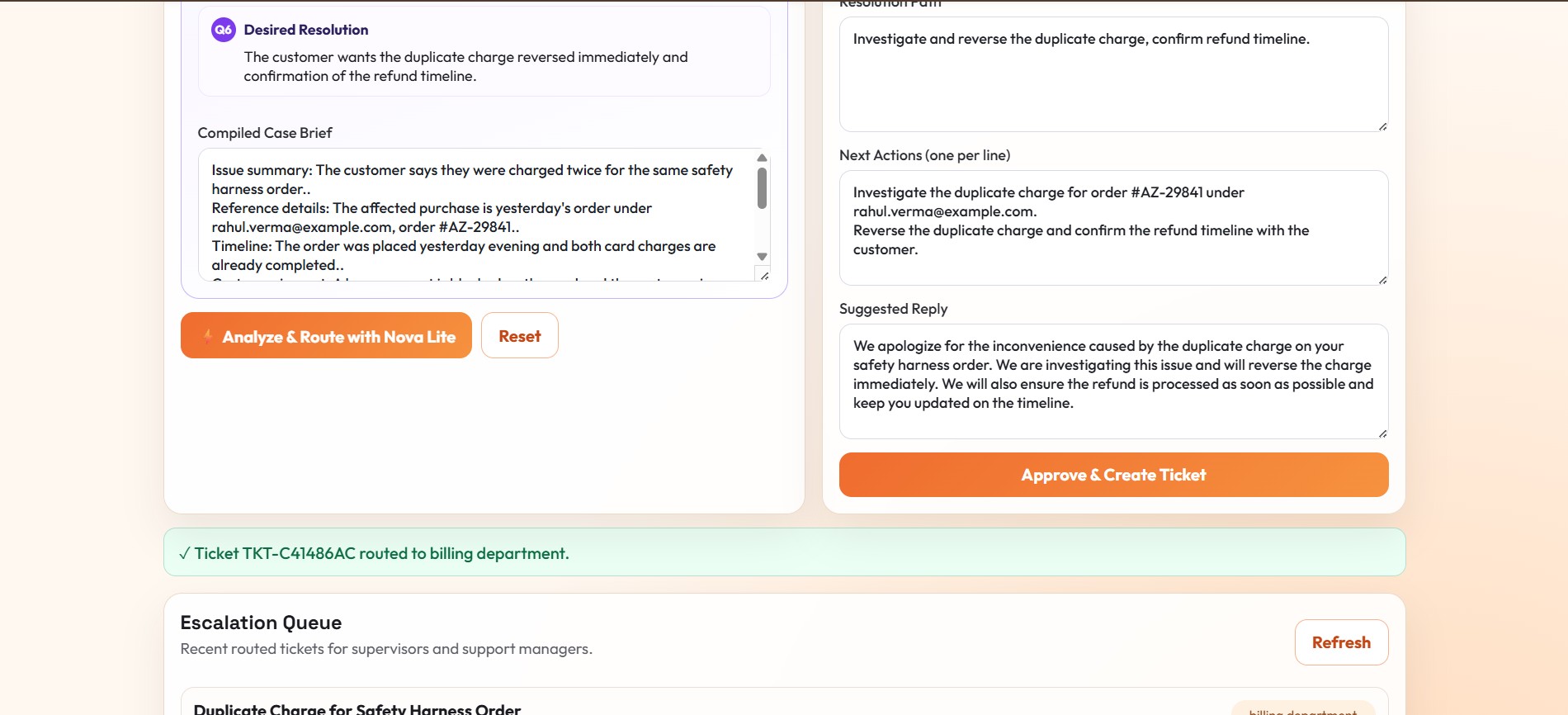
- It auto-generates a list of suggested "Next Actions" for the specialized team to start on immediately.
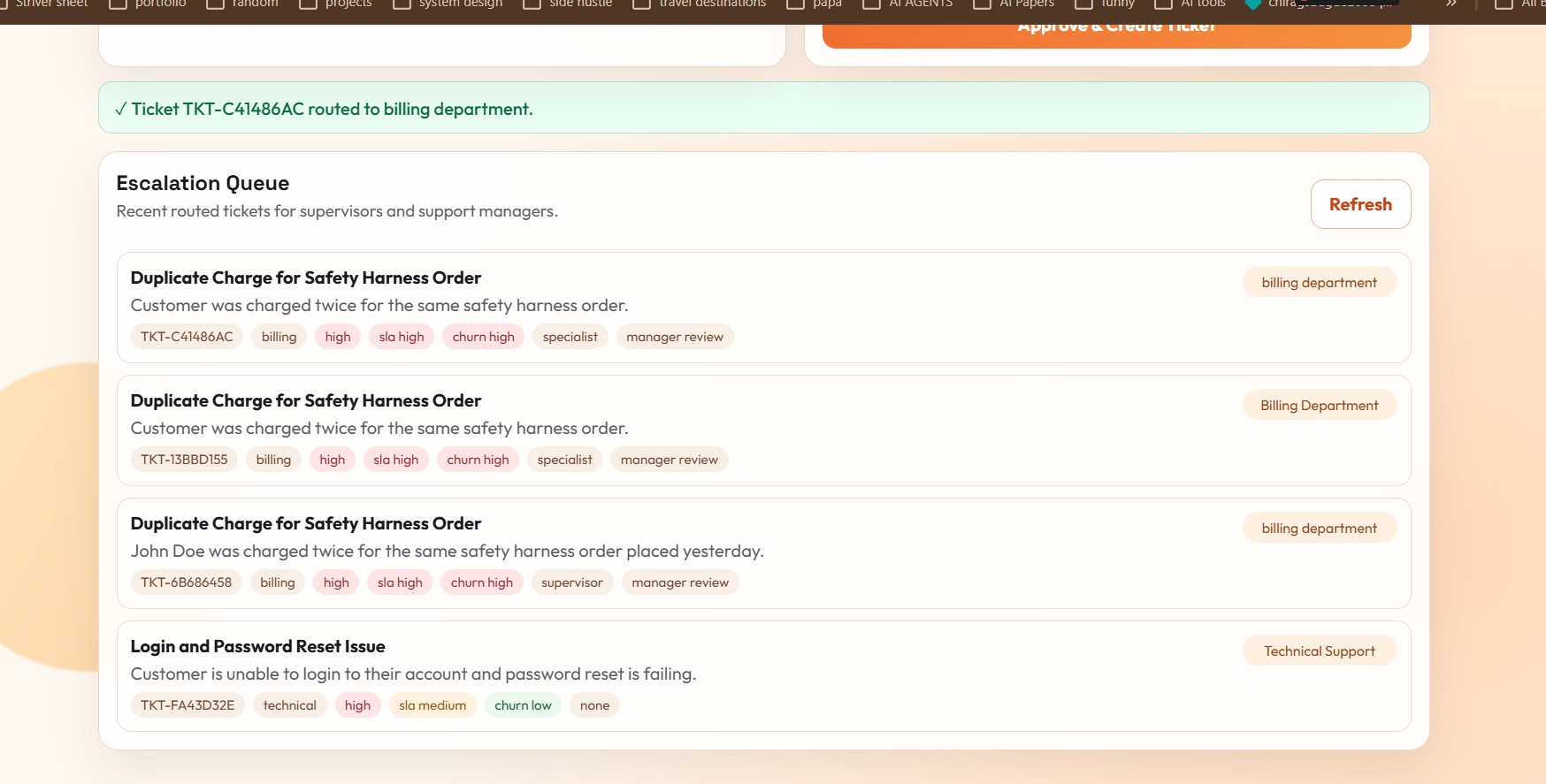
Supervisors can then just glance at their dashboard, review the drafted ticket, and approve it with one click.
🛠️ How we brought it to life
We split the project into a robust Python backend and a slick React frontend to prove this could work in a real call center environment.
- The Backend: We built a FastAPI server that hooks into the AWS Bedrock Runtime. We specifically used the new
BidirectionalStreamAPI to stream interactions directly to theamazon.nova-2-sonic-v1:0model. This is what handles the fast, conversational back-and-forth. - The Data Layer: Getting an AI to talk is cool, but we needed strict, reliable data for a database. That's why we brought in
amazon.nova-lite-v1:0via the Bedrock Converse API. We told Nova Lite to take the messy Sonic transcript and return a highly structured, deterministic JSON payload full of routing metadata. - The Frontend: We threw together a responsive Vite/React app with a clean, glassmorphic UI. We tapped into the browser's native Web Speech API so agents can literally dictate their notes out loud, and we added visual feedback (like live waveforms and SLA warning badges) so the user always knows what the copilot is doing.
⚠️ The roadblocks we hit
Moving from simple REST APIs to real-time streaming was tough:
- Streaming Audio: Setting up Nova Sonic's
BidirectionalStreamrequired managing async event loops and chunking audio bytes so the conversation felt natural and fluid. - Taming the Output: Nova Sonic is great at chatting, but bad at generating strict database JSON. Splitting the work, using Sonic for the human interview and Nova Lite for the JSON serialization, was our breakthrough moment.
🧠 What we walked away with
The biggest takeaway? Latency is everything in voice apps.
If a voice assistant takes 5 seconds to reply, it feels broken. Amazon Nova Sonic's incredibly fast response times are what actually make this feel like a "copilot" rather than a frustrating dictation tool. We also learned how powerful it is to chain different AI models together, rather than trying to force one giant model to do everything from chatting to JSON parsing.
🔮 Where we're taking it next
Right now, the copilot generates tickets in our own mock dashboard. The immediate next step is building webhooks to push these structured JSON tickets directly into real helpdesk software like Zendesk, Salesforce, or Jira.
We'd also love to implement an automated callback mechanism where Nova Sonic calls the distressed customer back to tell them the good news once their ticket is resolved.
Built With
- amazon-nova
- amazon-web-services
- fastapi
- python
- react
- typescript
- vite

Log in or sign up for Devpost to join the conversation.