-
-
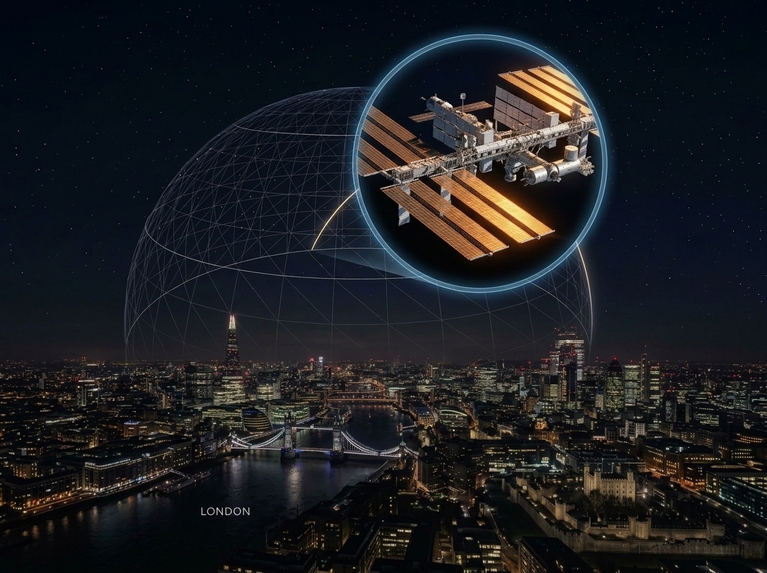
OrbitSim - Thumbnail
Inspiration
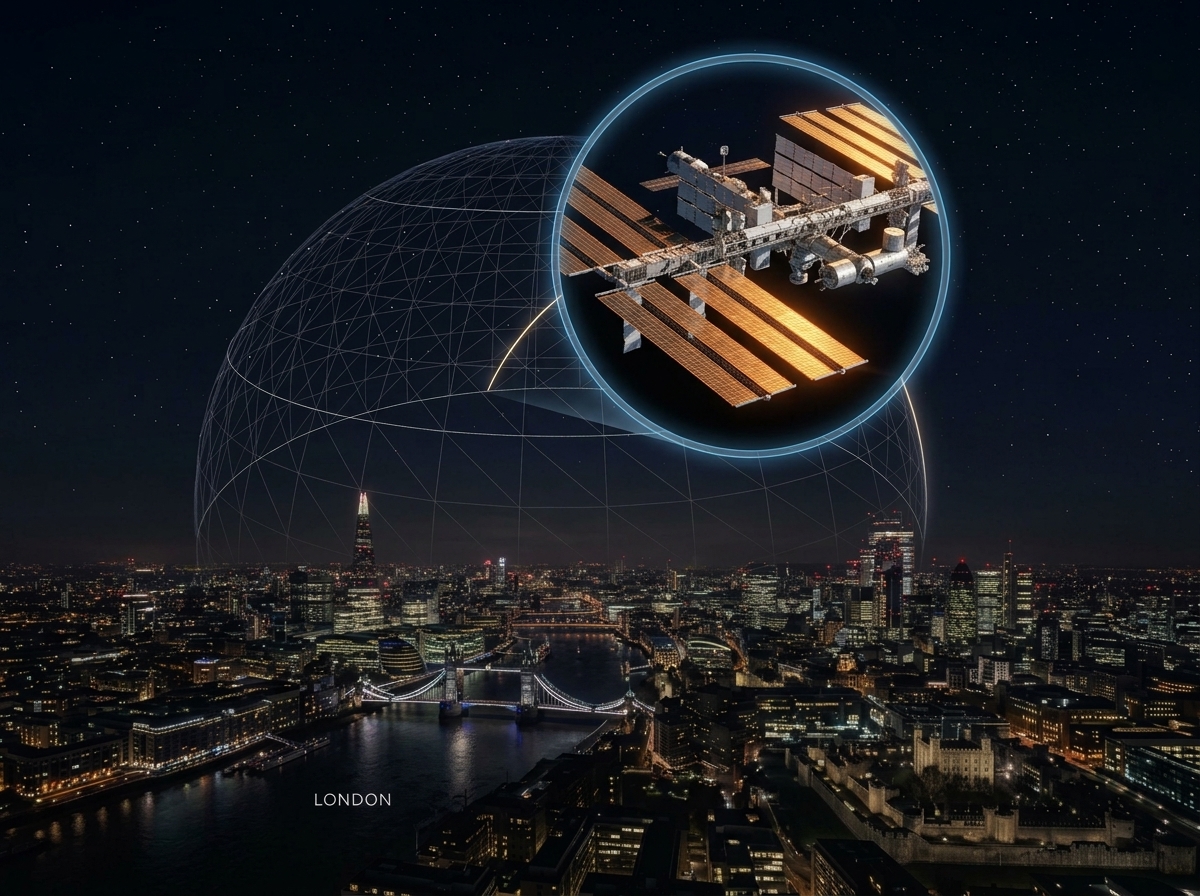
A simple question inspired this project: “When can I see a satellite from where I am?” Answering it often involves navigating technical catalogues, interpreting orbital data and checking separate weather forecasts. We wanted to make that experience visual and conversational: a voice-enabled space companion designed around the possibilities of Alexa+.
What it does
OrbitSim AI lets users explore satellites on an interactive 3D Earth, identify objects by name or unique NORAD catalogue ID, and predict upcoming passes over their location. A My Sky view shows where to look, while available cloud forecasts help assess viewing conditions. The browser-based Alexa+ simulation supports typed requests and browser speech, with a conversation history showing the MCP tool calls behind each interaction.
How we built it
We built a Python MCP server over Streamable HTTP, exposing two tools: show_orbit_view and find_passes. SGP4 propagates Space-Track orbital elements into predicted positions, Three.js/WebGL renders the globe and sky views as an MCP App, and Open-Meteo provides geocoding and cloud forecasts. The application is packaged in a pre-built Docker image on GitHub Container Registry, so users can run the demo without installing Python or Node.js locally.
Challenges we ran into
Data availability proved as important as visualisation: a valid NORAD ID identifies an object but does not guarantee current Earth-orbit elements. We added Space-Track catalogue lookups to identify objects when orbital data is missing, while avoiding unsupported claims about their status. Synchronising the embedded globe with its host also required careful handling to prevent duplicate messages and keep tool results, speech and visual updates consistent.
Accomplishments that we're proud of
We brought orbital calculations, satellite identification, local pass predictions and interactive visualisation together behind just two MCP tools. The demo makes its operation inspectable by showing tool inputs and results, while providing explanations when a requested object cannot be displayed. Publishing a pre-built container also makes the experience straightforward to reproduce, with each user supplying their own Space-Track credentials at runtime.
What we learned
We learned that a useful scientific interface must communicate uncertainty and limitations, not just produce an impressive visualisation. Predicted positions are not live telemetry, geometric visibility is not a guaranteed sighting, and missing orbital elements do not prove re-entry. MCP provided a practical way to separate the calculation engine from the interface, while the prototype highlighted how much conversational usability depends on clear feedback and coordinated state.
What's next for Voice-enabled OrbitSim
The next step is replacing the prototype’s local request-routing rules with Amazon Bedrock-powered tool orchestration, enabling contextual follow-ups such as “When can I see it?” and “What about Tokyo?” We also plan to explore direct Alexa+ integration, improve accessibility and viewing-condition explanations, and investigate suitable ephemerides for objects beyond Earth orbit. These are future developments: the current submission demonstrates the MCP-based browser experience, rather than a deployed Alexa+ Agent Skill.


Log in or sign up for Devpost to join the conversation.