-
-
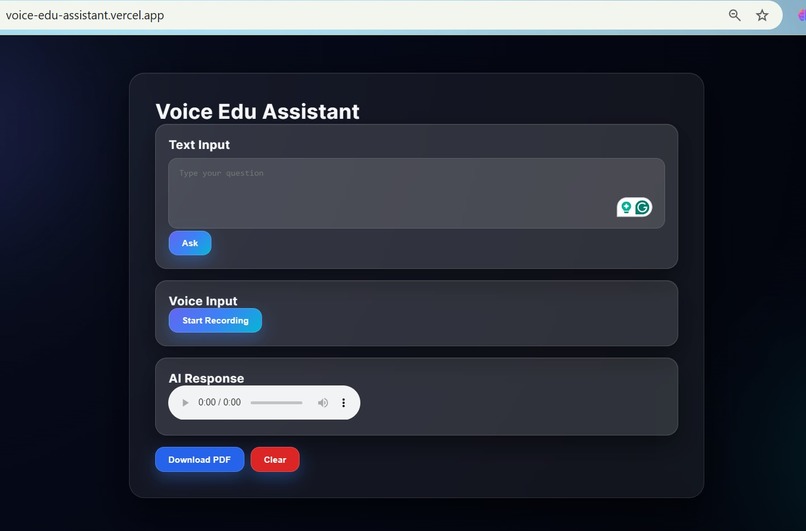
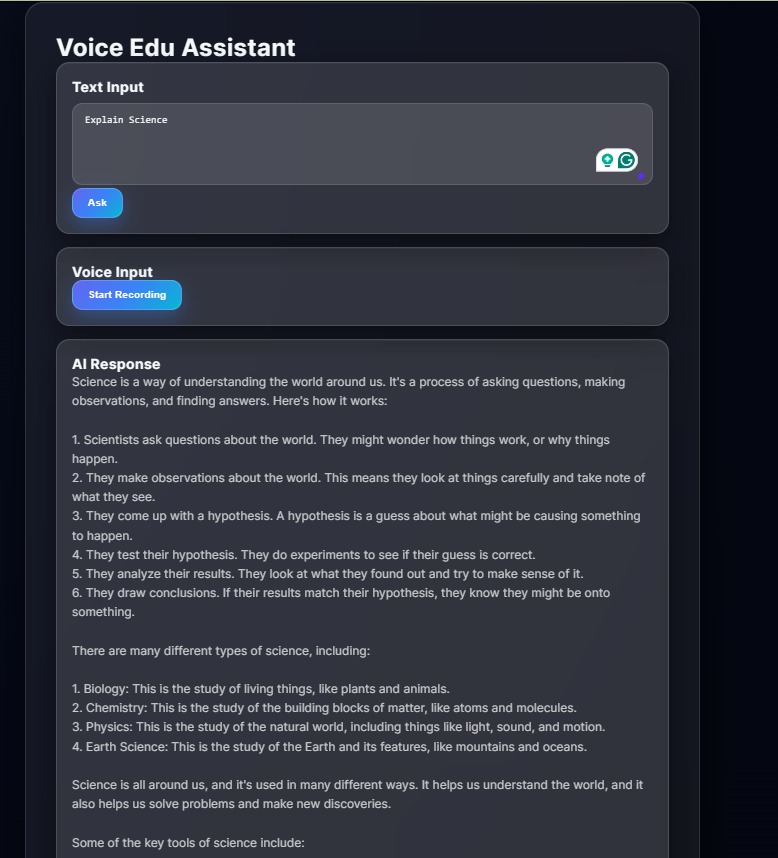
Laptop view
-
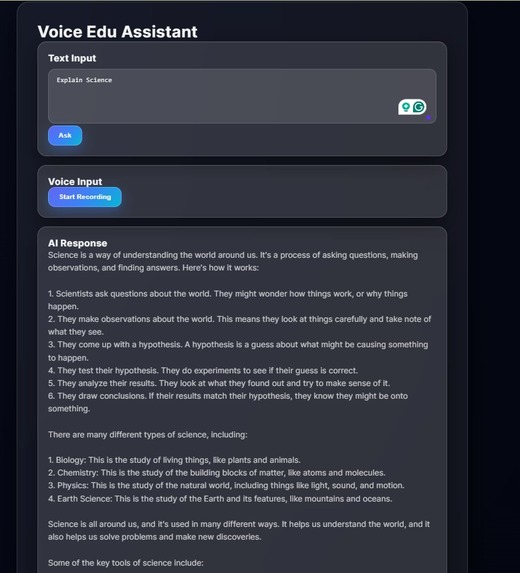
Voice edu at work
-
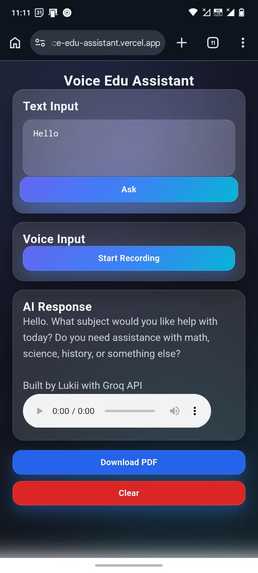
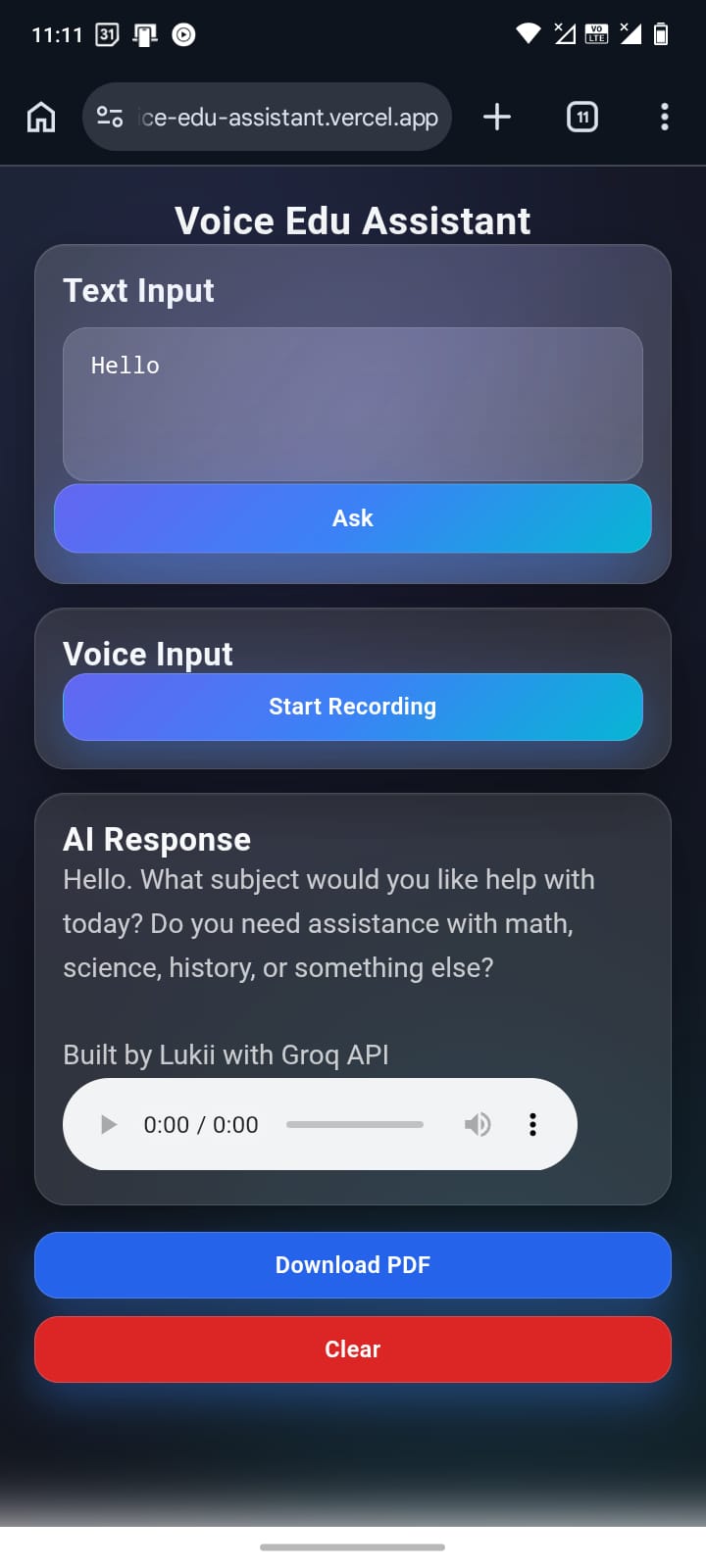
Mobile view
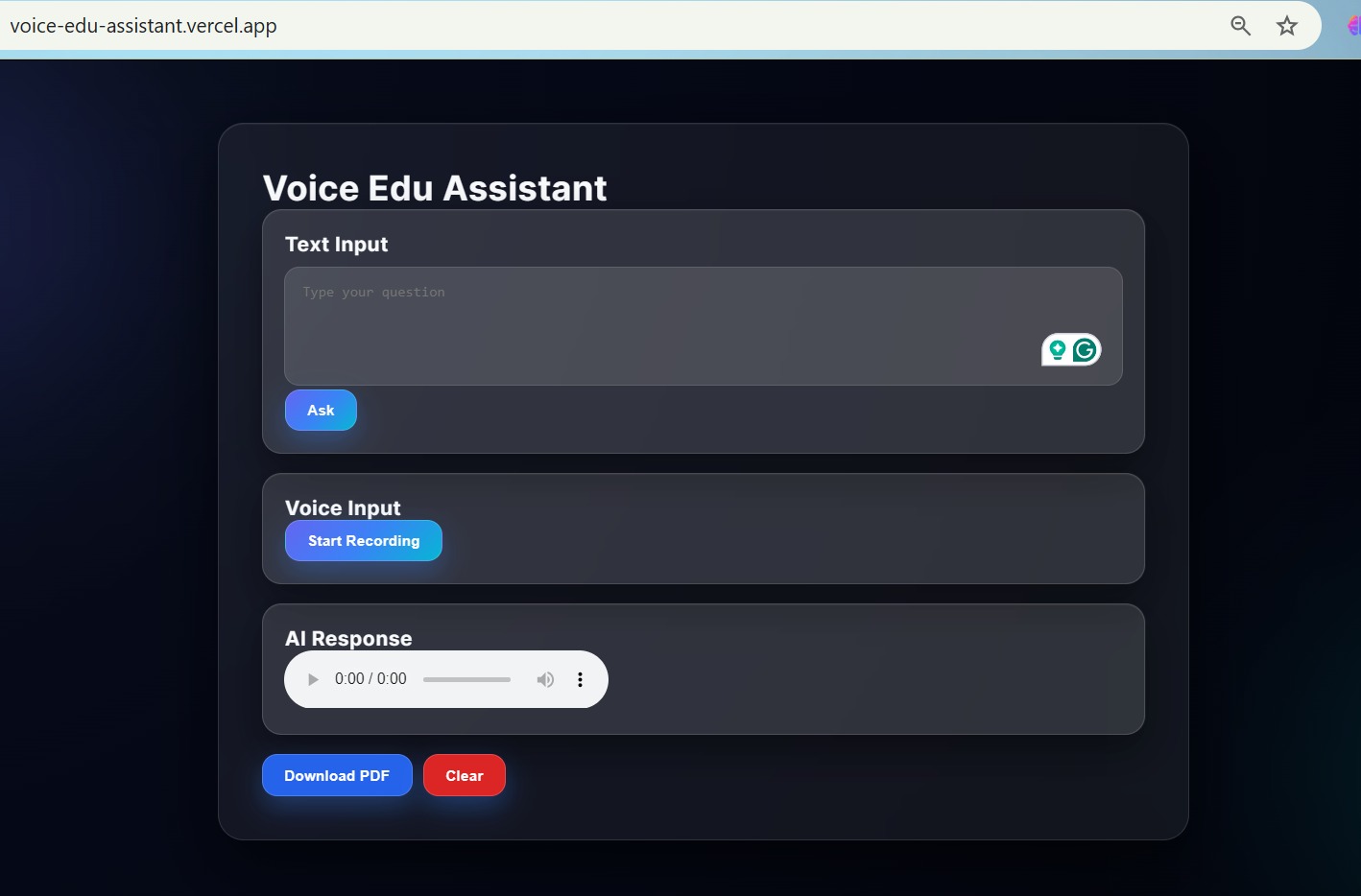
Inspiration
The Inspiration behind Voice edu assistant was to build an AI-powered learning tool that supports both text and voice interaction, making educational assistance more accessible and practical. Many AI demos focus only on text input, but real-world users often prefer speaking, especially when multitasking or learning on the go. This project was driven by the goal of understanding how modern AI systems handle voice input end-to-end, from the browser to the server and back.
What it does
Voice Edu assistant allows users to Ask questions using text input Ask questions using Voice input Receive intelligent AI-generated responses Seamlessly switch between text and voice interactions The system processes voice input, converts it to text, sends it to an AI model, and returns a meaningful response in real time. The focus of this version is reliability, correctness, and a smooth user experience.
How we built it
The project was built using a frontend backend architecture The frontend is built with HTML, CSS, and JavaScript. It uses the media recorder API to capture audio and the Fetch API to communicate with the backend The backend is built with Node.js and Express. It exposes REST endpoints for text and voice queries Multer is used to handle Audio uploads securely and efficiently Speech input is processed and sent to an AI language model to generate responses. All communication between frontend and backend happens through structured JSON responses
Challenges we ran into
Major challenges included Handling browser audio recording compatibility and MIME types Debugging failed network requests during voice uploads Managing asynchronous audio recording and processing Ensuring the frontend and backend stayed in sync under rapid iteration Making deadline-driven engineering decisions
Accomplishments that we're proud of
Successfully implemented end-to-end voice input in a real application Built a working AI assistant that supports both text and voice Overcame multiple complex debugging issues involving media handling Designed a modular system ready for future expansion Completed a functional, production-style project under hackathon pressure
What we learned
How real-world AI applications differ from simple demos How to work with audio streams and file uploads in web applications The importance of systematic debugging and logging How to make effective tradeoffs when working under tight deadlines How frontend and backend systems must be designed together, not in isolation
What's next for Voice edu assistant
FUTURE IMPROVEMENTS INCLUDE Adding Text To Speech for AI responses Deploying the application to a cloud platform Improving UI and accessibility features Adding user accounts and progress tracking Optimizing performance and scalability Voice Edu assistant is designed to grow into a complete AI-powered learning platform
Built With
- api
- css
- express.js
- fetchapi
- html5
- javascript
- mediarecorderapi
- multer
- node.js

Log in or sign up for Devpost to join the conversation.