OratorIQ — Evidence-Based Speech Coach
Inspiration
Public speaking is an important skill for students, job seekers, professionals, and entrepreneurs. However, improving speech delivery is difficult when feedback is limited to vague advice such as "speak more confidently" or "improve your communication."
We wanted to explore a more systematic approach: What if speakers could receive structured, evidence-based feedback on their content, organization, fluency, pacing, and vocal delivery?
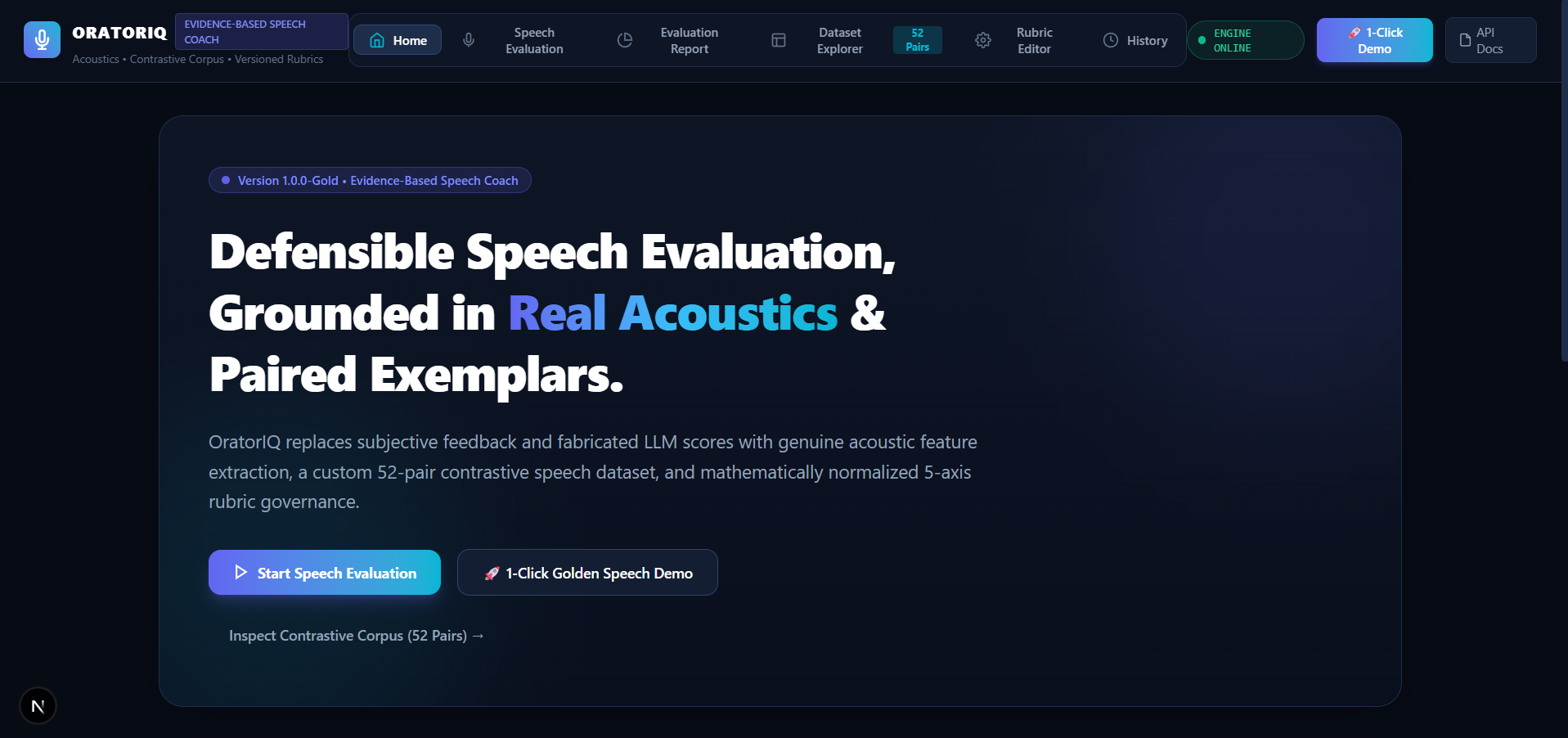
This led to OratorIQ, a speech evaluation and coaching platform built around transparent scoring, contrastive examples, and actionable recommendations.
What it does
OratorIQ is designed to help users understand both the strengths and weaknesses of their speeches.
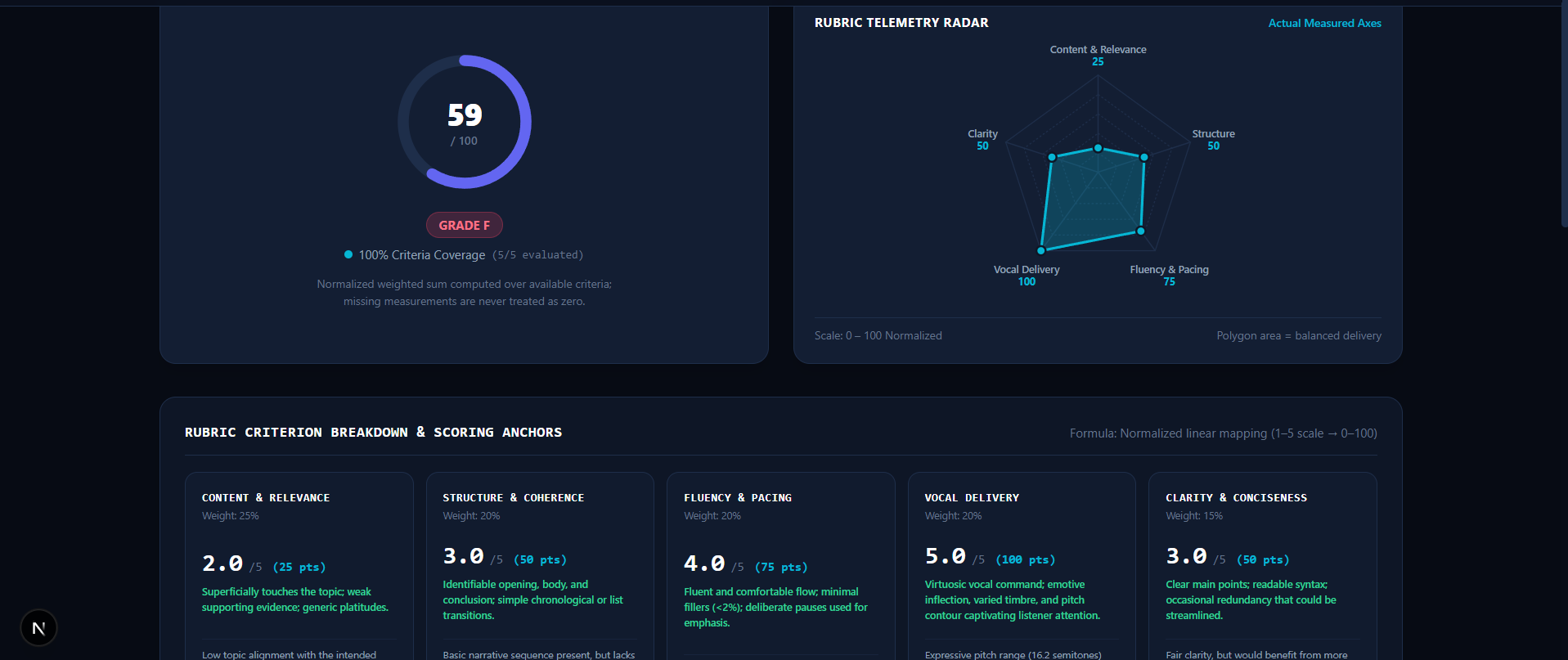
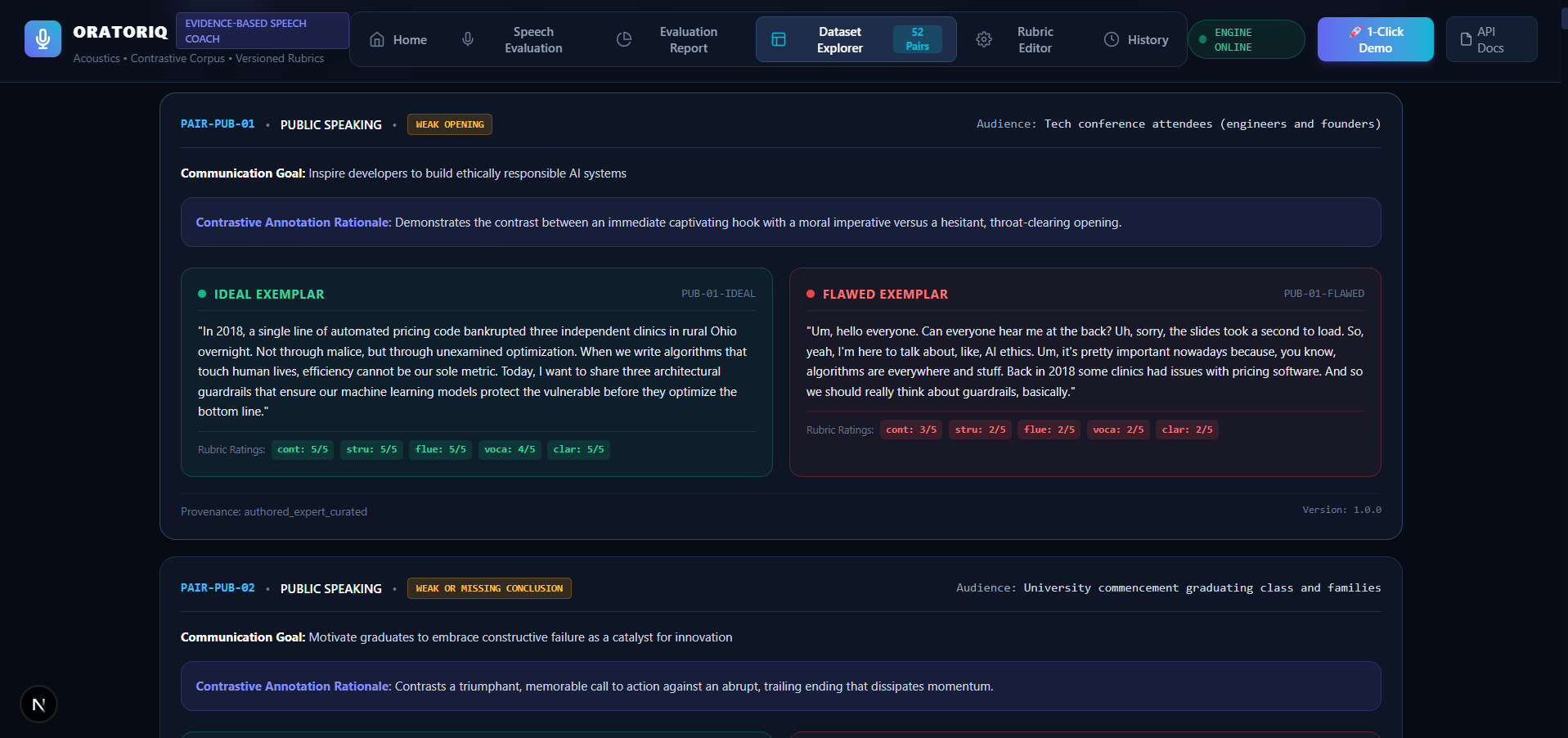
The platform combines a custom dataset of ideal and flawed speech examples with a configurable evaluation rubric. Instead of returning only a single overall score, the system breaks performance down into individual dimensions and explains where improvements are needed.
The intended workflow includes:
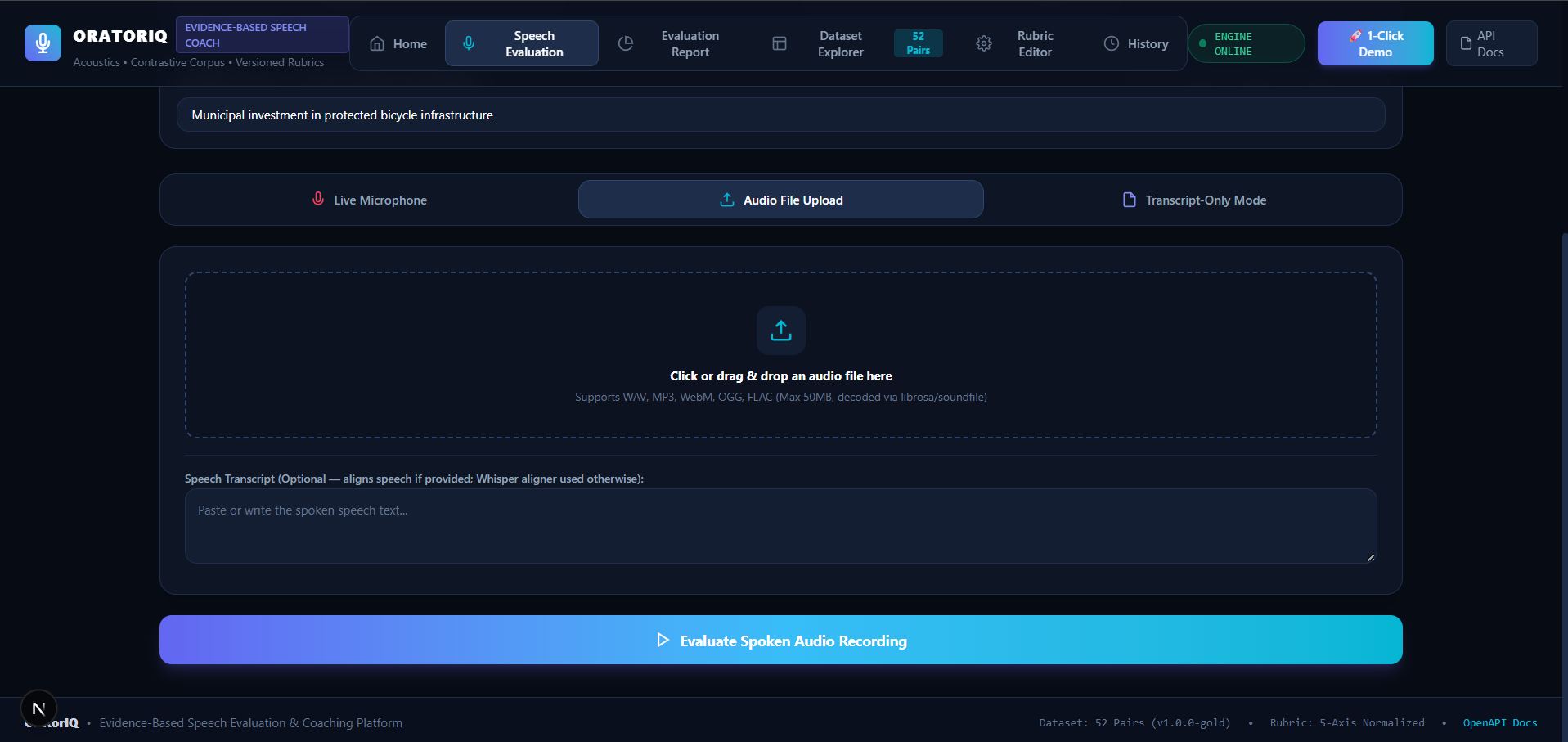
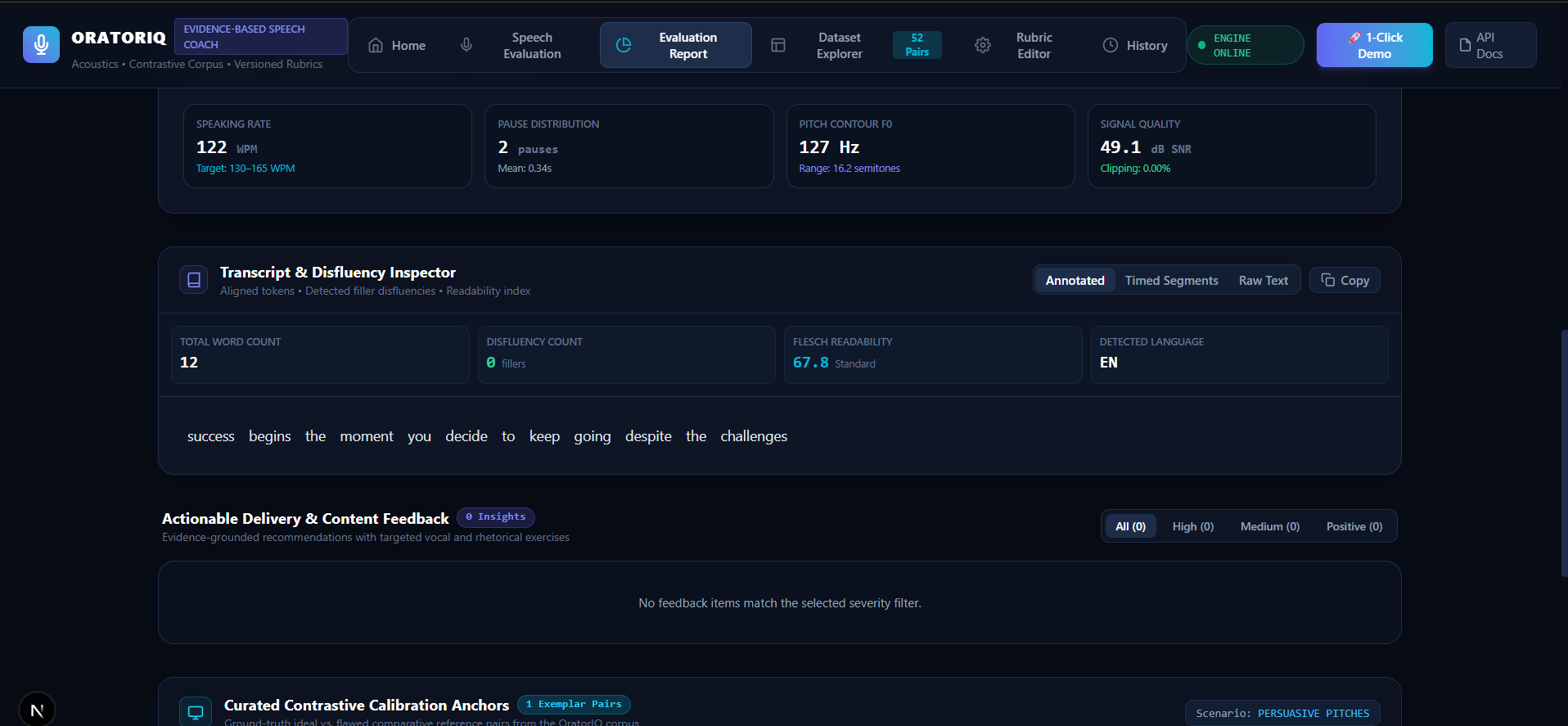
- Speech analysis: Process recordings and, where supported, generate transcripts and measurable acoustic features.
- Contrastive evaluation: Compare speech against relevant ideal and flawed examples to illustrate specific communication strengths and weaknesses.
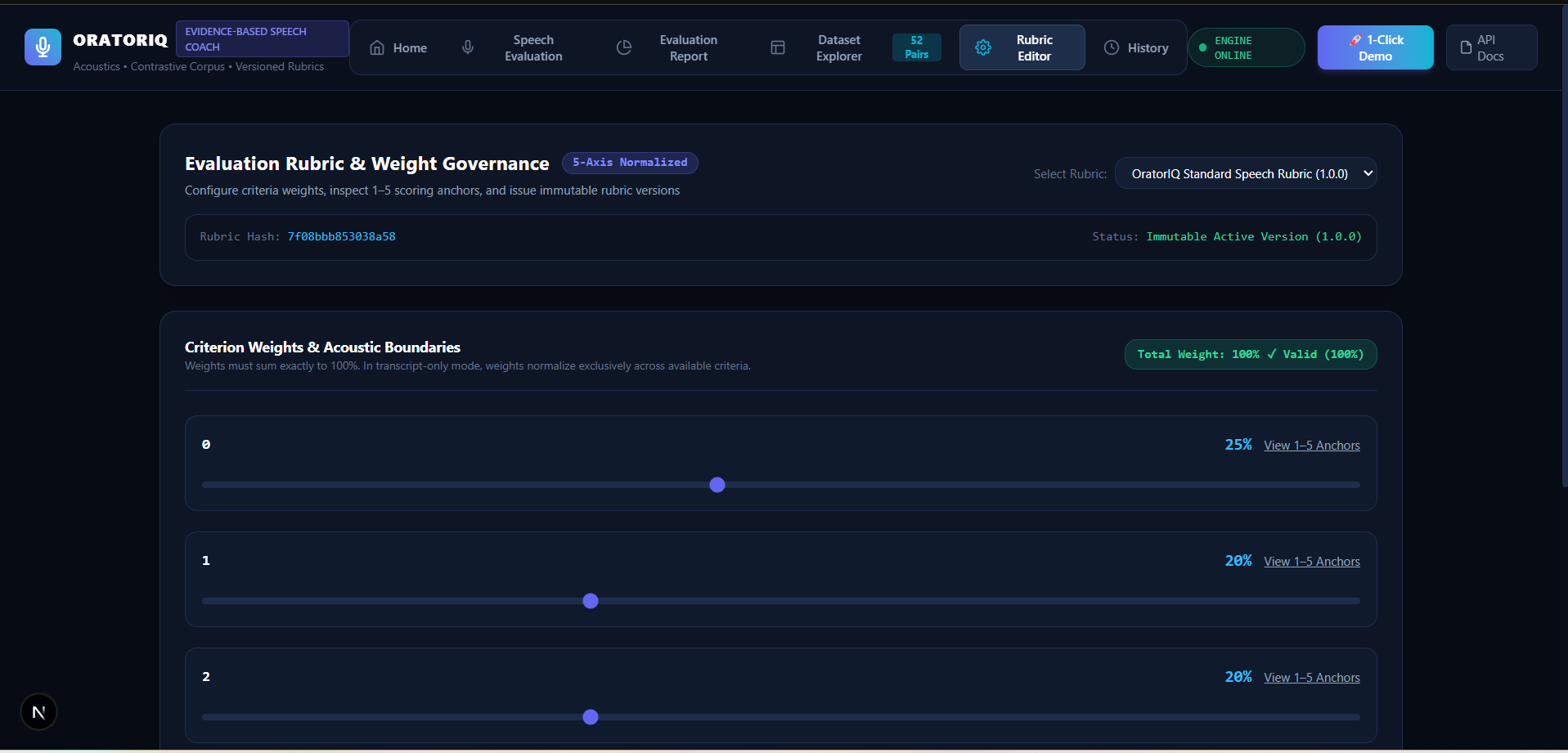
- Rubric-based scoring: Apply explicit criteria and configurable weights to generate interpretable scores.
- Actionable feedback: Connect identified issues to evidence from the transcript or audio and recommend specific exercises or revisions.
- Interactive dashboard: Present results, criterion-level scores, annotations, and evaluation history in an accessible interface.
How we built it
The existing project provided a Python-based evaluation backend, FastAPI endpoints, and an HTML, CSS, and JavaScript dashboard. These components form the starting point for the speech-evaluation implementation.
The speech-focused architecture separates audio processing, transcription, dataset management, rubric scoring, feedback generation, and visualization into distinct components.
A central design decision is to use deterministic calculations for measurable features and clearly defined rubric criteria for qualitative evaluation. Model-generated judgments, when used, must be distinguishable from directly measured values.
The contrastive dataset is intended to organize examples by scenario, flaw category, and rubric dimension. Versioned evaluation configurations make it possible to inspect how a score was produced and compare results under consistent settings.
Challenges we addressed
One major challenge is that speech quality is multidimensional. A speech can have excellent content but poor pacing, or strong vocal delivery but weak organization. A single score cannot adequately explain these differences.
Another challenge is reproducibility. Qualitative judgments can vary, while acoustic measurements depend on recording conditions and processing methods. Our design therefore emphasizes explicit scoring rules, versioned configurations, evidence tracking, and clear limitations.
We also considered the risk of misleading feedback. Acoustic indicators should not be treated as proof of confidence or competence, and missing measurements must not be replaced with fabricated scores.
What we learned
This project highlights the difference between building an attractive AI dashboard and building a trustworthy evaluation system.
We learned the importance of separating measurable features from subjective judgments, defining scoring criteria before evaluating examples, validating dataset quality, and connecting recommendations to observable evidence.
We also explored how contrastive datasets can make evaluation more understandable by showing not only a score, but the characteristics that distinguish stronger and weaker examples.
Future scope
Future improvements include expanding the contrastive dataset with reviewed annotations, evaluating agreement with human assessors, supporting additional languages and speaking scenarios, and tracking improvement across repeated recordings.
Our long-term goal is to make speech practice more structured, explainable, and accessible through a system that helps users understand exactly what to improve and how to improve it.
Built With
- artificial-intelligence
- audio-processing
- contrastive-learning
- css3
- data-visualization
- dataset-engineering
- explainable-ai
- fastapi
- html5
- interactive-dashboard
- javascript
- librosa
- machine-learning
- natural-language-processing
- next.js
- numpy
- pandas
- python
- react
- rest-api
- rubric-based-evaluation
- speech-analysis
- speech-recognition
- tailwind
- whisper

Log in or sign up for Devpost to join the conversation.