-
-
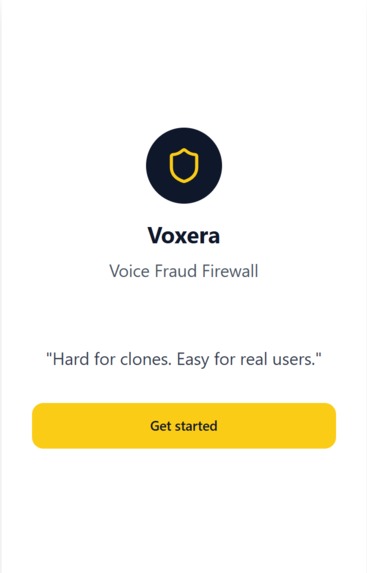
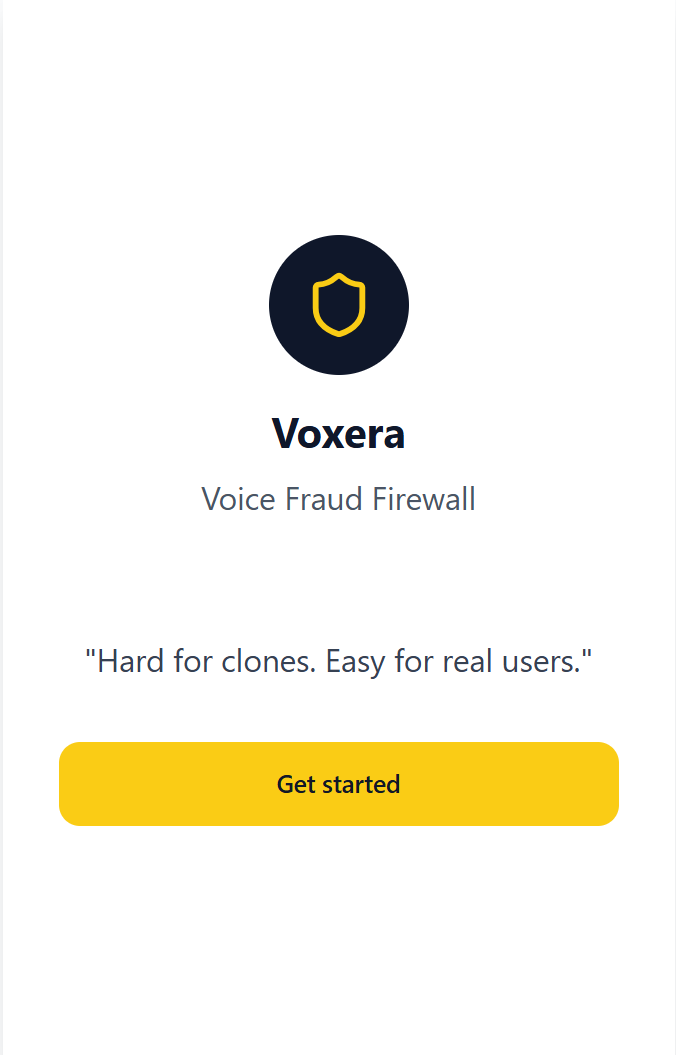
Get Started
-
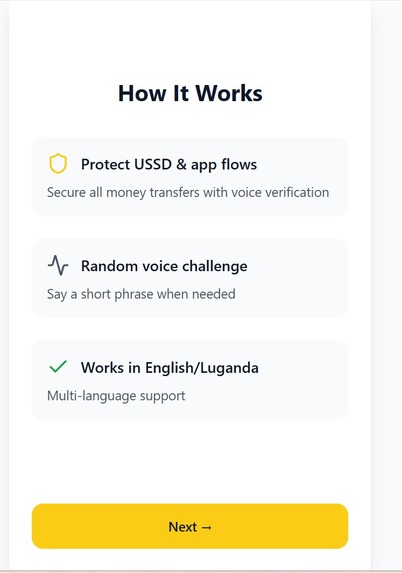
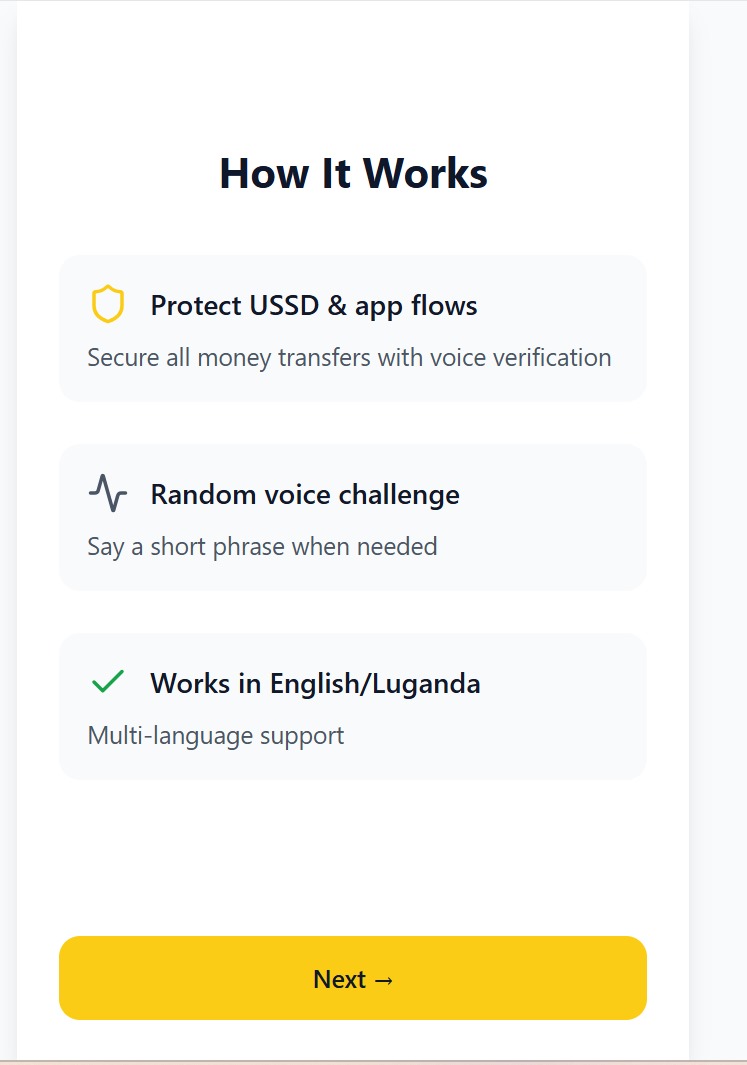
How It Works
-
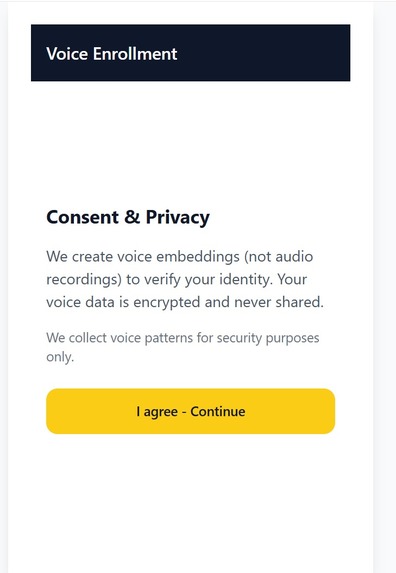
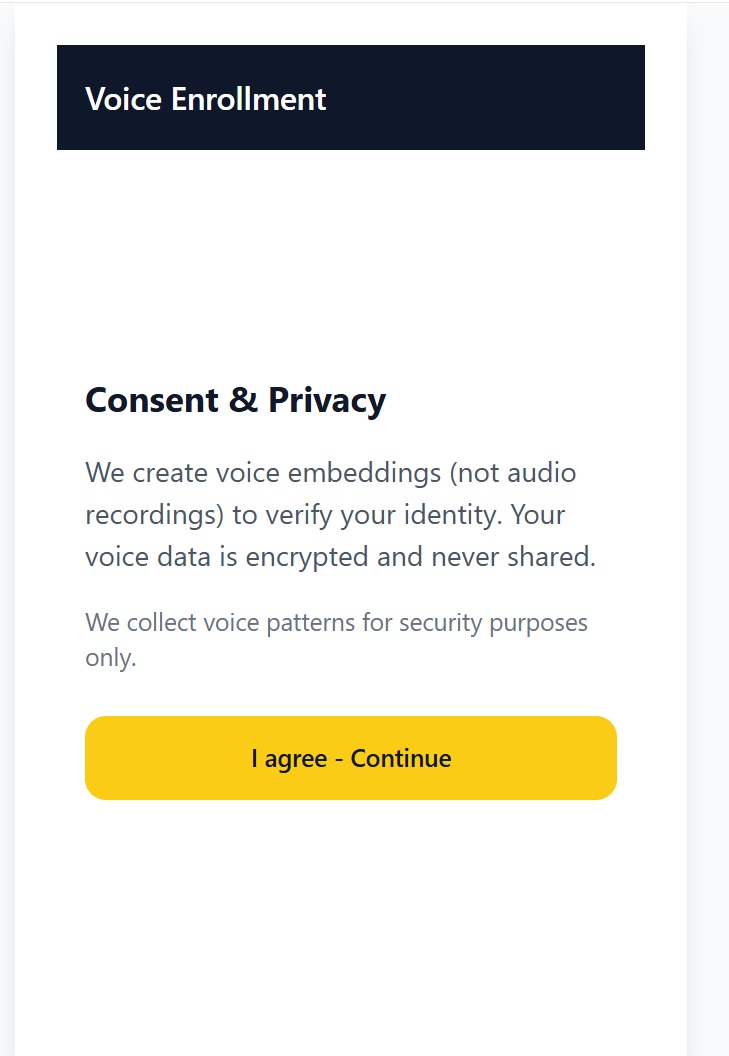
Consent & Privacy
-
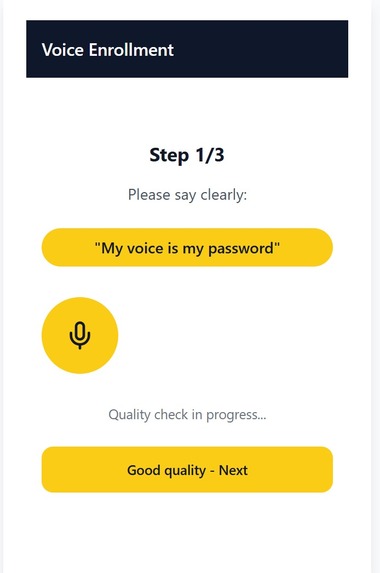
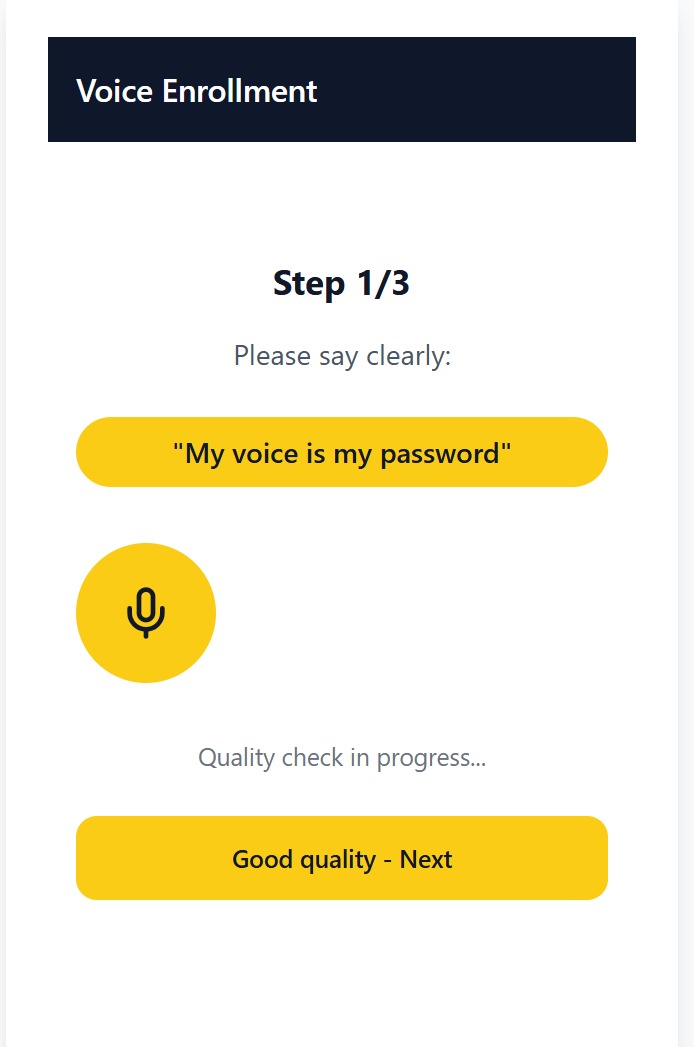
Voice Enrollment – Step 1/3
-
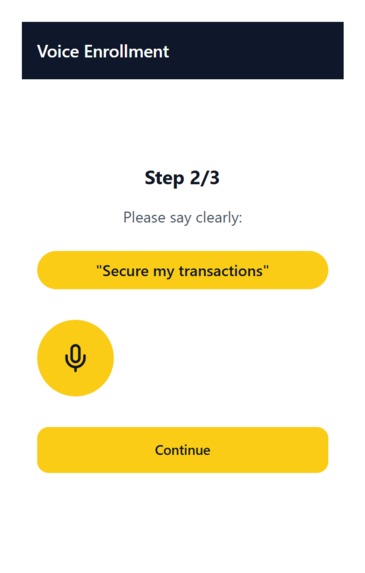
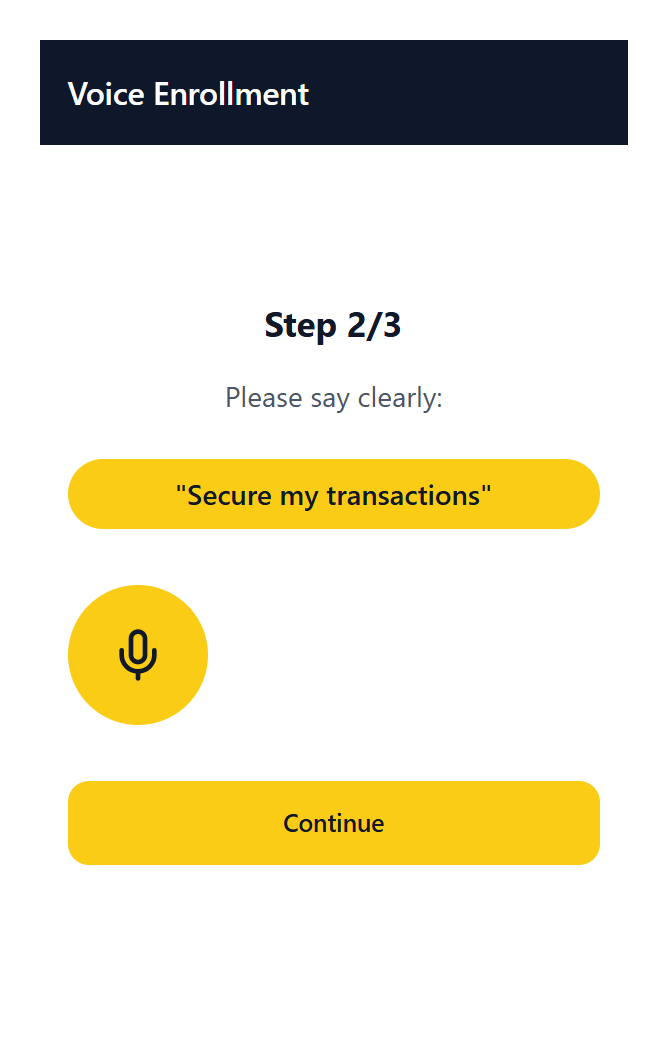
Voice Enrollment – Step 2/3
-
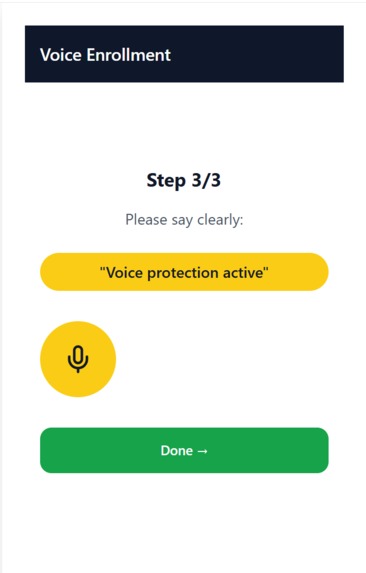
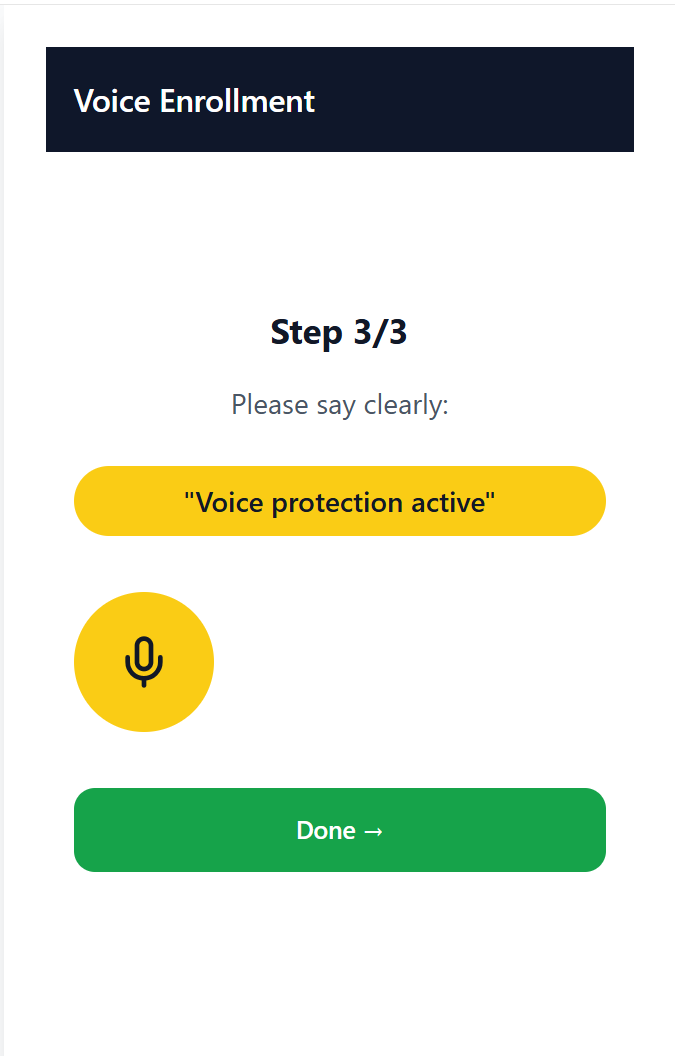
Voice Enrollment – Step 3/3
-
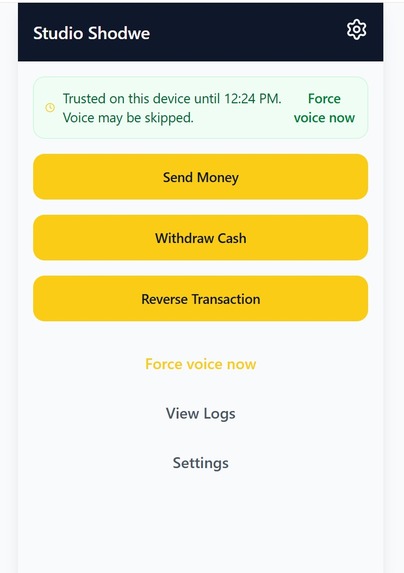
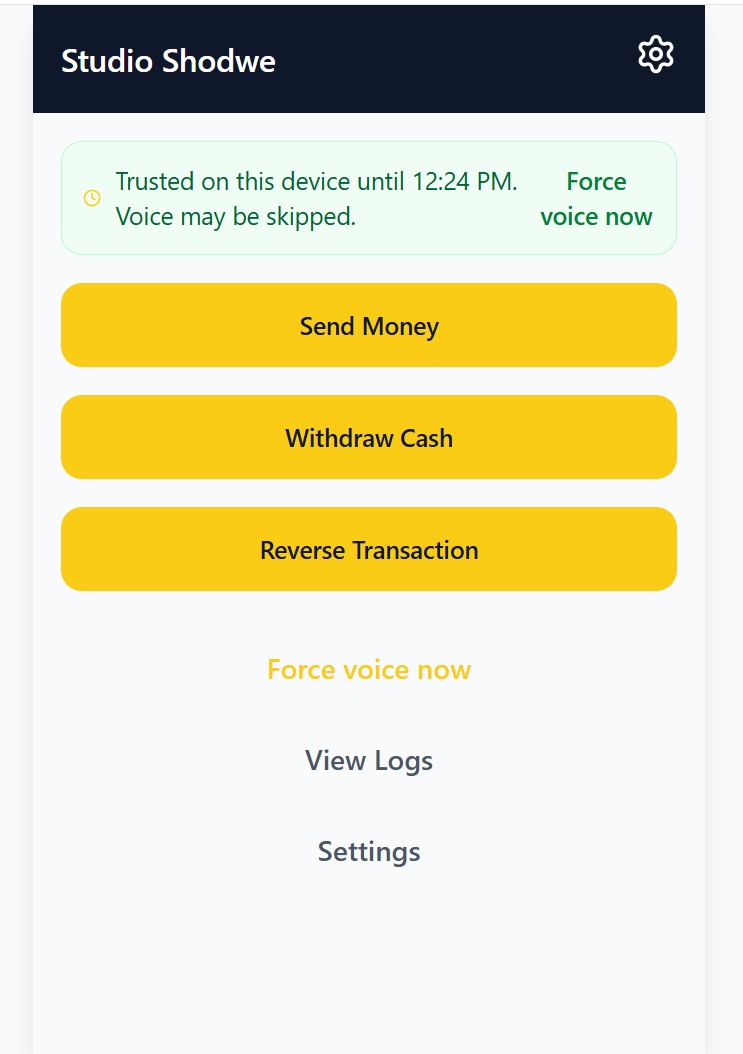
Home
-
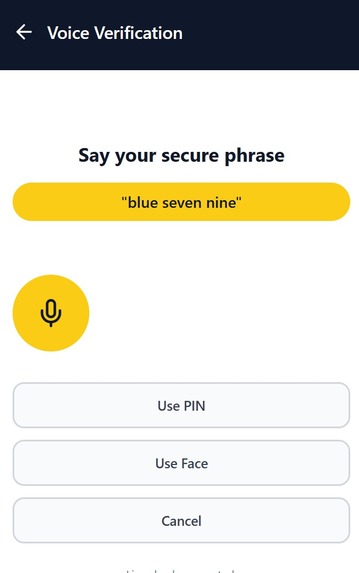
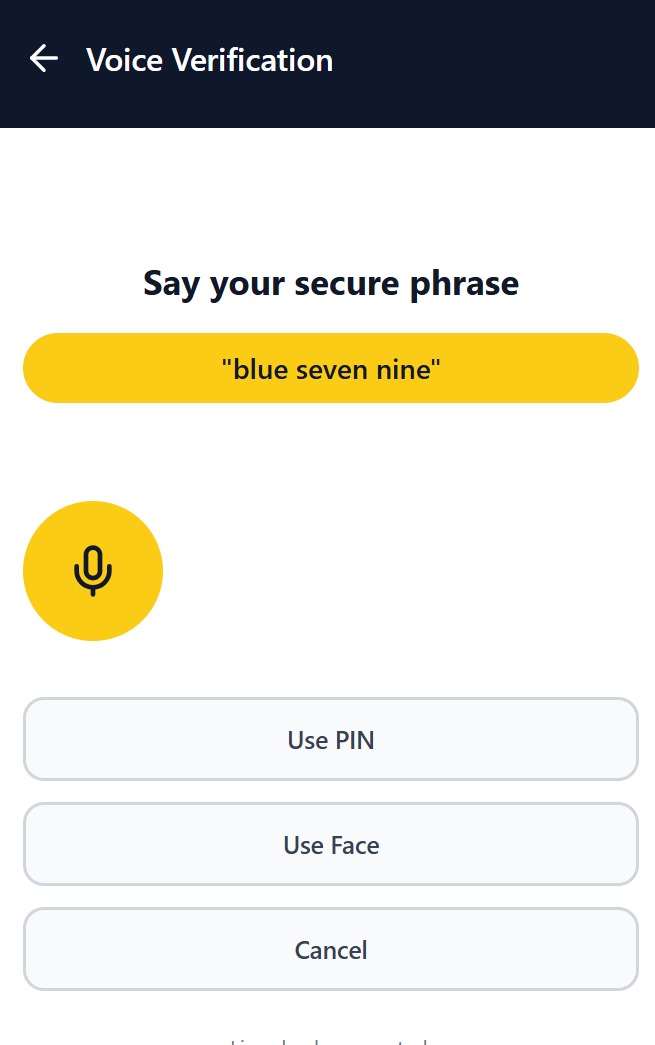
Voice verification
-
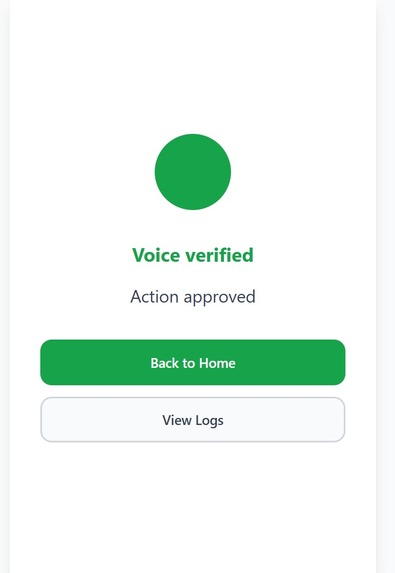
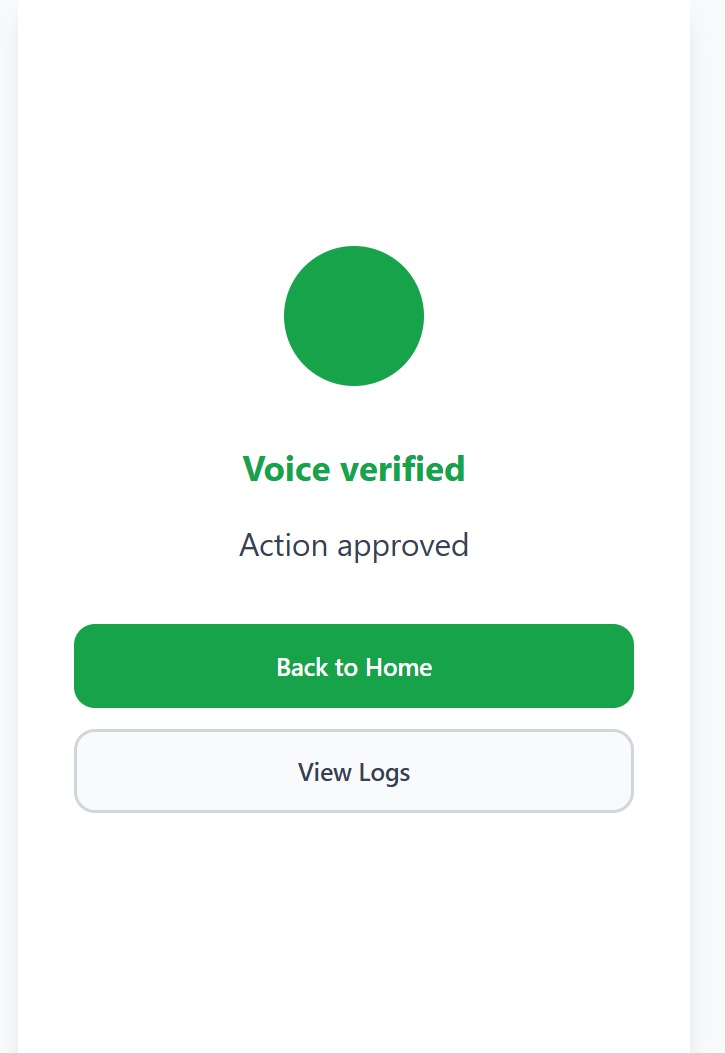
Success – Voice verified
-
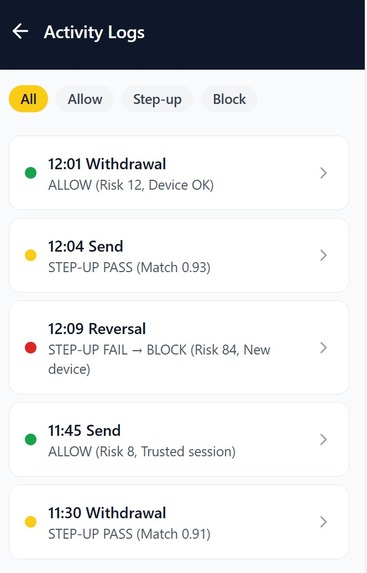
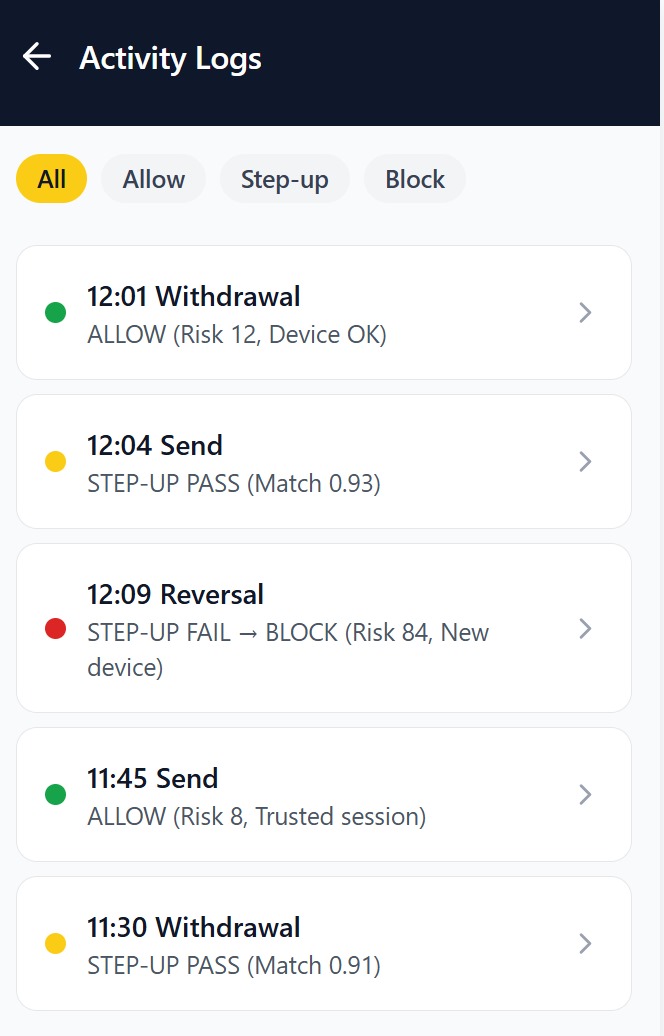
Activity Logs
-
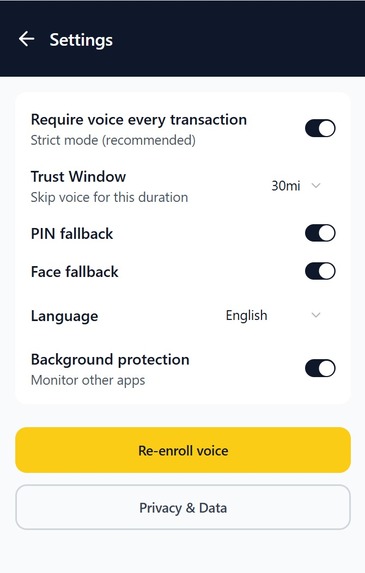
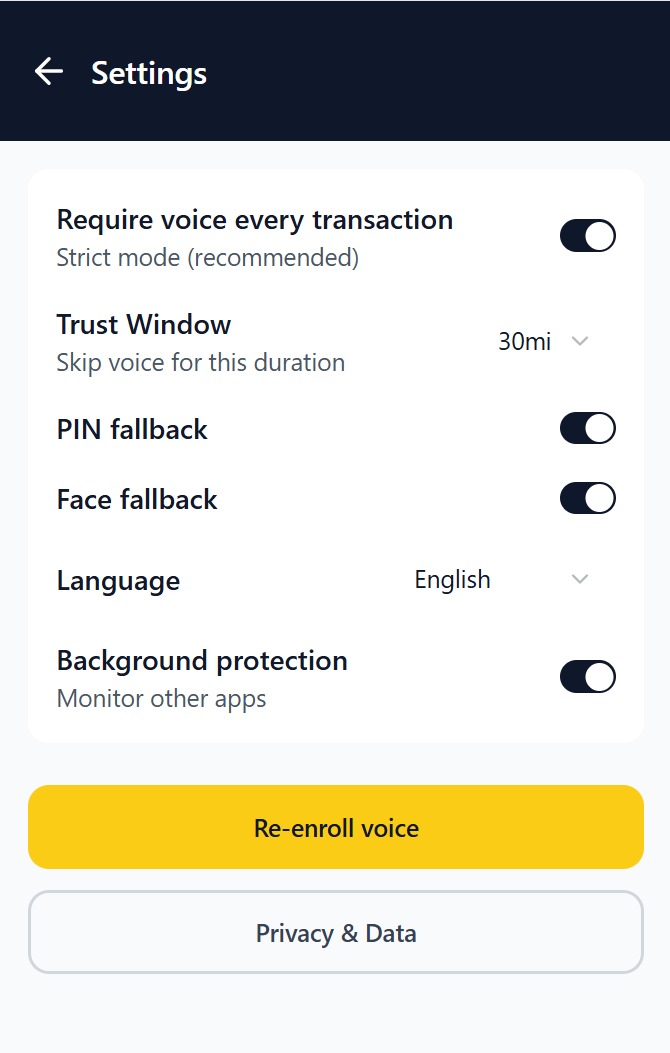
Settings
-
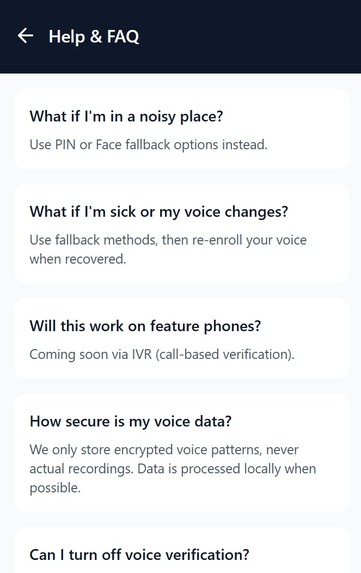
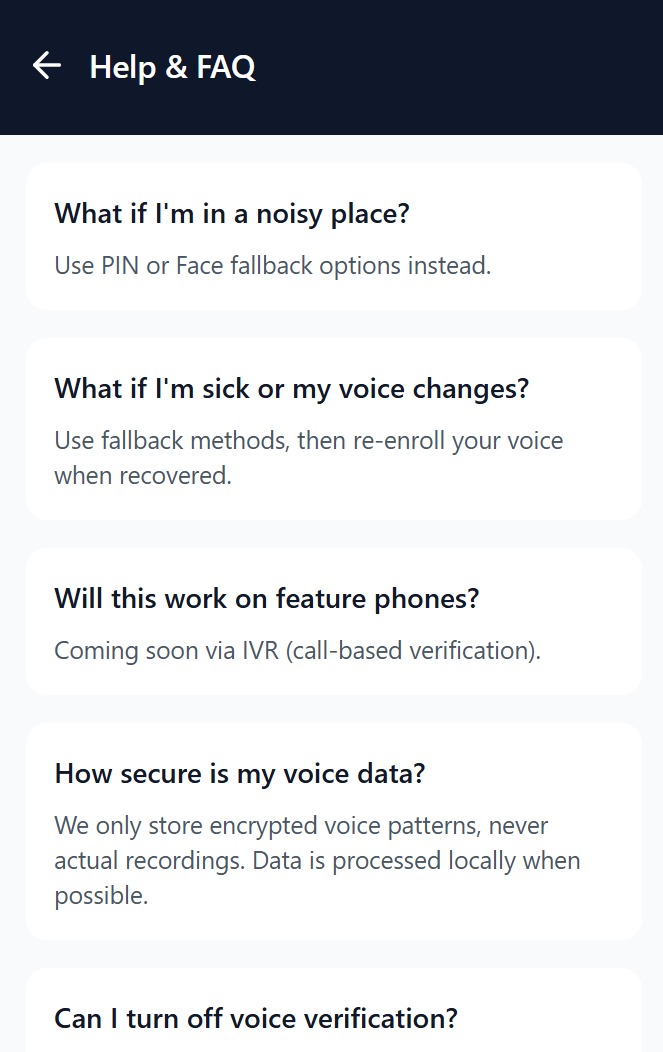
Help & FAQs
Inspiration
The inspiration for this project came from a deep-seated need to address a critical vulnerability in mobile money systems. We recognized that while mobile money has revolutionized financial inclusion in many developing regions, its reliance on simple PINs and codes makes it susceptible to sophisticated social engineering scams. The stories of people losing their life savings due to these vulnerabilities highlighted a clear demand for a more secure, yet accessible, form of authentication. Our goal was to create a solution that would protect users from fraud without introducing complex barriers, ensuring the digital economy remains a trusted and reliable platform for everyone.
What it does
Our Voice Biometric API is a specialized service that provides voice-based authentication for secure transactions. It works by creating and storing a unique digital voiceprint for each user during an enrollment phase. When a user initiates a high-risk transaction (like a large funds transfer or a SIM card swap), our API is called to perform a real-time voice verification. The user speaks a short phrase, and the system instantly compares this new voice sample against their stored voiceprint. If the match meets our security threshold, the transaction is approved. If not, it is blocked, providing an immediate and powerful layer of protection against unauthorized access.
How we built it
We designed the API with a microservices architecture to ensure scalability and reliability. We used Python with Flask for the core API logic due to its simplicity and extensive libraries for data processing and RESTful API development. For asynchronous tasks and real-time processing, we used Node.js to handle some of the backend logic. Our user data and metadata for voiceprints are stored in a PostgreSQL database, chosen for its robustness and data integrity. The actual raw audio files and voiceprints are stored in Amazon S3 for secure, scalable object storage. To ensure low-latency verification, we leverage Redis as a caching layer to quickly retrieve frequently accessed voiceprints. The entire application is deployed on Microsoft Azure, which provides a reliable cloud infrastructure with robust security and monitoring capabilities. We also integrated with a third-party voice biometrics service to handle the complex AI models required for accurate voice analysis.
Challenges we ran into
Challenges we ran into One of our biggest challenges was striking the right balance between security and user experience. We had to tune our algorithms to have an extremely low false positive rate (FPR) to prevent fraud, while also maintaining a low false negative rate (FNR) to avoid frustrating legitimate users. We also faced challenges in processing and securely storing large volumes of voice data efficiently. Managing a scalable architecture with different technologies like Python, Node.js, and Redis required careful orchestration. Additionally, ensuring our system was resilient to common audio attacks, such as deepfakes and recordings, presented a significant technical hurdle that required us to implement advanced liveness detection techniques.
Accomplishments that we're proud of
We are most proud of building a solution that provides enterprise-grade security while remaining accessible. We achieved a high degree of accuracy with a very low FPR and FNR, which is critical for a financial security product. We successfully integrated multiple technologies—Python, PostgreSQL, S3, Redis, and Azure—into a cohesive and high-performance system. The deployment on Azure allows the API to scale dynamically to meet demand, a crucial feature for a service that could handle millions of transactions. Finally, creating a user experience that is simple and intuitive, making it a viable security option for everyone, is something we are particularly proud of.
What we learned
We learned that a successful biometric security solution is not just about the technology; it's about the entire user journey. We gained valuable insights into the complexities of AI-driven security and the importance of continuous model tuning. We also deepened our understanding of building a resilient, scalable, and secure microservices architecture. Most importantly, we learned that technology's true value lies in its ability to solve real-world problems and empower people, just as we set out to do.
What's next for Voice Biometric API
We have several key areas we're exploring. We plan to integrate multi-factor authentication (MFA) to provide an even stronger layer of security, possibly combining voice with behavioral biometrics. We will also expand our language and dialect support to better serve a wider user base. Furthermore, we are looking to develop a developer-friendly SDK to make it easier for other platforms and applications to integrate our API. Our long-term goal is to become the leading voice authentication provider in the mobile finance sector.
Built With
- azure
- postgresql
- python
- redis
- s3
- voiceit


Log in or sign up for Devpost to join the conversation.