
Inspiration
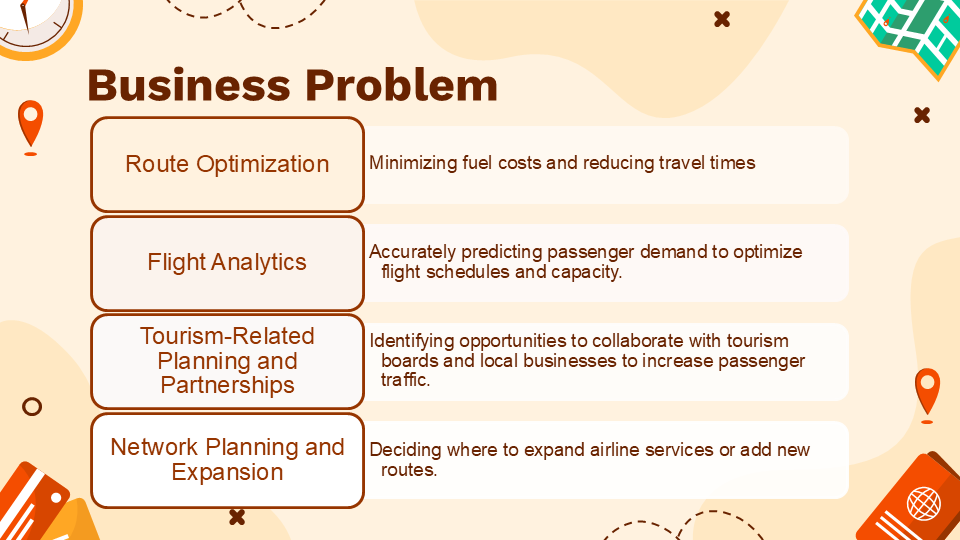
VoyageMind was inspired by the need to optimize airline routes and enhance travel experiences by leveraging advanced technologies like semantic and graph intelligence. The idea was to create a platform that not only analyzes airline networks and connectivity but also identifies new routes and optimizes existing ones, all while considering tourist attractions and events. The solutions solves basic business problems like:
- Route Optimization: Minimizing fuel costs and reducing travel times
- Flight Analytics: Accurately predicting passenger demand to optimize flight schedules and capacity.
- Tourism-Related Planning and Partnerships: Identifying opportunities to collaborate with tourism boards and local businesses to increase passenger traffic.
- Network Planning and Expansion: Deciding where to expand airline services or add new routes.
What it does
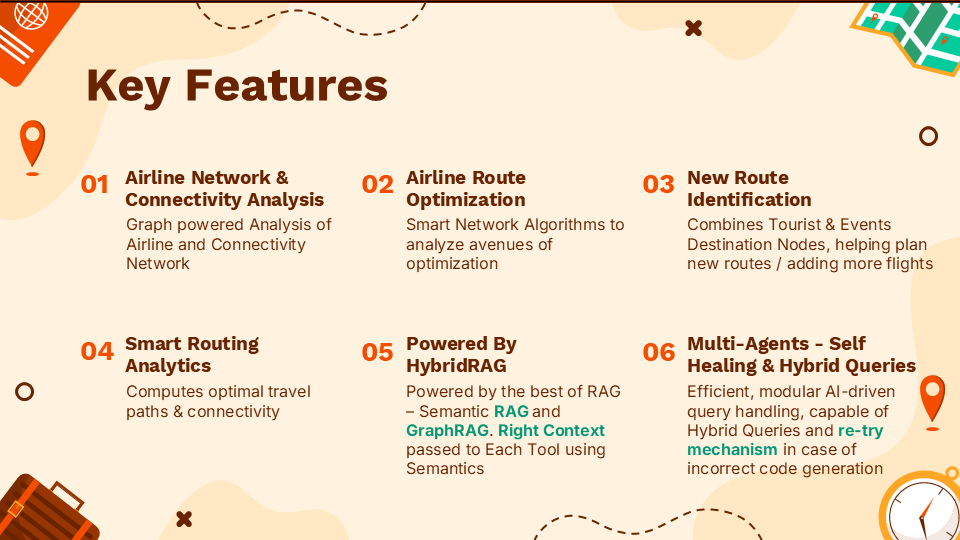
VoyageMind is an airline analytics tool designed to map smart routes using a combination of semantic and graph intelligence. It offers several key features:
- Airline Network & Connectivity Analysis: Graph powered Analysis of Airline and Connectivity Network
- Airline Route Optimization: Smart Network Algorithms to analyze avenues of optimization
- New Route Identification: Combines Tourist & Events Destination Nodes, helping plan new routes / adding more flights
- Smart Routing Analytics: Computes optimal travel paths & connectivity
- Powered By HybridRAG: Powered by the best of RAG – Semantic RAG and GraphRAG Right Context passed to Each Tool using Semantics
- Multi-Agents - Self Healing & Hybrid Queries: Efficient, modular AI-driven query handling, capable of Hybrid Queries and re-try mechanism in case of incorrect code generation
How we built it
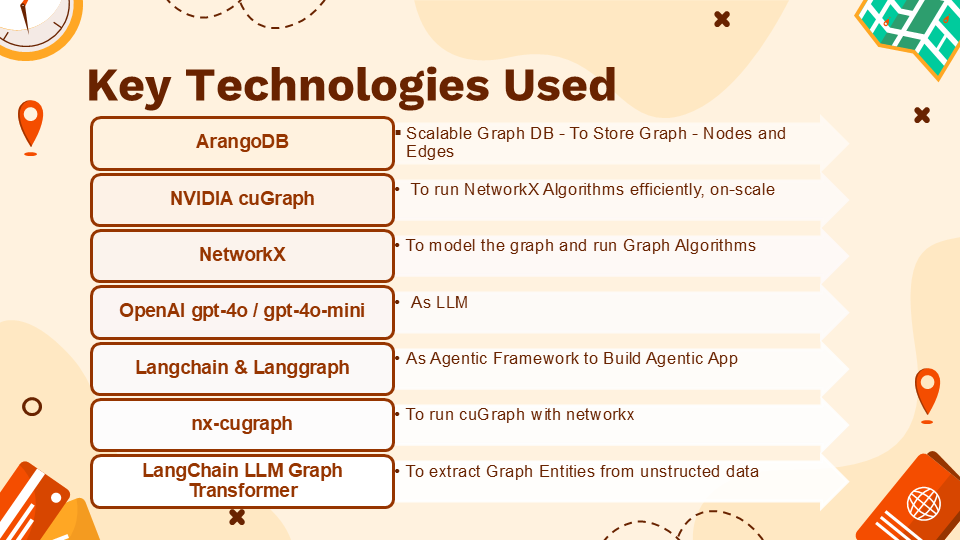
VoyageMind was built using key technologies that includes:
- ArangoDB: Scalable Graph DB - To Store Graph - Nodes and Edges
- NVIDIA cuGraph: To run NetworkX Algorithms efficiently, on-scale
- NetworkX: To model the graph and run Graph Algorithms
- OpenAI gpt-4o / gpt-4o-mini: As LLM
- Langchain & Langgraph: As Agentic Framework to Build Agentic App
- nx-cugraph: To run cuGraph with networkx
- LangChain WikiRetriever: To extract Graph Entities from wiki pages of cities
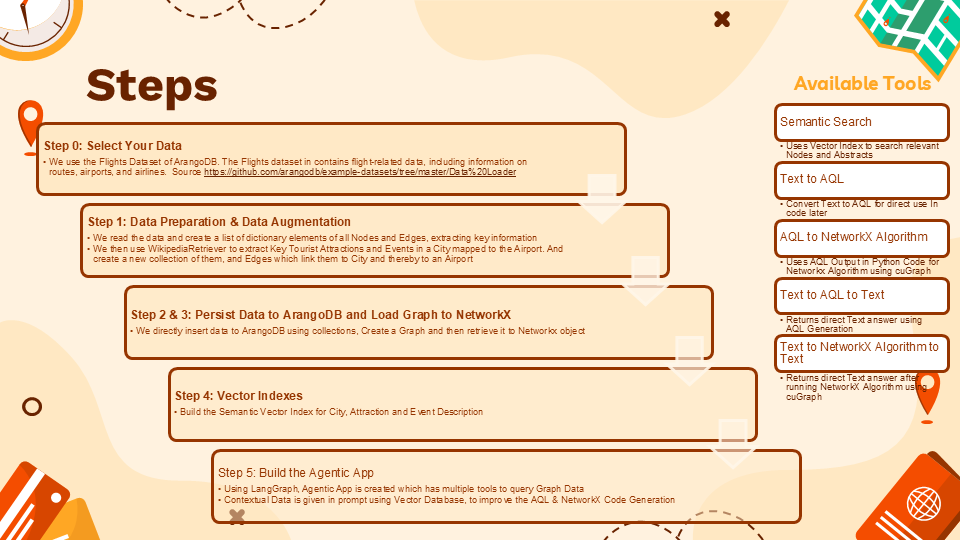
The steps involved in making VoyageMind are as follows:
Step 0: Select Your Data
We use the Flights Dataset of ArangoDB. The Flights dataset in contains flight-related data, including information on routes, airports, and airlines. Source https://github.com/arangodb/example-datasets/tree/master/Data%20Loader
Step 1: Data Preparation & Data Augmentation
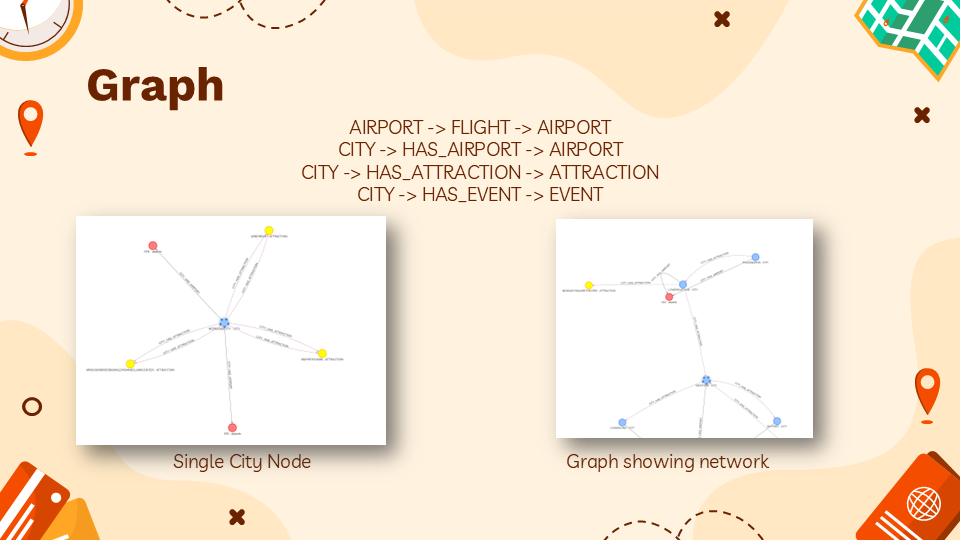
We read the data and create a list of dictionary elements of all Nodes and Edges, extracting key information. We then use WikipediaRetriever to extract Key Tourist Attractions and Events in a City mapped to the Airport. And create a new collection of them, and Edges which link them to City and thereby to an Airport
Step 2 & 3: Persist Data to ArangoDB and Load Graph to NetworkX
We directly insert data to ArangoDB using collections, Create a Graph and then retrieve it to Networkx object
Step 4: Vector Indexes
Build the Semantic Vector Index for City, Attraction and Event Description
Step 5: Build the Agentic App
Using LangGraph, Agentic App is created which has multiple tools to query Graph Data. Contextual Data is given in prompt using Vector Database, to improve the AQL & NetworkX Code Generation
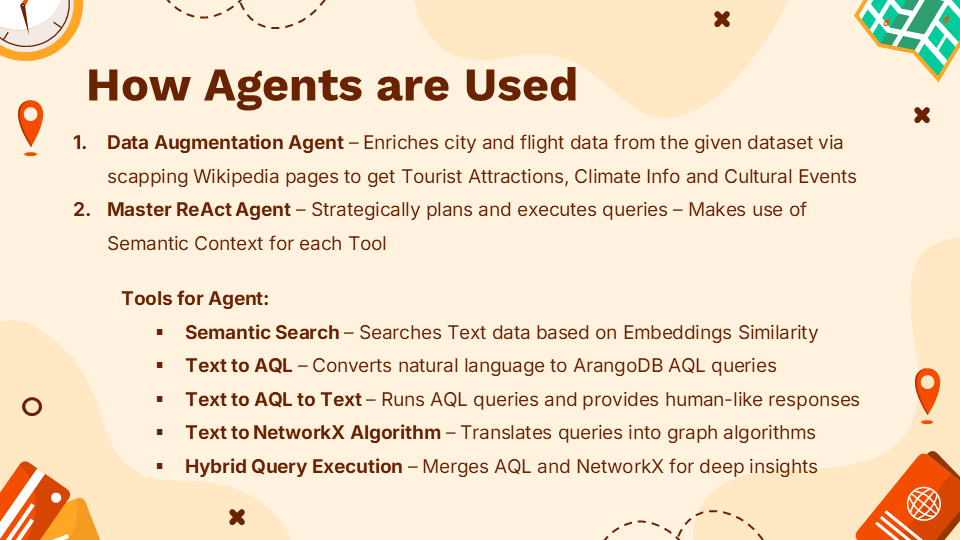
How Agents are Used
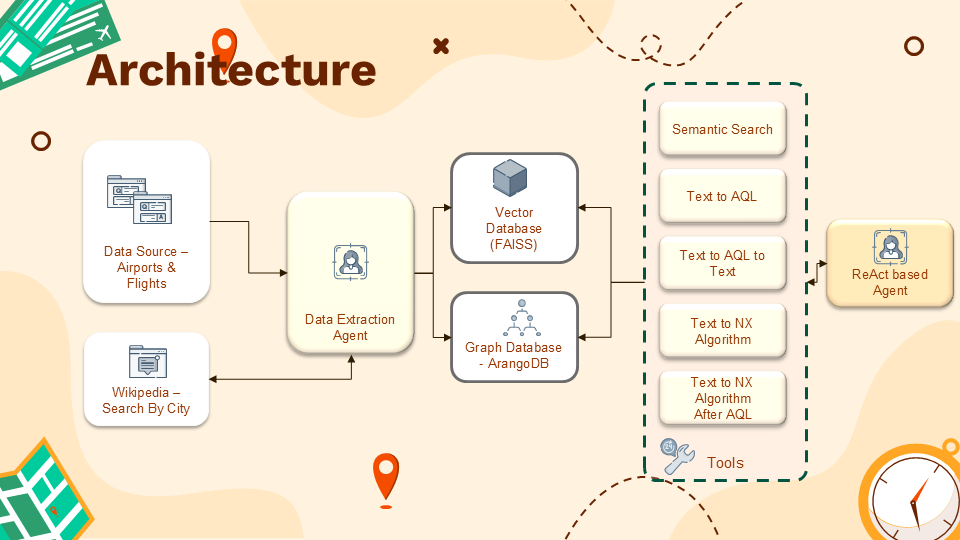
- Data Augmentation Agent – Enriches city and flight data from the given dataset via scapping Wikipedia pages to get Tourist Attractions, Climate Info and Cultural Events
- Master ReAct Agent – Strategically plans and executes queries – Makes use of Semantic Context for each Tool
Tools for Agent:
- Semantic Search – Searches Text data based on Embeddings Similarity
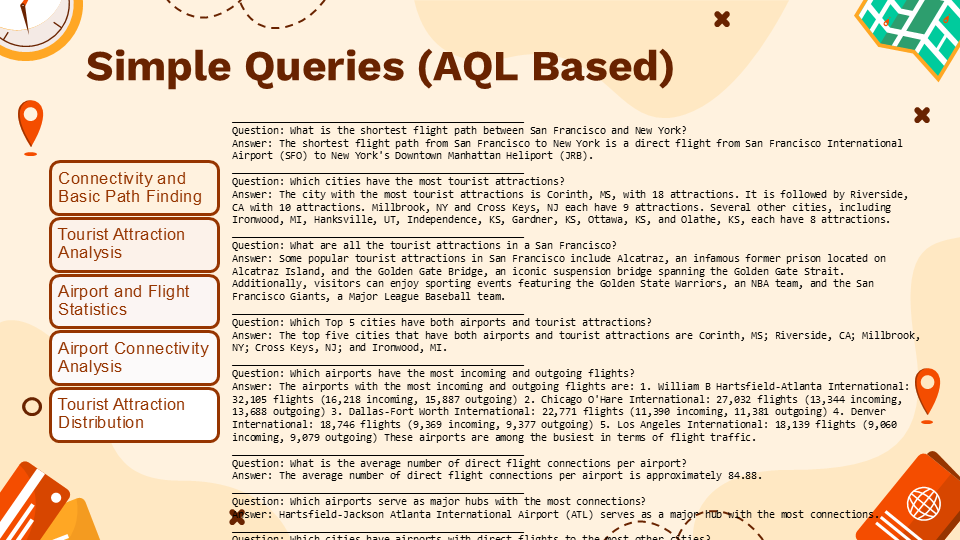
- Text to AQL – Converts natural language to ArangoDB AQL queries
- Text to AQL to Text – Runs AQL queries and provides human-like responses
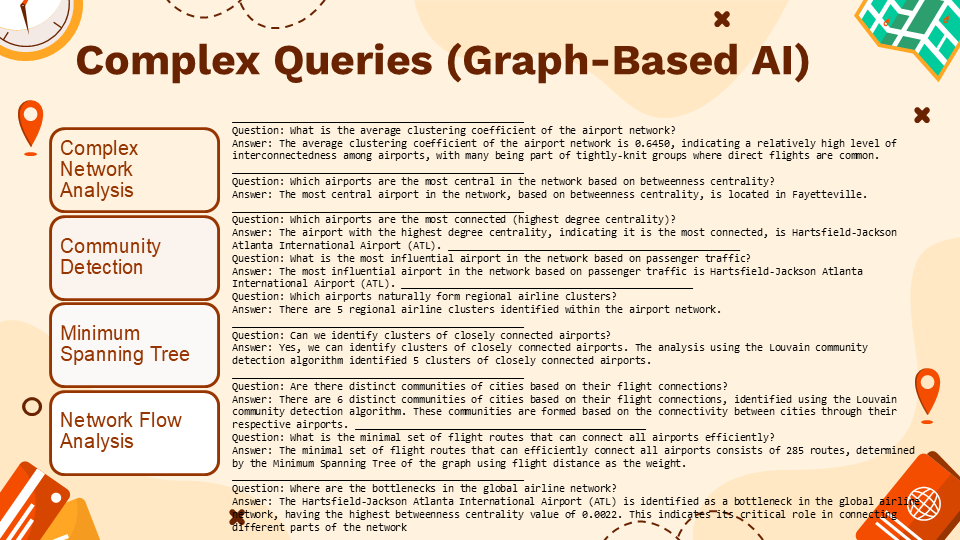
- Text to NetworkX Algorithm – Translates queries into graph algorithms
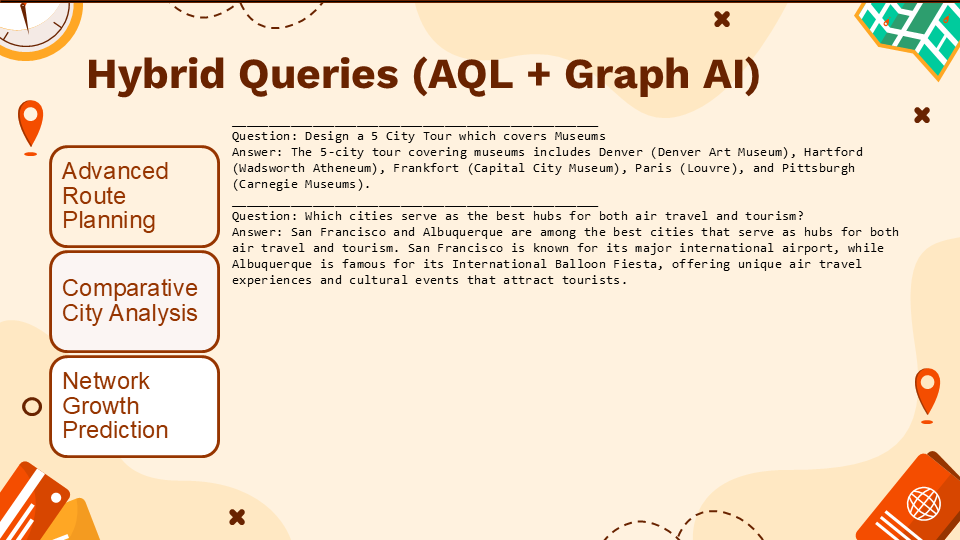
- Hybrid Query Execution – Merges AQL and NetworkX for deep insights
Challenges we ran into
First one, was to make cuGraph run on a Windows machine with RTX 4050. We then went ahead with running it under WSL Ubuntu on the Windows machine and then the cuGraph and Network Algorithms ran like a breeze.
Accomplishments that we're proud of
VoyageMind's sophisticated graph model, which integrates airports, flights, cities and tourist attractions. Our system efficiently extracts tourist attractions from Wikipedia entries of cities and models them as nodes linked to cities and airports. We also implemented a robust query system that allows users to explore the flight route network, identify optimization opportunities and new route identification, and perform complex queries such as Complex Network Analysis, Community Detection, Minimum Spanning Tree and Network Flow Analysis
What we learned
Leart how GraphRAG powers truth grounded Answers and which can be enhanced through Hybrid RAG using Vector Databases. We learnt how cuGraph and ArangoDB enables efficient storing of Graph, querying and performing NetworkX algorithms on the fly, enabling an Agent for real use cases.


Log in or sign up for Devpost to join the conversation.