-
-
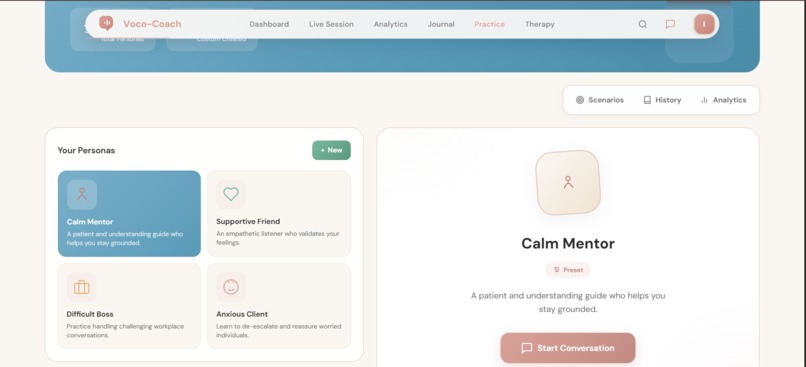
Journal
-
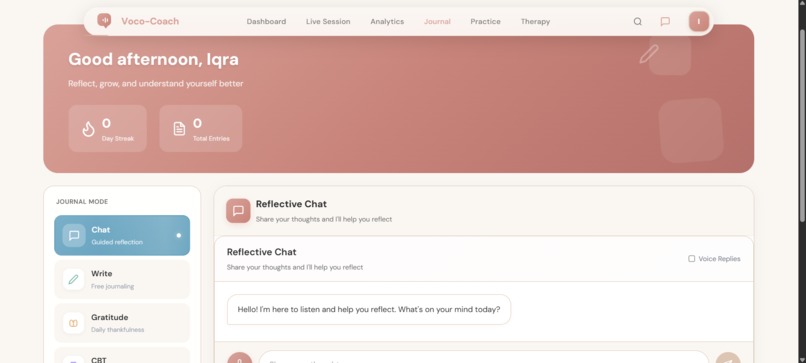
Coach
-
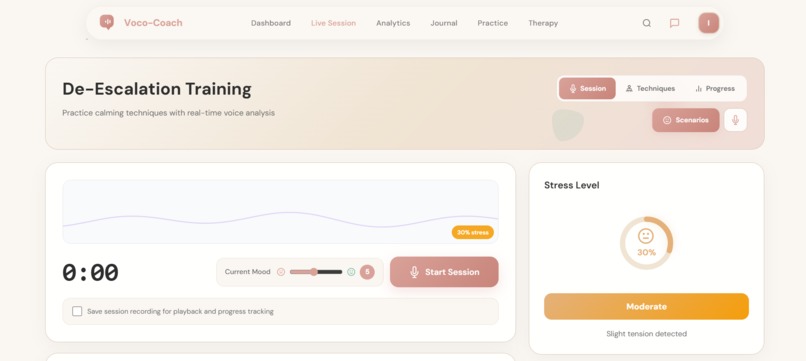
Therapy
-
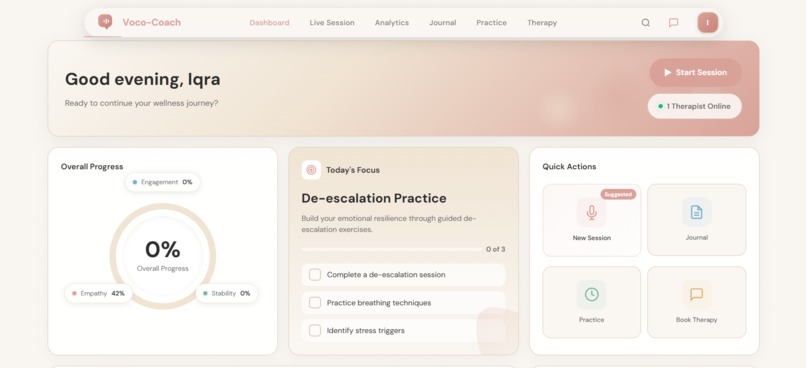
Dashboard
-
HomePage
Inspiration
The Story of Voco-Coach: Voice, Emotion, and AI
🌟 Inspiration
Communication is the most human thing we do, yet it is often the source of our greatest stress. Whether it’s a high-stakes meeting, a difficult conversation with a loved one, or managing social anxiety, we often lack a "safe space" to practice and receive objective feedback.
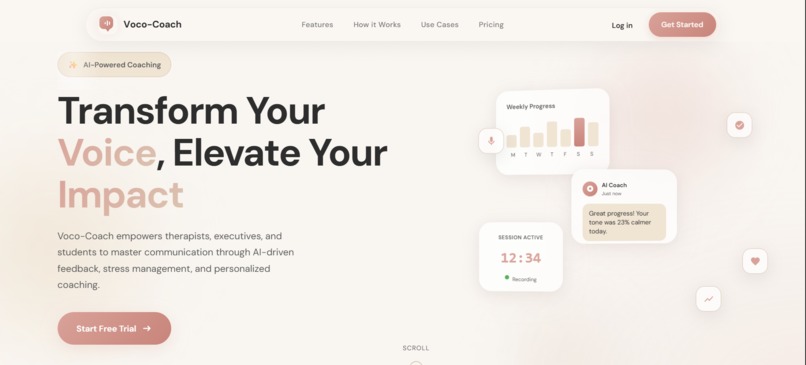
I was inspired to build Voco-Coach after realizing that while we have fitness trackers for our steps and heart rate, we lack a "fitness tracker" for our emotional and vocal health. I wanted to bridge the gap between AI-driven data and human-centric therapy, creating a tool that doesn’t just record what you say, but understands how you say it and how you feel while saying it.
🧠 What I Learned
Building Voco-Coach was a masterclass in Agentic AI and Affective Computing.
- Context is King: I learned that LLMs like Google Gemini 2.0 Flash are incredibly capable of detecting nuance, but they require structured data (biomarkers) to provide truly "empathetic" feedback.
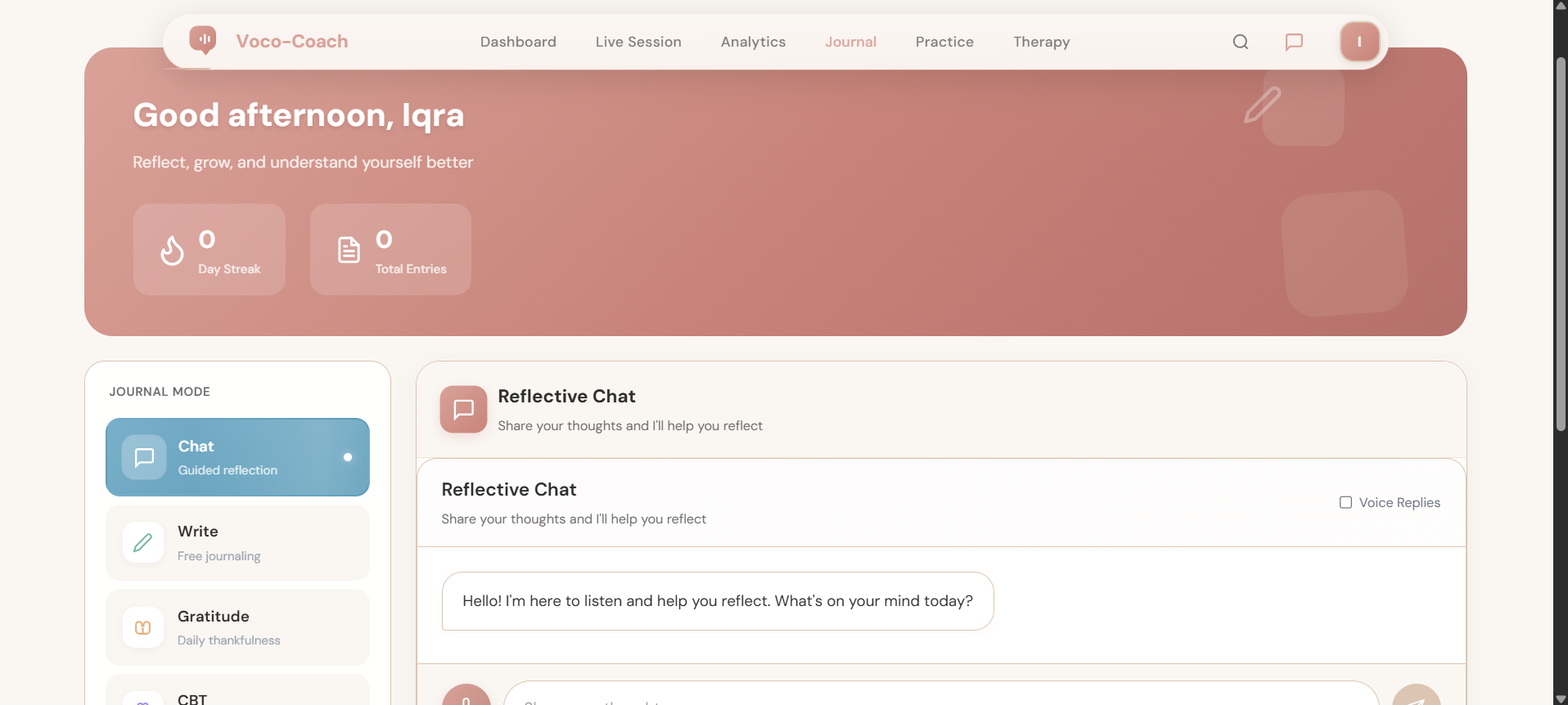
- The Power of Socratic Feedback: Instead of the AI telling the user what to do, I learned that the most effective growth happens when the AI asks the right questions. This led to the development of the Socratic Journaling feature.
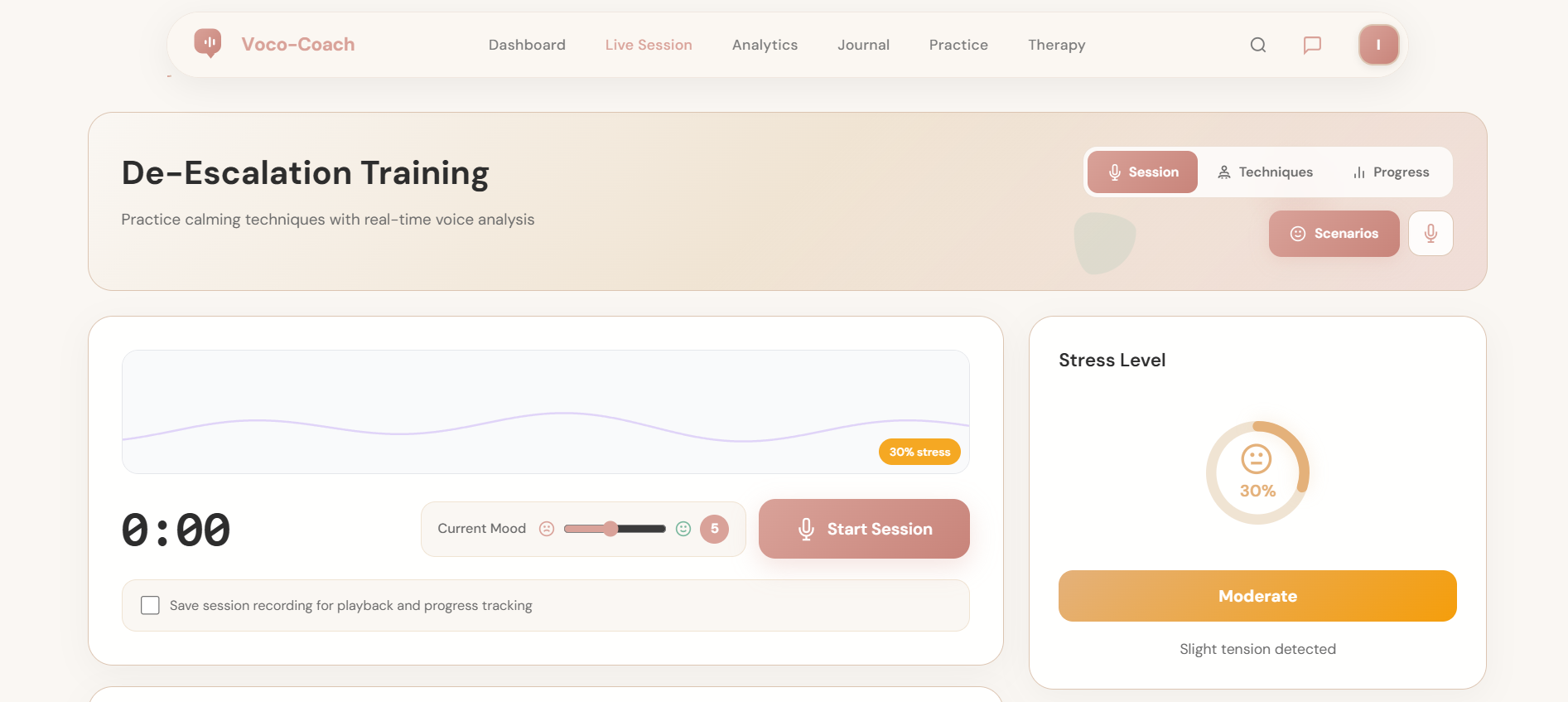
- Real-time Challenges: Handling live audio streams in a browser environment while maintaining a "Glassmorphism" UI taught me a lot about performance optimization in Next.js.
🛠️ How I Built It
Voco-Coach is built on a modern, high-performance stack designed for low latency and high emotional resonance.
The Technical Architecture
- The Intelligence Layer: I utilized Google Gemini 2.0 Flash for its speed and deep reasoning. It powers the "Calm Scores" and the Socratic questioning logic.
- The Vocal Layer: To make the AI feel human, I integrated ElevenLabs API, allowing the platform to speak back to the user with natural, emotionally expressive voices.
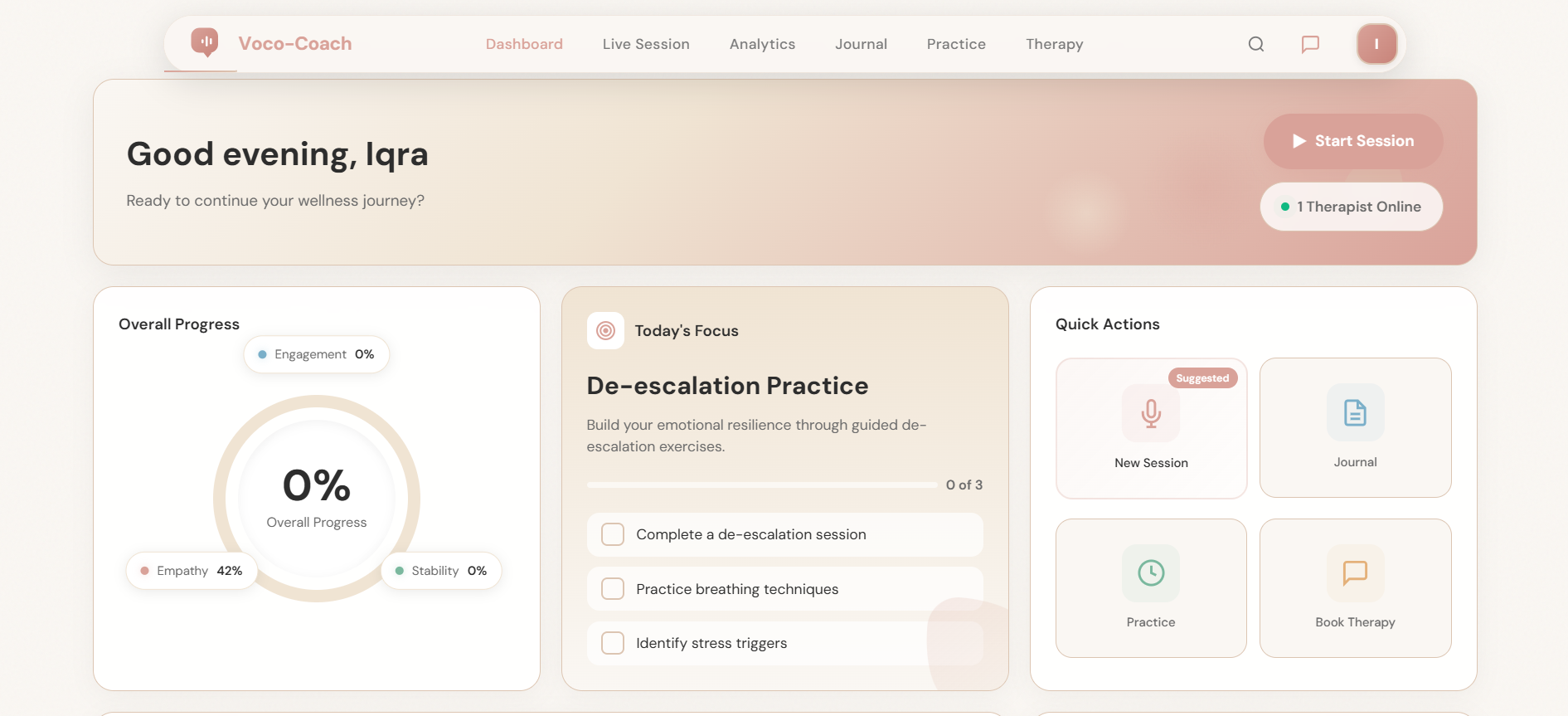
- The Data Layer: Using SQLite with Prisma ORM, I created a complex schema to track everything from 7-day stress trends to therapist-student chat histories.
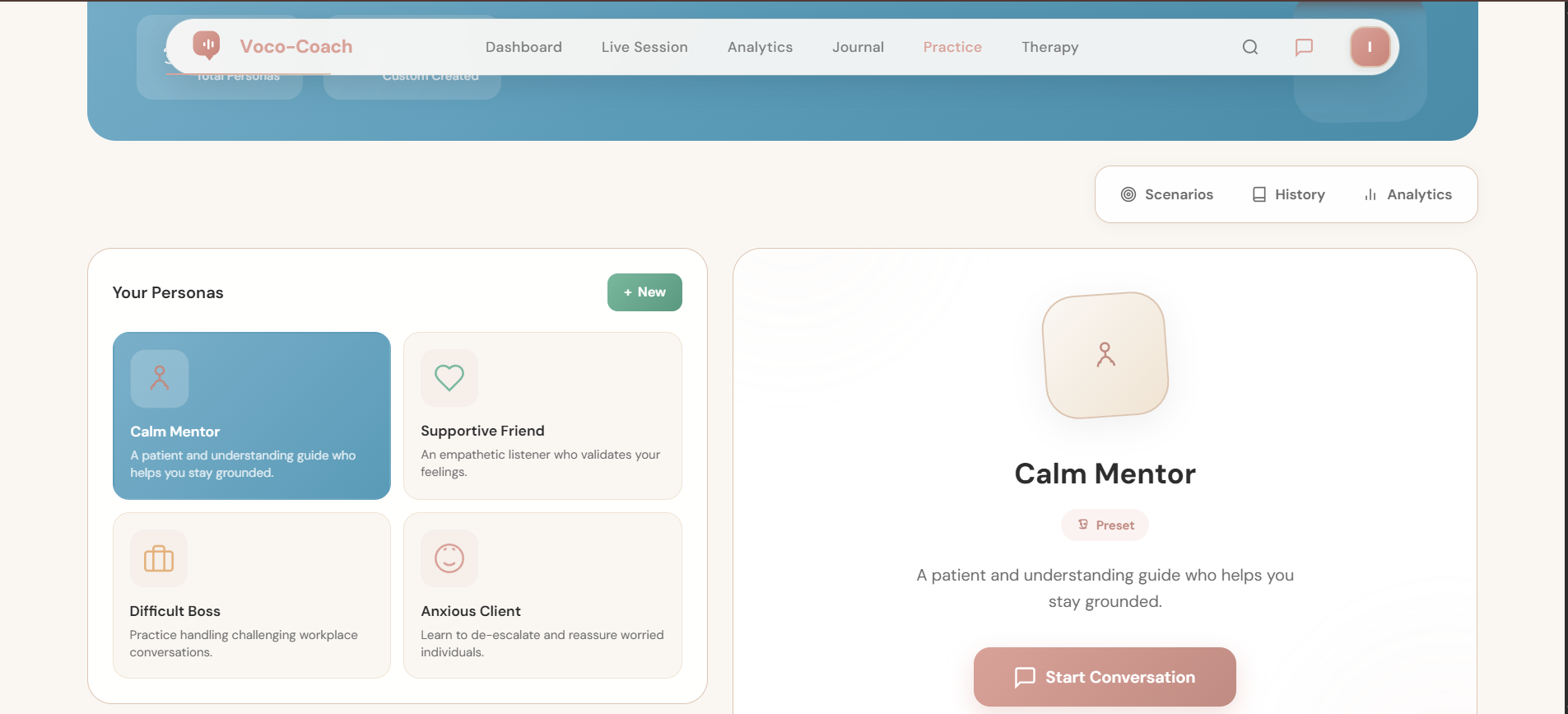
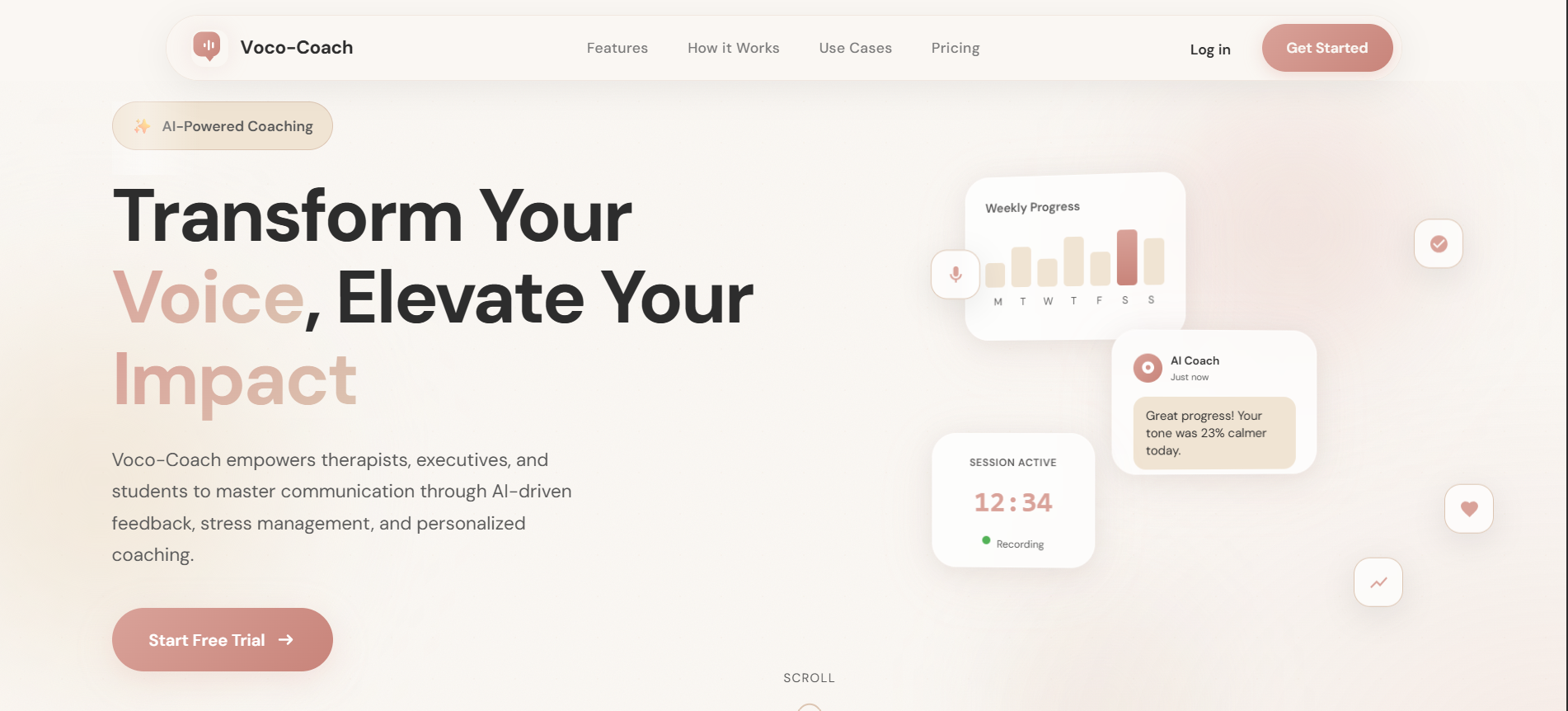
- The Interface: I chose a Glassmorphism design (Tailwind CSS + Framer Motion) to evoke a sense of clarity and calm, essential for a therapy-focused application.
The Mathematical Core
To calculate vocal health and stress, the application uses weighted averages of pitch variation () and clarity (). A simplified version of our Calm Score () can be expressed as:
Where:
- represents the pitch variance over time.
- is the voice clarity percentage.
- are weights adjusted based on the user's historical baseline.
🚧 Challenges Faced
The journey wasn't without its hurdles:
- Latency vs. Realism: Getting the AI to respond fast enough to feel like a "live" conversation while still processing complex emotional biomarkers was difficult. I solved this by using the Gemini 2.0 Flash model, which offers significantly lower latency for real-time applications.
- Role-Based Security: Designing a system where a single user could potentially be an Admin, a Therapist, and a Student required a robust JWT-based RBAC (Role-Based Access Control) system. Ensuring that data remained siloed and secure was a top priority.
- Tone Analysis Accuracy: Traditional sentiment analysis often misses the "vibe." I had to refine the prompts to ensure the AI looked for cognitive distortions in text rather than just "sad" or "happy" keywords.
🚀 The Future
Voco-Coach is just the beginning. I am looking toward a future where we can integrate wearable data to correlate vocal biomarkers with physiological stress (HRV).
Voco-Coach isn't just an app; it’s a companion for anyone looking to find their voice and master their emotions in an increasingly digital world.
Built With
- css
- html
- javascript
- nextjs
- node.js
- tailwind
- typescript

Log in or sign up for Devpost to join the conversation.