-
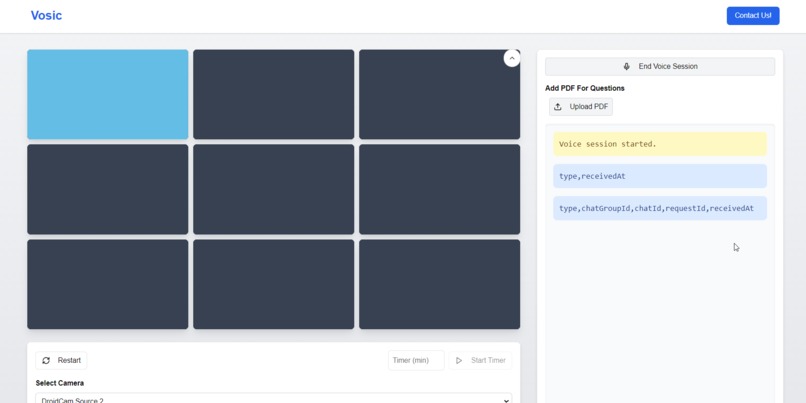
Main page

Inspiration
The inspiration behind our project stems from the personal challenges we’ve faced in the past with public speaking and presentations. Like many others, we often found ourselves feeling overwhelmed by nerves, shaky voices, and the pressure of presenting in front of peers. This anxiety would sometimes make it difficult to communicate ideas effectively, and the fear of judgment made the experience even more daunting. Recognizing that we weren’t alone in these feelings, we wanted to create a solution that could help others overcome similar hurdles. That’s where Vocis comes in. Its aim is to give people the freedom and the ability to practice their presentation skills at their own pace, in a safe, supportive environment. Whether it’s practicing for a school project, a work presentation, or simply building the confidence to speak in front of others, the platform allows users to refine their delivery.
What It Does
Our project aims to simulate real-life challenges that presenters might face. For example, handling difficult situations like Q&A sessions, dealing with hecklers, or responding to aggressive viewers. By creating these simulated scenarios, our software prepares users for the unpredictability of live presentations. We hope that by giving people the tools and the settings to practice on their own terms, they can gradually build the skills and self-assurance needed to present with ease in any setting.
Tech Stack - How Vocis is built
ReactJs Shadcn NextJs TailwindCSS Hume.Ai OpenAI
Challenges We Faced
During our hackathon, one of the key challenges we faced was the need to dive into extensive documentation while working on API implementation as we had never worked with Hume before. Not only that, as all of us don’t have much experience with the backend of an app, it was really taxing to learn and implement at the same time. This task, which is already time-consuming, became more difficult due to unstable internet connectivity. This led to unexpected delays in accessing resources and troubleshooting problems in real time, which put additional pressure on our timeline. Despite these setbacks, our team worked hard to adapt and maintain momentum.
Accomplishments
Despite the challenges we faced, we were able to make a functional prototype at the very least that displays the core of our program which is simulating real-life difficult scenarios for presenters and public-speakers. At least, the very bare bones and we’re very proud of ourselves for being able to do that and create a wonderful project.
What We Learned
We learned to create a viable project in limited time allowing us to overcome our shortcomings in our ability to create a project Through multiple workshops and gaining insightful help from mentors, we learned more about APIs, implementing APIs, and making sure they cooperate with each other and streamlining the process. We also learned a lot of new, cool and amazing technologies created by a lot of amazing people that allowed us to achieve the aim of our project
What’s Next For Vocis
We allow multiple users to present at the same time and the AI can create situations for multiple “panelists” We allow many more situations that panelists and presenters may face like many different types of aggressive people, journalists that are a little too overbearing. We add reactions of the audience that is listening to our presentation so that it creates a more realistic experience for the user (“presenter”) More security measure Authentication


Log in or sign up for Devpost to join the conversation.