-
-

VOCES logo
-
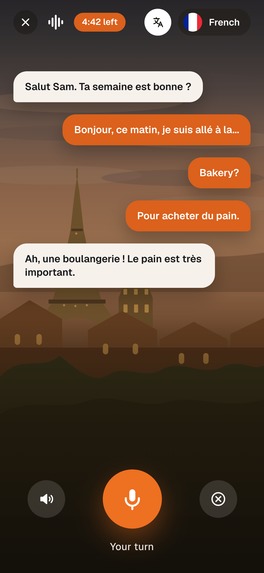
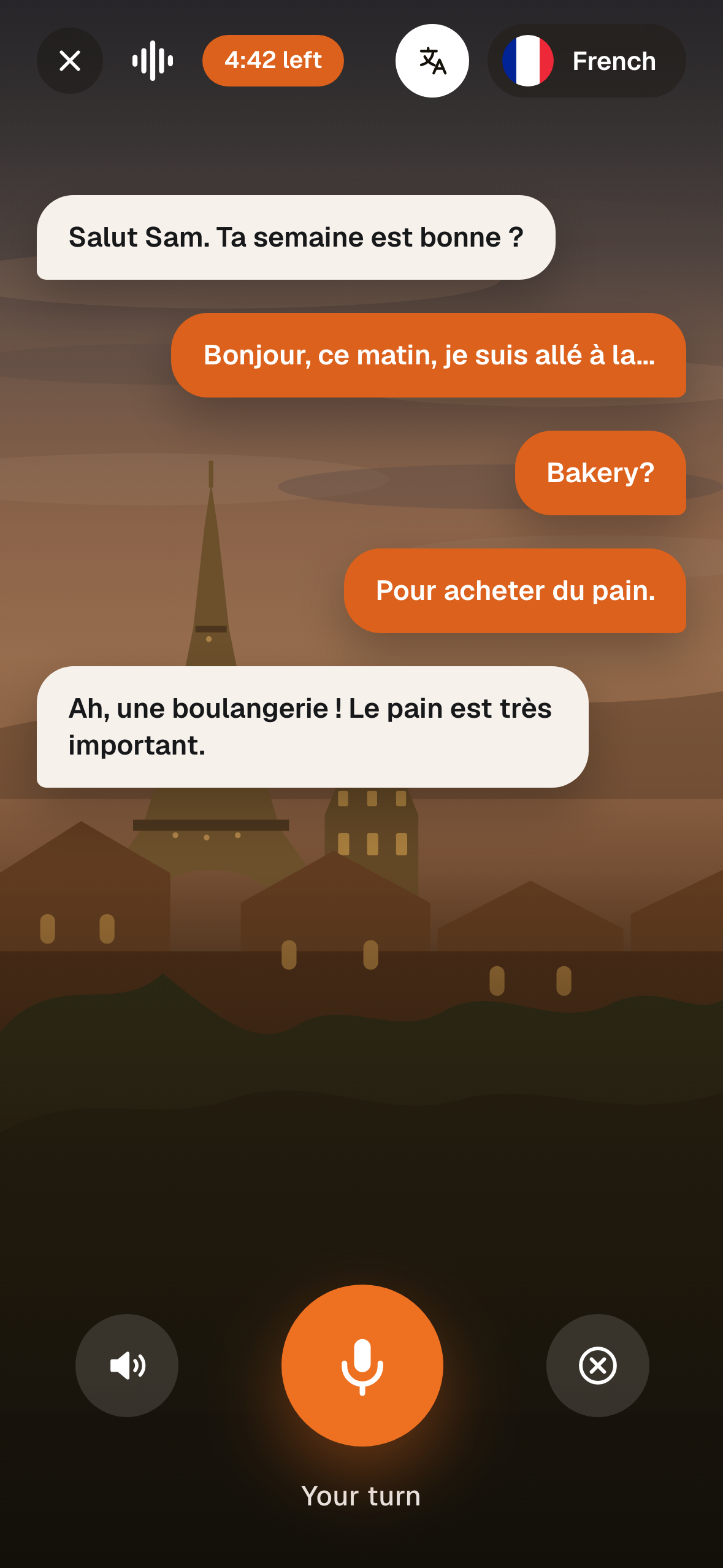
live natural conversation with Ai
-
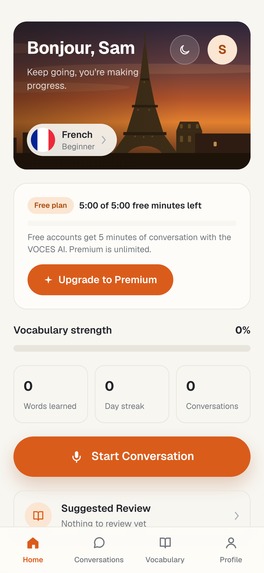
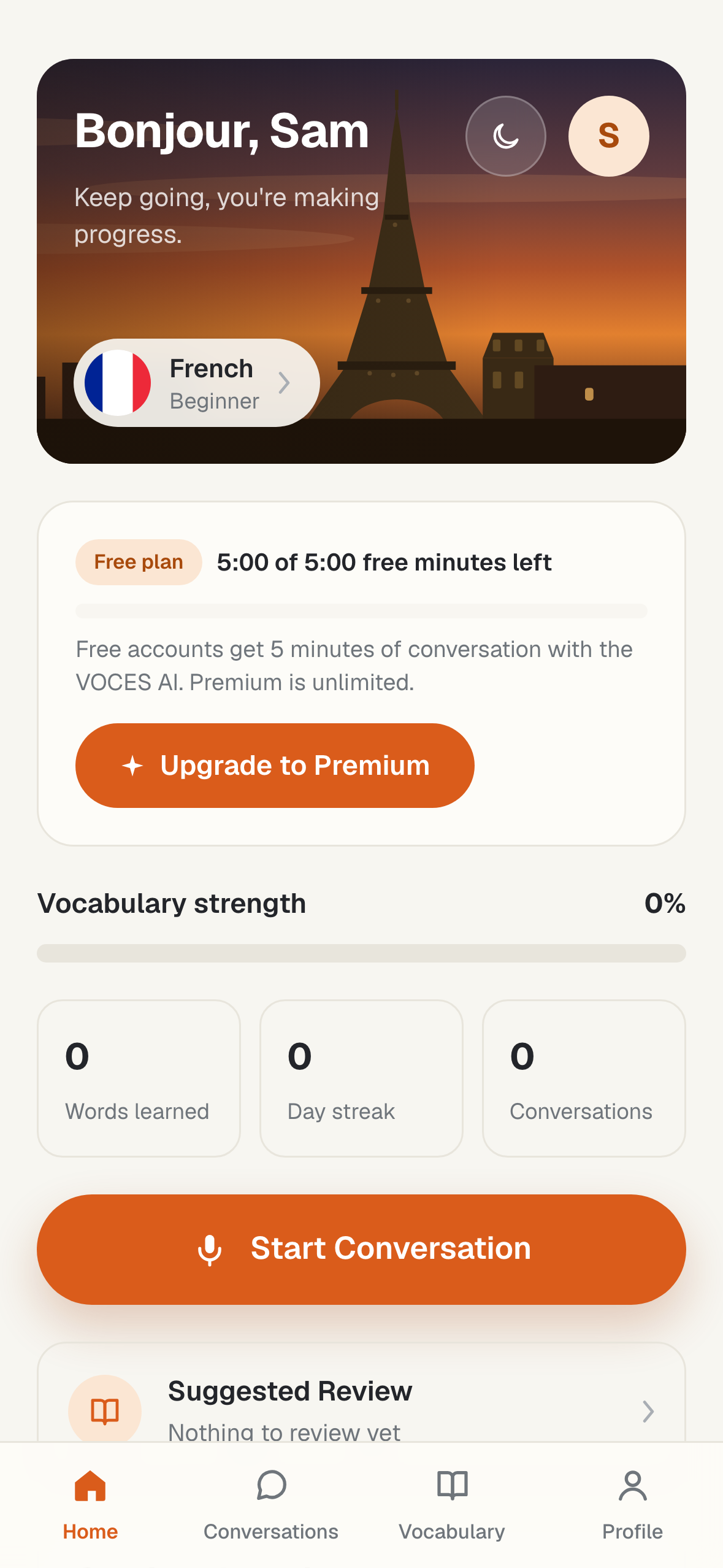
voces dashboard
-
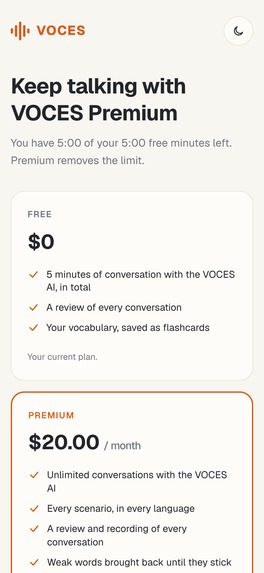
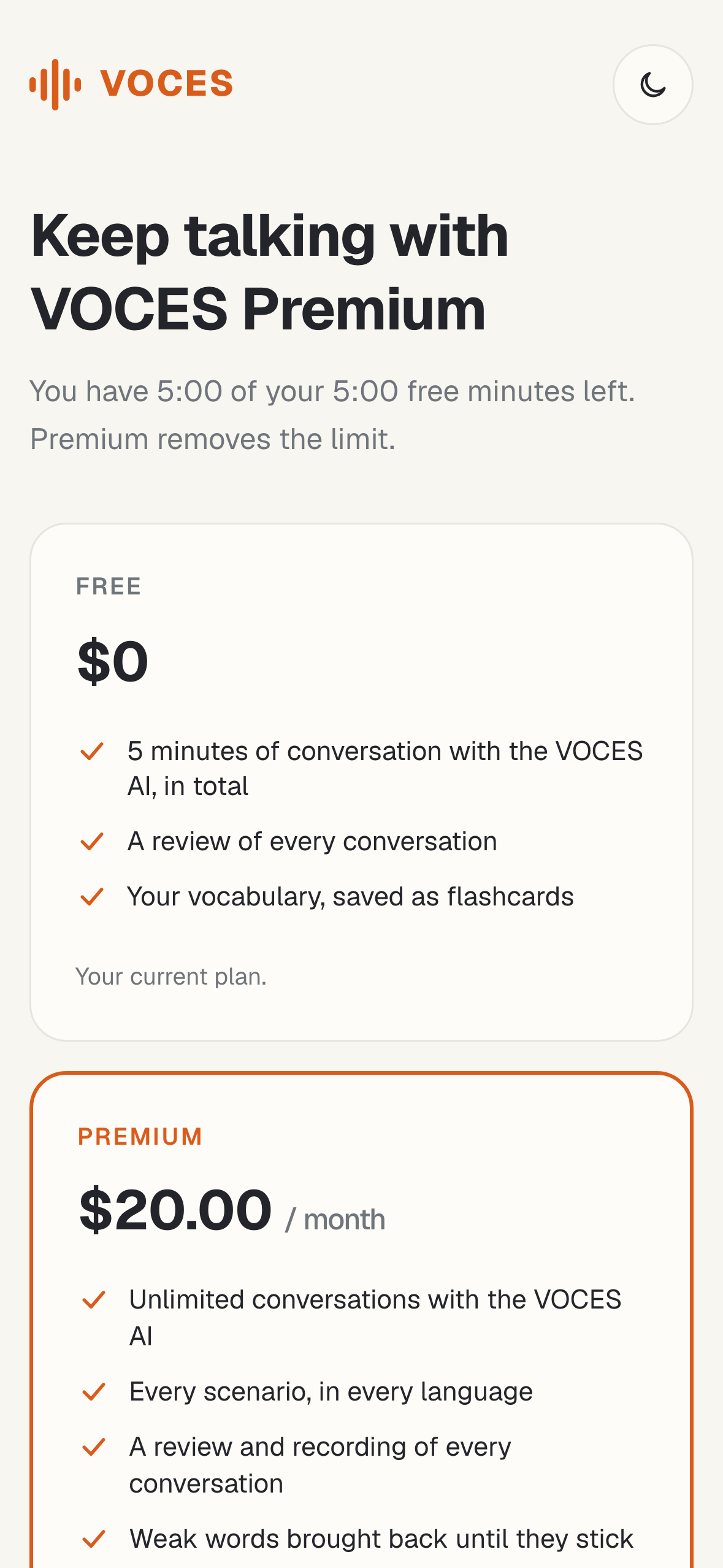
premium payment using Revenue cat SDK

About the Project
Inspiration
We were inspired by a simple problem with the way people learn languages: you can spend months memorizing vocabulary and studying grammar, but still struggle when it is time to actually speak.
We wanted to build something focused on the part that matters most: using the language.
That idea led to VOCES, a voice-first language immersion app where learners practice through natural conversations instead of relying mainly on word lists and traditional exercises.
Our goal was to make speaking practice feel less like taking a lesson and more like having an actual conversation.
How We Built It
VOCES is built around voice interaction. Users choose a language and a realistic scenario, then speak naturally with an AI conversation partner through their microphone.
The conversation engine maintains context throughout each session, allowing the AI to respond based on what has already been discussed rather than treating every interaction as an isolated question.
One of our main design decisions was corrections after the conversation.
Instead of interrupting learners every time they make a mistake, VOCES lets them stay focused on communicating. After the session, the app provides corrections, useful feedback, and areas they can improve.
We also built a smart vocabulary system that tracks when words are introduced, how strongly they have been reinforced, and which words the learner struggles to use.
Those weaker words can then be naturally brought back into future conversations and review sessions.
VOCES currently supports English, Spanish, Italian, German, and French, with the architecture designed to support additional languages in the future.
What We Learned
Building VOCES taught us that adding AI to an application is only part of the challenge. The bigger challenge is designing how the AI should interact with the learner.
We learned how important conversation context is for making AI interactions feel natural. We also learned that personalization becomes much more useful when it is based on actual user behavior rather than simply asking users what they want to practice.
Most importantly, we learned that speaking practice, feedback, and vocabulary reinforcement do not need to exist as separate activities.
They can work together as one continuous learning loop:
$$ \text{Conversation} \rightarrow \text{Feedback} \rightarrow \text{Reinforcement} \rightarrow \text{Better Conversation} $$
Challenges
One of our biggest challenges was making AI conversations feel natural while still keeping them useful for learning.
We did not want VOCES to feel like a chatbot randomly asking questions, but we also did not want conversations to become completely unstructured. The conversation engine needed to understand the current context while still guiding the learner toward meaningful language practice.
Voice interaction created another challenge. Speech recognition, AI response generation, and voice output all need to work together quickly enough that the conversation does not feel broken or delayed.
We also had to figure out how to provide useful corrections without overwhelming the learner. This is why we chose to move detailed corrections to the end of the session.
These challenges shaped VOCES around one core principle:
Speak first. Learn from the conversation. Then speak better next time.

Log in or sign up for Devpost to join the conversation.