-
-
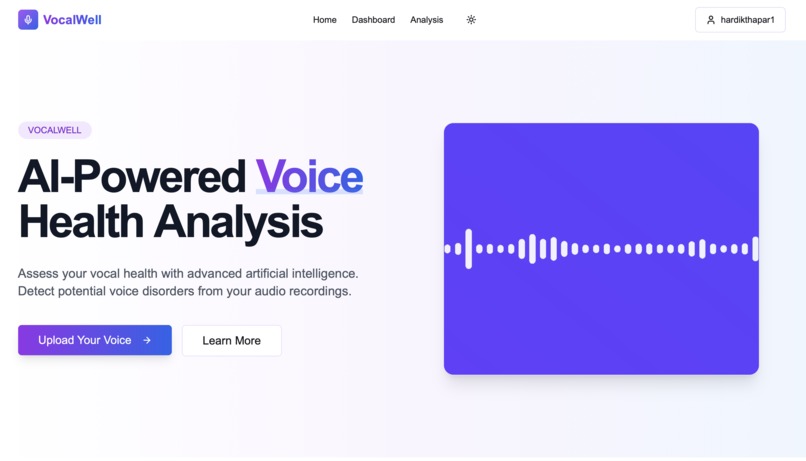
Welcome Page
-
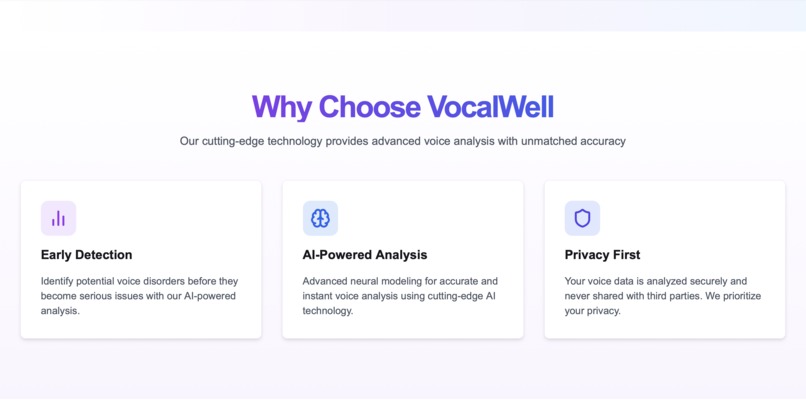
Impact
-
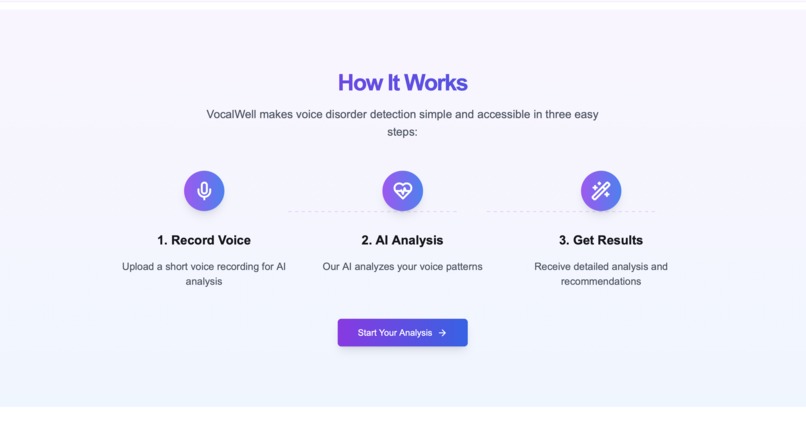
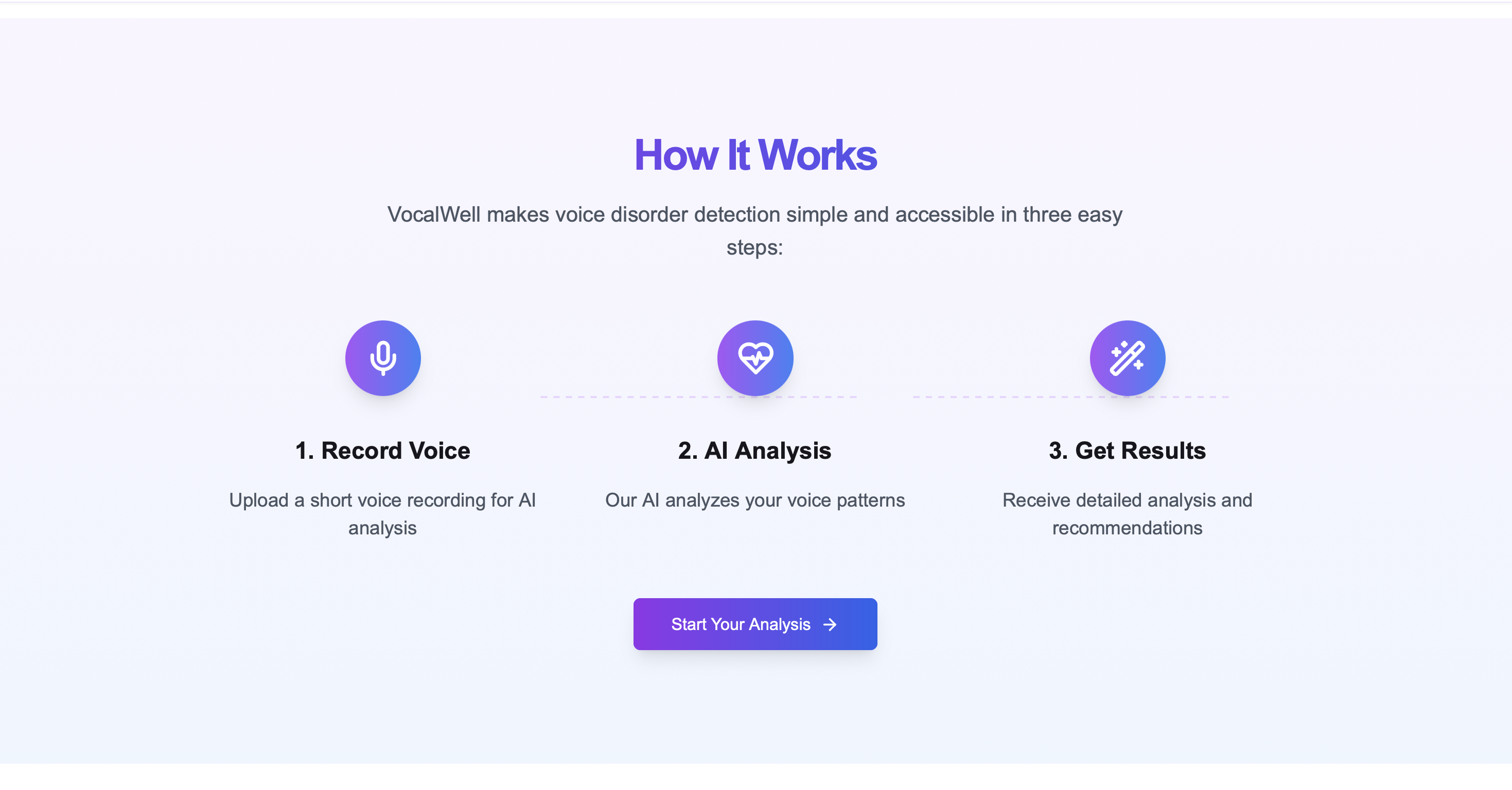
How it Works ?
-
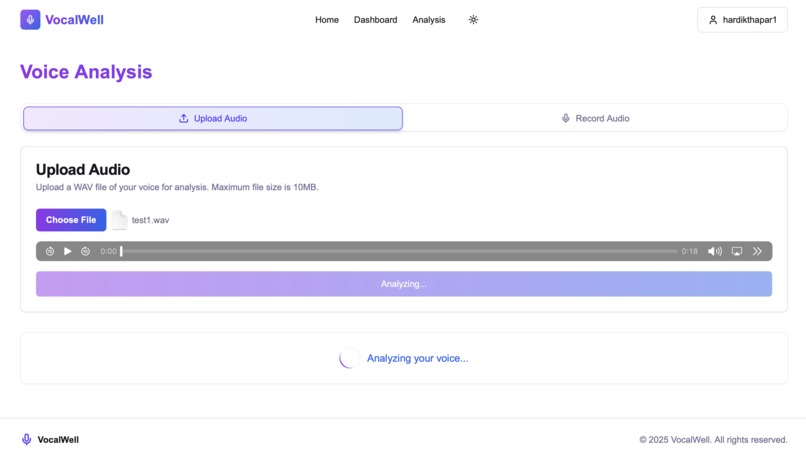
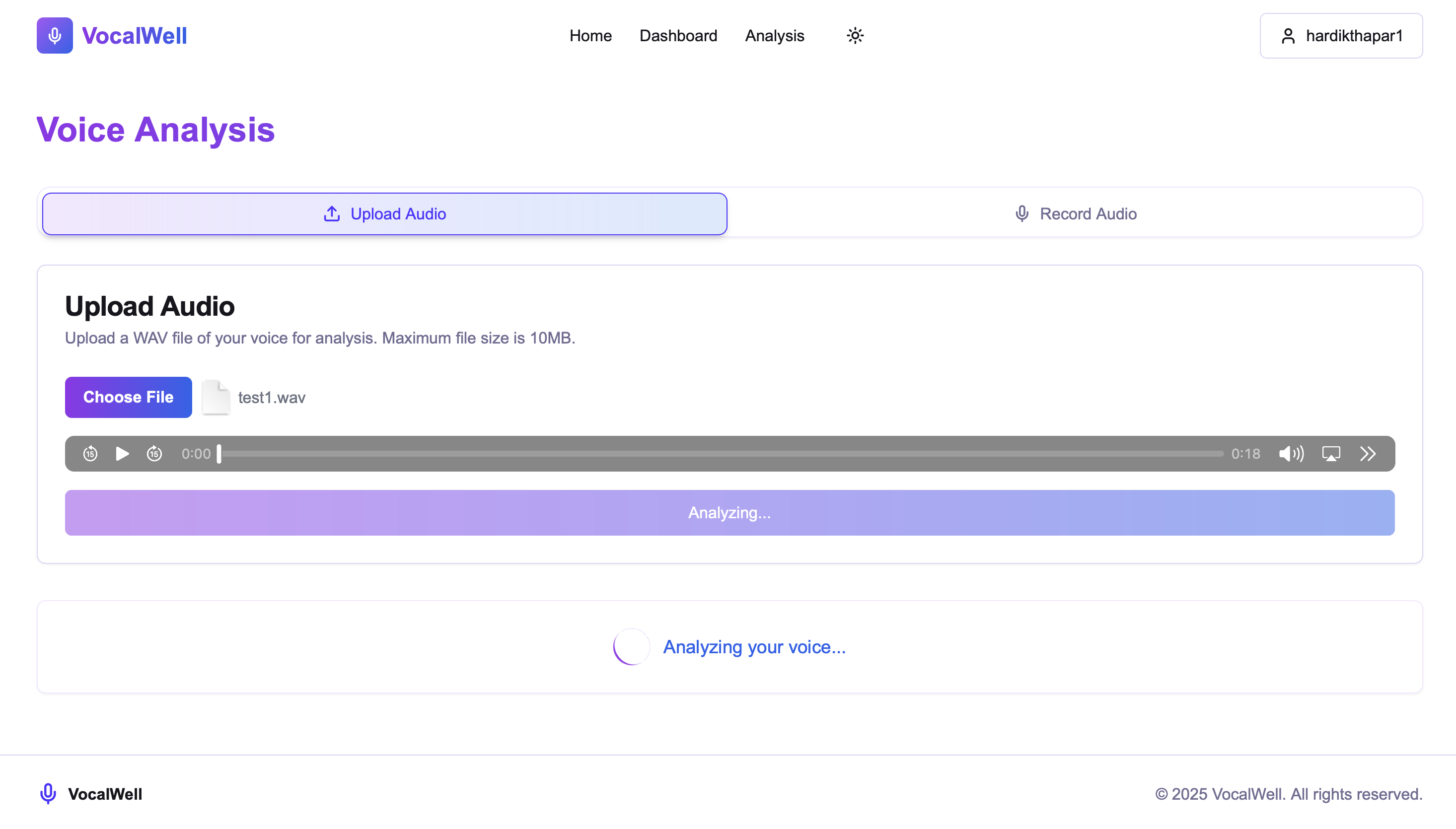
Analysis Page
-
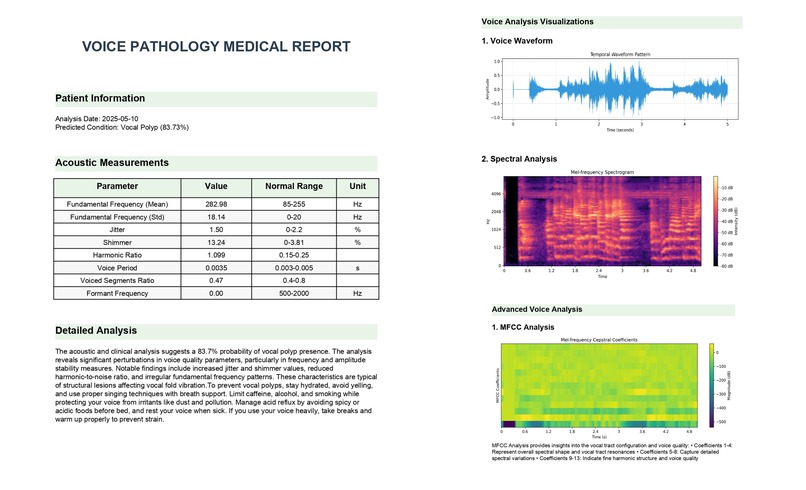
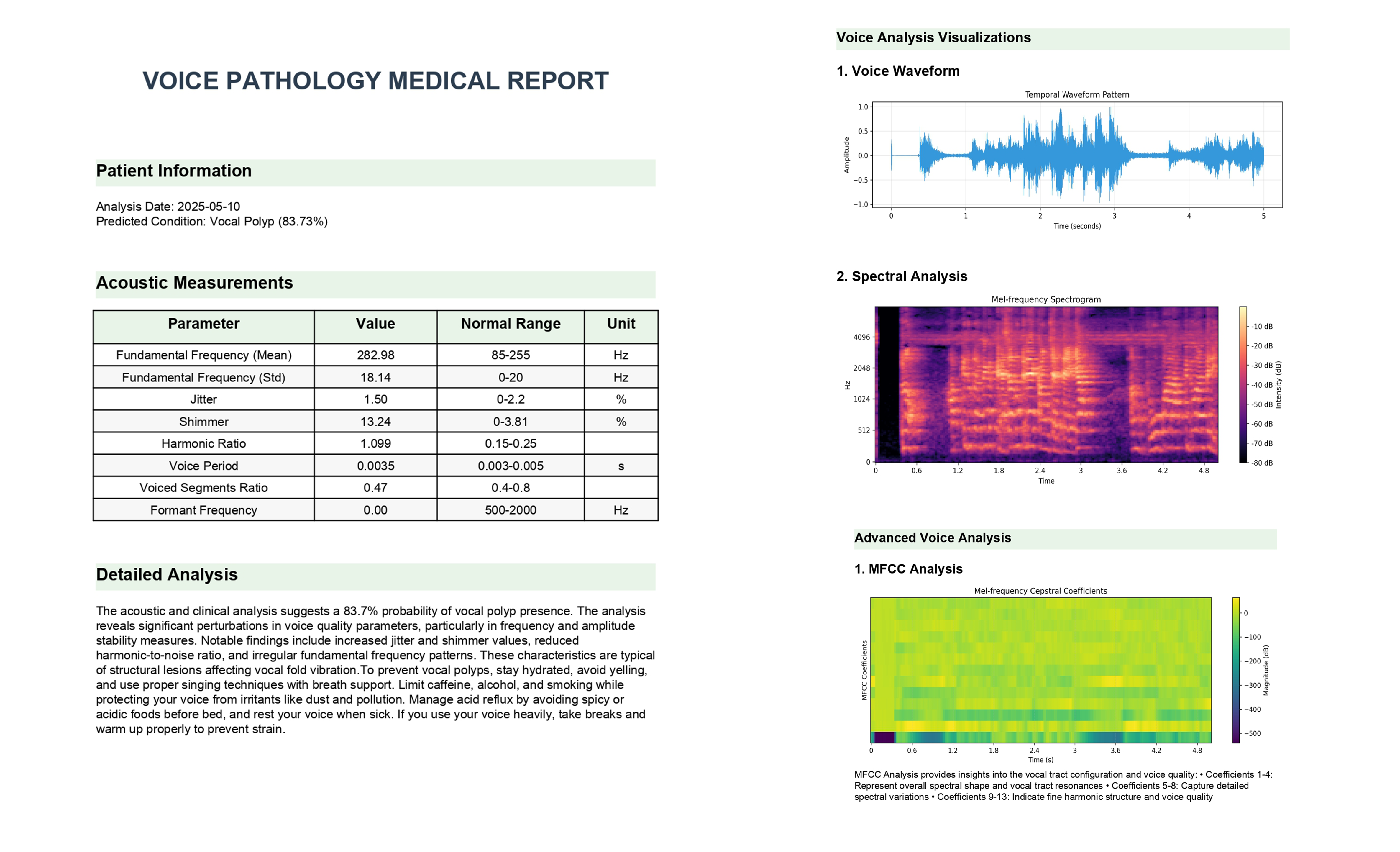
Reports PDF generated after analysis
-
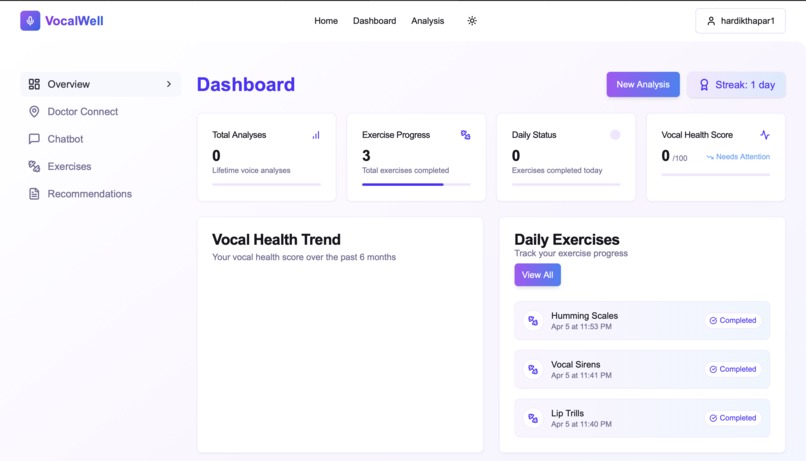
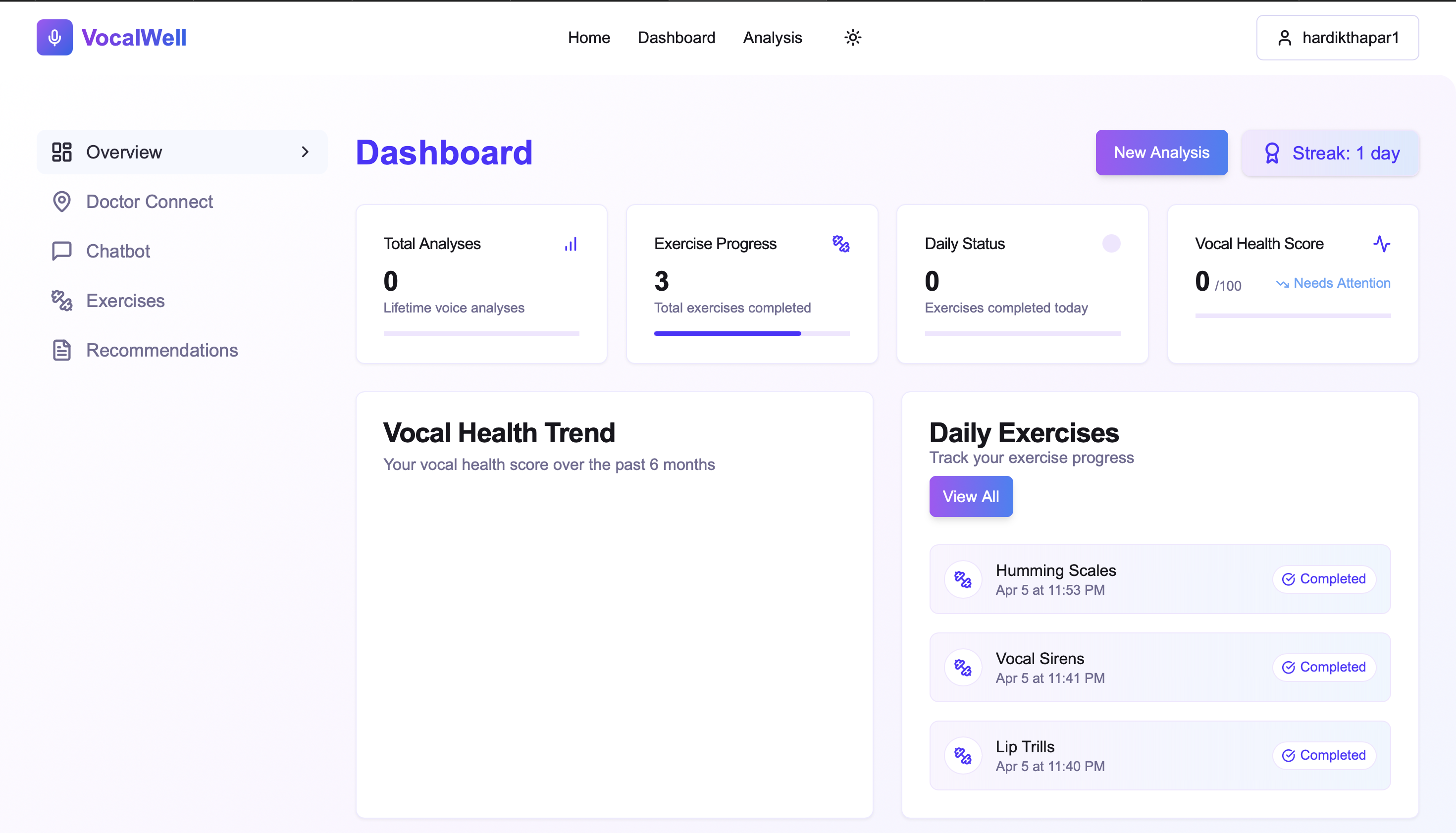
Dashboard Page
🎤 VocalWell: Empowering Voices, Enabling Equality
🌟 Inspiration
In a world where your voice defines your identity, ability to earn, teach, advocate, or simply be heard — millions, especially women and marginalized individuals, suffer from undiagnosed vocal disorders. Vocal health is overlooked, stigmatized, and often inaccessible.
Inspired by SDG 5 (Gender Equality) and SDG 10 (Reduced Inequalities), we imagined a world where diagnosing voice disorders becomes as easy as sending a voice note — private, fast, free, and AI-powered.
VocalWell was born out of a mission to give power back to the voice, enabling everyone — from rural teachers to urban performers — to protect the tool they use to impact the world.
💡 What it does
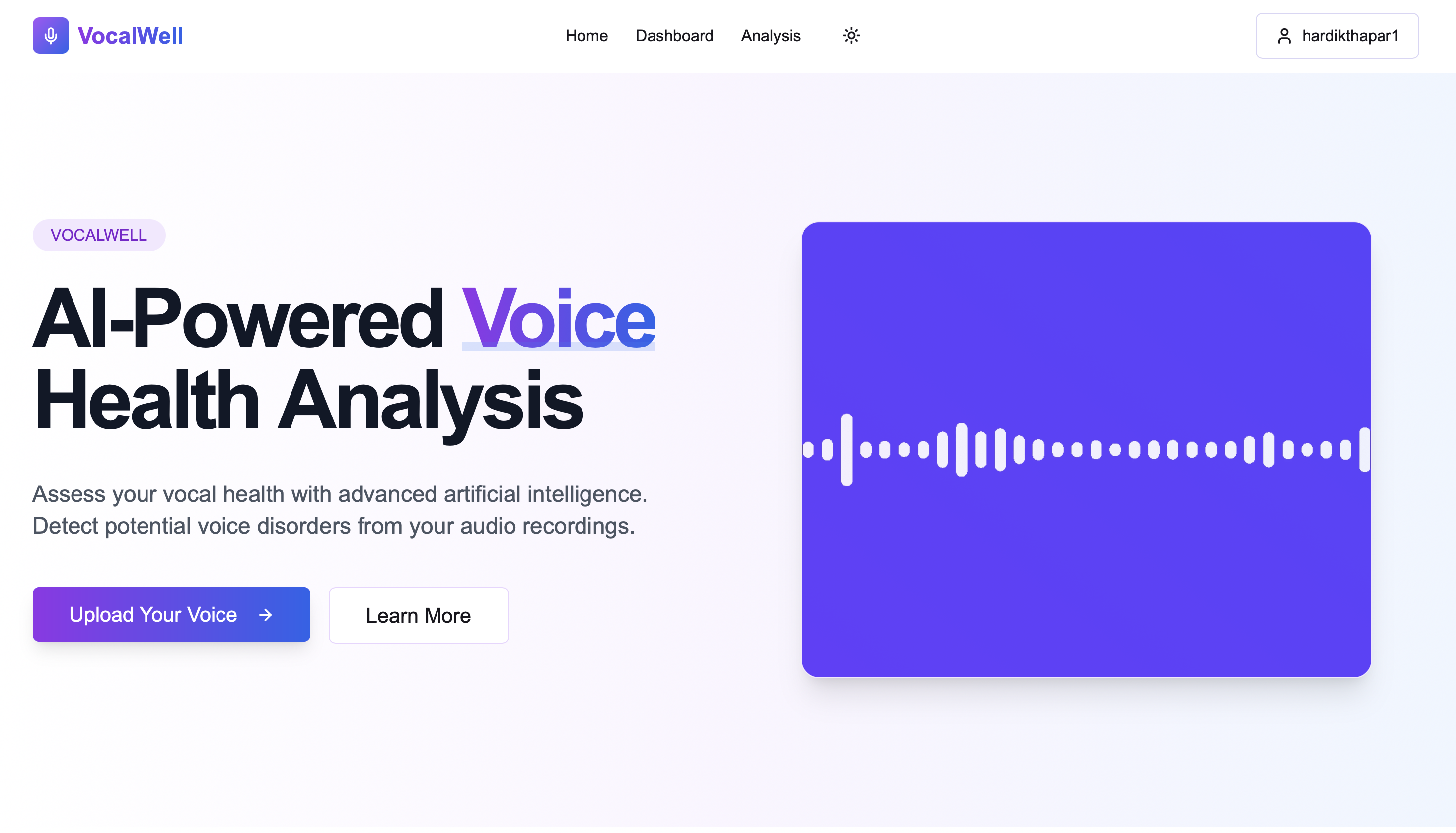
VocalWell is an AI-powered web platform that detects early signs of vocal disorders using just a voice recording.
- Users upload a short
.wavaudio sample. - Our ML model analyzes the voice for anomalies and vocal pathologies (like dysphonia, nodules, tremors).
- It displays a visual + textual diagnosis, spectrograms, waveform graphs, and an auto-generated report that can be shared with doctors.
- Everything is private, fast, multilingual, and mobile-optimized.
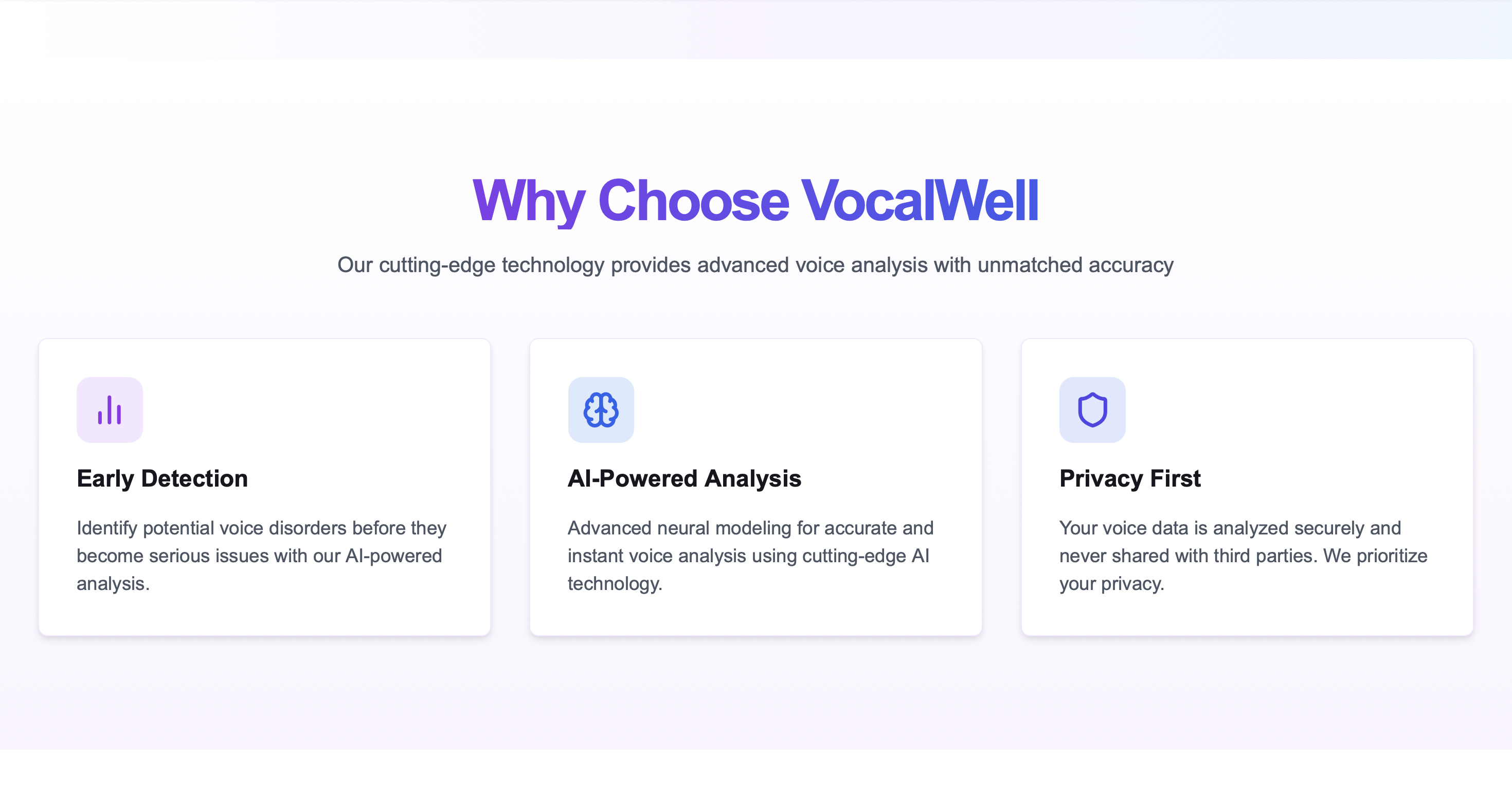
VocalWell transforms your phone into a non-invasive ENT tool — without expensive hardware or appointments.
🛠 How we built it
- Frontend: Built with Next.js and TailwindCSS for responsive, accessible UI.
- Backend + AI:
- Voice features extracted using Python (
librosa,pyaudio,scipy). - Trained a custom ML classifier model (Random Forest + CNN ensemble) on open voice disorder datasets.
- Voice features extracted using Python (
- Hosted reports and visual analysis using dynamic rendering.
- Built an upload interface and used Waveform + Spectrogram visualizations to show vocal anomalies.
- Integrated multilingual UI for inclusivity.
🚧 Challenges we ran into
- Finding balanced voice pathology datasets across genders was hard — we used synthetic augmentation and careful curation.
- Mapping audio features to interpretable disorders without medical background required deep research.
- Ensuring low-bandwidth compatibility was tough but critical — many potential users are in rural zones.
- Designing a medical product that feels non-intimidating, stigma-free, and inclusive took UX iterations.
🏆 Accomplishments that we're proud of
- Built a working AI-powered MVP that actually detects disorders with promising accuracy.
- Created a smooth, visual user experience even for non-technical users.
- Integrated accessibility (mobile, multilingual, low bandwidth) without compromising on quality.
- Developed a project that isn’t just tech for tech’s sake — but tech for voices that are often silenced.
📚 What we learned
- We learned how to train, fine-tune, and evaluate audio-based ML models for real-world use.
- Understood the importance of user psychology in designing for healthcare — especially for underserved populations.
- Gained deep insights into gender disparities in voice disorders and how technology can bridge this diagnostic gap.
- Learned that a small team with empathy and urgency can build something with global potential.
🚀 What's next for VocalWell
- Voice therapy recommendations + exercises powered by AI
- Doctor network for virtual consultations
- NGO and telemedicine integration to deploy in rural clinics & schools
- Expand to detect voice issues caused by abuse, stress, or hormonal imbalance
- Collaborate with speech-language pathologists and ENT specialists for model validation
🔥 Final Note
VocalWell isn’t just a project. It’s a movement — to protect the voices of those who lead classrooms, run families, spark revolutions, and sing lullabies.
When healthcare fails to reach the unheard, we build tools that let them diagnose, recover, and rise — on their own terms.
Let’s give voice to the voiceless.
Built With
- apis
- chart.js
- cloud-services
- convolutional-neural-networks-(cnn)
- databases
- frameworks
- github
- google-colab
- html5-audio-api
- hugging-face-datasets
- javascript
- librosa
- matplotlib
- netlify-(or-vercel)-for-deployment
- next.js
- platforms
- pyaudio
- python
- random-forest-classifier
- scikit-learn
- scipy
- tailwind-css
- tensorflow


Log in or sign up for Devpost to join the conversation.