-
-
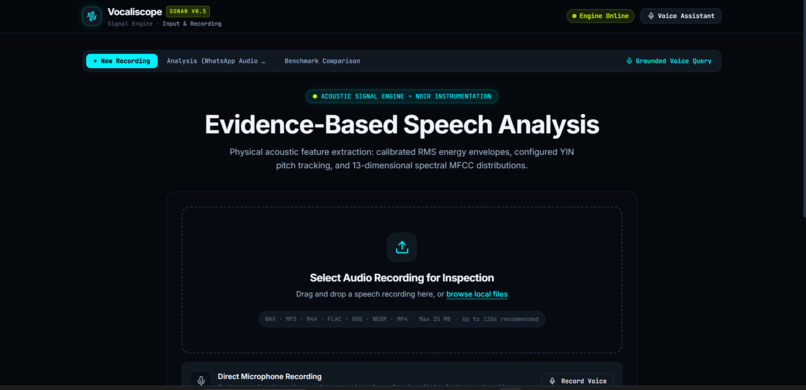
Explore Vocaliscope, an interactive platform for comparing speech and understanding vocal patterns.
-
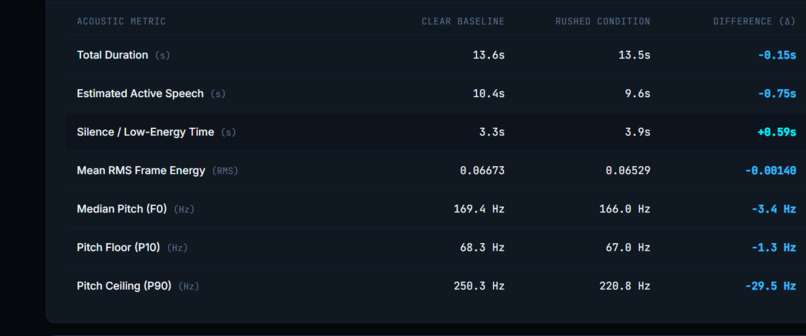
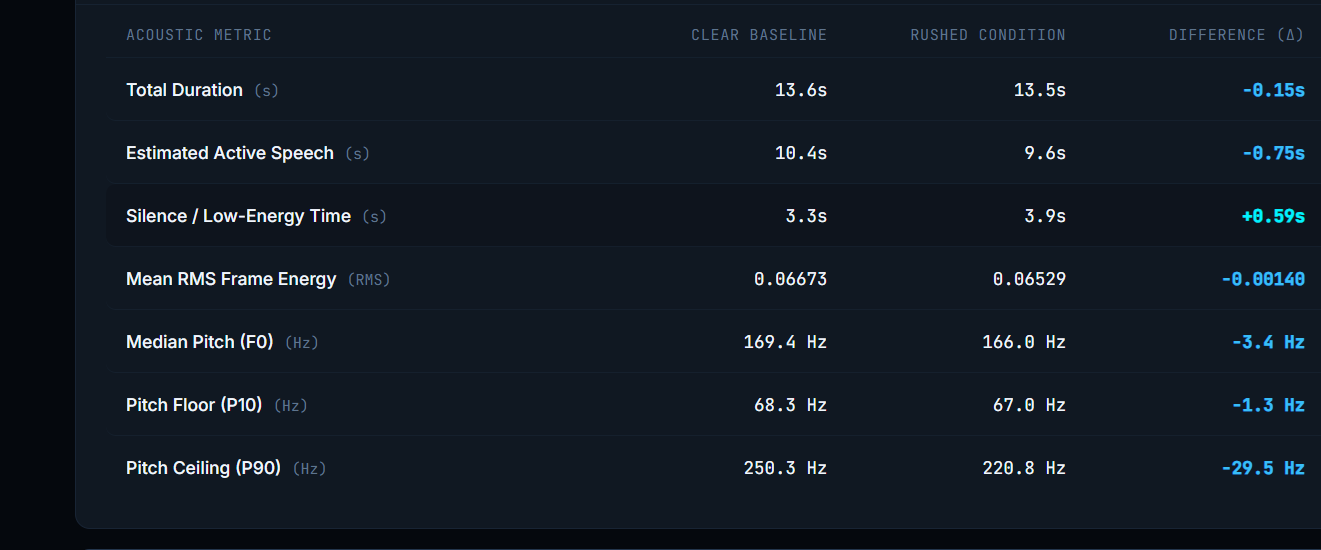
Compare pitch, energy, pacing, and pauses with visual insights and a timeline of detected speech events.
-
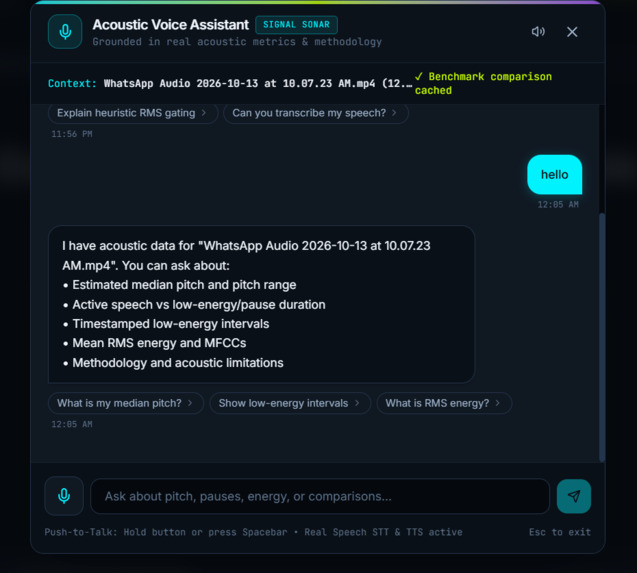
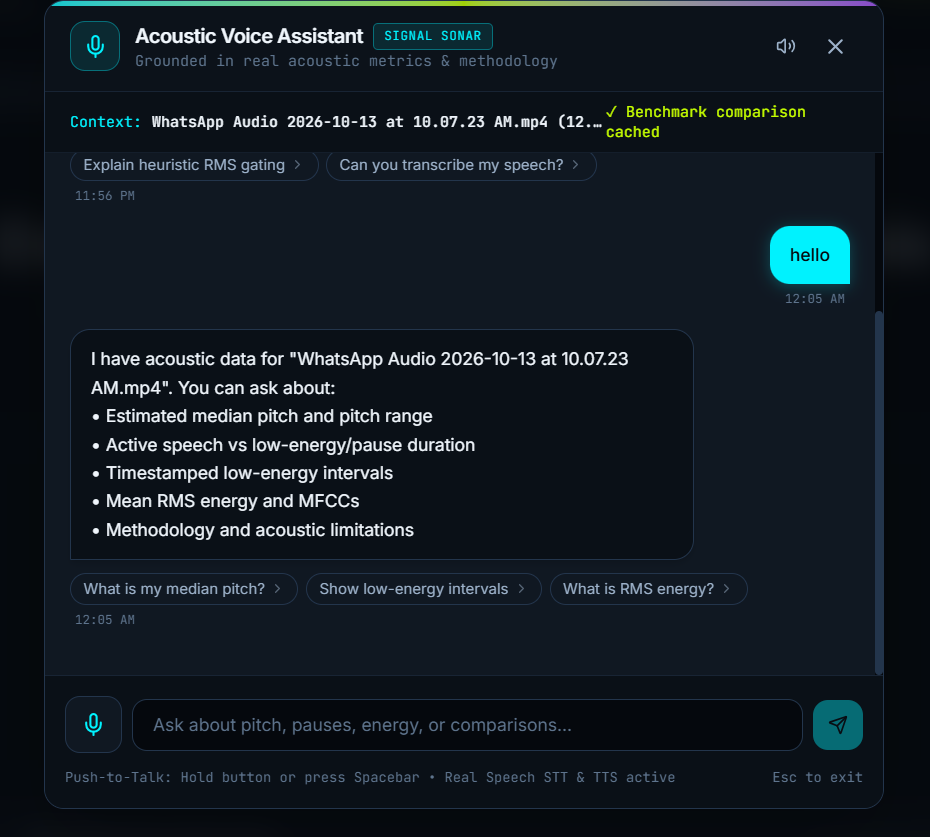
Ask questions about your analysis and get explanations grounded in the results from your recordings.
Inspiration
Inspiration
I wanted to build something that could help people understand how speech changes, not just what someone says. When a person speaks clearly or rushes through a sentence, their pace, pauses, pitch, and energy can change. I wanted to make these differences easier to see and understand instead of relying only on listening or a single overall score. That idea led to Vocaliscope.
What it does
Vocaliscope compares two speech recordings and highlights differences in their acoustic patterns. It extracts features such as pitch, RMS energy, and MFCCs, then presents the findings through visualizations, a timeline of detected events, and a weighted scorecard covering cadence, pauses, pitch variation, and energy dynamics. Users can also ask the built-in voice assistant questions about the comparison results.
How we built it
I built the backend using Python and FastAPI to process recordings and extract acoustic features. For the frontend, I used React, TypeScript, and Vite to create an interactive dashboard where users can explore the results. The analysis combines signal-processing techniques with a weighted rubric to make the comparison easier to follow. I also included sample recordings so the main workflow can be demonstrated.
Challenges we ran into
One challenge was turning acoustic measurements into information that people could understand without needing a technical background. Another was making the results useful without presenting every detected change as a definite flaw. Pitch, energy, and pauses can vary naturally between speakers, so the system needs to communicate its findings carefully. Getting the frontend, backend, visualizations, and analysis to work together also required testing and debugging.
Accomplishments that we're proud of
I'm proud that Vocaliscope brings speech comparison, acoustic feature analysis, timeline markers, a weighted scorecard, and an interactive assistant together in one application. Instead of showing only a final score, it lets users explore the measurements behind the comparison. I'm also proud to have built a working end-to-end prototype with a clear scope and documented limitations.
What we learned
Building Vocaliscope taught me that extracting data is only one part of creating a useful analytical tool. The results also need to be presented clearly and interpreted carefully. I learned more about acoustic feature extraction, API integration, frontend development, and the importance of testing the complete workflow. Most importantly, I learned to distinguish measurable evidence from conclusions that still need further validation.
What's next for Vocaliscope
The next step is to test Vocaliscope with a larger and more diverse collection of recordings and speakers. I want to improve the accuracy of temporal annotations, explore better speech alignment, and validate the scoring rubric against carefully prepared reference data. I also want to make the comparison more useful for different speaking styles and real-world situations. The long-term goal is to make speech analysis more transparent, explainable, and accessible to everyday users.
What it does
How we built it
Challenges we ran into
Accomplishments that we're proud of
What we learned
What's next for Vocaliscope
Built With
- acoustic-features
- antigravity
- artificial-intelligence
- audio-processing
- codex
- commandprompt
- data-visualization
- fastapi
- machine-learning
- powershell
- python
- react
- rest-api
- signal-processing
- speech-analysis
- tailwind
- typescript
- vite


Log in or sign up for Devpost to join the conversation.