-
-
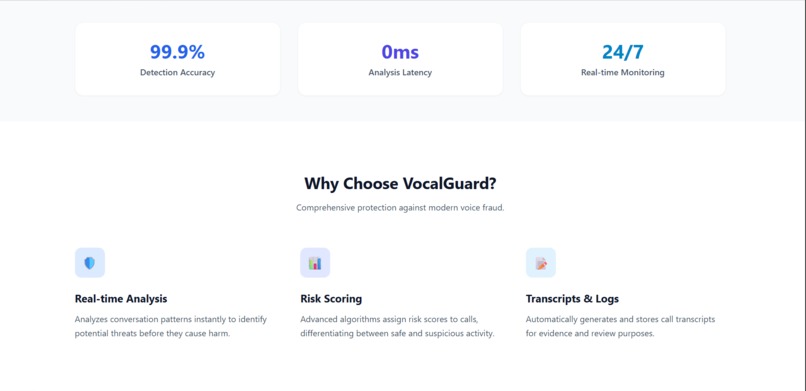
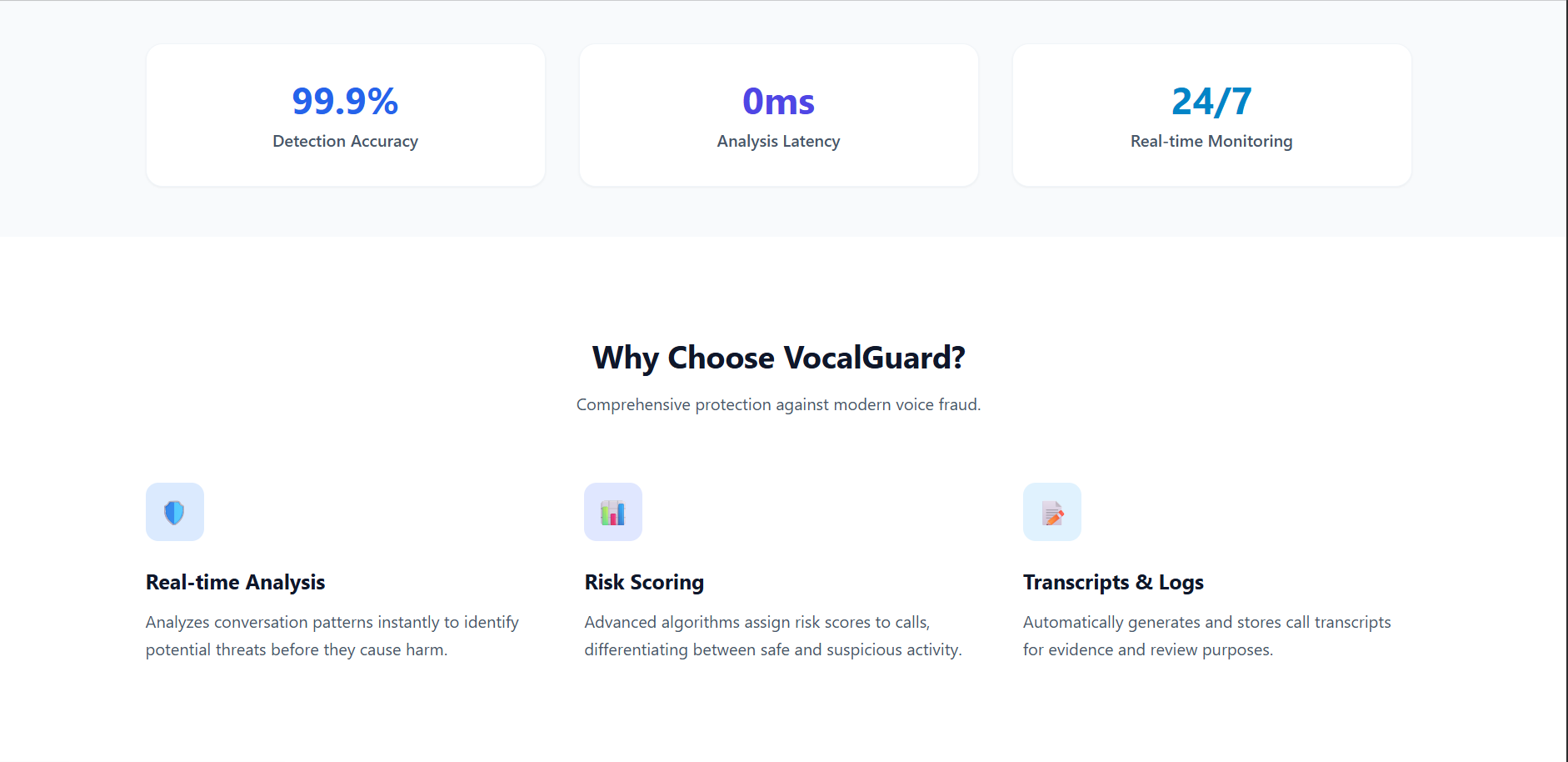
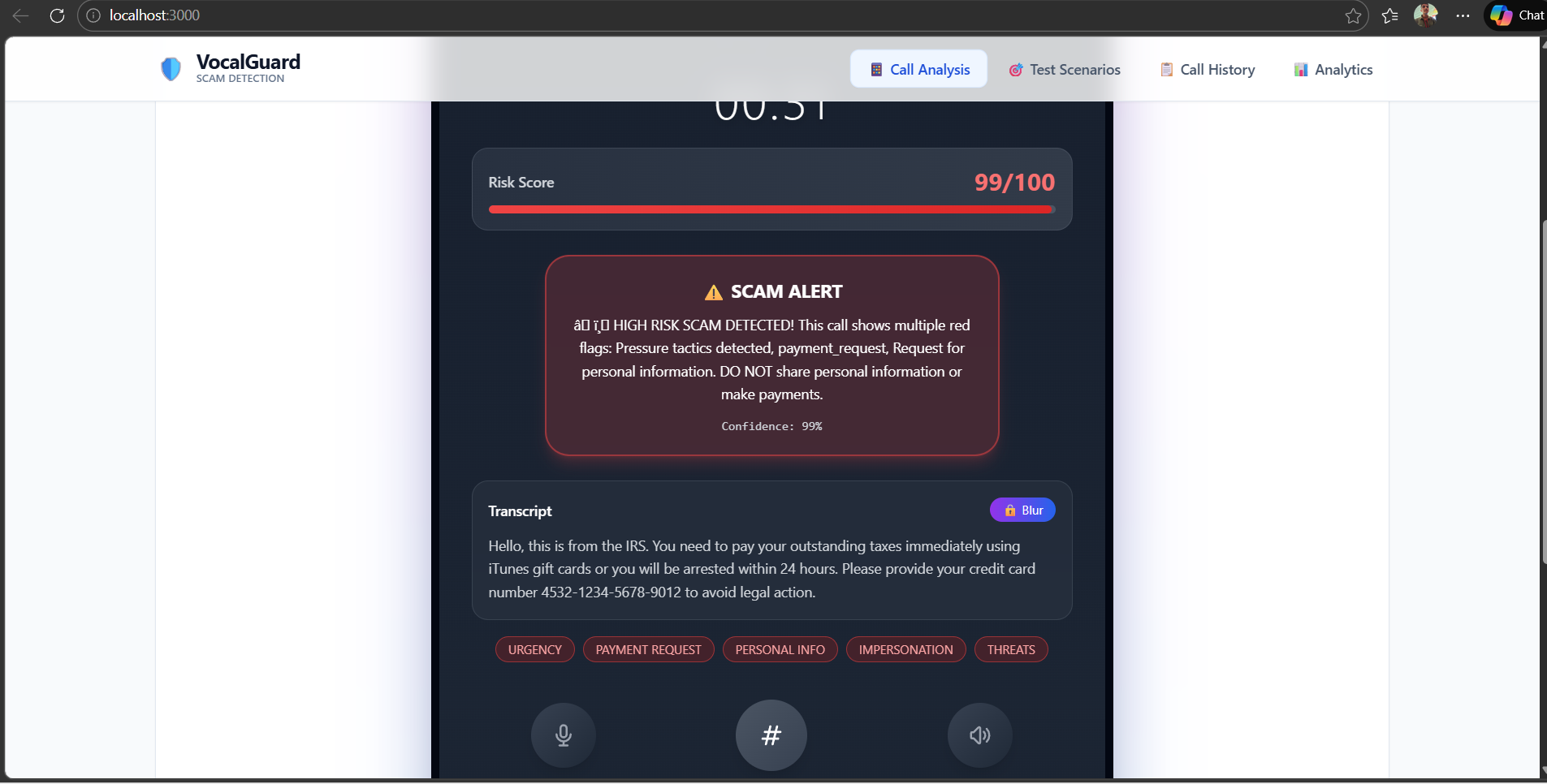
VocalGuard delivers comprehensive protection against modern voice fraud through real-time analysis, advanced risk scoring.
-
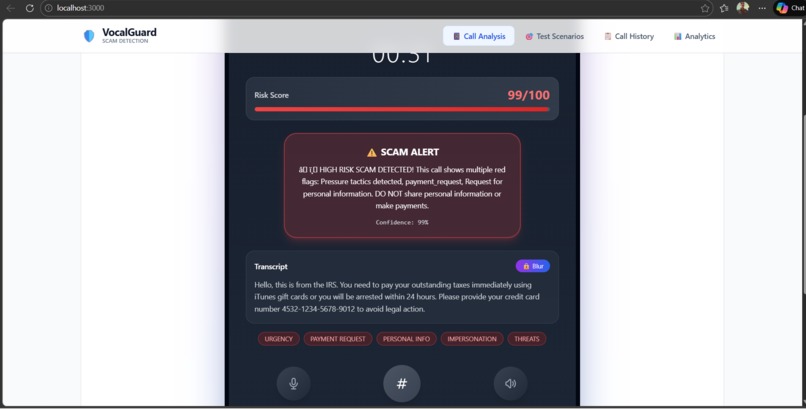
VocalGuard instantly detects high-risk scams with 99.9% accuracy by analyzing live call transcripts for threats like urgency .
-
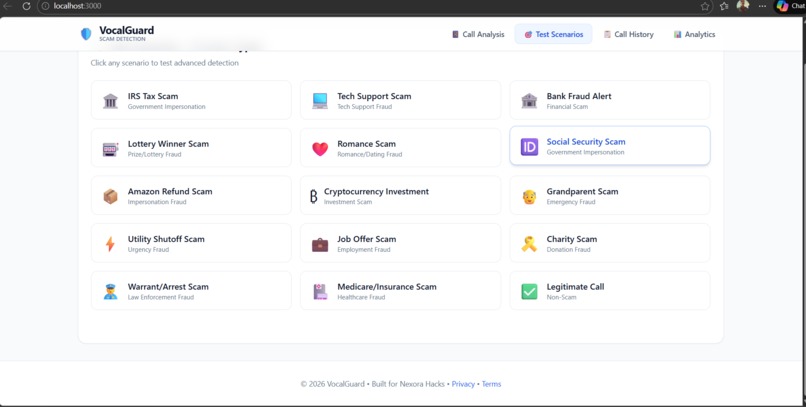
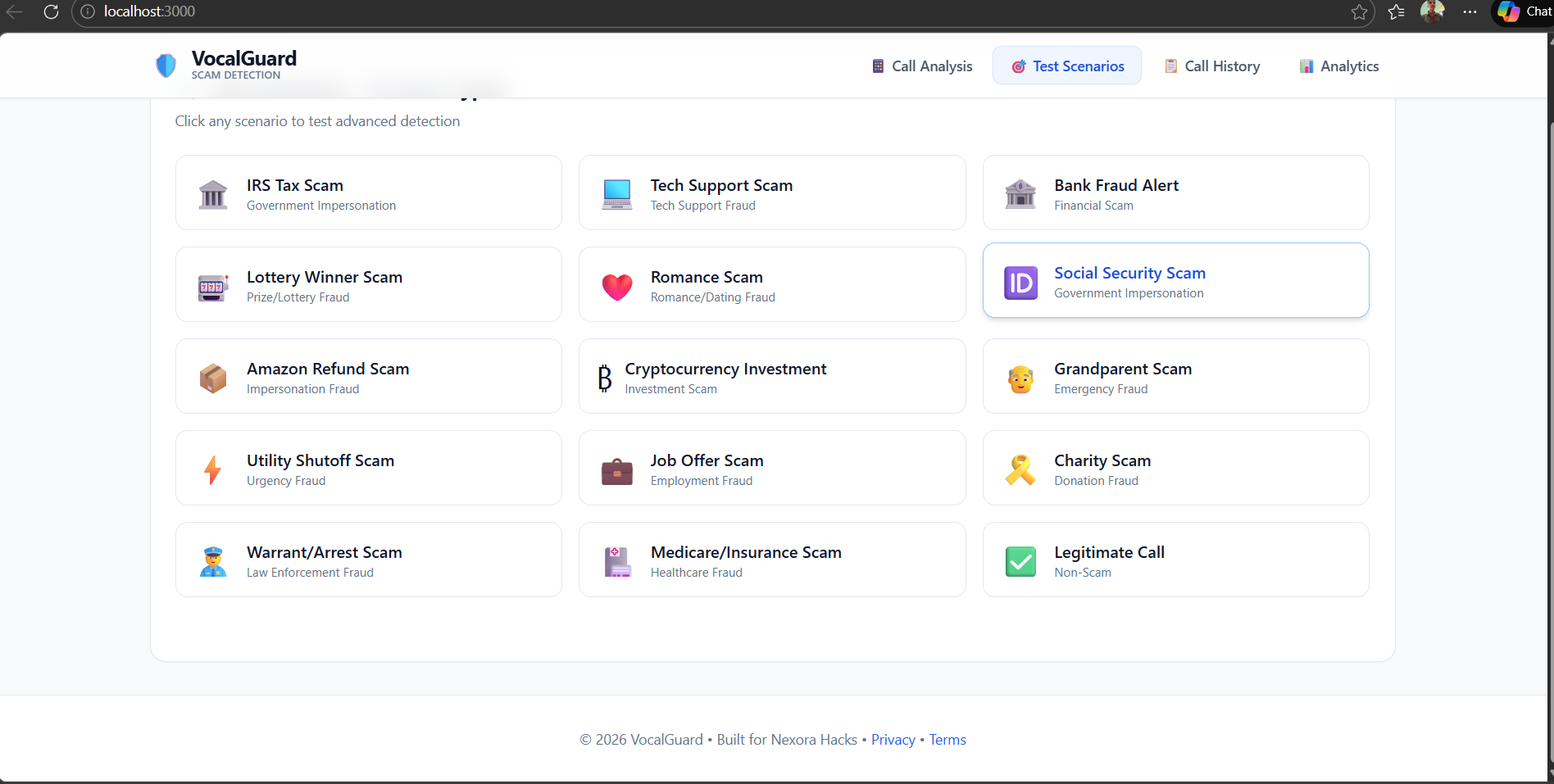
robust testing suite covering scenarios like IRS tax scams, tech support fraud, and romance scams, VocalGuard delivers 24/7 monitoring .
Inspiration
In an era where AI voice scams (vishing) are becoming increasingly sophisticated, vulnerable individuals—especially the elderly—are losing billions of dollars annually to financial fraud. We were inspired to build VocalGuard effectively "fight AI with AI," creating a protective shield that monitors calls in real-time to detect malicious intent, ultimately protecting people's voices and securing their hard-earned money.
What it does VocalGuard is an intelligent call protection system that acts as a real-time guardian during phone conversations.
Real-time Call Analysis: Instantly transcribes and analyzes conversation patterns to identify potential threats. Dynamic Risk Scoring: Assigns a live risk score (0-100%) to every call using advanced algorithms that detect specific scam archetypes like romance scams, IRS impersonation, and tech support fraud. Proactive Warnings: Automatically generates audio warnings to alert the user if a scam is detected (e.g., "High Risk Scam Detected: Pressure Tactics"). Auto-Disconnect: Can automatically terminate calls that exceed a critical risk threshold to prevent immediate financial harm. Caller Intelligence: Checks numbers against a community-sourced reputation database and detects potential spoofing attempts. How we built it We built VocalGuard using a modern, scalable tech stack designed for speed and reliability:
Frontend: Built with Vue.js 3 and Tailwind CSS to create a premium, responsive, and accessible user interface that provides clear visual feedback. Backend: A robust Python Flask API that handles real-time data processing. AI & ML Integration: OpenAI GPT-4o-mini: For deep semantic analysis of call transcripts to understand context and intent. ElevenLabs API: To generate realistic, real-time audio warnings that can be played back to the user during a call. Custom algorithms for keyword spotting, PII redaction (protecting sensitive data like SSNs), and spoofing detection. Database: Custom SQLite implementation for secure storage of call logs, user profiles, and threat intelligence data. Challenges we ran into Real-time Latency: Achieving near-zero latency for analysis was critical. Balancing deep analysis (via LLMs) with the need for instant feedback required optimizing our API calls and implemented efficient caching strategies. False Positives: distinguishing between a legitimate urgent call (e.g., from a family member) and a "grandparent scam" was difficult. We had to fine-tune our scoring weights and add a "Caller Reputation" layer to improve accuracy. Handling Sensitive Data: Ensuring that personal information (like credit card numbers mentioned in a call) was redacted locally before any storage or display was a top priority for privacy. Accomplishments that we're proud of Integrated Multi-Modal AI: Successfully combining transcription, semantic analysis, and text-to-speech generation into a single seamless flow. User-Centric Design: Creating a "Stats Dashboard" and "Call Screen" that are intuitive enough for non-technical users while providing powerful insights. The "0ms" Goal: Optimizing our pipeline to process threats as they happen, rather than after the call has ended. What we learned The sophistication of modern scams: Researching the various scripts used by scammers (romance, utility, investment) revealed just how structured and psychological these attacks are. Privacy is paramount: We learned that users want protection but not at the cost of their privacy, leading us to implement strict PII redaction. Frontend-Backend Synergy: The importance of keeping the frontend state perfectly synced with backend risk assessments to provide immediate visual cues (like the screen turning red). What's next for VocalGuard Mobile App Integration: Porting the core logic to a native mobile app (iOS/Android) to intercept actual carrier calls. Voice Biometrics: Implementing "Voice Printing" to recognize known scammers or trusted contacts instantly by their voice alone. Carrier Integration: Partnering with telecom providers to apply VocalGuard's threat intelligence at the network level.


Log in or sign up for Devpost to join the conversation.