IMPORTANT
On repl.it, the word's practiced list is global; however once hosted properly, the website will be updated to store that locally.
Inspiration
After seeing people who struggle with learning new words and practicing the ones they know in the English language, we thought about making a website that streamlines this learning process in the easiest way possible.
What it does
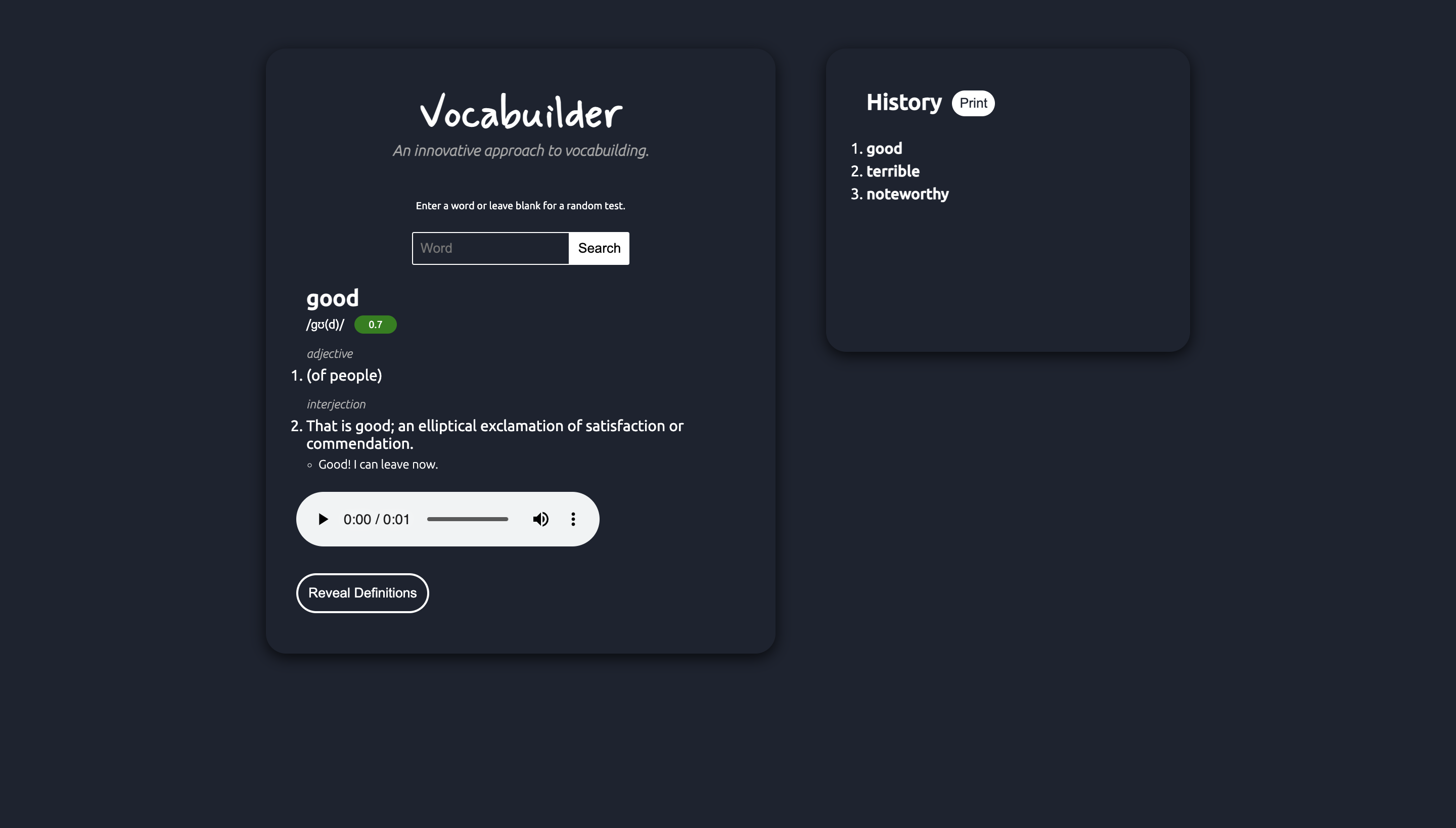
- The user can input a word they don't know or get a random word.
- The user must try to recollect that word's meaning.
- If they can't, they can view the meanings (initially hidden)
- They can print out the list of words they practiced that session including the definitions.
- The website provides phonetics, sentiment of the word (how positive or negative is the word), audio of how the word is pronounced, and part of speech of the word.
How we built it
- Server: Flask (Python)
- Frontend: HTML, CSS, and JS
- Sentiment Analysis: Python
Challenges we ran into
- Getting the API information to format properly.
- Sentiment analysis not working properly.
- Make the list printable without the other elements showing.
- Handling user input.
Accomplishments that we're proud of
- We are able to give the user lots of information regarding the word they want particularly the sentiment, phonetics, and audio files.
- A learning feature that hides the definitions on load.
- Printable list feature.
What we learned
- How to use REST APIs to get information and display them properly.
- How to make appealing UIs.
- How to conduct sentiment analysis.
- How to print select elements from a webpage.
What's next for Vocabuilder
- User registration system to track analytics over time.
- Some parts of the API are not complete (as its a free service provided by someone), so we plan to figure out how to add phonetics and audio files for all the words.
- More in-depth learning features such as flash cards, using AI to recommend words and deciding the pattern of practice, etc.

Log in or sign up for Devpost to join the conversation.