-
-
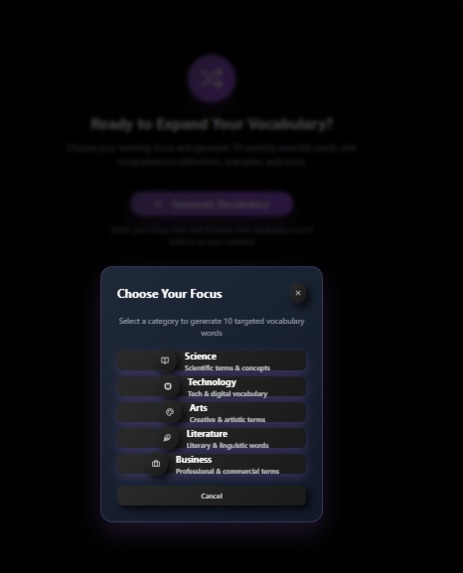
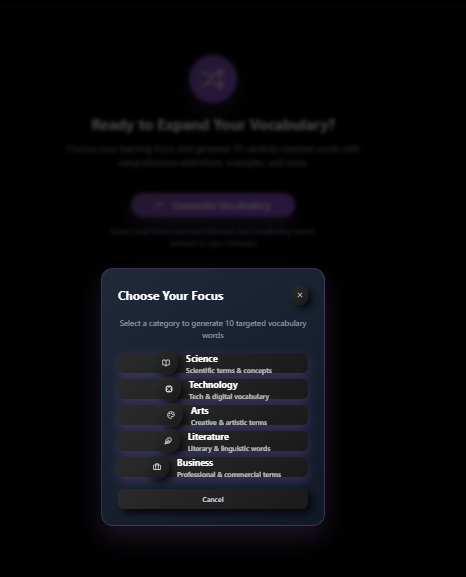
categories to choose from the type of words you want to learn
-
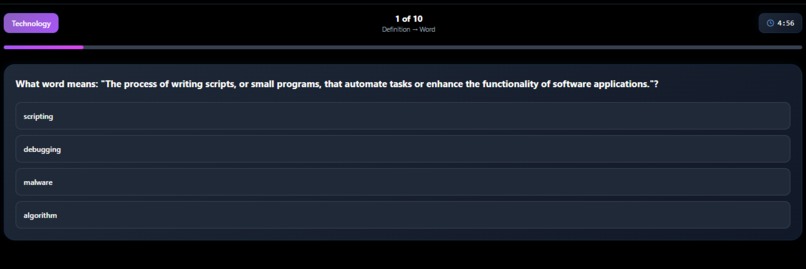
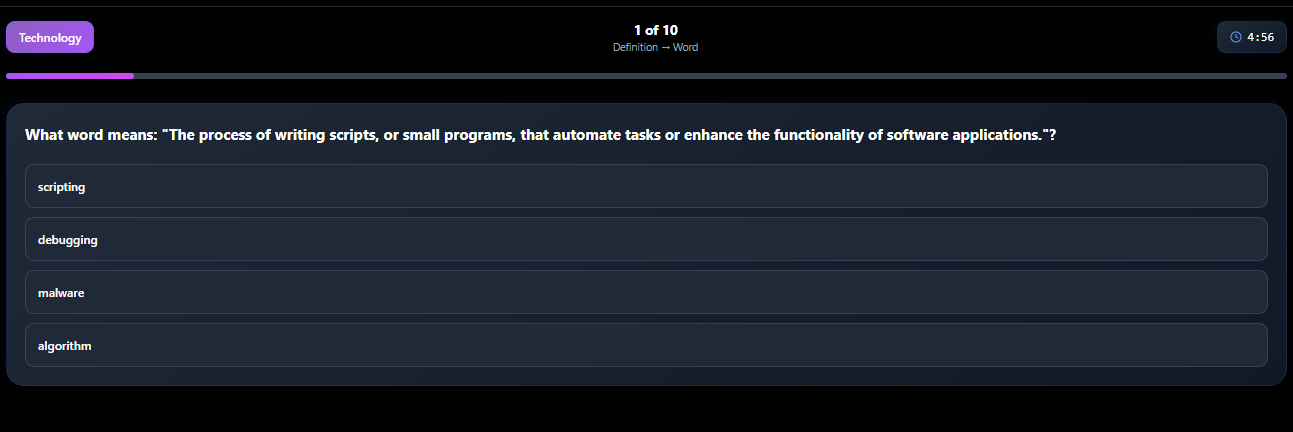
This is how test is taken
-
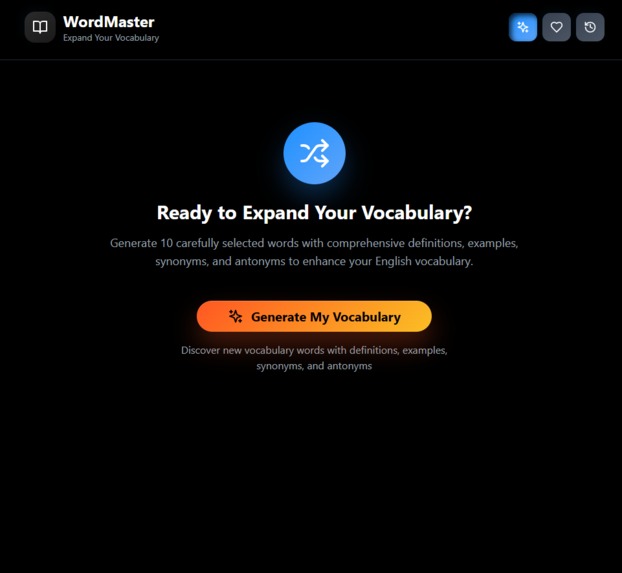
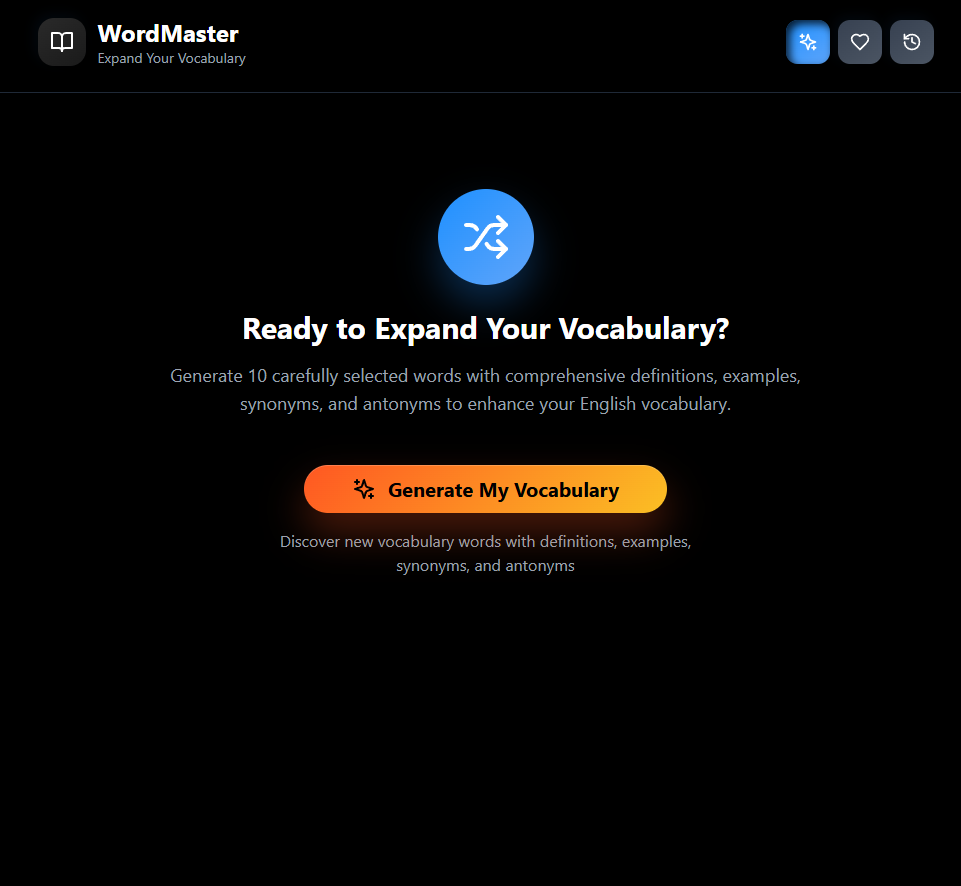
Dashboard /starting screen of the application
-
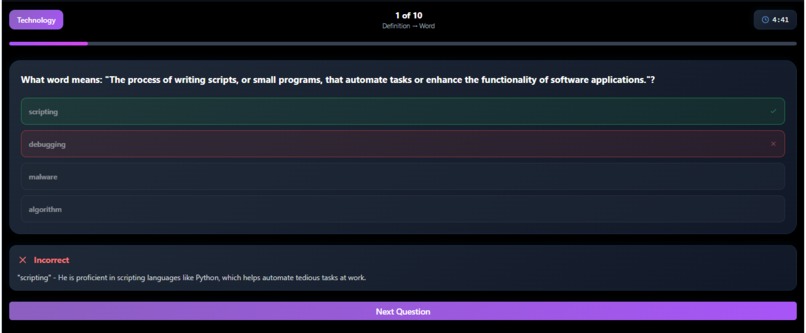
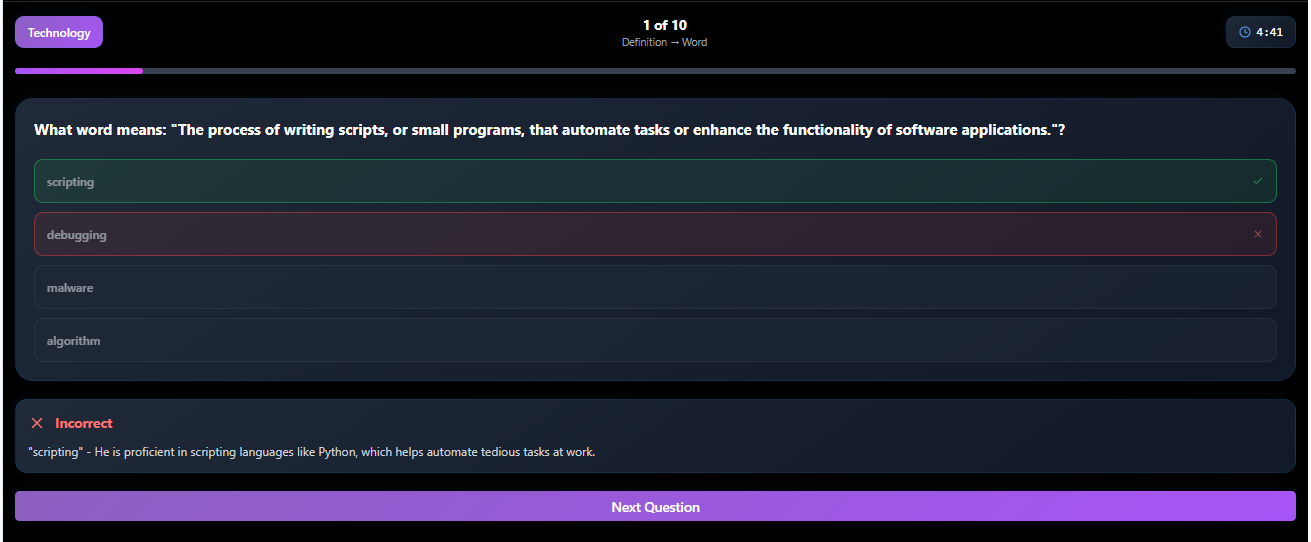
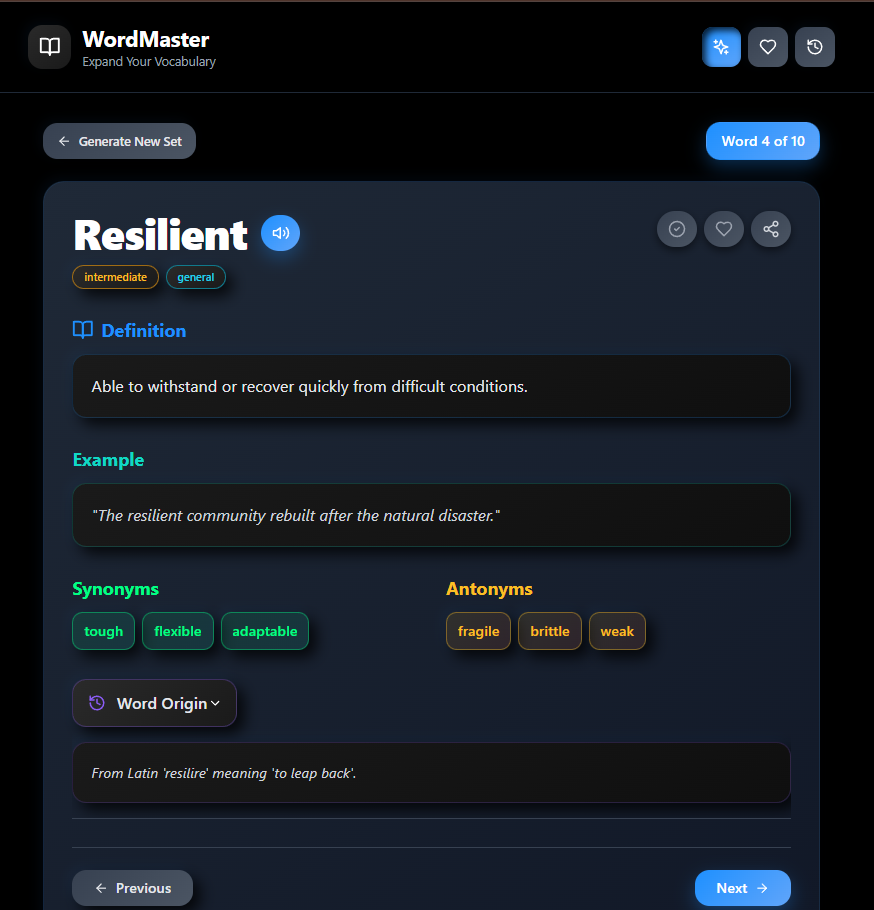
this is how individual word can learned by seeing mistakes at the same time
-
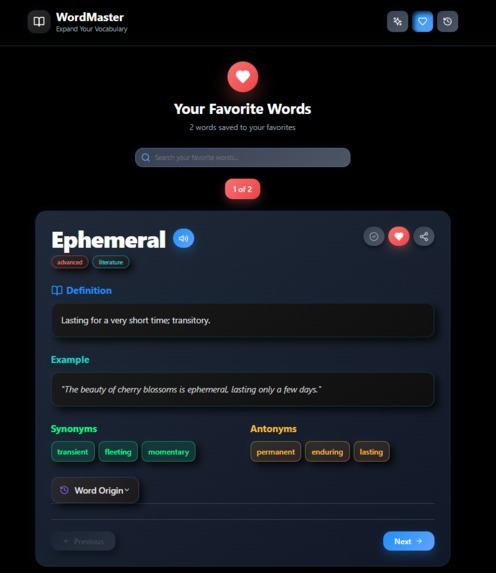
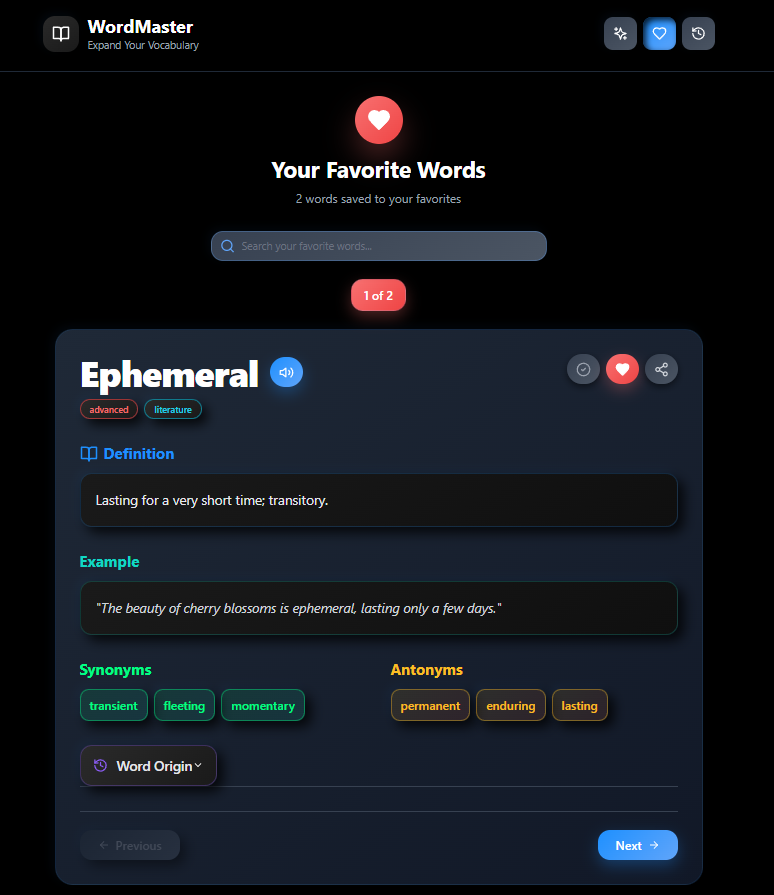
The section of Favourities / loved words
-
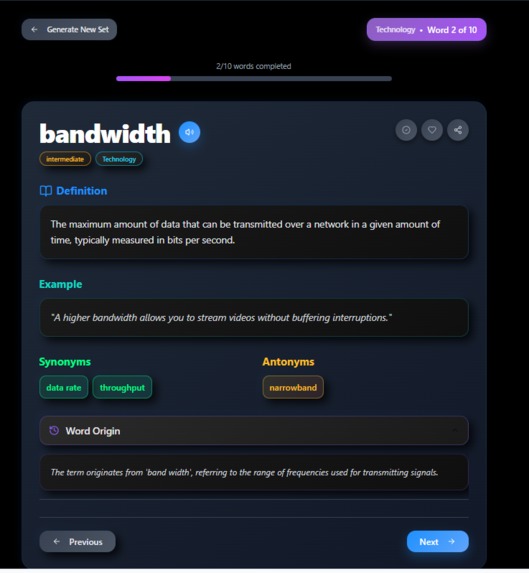
Words can be learned by many ways
-
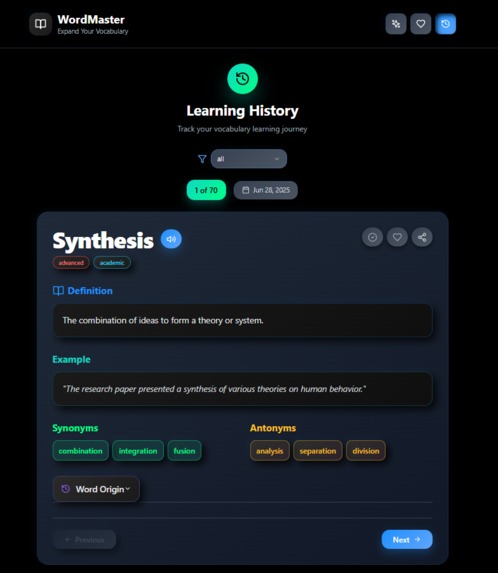
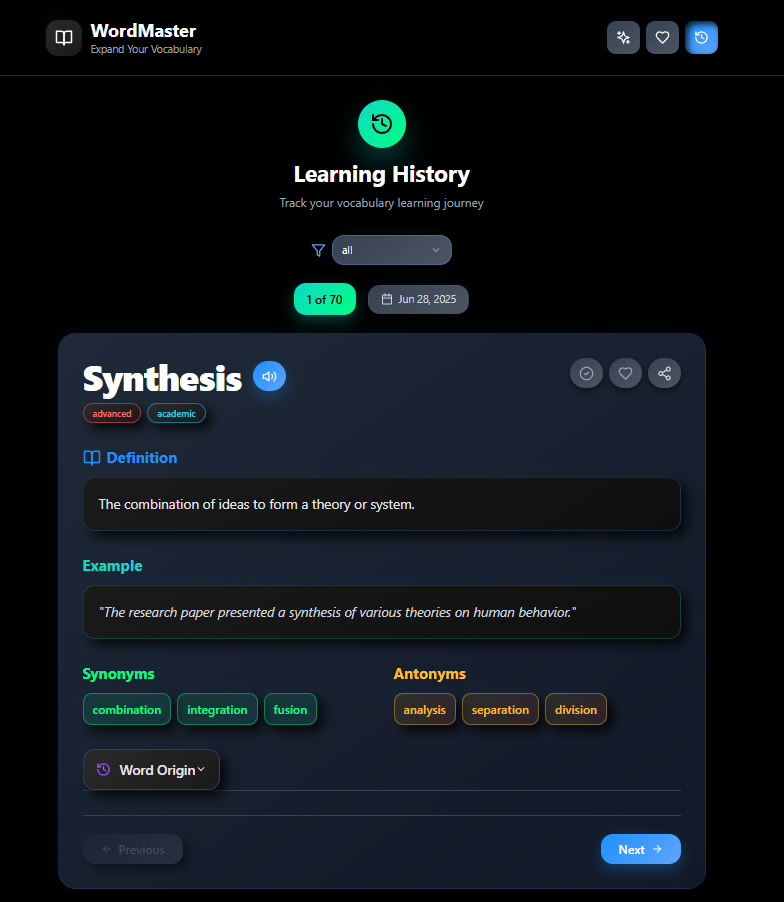
Words in history can check those out for revision and repetativ learning
-
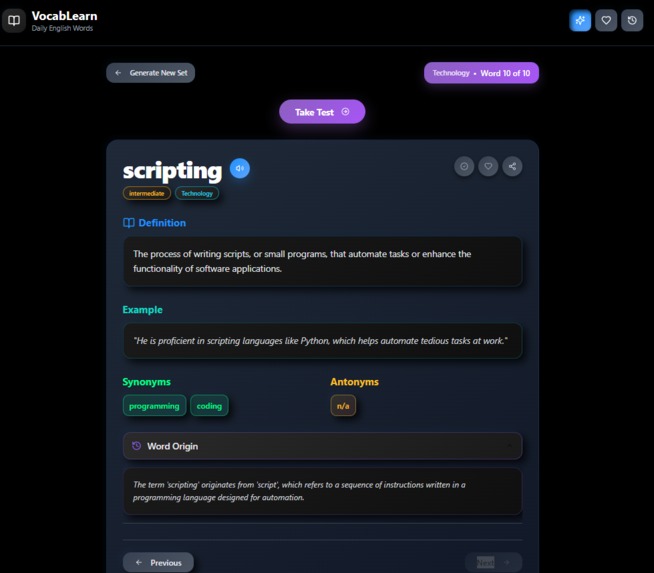
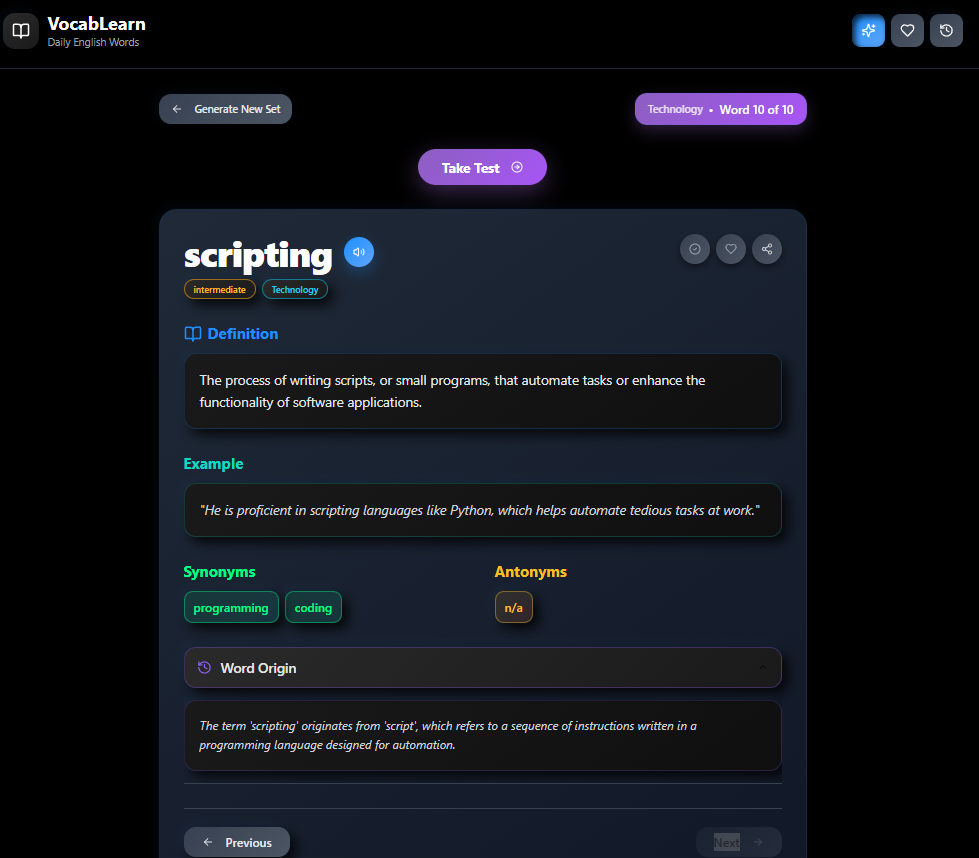
This is how after learning all words the recording button of words is transformed into take a test button
-
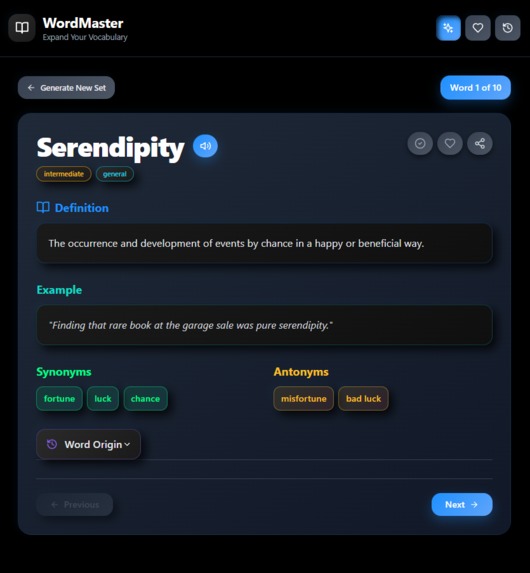
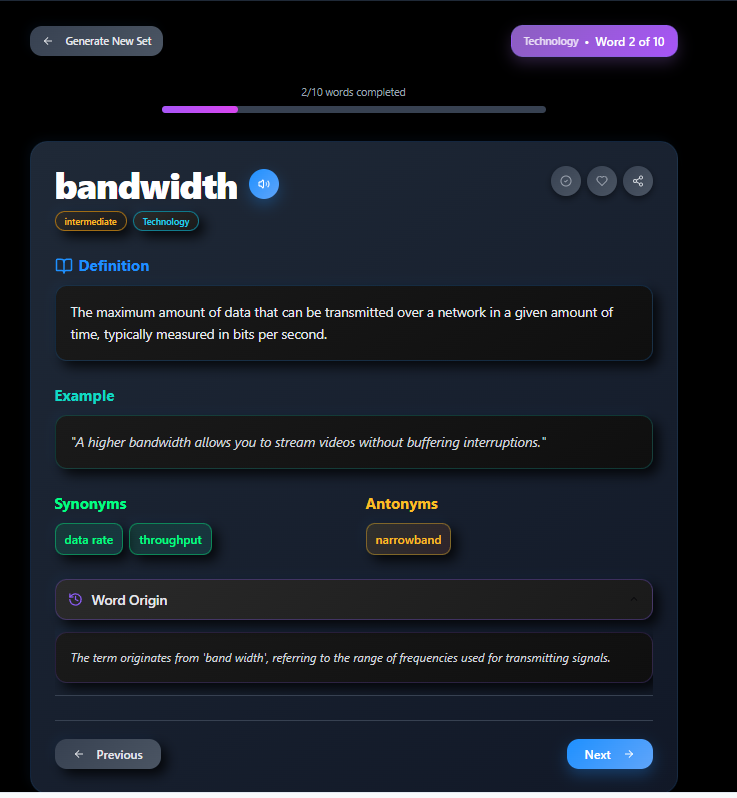
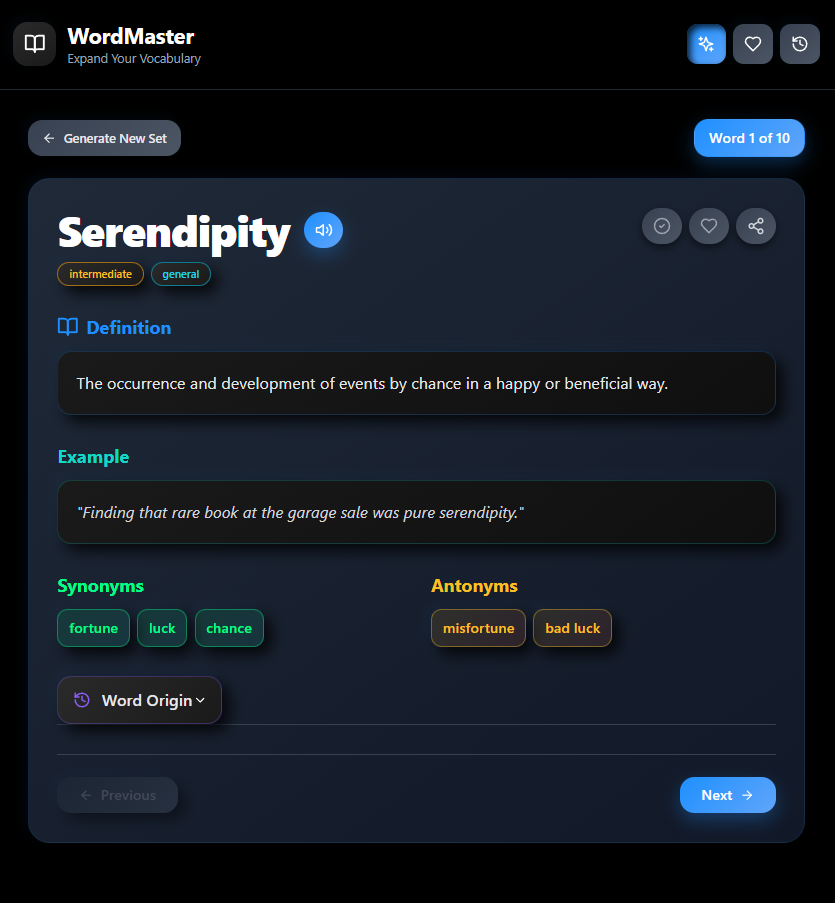
Words are shown to user like this
-
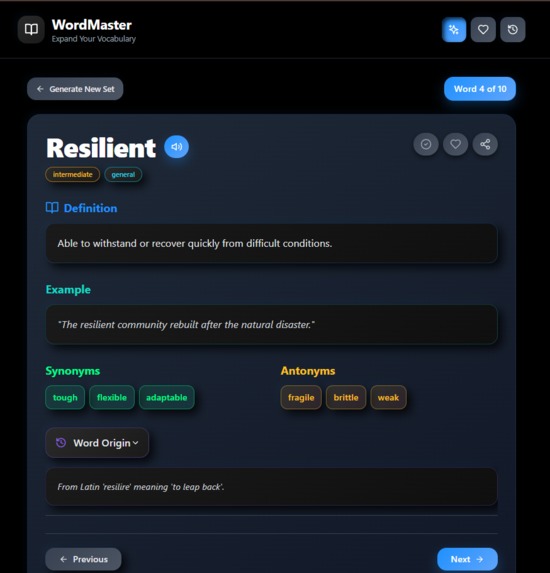
you can also check the origin of the word
-
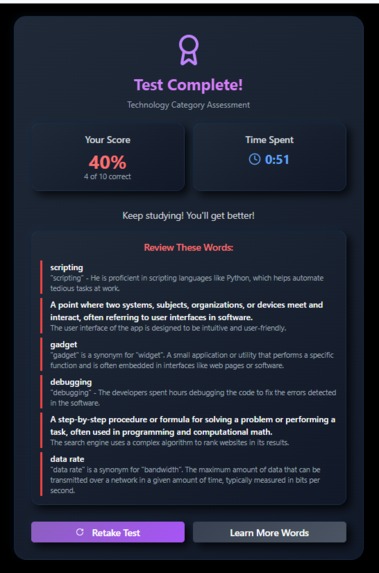
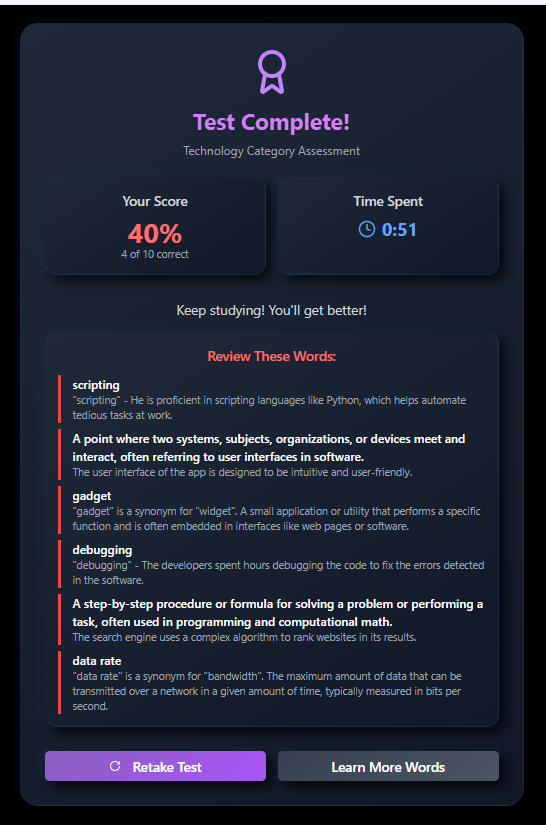
Results based on the test from here user can relearn or tetake the test
Inspiration
VocabLearn/Wordmaster aims to personalize word learning journeys based on each user's level, profession, and usage frequency.The project was born from a simple question: "Why do we forget words we once learned, and how can we fix that?" We realized that most vocabulary apps fail to connect the word to the learner’s world — so we decided to fix that. Vocablearn== wordmaster; bool true;
What it does
VocabLearn is an AI-powered vocabulary learning app that helps users learn, retain, and use words effectively in real-life contexts.
How we built it
VocabLearn was built using Bolt
Challenges we ran into
🚧 Challenges We Ran Into Building VocabLearn came with its share of complex challenges: 🧠 Personalization Logic Crafting a dynamic recommendation system that could tailor vocabulary based on profession, interest, and skill level without overwhelming the user was a major hurdle. 🌐 Contextual Content Curation Pulling real-life examples (from YouTube, articles, etc.) and ensuring they were appropriate, accurate, and meaningful required advanced NLP filtering and moderation logic. 🧪 Memory Optimization Tuning our spaced repetition system to balance between over-learning and under-retention took several iterations and user trials. 📱 Cross-Platform UI Consistency Ensuring that animations, custom components, and layouts worked smoothly across both Android and iOS using Flutter pushed our UI/UX boundaries. 🔐 Backend Security & Performance Bolt made things faster, but implementing role-based access, real-time updates, and scaling the API for future growth demanded solid backend architectural planning.
Accomplishments that we're proud of
🎉 Delivered a fully functional MVP that works seamlessly across platforms
📚 Successfully integrated AI-based word relevance engine and spaced repetition learning model
📈 Achieved high user engagement during testing through gamification and intelligent progress tracking
🧩 Built a smart, real-world context engine that pulls in usable, real examples from media
🔐 Created a secure, modular backend using Bolt in record development time
What we learned
🚀 The power of contextual learning — people remember better when words are tied to what they see, hear, and do daily
🔍 How to implement semantic similarity models to adapt content dynamically
🎯 Importance of UX design in edtech — too much information can demotivate users; minimal, timely content works best
⚙️ How to leverage Bolt for rapid backend development and clean API design
🔗 The benefit of combining AI, NLP, and traditional memory techniques for educational impact
What's next for VOCABLEARN
VocaLearn is just getting started. Here's what we plan to roll out next:
🌍 Multilingual Support — enable users to learn vocabulary in other languages like Spanish, French, and Hindi
🤖 Voice Assistant Integration — practice speaking with an AI-powered voice trainer
🧪 Adaptive Difficulty Engine 2.0 — enhance the memory algorithm using reinforcement learning
📈 Performance Analytics for Learners — deep insights into vocabulary usage in real-life conversations (via WhatsApp, email scanning – with consent)
🌐 Community Feature — challenge friends, join vocab battles, and learn collaboratively
💼 Career-Aligned Vocab Tracks — learn words based on roles like Data Analyst, Product Manager, or Lawyer


Log in or sign up for Devpost to join the conversation.