-
-
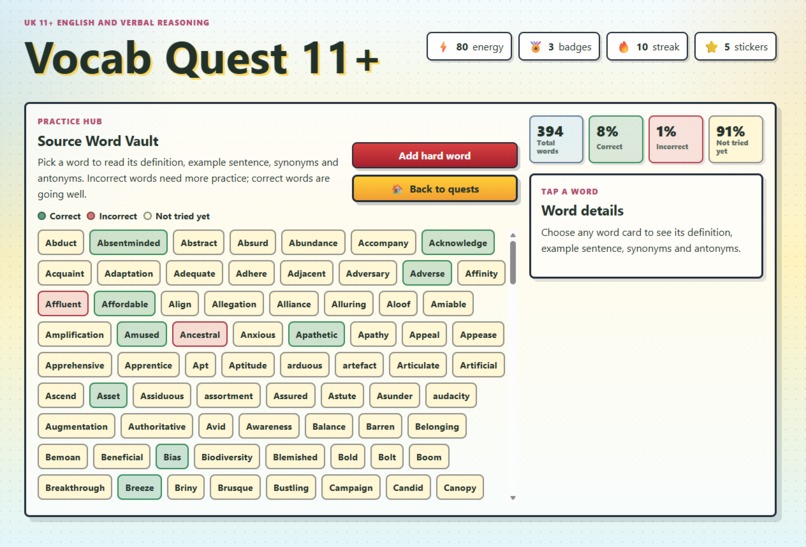
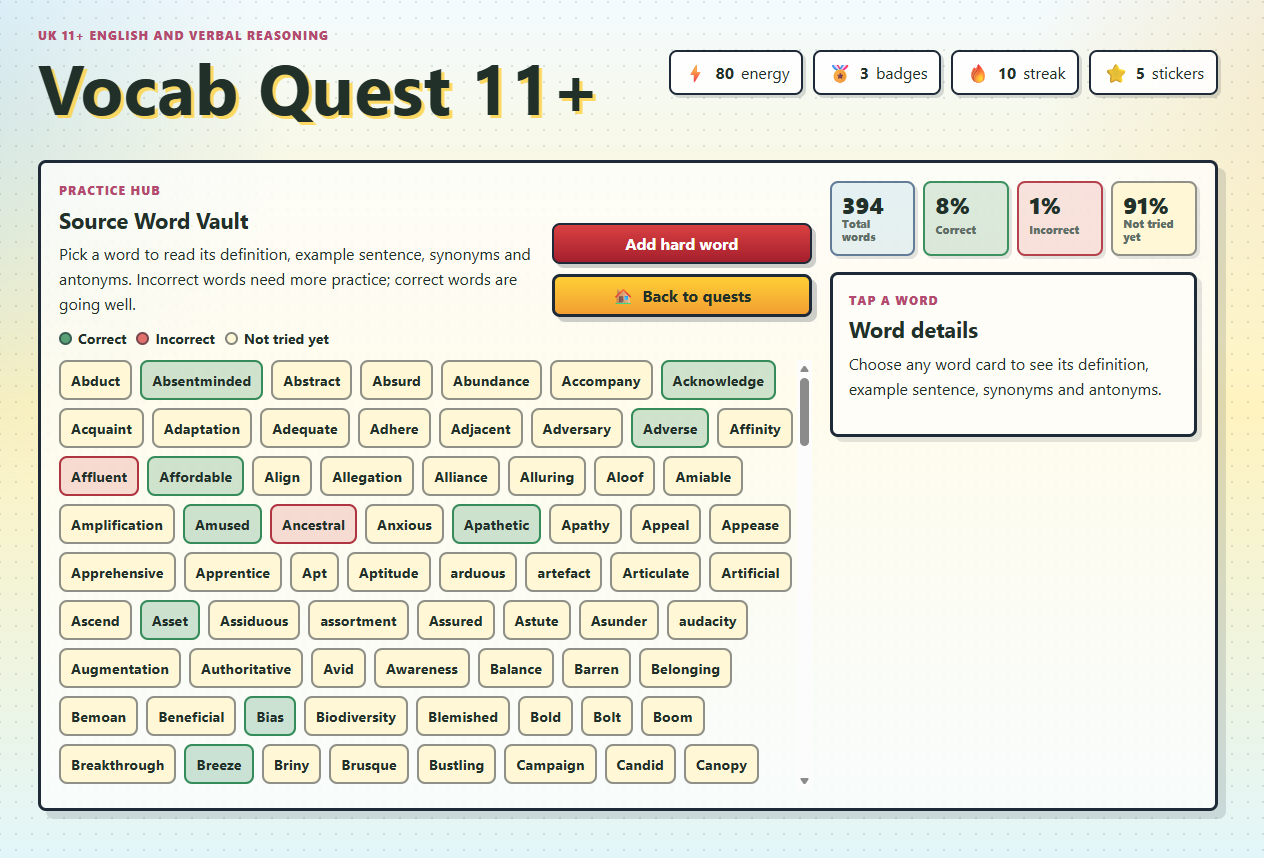
Vocab Vault
-
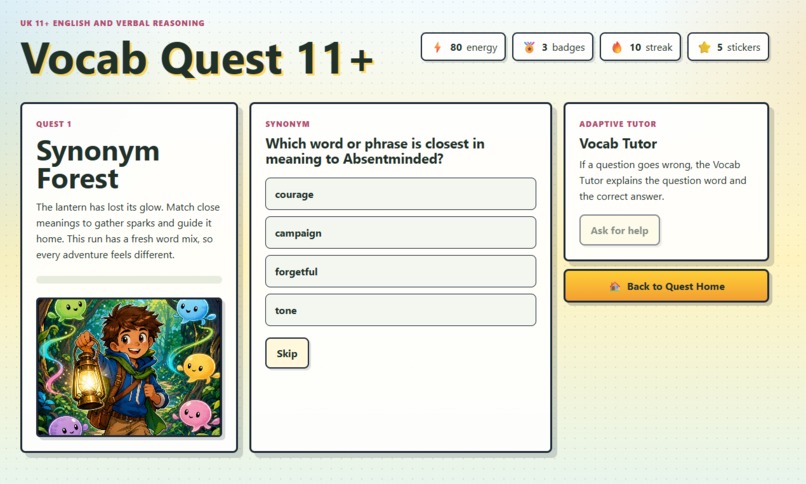
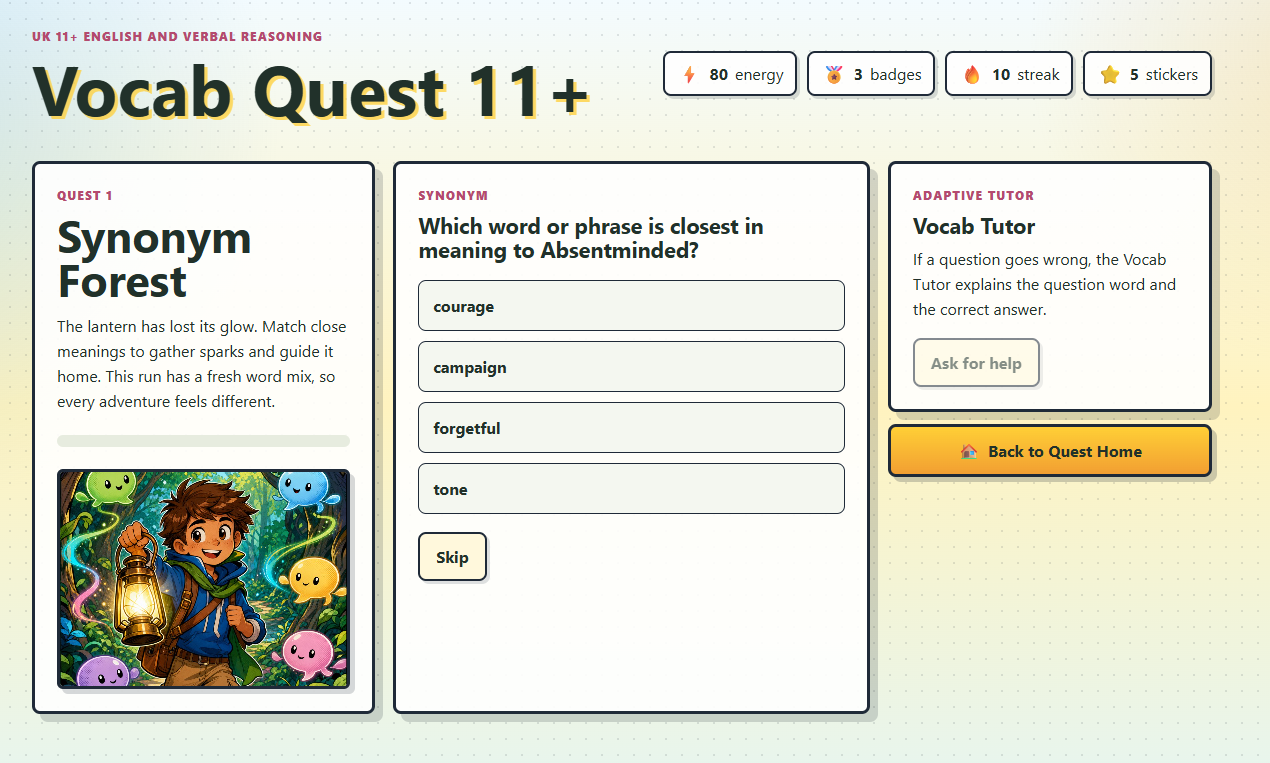
Quest 1: Synonyms
-
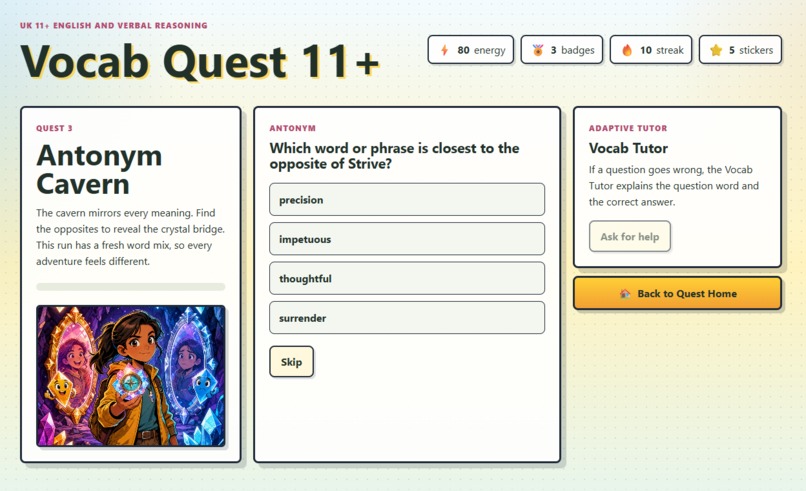
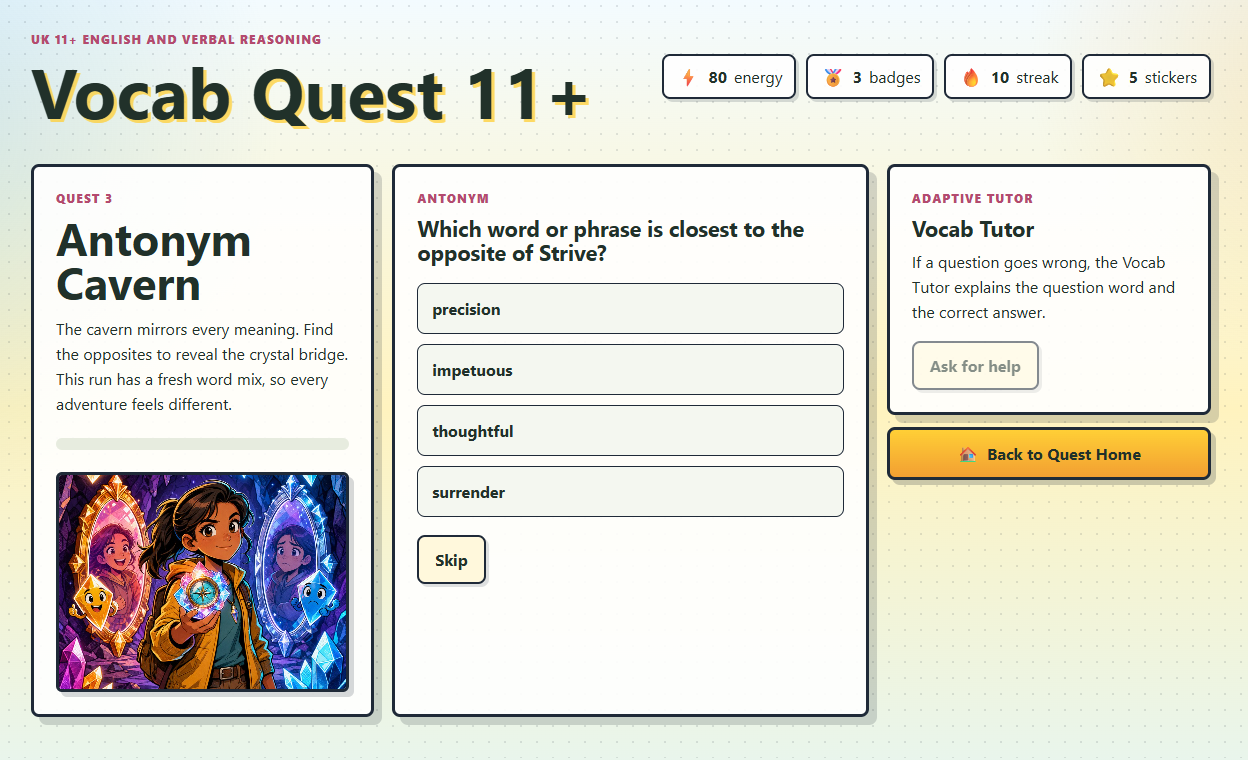
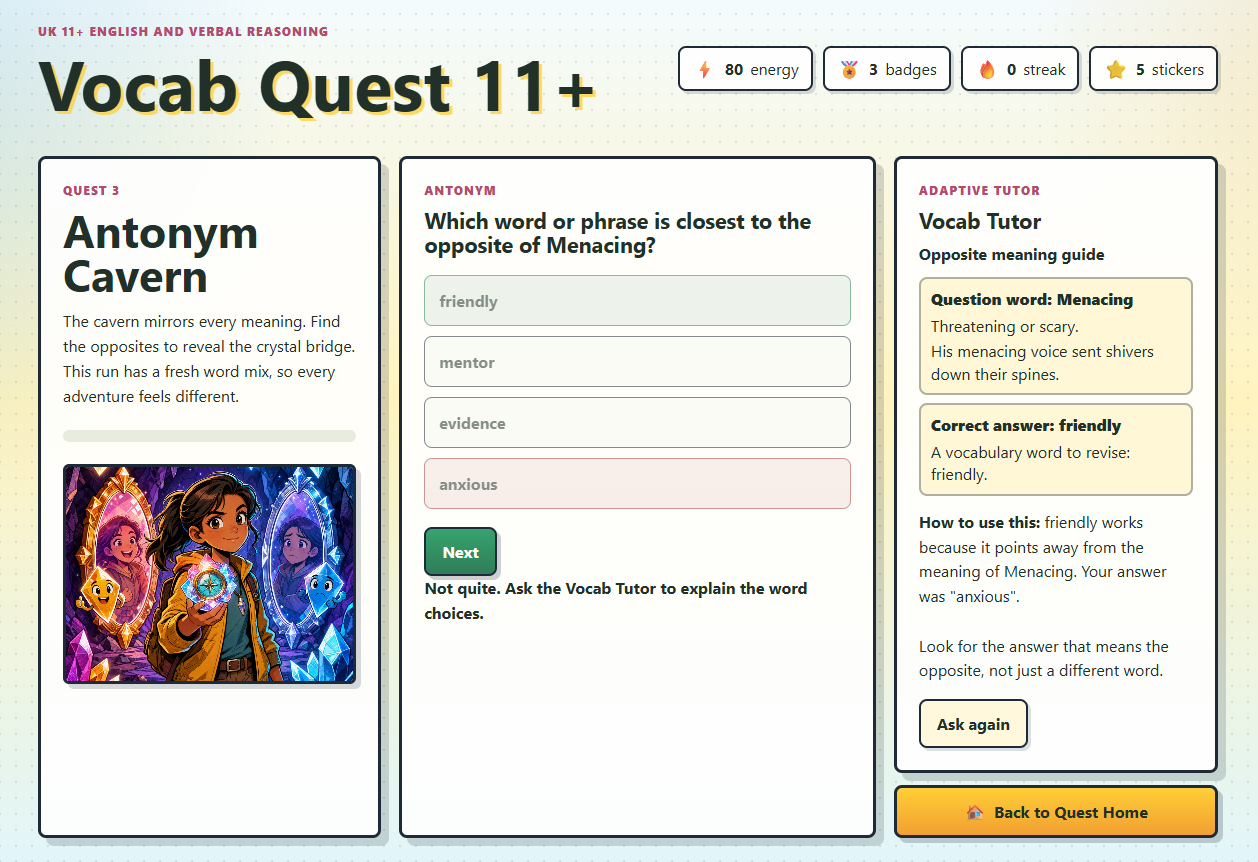
Quest 3: Antonyms
-
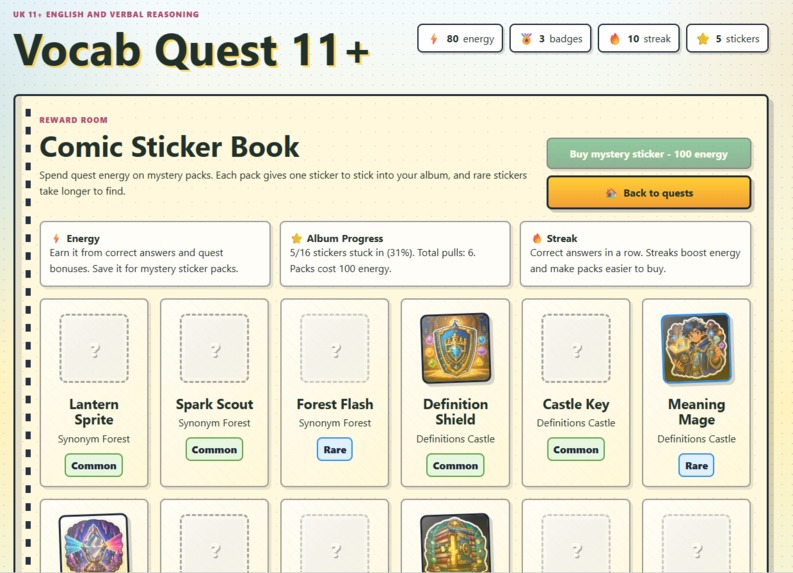
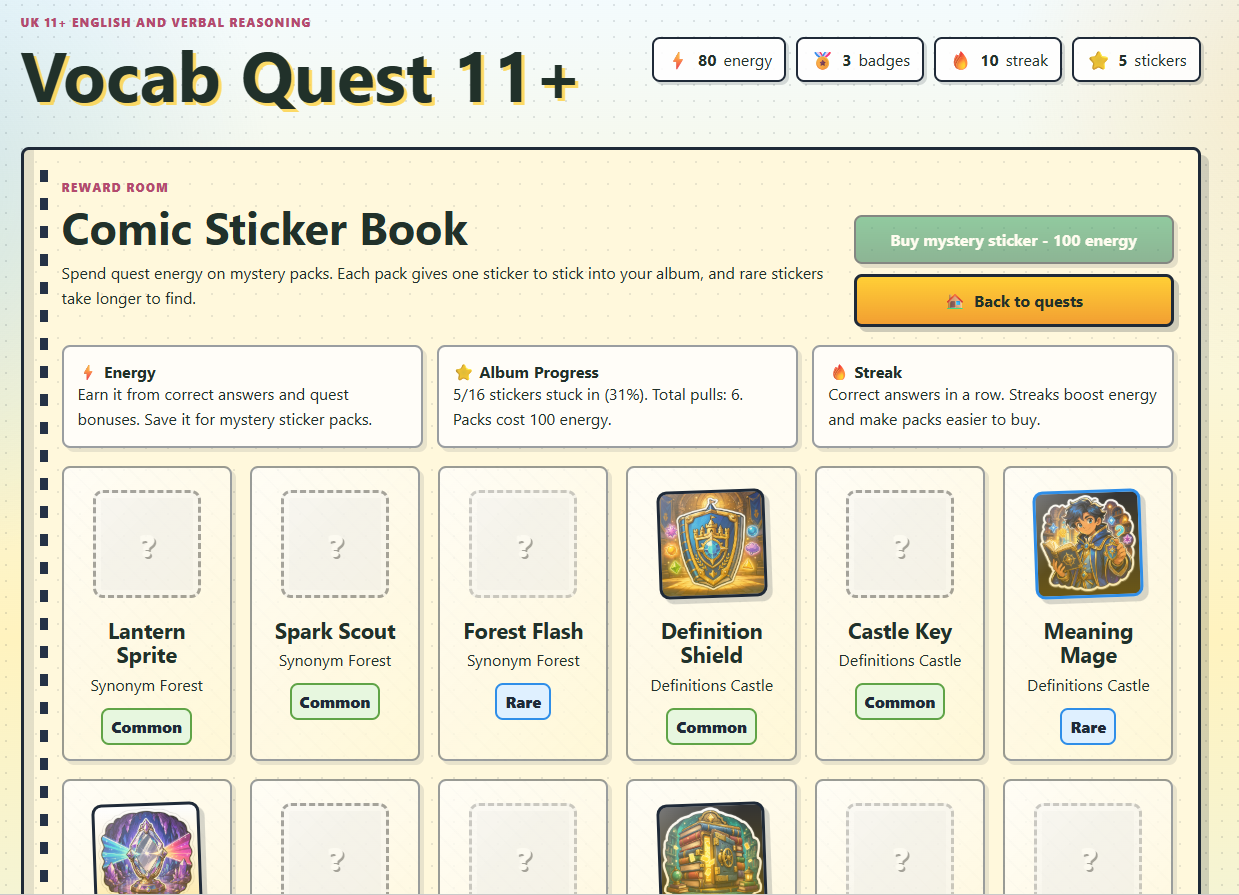
Rewards Sticker Book
-
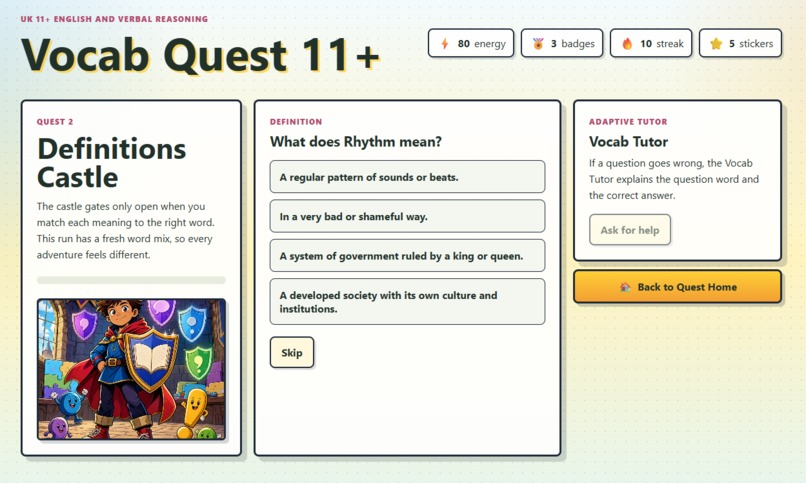
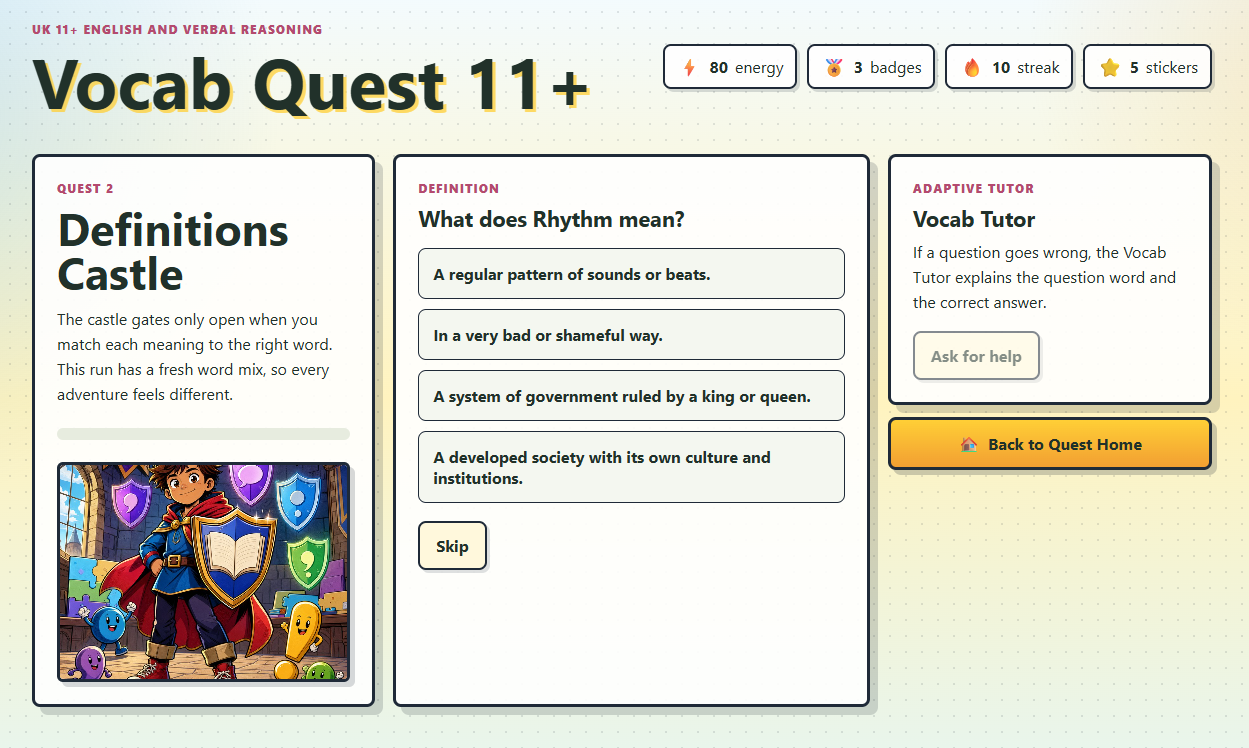
Quest 2: Definitions
-
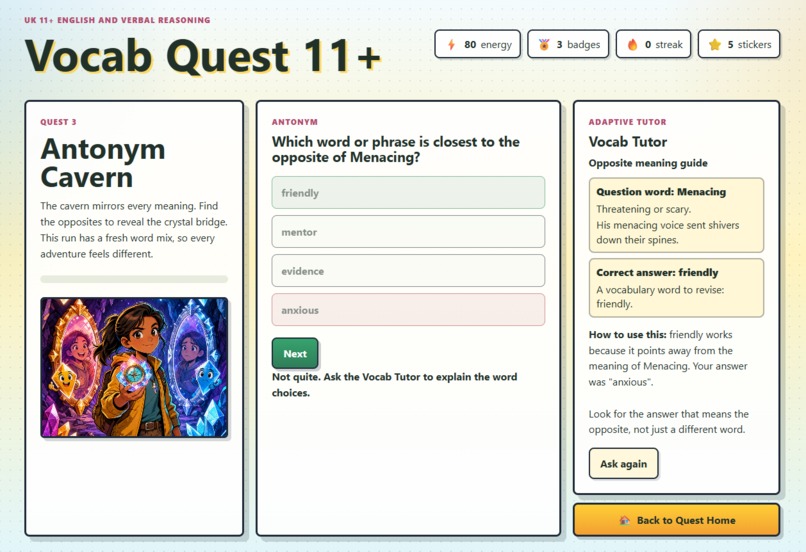
Vocab Tutor for wrong answers
-
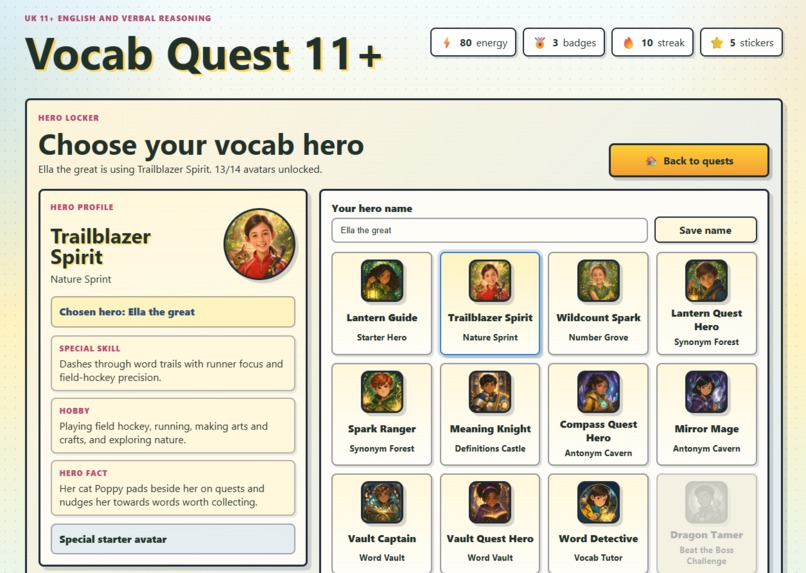
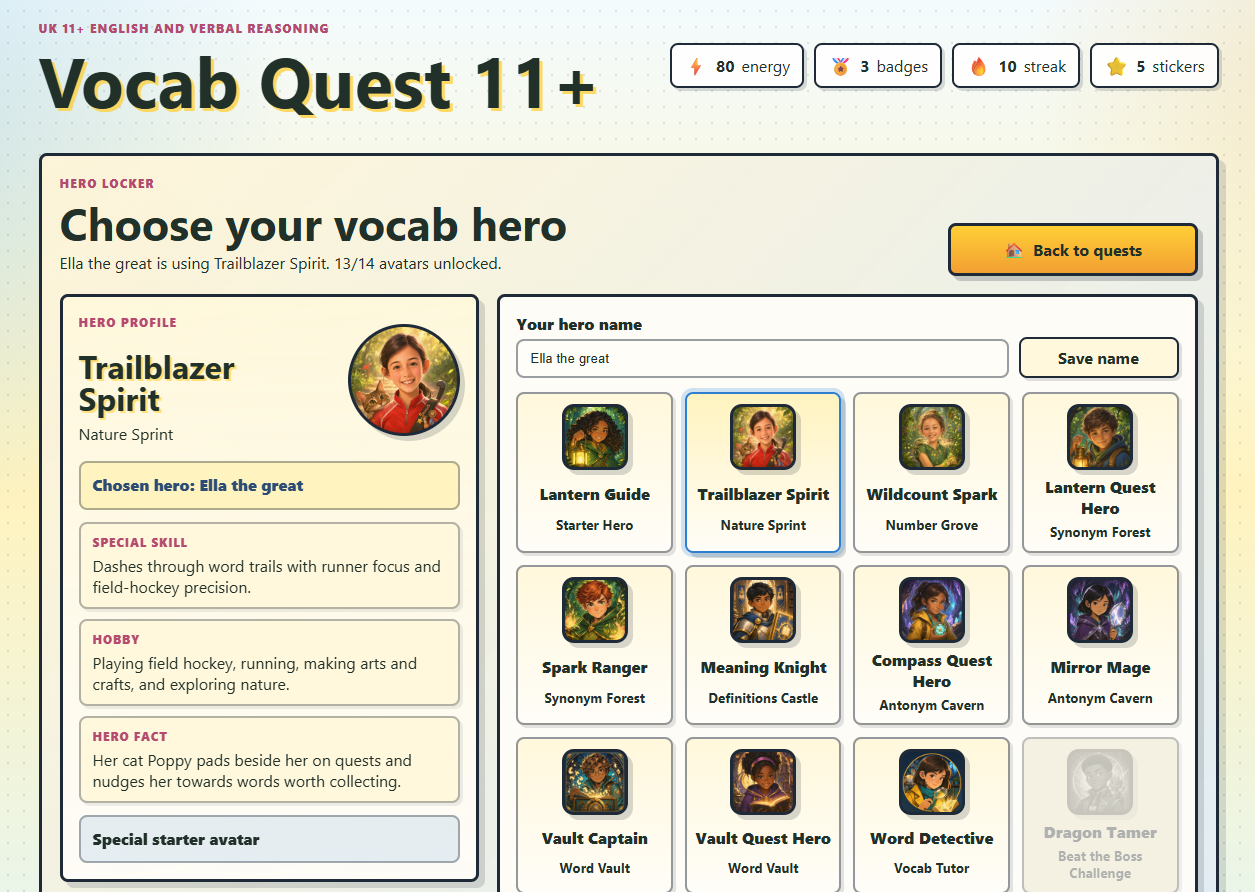
Avatar and Profile area
-
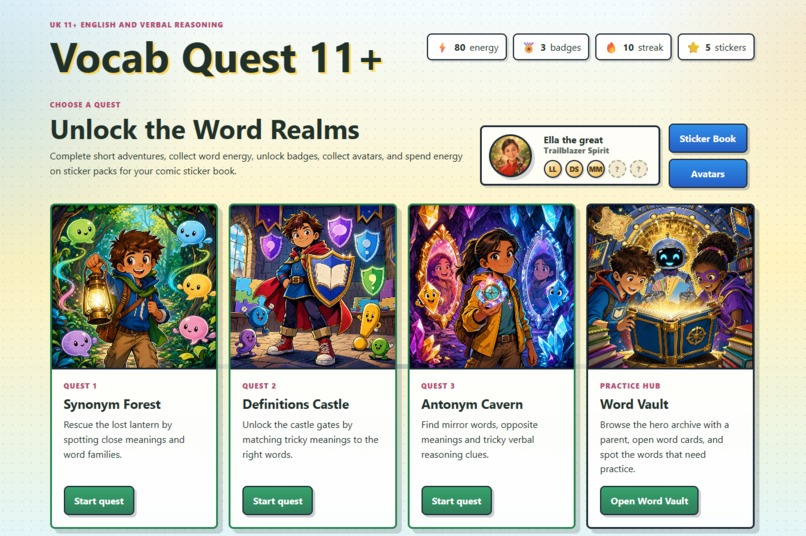
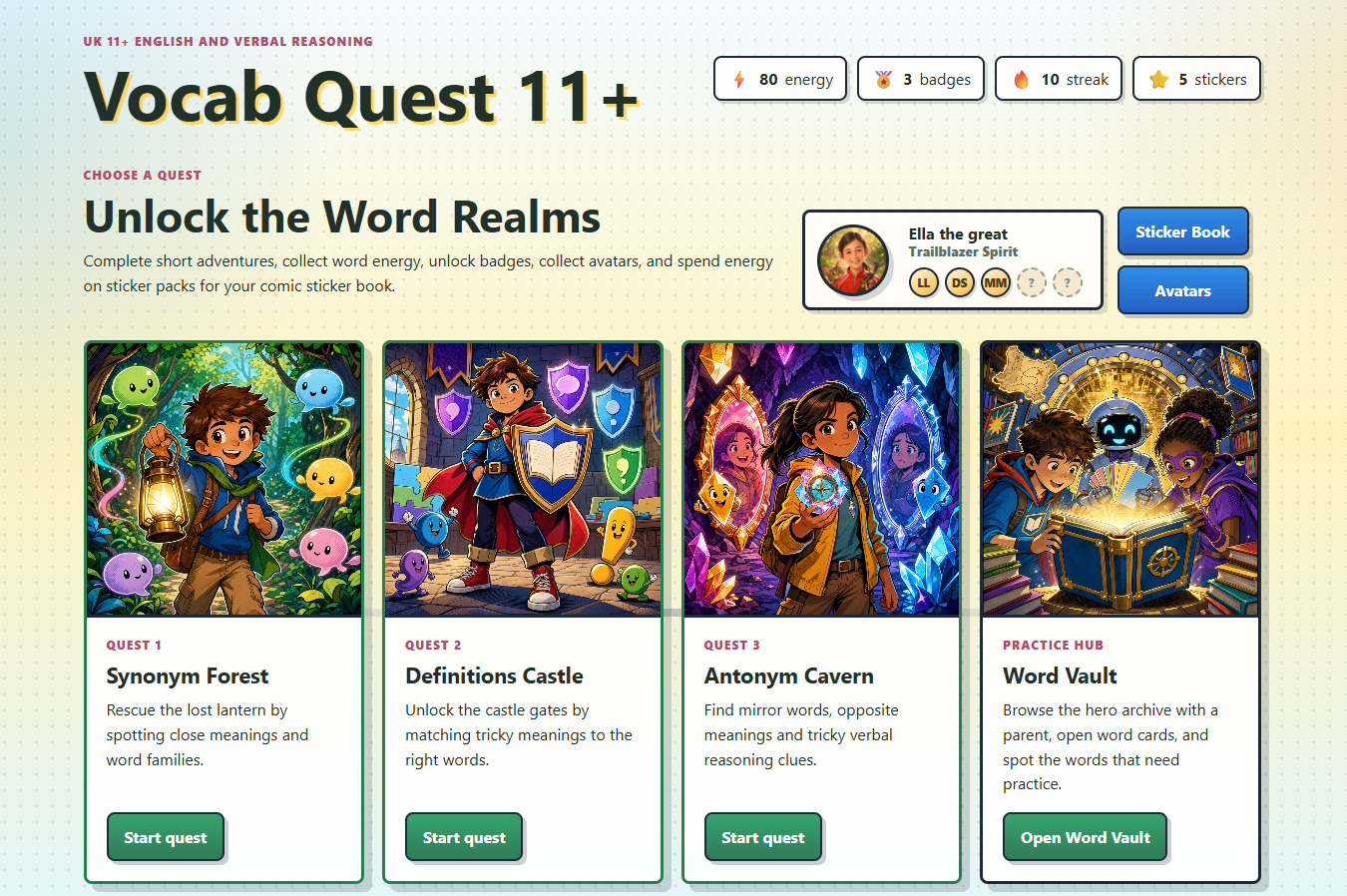
Home Screen
Inspiration
I built Vocab Quest 11+ because getting my ten-year-old daughter to build her vocabulary for the 11+ has been a very real personal challenge.
Vocabulary matters hugely for UK 11+ English and Verbal Reasoning, but it is hard to make it stick. Flash cards only get you so far, especially when the child has limited interest in sitting and drilling words. The usual advice to "read more" is valuable, but it is too slow and too indirect when you are trying to build exam-ready vocabulary in a focused way.
So I designed this game with my daughter, not just for her. I wanted it to feel like something she would actually choose to play: colourful, rewarding, and full of small goals such as energy, stickers, badges and progress. The best sign that the idea works is that she is genuinely keen to play it and collect the rewards, while still practising the vocabulary she needs.
The parent side matters just as much. Being able to add words she personally struggles with is a real game changer, because the game can keep adapting around what we discover through homework, tutoring and practice papers.
What it does
Vocab Quest 11+ is an adaptive browser-based learning game for children aged 9 to 11 preparing for UK 11+ English and Verbal Reasoning exams.
Players choose short adventure quests and answer vocabulary questions covering:
- definitions
- synonyms
- antonyms
Correct answers earn energy, streaks and progress rewards. Strong quest performance unlocks badges, and children can spend energy on sticker packs in a comic-style sticker book.
The game also includes a Word Vault, where children and parents can browse vocabulary cards with definitions, examples, synonyms and antonyms. Parents can add "hard words" into the local word bank, so the app grows around the learner's actual needs rather than staying fixed.
When a child gets stuck, the AI tutor gives child-friendly support by explaining the vocabulary in the question and why the correct answer works.
How we built it
I built the project in one weekend with Codex/ChatGPT during OpenAI Build Week, using Codex to help turn a rough parent-and-child idea into a working app quickly. Codex helped shape the product structure, build the browser game, implement the quest flow, create the vocabulary challenge logic, manage saved progress, connect the local word bank, and prepare the README and submission materials. I am not a developer or in any way technical. I got a free 3-month licence for Codex at a Women in AI event focused on Codex, that I attended at the OpenAi office in London. I have been playing around with this and learning.
The app is built as a local web project with a Node.js server and browser front end. The vocabulary library is managed from an editable Excel word bank, which is converted into JSON for the game. That means the learning content is not locked inside the code, and a parent or tutor can keep expanding it over time using the in-app feature to add new words.
The OpenAI integration powers the adaptive tutor layer. When a learner answers incorrectly or skips a question, the server sends the relevant word, question, learner answer and correct answer to the configured OpenAI model. The model returns child-friendly feedback that supports learning without simply giving away the answer.
The app also works without an API key by falling back to deterministic local tutor feedback, so judges can still test the complete game loop.
Challenges we ran into
The biggest challenge was balancing fun with real educational value. I did not want to build a quiz with a few game graphics added on top. It had to feel motivating enough for a child to return to, while still doing the serious job of vocabulary practice.
Another challenge was making it useful for a real family situation. Children do not all struggle with the same words. The ability for a parent to add difficult words into the Word Vault was important because it makes the game much more personal and practical.
I also had to think carefully about the AI tutor. For an education project aimed at children, the feedback needs to be clear, safe and age-appropriate. It should explain mistakes and build confidence, but not simply hand over the answer. I tried a more complicated tutor to start but it didn't make sense across the various quests, so I simplified it - but really that's all it needed for the child to learn the word definitions and what was the correct answer and why.
Accomplishments that we're proud of
I am proud that Vocab Quest 11+ became a complete, runnable product experience in one weekend, built around normal family life and children's activities, rather than just a prototype. It includes a child-facing quest game, adaptive feedback, progress rewards, a parent-editable vocabulary source, a Word Vault, sticker collection, badges and clear setup instructions. It also has a number of improvements we could make.
I am especially proud that my daughter is actually using it. That has been the most useful test. If she wants to play, collect stickers and keep going, then the game has already solved one of the hardest parts of revision: getting started without it feeling like a battle.
What we learned
This project showed me how useful Codex can be for turning a practical idea into a working product - FAST, with no technical or developer experience.
Most importantly, I learned that a learning tool has to fit into real life. For us, that means short practice sessions, visible rewards, and the ability to add the words my daughter is actually finding difficult.
What's next for Vocab Quest 11+
Future versions could add:
- multiple child profiles, so siblings or classmates can switch between their own progress
- difficulty settings to make the game easier or harder
- easier vocabulary packs for younger children who start preparing before age 9
- larger curated 11+ vocabulary packs
- voice-based practice for spoken explanations
- richer analytics on vocabulary confidence over time
The longer-term goal is to make 11+ vocabulary practice feel less like revision and more like a daily learning adventure that adapts to each child and the words they find hardest with their parent or tutor.


Log in or sign up for Devpost to join the conversation.