-

Icon Mascot
-

Inspiration
Public speaking is often cited as a primary source of social anxiety, a challenge that is particularly prevalent within the engineering community. We recognized that while engineers possess brilliant ideas, the "soft skill" of delivery can often be a barrier to impact. We built Voca to bridge that gap, providing a safe, private space for engineers to refine their voices and transform their communication from functional to formidable.
What it does
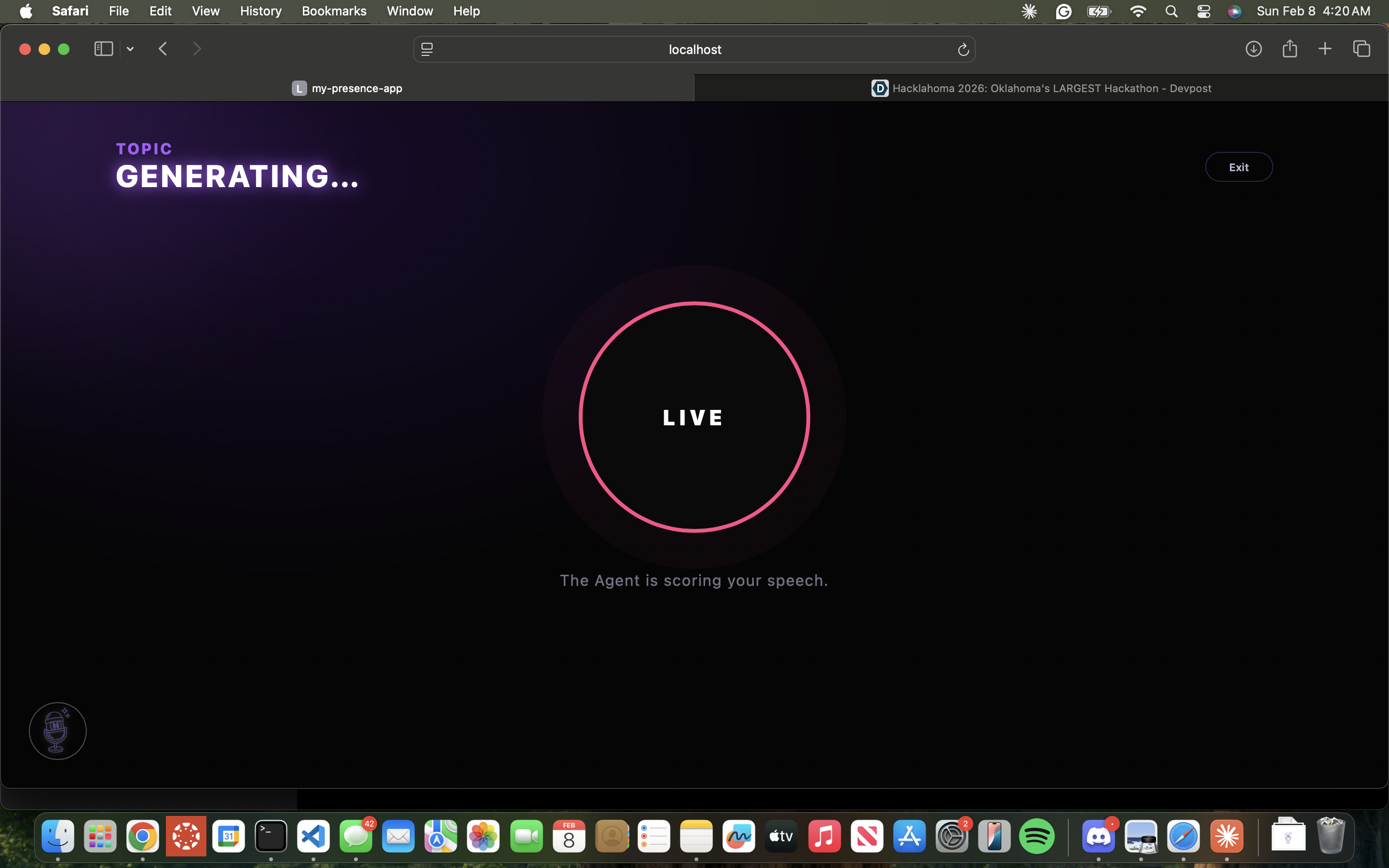
Voca is a high-performance vocal coaching platform that uses real-time AI to deconstruct your speech. By evaluating your delivery, it turns raw audio into a magnetic presence through instant, actionable feedback. The app analyzes your transcript, sentiment, and tone, offering specific critiques that help you identify verbal fillers, refine your pacing, and project confidence.
How we built it
The architecture of Voca is a synergy between a modern frontend and a robust AI backend:
Frontend: Built with React (JSX) and custom CSS, featuring a "Glassmorphism" aesthetic and a dynamic vertical frequency spine that visualizes the user's voice.
Backend: Developed in Python, hosting the core analytical engine.
The Bridge: We established a connection between the two layers via an API-driven "handshake." When a user records audio, the frontend "calls" the backend—much like a phone call—allowing the recording to be processed by the AI agent running on its own host for full functionality.
Challenges we ran into
System Integration: Merging the asynchronous nature of the frontend with the Python backend was a complex task. We currently solve this by orchestrating the program through two parallel terminals to ensure stable communication.
AI Orchestration: Tuning the agent, powered by the Google Gemini LLM, required significant prompt engineering to ensure the feedback was both "human-like" and technically accurate.
Audio Pipeline: Converting raw .wav voice files into a clean, machine-readable transcript that the AI could accurately score was a difficult hurdle in data processing and normalization.
Accomplishments that we're proud of
We are incredibly proud of the seamless integration of the AI agent within our web application. It doesn't just transcribe; it understands nuance. Furthermore, we take great pride in our UI/UX design, specifically the interactive "wavelength" animations that make a technical tool feel like a premium, living experience.
What we learned
This project was a deep dive into the world of Generative AI. We learned how to implement and leverage AI agents, moving beyond simple chatbots to create an interactive mentor. We also gained significant experience in full-stack architecture, specifically in managing real-time data flow between disparate tech stacks.
What's next for Voca
Cloud Deployment: Migrating from a dual-terminal local environment to a unified cloud-hosted solution.
Visual Analytics: Integrating real-time pitch tracking and "pacing" progress bars to give users visual targets during their speech.
Scenario Training: Adding specific "Context Modes" like "The Boardroom," "The First Date," or "The Stand-up Meeting" to tailor the AI's critique to specific social pressures.

Log in or sign up for Devpost to join the conversation.