-
-
ScopeLint — checks every pull request against your statement of work, automatically. Built with Codex and GPT-5.6 Terra.
-
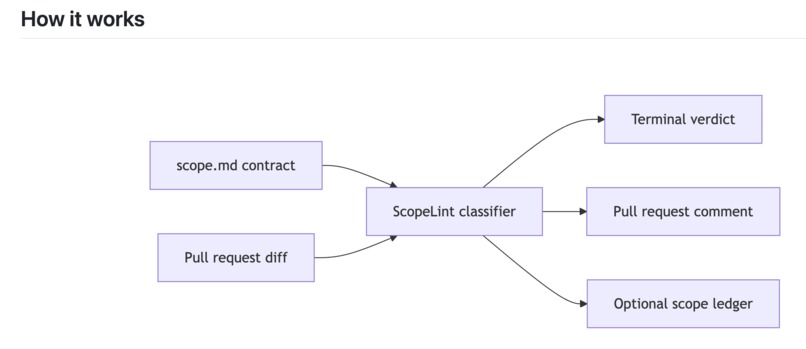
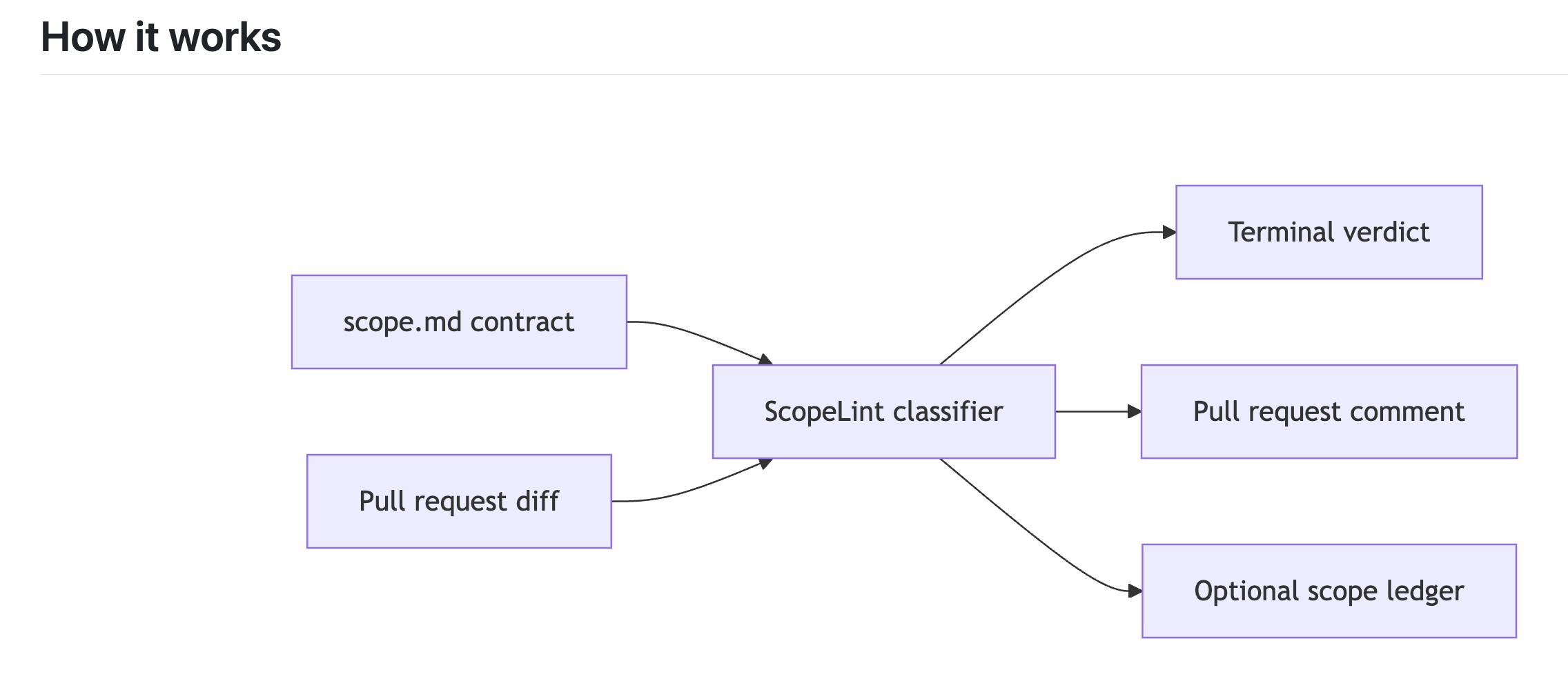
How ScopeLint works: every pull request is checked against scope.md by GPT-5.6, then a verdict and change order are posted automatically.
-
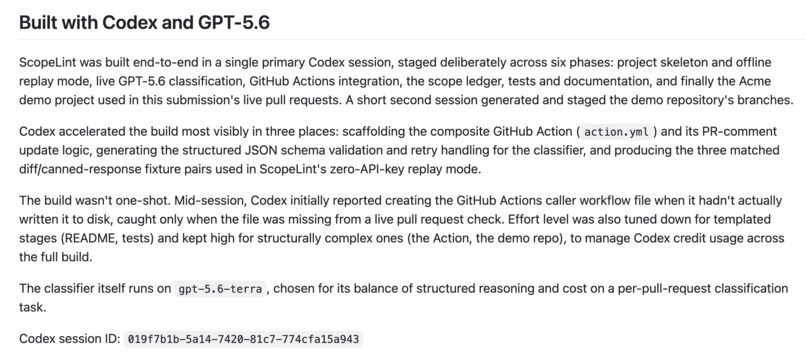
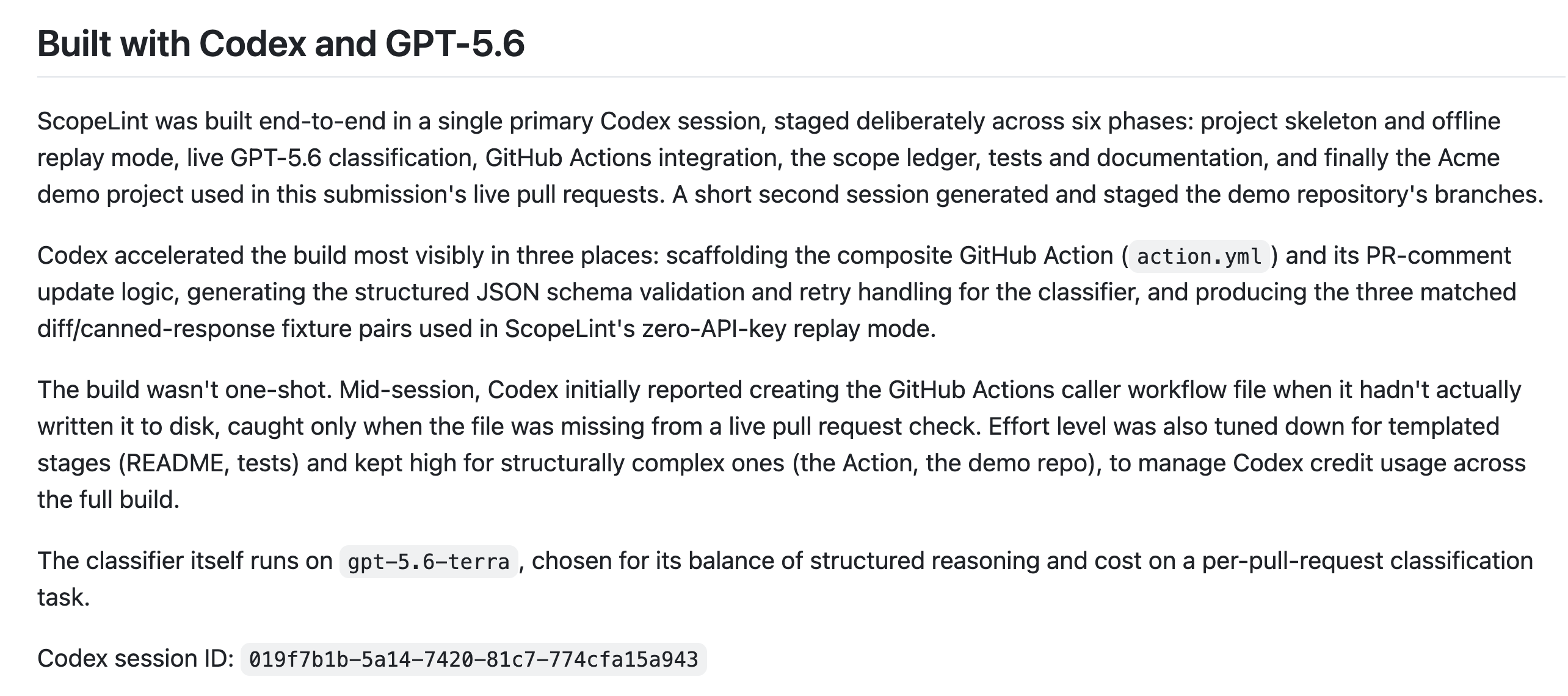
Built end to end with Codex across six staged phases; the classifier runs on GPT-5.6 Terra.
-
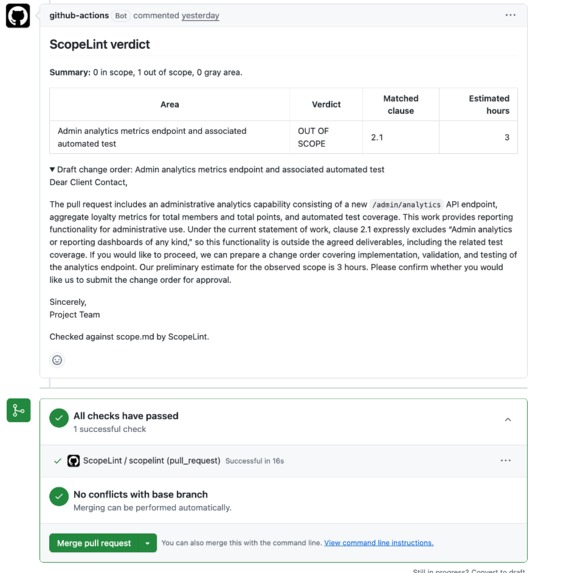
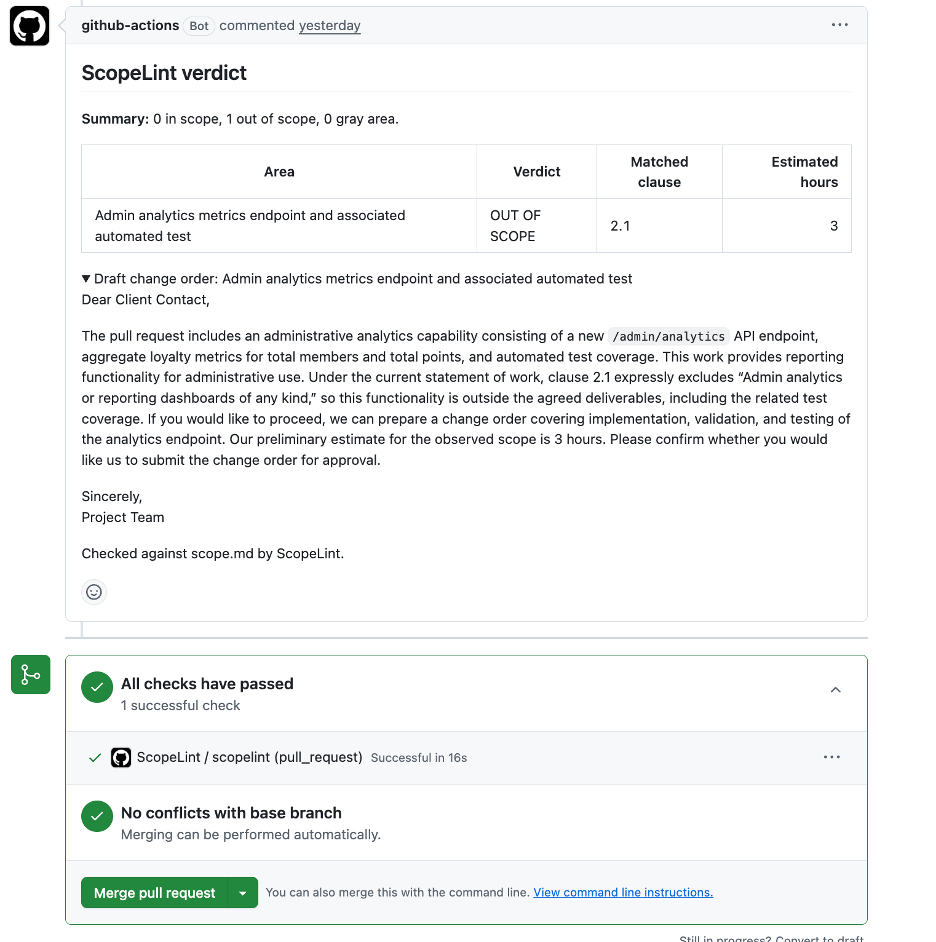
Out-of-scope pull request flagged by ScopeLint with a drafted change order
-
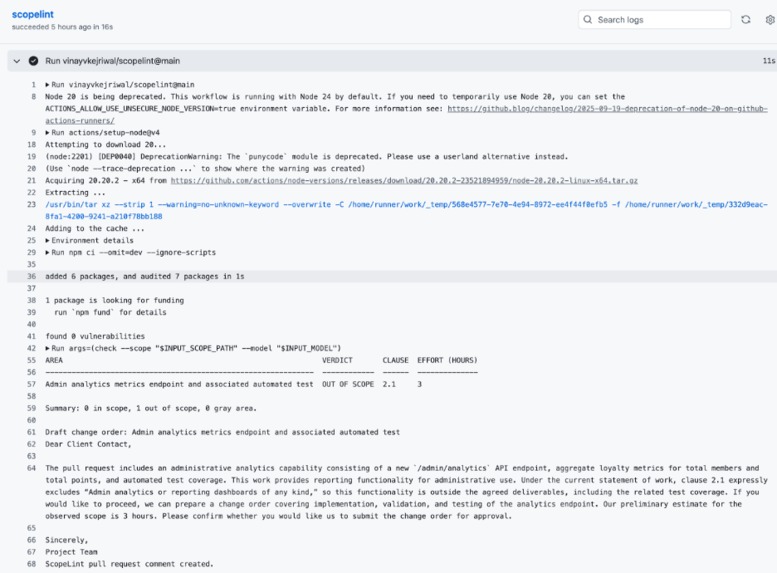
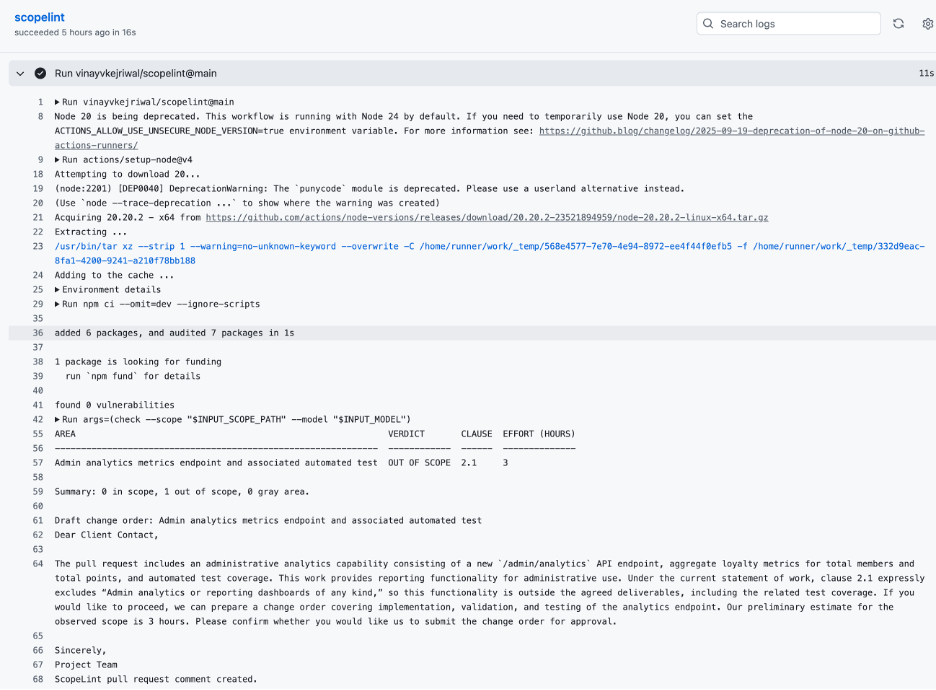
ScopeLint running automatically in GitHub Actions on every pull request
-
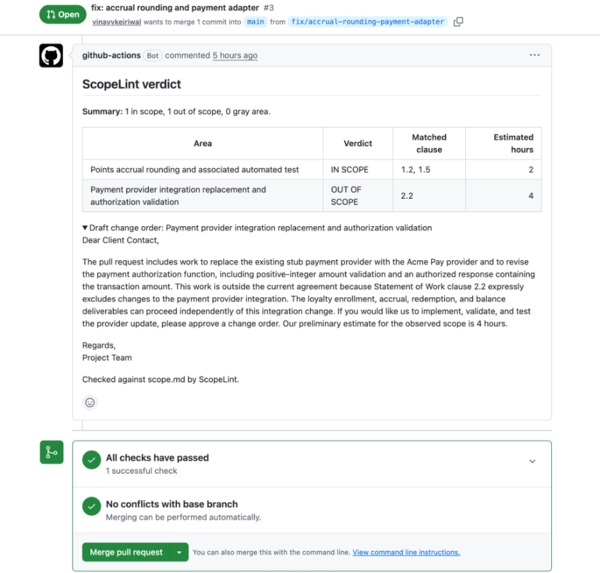
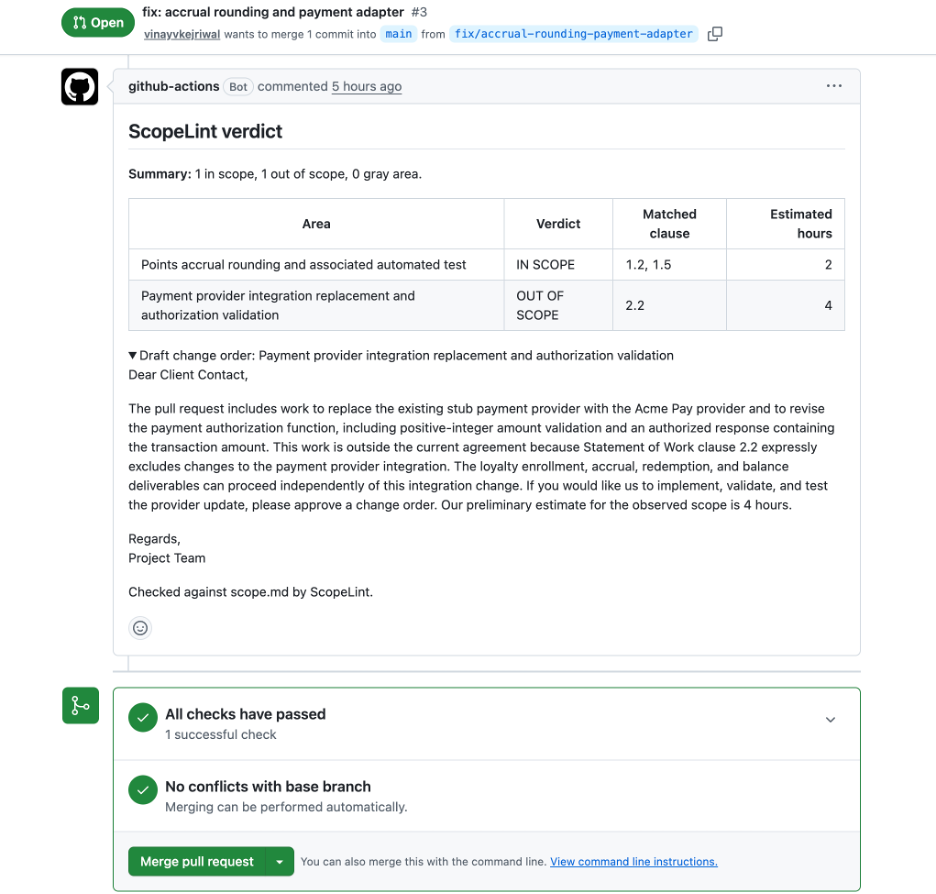
Mixed-scope pull request: in-scope fix separated from the excluded module
Inspiration
Consulting and agency teams operate on a fragile assumption: that scope stays where the contract says it should. In practice, scope creep doesn't announce itself in a meeting, it slips in through a pull request, an "extra" feature added mid-sprint that nobody flags until it's already built and unbillable. Every existing scope-monitoring tool watches conversations, tasks, and emails. None of them watch the one place the actual, billable work materializes: the code itself. That gap is ScopeLint.
What it does
ScopeLint is a GitHub Action and CLI that checks every pull request against a project's statement of work, automatically, the same way tests and linters already run. Commit the contract as scope.md, and GPT-5.6 classifies each functional area of a pull request as in scope, out of scope, or gray area, citing the exact clause it matched. Out-of-scope work gets a client-ready change order draft attached on the spot. A running scope ledger tracks cumulative drift and estimated unbilled hours across the life of a project. A bundled replay mode with canned fixtures lets anyone try it with zero API key.
How we built it
Built solo, end to end, with Codex, staged deliberately across six phases: the offline CLI skeleton and replay mode, live GPT-5.6 classification with structured JSON output, GitHub Actions integration and PR-comment posting, the scope ledger, tests and documentation, and finally a full demo project, an Express loyalty API with a real statement of work and three staged pull requests, used for this submission's live evidence. The classifier runs on gpt-5.6-terra, chosen for its balance of structured reasoning and cost on a per-pull-request task.
Challenges we ran into
Real infrastructure friction, not algorithm design, ate most of the time: git authentication with a personal access token that needed the workflow scope before GitHub would accept a change to .github/workflows/, a Codex session that reported creating a file it hadn't actually written to disk (caught only when a live pull request check failed with a missing-key error), and pacing Codex's effort level up or down per stage to make $100 in credits last across all six build phases plus a full second demo repository.
Accomplishments that we're proud of
A working, live demo where every claim is verifiable, not staged screenshots. The three pull requests in the demo repository actually run ScopeLint through GitHub Actions, call GPT-5.6 live, and post real verdicts a judge can click into and inspect themselves, including the model correctly refusing to cite a contract clause when the scope document didn't actually contain one, rather than hallucinating a match. Shipping a full CLI, GitHub Action, ledger system, test suite, and a second demo repository with staged scenarios, solo, inside a single day's build window.
What we learned
That most of the risk in a build like this isn't the AI reasoning, it's the plumbing around it. GitHub Actions rejecting a workflow file over a missing token scope, git authentication breaking silently, an agent reporting success on a file it hadn't actually written, these cost more time than designing the classification prompt itself. We also learned to pace an AI coding agent's effort level deliberately: high reasoning for structurally complex stages like the GitHub Action and the demo repository, lower effort for templated work like documentation and tests, to make a fixed credit budget stretch across a full six-stage build.
What's next for ScopeLint
A hosted dashboard aggregating the scope ledger across every repo a consulting team manages, so a delivery lead sees drift trends across an entire client portfolio, not just one project. Direct integrations so an approved change order pushes straight into Jira or a billing tool instead of sitting in a pull request comment. Support for multiple scope documents per repo, for teams running several concurrent workstreams against one codebase.
Built With
- codex
- express-(demo-api)
- github-actions
- gpt-5.6-terra
- node.js-20
- the-openai-sdk
- typescript
- vitest


Log in or sign up for Devpost to join the conversation.