-
-
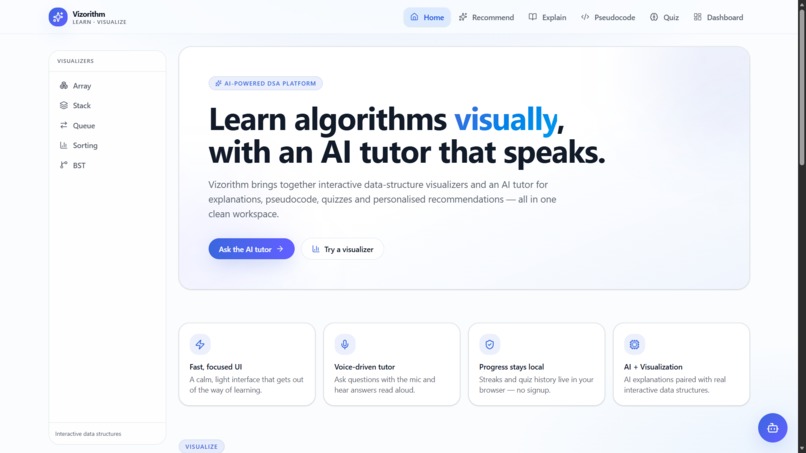
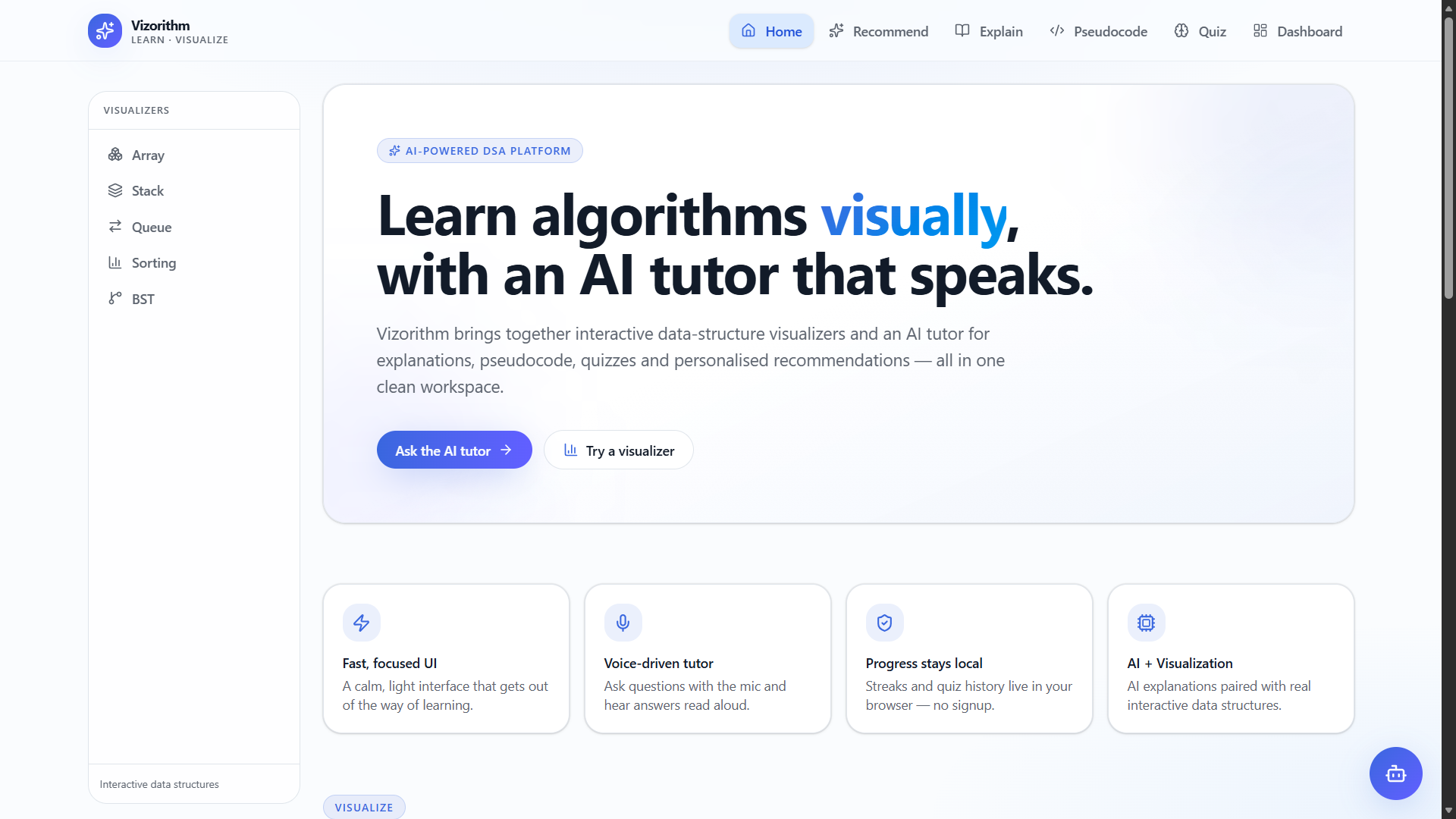
Vizorithm homepage showcasing the AI-powered DSA learning platform.
-
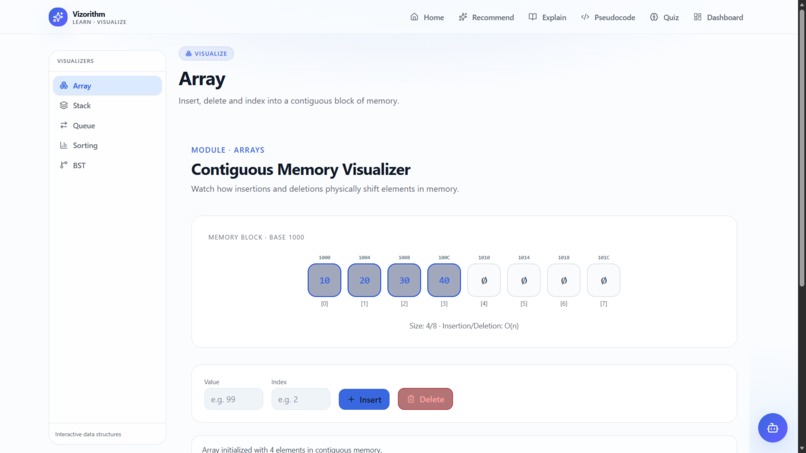
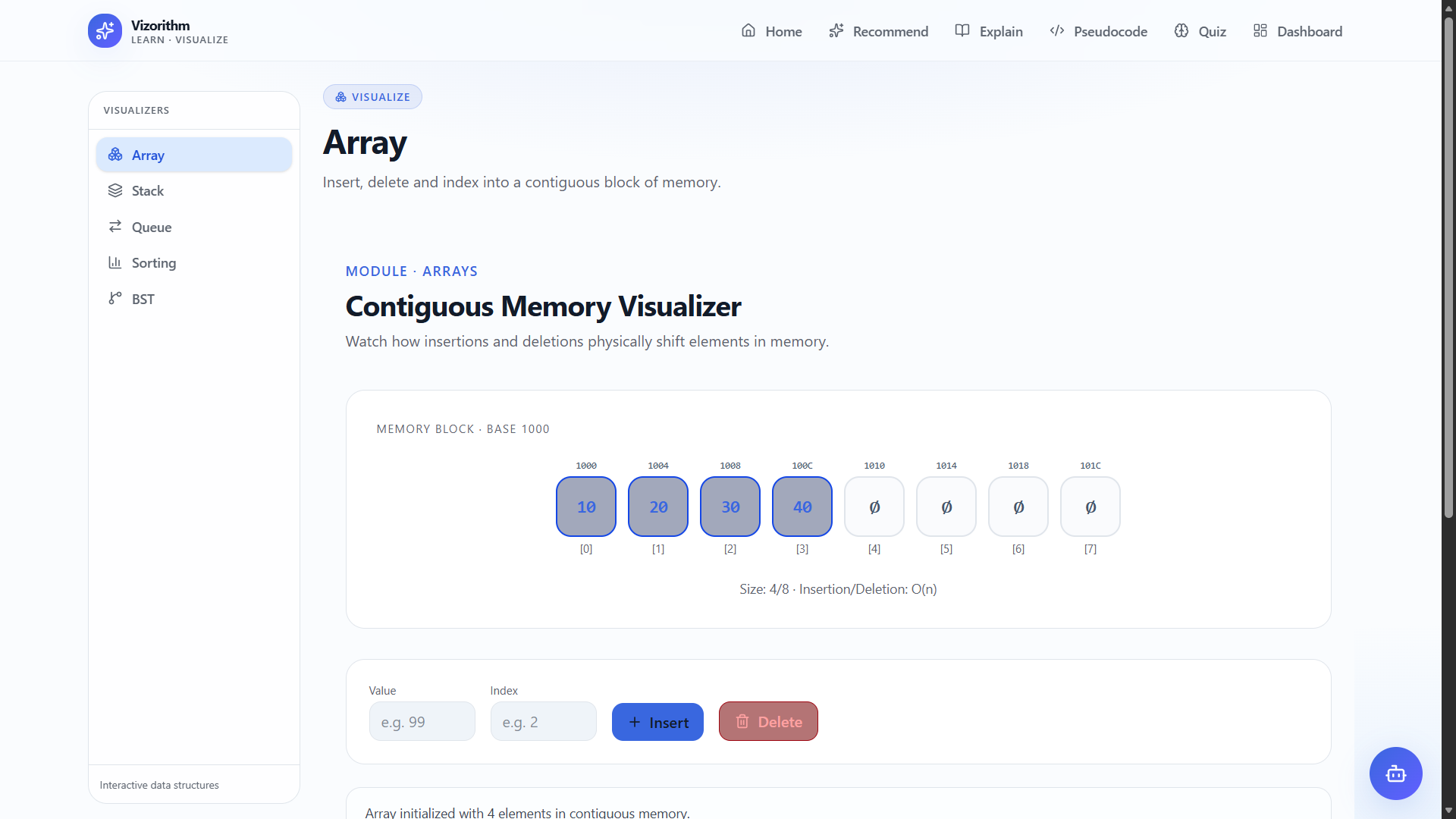
Interactive array operations with real-time visualization.
-
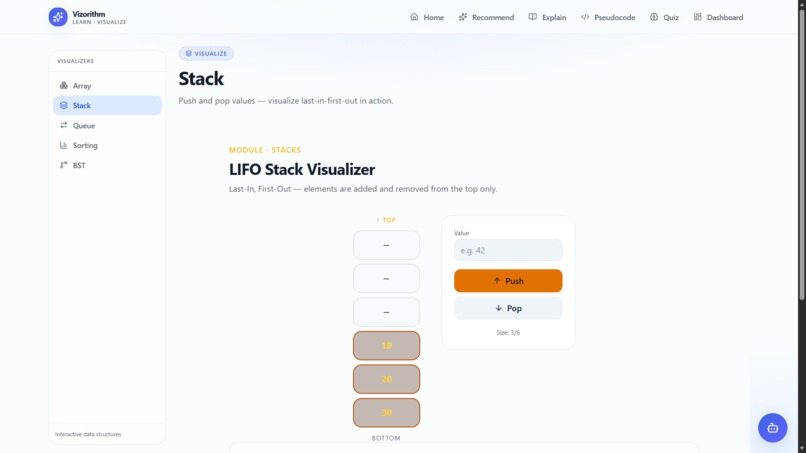
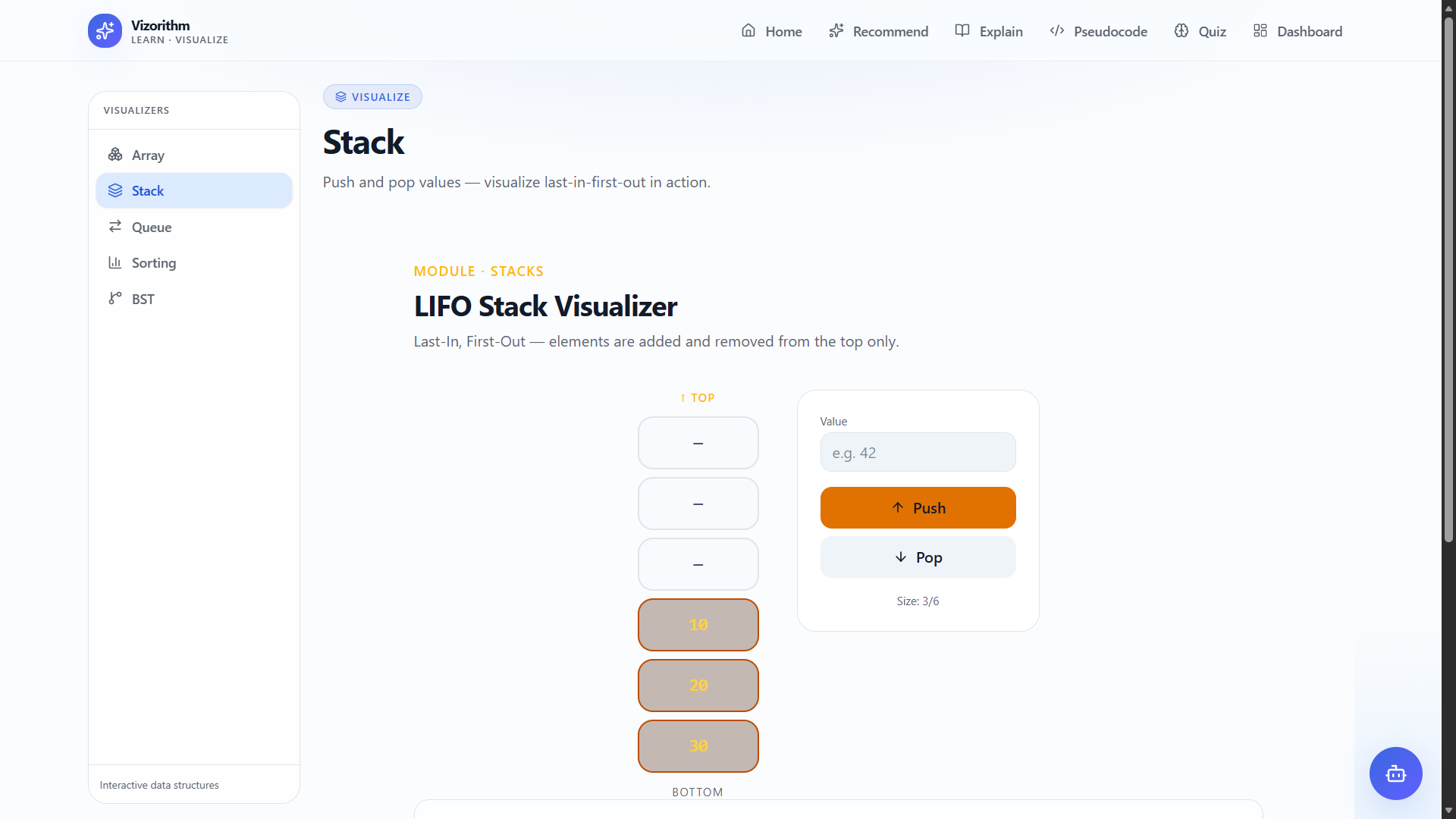
Visualize push and pop operations step by step.
-
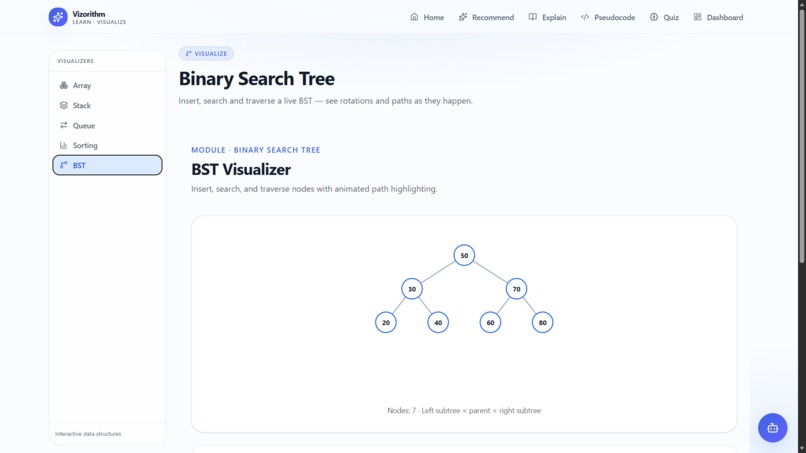
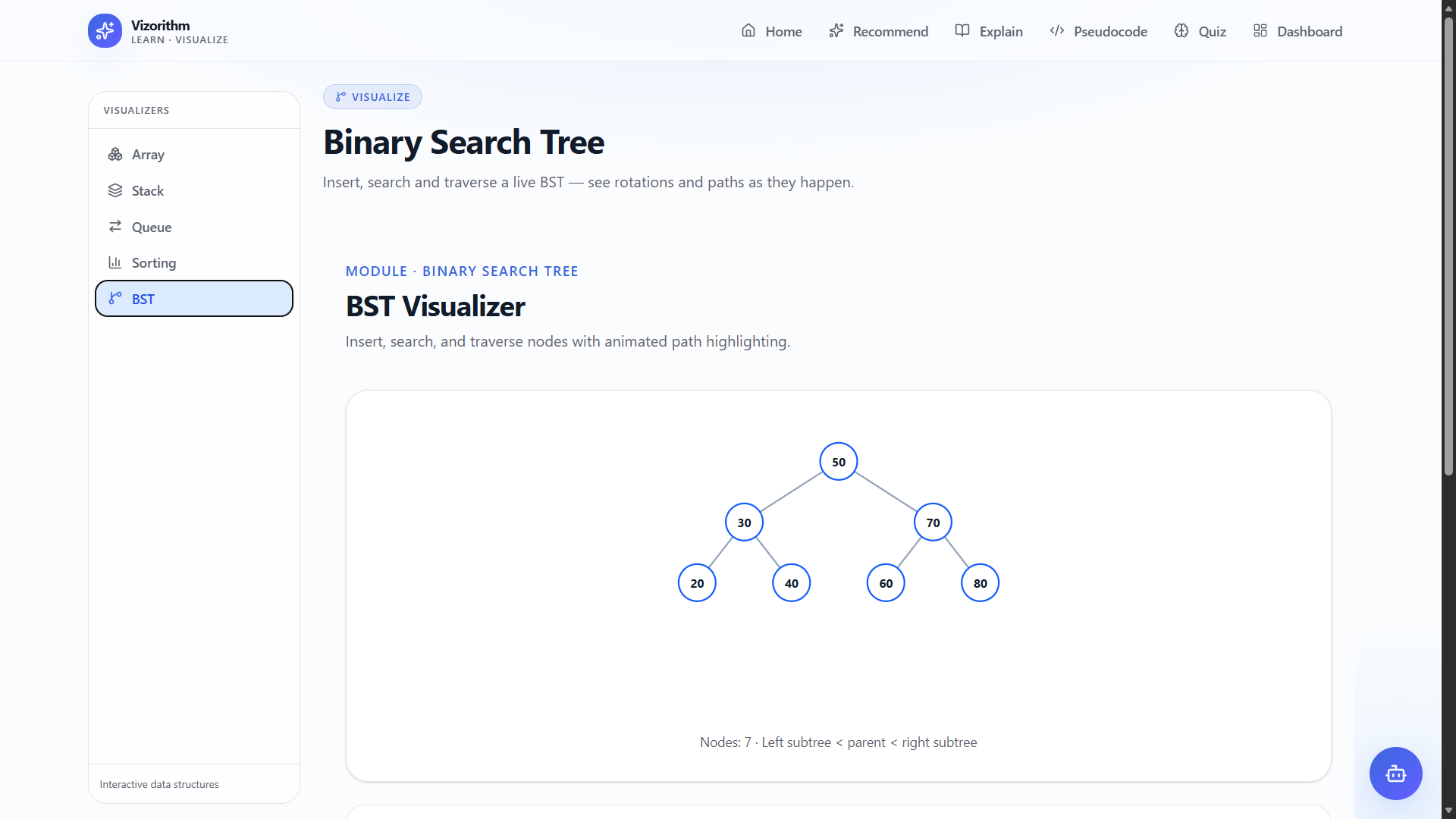
Explore BST insertion and traversal visually.
-
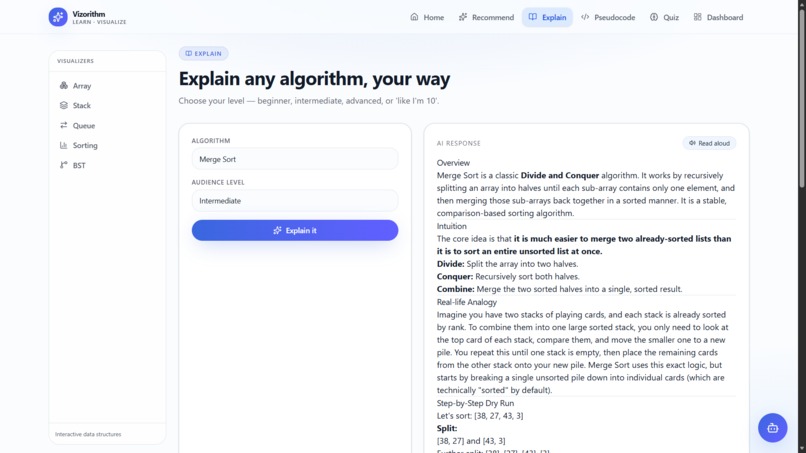
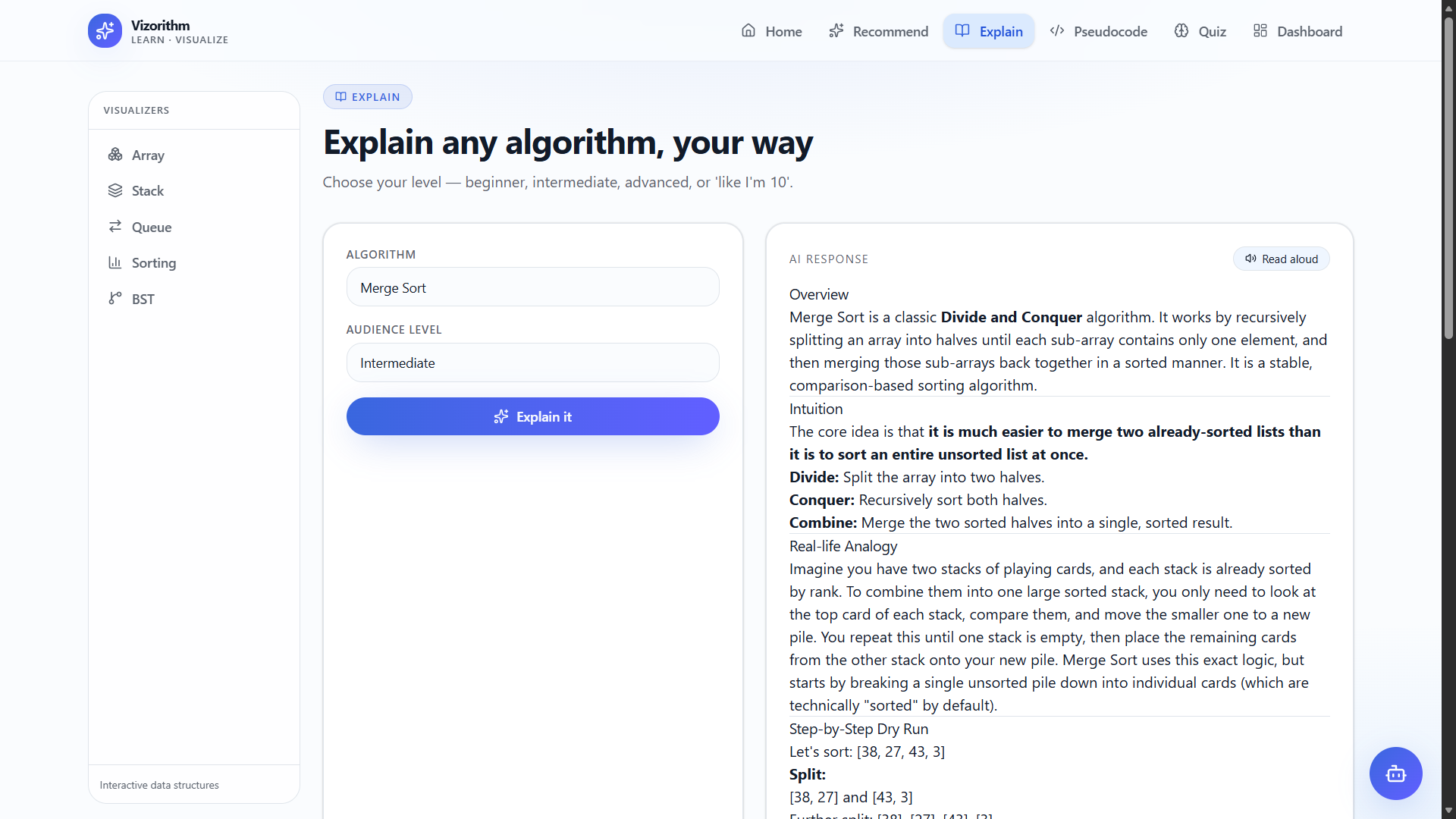
Get AI-powered explanations tailored to the selected algorithm.
-
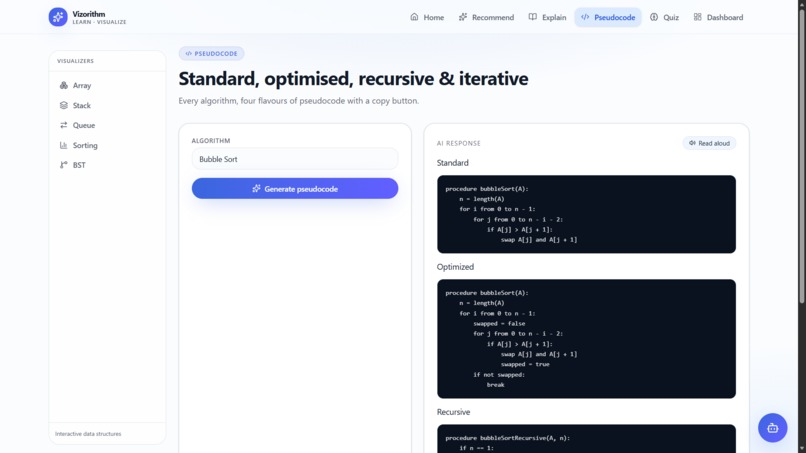
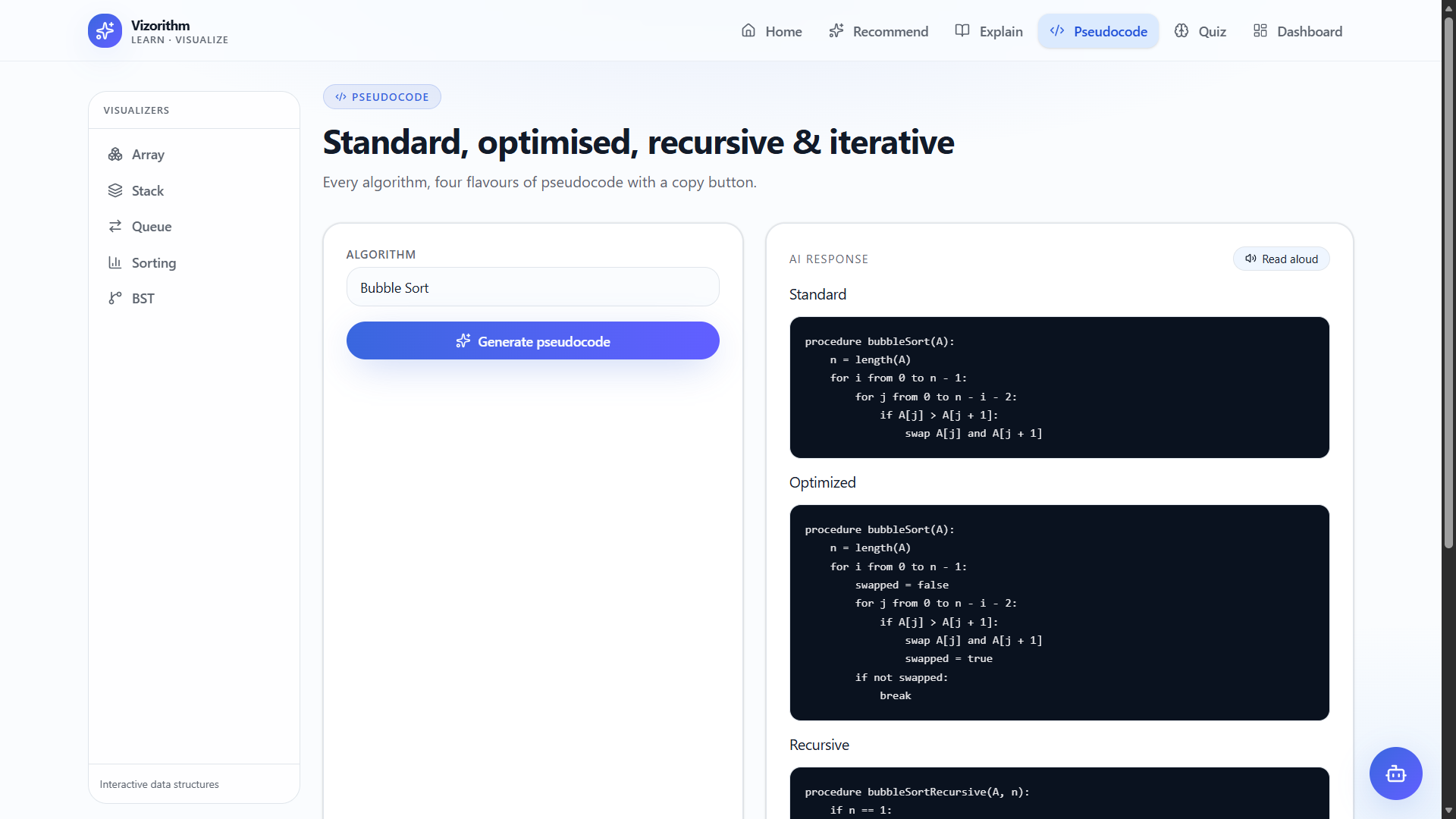
Generate clean pseudocode to understand implementation logic.
Vizorithm
Inspiration
Learning Data Structures and Algorithms (DSA) can be overwhelming for beginners. Most platforms either focus on theory without visualization or provide visualizations without meaningful explanations. We wanted to bridge this gap by creating an interactive learning platform that combines algorithm visualization with AI-powered guidance, allowing students to not only see how algorithms work but also understand why they work.
Our goal was to make learning DSA more intuitive, engaging, and accessible through personalized explanations, quizzes, recommendations, and voice interaction.
What it does
Vizorithm is an AI-powered educational platform that helps students master Data Structures and Algorithms through interactive visualizations and personalized learning.
The platform currently includes:
- Interactive visualizers for Arrays, Stacks, Queues, Sorting Algorithms, and Binary Search Trees.
- AI-powered explanations that simplify complex concepts.
- Personalized algorithm recommendations based on learning goals.
- AI-generated pseudocode for better conceptual understanding.
- Quiz generation to reinforce learning.
- Voice-enabled AI tutoring using the browser's Speech API.
- Local progress tracking including quiz history, scores, and learning streaks.
Instead of simply giving answers, Vizorithm encourages users to explore algorithms visually while receiving contextual AI guidance.
How we built it
We built Vizorithm using a modern full-stack web architecture.
Frontend
- React 19
- TanStack Router
- TypeScript
- Tailwind CSS
AI Layer
- Google Gemini 3.1 Flash Lite
- Vercel AI SDK
Backend
- TanStack Server Functions
- Zod for request validation
The application uses a unified AI endpoint that supports multiple educational tasks including explanations, algorithm recommendations, pseudocode generation, quiz creation, and conversational tutoring.
User progress is stored locally to provide a seamless learning experience without requiring account creation.
Challenges we ran into
One of our biggest challenges was designing AI prompts that consistently generated educational, beginner-friendly responses instead of generic answers.
Another challenge was integrating multiple AI-powered features—including explanations, recommendations, quizzes, pseudocode generation, and voice interaction—while maintaining a smooth and responsive user experience.
Balancing visualization performance with AI responsiveness also required careful architectural decisions to keep interactions fast and intuitive.
Accomplishments that we're proud of
- Built a complete AI-powered DSA learning platform.
- Successfully integrated multiple educational AI features into a single application.
- Created interactive visualizations for fundamental data structures and algorithms.
- Implemented voice-based AI tutoring for a more engaging learning experience.
- Designed a clean, modern interface focused on reducing learning complexity.
- Developed an educational workflow that combines visualization, AI guidance, and practice in one place.
What we learned
This project taught us that effective educational AI is about more than generating answers—it is about helping learners build understanding.
We also gained valuable experience designing AI prompts, building scalable server functions, integrating large language models into web applications, and creating intuitive educational interfaces that balance usability with technical functionality.
What's next for Vizorithm
Our vision is to transform Vizorithm into a complete AI learning companion for computer science students.
Future improvements include:
- Adaptive learning paths based on user performance.
- Personalized AI tutoring using long-term learning history.
- Support for Graphs, Dynamic Programming, Trees, and Advanced Algorithms.
- Collaborative classrooms for teachers and students.
- Cloud synchronization and user accounts.
- Coding challenges with AI-powered feedback.
- Real-time progress analytics and personalized study plans.
- Multi-language support to make algorithm education more accessible worldwide.
Built With
- gemini-api
- node.js
- npm
- react
- typescript
- vite


Log in or sign up for Devpost to join the conversation.