-
-
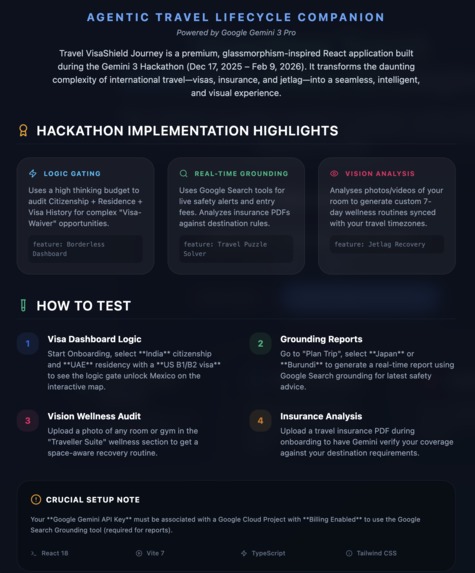
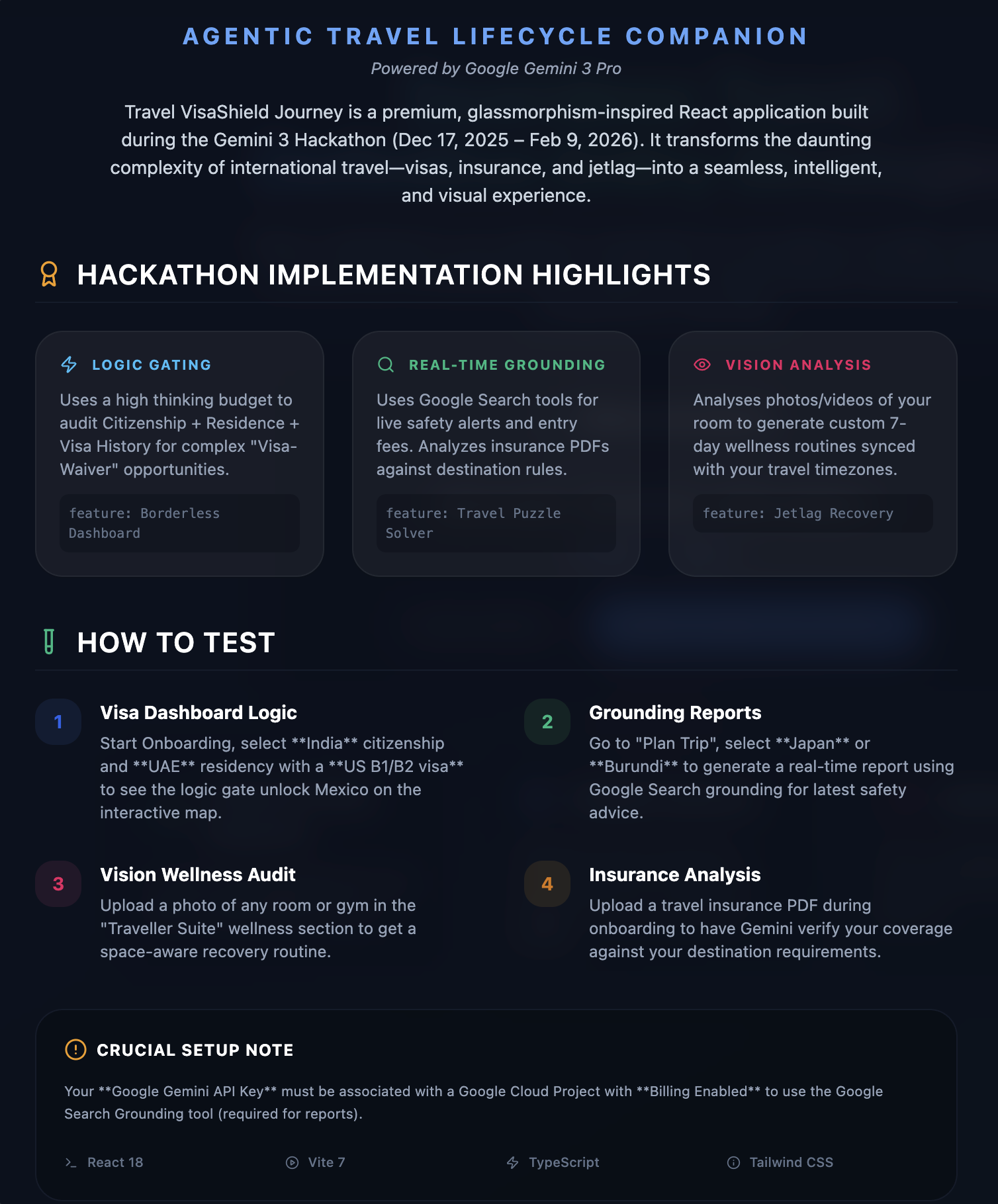
Travel VisaShield Implementation Highlight
-
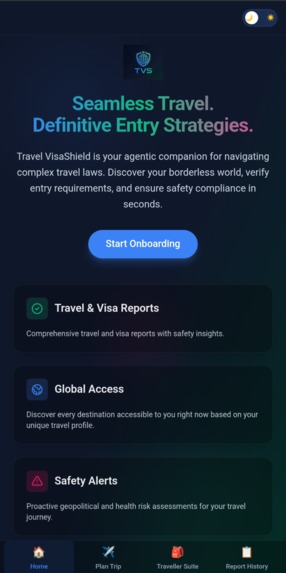
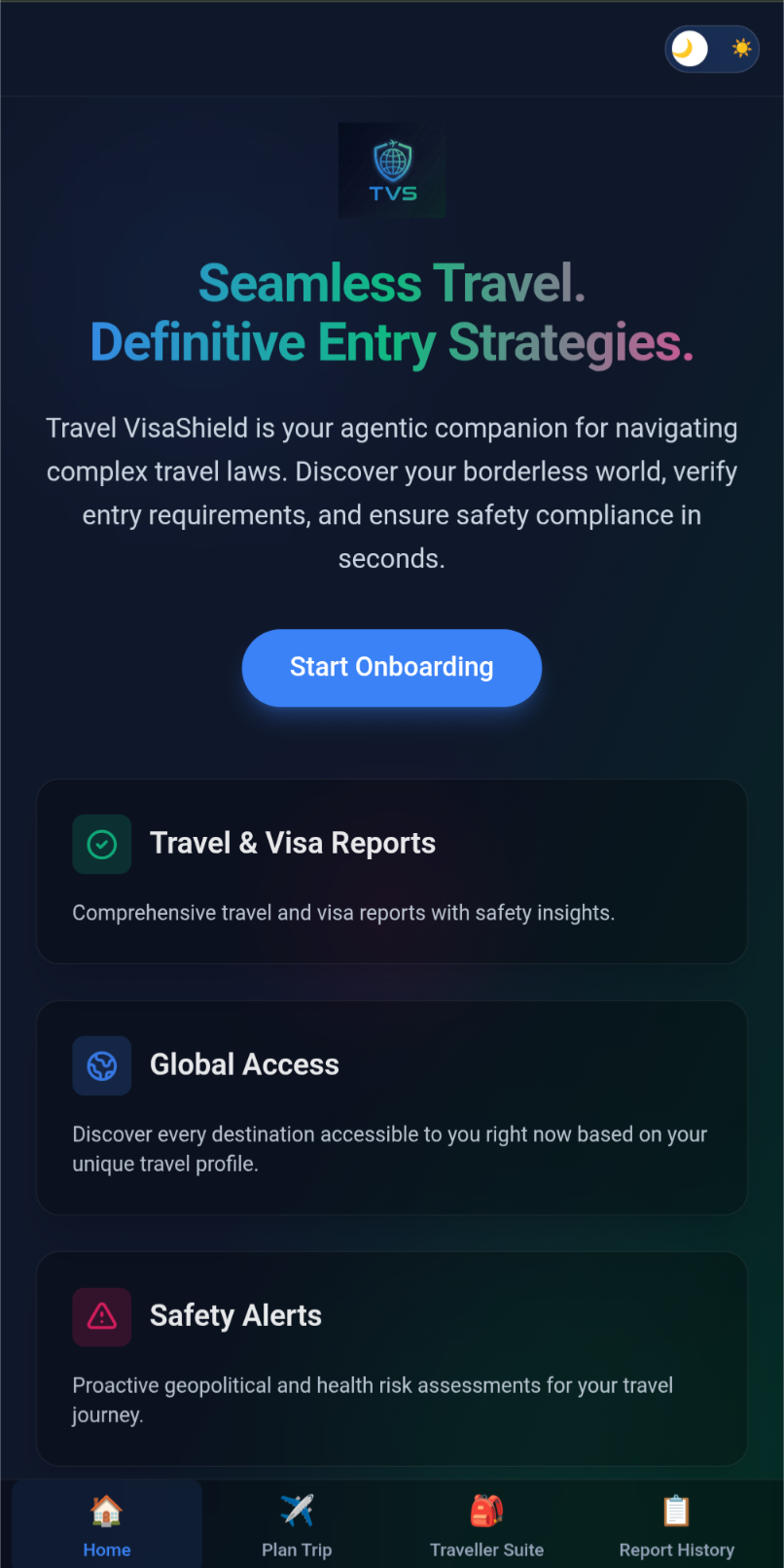
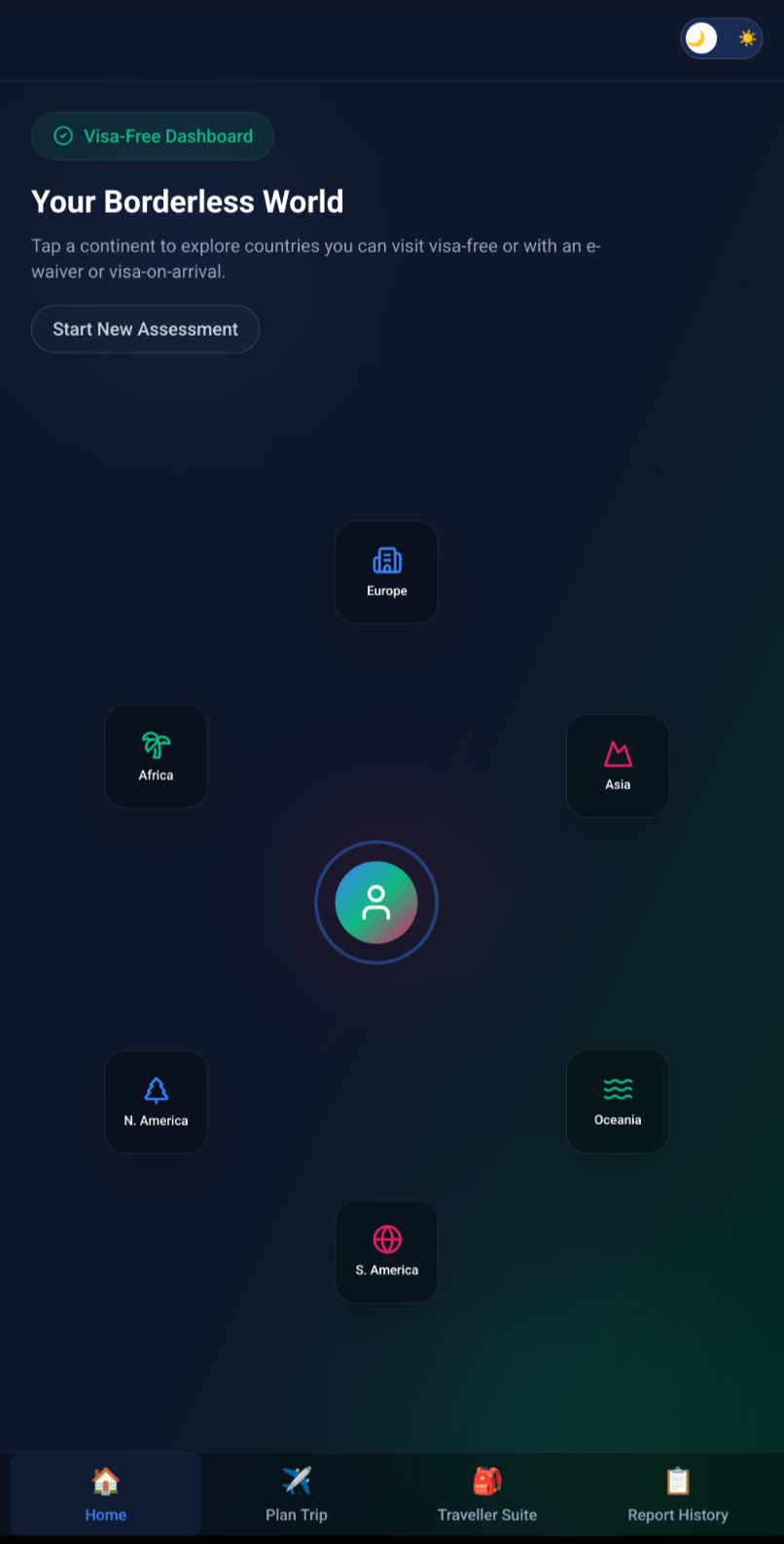
Onboard - Dark Mode
-
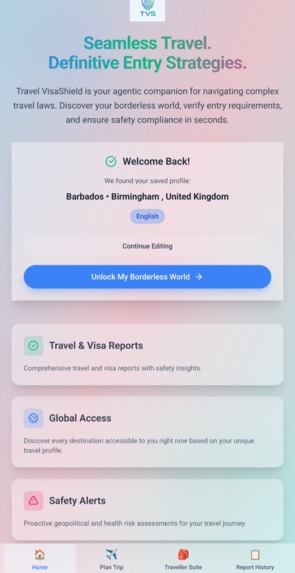
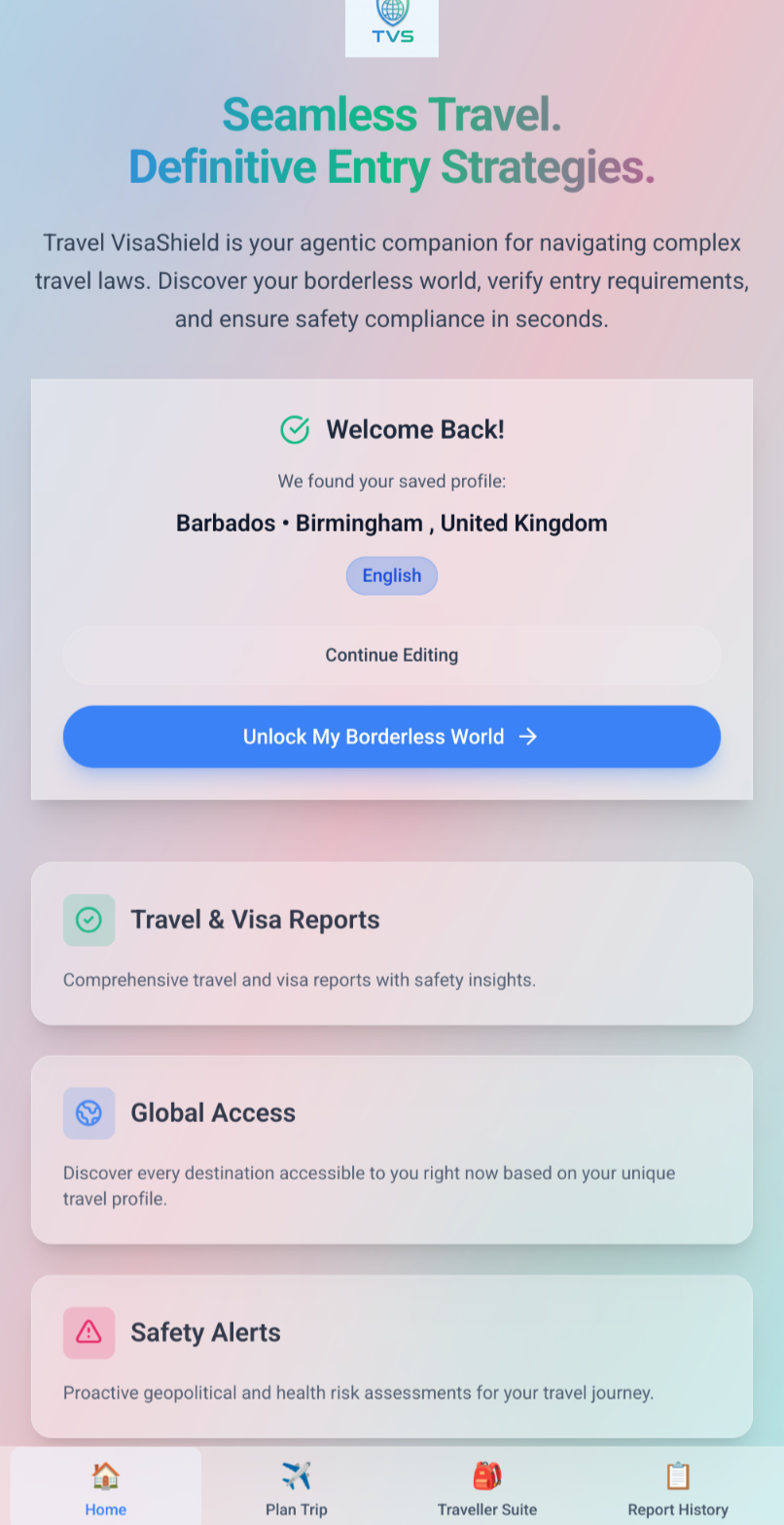
Unlock Borderless World - Light Mode
-
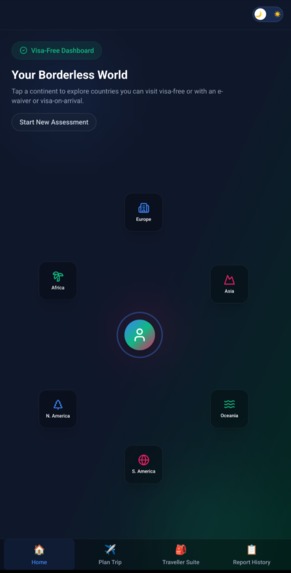
Result of Borderless Search by Continent - Dark Mode
-
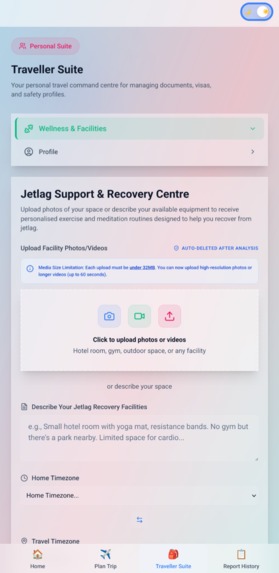
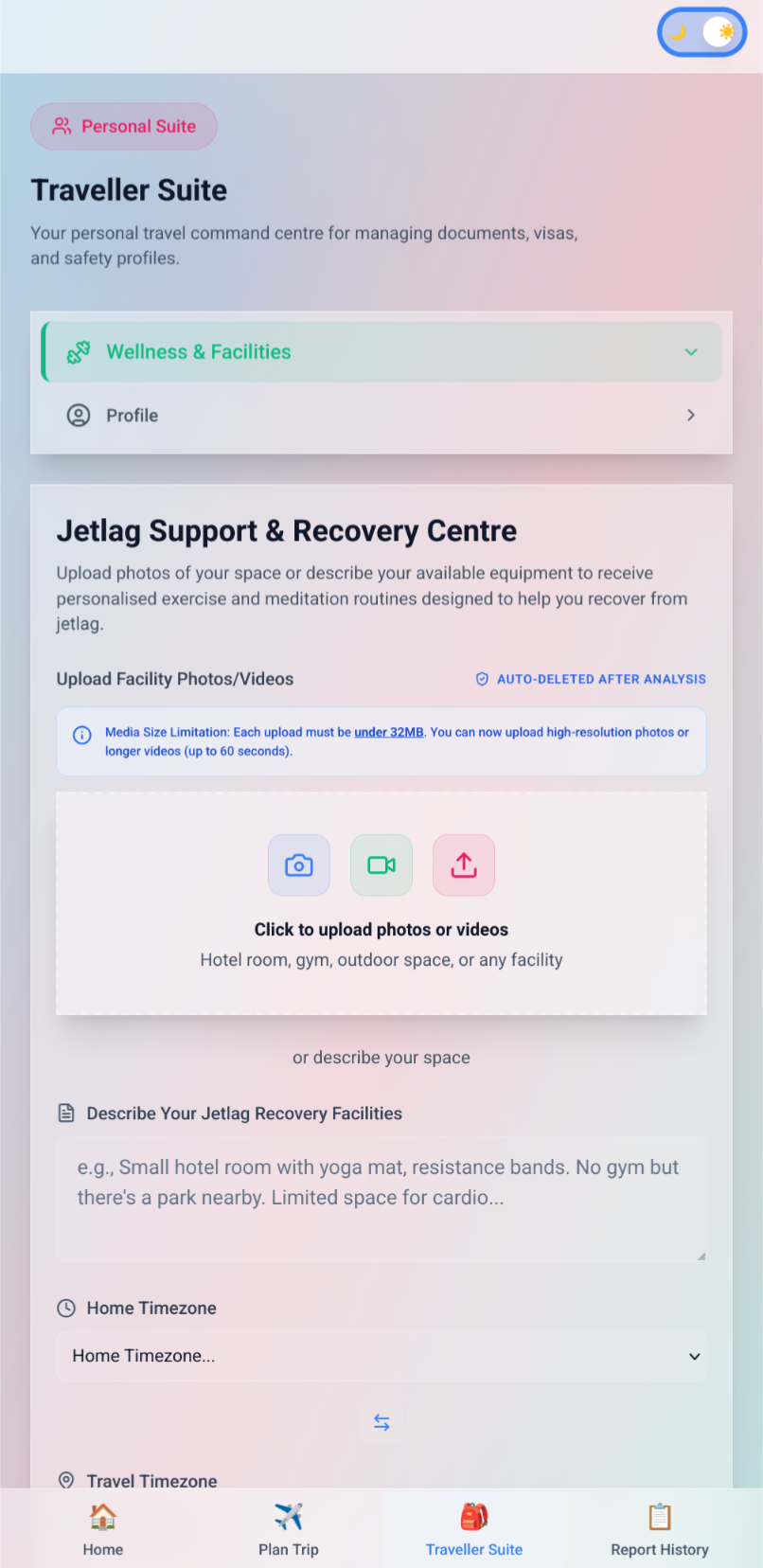
Recovery Suite - Light Mode
Inspiration
Travel VisaShield was inspired by the increasingly volatile landscape of global immigration. In just the last year, we've seen a massive shift in border controls, the rise of digital nomad visas, and sudden changes in entry requirements that traditional travel blogs can't keep up with. I wanted to build an app that replaces hours of manual research with a single click - providing a source-grounded, deep-dive Travel Report that covers everything from "Can I enter?" to "Is it safe right now?" Beyond pre-travel planning, I wanted to create a full travel lifecycle companion that supports users from departure through to their return home.
What it does
Travel VisaShield is an agentic travel intelligence platform that serves as a protective companion for global nomads. It features an interactive map that helps users visualise entry permissions across the globe while providing an educational opportunity to explore world geography. The app performs a multi-layered identity audit to calculate immediate visa-free opportunities, accounting for complex rules like residency waivers and gateway visas (e.g., US or Schengen). It provides real-time security and conflict alerts, extracts local emergency contacts through live grounding, and analyses travel insurance policies for compliance. Finally, it uses multimodal AI to audit travel spaces and generate personalised 7-day jet lag recovery routines based on circadian science.
How I built it
My project is powered by a trio of specialised agentic reasoning engines built on Gemini 3 Pro Preview. The core architecture relies on my 'Verification Loop Protocol' - a logic gate I designed to ensure clinical accuracy by having the AI identify default rules and then actively attempt to invalidate them using live-searched waiver assets.
- Agent Set A (Identity Auditor): Uses high-level reasoning to parse multi-layered identities (citizenship vs. residency) and calculate immediate visa-free opportunities.
- Agent Set B (Strategic Strategist): Uses Real-Time Google Search Grounding to provide live security/conflict alerts, calculate dynamic visa fees, and extract local emergency numbers. It also uses the Gemini File API to analyse complex insurance policy PDFs for compliance.
- Agent Set C (Wellness Strategist): A multimodal agent that analyses videos or photos of travel spaces to create personalised 7-day jet lag recovery plans based on circadian science and age-group awareness. I implemented a "Timezone Swap" feature specifically to support recovery routines for both outbound and return journeys, making the app a resilient companion for the entire trip.
Challenges I ran into
- UI Presentation: Parsing high-density AI search grounding results into a clear and intuitive user interface.
- Media Limits & Infrastructure Pivot: I hit an infrastructure wall when my original deployment platform capped media uploads at 4.5MB. Since my vision required processing files up to 30MB - as successfully tested in Google AI Studio - this forced a rapid pivot. Despite having no prior experience with Google Cloud Run, I had to quickly learn the platform's architecture and start the migration process. This move to a platform with a 100MB limit was the final piece of the puzzle, that will enable my users to experience the true multimodal potential of Gemini 3 without compromise.
Accomplishments that I'm proud of
I am particularly proud of the interactive map integration, which offers a genuine educational experience for users of all ages. It has been incredibly rewarding to see how the app helps both adults and children learn about global geography - such as discovering that Armenia is geographically located in Asia, not Europe as many (including myself) previously thought. I am also proud of the Verification Loop Protocol, which ensures the AI doesn't just guess but actively validates rules against live-searched waivers.
What I learned
I learned how to leverage "Nested Logic" in AI prompts; teaching the model to prioritise "Waiver Assets" which often override standard rules. This project also forced me to master Google Cloud Run and containerisation from a standing start.
What's next for Travel VisaShield
I want to integrate real-time flight tracking to automatically adjust jet lag recovery plans based on actual arrival times. Future updates will include more granular multimodal audits, such as using AI to analyse hotel room photos for specific safety features or medical equipment accessibility. Most Importantly - I plan to release this app in the play and app stores in the nearest future.
Built with
- Model: Google Gemini 3 API
- Capabilities: Google Search Grounding, Multimodal (Video/Image/PDF) Analysis
- AI SDK: Google GenAI Python SDK
- Frontend: React, Tailwind CSS, Framer Motion (for smooth onboarding transitions)
- Backend: Python (FastAPI/Flask)
- Tools: Lucide React for iconography
Built With
- cloud-run
- gemini
- google-ai-studio
- local-storage
- react
- tailwindcss
- typescript

Log in or sign up for Devpost to join the conversation.