Inspiration
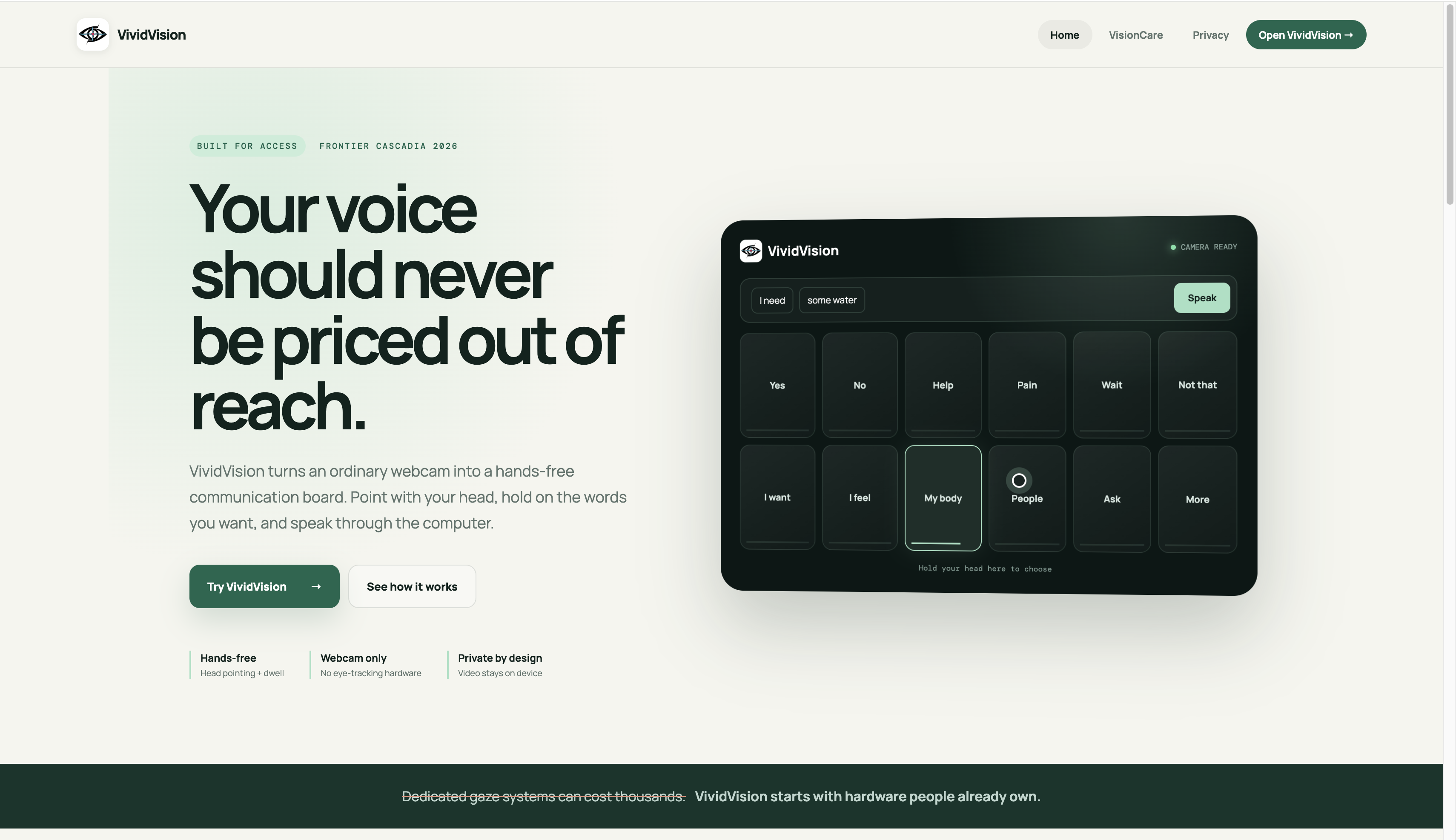
We asked one uncomfortable question: Why should having a voice depend on expensive, specialized hardware?
People with paralysis, cerebral palsy, ALS, and other motor impairments may rely on communication devices costing thousands of dollars. As high school students, we wondered whether an ordinary webcam could provide a more accessible alternative.
What it does
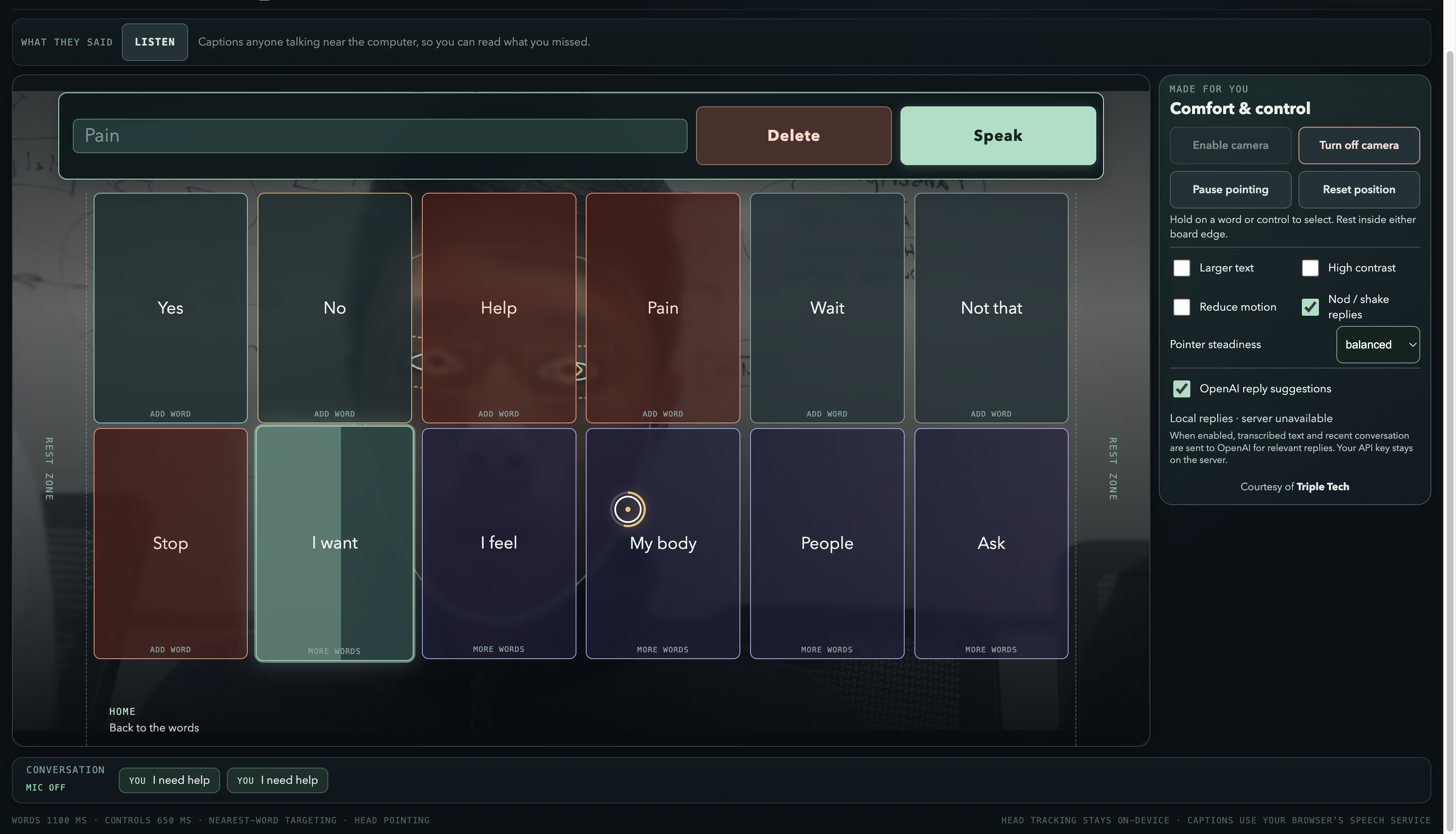
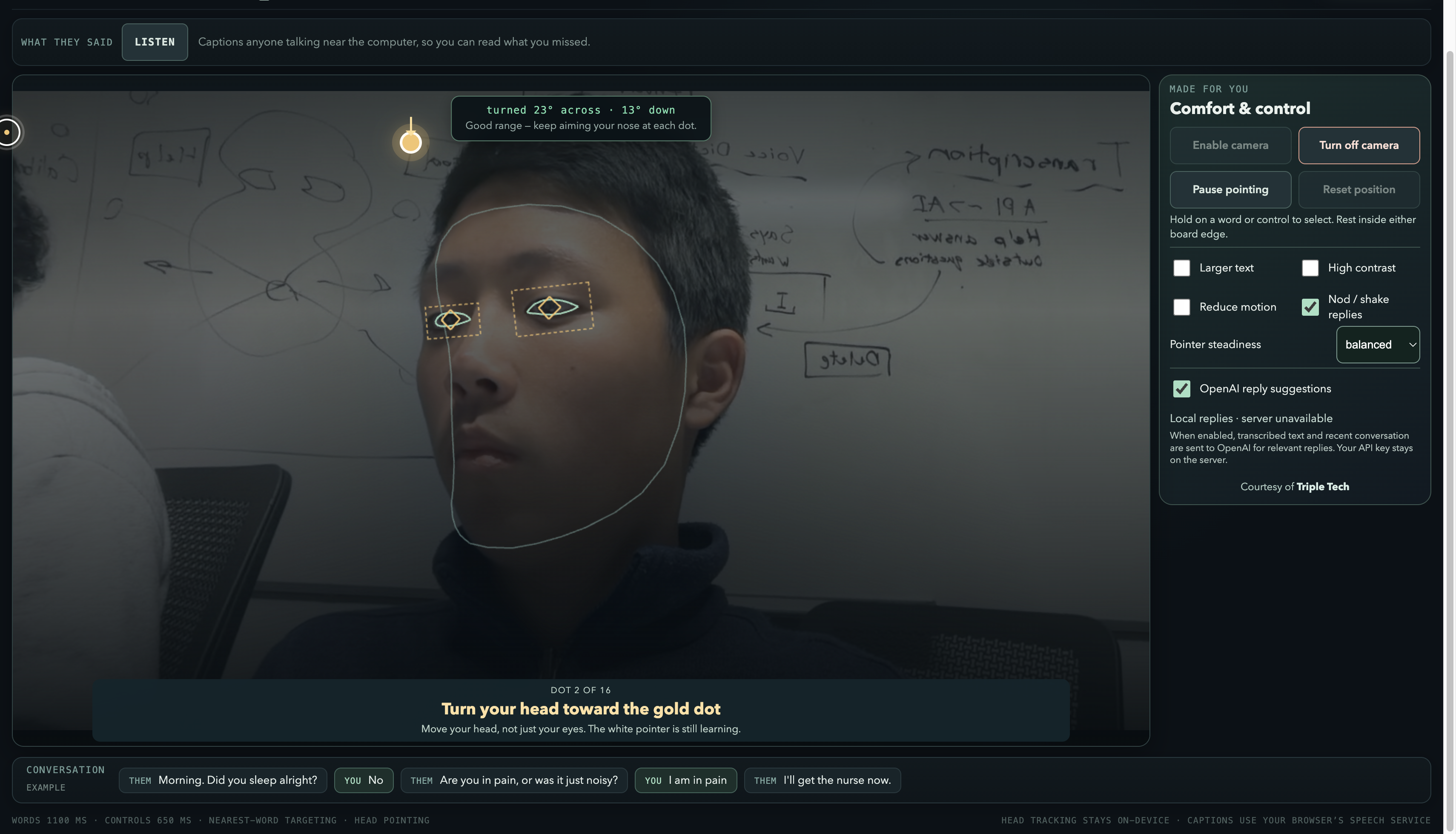
VividVision is a hands-free communication board controlled through head movement. After calibration, users select words by holding their head toward large tiles, build sentences, delete words, and speak aloud.
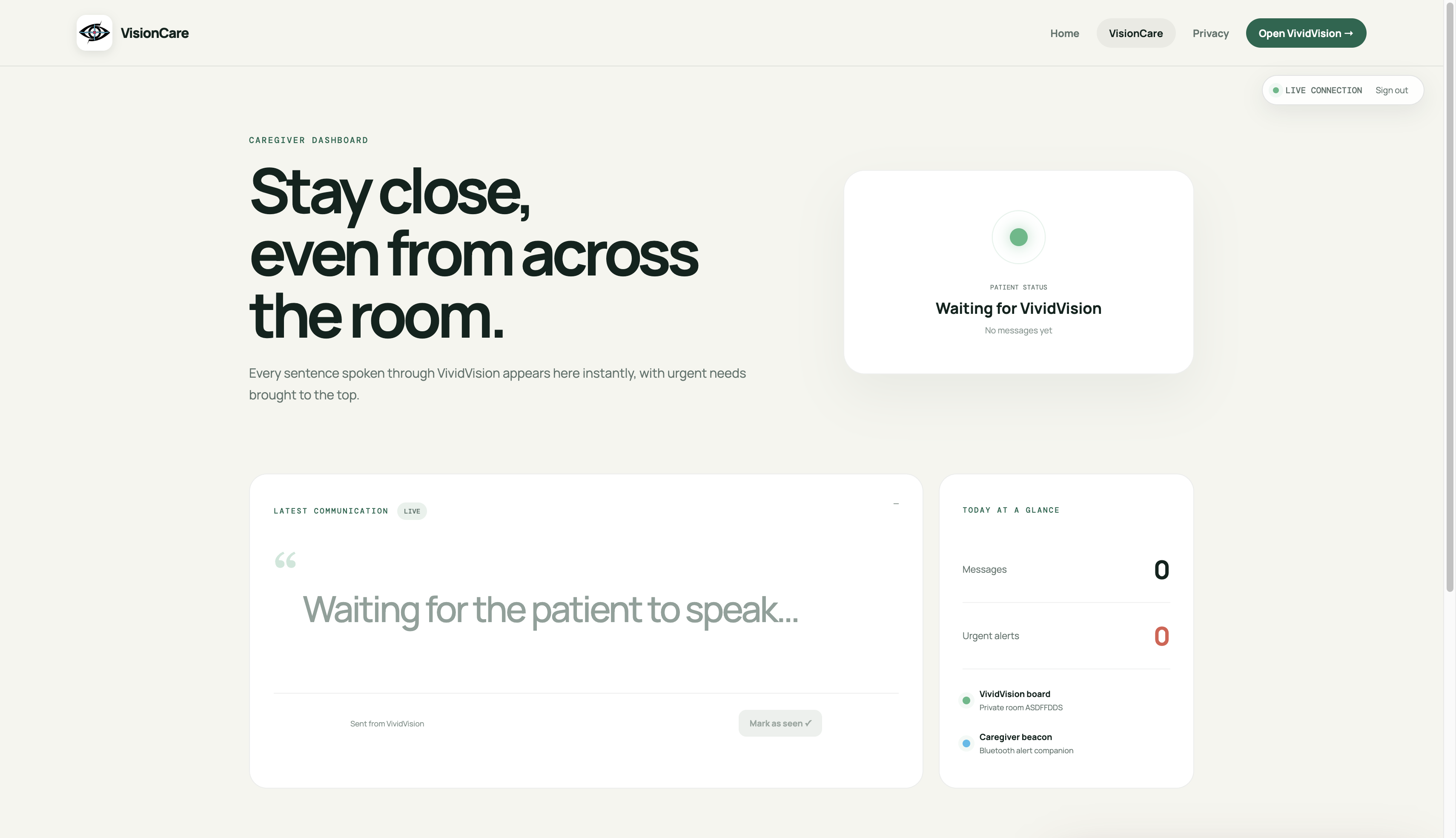
VisionCare sends those messages to a caregiver dashboard in real time. Urgent phrases are highlighted, while a Bluetooth Particle Argon activates a physical LED alert.
How we built it
VividVision uses MediaPipe facial landmarks, temporal filtering, calibration, nearest-target selection, and dwell timing. We designed two rows of six large targets because our testing showed vertical movement was less accurate than horizontal movement.
We built it with React, TypeScript, Vite, Supabase Realtime, Web Bluetooth, speech synthesis, and Particle Argon firmware.
Challenges we ran into
Our original eye-tracking approach produced errors above 20%. After measuring the problem, we switched to more reliable head pointing.
We also overcame failed Bluetooth updates, incompatible university Wi-Fi, Particle setup issues, and a disconnected breadboard ground rail.
Our first delete controls were too small for head pointing, so we redesigned them as full-size board targets.
Accomplishments that we're proud of
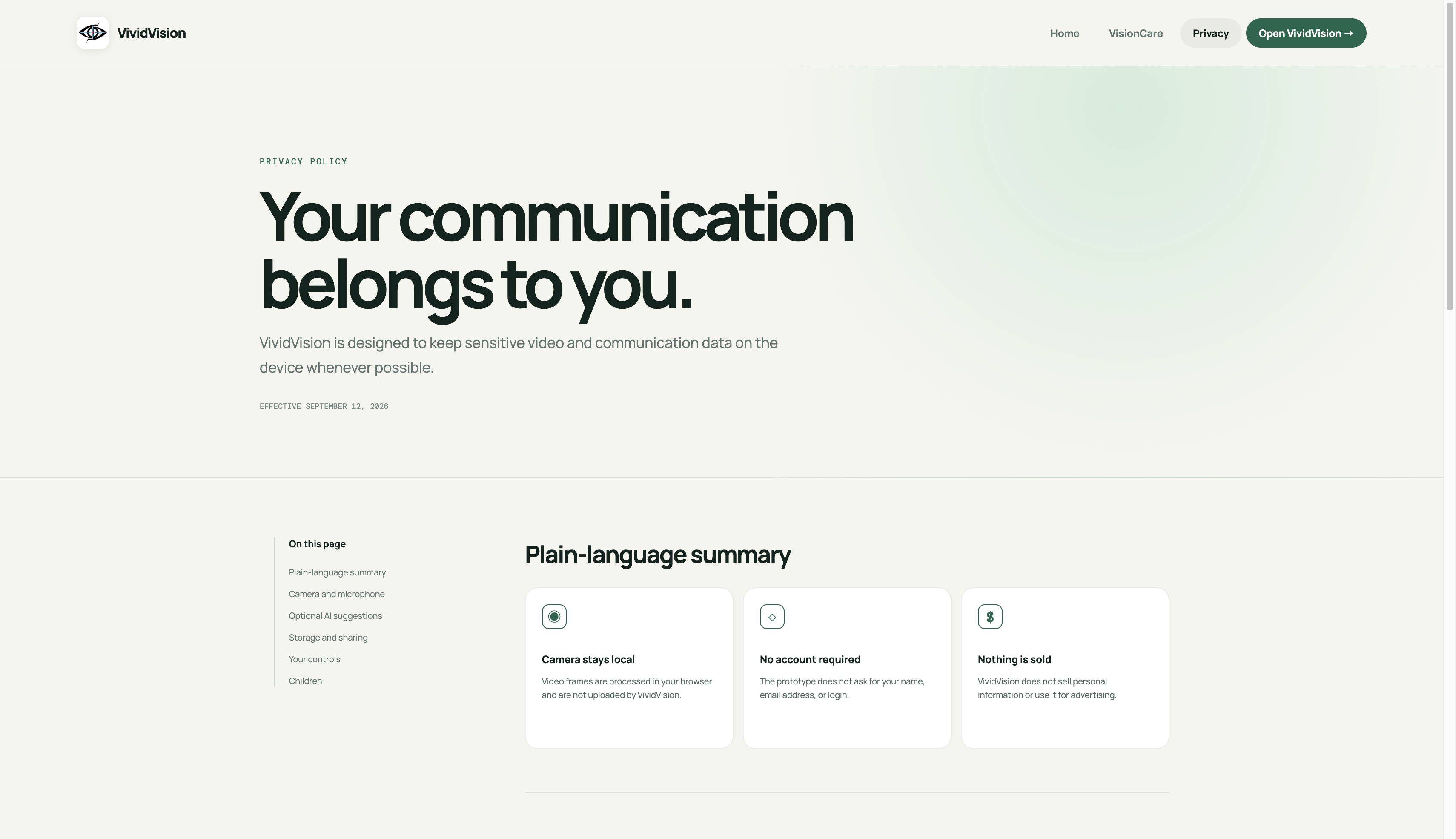
We transformed an ordinary webcam into a working hands-free communication system. We reduced pointing error from over 20% with eye tracking to approximately 1% using calibrated head movement. We also connected spoken messages to VisionCare in real time and built a Bluetooth LED alert using Particle Argon. Most importantly, every major action—including selecting, deleting, and speaking—can be completed without a mouse or keyboard.
What we learned
Accessibility must shape every decision from the beginning. Target size, dwell timing, rest zones, deletion, speech, and caregiver alerts all affect whether someone can use the product independently.
VividVision demonstrates that hands-free communication can begin with an ordinary webcam and the belief that everyone deserves to be heard.
What's next for Vivid Vision
Next, we want to test VividVision with AAC users, caregivers, educators, and accessibility professionals. We plan to add personalized vocabulary, multilingual voices, improved mobile support, caregiver acknowledgements, and more durable alert hardware. Long term, we want to develop VividVision into an affordable, reliable product that complements professional AAC care.

Log in or sign up for Devpost to join the conversation.