Inspiration
Agentic commerce is arriving, but it is arriving through big platforms. The small store that sells through Instagram, Tiendanube or a hand-built site has no API, no product feed and no checkout an agent can call. When a shopper asks Claude or ChatGPT for "a black t-shirt in size M under $40", those stores simply don't exist.
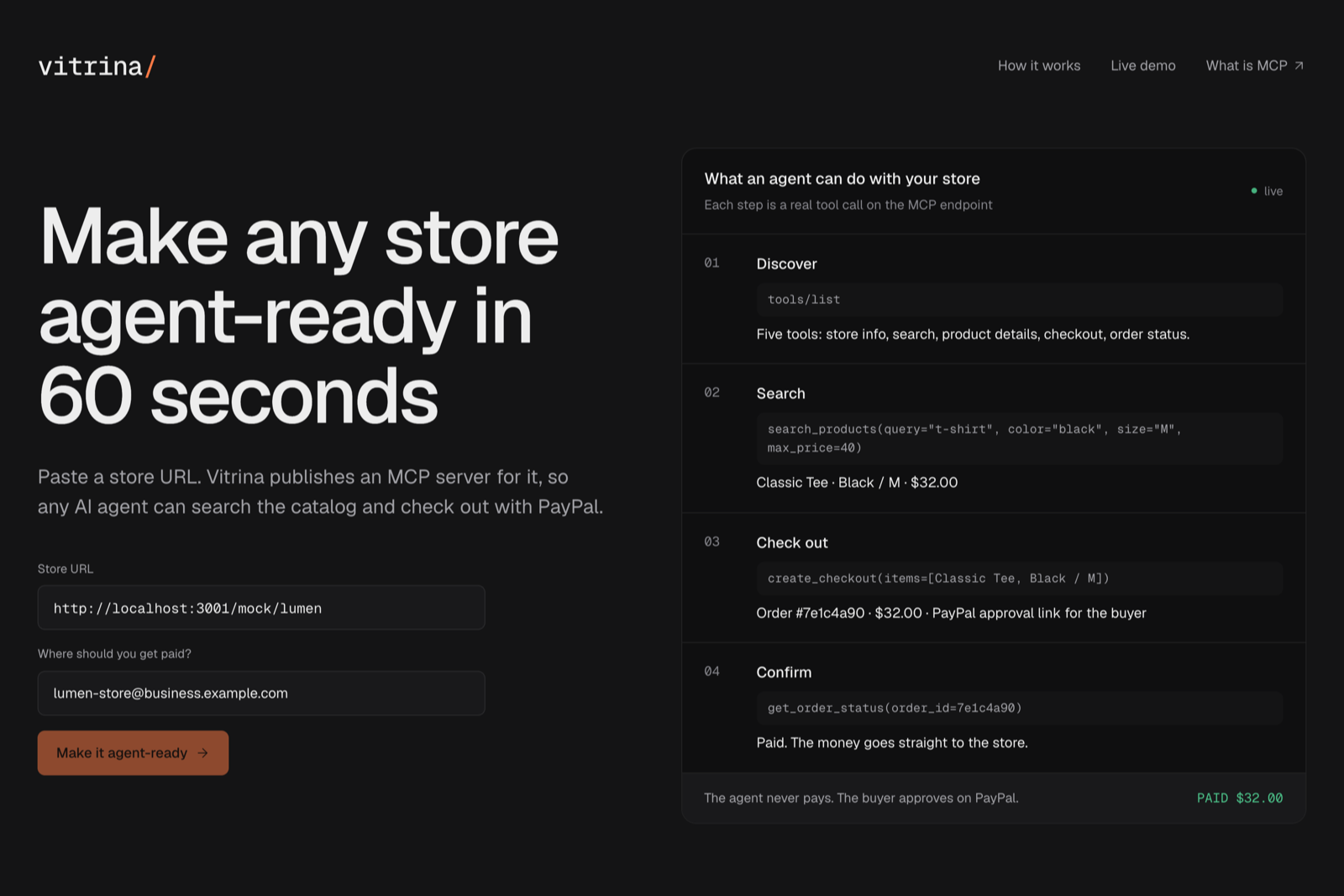
We wanted the smallest possible step for a merchant: paste your store URL, add your PayPal email, and your store is ready for AI agents. No plugin, no developer, no new account.
What it does
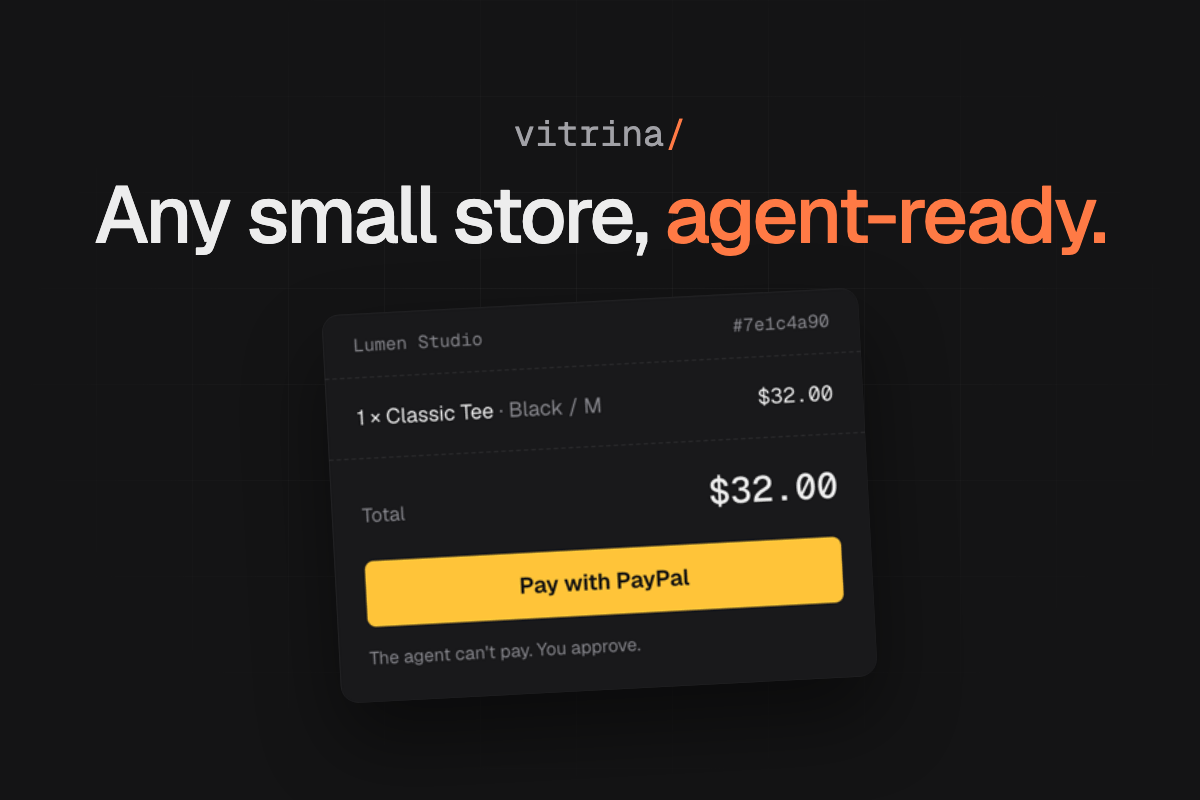
Vitrina turns any small online store into an agent-ready store.
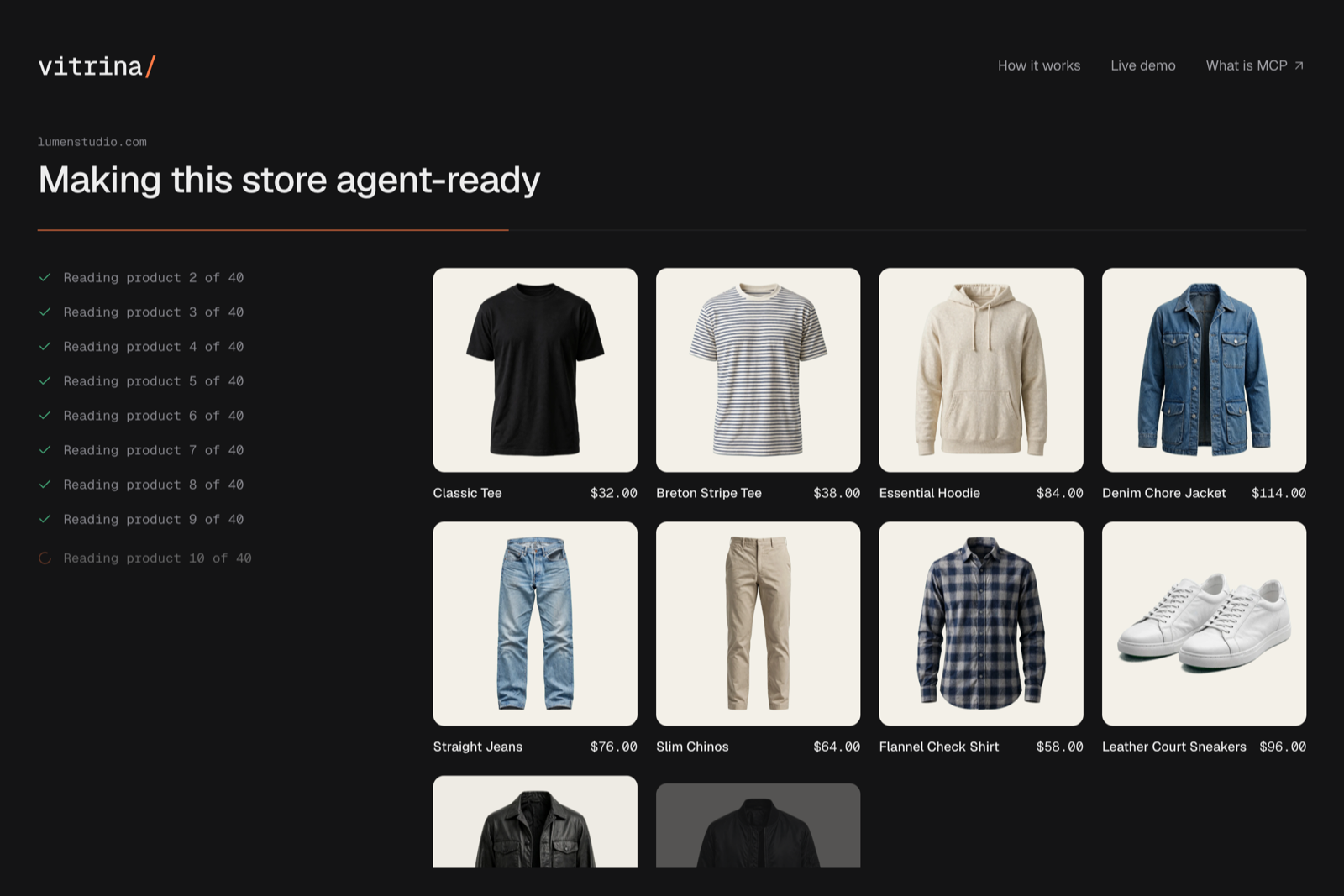
- Reads the store. It uses the Shopify catalog when there is one, then structured data (JSON-LD), and otherwise reads each product page with an LLM and validates the result against a schema. You get a clean catalog with variants, sizes, colors and prices.
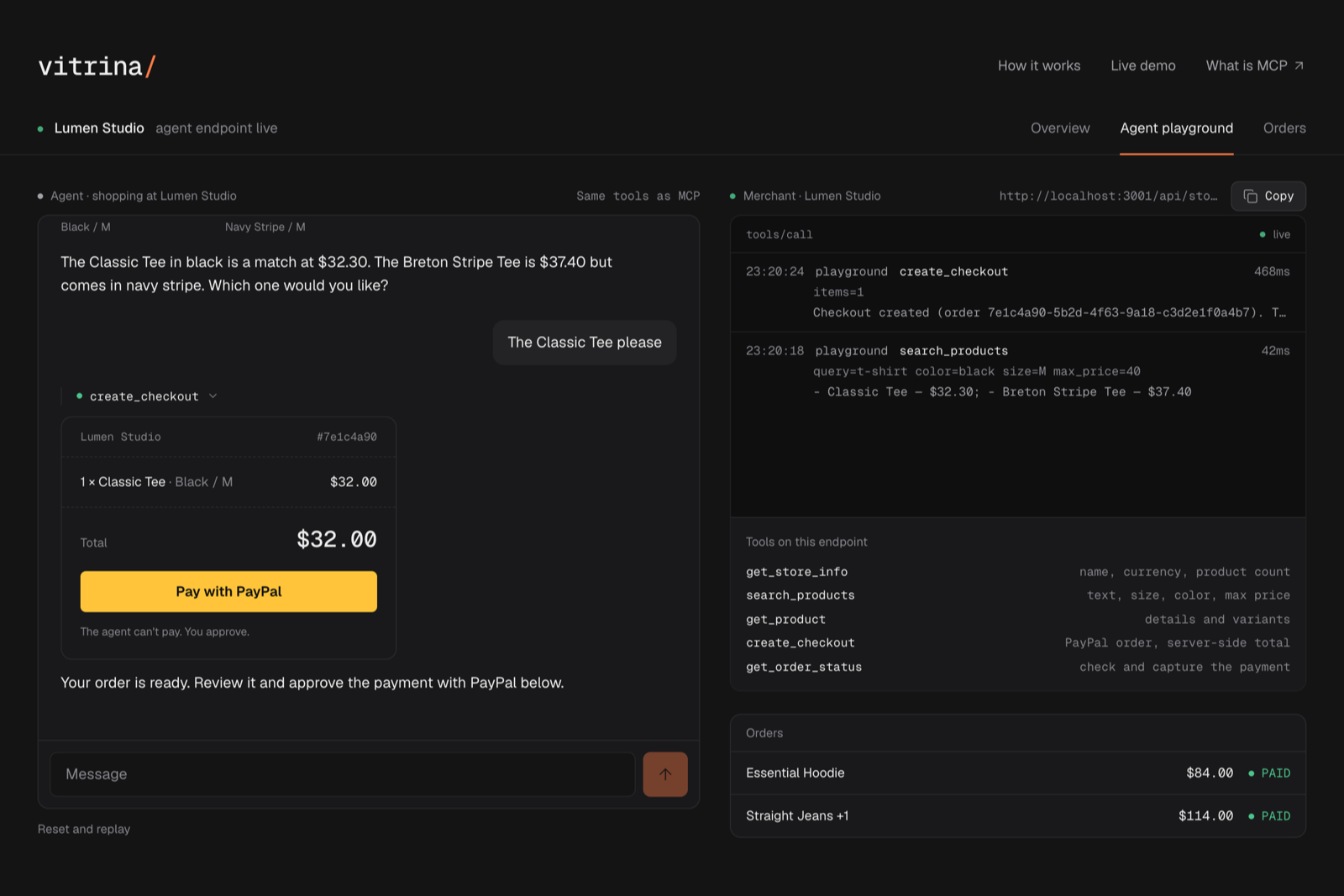
- Publishes an MCP server for the store. Five tools:
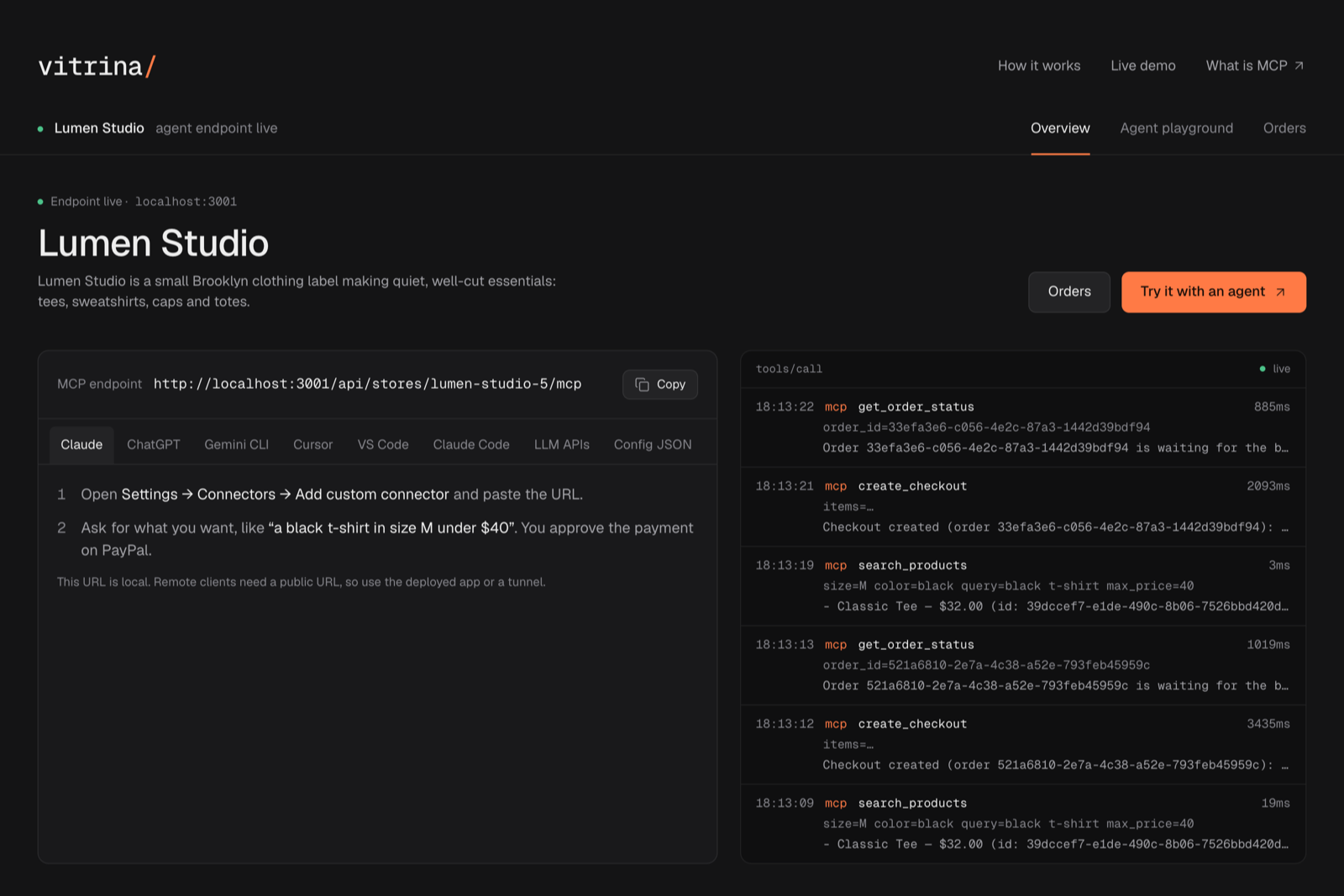
get_store_info,search_products,get_product,create_checkoutandget_order_status. Any MCP client (Claude, ChatGPT, Cursor, VS Code) can connect with one URL. There is also a shopper-side MCP that searches every Vitrina store at once and routes each checkout to the store that owns the product. - Checks out with PayPal.
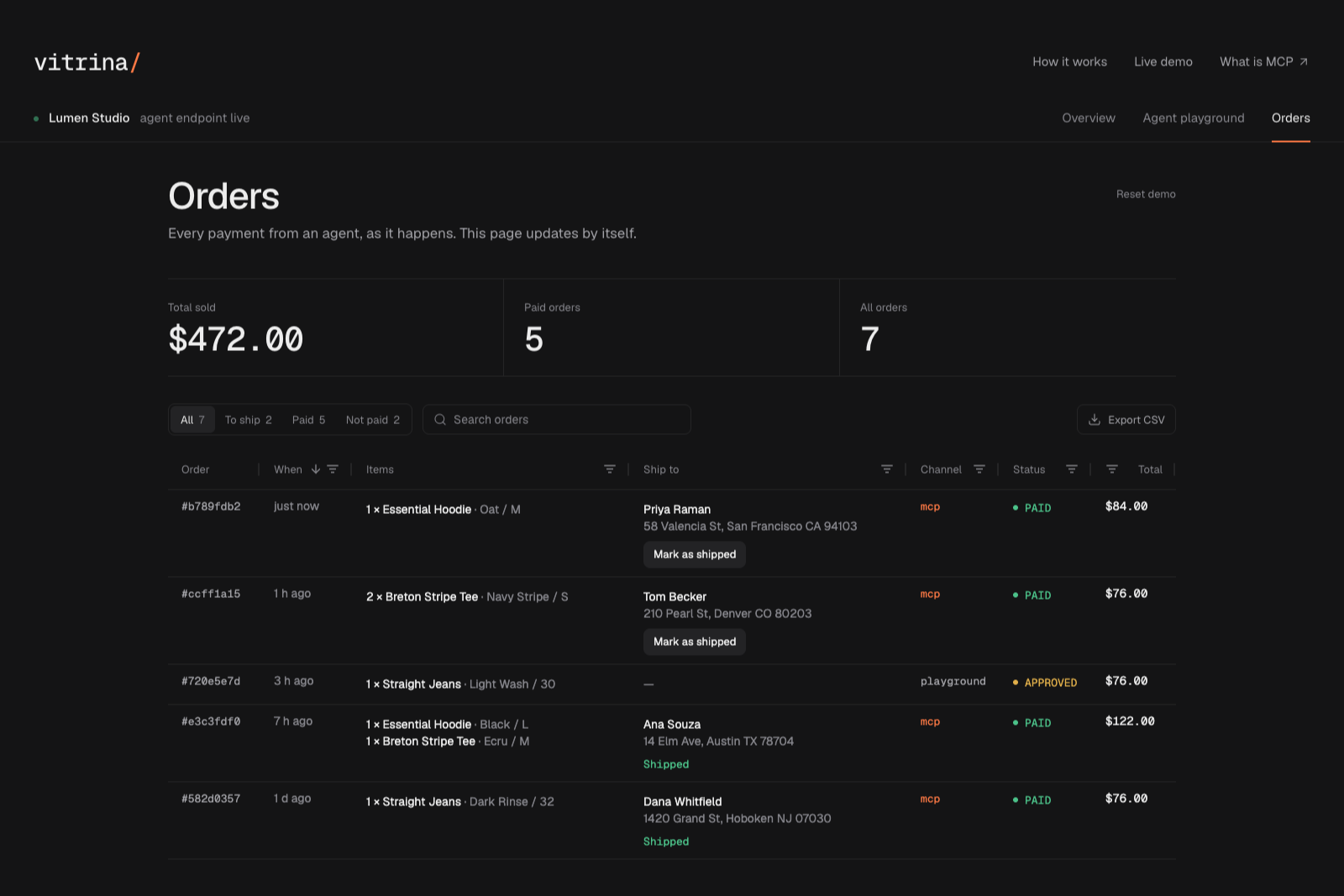
create_checkoutcreates a PayPal Orders v2 order with the store as the payee, so the money goes straight to the merchant. The agent can build the order but cannot pay: the buyer approves in PayPal, every time. - Gives the merchant an order book. Orders appear live, with the buyer's shipping address from PayPal, in a dashboard built on AG Grid: sort, filter, search, "To ship" queue, CSV export and a "Mark as shipped" action.
A built-in Agent playground runs the same tools with Claude, OpenAI or Llama, and shows every MCP tool call live, so you can watch an agent shop.
How we built it
- Next.js 15 + TypeScript, Drizzle and Postgres (Neon), Zod for every boundary.
- MCP TypeScript SDK with stateless Streamable HTTP: one endpoint per store, plus one for shoppers.
- PayPal Orders v2 (sandbox):
intent: CAPTURE,payee.email_addressrouting, totals always computed on the server from catalog prices (never from what the agent says), capture after approval that is safe to retry, shipping address taken from PayPal, and signature-verified webhooks. - Model-agnostic AI layer: one interface over Anthropic (Claude, with native structured output), OpenAI and Meta Llama. Visitors can bring their own key; it stays in their browser and is used for their request only.
- AG Grid Community for the merchant's order book, themed to match the app.
- Render for hosting, from a
render.yamlBlueprint, with migrations on start.
Challenges we ran into
- Reading messy stores reliably. Plain HTML stores are inconsistent. We built a cascade (Shopify → JSON-LD → LLM extraction) and made the LLM step return schema-validated JSON, retrying with the validation errors when it gets something wrong.
- Keeping the human in the loop. It is tempting to let the agent "just buy it". We designed the tools so the agent stops at the PayPal approval link, and the order is only captured after the buyer approves.
- Paying the right merchant without onboarding. Using PayPal's payee field means each store only needs its PayPal email, not API keys, and funds never pass through us.
- Trusting nothing the agent says about money. Prices, variants and totals are re-checked on the server against the catalog before any PayPal order is created.
- Running a public demo without paying for everyone's AI. The deploy runs without a server AI key: the MCP path needs no model (the client brings its own), and visitors can plug in their own key for the playground.
What we learned
- MCP makes "agent-ready" a very small surface: five well-described tools are enough for a full shopping flow.
- PayPal's approval step is a feature, not friction: it is the natural place for human consent in agentic commerce.
- Structured output plus validation turns LLM extraction from a demo trick into something you can build on.
What's next
- Inventory sync and order webhooks back to the merchant's existing platform.
- Venmo and Pay Later through the same PayPal checkout.
- A public directory so shopper agents can discover Vitrina stores.
Try it
- Live app: https://vitrina-q1if.onrender.com (free instance: the first visit can take up to a minute to wake up)
- MCP for any agent:
https://vitrina-q1if.onrender.com/api/mcp - Pay with any PayPal sandbox Personal account.
- The live app works without an AI key: click Use demo store, then connect Claude to the MCP URL and ask for "a black t-shirt in size M, under $40". Full testing steps are in the README.
Built With
- ag-grid
- anthropic
- claude
- drizzle
- llama
- mcp
- model-context-protocol
- neon
- next.js
- openai
- paypal
- paypal-orders-api
- postgresql
- react
- render
- tailwindcss
- typescript
- zod
