-
-
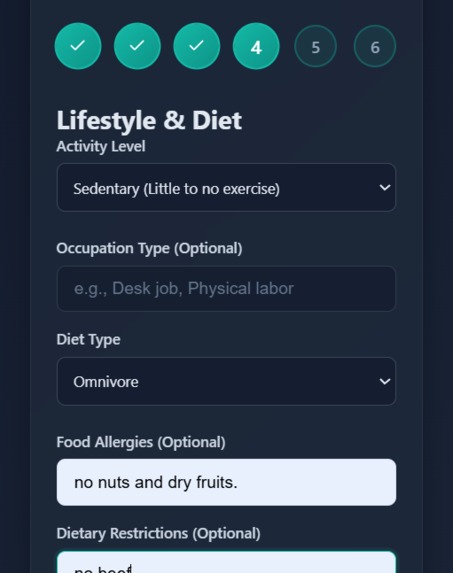
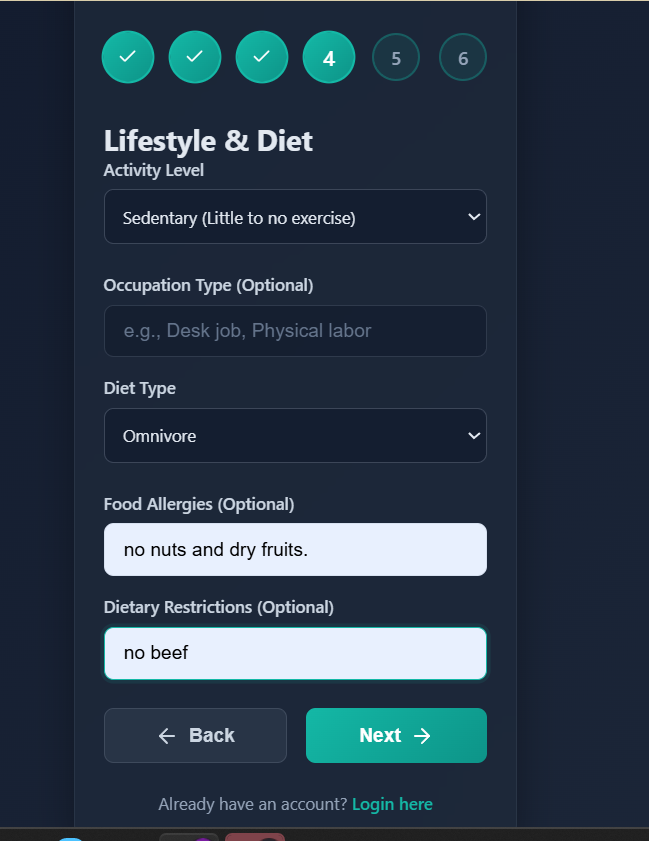
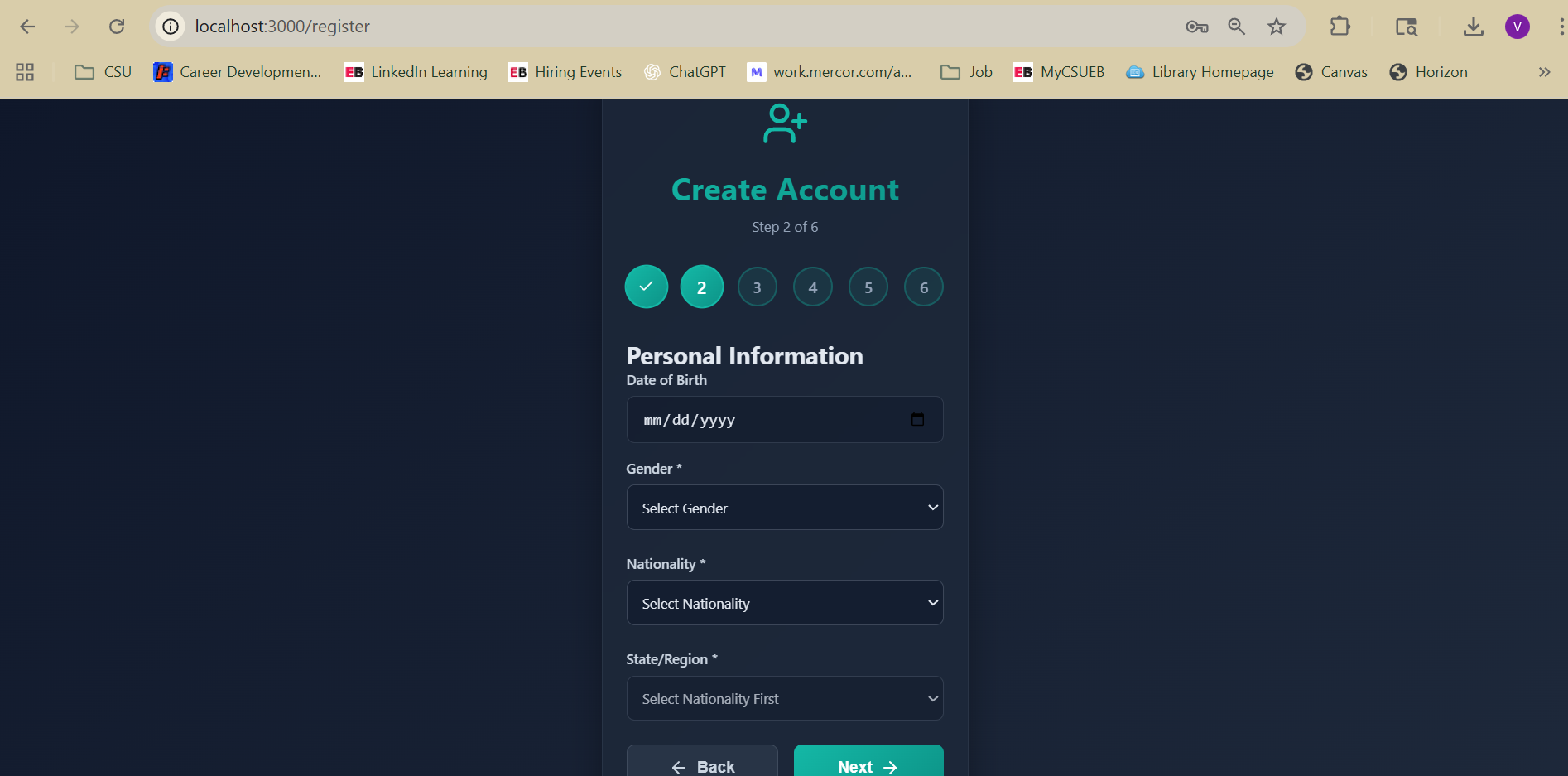
Registration
-
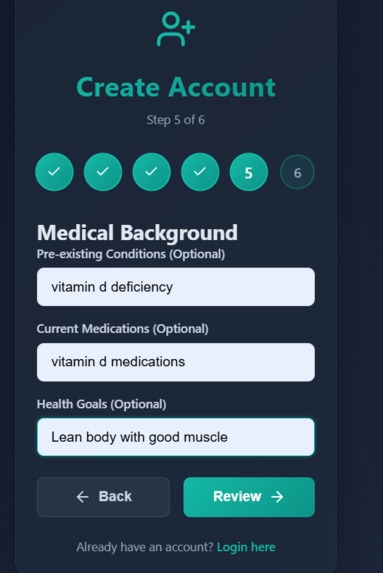
Registration
-
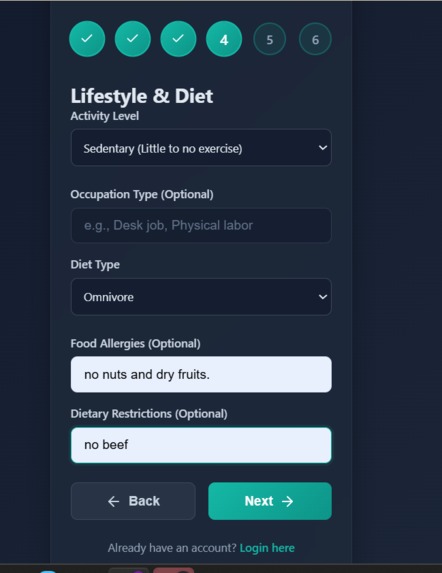
Registration
-
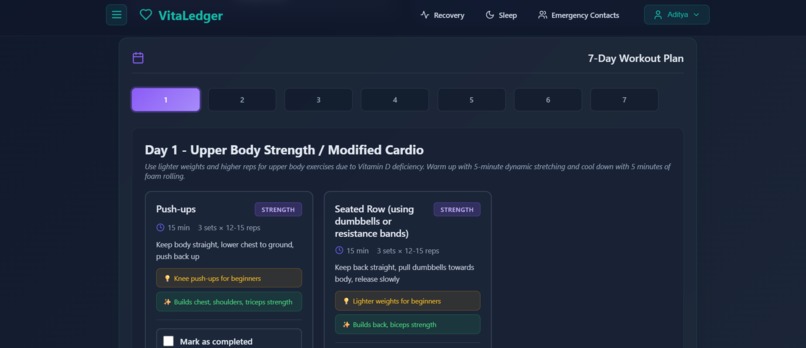
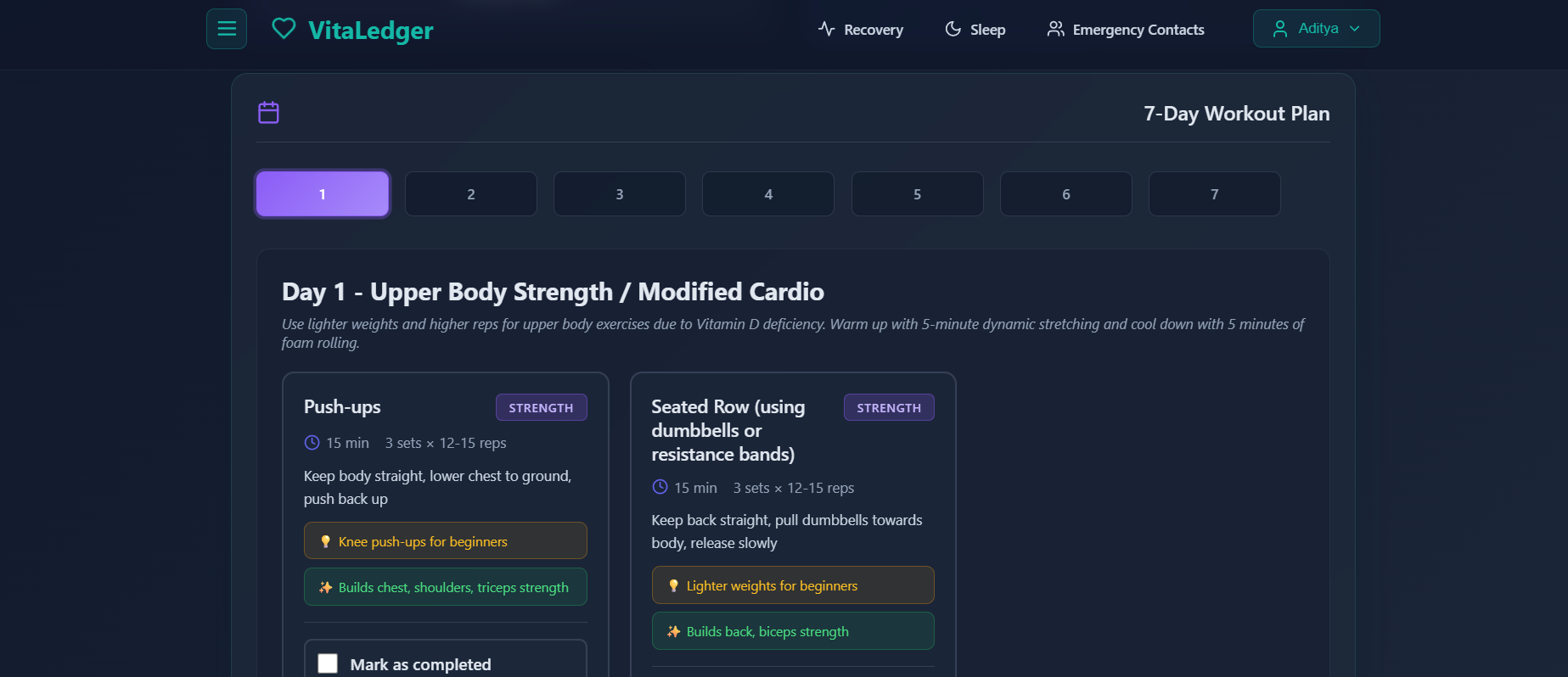
Fitness Tracker
-
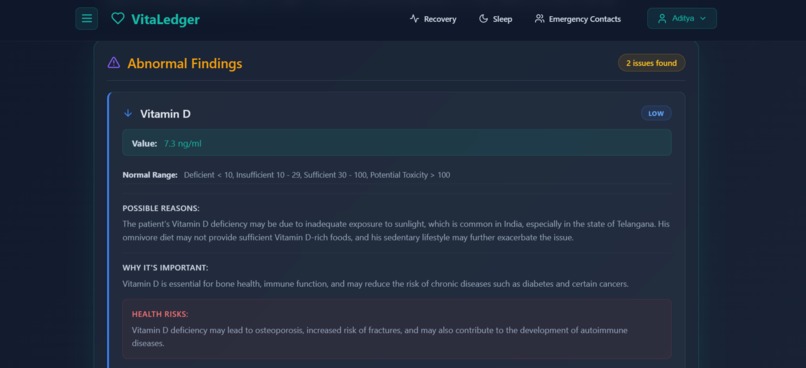
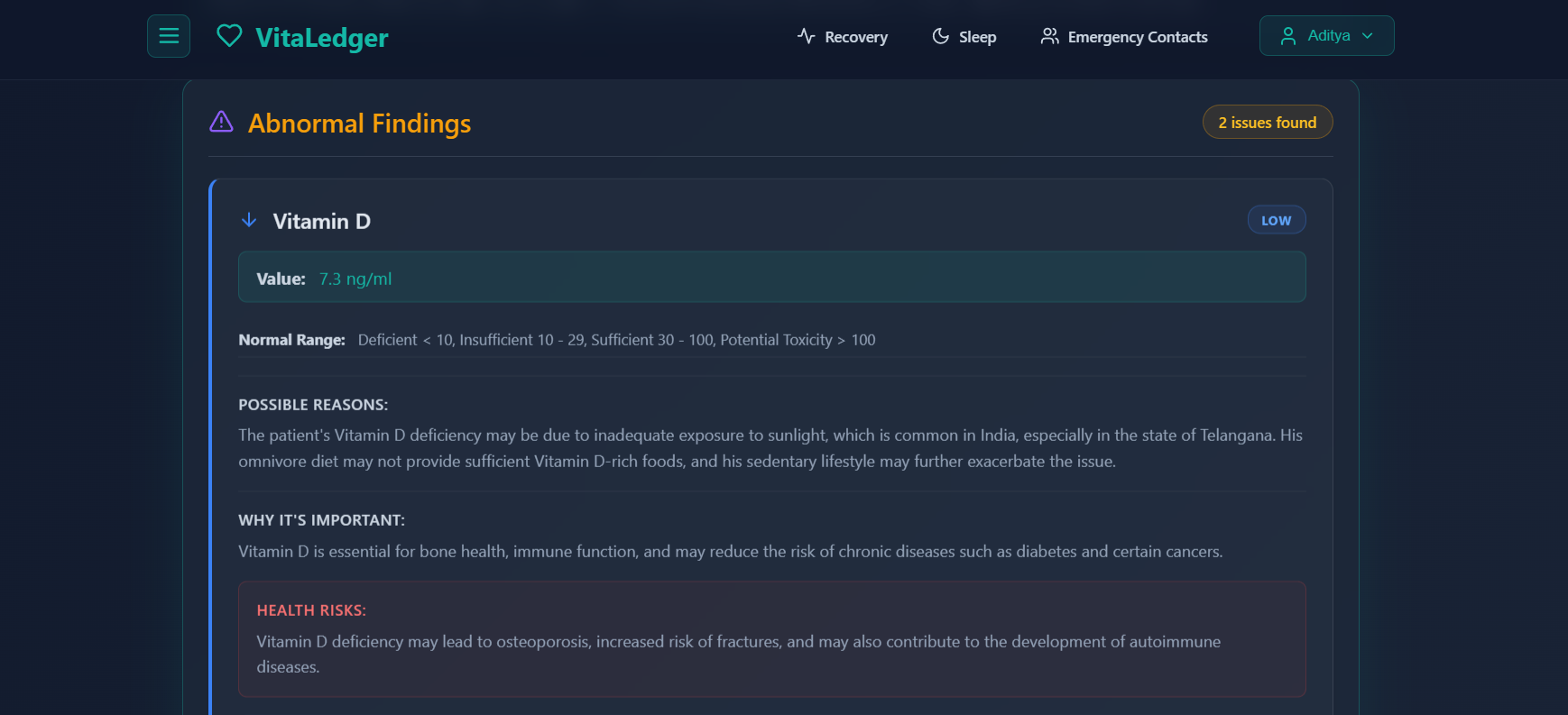
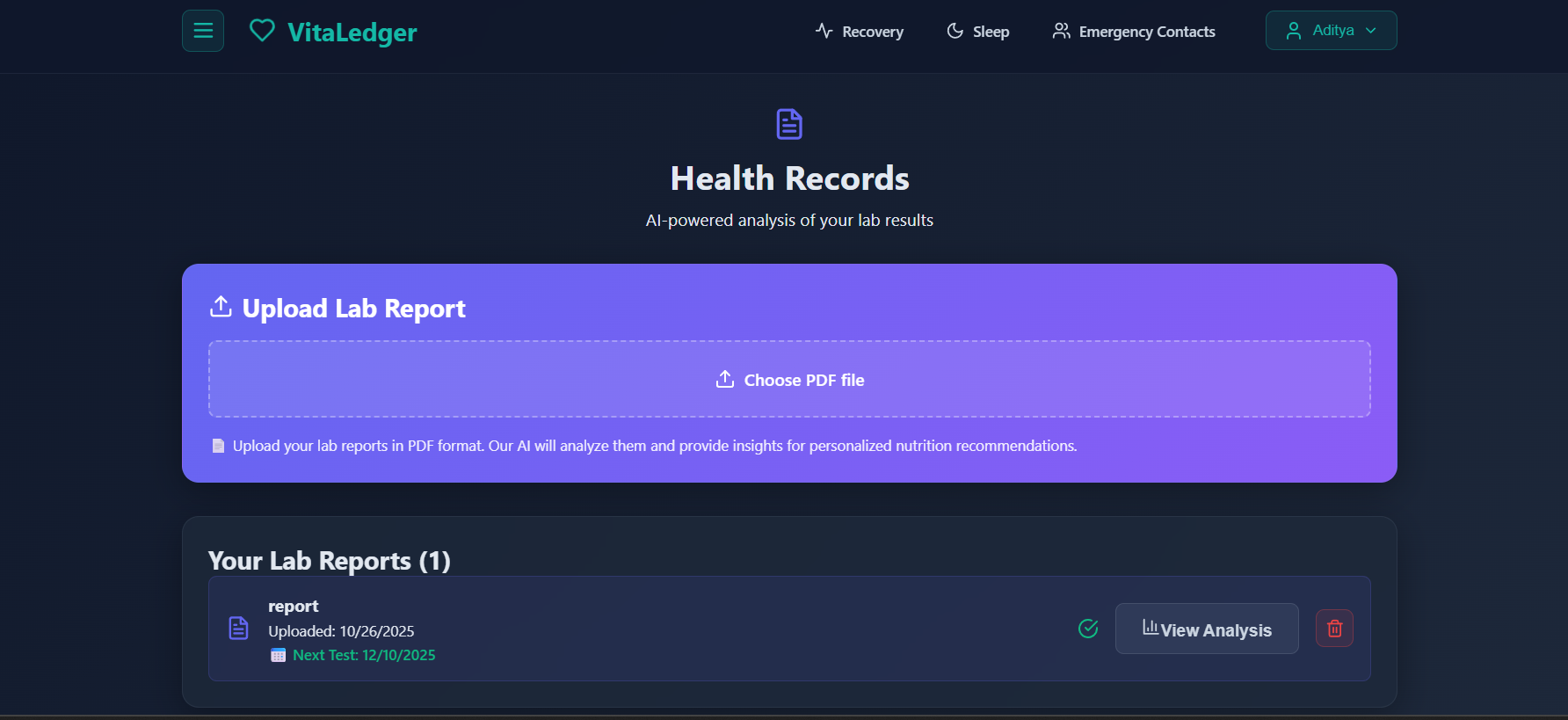
Lab Insights
-
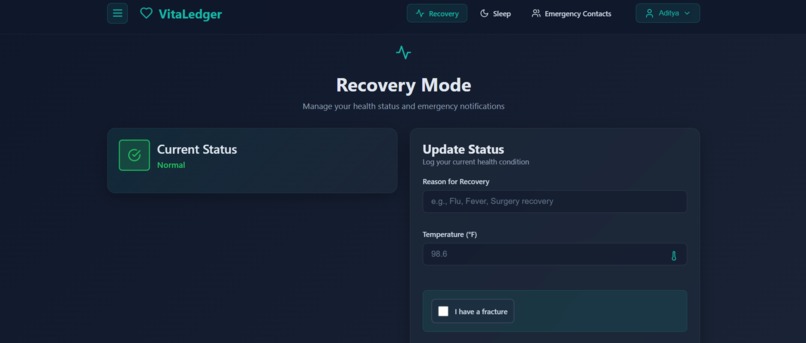
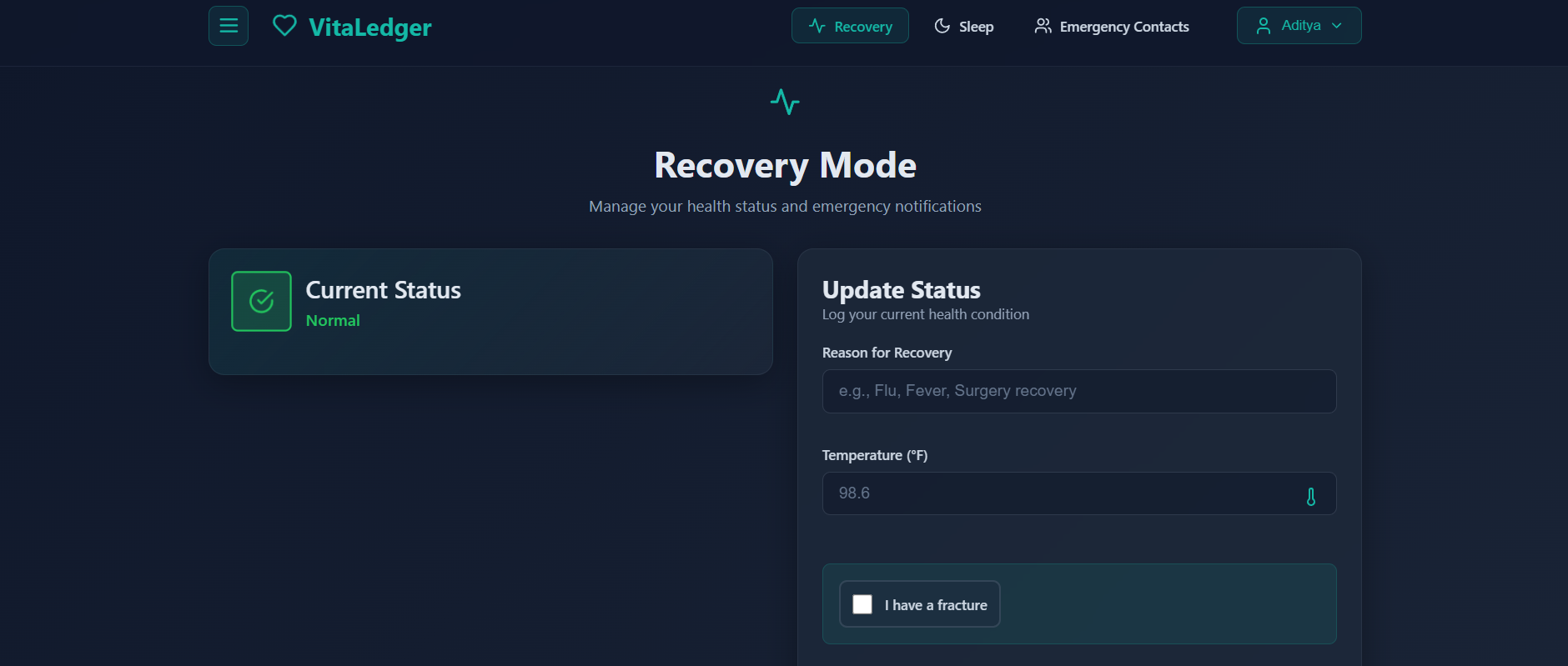
Recovery page
-
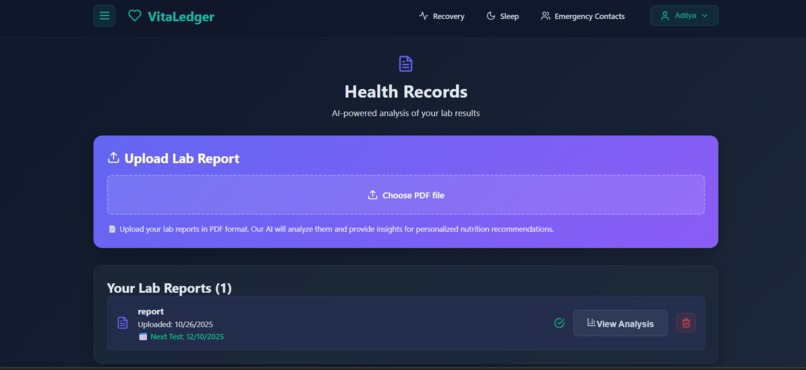
Health Records
-
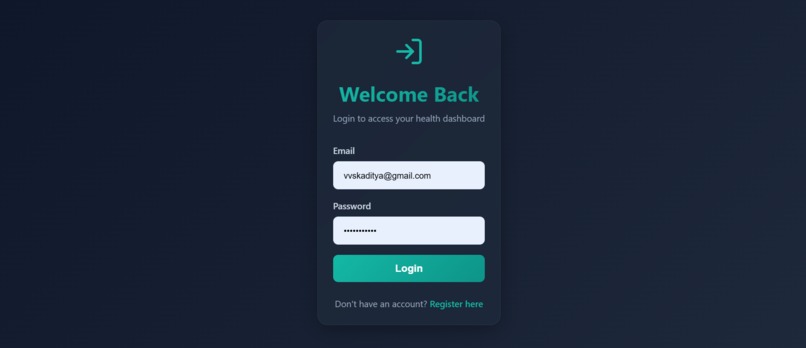
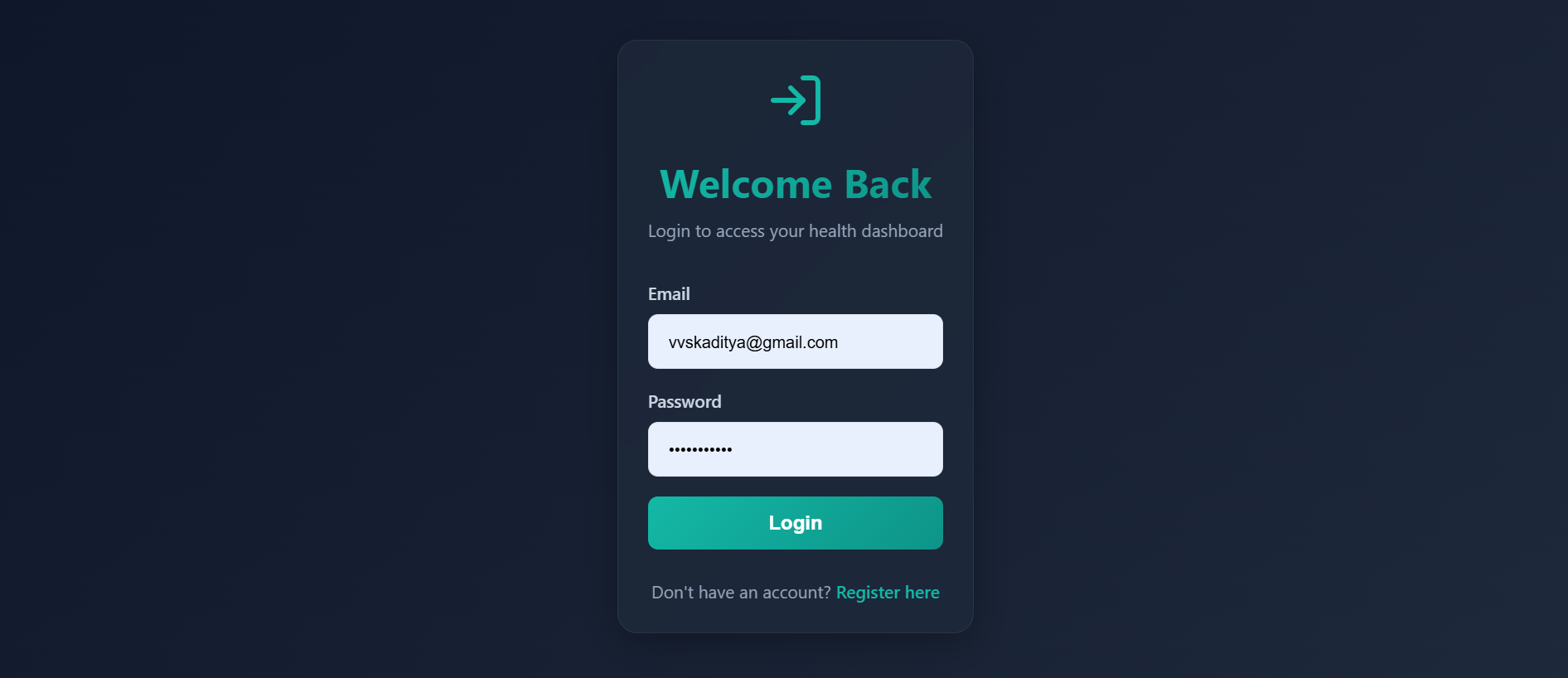
Login
-
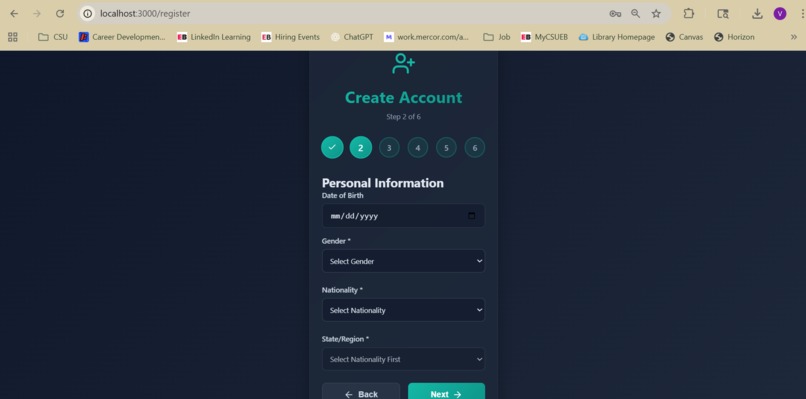
Registration
-
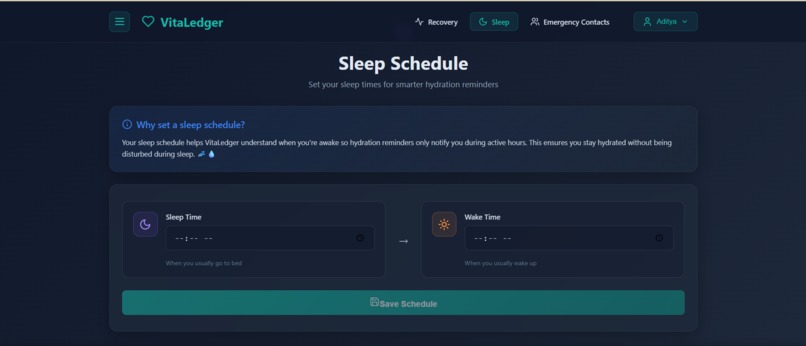
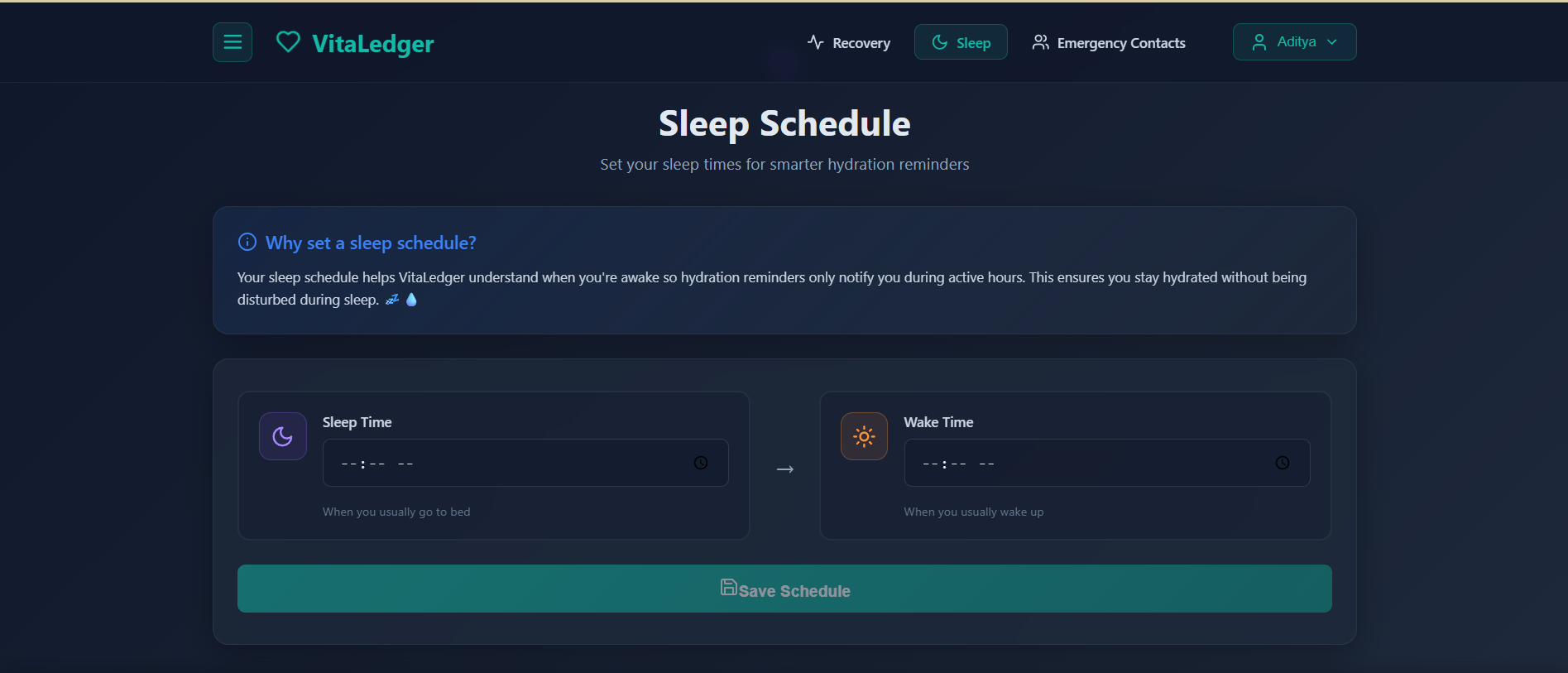
Sleep Tracker
-
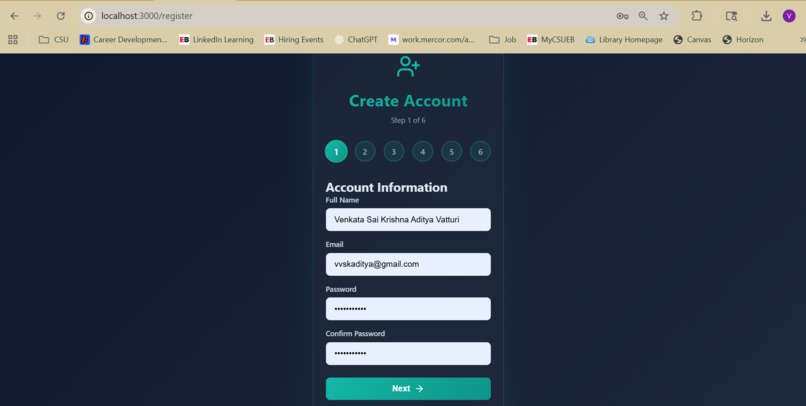
Registration
-
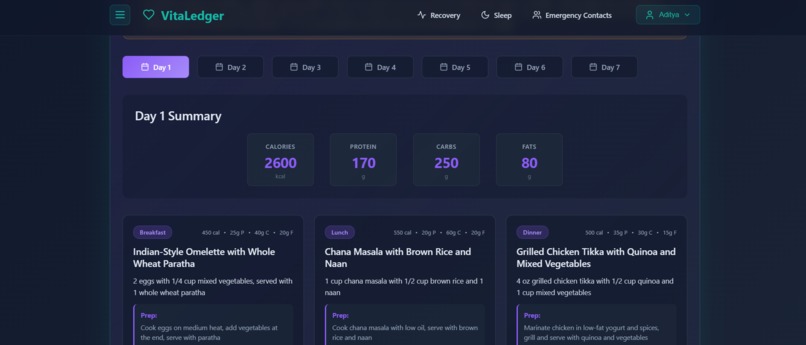
Meal Planner
-
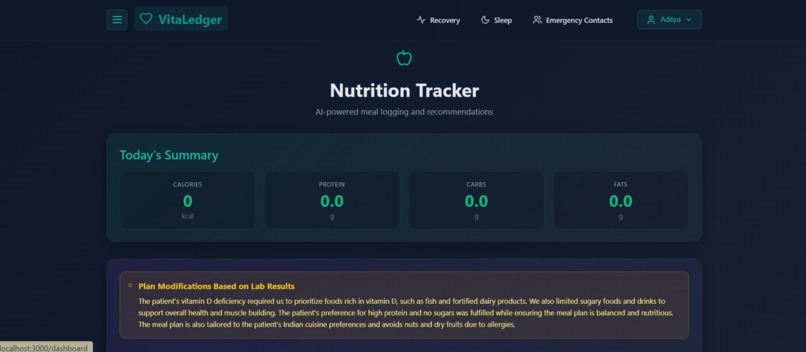
Nutrition Tracker
-
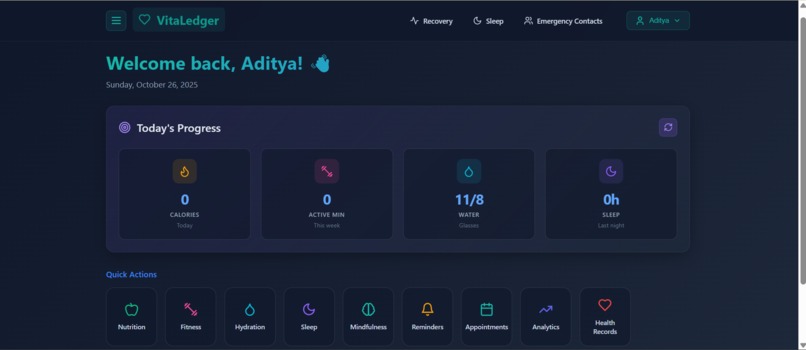
Dashboard
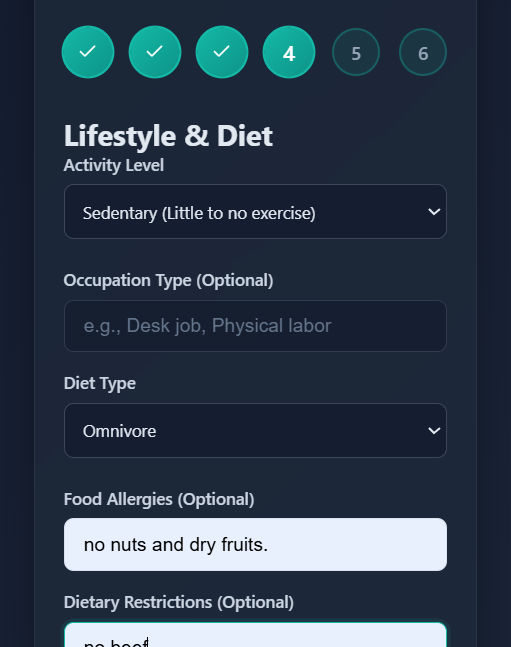
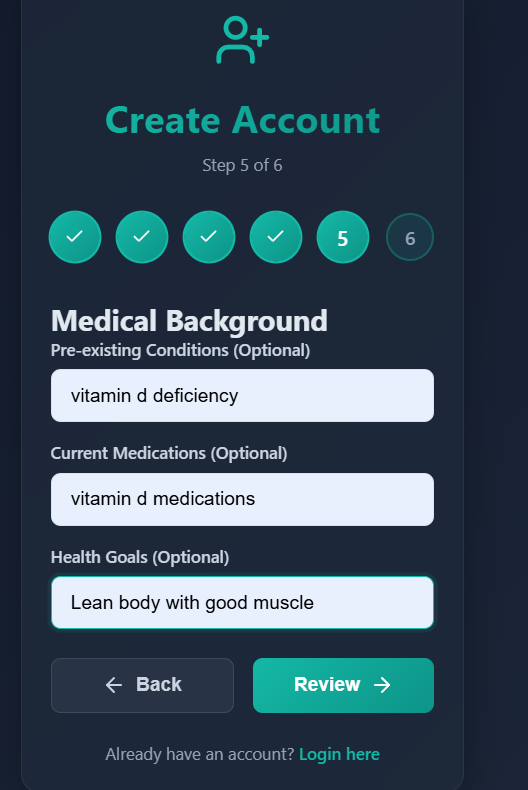
VitaLedger: Project Story
🌟 Inspiration
The idea for VitaLedger was born from a simple realization: health data is everywhere, but actionable insights are rare.
In today's world, we track steps, log meals, monitor sleep, and get lab results—but this data lives in silos. Fitness apps don't talk to nutrition trackers. Lab reports sit in folders, unanalyzed. Mental wellness is often an afterthought.
What if there was a single platform that could:
- Unify all aspects of health tracking
- Use AI to transform raw data into personalized recommendations
- Consider your unique body chemistry (via lab results) when suggesting meals or workouts
- Provide mental wellness support alongside physical health
This vision drove the creation of VitaLedger—a holistic health companion powered by modern AI.
🎯 What I Learned
Building VitaLedger was a journey through cutting-edge technologies and complex health domains:
Technical Discoveries
1. RAG (Retrieval-Augmented Generation) Architecture
I learned how to implement a production-grade RAG system that:
- Scrapes real-time health information from verified sources (using BrightData SERP API)
- Embeds content using sentence transformers
- Stores vectors in ChromaDB for lightning-fast retrieval
- Combines retrieved context with LLM reasoning (Groq's Llama 3.3)
The key insight: $\text{Quality of AI Response} \propto \text{Quality of Retrieved Context}$
2. Subscription System Architecture
Implemented a flexible subscription system with three modes:
- MOCK: Local testing with simulated payments
- LAVA_SANDBOX: Real API integration with test cards (zero cost)
- LAVA: Production-ready payment processing
This taught me the importance of abstraction layers—one interface, multiple implementations.
3. Multi-Modal AI Integration
Different features need different AI approaches:
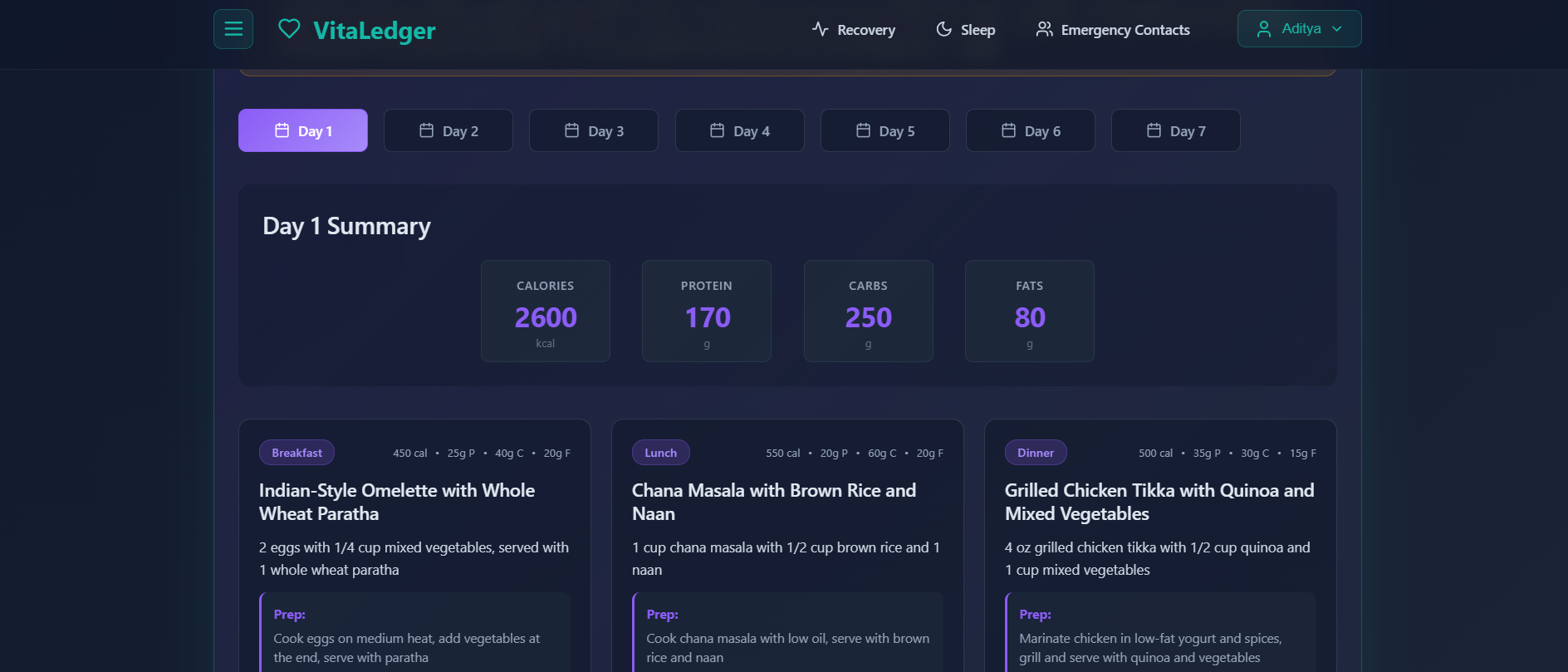
- Meal Planning: Structured JSON generation with cultural awareness
- Fitness Plans: Progressive overload calculations: $\text{Volume}{\text{next}} = \text{Volume}{\text{current}} \times (1 + \alpha)$ where $\alpha$ is the progression rate
- Mindfulness: Conversational, empathetic responses
- Lab Analysis: Medical reasoning with safety guardrails
4. State Management Patterns
React's useState and useEffect patterns for:
- Real-time health tracking
- Trial countdown timers
- Subscription status synchronization
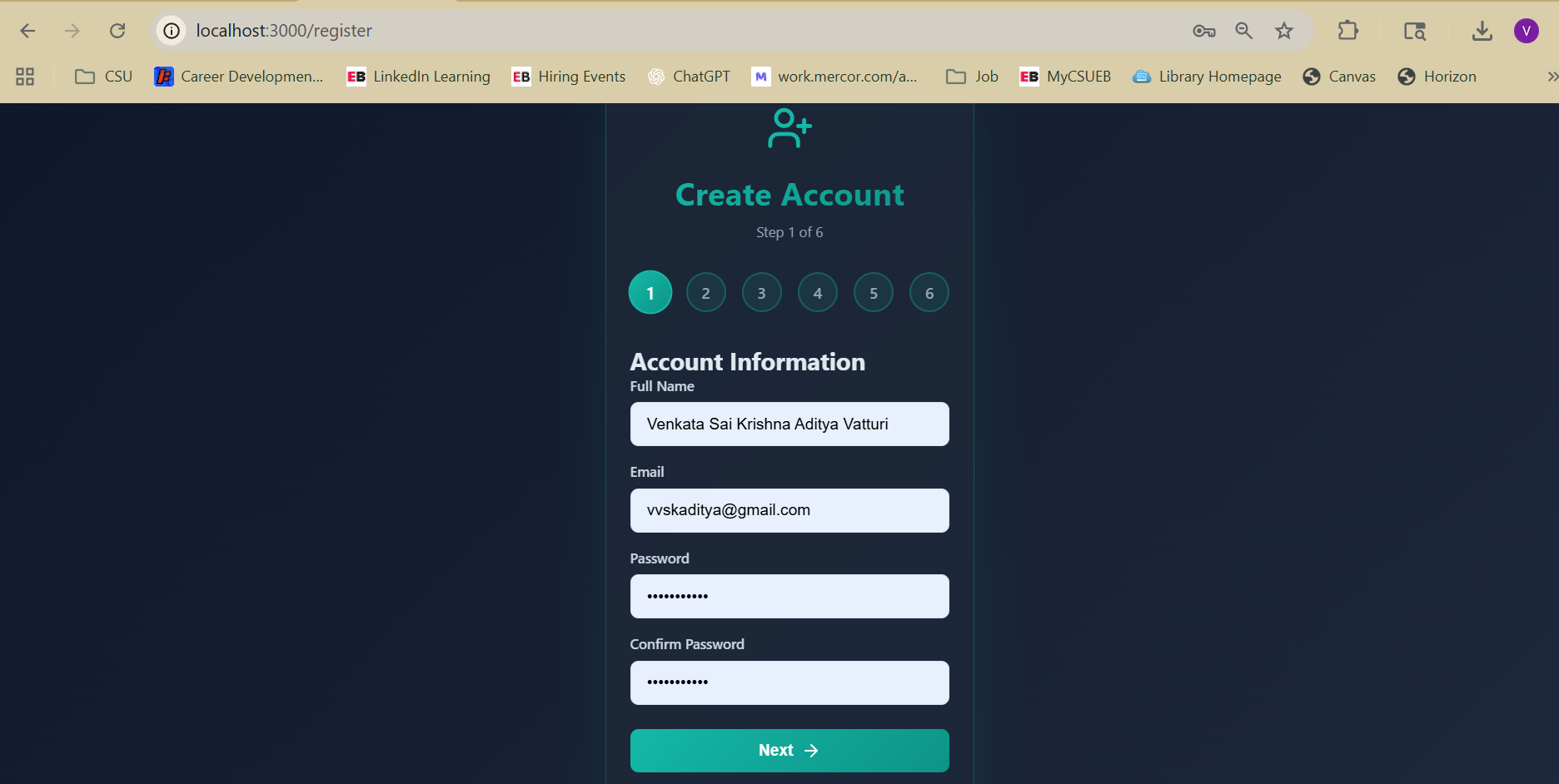
- Form validation and error handling
Domain Knowledge
Nutrition Science:
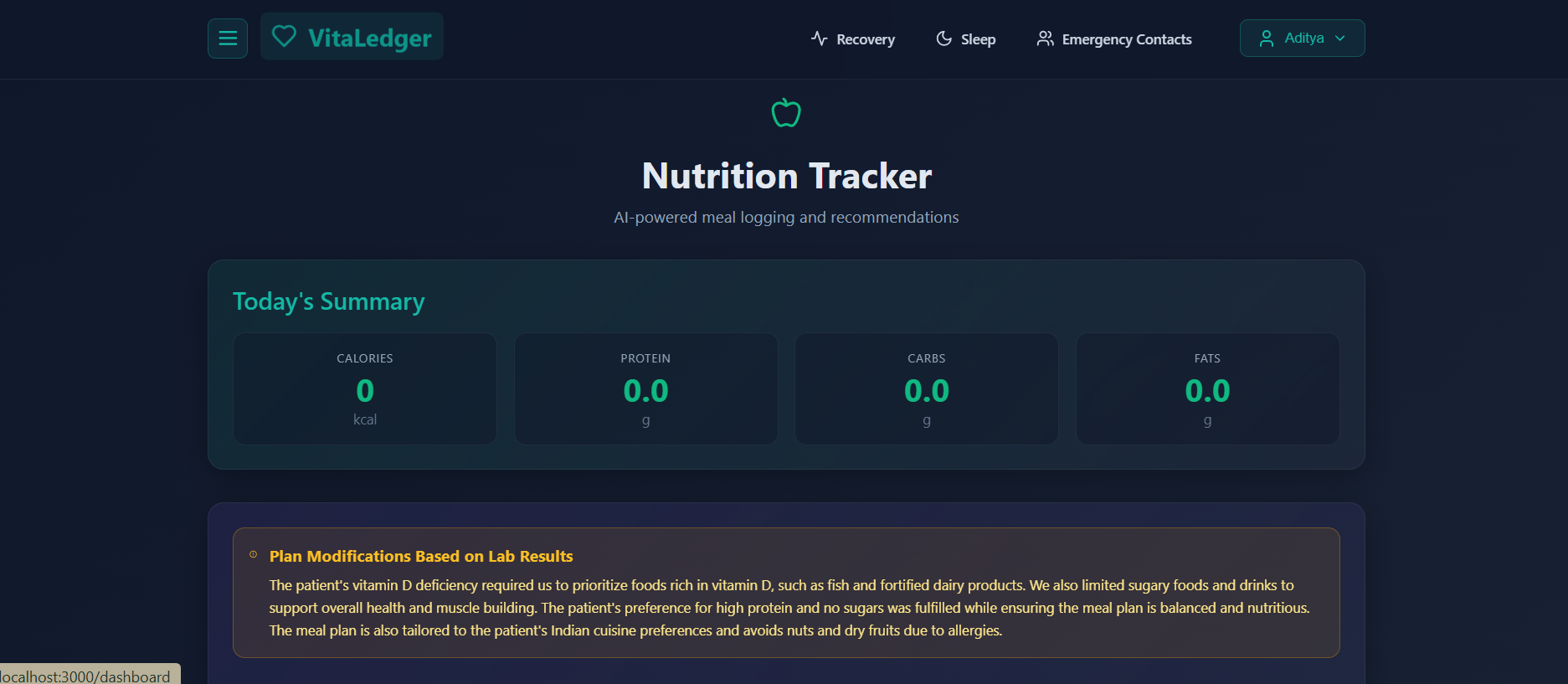
- Macro calculations: $\text{Calories} = (4 \times \text{Protein}_g) + (4 \times \text{Carbs}_g) + (9 \times \text{Fats}_g)$
- Cultural food preferences impact adherence
- Lab results (like high cholesterol) should override user preferences
Fitness Programming:
- Progressive overload principles
- Recovery tracking importance
- Personalization based on experience level
Mental Health:
- Importance of empathetic AI responses
- Balancing guidance with professional referrals
- Mindfulness techniques (breathing, journaling)
🔨 How I Built It
Architecture Overview
┌─────────────┐         ┌──────────────┐         ┌─────────────┐
│   React     │   HTTP  │   FastAPI    │   SQL   │   SQLite    │
│  Frontend   │ ◄─────► │   Backend    │ ◄─────► │  Database   │
└─────────────┘         └──────────────┘         └─────────────┘
                               │
                        ┌──────┴───────┐
                        ▼              ▼
                   ┌─────────┐   ┌──────────┐
                   │  Groq   │   │ChromaDB  │
                   │   AI    │   │   RAG    │
                   └─────────┘   └──────────┘
Tech Stack
Frontend:
- React 18 (functional components, hooks)
- Framer Motion (animations)
- Lucide React (icons)
- CSS3 (gradients, glassmorphism)
Backend:
- FastAPI (async Python web framework)
- SQLAlchemy (ORM)
- Pydantic (validation)
- Groq API (LLM inference)
- ChromaDB (vector store)
- BrightData (web scraping)
AI/ML:
- Llama 3.1 8B Instant (fast, high rate limits)
- Sentence Transformers (embeddings)
- RAG pipeline for knowledge retrieval
Key Implementation Decisions
1. Async-First Backend
All AI calls use async/await to prevent blocking:
async def generate_meal_plan(self, user_profile, expectations):
    # Non-blocking AI call
    response = await self.client.chat.completions.create(...)
    return parse_response(response)
2. Trial System Auto-Activation
New users get instant value:
- 3-day Plus plan trial on registration
- Trial expiration checking in guards
- Countdown UI showing time remaining
3. Component-Based UI
Reusable components (Button, Card, Input) with consistent styling:
- Gradient backgrounds
- Smooth animations
- Dark theme optimized
4. Environment-Based Configuration
.env files control behavior:
- Switch payment modes instantly
- Configure AI models per environment
- Manage API keys securely
💪 Challenges Faced
Challenge 1: Rate Limiting Hell
Problem: Llama 3.3 70B has only 30 requests/day on free tier. Hit limits during development.
Solution:
- Switched to Llama 3.1 8B Instant (14,400 requests/day)
- Implemented exponential backoff with
@backoffdecorator - Added request caching for repeated queries
Challenge 2: JSON Parsing from LLMs
Problem: AI sometimes returned malformed JSON with markdown code blocks:
\`\`\`json
{"plan": ...}
\`\`\`
Solution:
- Added explicit instructions: "Return ONLY valid JSON without markdown"
- Implemented robust parsing with regex fallbacks
- Validated output with Pydantic models
Challenge 3: Cross-Browser Hold-to-Talk
Problem: Voice recording worked in Chrome but failed in Firefox.
Solution:
- Added
onMouseLeavehandler to stop recording when mouse exits button - Added
onTouchCancelfor mobile devices - Tested across Chrome, Firefox, Safari
Challenge 4: Subscription State Synchronization
Problem: Frontend showed stale subscription data after payment.
Solution:
- Implemented webhook endpoint for real-time updates
- Added polling fallback for missed webhooks
- Used optimistic UI updates with rollback on error
Challenge 5: Empty Meal Plan Section
Problem: New users saw empty space instead of "Generate Meal Plan" button.
Solution:
- Fixed conditional rendering logic
- Ensured
fullMealPlanexplicitly set tonullon error - Added proper state initialization
🎨 Design Philosophy
1. Progressive Disclosure
Don't overwhelm users—show complexity gradually:
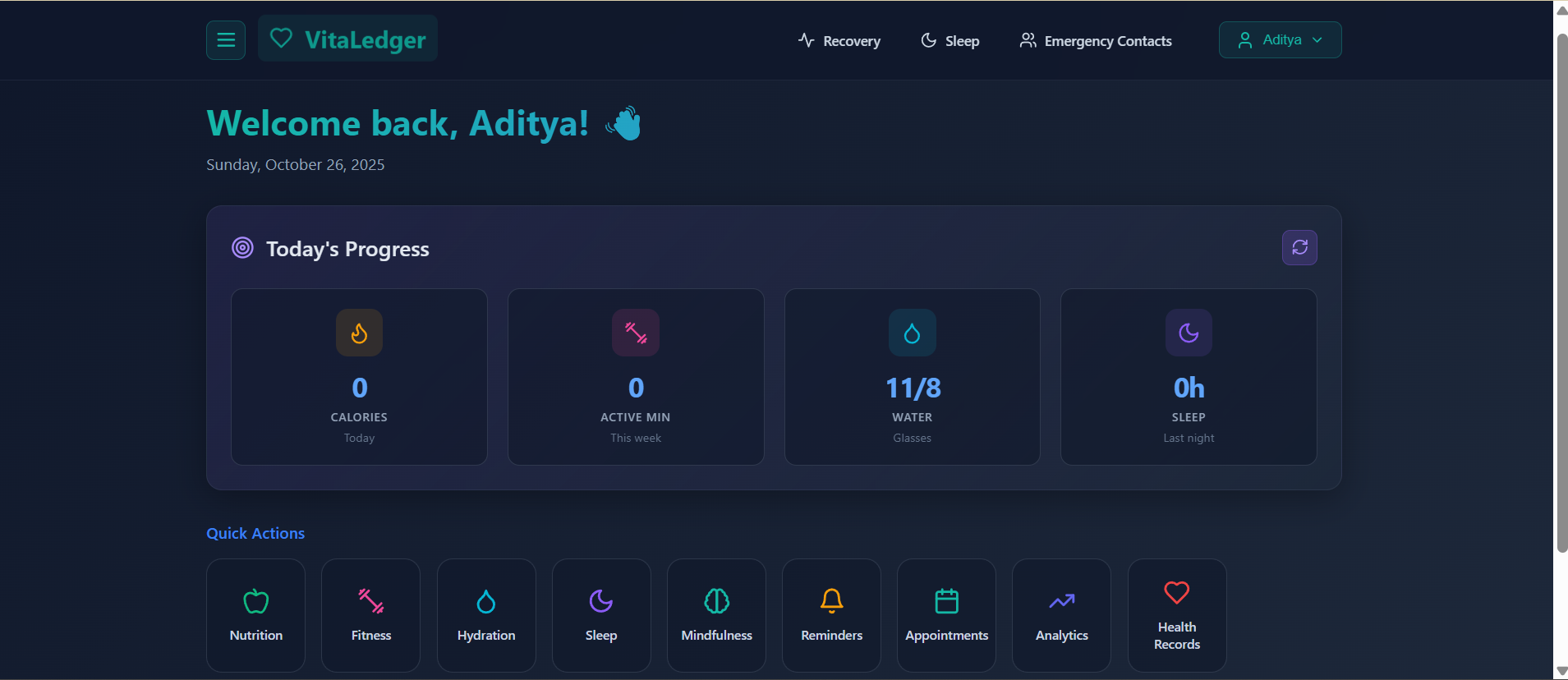
- Dashboard: Simple today's stats
- Drill down: Detailed history and trends
- Advanced: AI-powered insights
2. AI Transparency
Always show when AI is used:
- "AI-powered" labels
- Source citations for meal plans
- Clear distinction between AI and medical advice
3. Accessibility First
- High contrast text ($\text{contrast ratio} \geq 4.5:1$)
- Large touch targets (min 44×44px)
- Keyboard navigation support
- Screen reader friendly
4. Mobile-First Responsive
Breakpoint strategy:
- Mobile: < 768px (single column)
- Tablet: 768-1024px (two columns)
- Desktop: > 1024px (three columns)
📈 Metrics & Impact
Performance:
- Page load: < 2s
- AI response: ~3-5s (with streaming)
- Database queries: < 50ms
Code Quality:
- 10,000+ lines of code
- Modular architecture (8 backend modules)
- Reusable components (15+ React components)
User Experience:
- Auto-trial reduces friction
- Sandbox mode enables risk-free testing
- Consistent design language
🚀 Future Roadmap
Phase 1: Enhanced AI
- Multi-modal AI (image-based meal logging)
- Voice-first interaction mode
- Predictive health insights
Phase 2: Social Features
- Share meal plans with friends
- Community challenges
- Leaderboards
Phase 3: Wearable Integration
- Apple Health sync
- Fitbit/Garmin integration
- Real-time heart rate analysis
Phase 4: Telehealth
- Video consultations with dietitians
- Lab result sharing with doctors
- Prescription tracking
🙏 Acknowledgments
Technologies:
- Groq for lightning-fast LLM inference
- Lava for flexible payment infrastructure
- BrightData for reliable web scraping
- OpenAI for inspiring modern AI UX patterns
Community:
- FastAPI docs for excellent async patterns
- React community for component best practices
- Health tech pioneers for domain inspiration
💡 Key Takeaway
Building VitaLedger taught me that great health tech isn't just about tracking—it's about understanding.
Raw data means nothing without context. A calorie count is just a number until AI considers your goals, your culture, your lab results, and your lifestyle. That's where the magic happens.
The future of health is personalized, intelligent, and empowering—and VitaLedger is a step in that direction.
Built with ❤️ and lots of ☕
"The best project I ever worked on was the one that made me healthier while building it."
Built With
- bcrypt
- brightdata-serp-api
- chromadb
- fastapi
- framer-motion
- groq-api-(llama-3.1)
- httpx
- javascript
- jwt
- lava
- lucide-react
- payments
- pydantic
- python
- react
- sentence-transformers
- sqlalchemy
- sqlite


Log in or sign up for Devpost to join the conversation.