Inspiration
What it does
Inspiration
Many people know that nutrition matters, but do not know what their body actually needs, what is in their meals, or how different foods interact with their nutritional goals. VitaVue was created to make evidence-based nutrition easier to understand and apply in everyday life.
What VitaVue Does
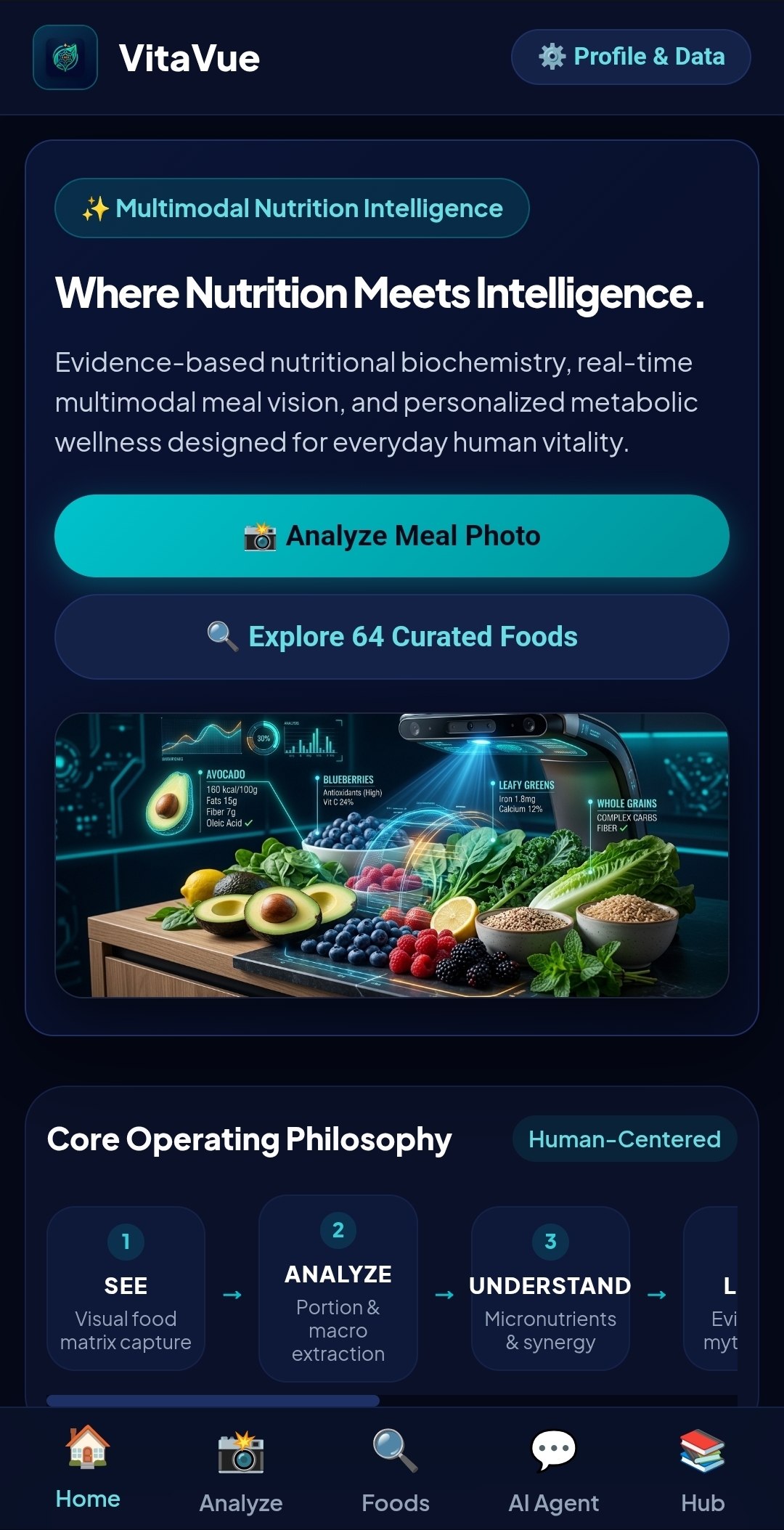
VitaVue is a multimodal nutrition intelligence platform that combines computer vision, nutritional data, and evidence-based reasoning.
Users can:
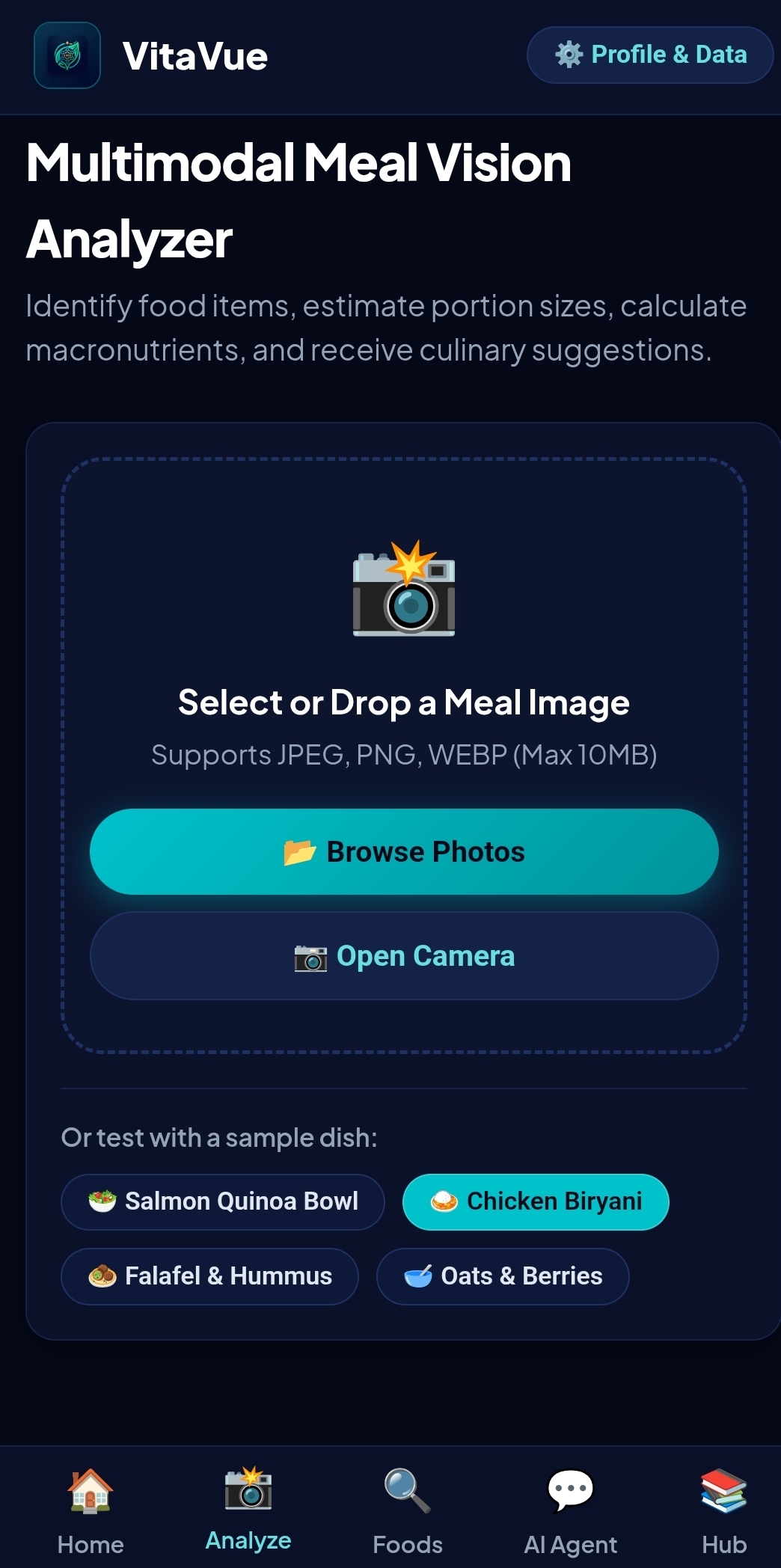
- 📸 Analyze meal images to identify visible food components and estimate portions and macronutrients.
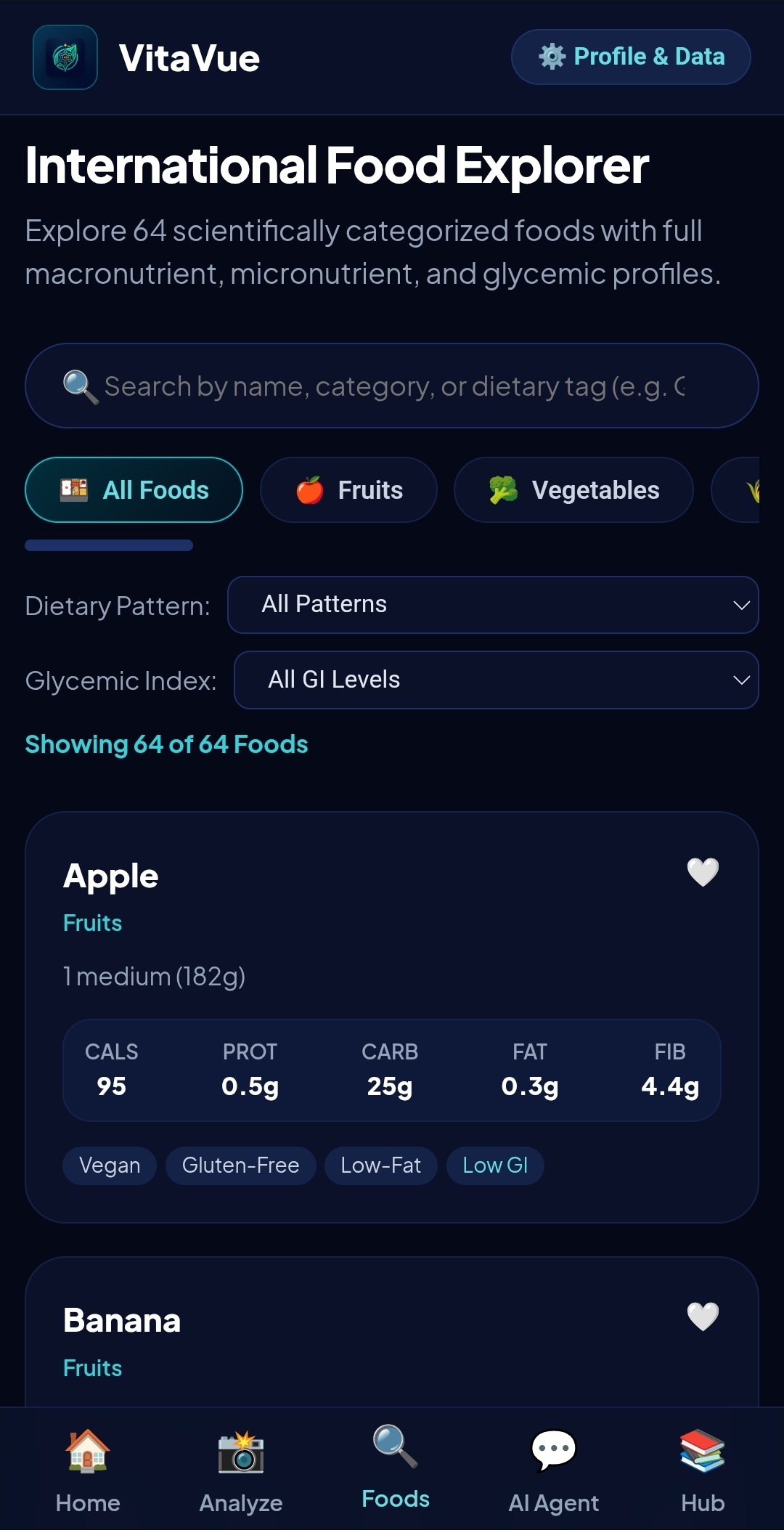
- 🔍 Explore a curated database of 64 foods with macro, micronutrient, dietary, and glycemic information.
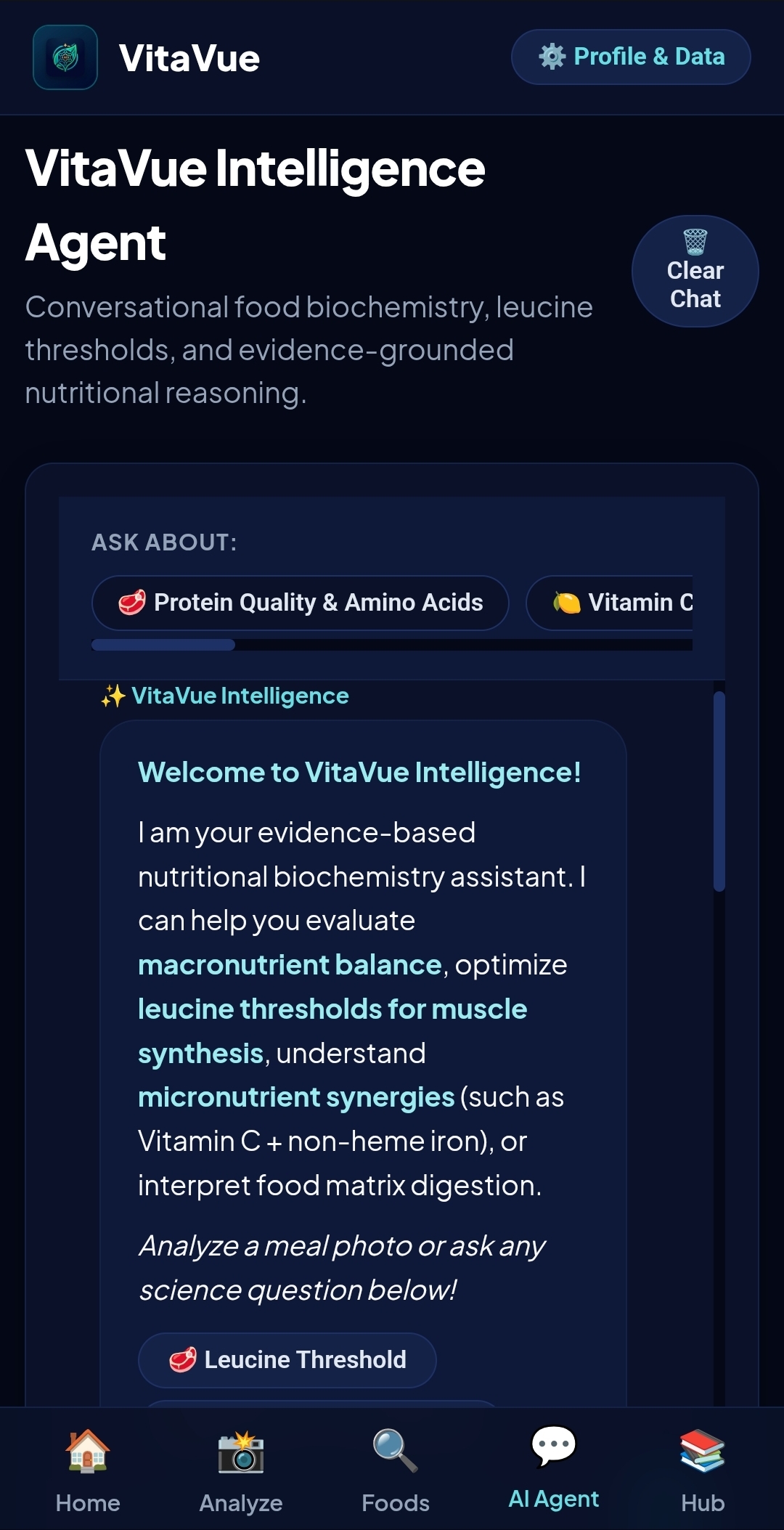
- 💬 Ask the AI Nutrition Agent questions about protein quality, amino acids, leucine, micronutrient interactions, fiber, digestion, and food combinations.
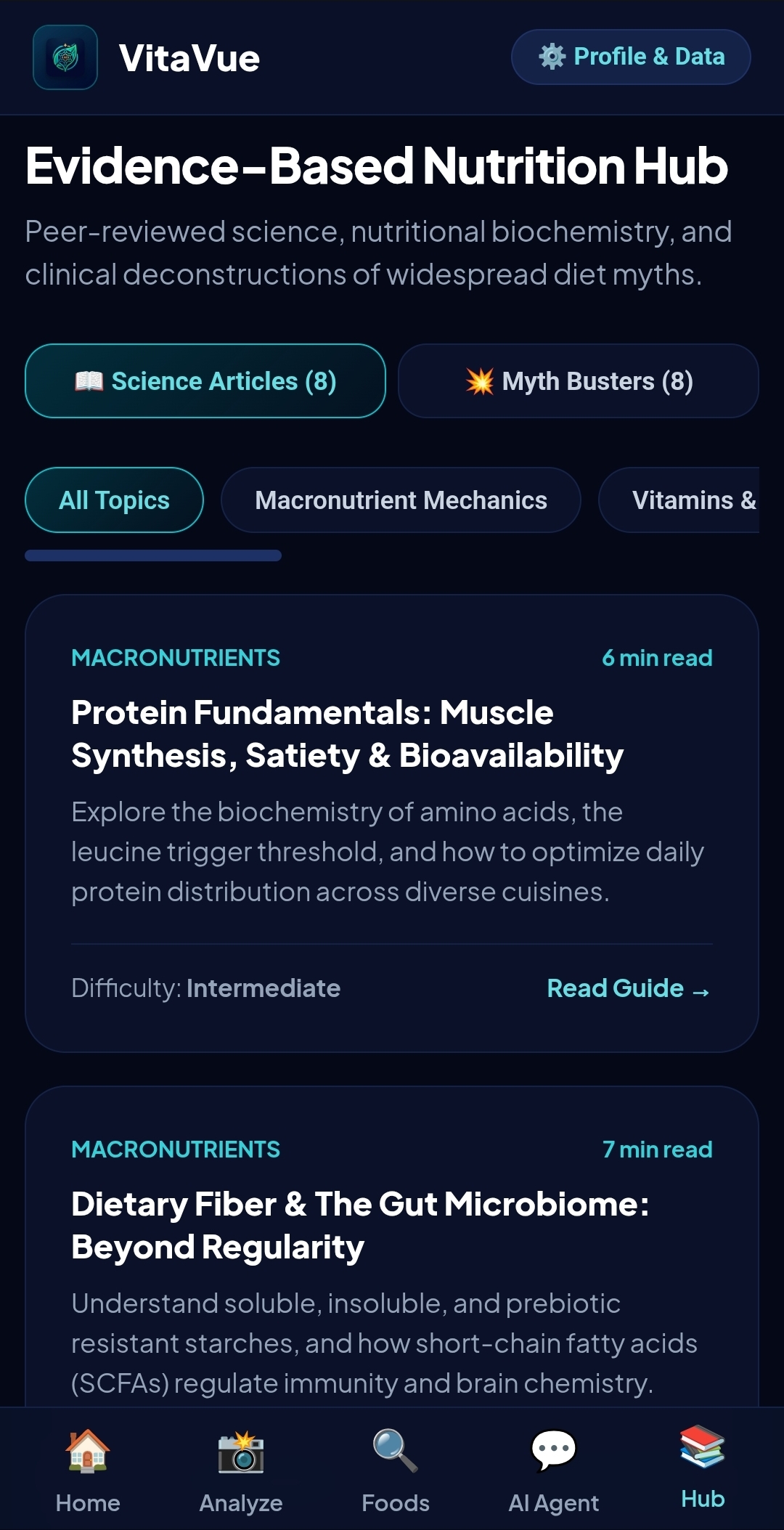
- 📚 Learn from evidence-based nutrition articles and nutrition myth explanations.
- 📋 Build structured meal frameworks using nutritional targets.
- 📊 Track logged meals and daily macronutrient intake.
The system is designed to distinguish between visual estimates and verified nutrition data rather than presenting estimates as clinical measurements.
How We Built It
VitaVue uses a web-based application architecture with a multimodal meal-analysis interface, structured nutritional datasets, client-side image processing, deterministic nutritional calculations, conversational reasoning logic, and a responsive user interface.
The meal-analysis pipeline evaluates visual characteristics of an uploaded image before generating a nutritional estimate. Food profiles are selected using specificity-aware matching so queries such as "apple juice", "banana smoothie", "brown rice", and "cooked white rice" are not incorrectly treated as the same food.
Nutritional totals are calculated from structured food and meal data rather than arbitrary values generated during display.
Responsible AI
Nutrition estimation from photographs has inherent uncertainty because portion size, ingredients, preparation methods, and hidden components cannot always be determined visually.
Therefore, VitaVue clearly presents meal analysis as an intelligent estimate and includes a responsible-AI notice. It is intended for educational and informational use and is not a substitute for diagnosis, treatment, or individualized medical nutrition therapy.
Challenges
The main challenge was preventing an AI nutrition application from appearing more certain than the available evidence allows. We focused on state isolation, food-specific semantic resolution, mathematical consistency, non-food image handling, and clear separation between sample/demo data and real user logs.
What We Learned
Building VitaVue highlighted the importance of combining AI capabilities with deterministic data handling and scientific constraints. A useful health-AI system should not only provide intelligent outputs; it should also communicate uncertainty, maintain data integrity, and make its reasoning understandable to users.
Future Development
Future versions could integrate validated nutrition databases, improved computer-vision segmentation, barcode/ingredient recognition, wearable data, personalized nutritional targets, and clinical validation studies.
How we built it
Challenges we ran into
Accomplishments that we're proud of
What we learned
What's next for VitaVue
Built With
- ai
- api
- artificial
- canvas
- computer
- css3
- data
- html5
- intelligence
- javascript
- learning
- machine
- multimodal
- nutrition
- responsive
- science
- vision
- visualization
- web

Log in or sign up for Devpost to join the conversation.