

Inspiration
VitaVerse AI was inspired by the growing need for faster, safer, and more accessible healthcare support. Many patients struggle to understand their symptoms, decide whether they need a doctor, or explain their health problems clearly during consultation. At the same time, doctors and healthcare workers often need quick, structured patient information to make better decisions. This project was created to bridge that gap using a healthcare-focused AI agent system.
What it does
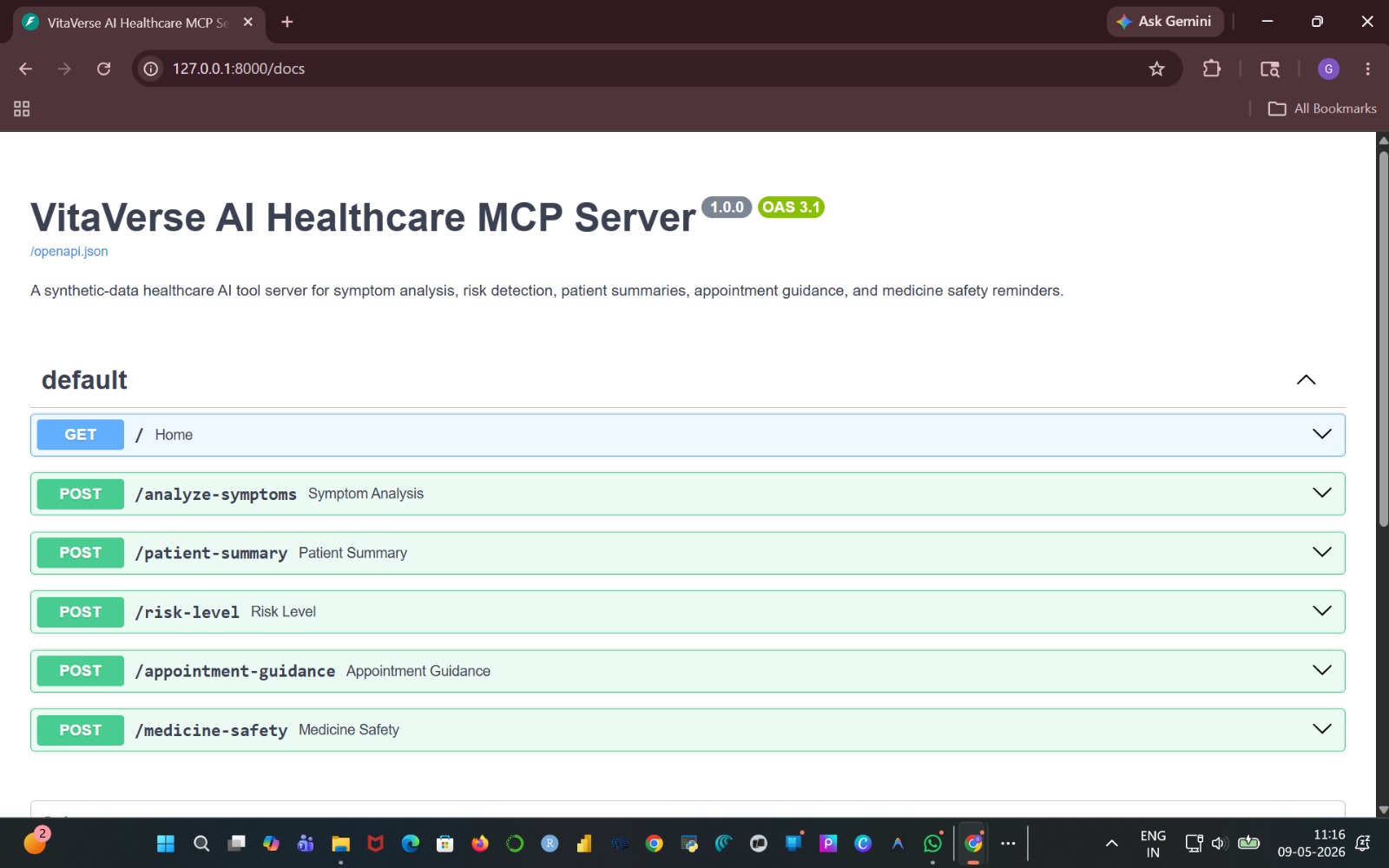
VitaVerse AI is an MCP-based healthcare AI system designed for the Prompt Opinion multi-agent platform. It provides specialized healthcare tools that can help AI agents analyze symptoms, generate patient summaries, detect risk levels, provide appointment guidance, and give medicine safety reminders. The system does not replace doctors or provide final medical diagnosis. Instead, it supports patients and medical professionals by organizing health information and suggesting safe next steps.
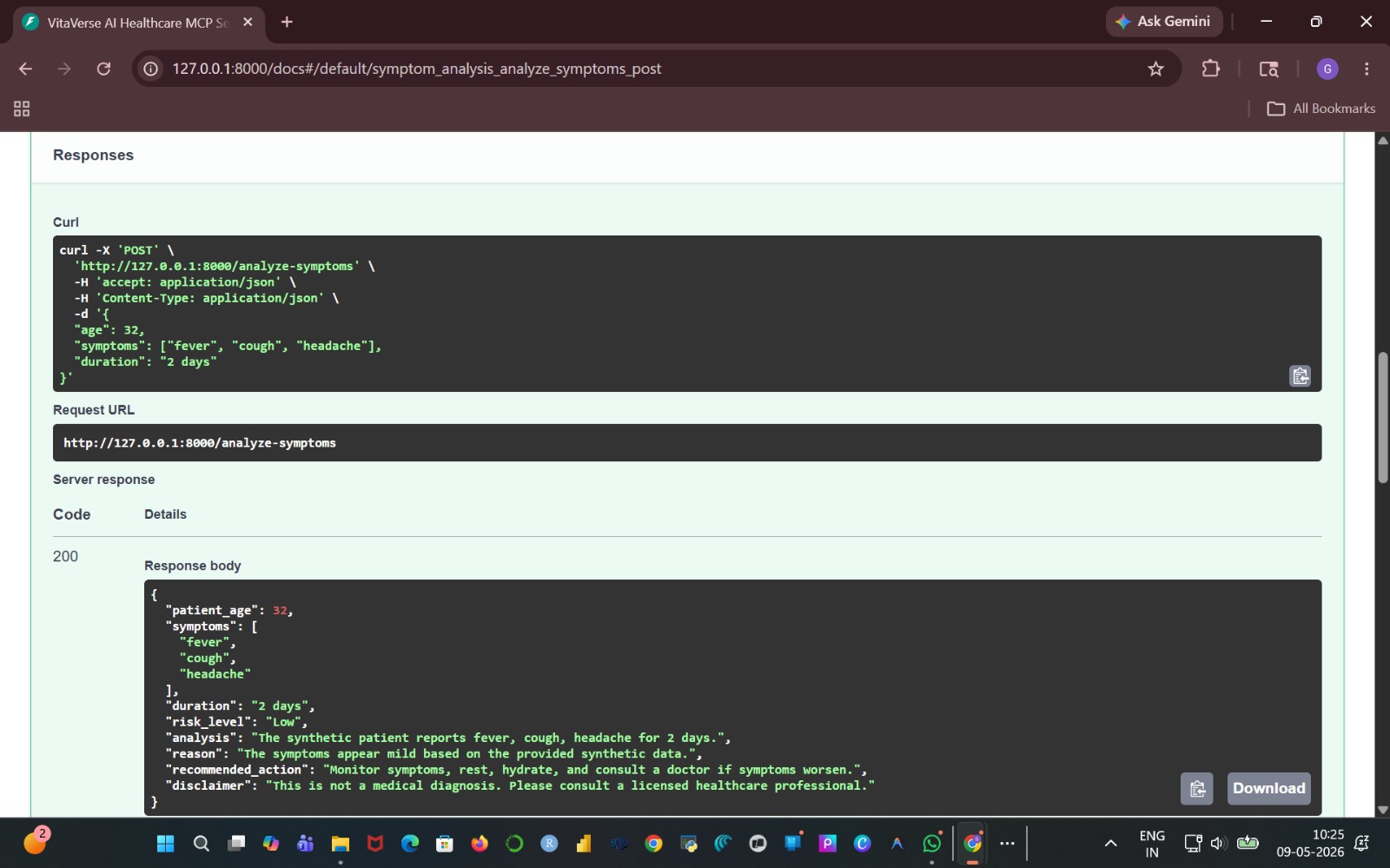
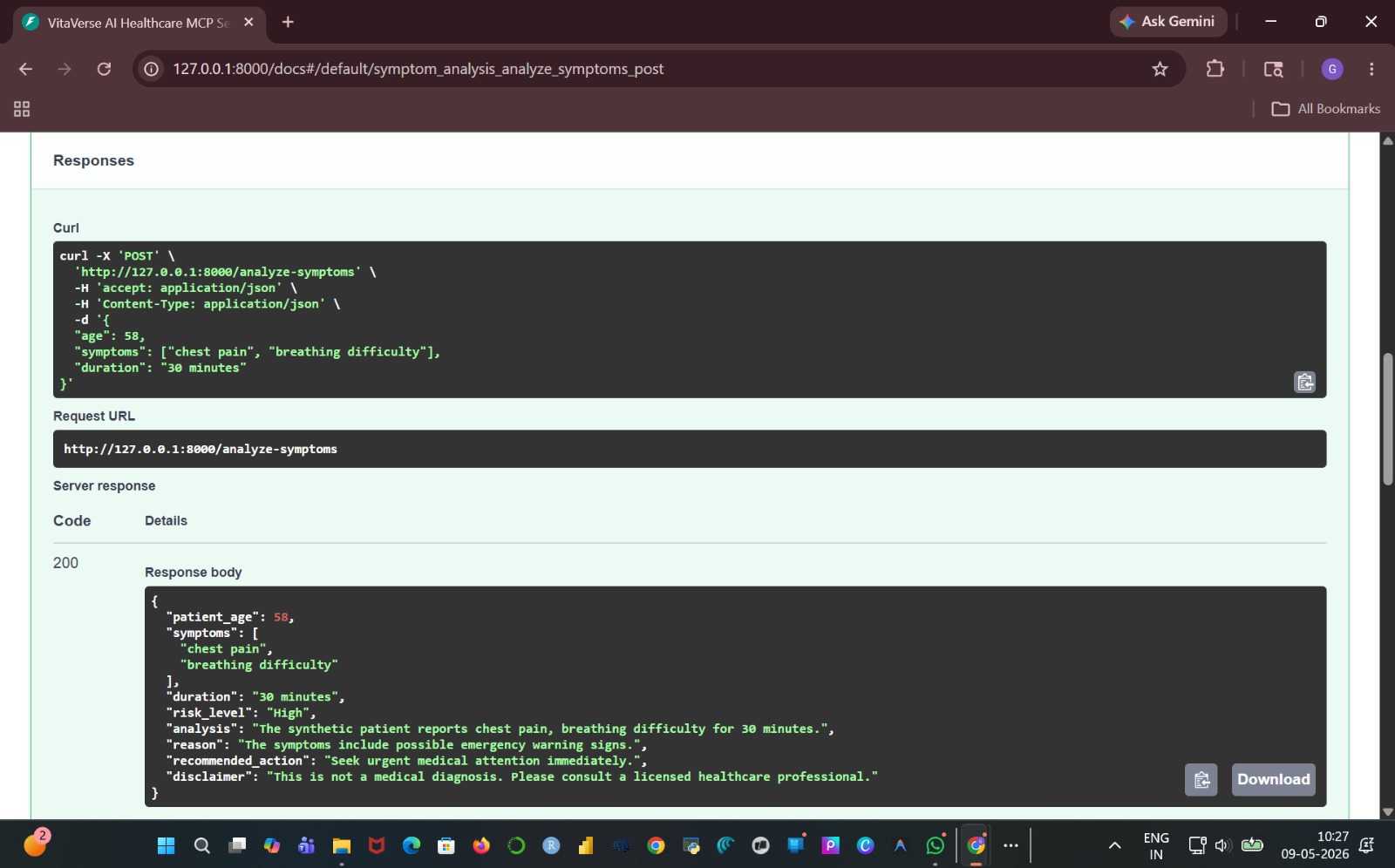
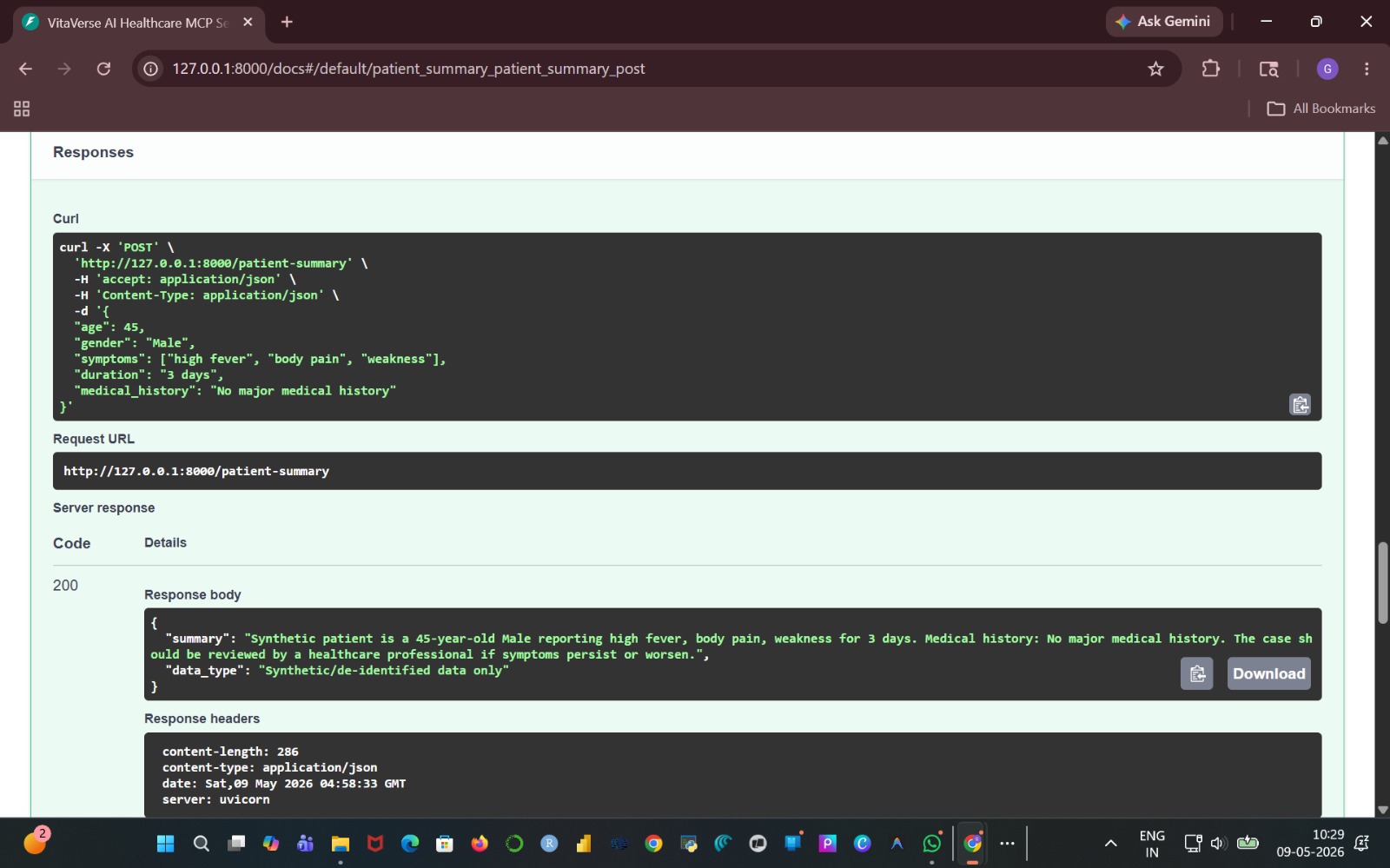
The project uses only synthetic and de-identified patient data. This ensures that no real Protected Health Information is used. A user can enter sample patient symptoms such as fever, cough, headache, chest pain, or breathing difficulty. The system then processes the information and returns a structured response containing symptom summary, possible risk level, suggested care category, and safety advice.
How we built it
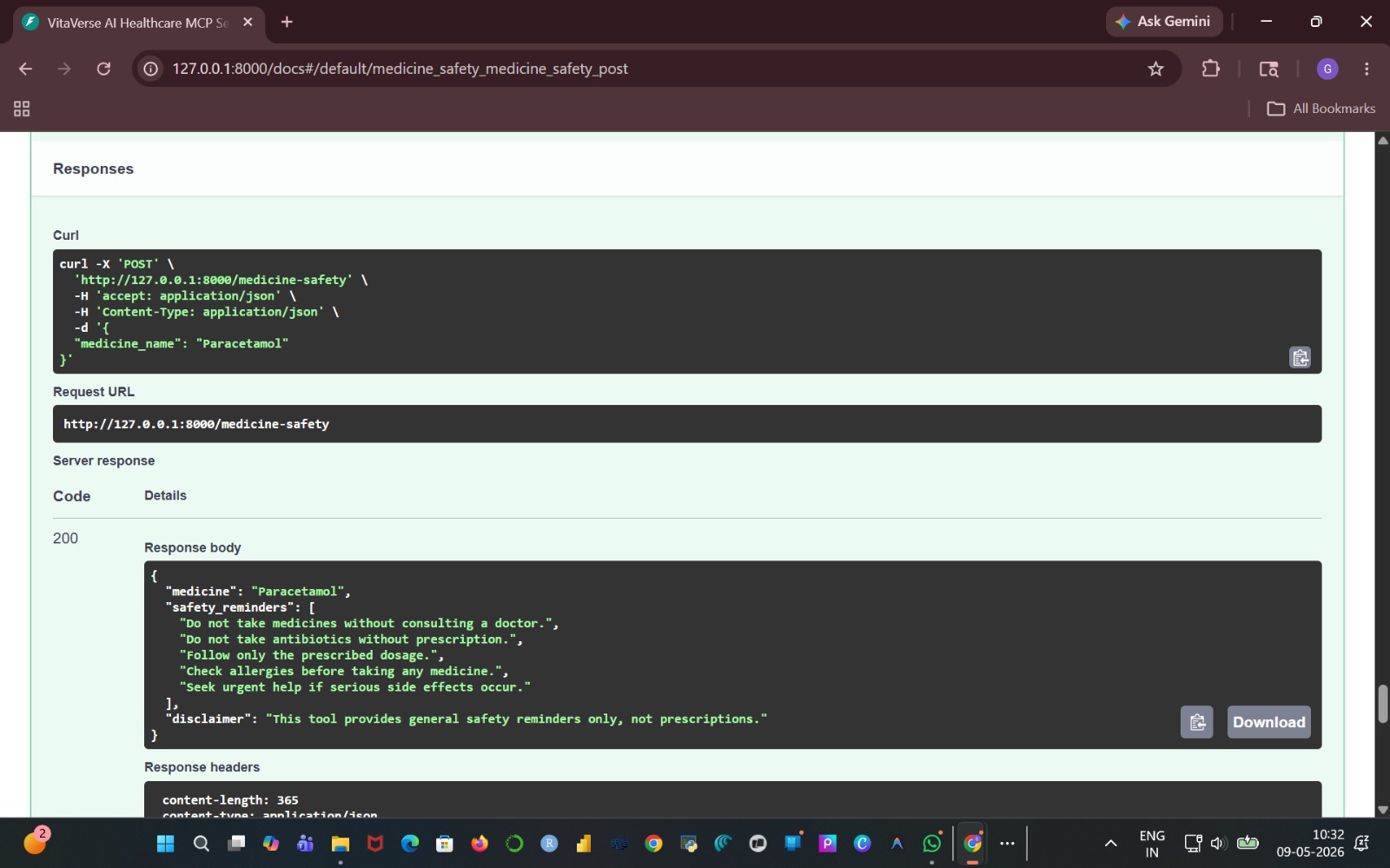
We designed VitaVerse AI around the Model Context Protocol path. The project exposes healthcare tools through an MCP server so that agents on the Prompt Opinion platform can discover and use them. The system contains separate tools for symptom analysis, patient summary generation, risk detection, appointment guidance, and medication safety reminders.
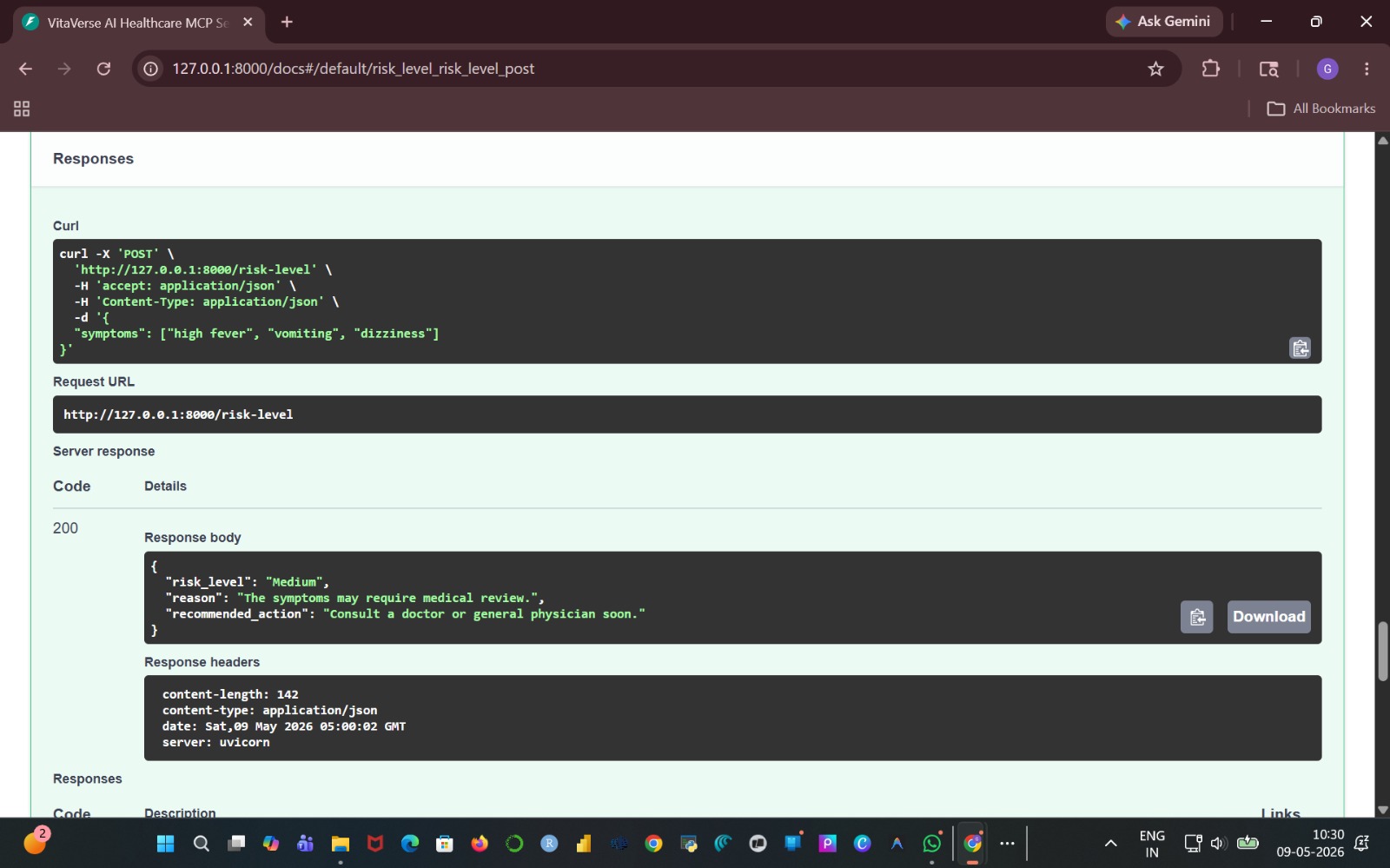
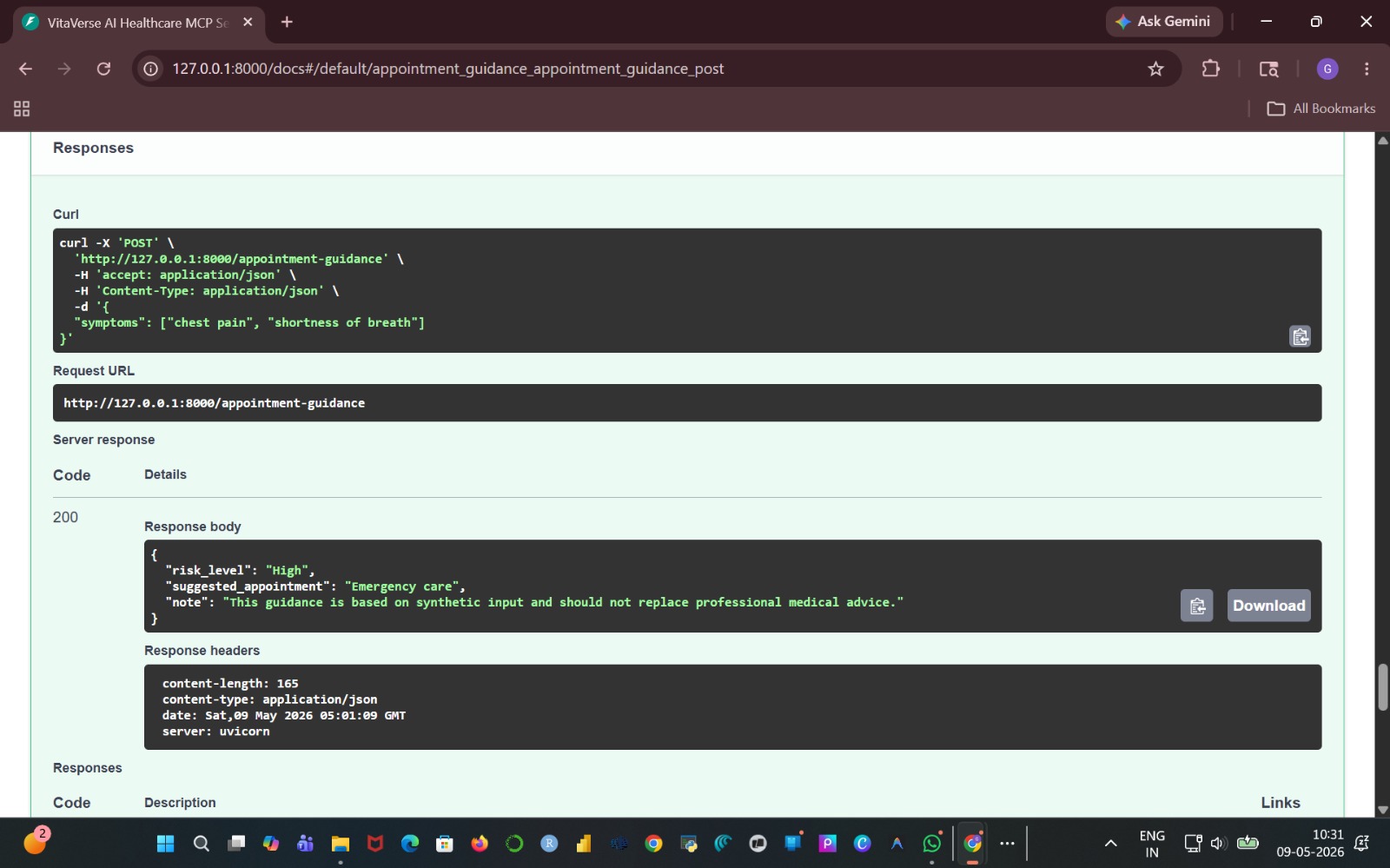
The backend logic was planned using Python and healthcare rule-based workflows. Each tool receives structured input, processes it safely, and returns clear output. For example, if a patient reports mild fever and cough, the system may classify it as low to medium risk. If the patient reports chest pain or breathing difficulty, the system marks it as high risk and recommends urgent medical attention.
Challenges we ran into
One major challenge was designing the project in a safe way because healthcare AI must be careful and responsible. We had to make sure the system does not claim to replace doctors or give dangerous medical prescriptions. Another challenge was aligning the project with the hackathon requirements, especially MCP integration, marketplace discoverability, and strict data privacy rules.
We also focused on keeping the project useful but simple enough to demonstrate clearly. Instead of trying to build a full hospital system, we created focused healthcare tools that can be used by agents for real-world support scenarios.
Accomplishments that we're proud of
We are proud that VitaVerse AI was designed as a healthcare-focused AI solution that follows the hackathon requirements and uses a safe, responsible approach. Since healthcare data is sensitive, one of our biggest accomplishments was building the project around synthetic and de-identified patient data instead of using any real Protected Health Information.
We are also proud of creating a clear MCP-based architecture where different healthcare tools can work together through the Prompt Opinion multi-agent platform. The project includes useful tools such as symptom analysis, patient summary generation, risk-level detection, appointment guidance, and medicine safety reminders.
Another accomplishment is that the system focuses on safety instead of giving direct medical diagnosis or prescriptions. VitaVerse AI supports patients and doctors by organizing health information, identifying possible risk levels, and suggesting safe next steps. This makes the project practical, understandable, and suitable for a healthcare AI challenge.
We are proud that the project can be demonstrated clearly with simple examples, such as analyzing symptoms like fever, cough, headache, chest pain, or breathing difficulty and returning structured outputs. Overall, VitaVerse AI shows how multi-agent AI can be used to make healthcare guidance faster, safer, and more accessible.
What we learned
Through this project, we learned how multi-agent systems can improve healthcare workflows. We understood the importance of safe AI design, synthetic data usage, structured patient summaries, and risk-based decision support. We also learned how MCP servers can expose useful tools that different AI agents can call and combine.
What's next for VitaVerse AI
In the future, VitaVerse AI can be improved by adding more healthcare tools such as lab report explanation, chronic disease monitoring, multilingual patient support, doctor dashboard integration, and hospital appointment APIs. The system can also be expanded with better validation, more medical safety checks, and integration with real healthcare platforms using only authorized and compliant data.
