-
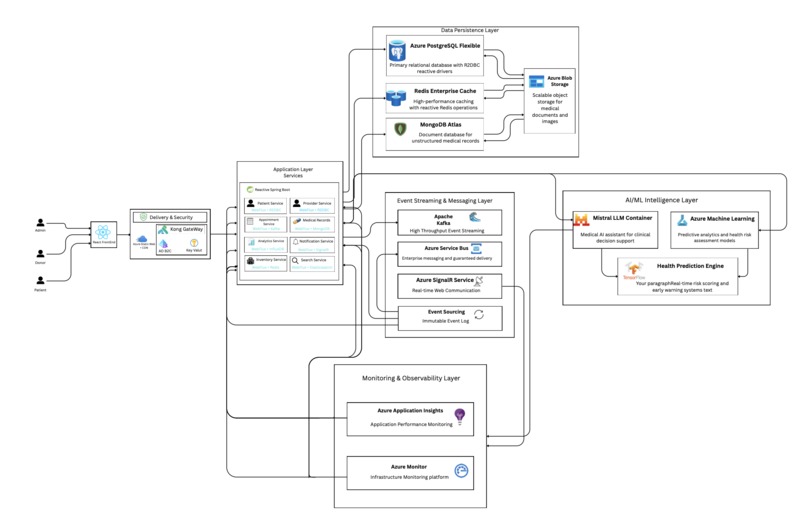
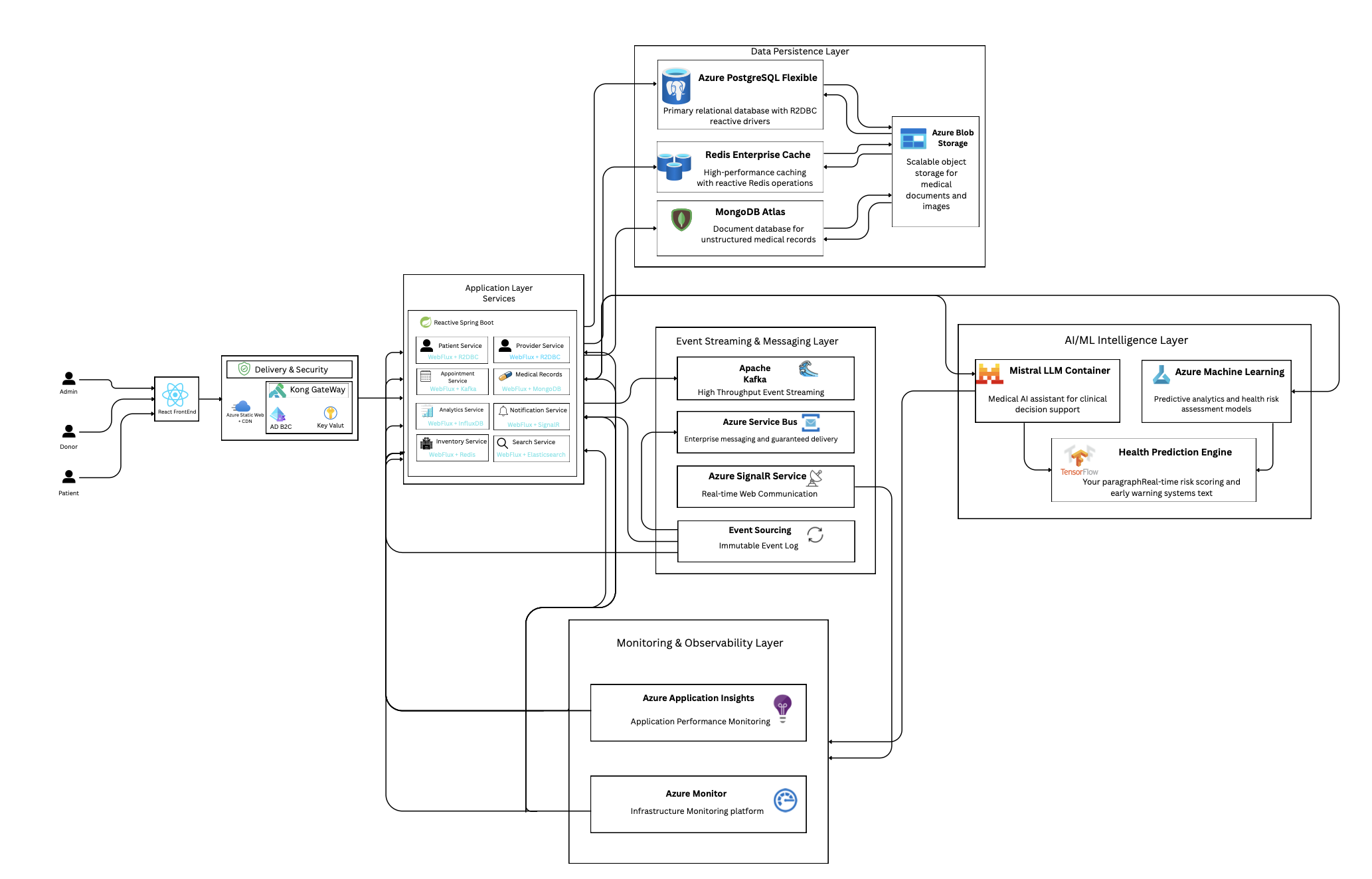
System Architecture with Modern Supply Chain Management with Secure access, reactive Backend, real time AI insights, Cloud Storage.
What It Does
VitaSync is a smart, AI-powered blood logistics system designed to shift blood banking from reactive emergency care to proactive, long-term planning — especially for chronic patients like those with Thalassemia and Sickle Cell disease.
The platform:
- Automatically generates personalized transfusion schedules
- Sends smart reminders to patients and donors
- Matches patients with compatible donors based on location and blood type
- Uses an AI engine to forecast blood demand two weeks ahead, helping prevent shortages and aimed reduce blood wastage by over 40%
A real-time dashboard displays live inventory from multiple blood banks, complete with expiry alerts, ensuring smarter usage of available units.
Separate mobile apps for donors and patients, with WhatsApp integration, keep everyone connected and informed. NGOs can plan targeted blood drives, and the system integrates seamlessly with hospital EMRs and government platforms like e-RaktKosh.
VitaSync is not just a booking system — it's a scalable, intelligent blood maintenance platform that optimizes donor usage and ensures no unit of blood is wasted.
What Inspired Us
During our research, we discovered that chronic patients need transfusions every 2–4 weeks, but most blood bank systems are built only for emergency needs.
We connected with a local NGO supporting Thalassemia patients and learned about the emotional and logistical stress families face — from uncertainty of blood availability, to expired blood going unused, and donors being contacted randomly instead of based on actual need.
This deeply human insight inspired us to reimagine the blood banking system from the ground up — with data, AI, and care coordination at the center.
What We Learned
VitaSync taught us that healthcare logistics is about more than just software — it's about building trust, reducing stress, and preventing life-threatening gaps.
We gained critical insights in:
- Advanced blood compatibility (beyond ABO/Rh)
- Cold chain management
- AI-based demand forecasting to reduce waste and manage supplies effectively
On the technical side, we worked extensively with:
- Reactive Spring Boot architecture
- Kafka-based real-time event streaming
- Building healthcare UIs that are both fast and reliable under pressure
How We Built It
Our system architecture includes:
- Spring Boot WebFlux for non-blocking, reactive backend services
- PostgreSQL for storing secure, structured patient and donor data
- Redis Enterprise for real-time, in-memory inventory tracking
- Apache Kafka for high-throughput event streaming across modules
Our AI engine, built using Azure Machine Learning, TensorFlow, and Mistral LLM containers, enables smarter transfusion schedule handling by combining donor availability, live inventory data, and clinical transfusion patterns.
It actively optimizes who donates, when, and where, reducing last-minute shortages and minimizing blood wastage in a scalable and data-driven manner.
We built:
- Role Based Application for donors and patients
- WhatsApp notification integration for reminders
- A centralized admin dashboard showing inventory, donor activity, and expiry alerts across blood banks
Challenges We Faced
- Real-time consistency across locations: Solved using Kafka Streams and event-driven updates
- Lack of training data for AI models: Addressed by simulating patterns using medical research
- Balancing HIPAA-compliant security with usability: Refined over multiple design iterations
- Concurrent bookings and updates: Solved through reactive programming for scale and performance
How the Project Evolved
What began as a basic transfusion booking app became a full-scale blood logistics platform.
We realized that solving for chronic patients means solving for the entire supply chain — including forecasting, donor coordination, inventory optimization, and expiry reduction.


Log in or sign up for Devpost to join the conversation.