
💡 Inspiration
We noticed something: fitness apps are great at tracking data, but terrible at keeping people motivated long-term. You might log your meals and workouts, but who checks if you actually stick to them? That’s where friends come in. We wanted to build an app that not only tracks health metrics but also connects users with their real-life support system — making fitness a shared journey, not a solo grind.
🧩 What it Does
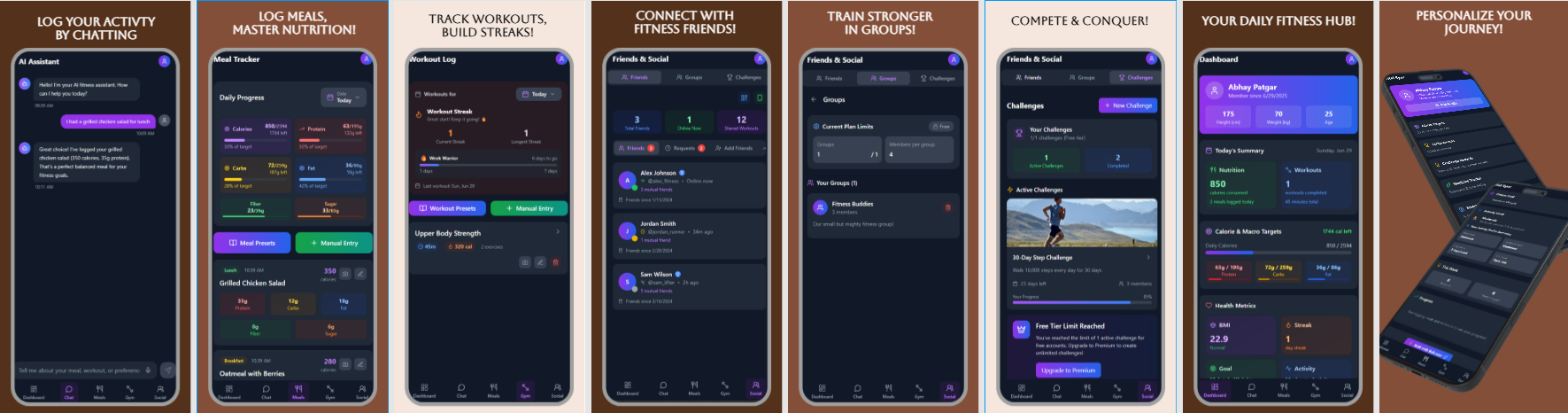
VitalSync is a smart, AI-powered fitness tracker that learns from your behavior and helps you stay consistent — with a little help from your friends. It lets you:
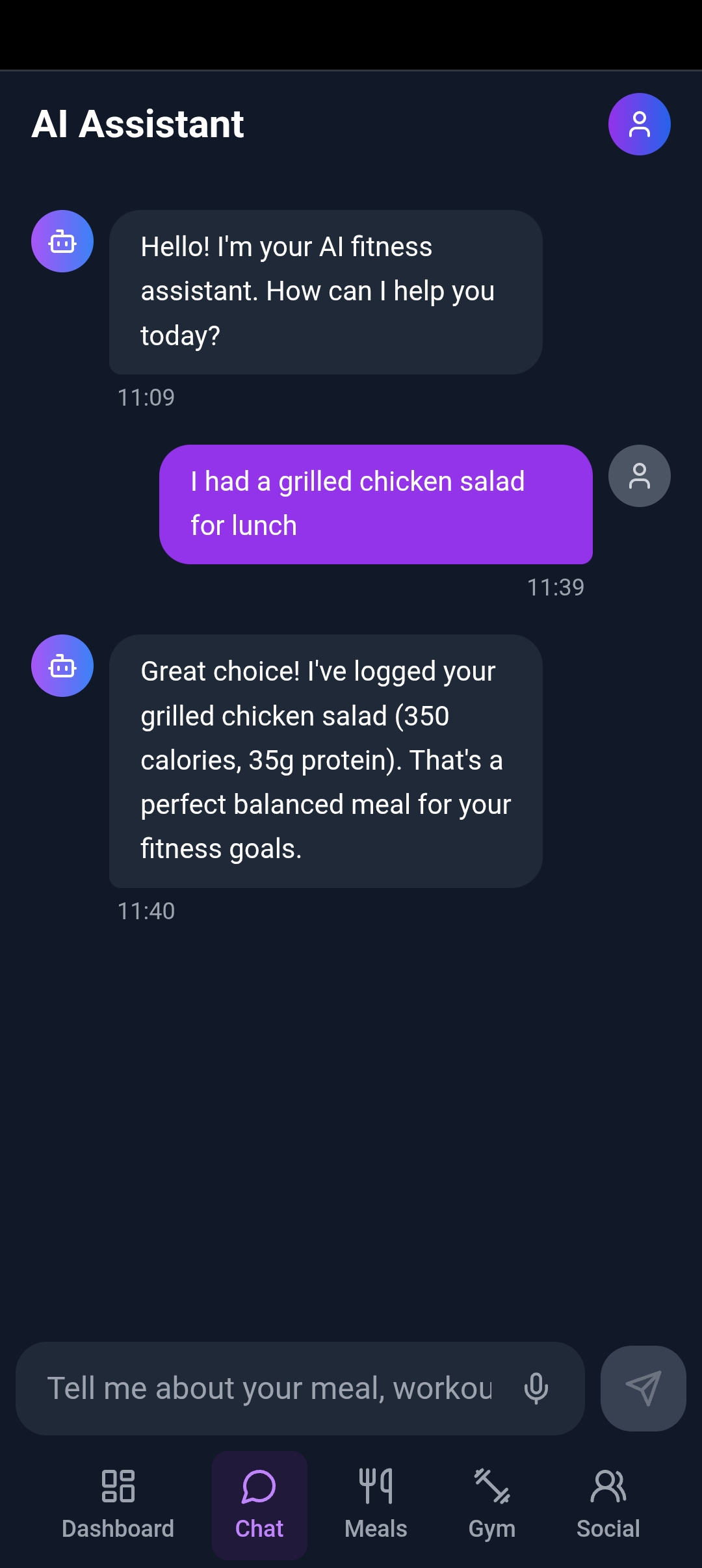
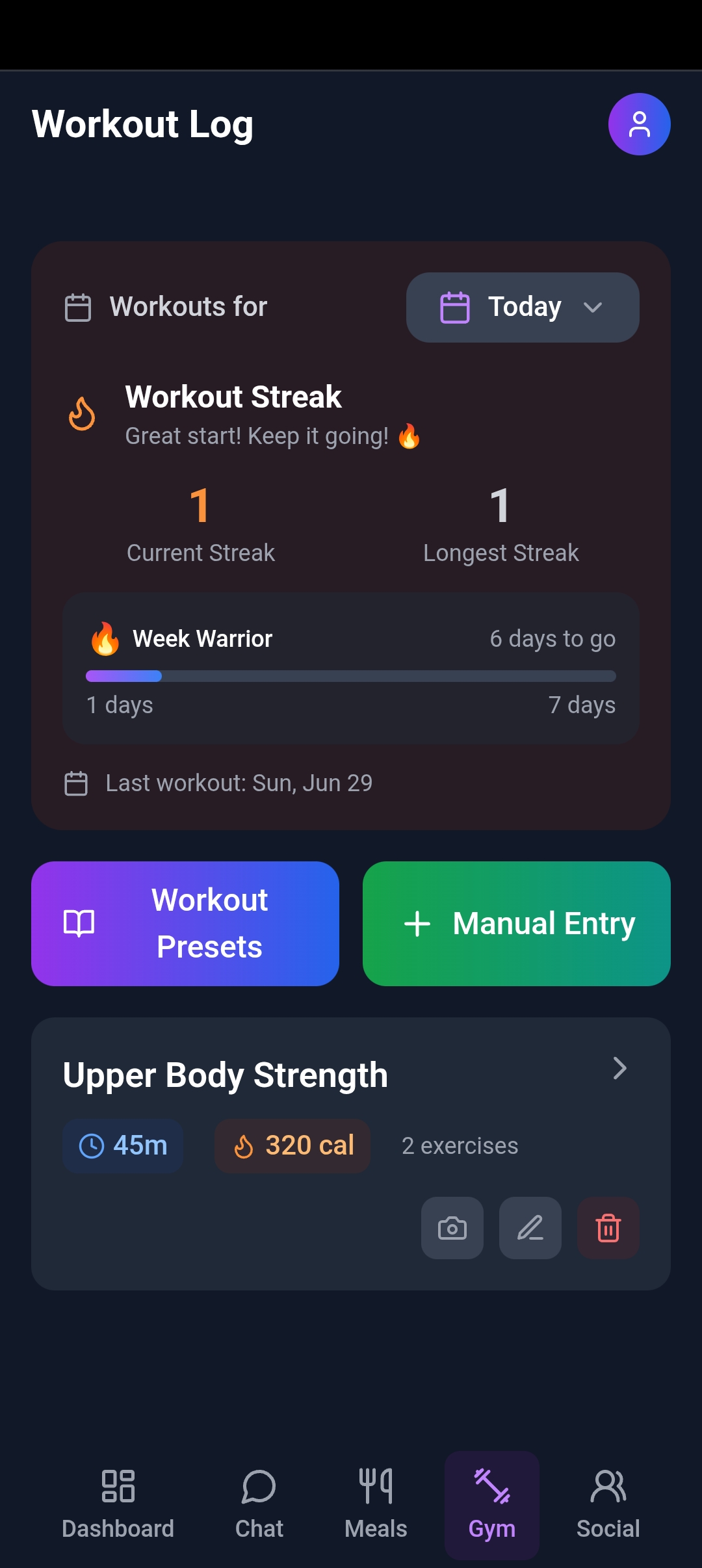
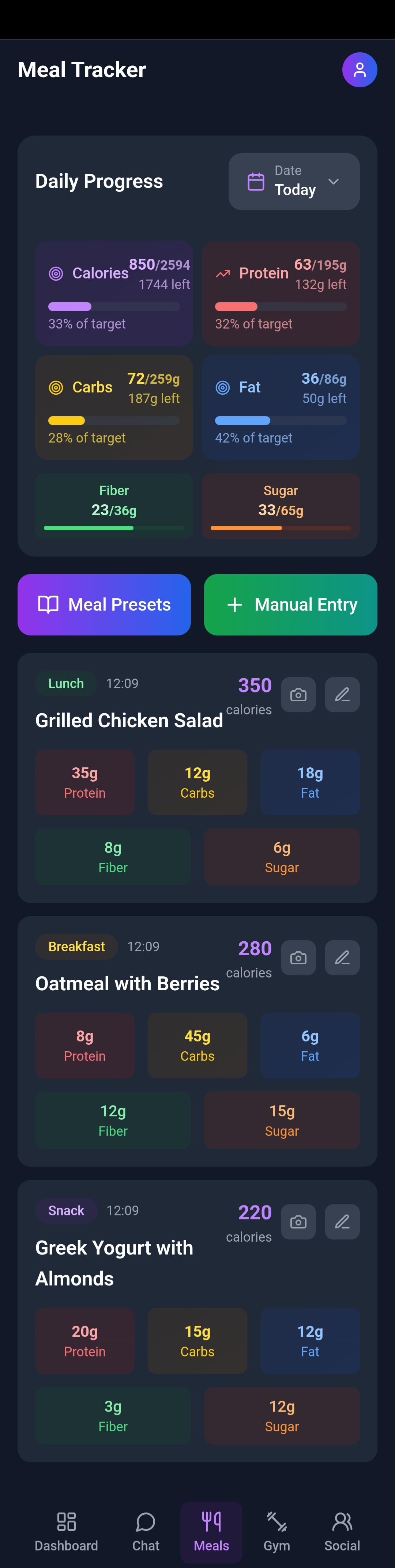
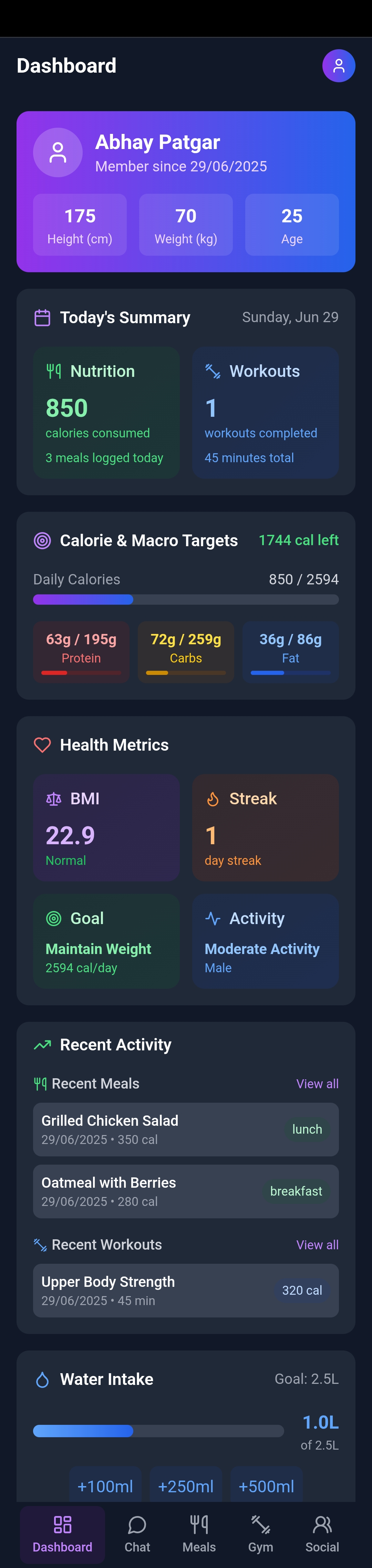
- Log meals and workouts using natural language
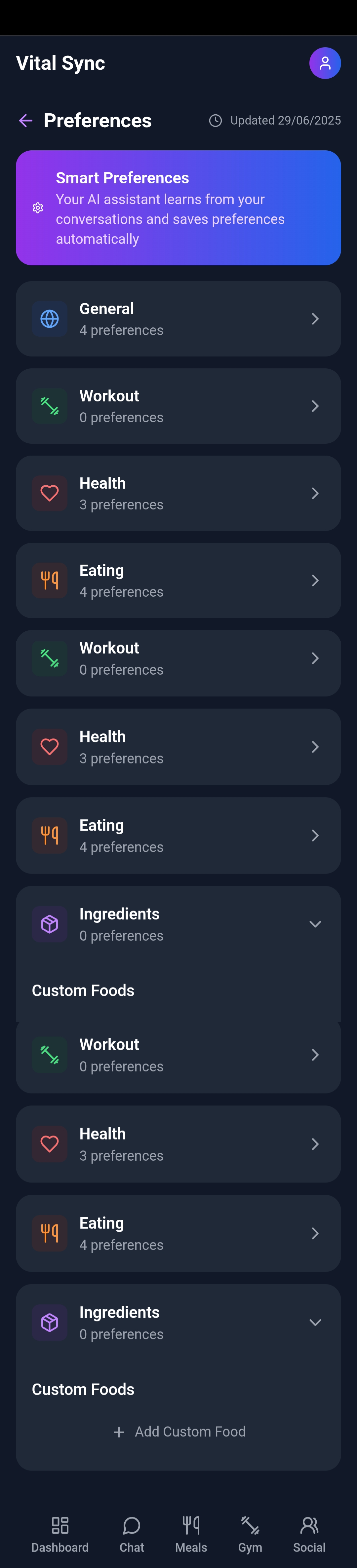
- Build custom food profiles (like your favorite paneer brand)
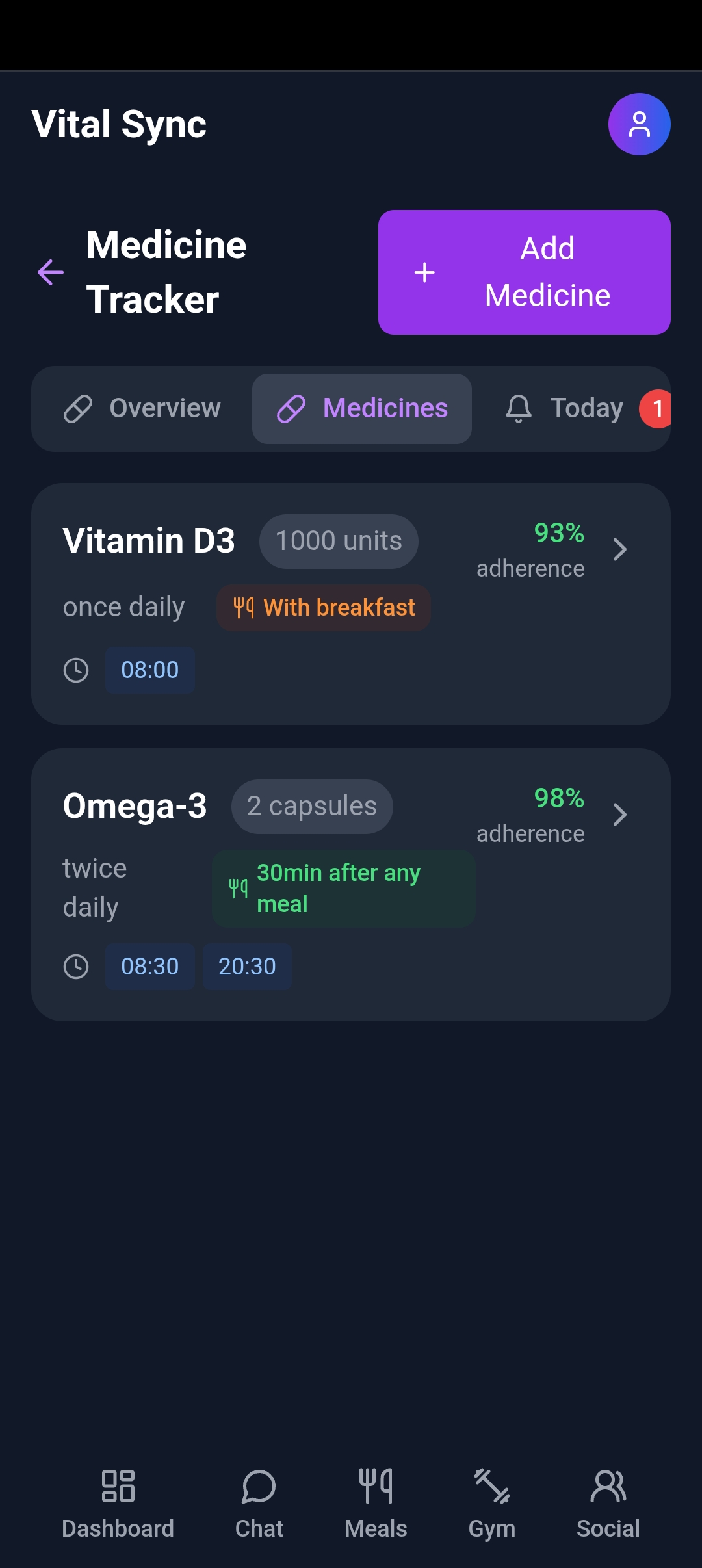
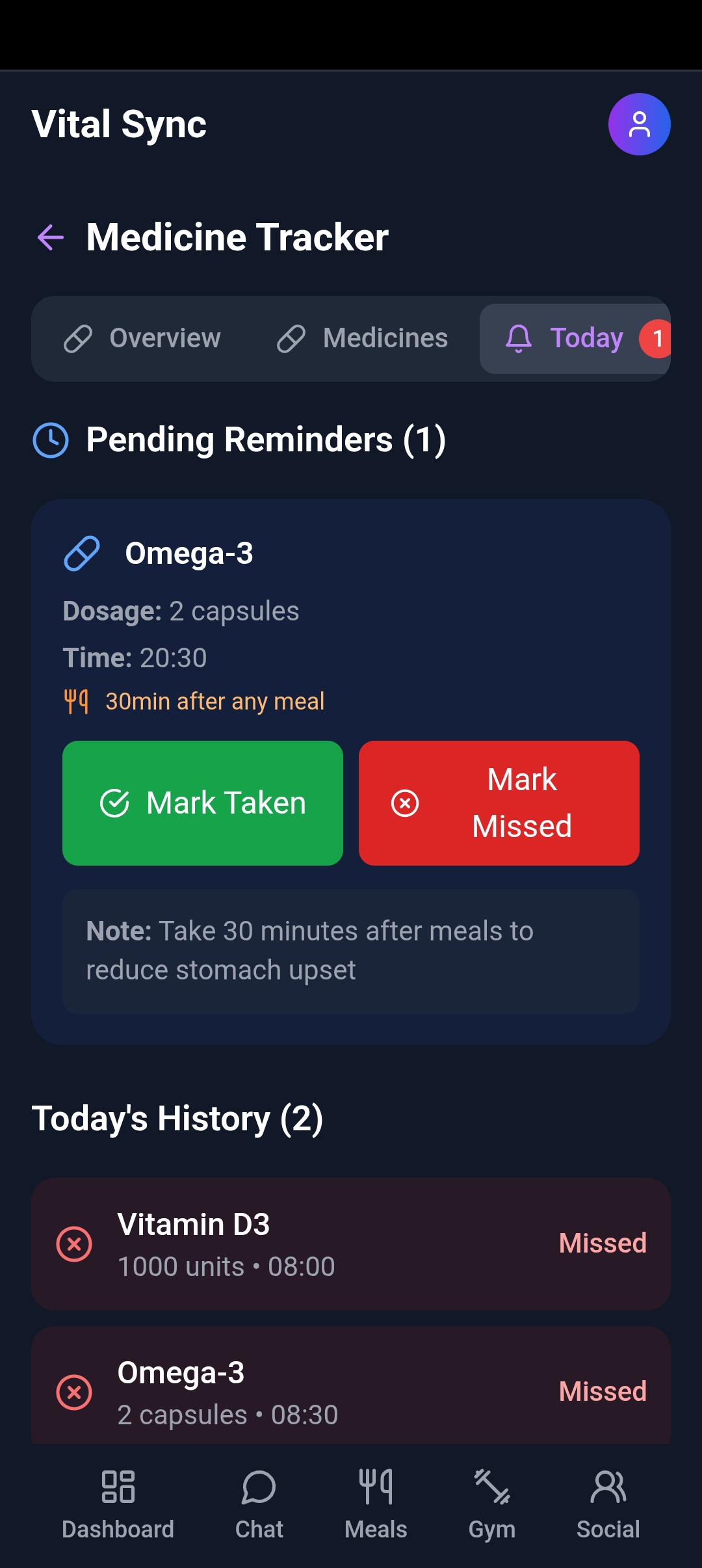
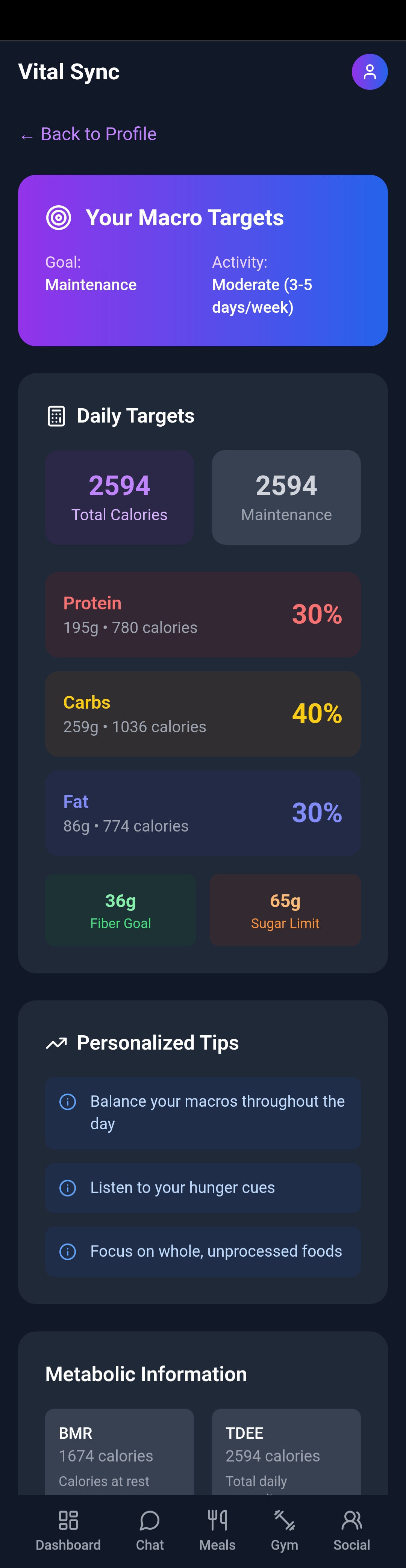
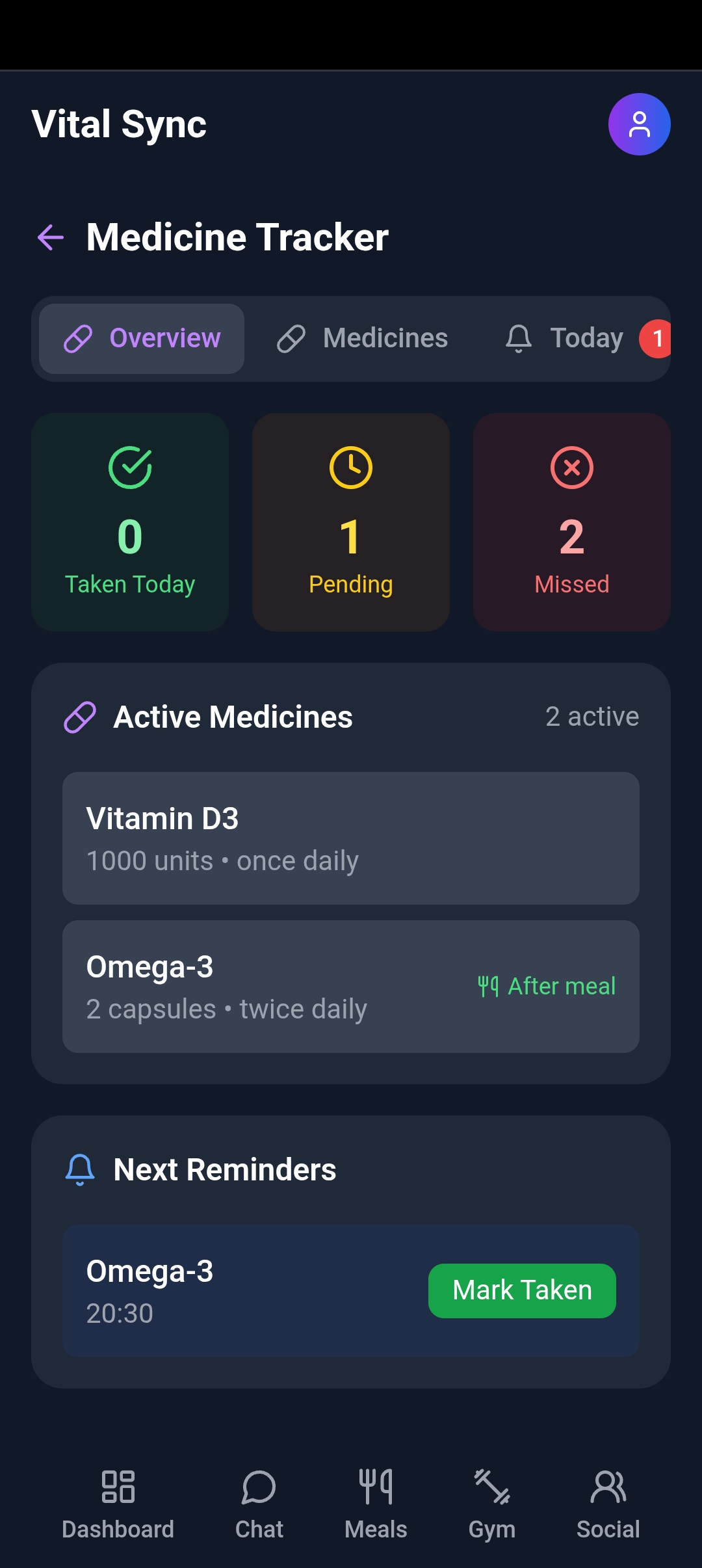
- Track hydration, gym streaks, steps, and screen time
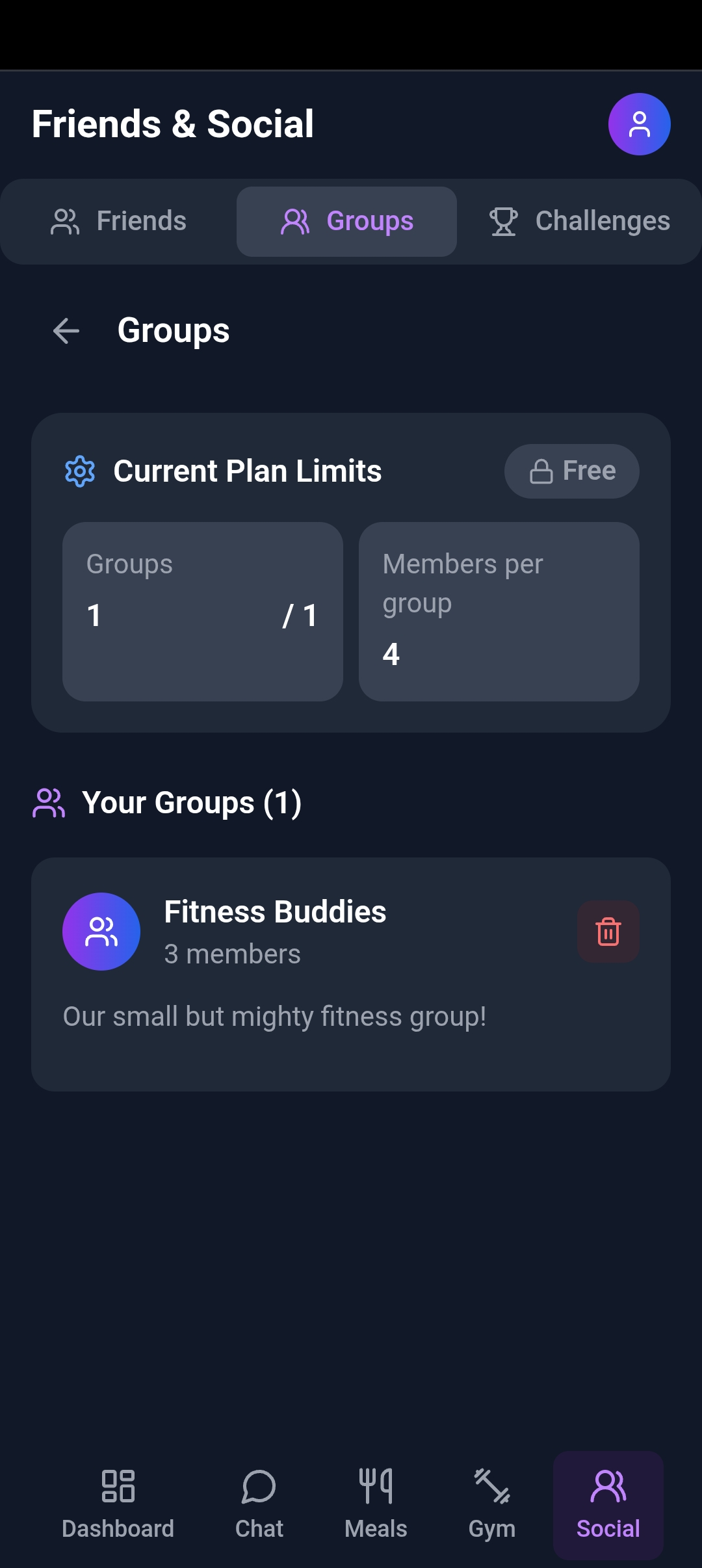
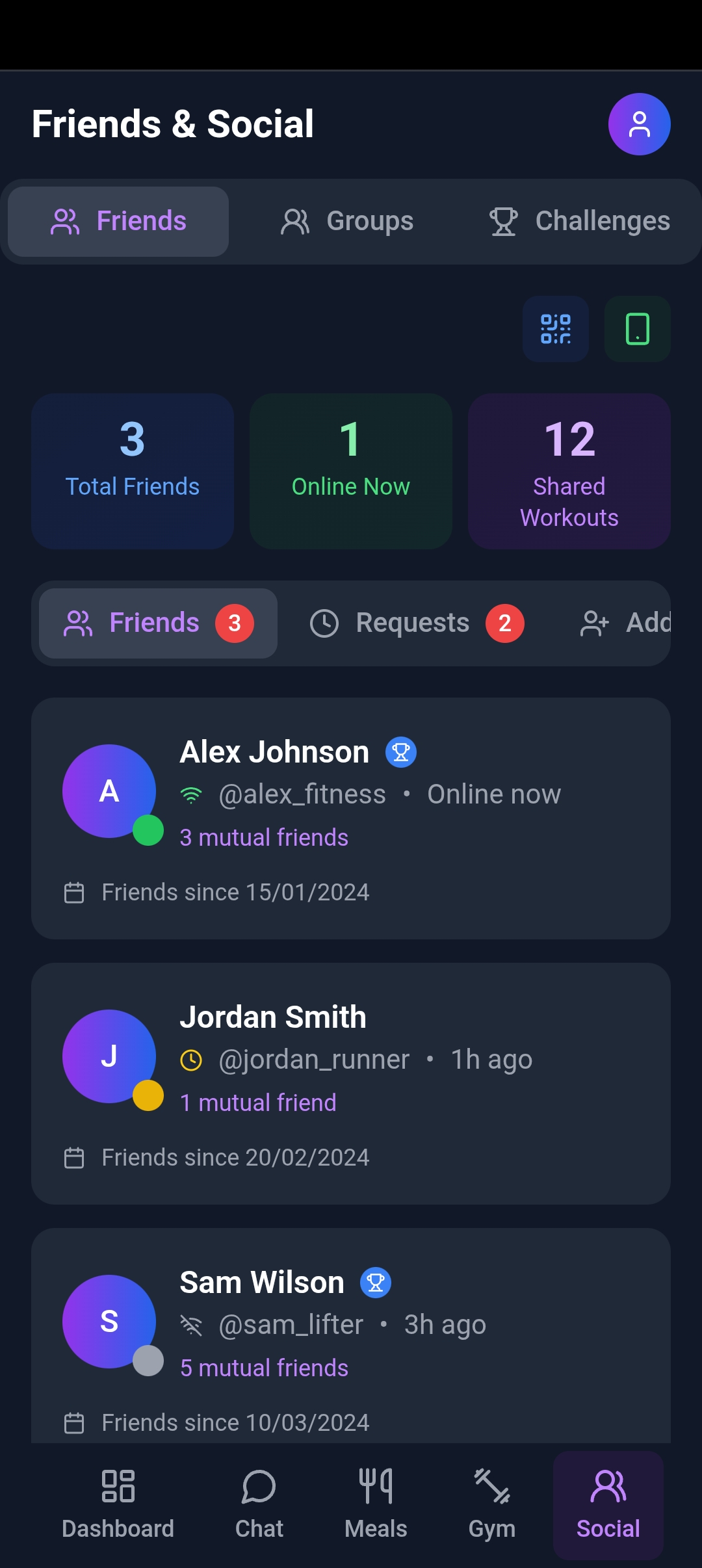
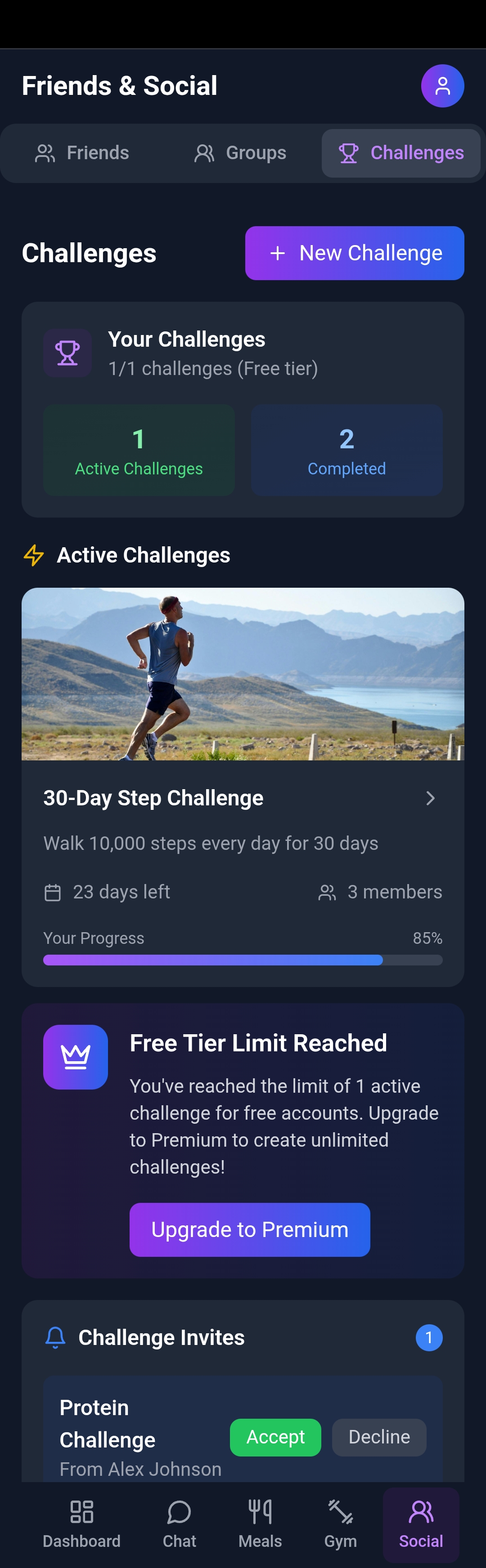
- Add friends and see their daily progress
- Send motivational (or sarcastic!) nudges when someone slips up
The app adapts to you, remembers your habits, and makes fitness feel less like work and more like a game.
⚒️ How We Built It
We built VitalSync using React, TypeScript, and Bolt for a clean, responsive frontend experience. The AI chat assistant uses natural language processing logic to extract food and workout details from user messages. We implemented a mock backend API structure so the app is ready to scale with real-time sync later.
🧗 Challenges We Ran Into
Bringing social motivation into a fitness app came with its own set of challenges:
- Balancing privacy and accountability — how much should friends really know?
- Ensuring the AI understood varied inputs without getting confused
- Designing a UI that felt engaging but not overwhelming
- Making sure the mock API structure was flexible enough for future backend integration
But every challenge helped us think deeper about what makes a fitness app truly useful — and human.
🏆 Accomplishments We're Proud Of
We’re proud of building more than just a fitness tracker — we made a habit companion. Some highlights:
- An AI that learns and remembers user preferences
- A friend nudge system that adds emotional engagement
- Clean, Apple-level design with smooth interactions
- A modular architecture that’s easy to extend
Most of all, we created something fun — and that’s rare in the world of health apps.
📚 What We Learned
This project taught us that:
- Fitness isn’t just about data — it’s about behavior and emotion
- AI can be powerful when it’s used to enhance, not replace, user input
- Motivation works best when it’s social and personalized
- Building scalable, maintainable code upfront saves time later
We also learned how to structure complex frontend systems while keeping them lightweight and intuitive.
🚀 What’s Next for VitalSync
We’re excited to take VitalSync even further:
In the next phase, we’ll be building out the backend infrastructure and integrating powerful AI systems to take VitalSync from a feature-rich frontend prototype to a fully functional, scalable application. This includes setting up real APIs, connecting to databases, integrating LLMs for smarter chat responses, and using vector databases to store and recall user preferences and chat history.
We'll start by implementing core backend APIs for user authentication, data syncing, and social features like friend connections and nudges. These will allow users to log in, save their meals and workouts in the cloud, and share progress with friends across devices.
Next, we'll integrate a vector database to store user preferences, learned patterns (like favorite foods), and chat history embeddings. This will let the AI assistant remember context across sessions and deliver more personalized responses over time.
To power the chat experience, we'll connect to an LLM API such as OpenAI or Anthropic, or run a local model via Ollama. This will improve natural language understanding, allowing the app to better interpret food entries, suggest workouts, and even auto-correct ambiguous inputs like “paneer” based on what the user usually means.
We're also planning to build a smart preference learning engine that uses AI to detect and store new preferences automatically from chat — like when someone says, “I always eat Milky Mist low fat high protein paneer,” and then remembers it forever.
Finally, we’ll set up integrations with health platforms like Google Fit, Digital Wellbeing, so users can sync step counts, screen time, and sleep data directly into VitalSync.
All of this will be built with scalability, privacy, and performance in mind — ensuring VitalSync grows with its users and stays fast, smart, and secure.
Our mission remains the same: make fitness not just trackable — but enjoyable, shareable, and sustainable.
Built With
- bolt
- css3
- html5
- local-storage
- lucide-react
- mobile-first
- mock-api-services
- react
- responsive-design
- supabase
- tailwind-css
- typescript
- vite


Log in or sign up for Devpost to join the conversation.