-
-
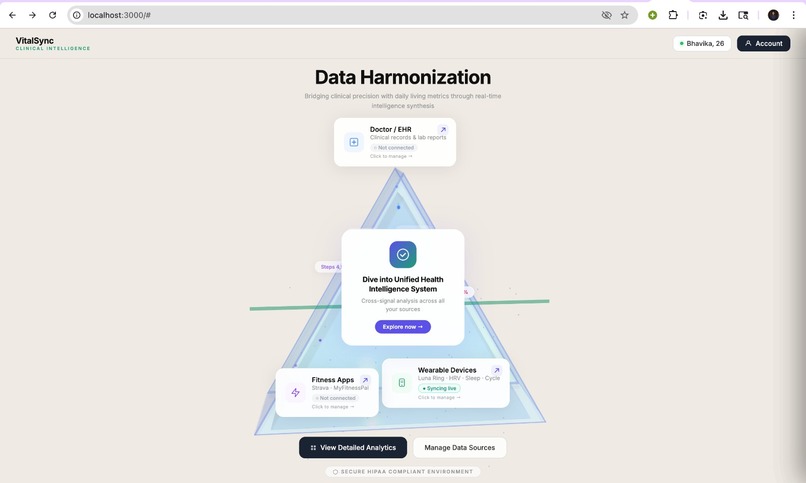
Landing Page - Dynamic
-
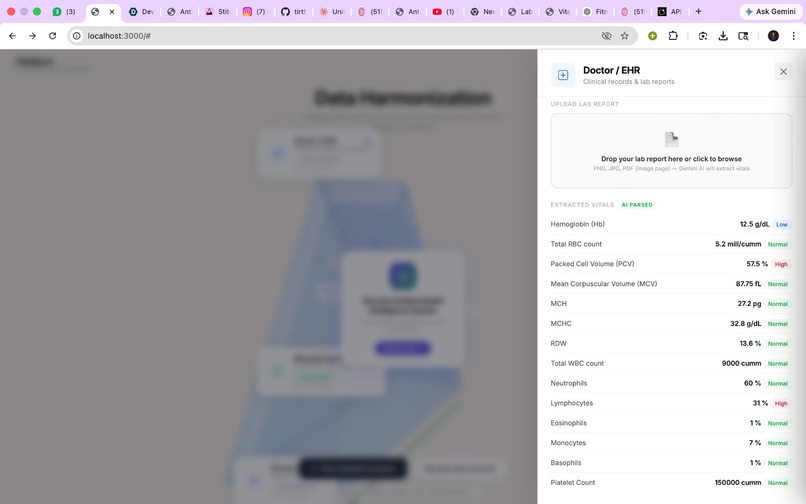
Lab Report Extractor
-
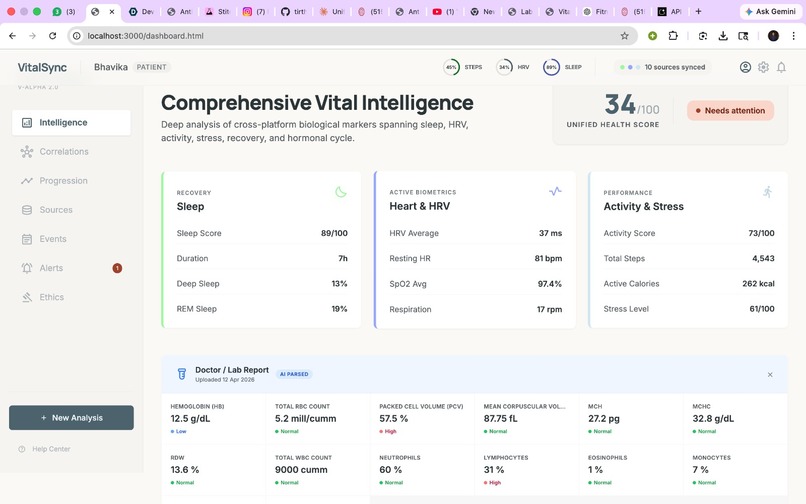
Main Page
-
-
-
-
-
-
-
-
-
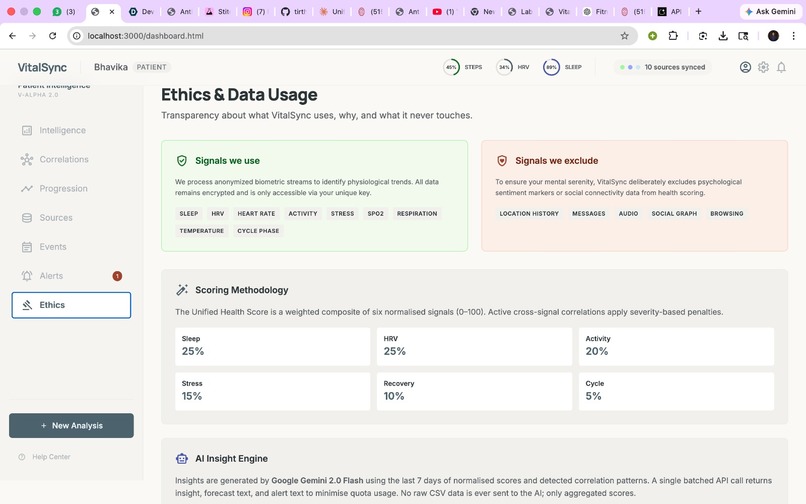
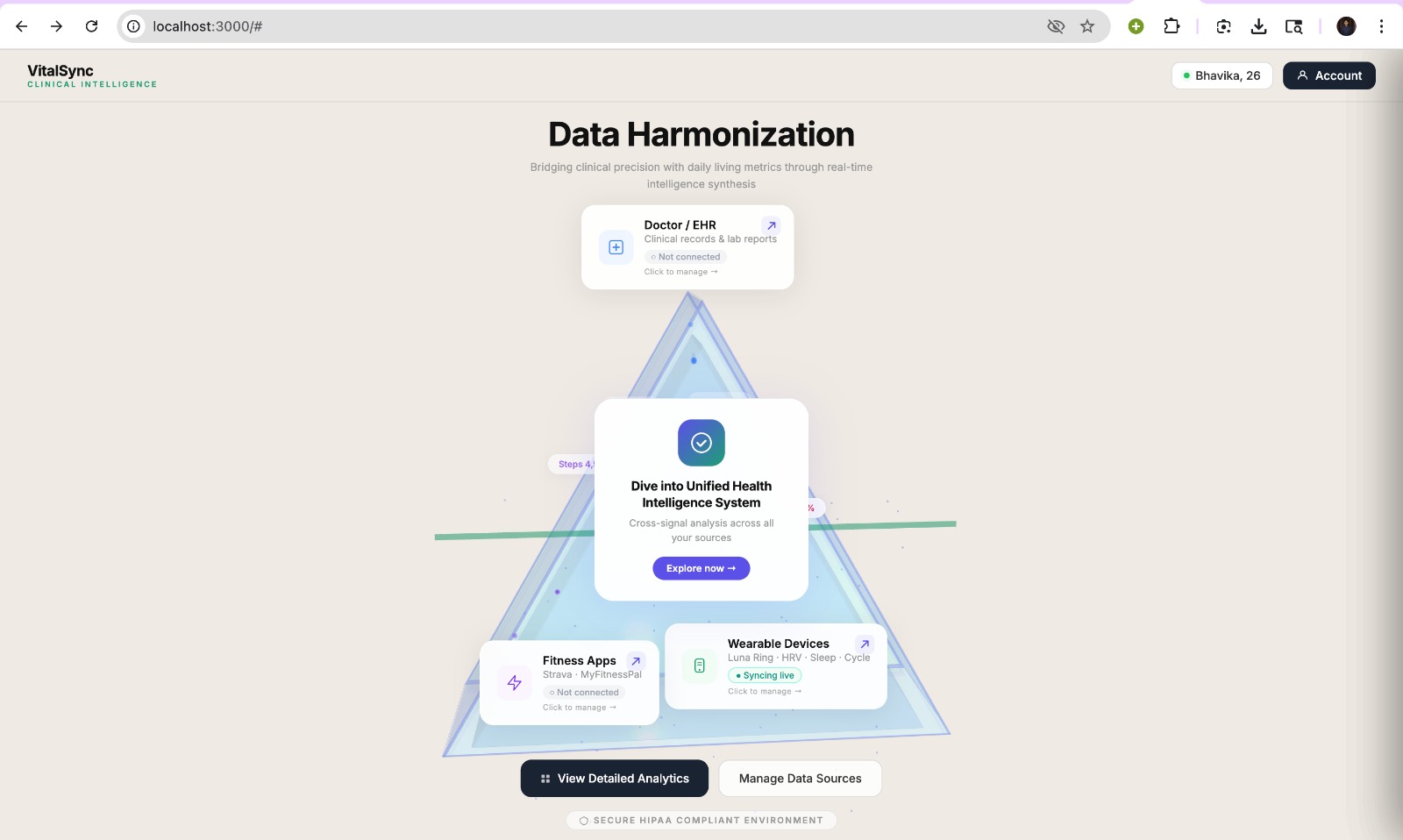
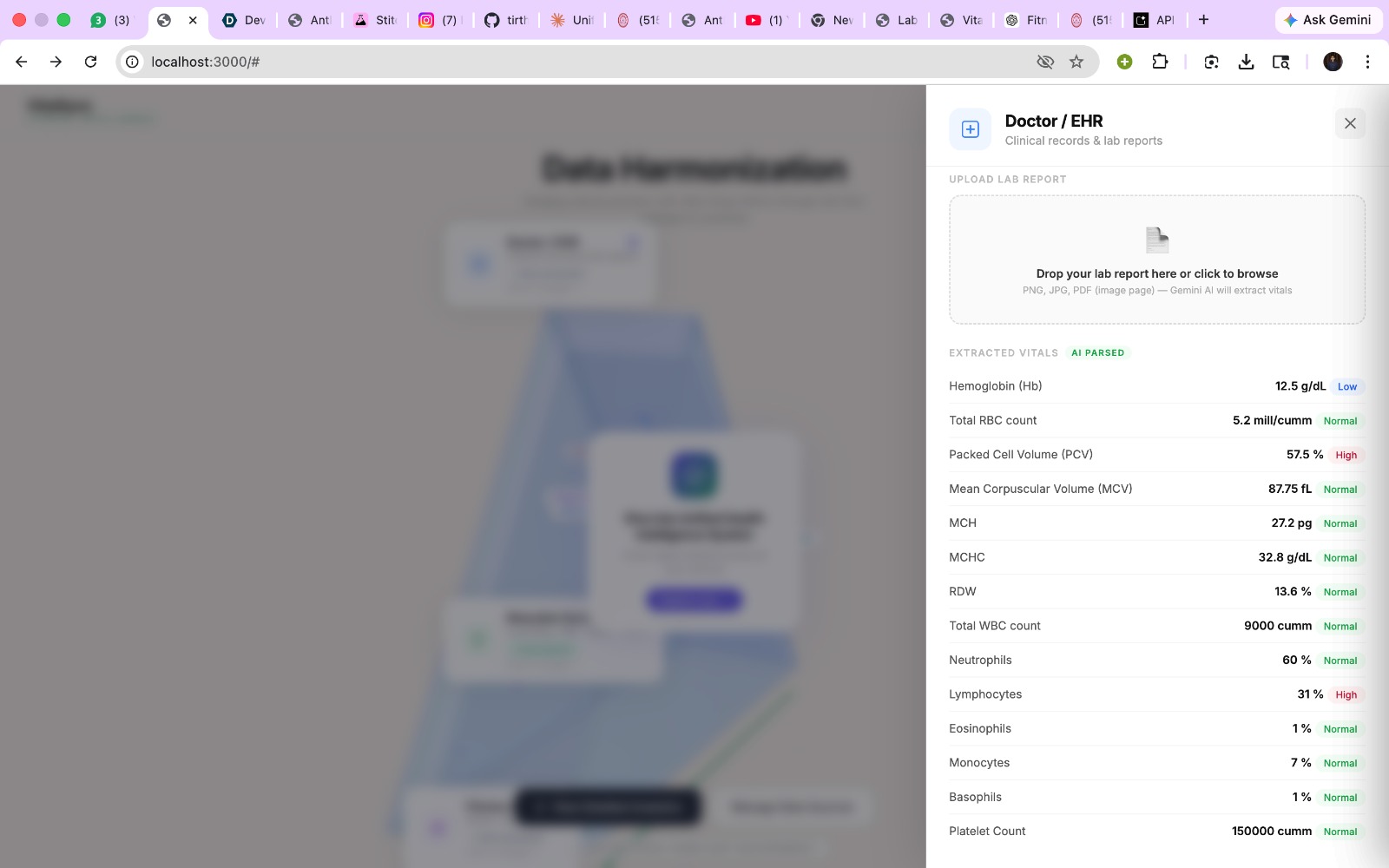
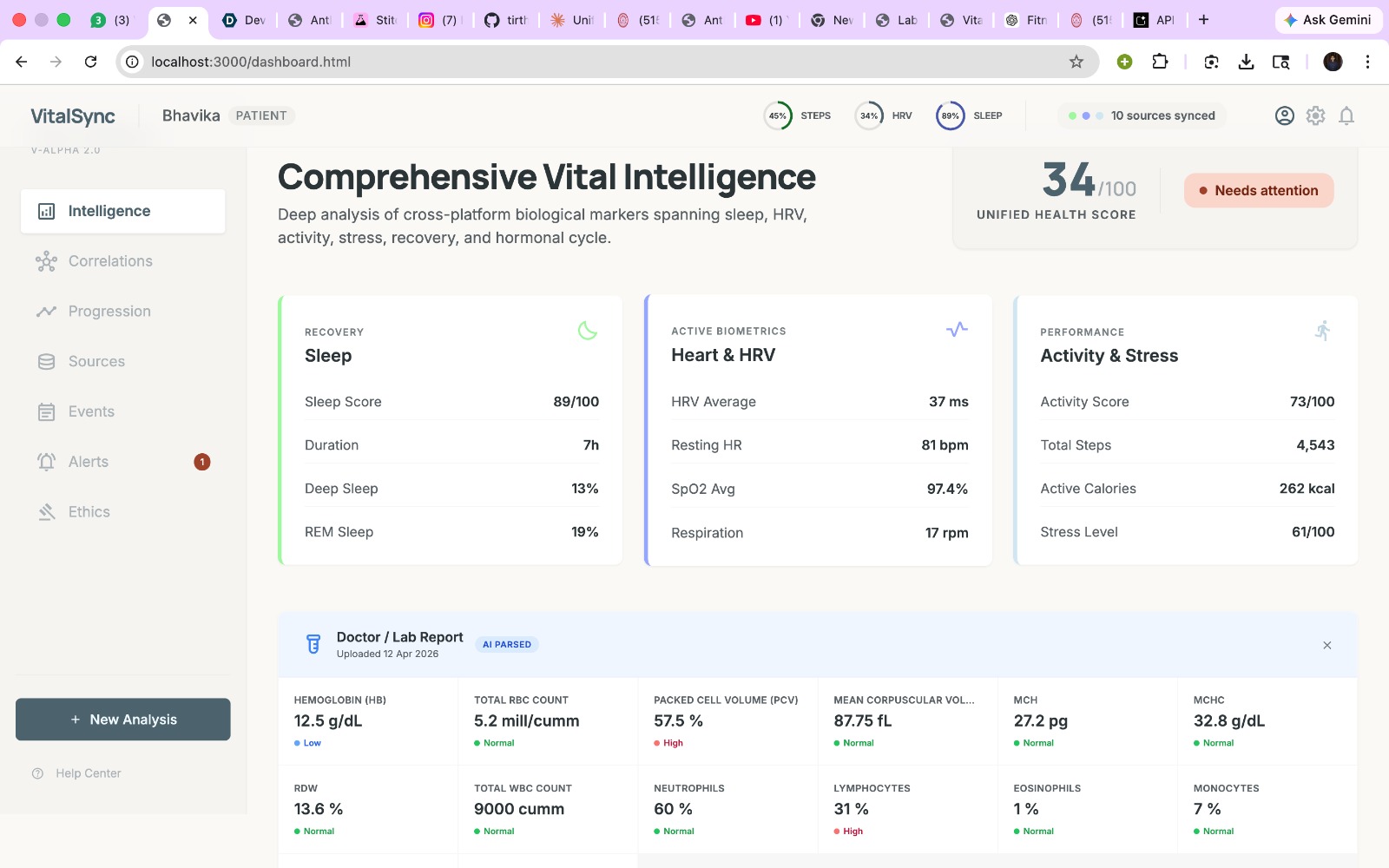
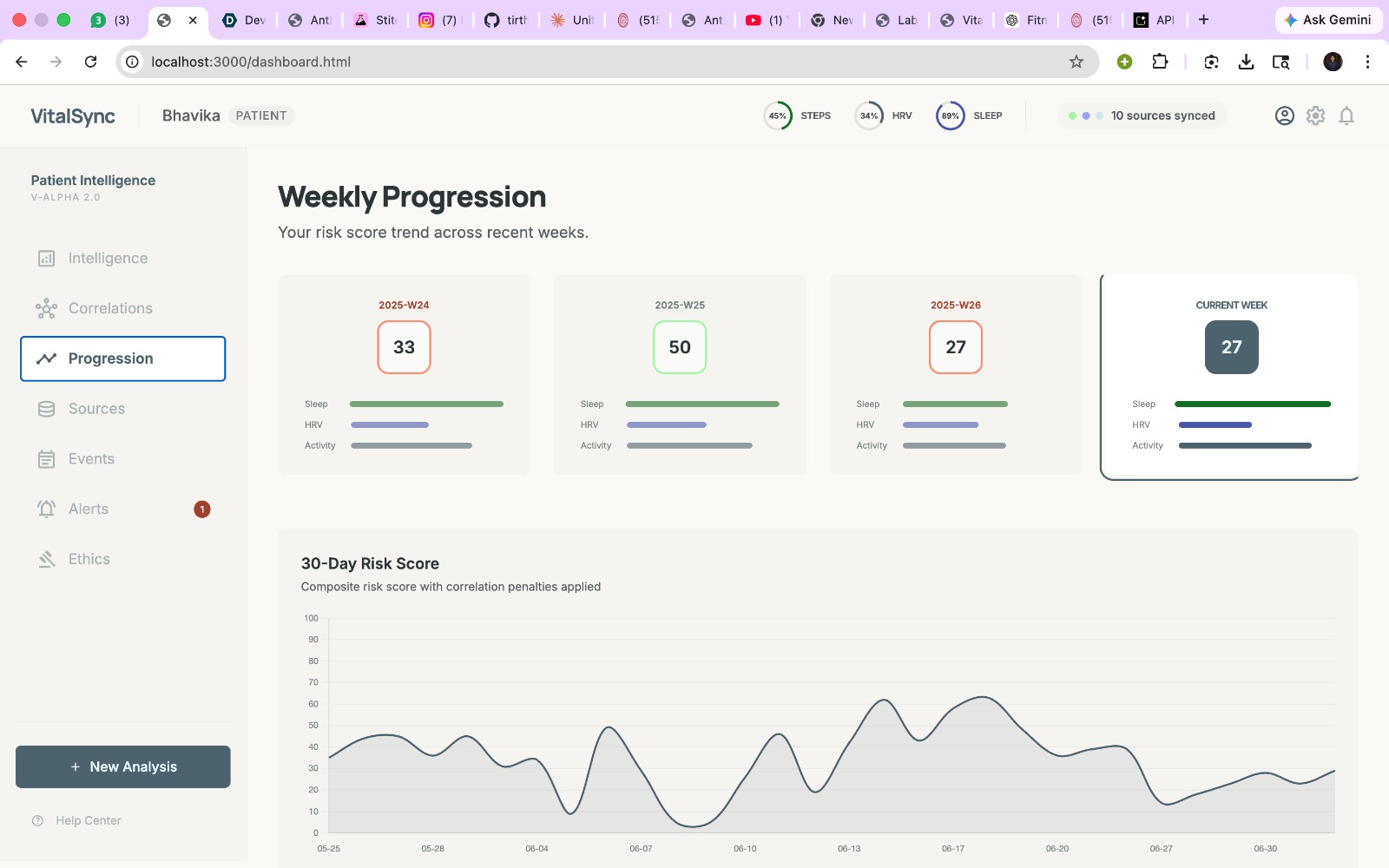
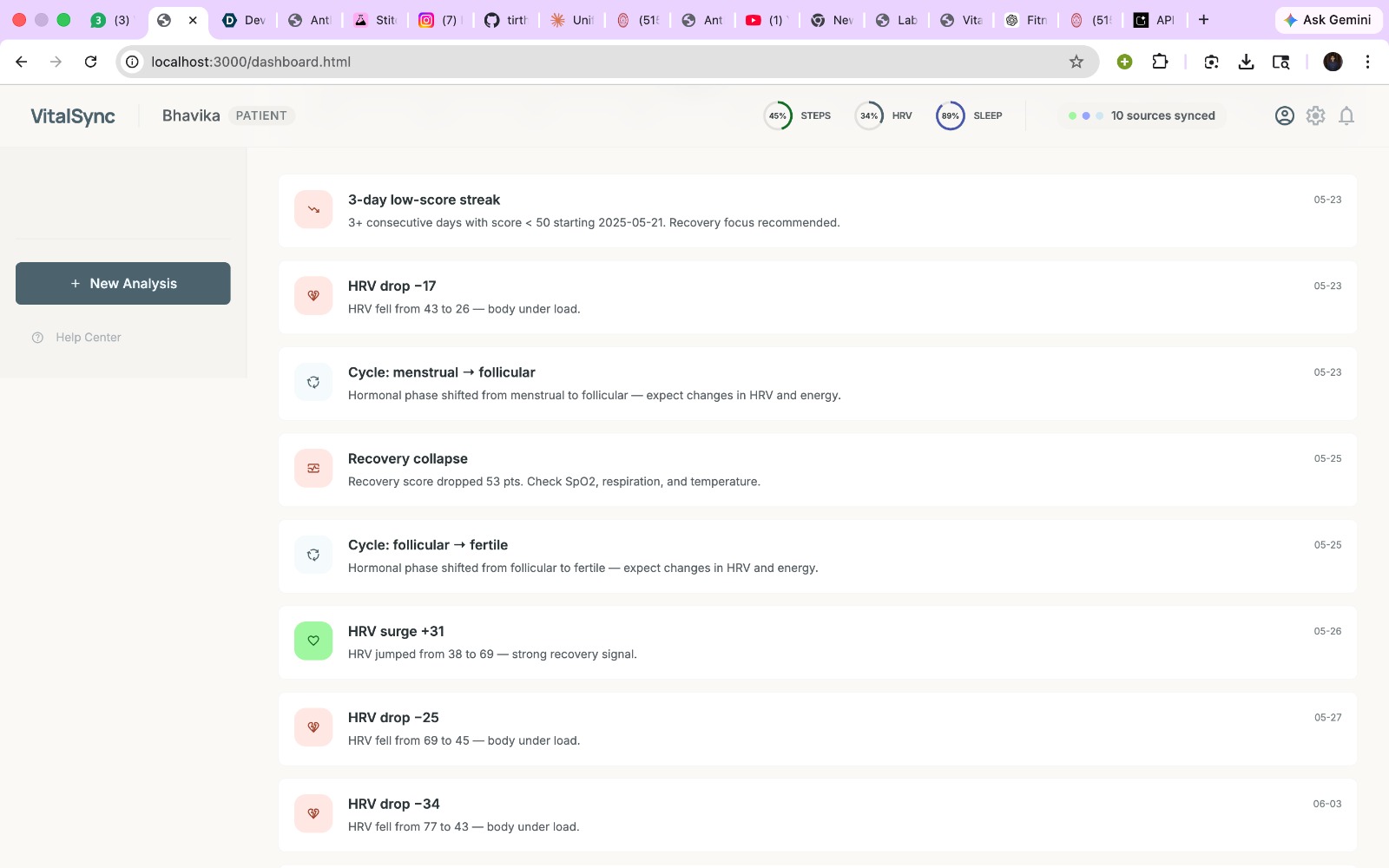
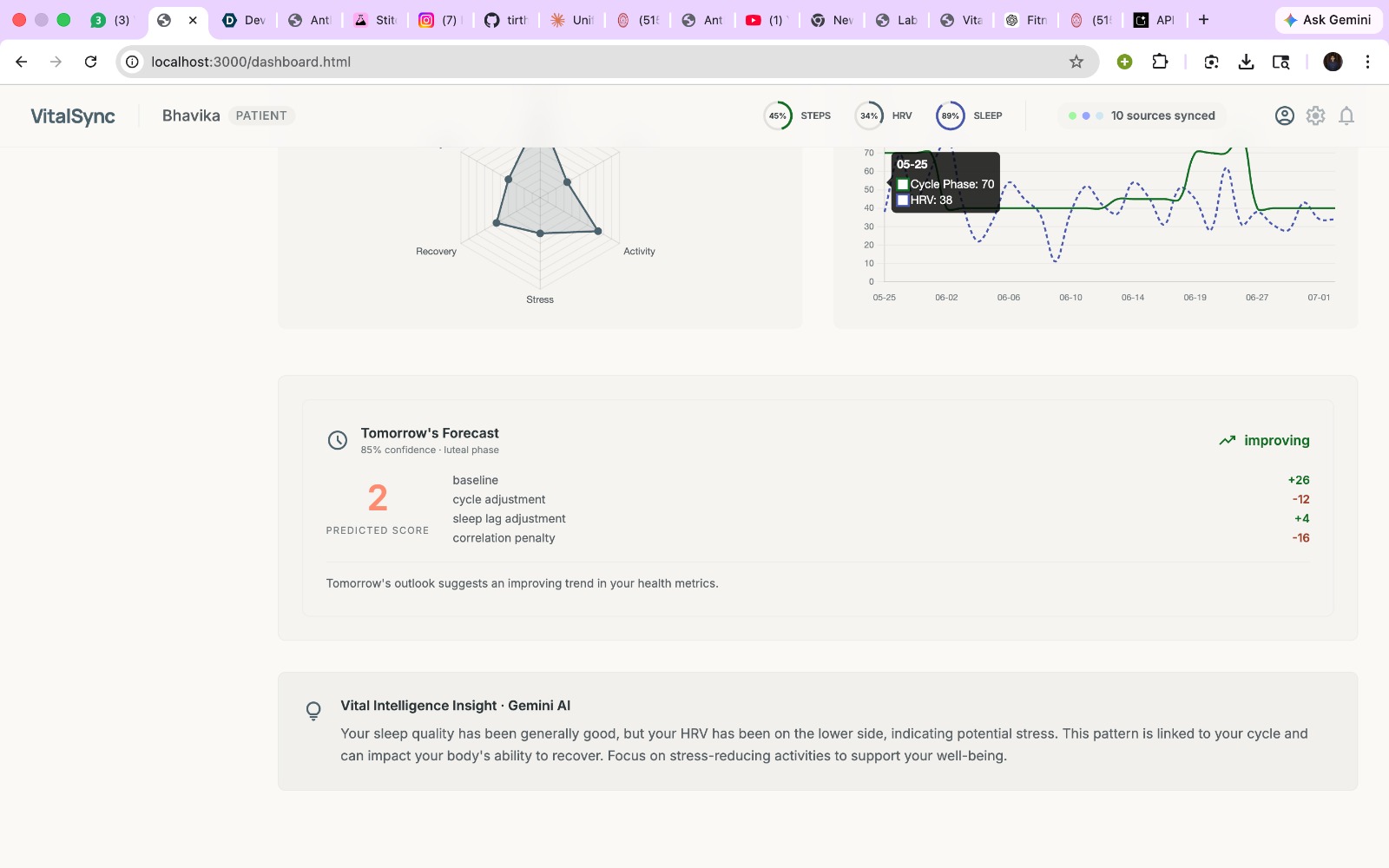
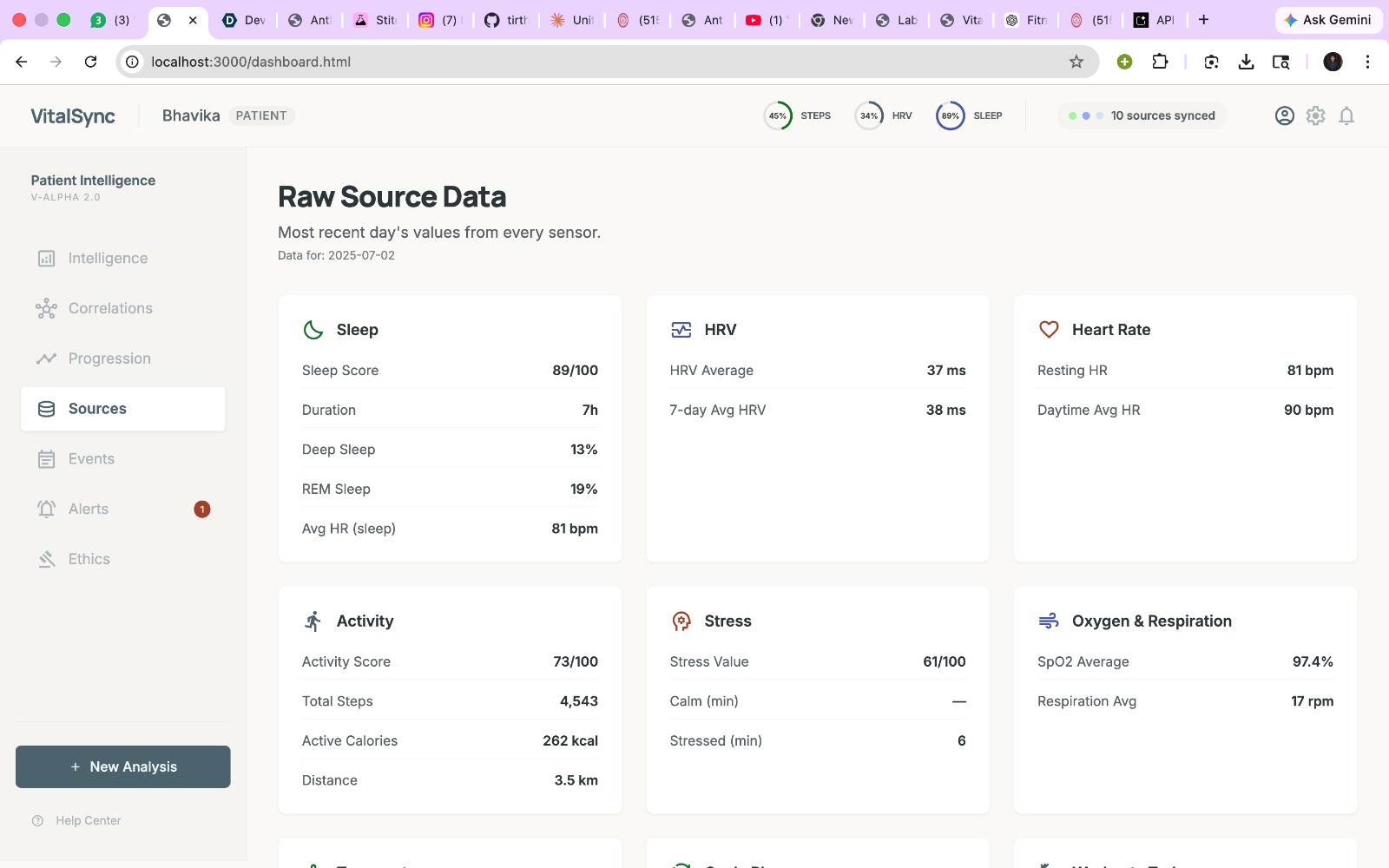
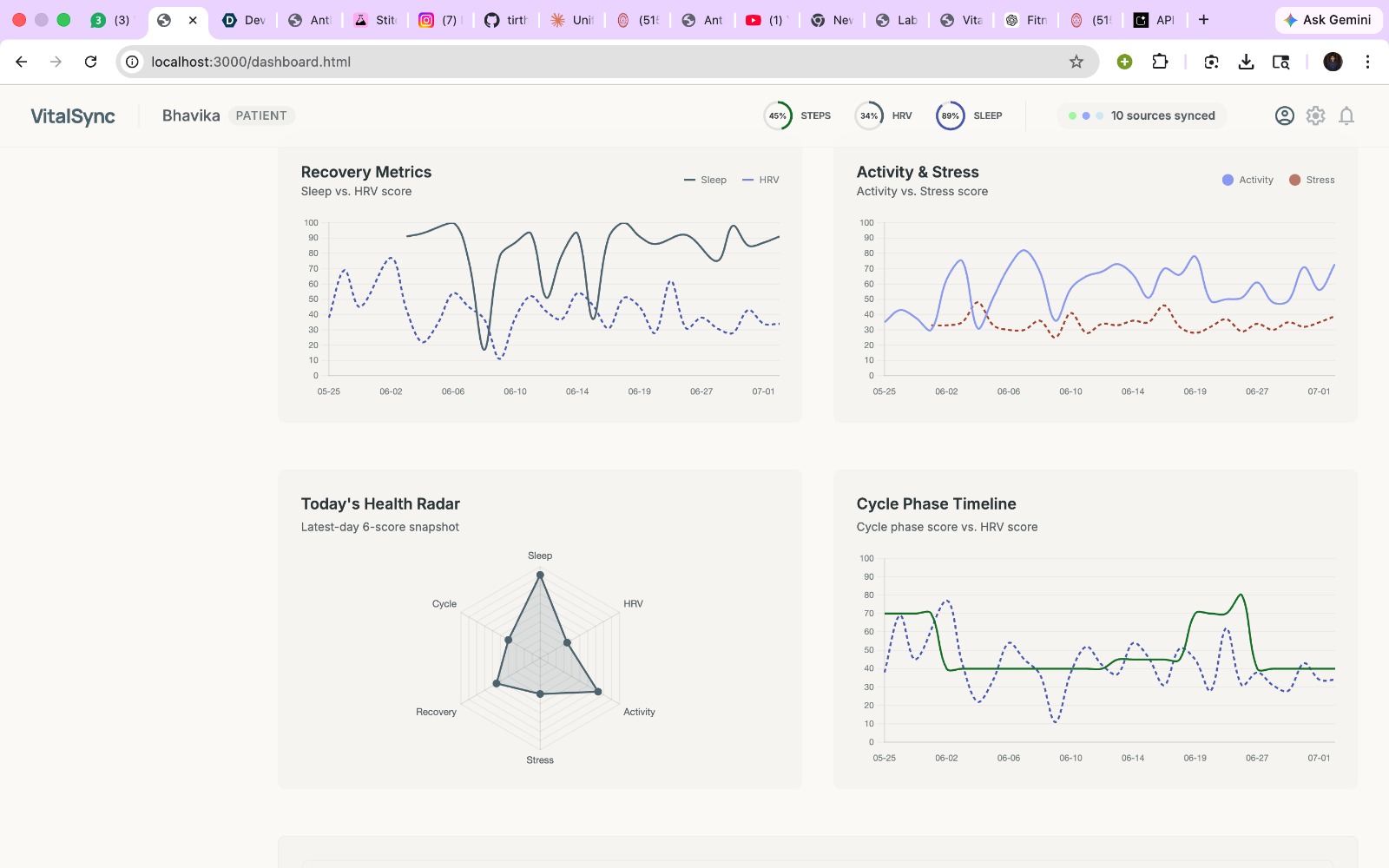
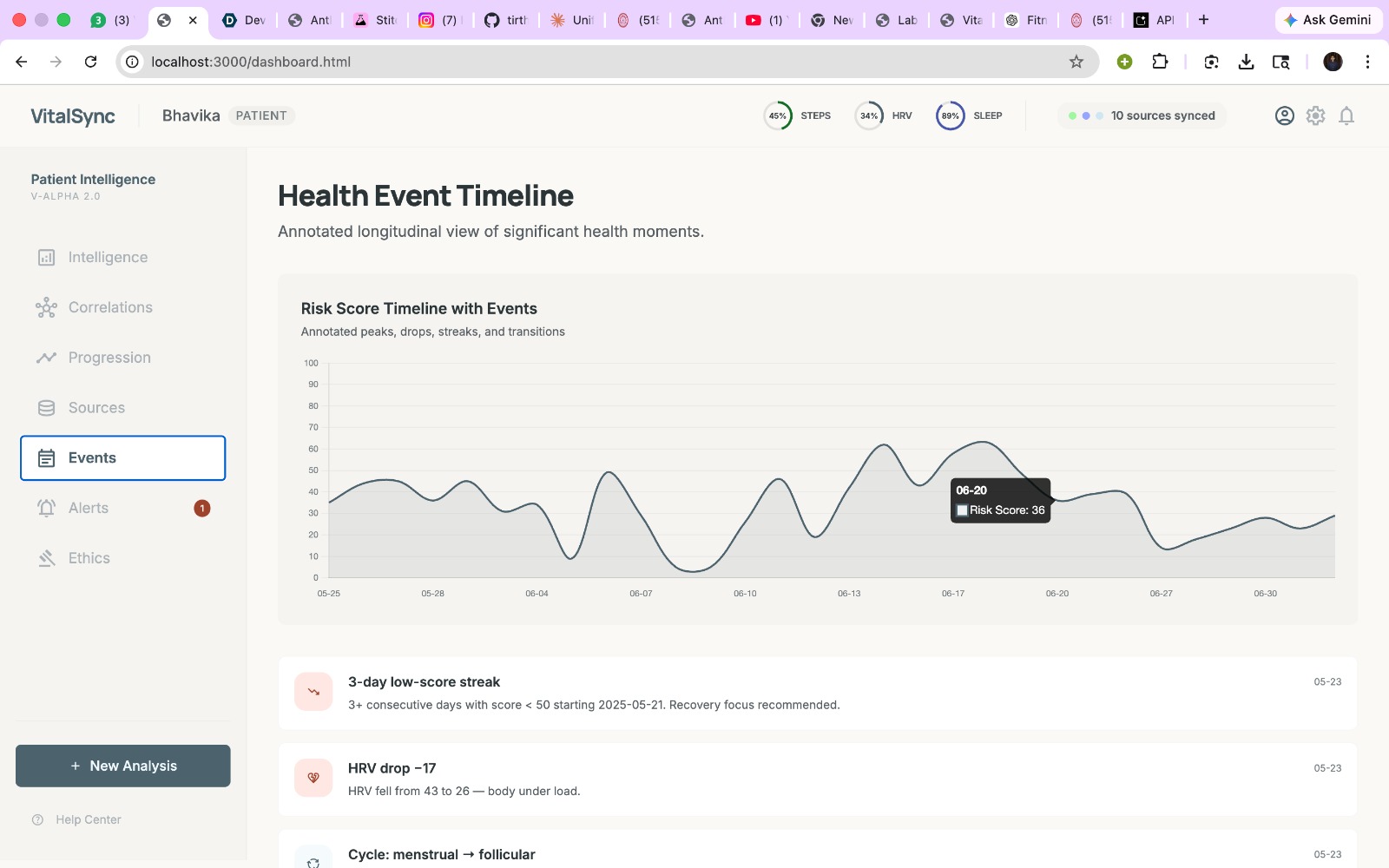
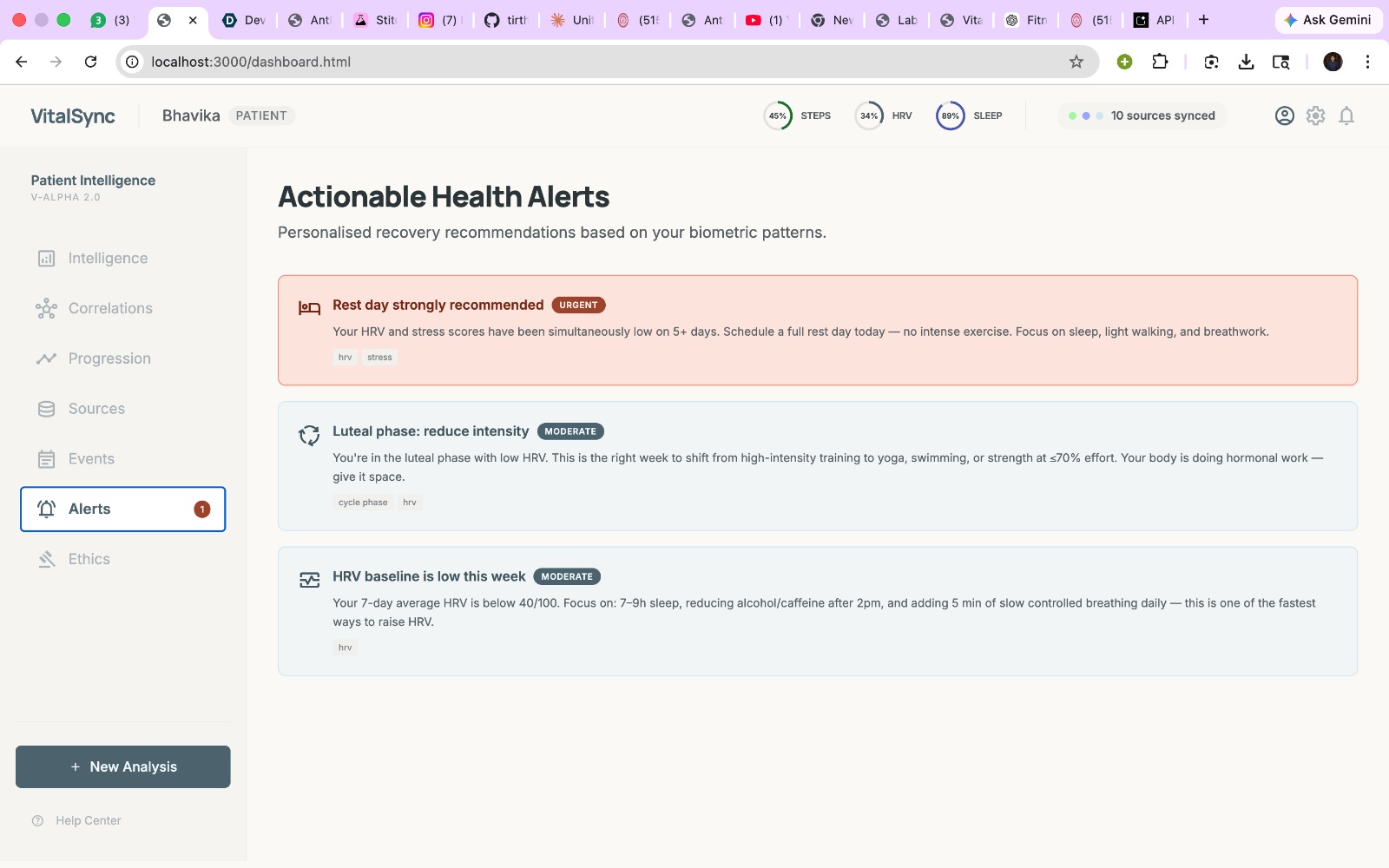
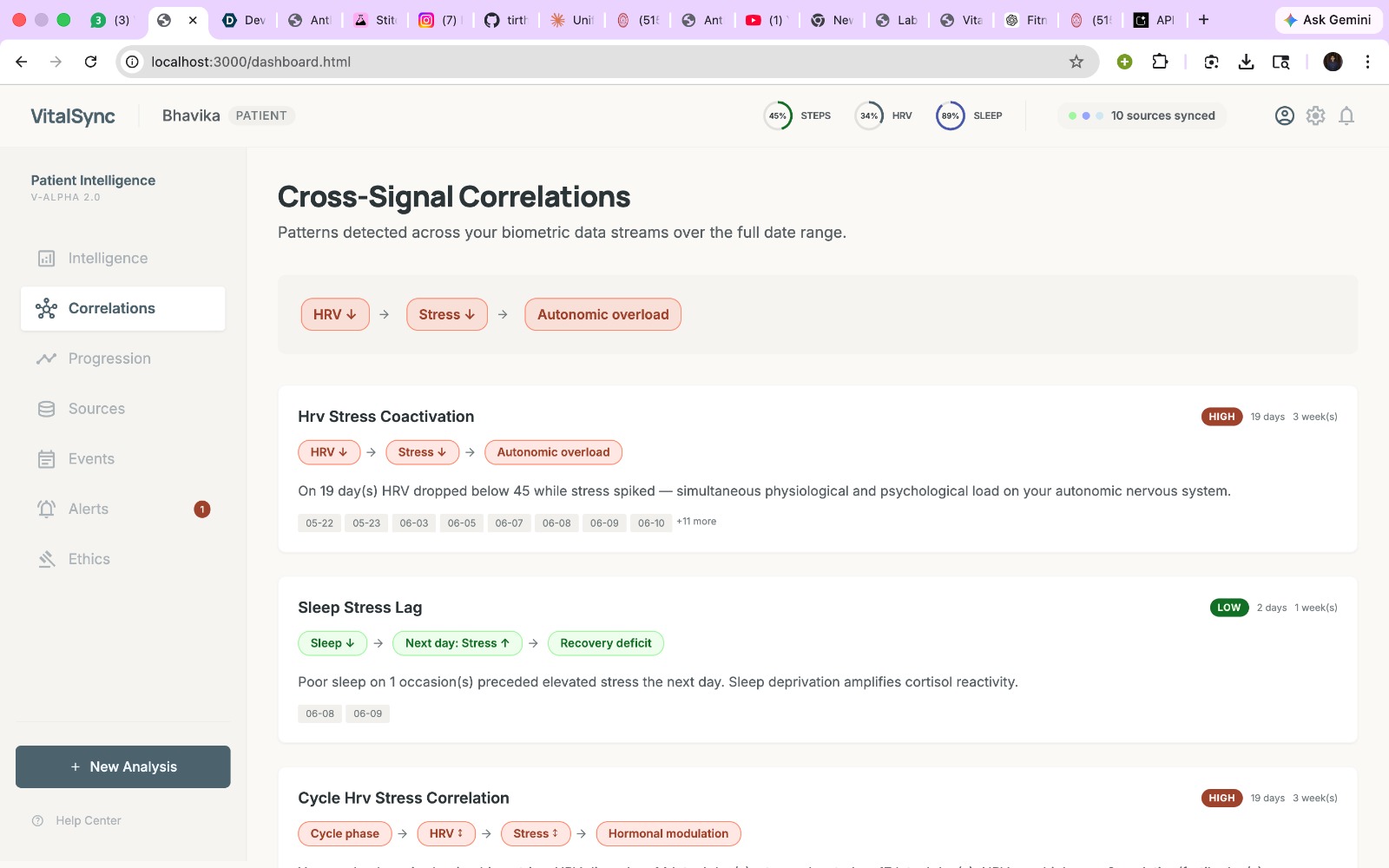
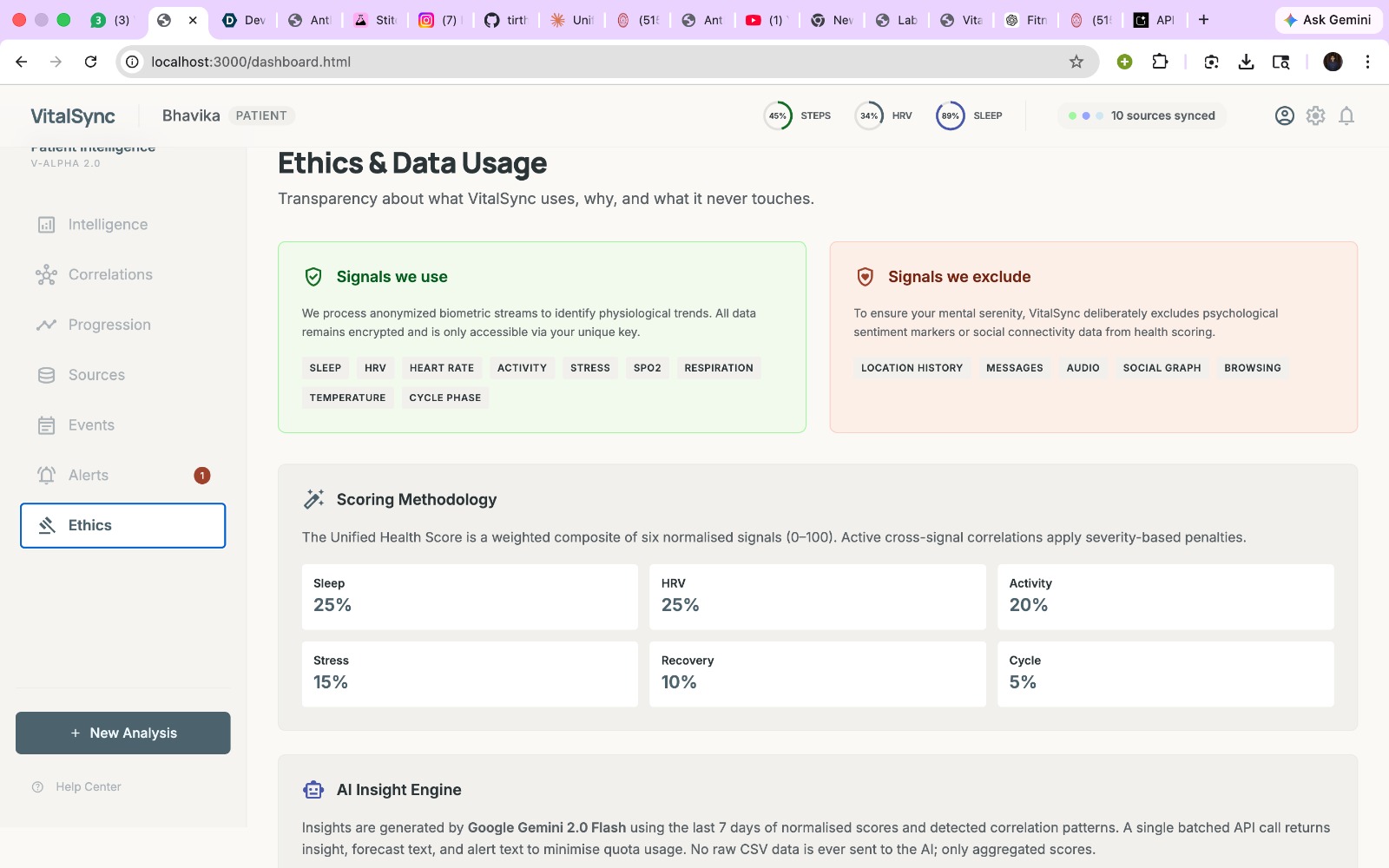
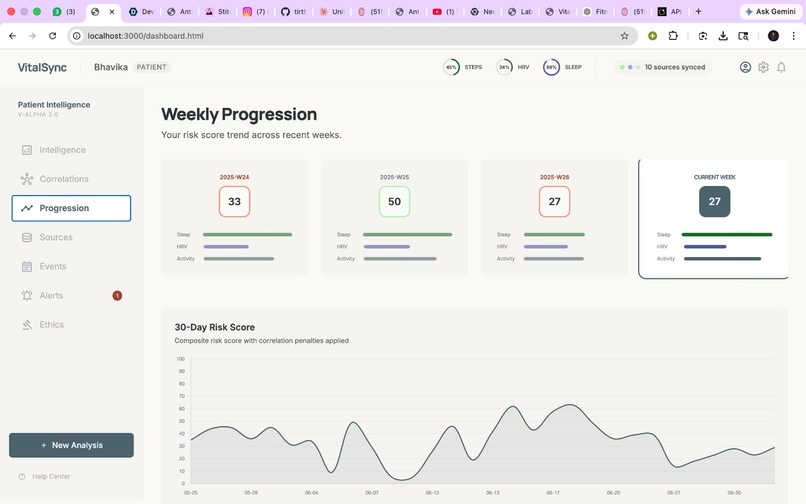
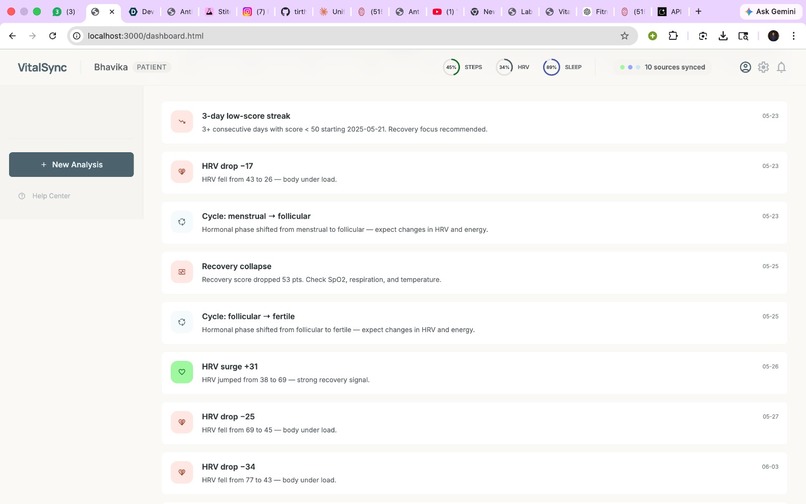
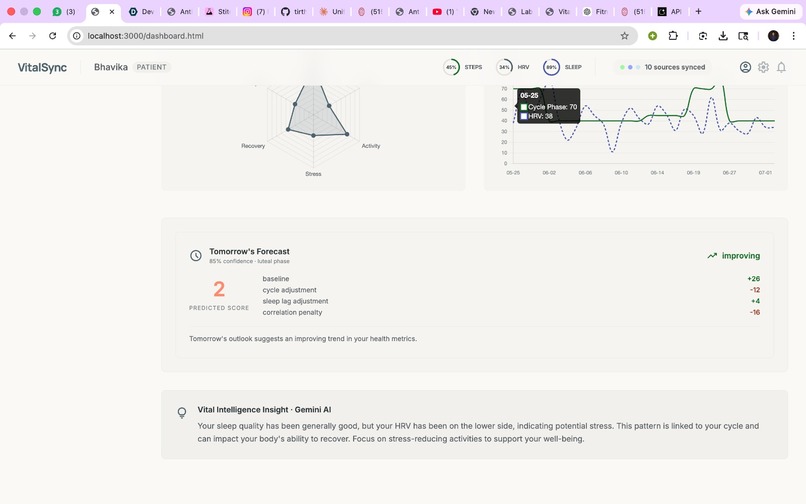
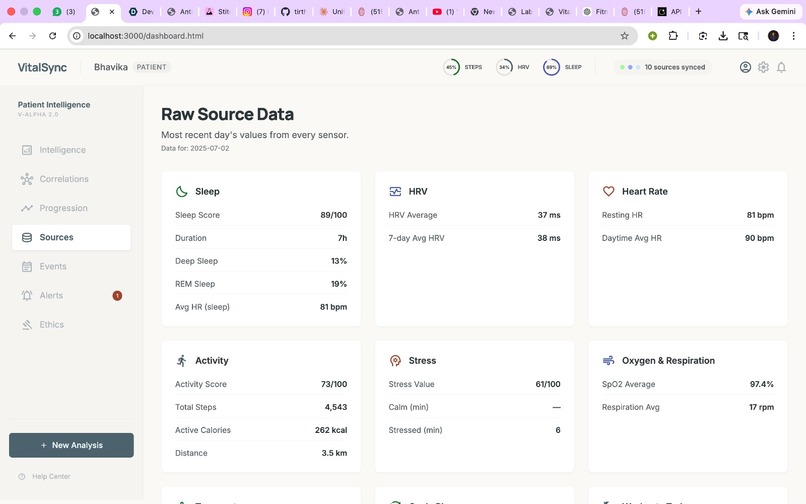
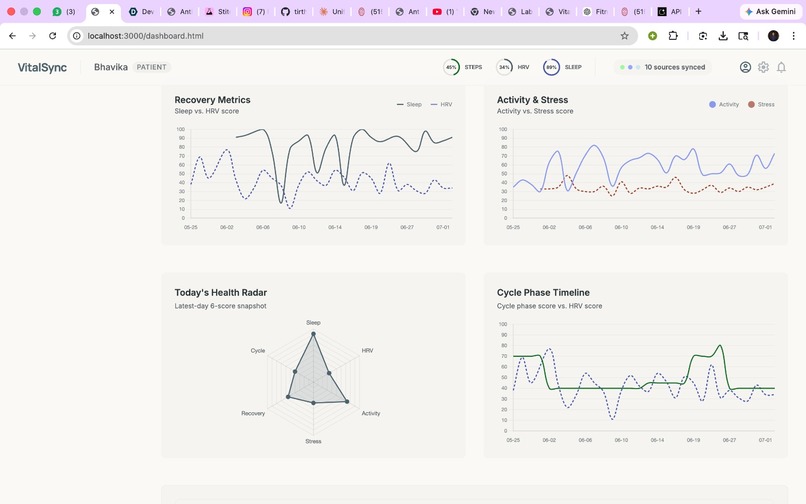
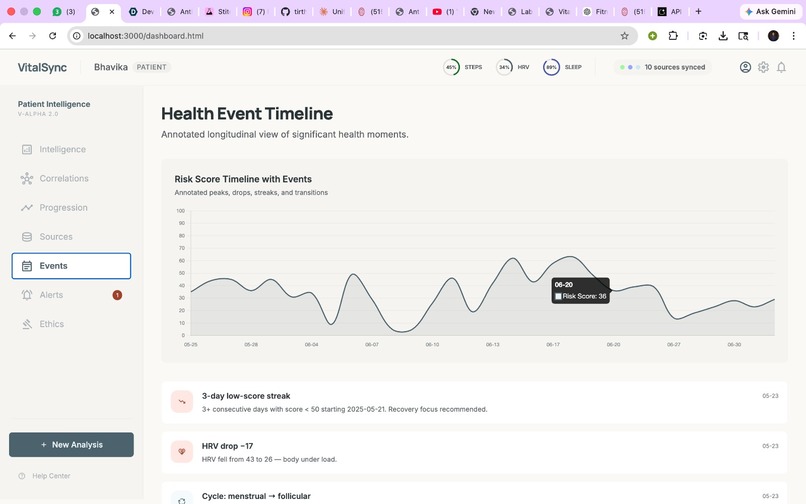
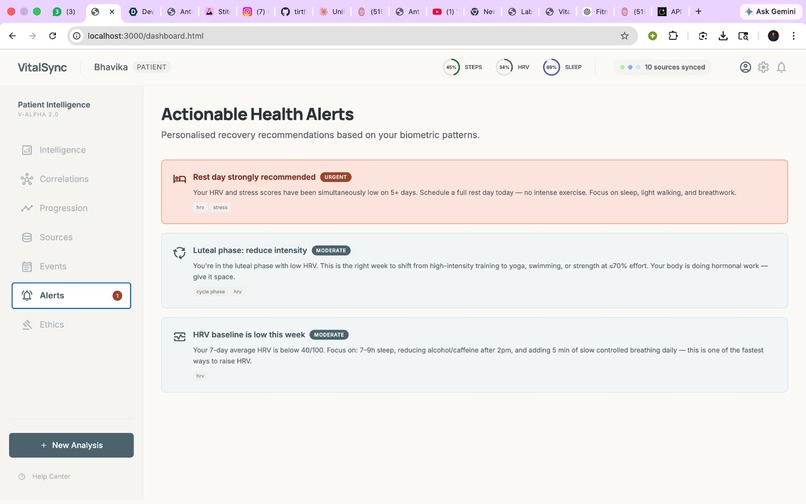
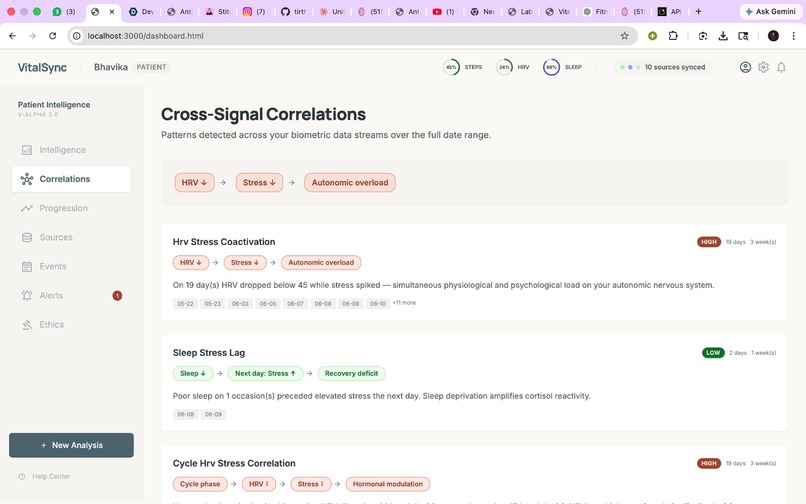
We built VitalSync because health data is broken into silos — your doctor sees your blood reports, your Fitbit sees your sleep, Strava knows your fitness, but none of them talk to each other, and that gap costs people real insight into their own health. VitalSync pulls clinical records, wearable biometrics, and fitness app data into a single unified intelligence system and uses AI to find cross-signal correlations that no individual app can see alone — things like how your sleep duration affects your HRV, or how your activity levels shift your resting heart rate the next morning. We built it using React and Three.js for the frontend, with Claude via the Anthropic API powering the correlation engine, structured to always express insights in plain language with a clear push toward professional verification rather than self-diagnosis. The hardest challenge wasn't technical — it was making sensitive health data feel calm, trustworthy, and human rather than clinical and scary. We're proud that the ethical layer is baked into every design decision, not bolted on at the end. What's next is deeper EHR integration, a shareable pre-appointment health summary, and a longitudinal engine that gets smarter the longer you use it — because a six-month trend tells a completely different story than a single day's snapshot.

Log in or sign up for Devpost to join the conversation.