-
-
(1)
-
(2)
-
(3)
-
(4)
-
(5)
-
(6)
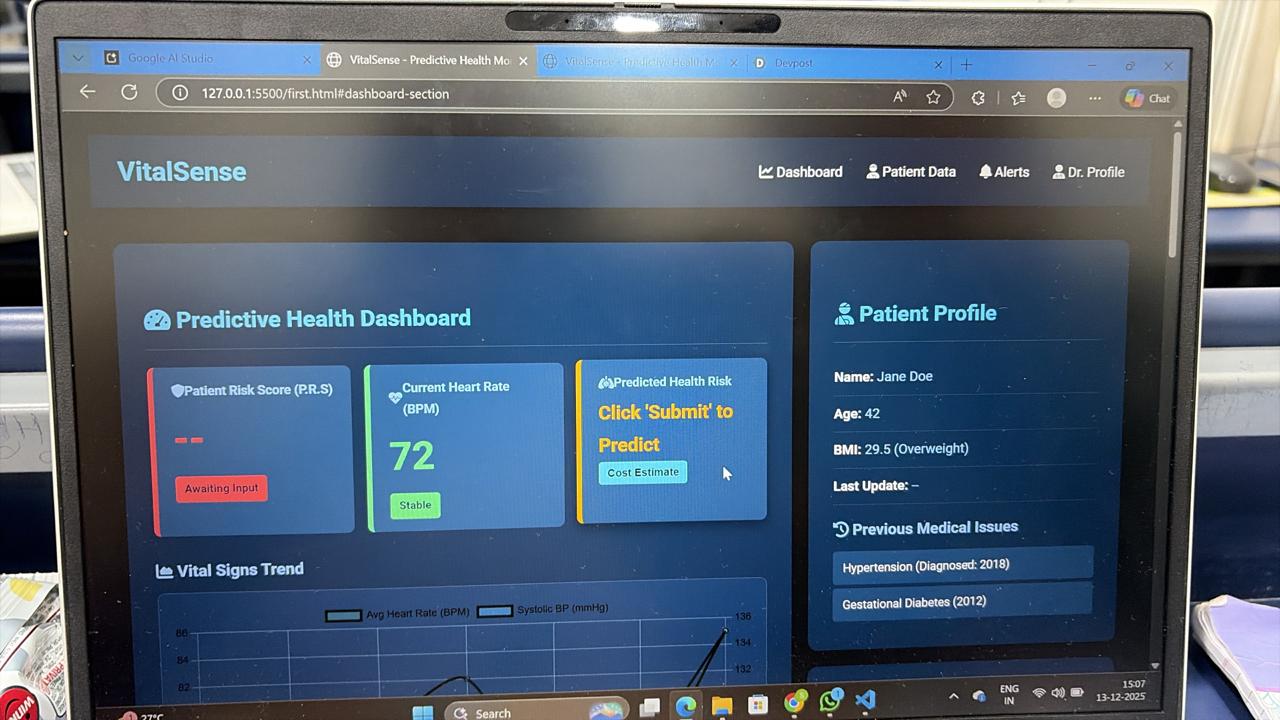
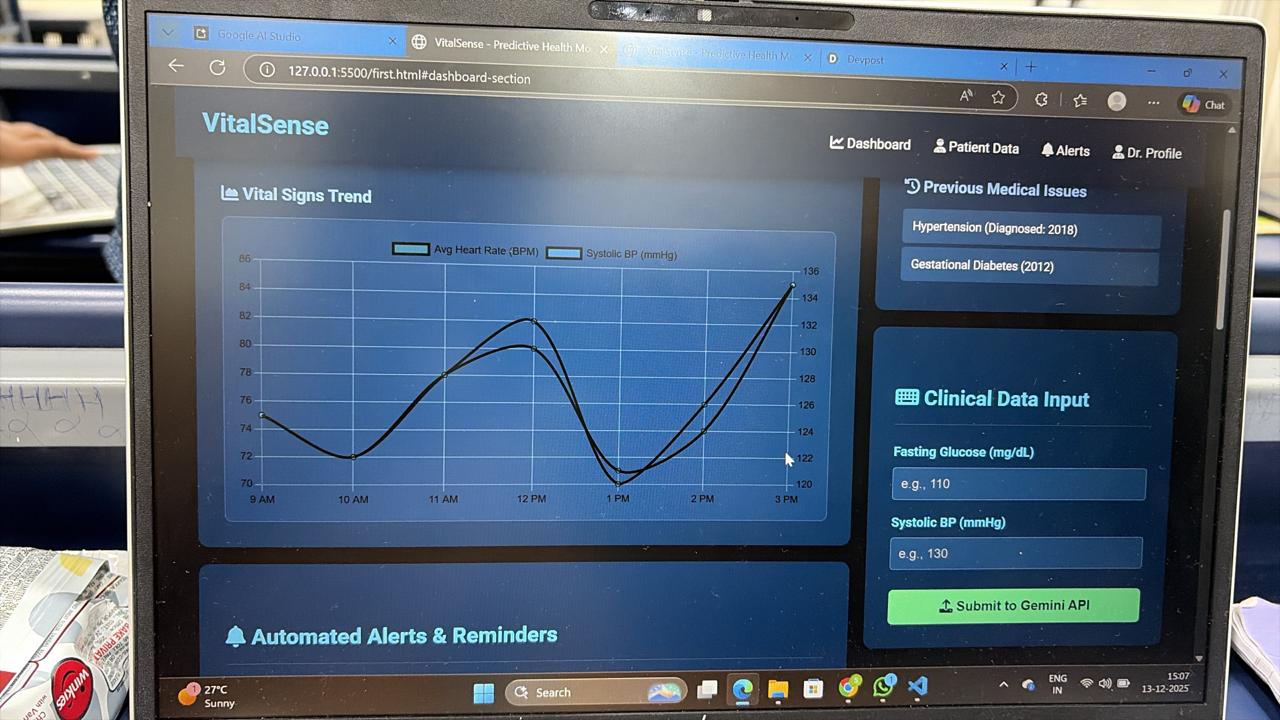
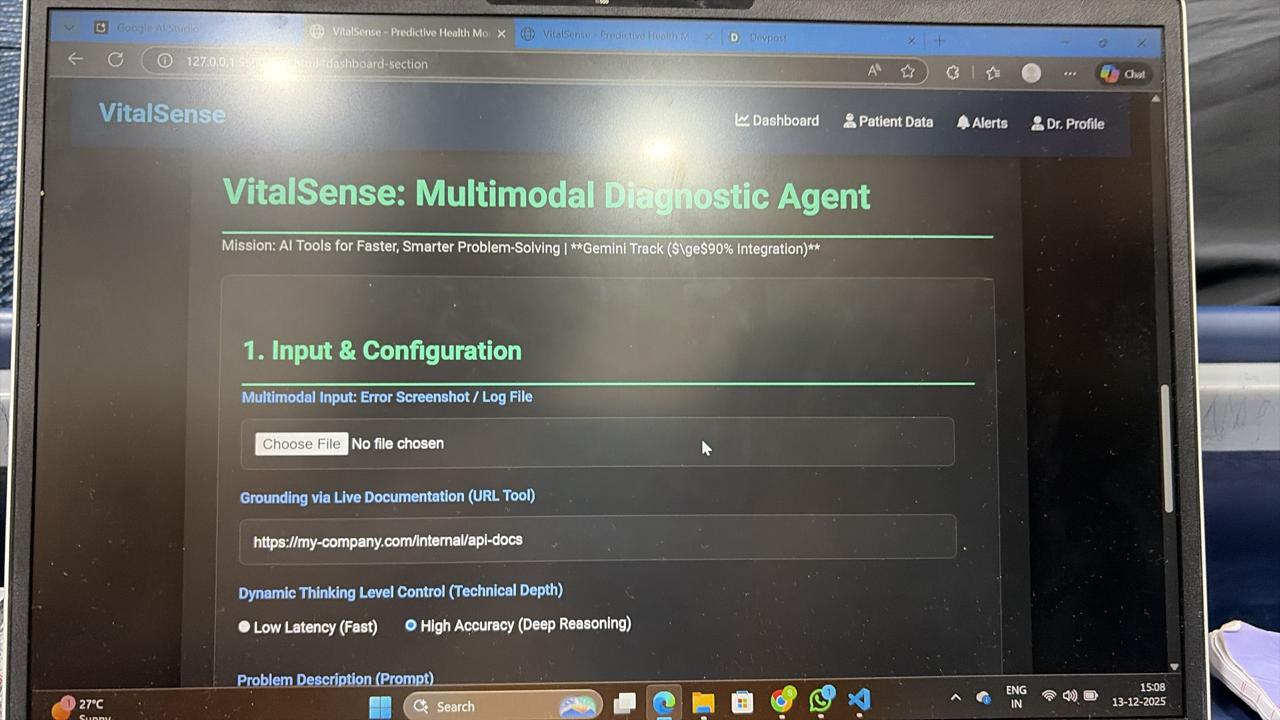
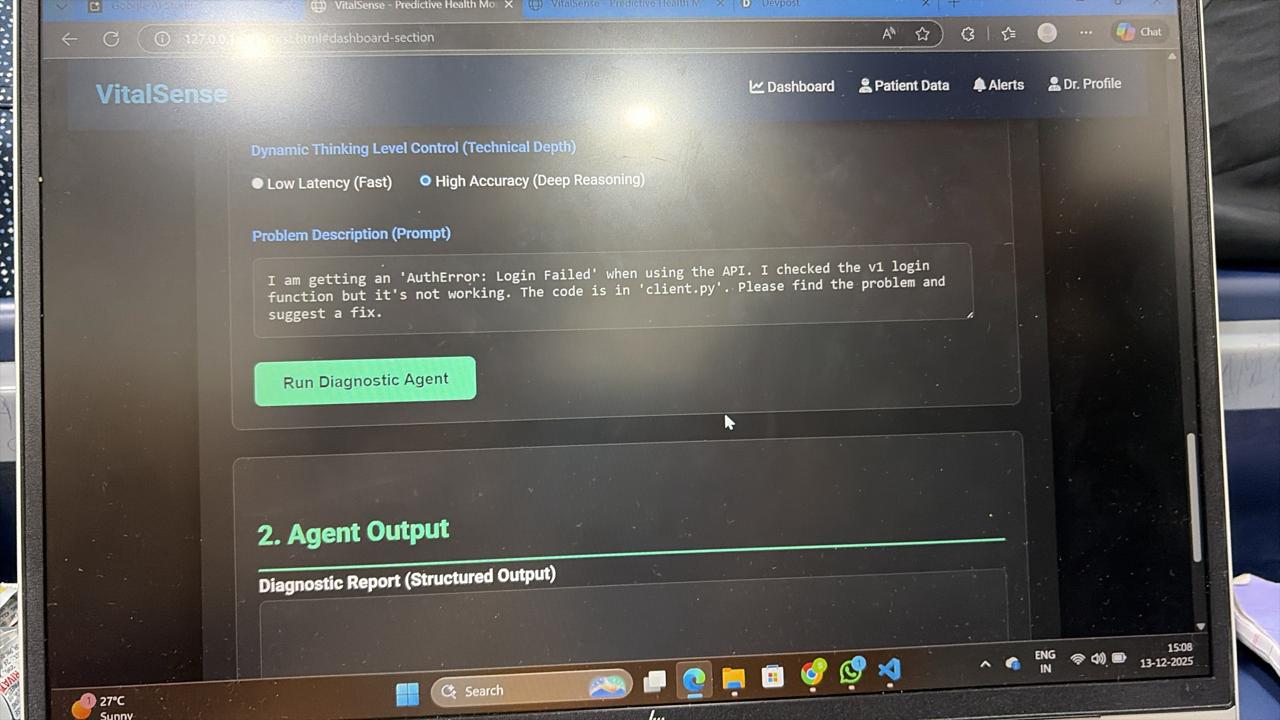
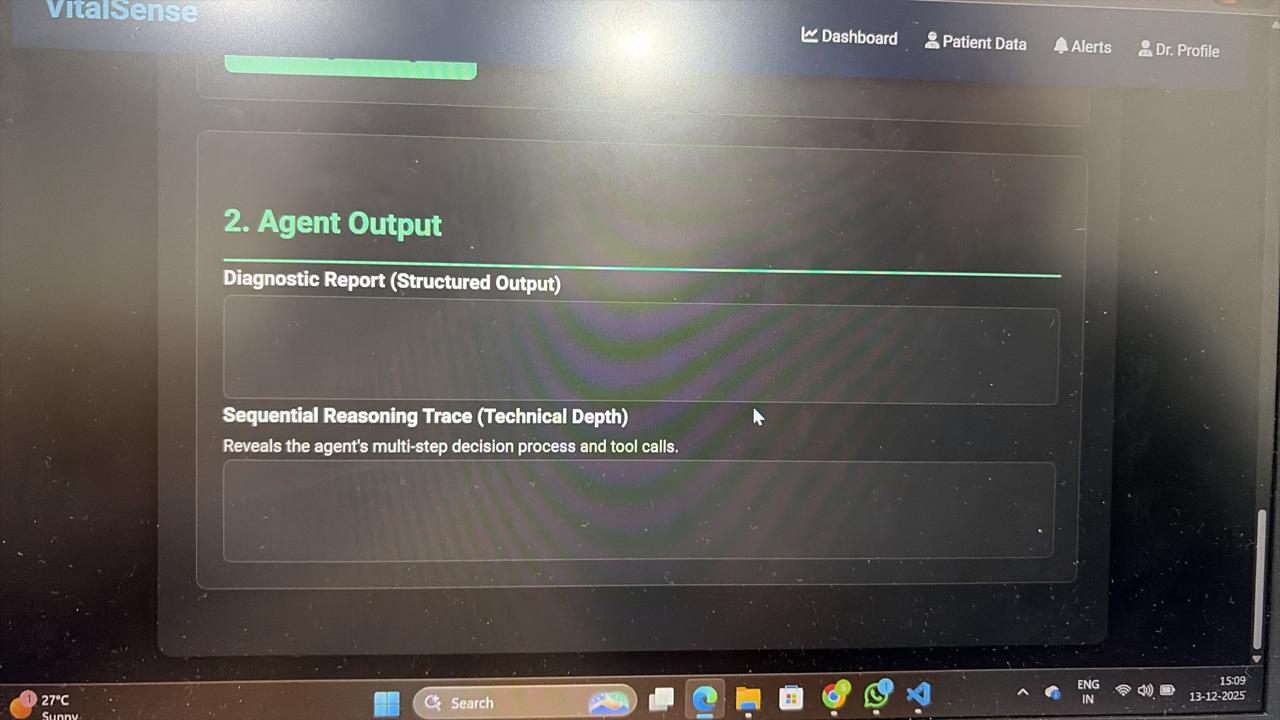
Inspiration- Health shouldn't be reactive; it should be predictive. We realized that millions of patients have access to raw data (heart rate, BP, glucose) but lack the immediate medical context to understand it. We wanted to bridge the gap between "seeing a number" and "knowing what to do," turning anxiety into action.
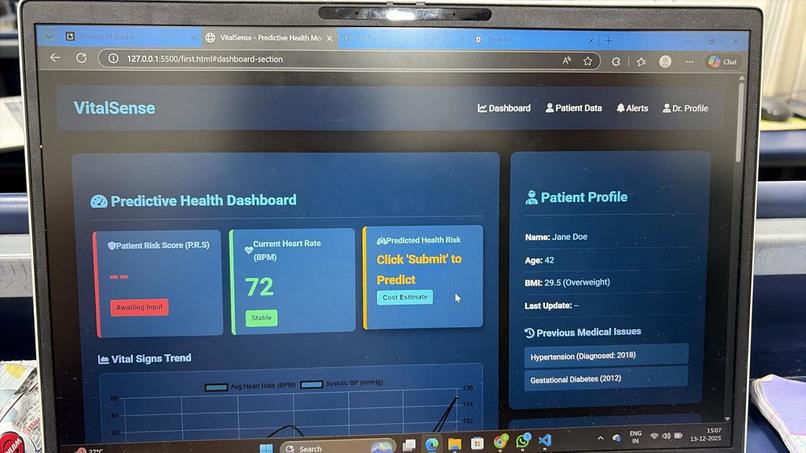
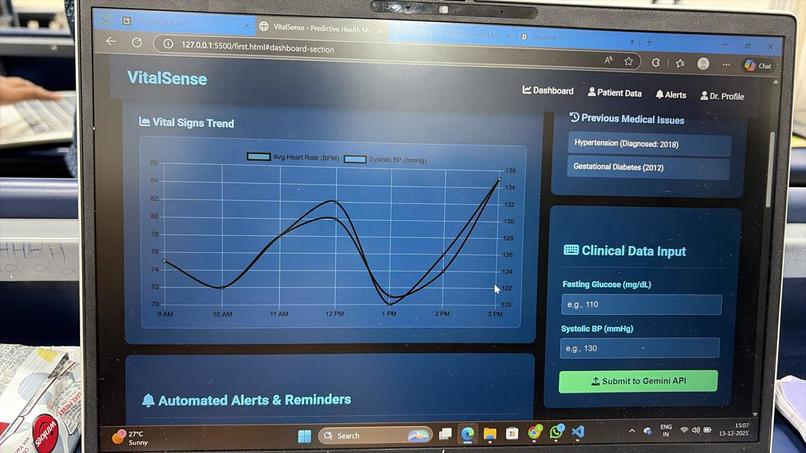
What it does- VitalSense is a real-time, AI-powered predictive health dashboard. It takes standard clinical inputs (Glucose, Blood Pressure, Age) and uses Google Gemini to instantly calculate a Personalized Risk Score (PRS). Beyond just a score, it generates:
Predictive Diagnostics: Identifies the most likely future condition (e.g., Type 2 Diabetes).
Actionable Alerts: Categorizes risks as Urgent, Reminders, or Informational.
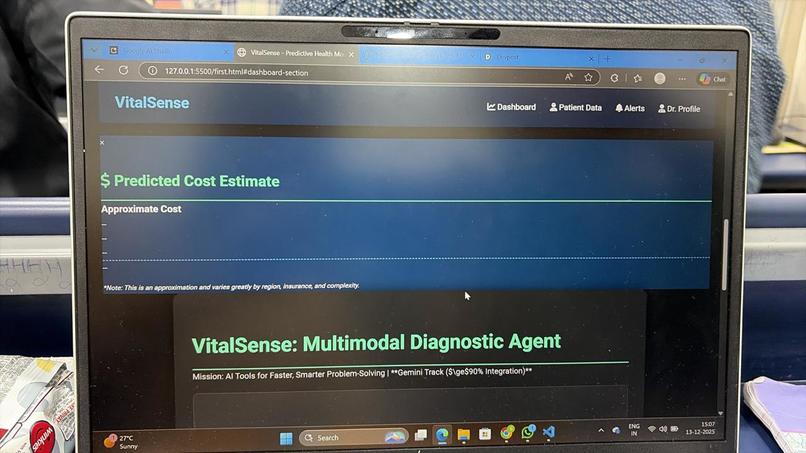
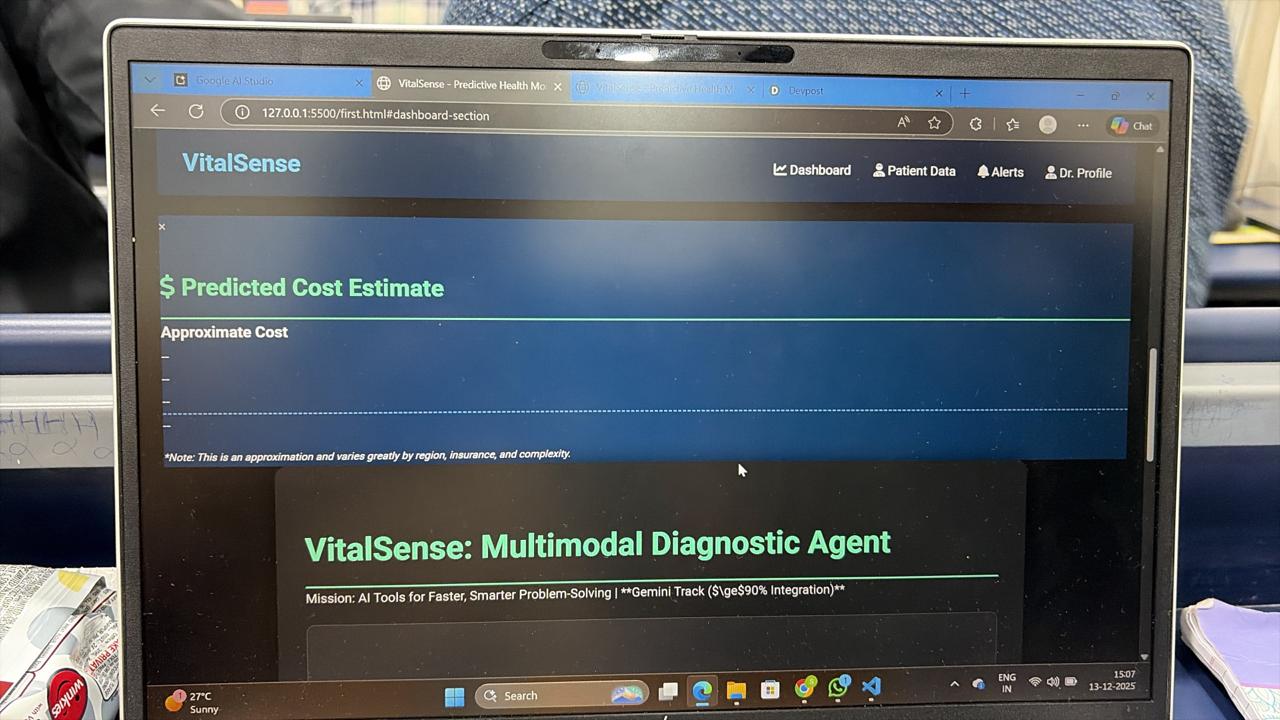
Financial Forecasting: unique feature that estimates the potential 1-year cost of not treating the condition, motivating users to act.
How we built it- Here is a concise, hackathon-ready project description for VitalSense.
Inspiration Health shouldn't be reactive; it should be predictive. We realized that millions of patients have access to raw data (heart rate, BP, glucose) but lack the immediate medical context to understand it. We wanted to bridge the gap between "seeing a number" and "knowing what to do," turning anxiety into action.
What it does VitalSense is a real-time, AI-powered predictive health dashboard. It takes standard clinical inputs (Glucose, Blood Pressure, Age) and uses Google Gemini to instantly calculate a Personalized Risk Score (PRS). Beyond just a score, it generates:
Predictive Diagnostics: Identifies the most likely future condition (e.g., Type 2 Diabetes).
Actionable Alerts: Categorizes risks as Urgent, Reminders, or Informational.
Financial Forecasting: unique feature that estimates the potential 1-year cost of not treating the condition, motivating users to act.
How we built it using Google Gemini and team spirit We built a full-stack solution using Python (Flask) for the backend and vanilla HTML/JS for a responsive frontend.
The Brain: We leveraged Google Gemini 1.5 Flash via the API. We used advanced prompt engineering to enforce strict JSON output, ensuring the AI acted as a structured medical consultant.
The Glue: Flask handles the API calls, securely managing keys and data flow.
The Team: When one of us was stuck on the CSS grid, another jumped in. When the backend logic failed, we pair-programmed until it worked. Our synergy was just as vital as the code.
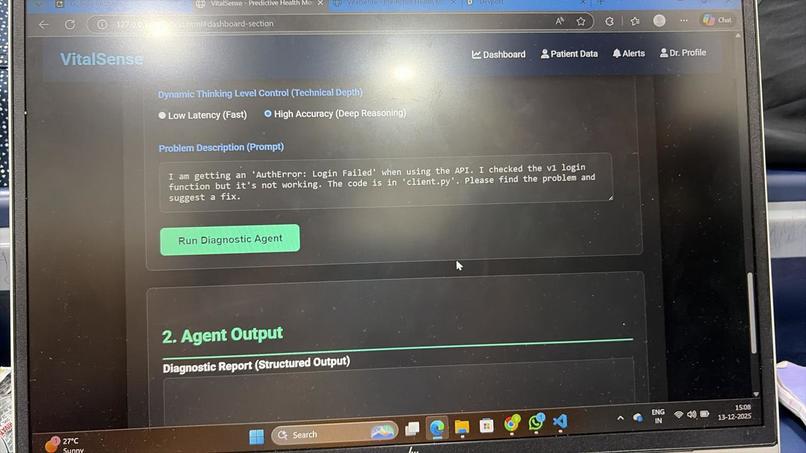
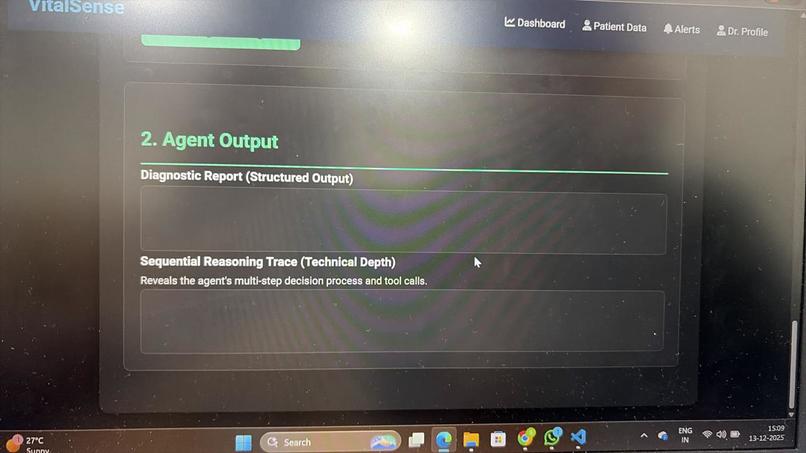
Challenges we ran into- Our biggest hurdle was taming the AI's output. Initially, we faced frequent Google Generative AI API errors (specifically 500 errors and malformed JSON).
The Fix: We implemented robust error handling in Python and refined our system prompts to demand strictly formatted JSON without Markdown. We also added a "Litmus Test" in our backend boot sequence to ensure the API connection was stable before the app even launched.
Accomplishments that we're proud of- Seamless Integration: Successfully connecting a custom frontend to the Gemini API with low latency.
The "Cost Estimate" Feature: We are particularly proud of getting the AI to generate realistic financial breakdowns—a feature rarely seen in health apps.
Resilience: Overcoming the API connectivity issues and creating a dashboard that degrades gracefully if the AI hangs.
What we learned- Prompt Engineering is Engineering: We learned that how you ask Gemini is just as important as the code you write.
Structured Data is Key: We mastered the art of forcing an LLM to speak "computer" (JSON) rather than just human language.
Error Handling: We learned that in AI apps, you must always plan for the "non-deterministic" nature of the model.
What's next for VitalSense- Wearable Integration: Connecting directly to Fitbit/Apple Health APIs for live data streaming.
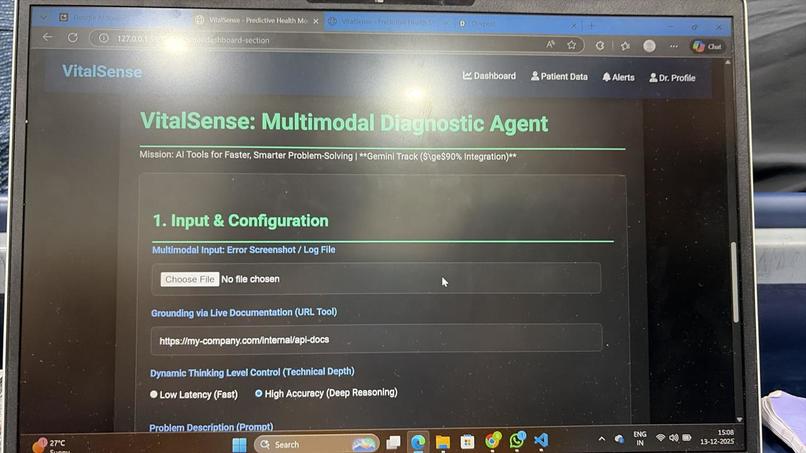
Multi-Modal Analysis: Using Gemini 1.5 Pro to allow users to upload photos of skin conditions or X-rays for analysis.
Voice Assistant: Adding a "Talk to VitalSense" feature for accessibility.
Built With
- charts.js
- css3
- flask
- flask-cors
- fontawesome
- google-genai
- googlegeminiapi1.5flash
- html5
- javascript
- python
- python-dotenv
- vscode
