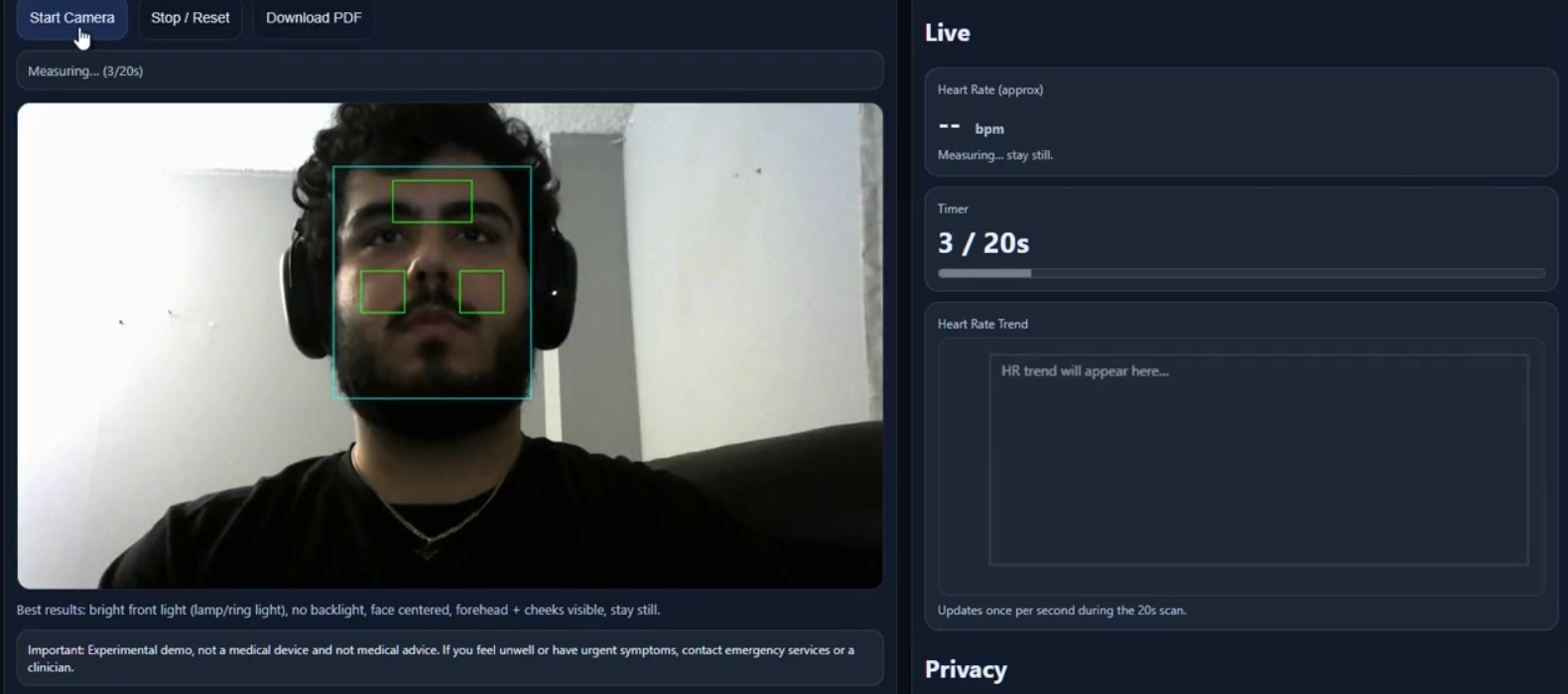
Inspiration A lot of people want to track their heart rate but not everyone can afford a smartwatch or a proper device. I wanted something that works with just a phone, fast, and free—especially for seniors and people who just need a quick daily check. That’s why I built VitalScan Mirror. What it does VitalScan Mirror is a web app that measures your heart rate using your phone’s camera in about 20 seconds. You open the site, place your finger on the camera, stay still, and it gives you a heart-rate result. It’s designed to be simple and accessible, without needing extra hardware. How we built it
Built as a web application so anyone can use it instantly without installing an app.
Used the phone camera to capture subtle color changes from blood flow (camera-based heart-rate / rPPG-style approach).
Processed the signal in real time, cleaned the noise, and estimated BPM from the repeating pattern.
Added a simple UI with a timer, instructions, and a clear result screen.
Challenges we ran into
Noise and movement: even small finger movement can mess up the signal.
Different cameras and lighting: results change depending on phone quality and brightness.
Getting stable readings fast: trying to keep it accurate while still finishing in ~20 seconds.
Making it simple: keeping the experience “one button and go” without confusing steps.
Accomplishments that we're proud of
Built a working prototype that can estimate heart rate in ~20 seconds using only a phone camera.
Made it free and web-based, so it’s easy to access for everyone.
Created a demo that clearly shows the idea working in real time.
Focused on real-world use (simple UX, fast results, accessibility angle).
What we learned
Camera-based heart rate tracking is possible, but it’s very sensitive to lighting, pressure, and motion.
Good filtering and signal cleanup makes a huge difference.
Users need clear guidance (stay still, consistent pressure, good lighting) to get better results.
Making health tech means being careful with messaging: it should be helpful, but not claim it’s a medical diagnosis.
What's next for VitalScan Mirror — Camera-Based Heart Rate
Improve accuracy and consistency across more phones and lighting conditions.
Add a confidence score so users know when a reading is reliable.
Add optional features like history tracking, reminders, and trend graphs (daily/weekly).
Do broader testing with more users (including seniors) and compare against real devices.
Create a safe “health disclaimer” flow and explore partnerships with digital health groups for feedback and pilot testing.

Log in or sign up for Devpost to join the conversation.