Inspiration
VitalScan AI was born from a simple and powerful idea, making healthcare more accessible using voice and artificial intelligence.
I created this project thinking about people who don’t always have easy access to a doctor. With VitalScan AI, anyone can describe how they feel in their own language and get quick, clear medical guidance when they need it most.
It’s not meant to replace a doctor. Instead, it helps people make better decisions in those early, uncertain moments.
Healthcare professionals can also benefit. VitalScan AI offers features like Clinical Mode and can be integrated into appointment systems, helping doctors connect with better-informed patients.
During the hackathon, I explored tools like RevenueCat to simulate subscriptions and ElevenLabs to make the voice interaction feel more natural. One of the biggest challenges was configuring the custom domain manually with IONOS, after running into issues with Entri. It took time, but I learned a lot and completed it successfully.
What I’m most proud of is that VitalScan AI is not just a technical project. It’s a real solution with purpose, built to help people.
What it does
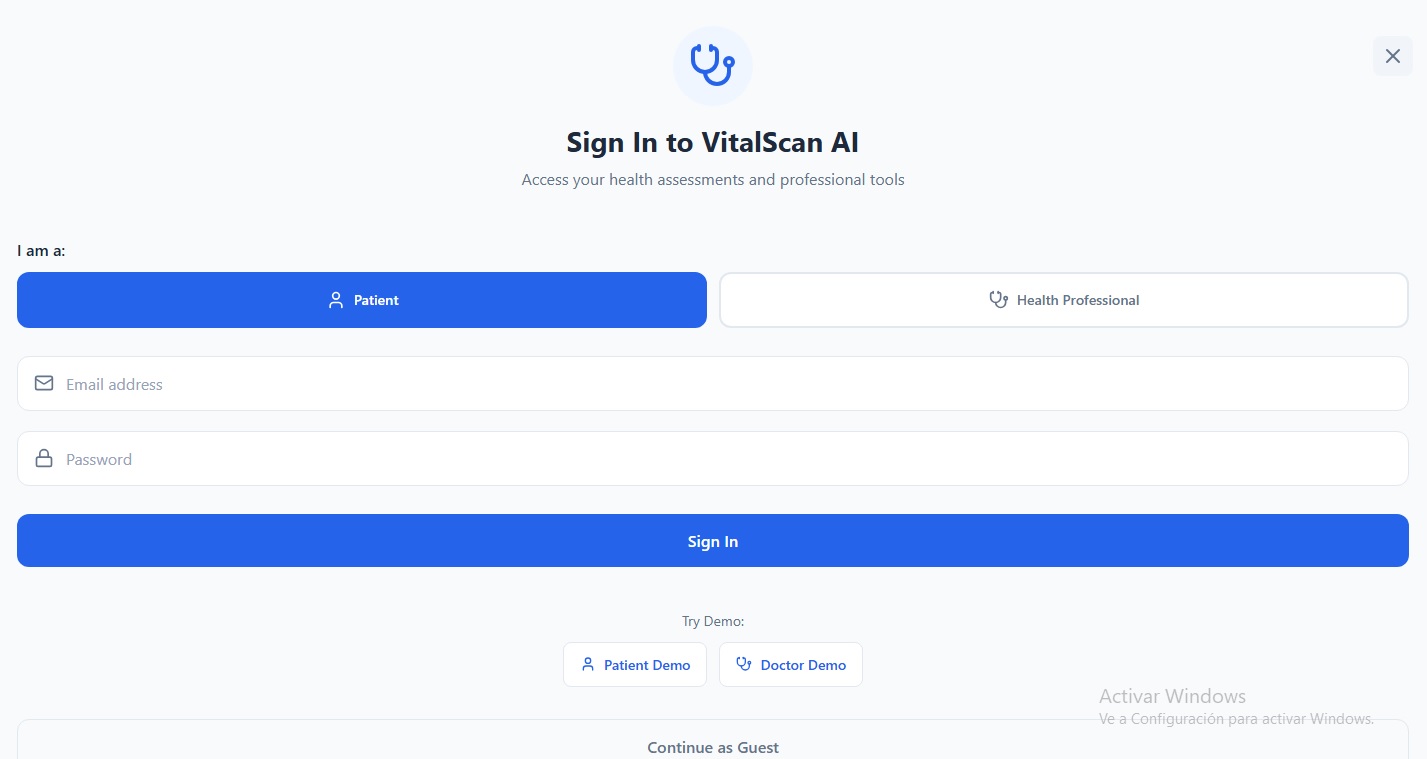
VitalScan AI is a multilingual voice-based health assistant that lets users describe symptoms and receive instant medical guidance through natural conversation.
It supports English, Spanish, Portuguese, and French, and includes a Clinical Mode for healthcare professionals with advanced features.
It also suggests nearby doctors and is designed for both patients and professionals to benefit from clearer communication and faster decisions.
How we built it
- Built with Bolt.new for UI
- React and TypeScript for frontend logic
- Netlify for deployment
- GitHub for version control
- RevenueCat (simulated) to design and test subscription logic
- ElevenLabs for voice interaction
- IONOS for custom domain setup
- ChatGPT to help with content writing, organization, and brainstorming
Challenges we ran into
- Setting up a custom domain manually with IONOS after Entri integration failed
- Managing voice interactions in multiple languages
- Designing a functional paywall without full backend integration
- Keeping the app lightweight while adding real value for patients and professionals
Accomplishments that we're proud of
- Creating a working prototype with voice and multilingual support
- Simulating subscription logic with a user-friendly paywall
- Deploying the app publicly with a custom domain
- Designing a tool with real-world impact in mind
What we learned
- How to integrate third-party APIs like RevenueCat and ElevenLabs
- How to troubleshoot and manually configure a custom domain
- How to simulate business logic like subscriptions
- How to communicate technical ideas clearly using tools like ChatGPT
- The importance of accessibility and multilingual design in health apps
What's next for VitalScan AI
- Integrate real appointment scheduling and calendar systems
- Expand Clinical Mode features for professionals
- Publish to app stores with real subscription support
- Add more languages and region-specific medical info
- Explore partnerships with clinics and NGOs in underserved areas
Built With
- bolt.new
- chatgpt
- elevenlabs
- github
- ionos
- javascript
- netlify
- node.js
- organization
- react
- revenuecat
- typescript

Log in or sign up for Devpost to join the conversation.